




























Washington's Birthday (Jan. 22)

with ORO VALENTIO

An Observance of Foundation, Restraint, and Enduring Virtue

George Washington was widely admired for his virtue and honor, qualities that shaped both his leadership and his legacy. He was known for placing duty above personal ambition, most famously demonstrated when he resigned his military command at the end of the Revolutionary War rather than seeking power—an extraordinary act that astonished the world and affirmed the principle of civilian control over the military. Throughout his life, Washington emphasized integrity, self-discipline, and moral restraint, believing that a leader’s character was as important as his ability. As president, he governed with humility and a strong sense of responsibility, refusing monarchical titles and stepping down voluntarily after two terms to prevent the concentration of power. His conduct earned deep respect at home and abroad, establishing an enduring standard of honorable leadership rooted in service, sacrifice, and fidelity to republican ideals rather than personal glory.
In the United States, Washington’s Birthday is observed as a moment of foundational remembrance—a day set apart to honor the character and conduct of the nation’s first president, George Washington. More than a celebration of birth, the observance reflects on the principles that shaped the republic at its inception: restraint over ambition, duty over power, and service guided by conscience.
Washington’s legacy is defined as much by what he refused as by what he achieved. His voluntary relinquishment of power, his insistence on civilian governance, and his warnings against factionalism established a moral architecture for leadership that would outlast his lifetime. Washington’s Birthday invites Americans to revisit these ideals—not as relics of history, but as living standards by which leadership may still be measured.
Traditionally marked with quiet dignity, the day encourages reflection through education, historical study, and civic contemplation. Speeches, writings, and preserved places—such as Mount Vernon—serve as touchstones, reminding the nation that its strength was forged not merely through victory, but through disciplined character and principled restraint.

Unity, Restraint, and the Stewardship of a Republic

George Washington demonstrated military leadership marked less by tactical brilliance and more by strategic patience, resilience, and an exceptional ability to hold an army—and a cause—together under extreme hardship. As commander-in-chief of the Continental Army during the American Revolutionary War (1775–1783), he faced chronic shortages of food, supplies, training, and funding, often commanding a force that was smaller and less experienced than the British Army. Washington understood that outright battlefield victories were not always necessary; instead, his primary objective was to keep the army intact long enough for political support, popular will, and foreign alliances—especially with France—to turn the tide. He adapted quickly, learning from early defeats, adopting guerrilla-style tactics when needed, and avoiding decisive engagements that could destroy his forces. His leadership during harsh winters, most notably at Valley Forge, showcased his moral authority and personal endurance, as he maintained discipline, inspired loyalty, and implemented crucial reforms in training and organization. Above all, Washington’s ability to unite diverse colonies under a single command and subordinate personal ambition to civilian authority established a model of military leadership grounded in duty, restraint, and service to the nation rather than personal power.
In his Farewell Address of 1796, George Washington offered the young nation not a celebration of triumph, but a sober gift of counsel. Written as he stepped away from power, the address stands as an act of restraint—an intentional passing of responsibility from one leader to the people themselves. Washington warned against the dangers of factionalism, the corrosion of unity, and the temptation to place personal or party loyalty above the common good.
At its core, the Farewell Address is a meditation on stewardship. Washington understood that the republic’s survival would depend not on any single figure, but on the moral discipline of its citizens and leaders alike. He urged Americans to value national unity, respect constitutional order, and exercise vigilance against influences—foreign or domestic—that might erode independence of thought and purpose.
More than two centuries later, the address endures as a quiet measure of leadership: power willingly relinquished, authority tempered by humility, and foresight grounded in duty rather than ambition. In reflecting on Washington’s words, Americans are reminded that the strength of the nation rests not merely in its institutions, but in the character with which they are upheld.

Traditions to Commemorate

Reflection on Foundational Leadership
Washington’s Birthday centers on remembrance rather than celebration. Schools, institutions, and families traditionally reflect on the life and character of George Washington, emphasizing integrity, restraint, and duty. His leadership is studied as an example of service exercised within limits, rather than power sought for its own sake.

📖 Readings from Washington’s Writings
A long-standing tradition is the reading or discussion of Washington’s Farewell Address. This document is revisited for its warnings against factionalism, unchecked power, and foreign entanglements, and for its emphasis on unity, moral character, and constitutional order.

🏛️ Visits to Historic Sites
Many Americans observe the day by visiting or reflecting on historic places connected to Washington, especially Mount Vernon. Museums, historical societies, and reenactment groups often host educational programs focused on early American civic life.

🎓 Educational Observances
Washington’s Birthday has traditionally been marked in schools and civic institutions through lectures, essays, and history lessons focused on the founding of the republic, the Revolutionary War, and the responsibilities of citizenship.

🇺🇸 Civic & Patriotic Displays
While understated, the day may include:
  • Display of the American flag
  • Small civic ceremonies
  • Public addresses emphasizing constitutional principles
These acts are meant to affirm continuity rather than spectacle.

🤍 Emphasis on Virtue Over Festivity
Unlike modern holidays, Washington’s Birthday historically avoided indulgence or festivity. The tone was intentionally sober, reinforcing the idea that the presidency—and the republic itself—rests on character, discipline, and restraint.

The Unifying Purpose
Washington’s Birthday honors not personality, but principle. Its traditions remind Americans that the nation’s foundation was laid not through ambition, but through self-governance, voluntary limits on power, and devotion to the common good.
The day asks a quiet but enduring question:
Are we worthy stewards of what was entrusted to us?
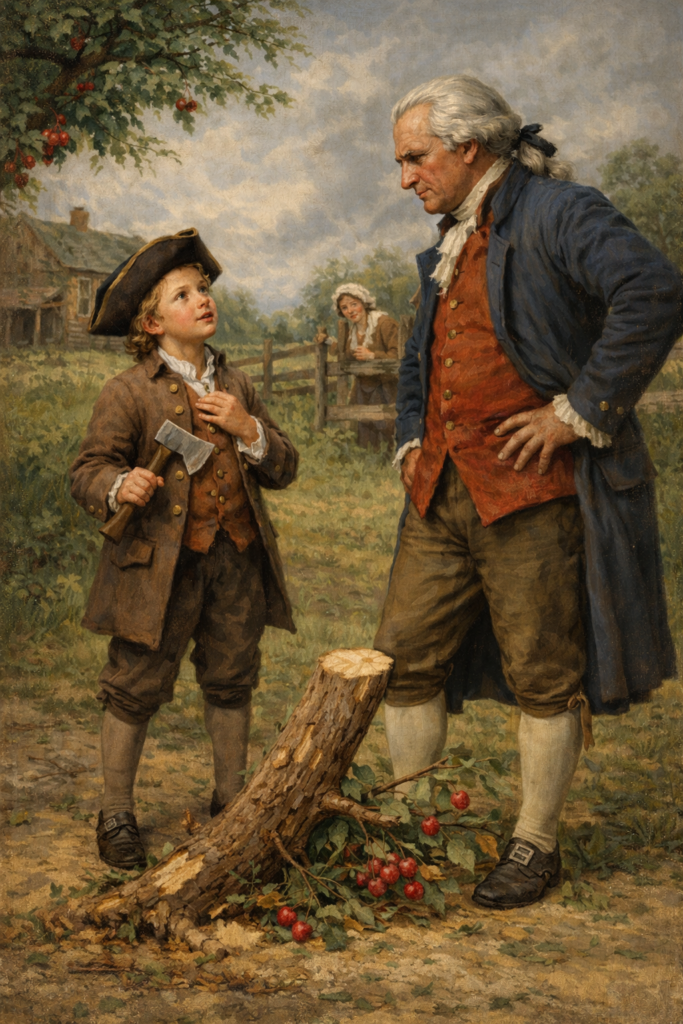
The story of George Washington and the cherry tree is a well-known American legend rather than a verified historical event. According to the tale, a young Washington received a hatchet and, while playing, chopped down his father’s prized cherry tree. When confronted, he is said to have confessed honestly, declaring, “I cannot tell a lie.” His father, instead of punishing him, praised his son’s truthfulness as being worth more than the tree itself. The story first appeared in the early 19th century in a biography written by Parson Mason Locke Weems, who intended it as a moral lesson rather than a factual account. While historians agree the event almost certainly never happened, the story endured because it symbolized the virtues Americans associated with Washington—especially honesty, moral courage, and integrity—and it played a powerful role in shaping his image as a model of virtuous leadership for future generations.

True Authority is Rooted in Virtue

George Washington was a central figure in the founding of the United States and is often called the “Father of His Country.” Born in 1732 in Virginia, he rose to prominence as a military leader during the American Revolutionary War, serving as commander-in-chief of the Continental Army and guiding the colonies to independence from British rule. After the war, Washington played a crucial role in shaping the new nation by presiding over the Constitutional Convention of 1787, which produced the U.S. Constitution. He later became the first President of the United States, serving two terms from 1789 to 1797, and set enduring precedents for the office, including the peaceful transfer of power. Known for his integrity, restraint, and sense of duty, Washington’s leadership helped establish the foundations of American government and national identity.
At its heart, Washington’s Birthday affirms a uniquely American conviction: that true authority is rooted in virtue, that power is best exercised with humility, and that the republic endures when leaders place the future of the nation above personal gain. It is a day to honor beginnings—and the enduring responsibility to uphold them.

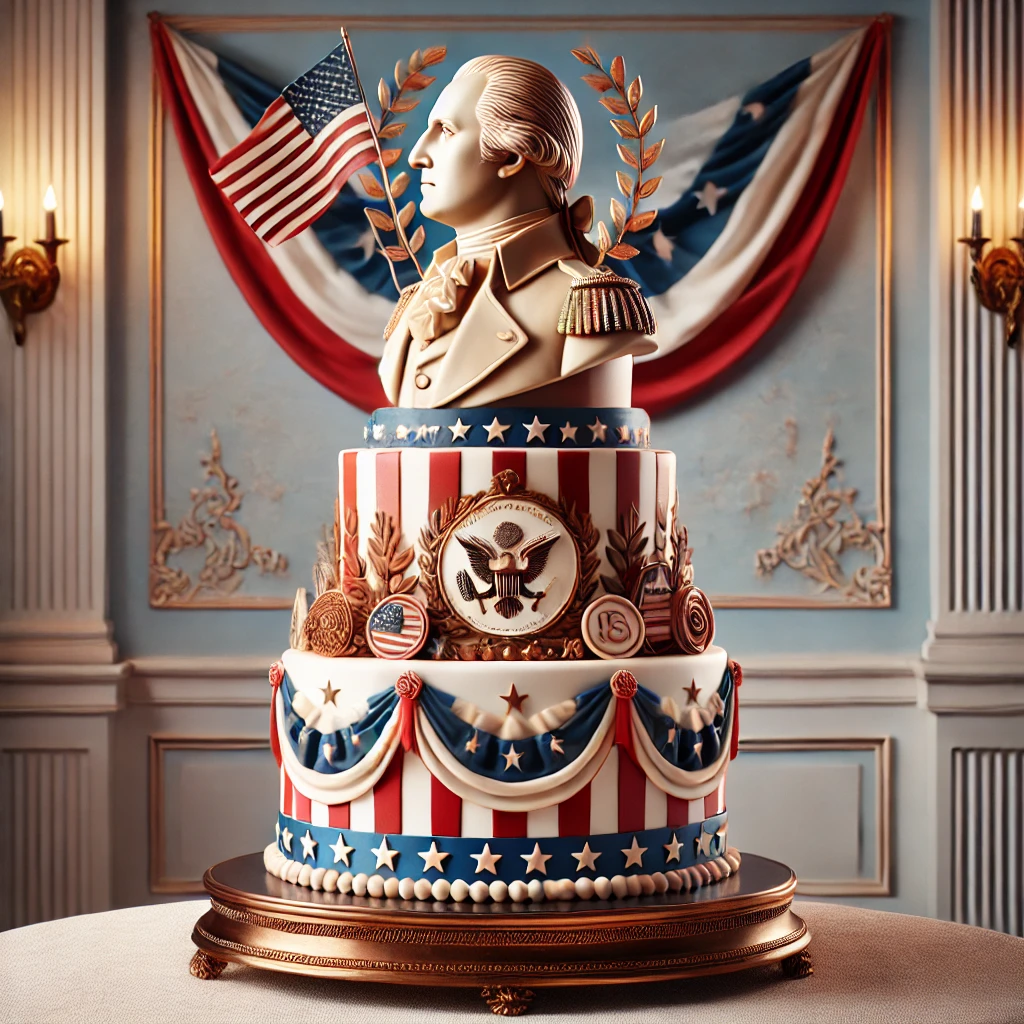
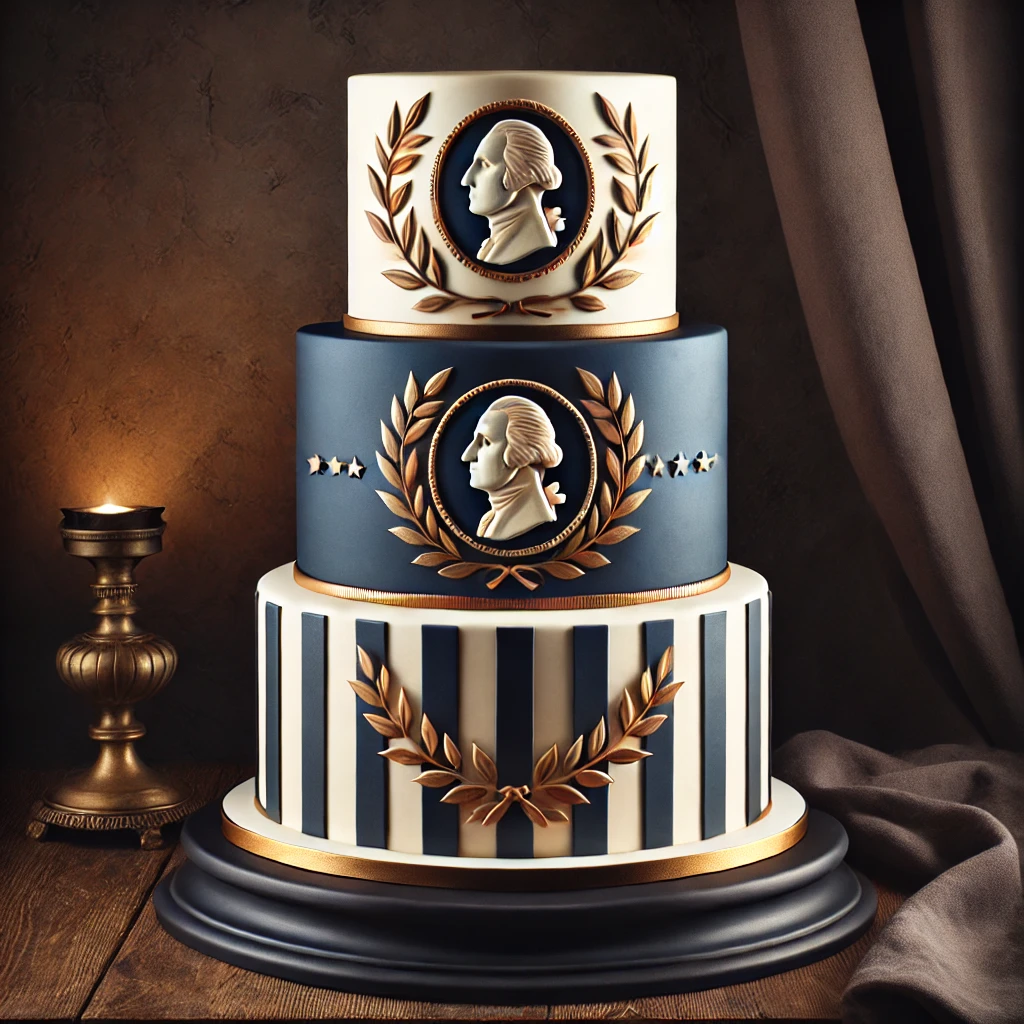
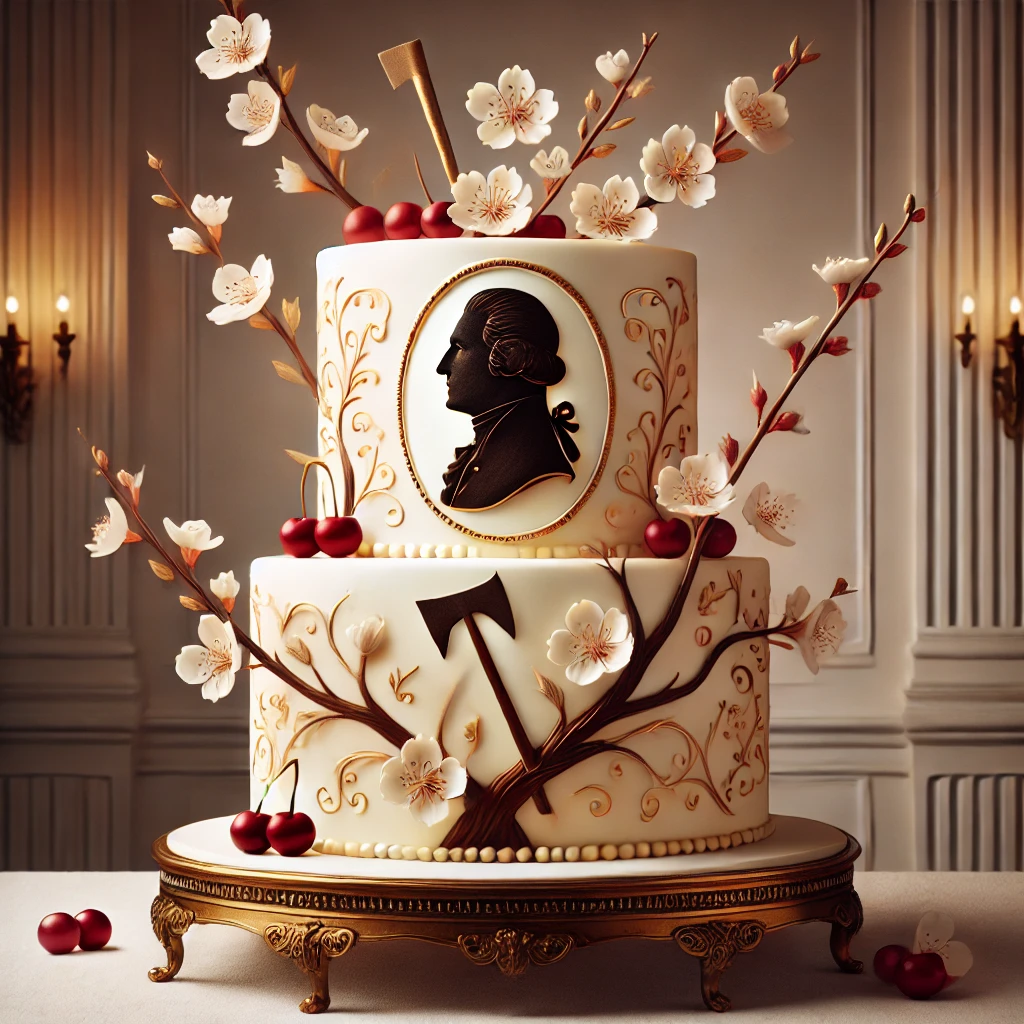
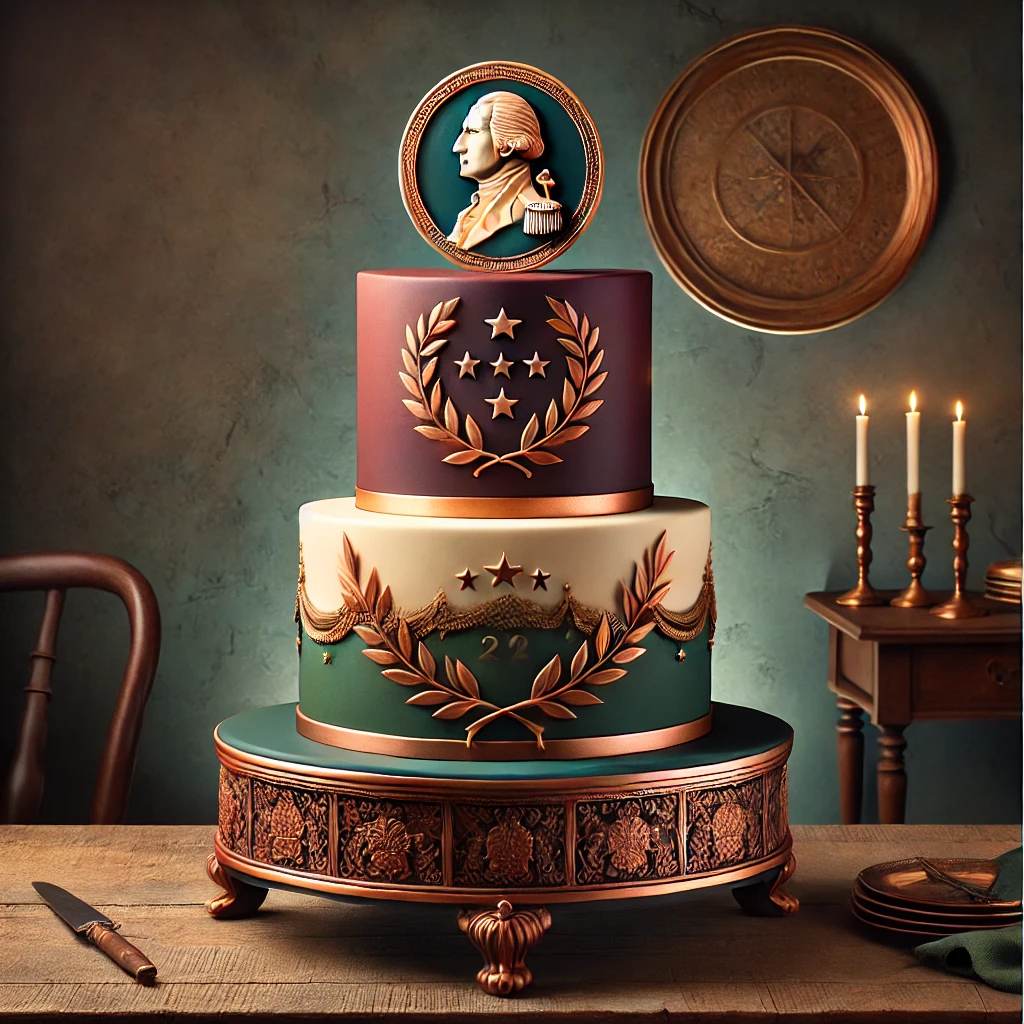
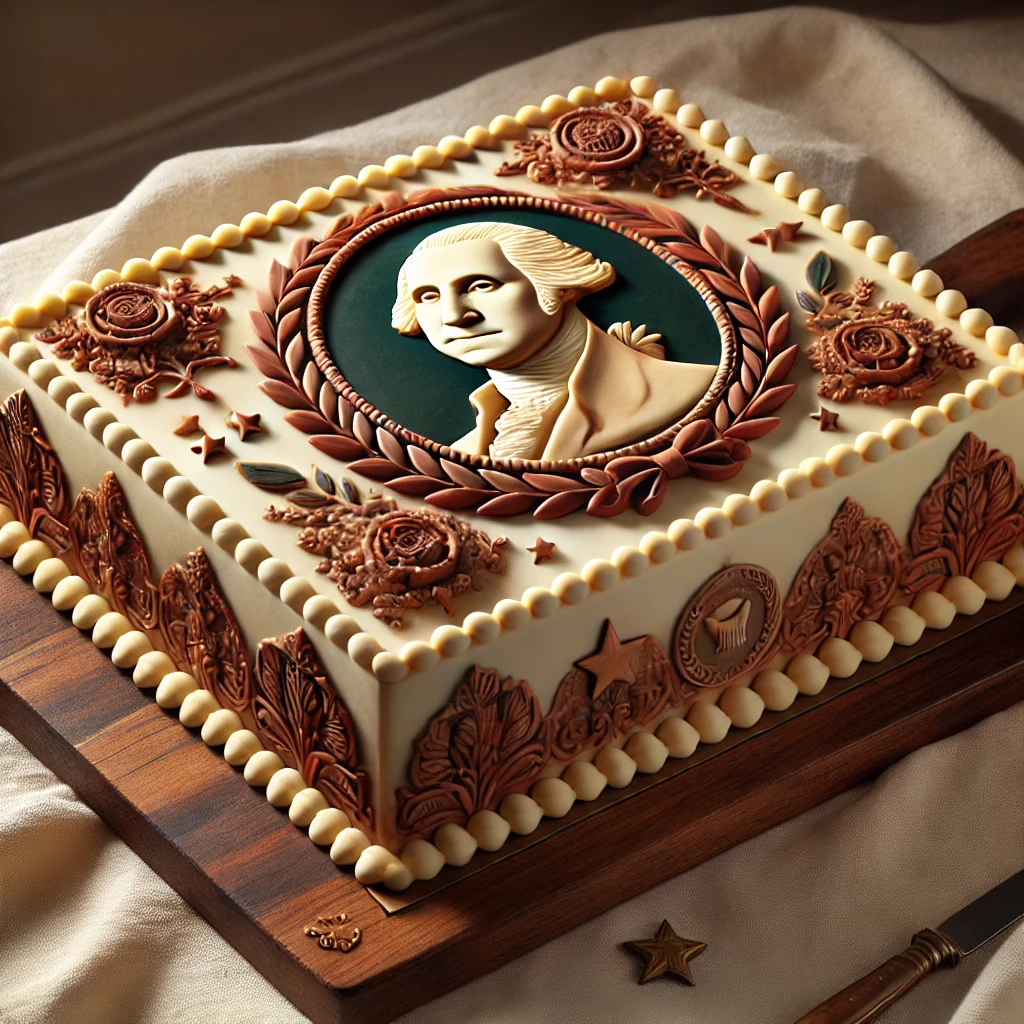
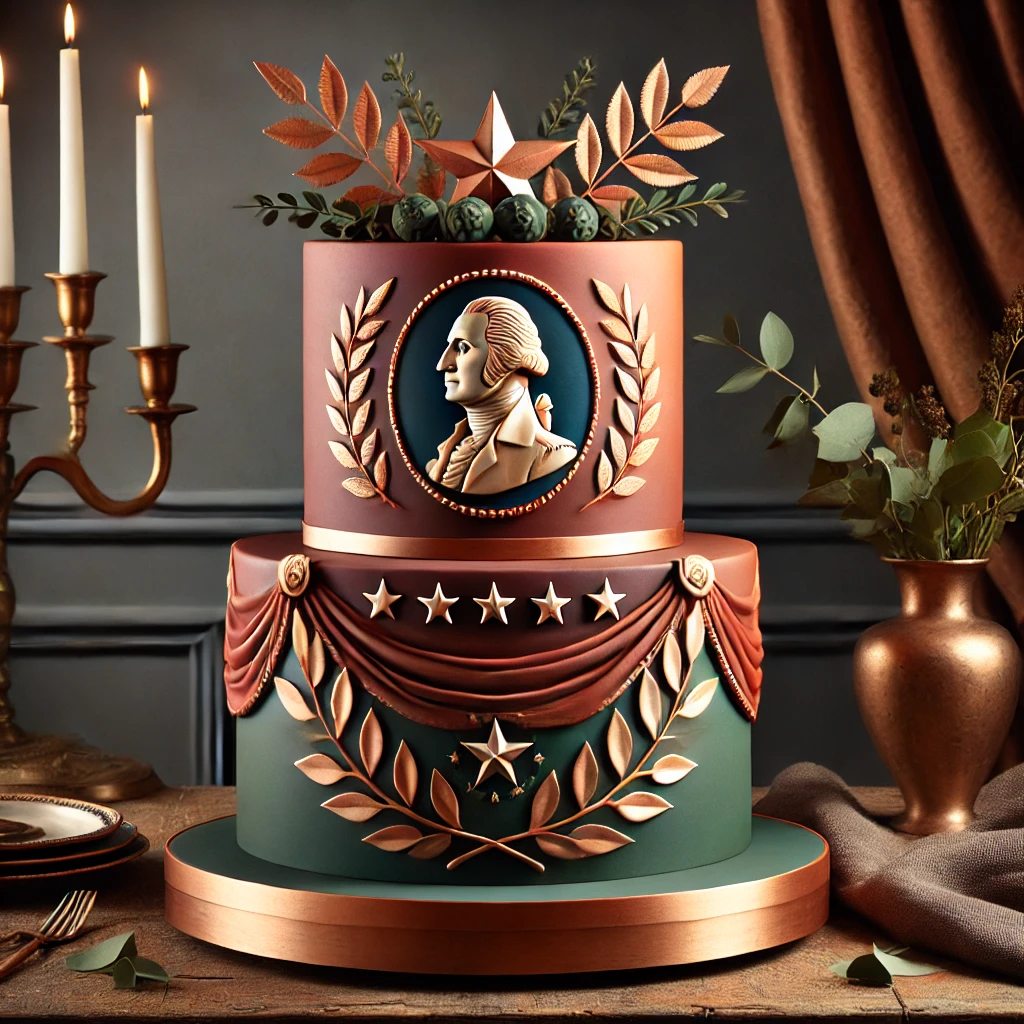
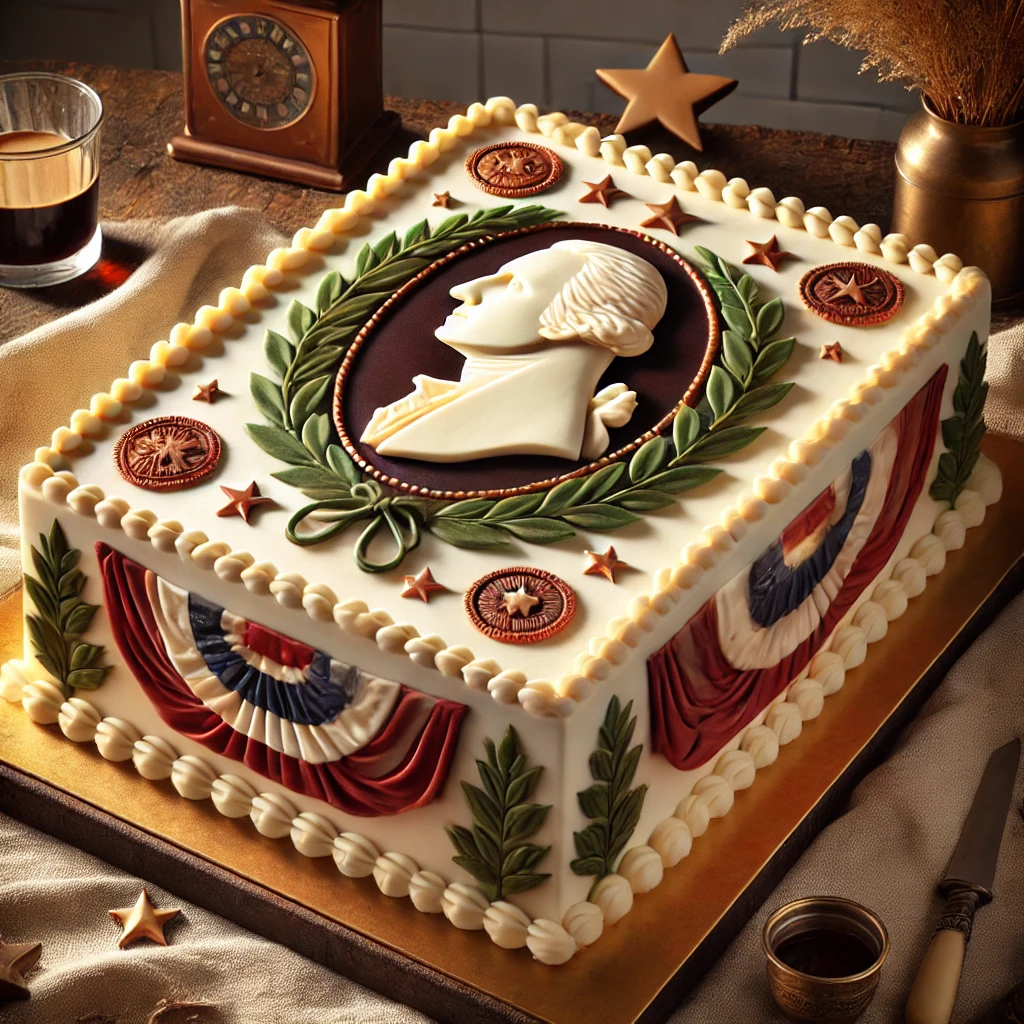
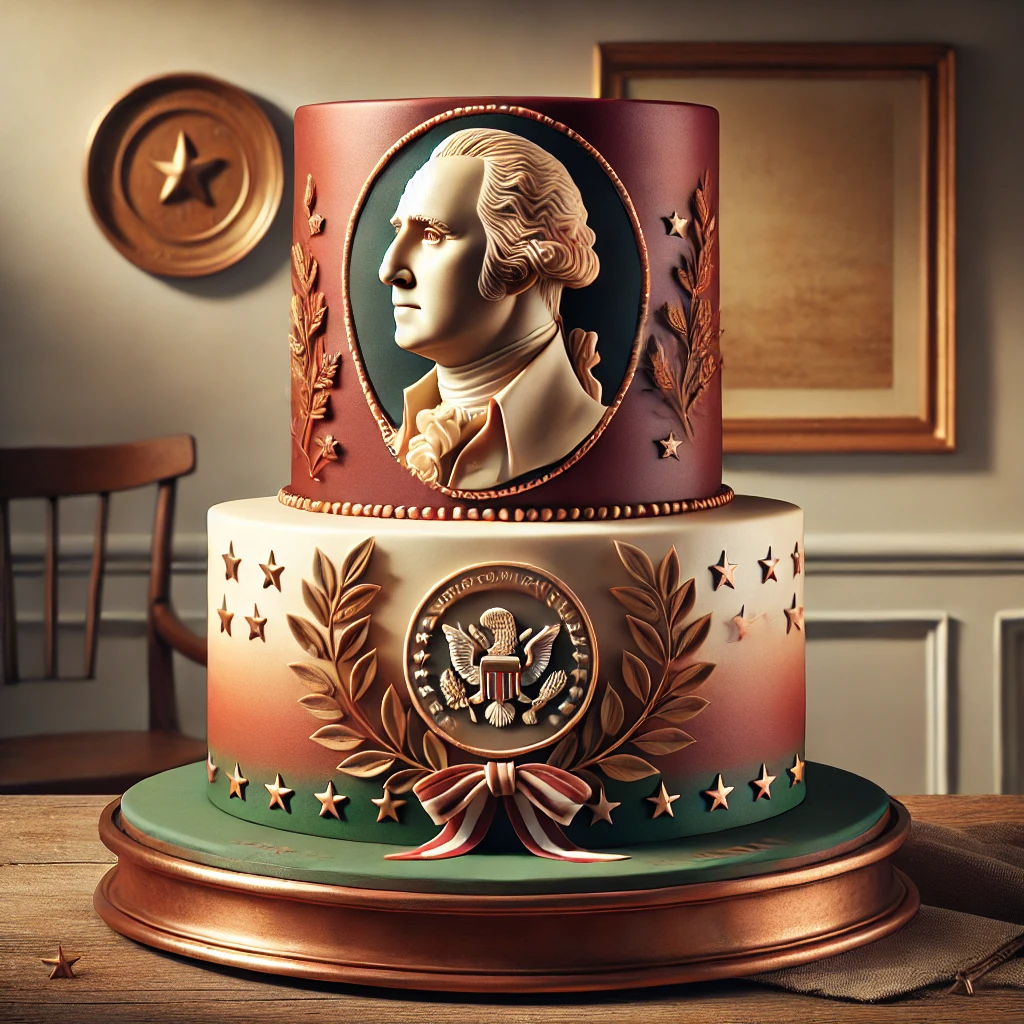
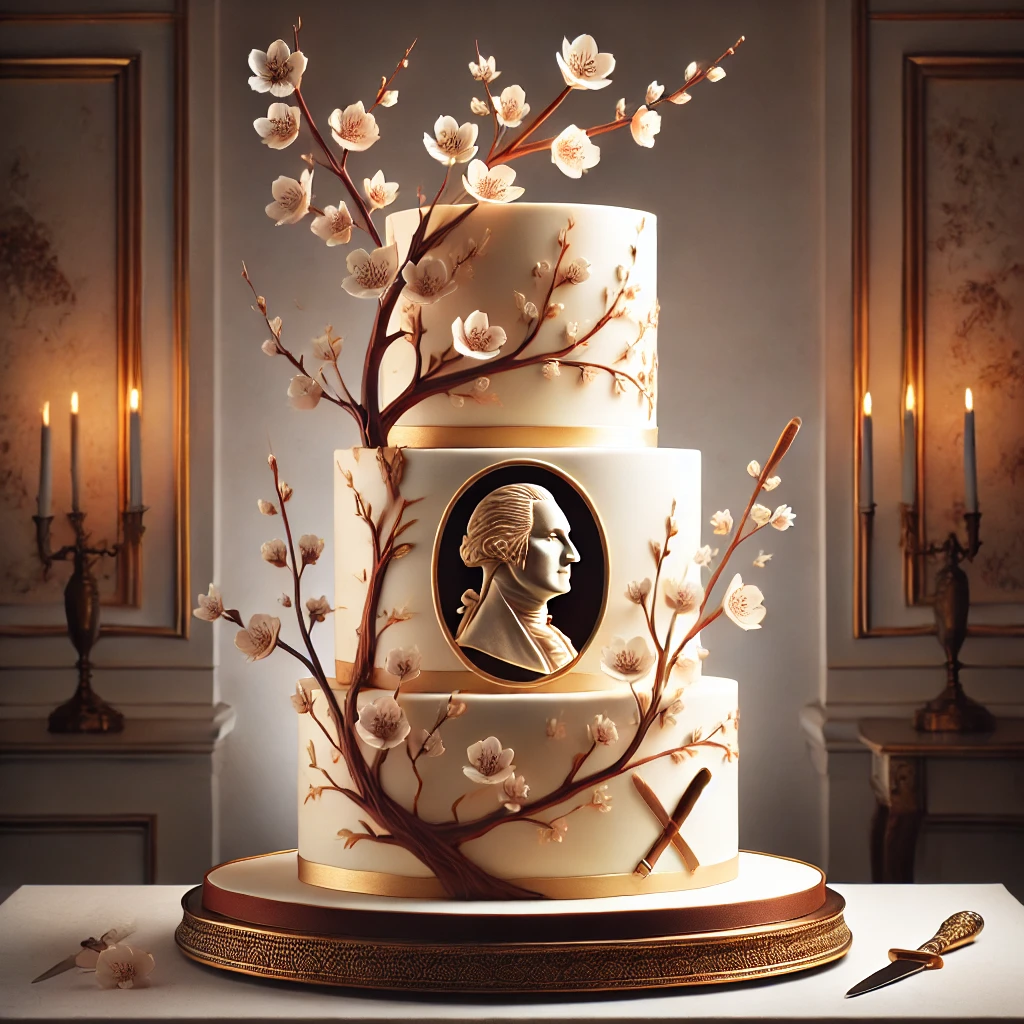
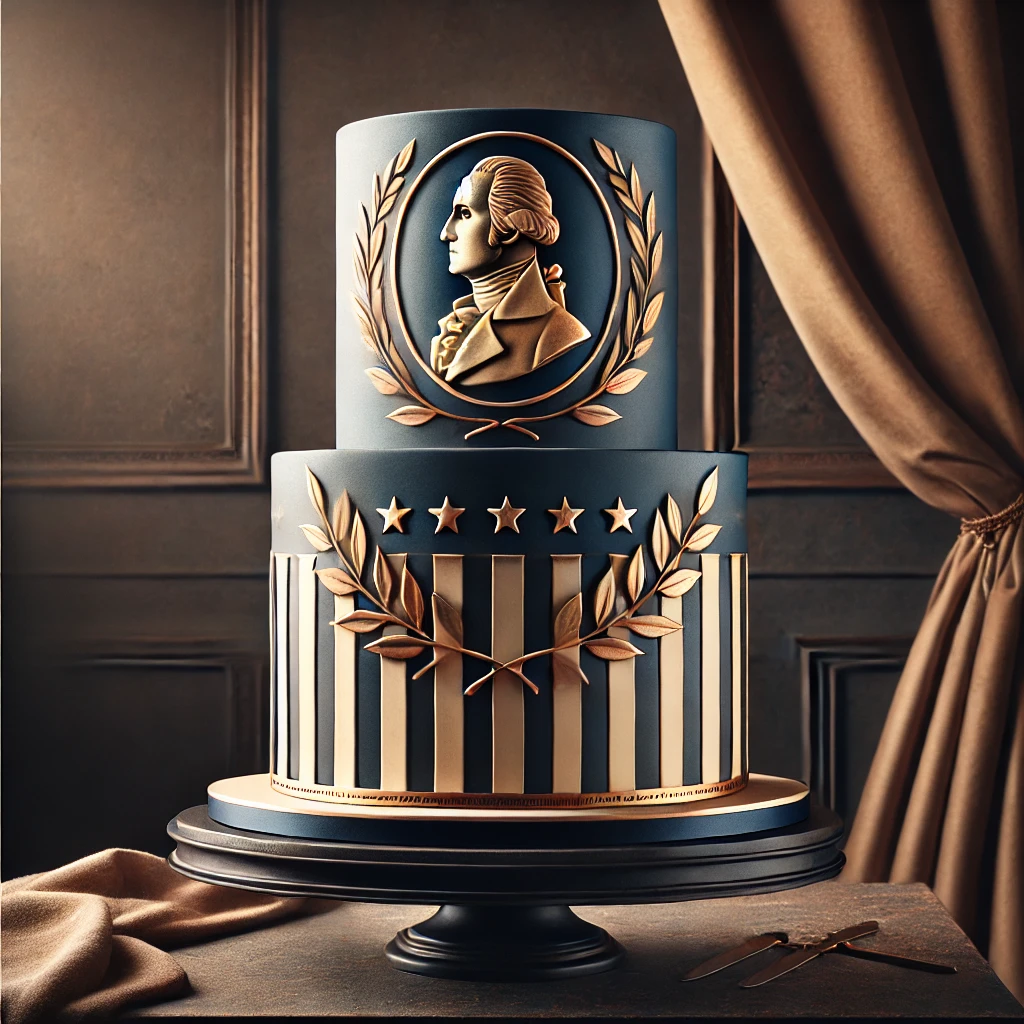
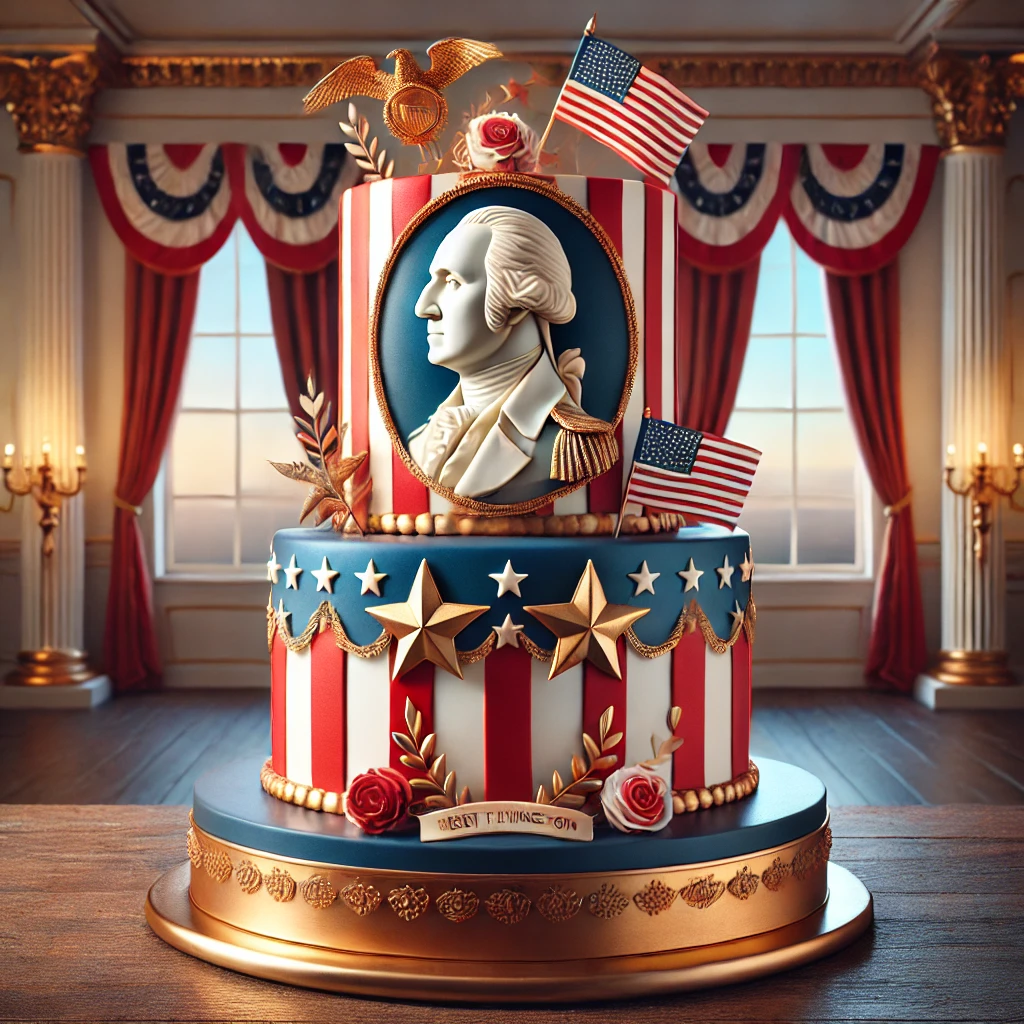
Washington's Birthday Cake Decorating Ideas

Washington's Birthday Traditional Dishes

🍞 Simple Breads & Hearth Fare
Washington’s Birthday meals traditionally echoed 18th-century colonial American food, especially in educational and heritage observances:
  • Hearth-baked bread
  • Cornbread or cornmeal loaves
  • Biscuits or simple rolls
Bread symbolized daily provision and self-sufficiency, values Washington prized both personally and publicly.

🍖 Roast Meats (Modest, Not Festive)
When meals were prepared, they were often plain and restrained:
  • Roast beef or pork
  • Occasionally roast fowl
These reflected common colonial diets rather than celebration—nourishing, practical, and unadorned.

🍎 Apples & Seasonal Fruit
Apples were among the most common fruits in colonial America and frequently appeared as:
  • Baked apples
  • Apple tarts or puddings
  • Apple cider (often non-alcoholic for public observances)
Fruit dishes emphasized stewardship of land and harvest, themes closely tied to Washington’s life as a farmer.

🍰 Cherry Dishes (Later Symbolic Tradition)
Cherry pie became symbolically associated with Washington in the 19th century due to the apocryphal cherry tree story.
  • Cherry pie or tarts
  • Cherry preserves
While not historically accurate to Washington’s own table, cherry desserts became a pedagogical tradition—especially in schools—used to teach honesty and character.

🍯 Simple Puddings & Cakes
Desserts, when present, were restrained:
  • Pound cake
  • Bread pudding
  • Custards
Sweetness was modest, reinforcing the tone of dignity rather than indulgence.

Winter Recipes