Mardi Gras

with ORO VALENTIO

The Tuesday before Ash Wednesday

The traditional colors of Mardi Gras—purple, green, and gold—carry symbolic meaning that reflects the deeper structure beneath the celebration. Purple represents justice, recalling both royal authority and moral order, and serves as a reminder that celebration is ultimately accountable to higher principles. Green symbolizes faith, growth, and renewal, pointing toward life, hope, and the spiritual season that follows Mardi Gras in Lent. Gold signifies power and abundance, expressing gratitude for provision, joy, and shared prosperity. Together, these colors form a visual theology: joy governed by justice, abundance tempered by faith, and celebration oriented toward renewal. Far from being decorative alone, the Mardi Gras colors embody the balance the season is meant to uphold—festivity that knows its purpose, and beauty that gestures toward what comes next rather than consuming the moment itself.
Mardi Gras—meaning “Fat Tuesday”—is the culminating day of a season rooted not in excess alone, but in preparation. Historically, Mardi Gras developed as the final moment of festivity before the disciplines of Lent began, allowing communities to use up rich foods, gather in joy, and mark the transition from celebration to restraint. Its origins lie in medieval Christian Europe, where the calendar carefully balanced feasting with fasting, joy with discipline, and abundance with accountability.
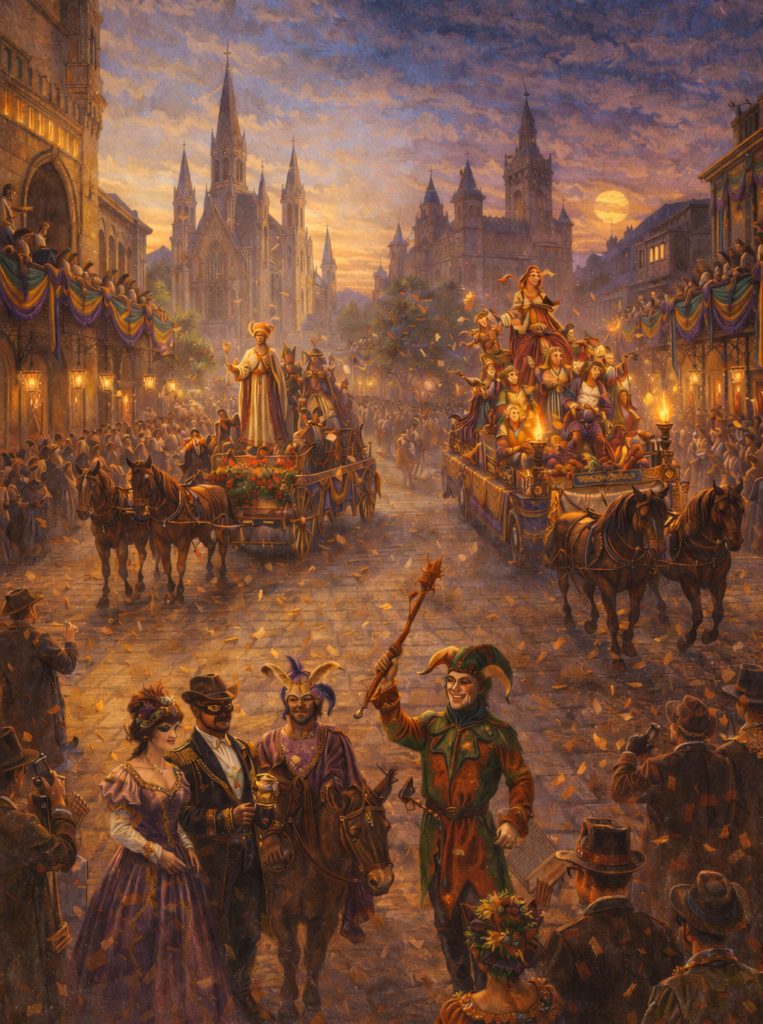
As the tradition traveled and evolved, Mardi Gras took on distinct cultural expressions, most famously in New Orleans, where French, Spanish, African, and Caribbean influences shaped its music, pageantry, and ritual. Parades, masks, and symbolic colors emerged not merely as spectacle, but as storytelling—expressions of community identity, social inversion, and shared memory. Beneath the celebration lies a deeper structure: Mardi Gras acknowledges that joy, when properly ordered, prepares the heart for sacrifice rather than replacing it.
Culturally, Mardi Gras serves as a threshold. It is not meant to extend indefinitely, but to conclude. The revelry of the day gives way to Ash Wednesday, where reflection, repentance, and renewal begin. This deliberate contrast preserves meaning on both sides: celebration retains its depth because it ends, and discipline retains its humanity because it is preceded by joy.
At its core, Mardi Gras is not about indulgence for its own sake, but about recognizing rhythm—honoring the human need for festivity while affirming the greater necessity of restraint, clarity, and renewal. It stands as a reminder that celebration is most meaningful when it knows its place, and that true joy is not diminished by discipline, but given its proper time and purpose.

Joy is NOT the Opposite of Sacrifice

Mardi Gras reflects a deep truth about both human nature and the wisdom of tradition: that joy and sacrifice are not enemies, but companions—each giving meaning to the other when rightly ordered. Joy, rightly understood, is not a flight from duty, but a strengthening of the heart before it is called to bear the weight of sacrifice. Celebration, when given its proper time and meaning, reminds us why self-denial matters, and what it is ultimately for. Far from numbing the soul, ordered joy stirs gratitude, forges connection, and restores vision—so that sacrifice can be embraced not with bitterness, but with conviction and love.
Historically, this rhythm prevented both extremes. Without joy, sacrifice becomes harsh and brittle; without sacrifice, joy dissolves into excess and emptiness. Mardi Gras stands precisely at this balance point. It allows laughter, color, music, and shared festivity to have their rightful place, while clearly signaling that they are not the final aim. When the celebration ends, it does not leave behind exhaustion or denial, but readiness. The heart, having tasted abundance and community, is better prepared to embrace restraint, reflection, and self-giving.

In this way, Mardi Gras reveals that joy is not the opposite of sacrifice—it is its preparation. It shows that discipline grounded in gratitude is stronger than discipline born of mere denial, and that when joy precedes it, sacrifice becomes not a burden, but a gift of love freely given.

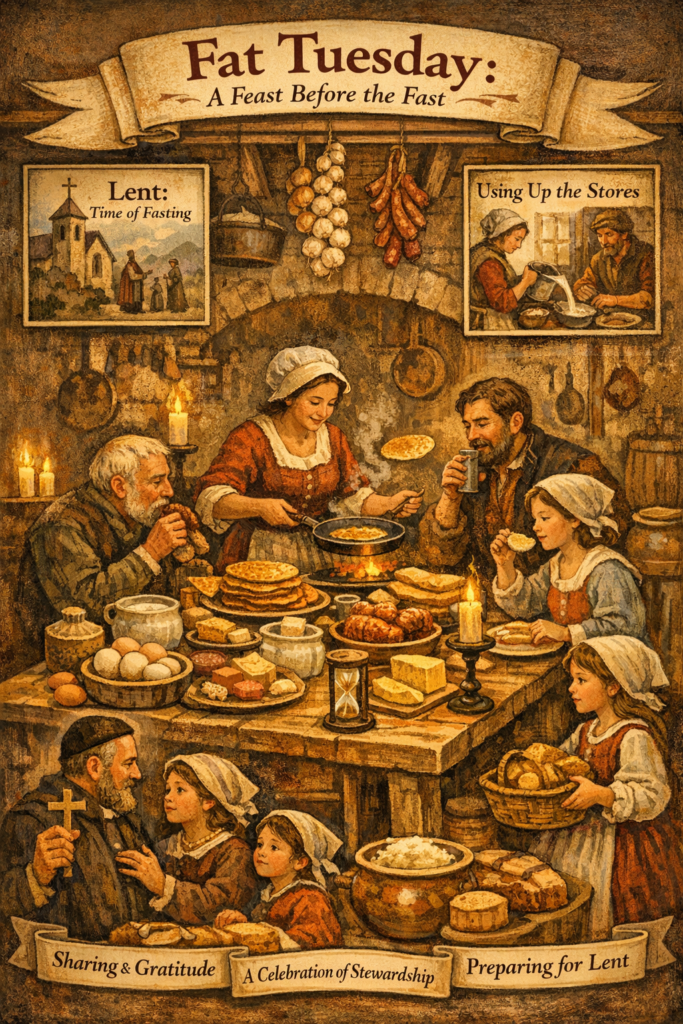
“Fat Tuesday” was never meant to glorify excess for its own sake; it emerged from practical household wisdom shaped by the liturgical calendar. In pre-modern societies, Lent required abstinence from rich foods such as butter, eggs, milk, and animal fats—items that could not be preserved easily and would spoil if left unused. Mardi Gras therefore functioned as a deliberate household reset, when families cooked, shared, and finished what they had on hand before entering a season of restraint. This made the day communal rather than indulgent, rooted in stewardship rather than abandon. The celebration acknowledged abundance honestly, without waste, and prepared both pantry and people for discipline ahead. In its original form, Fat Tuesday balanced joy with responsibility, reminding communities that festivity has meaning when it serves preparation, gratitude, and order rather than excess or escape.

Mardi Gras Traditions to Make Your Own

Mardi Gras long predates the city most closely associated with it. Its origins reach back to medieval Europe, where Carnival developed as part of the Christian calendar centuries before New Orleans was founded in 1718. Rooted in the rhythm of feast and fast, these early celebrations marked the period between Epiphany and Lent, allowing communities to gather, prepare, and release before the disciplines of repentance and restraint began. French and Italian Carnival customs—shaped by liturgical time, seasonal necessity, and communal ritual—were later carried to the Americas through colonization and migration. When Mardi Gras eventually took root in New Orleans, it did not emerge spontaneously, but arrived as a fully formed tradition, adapted to local culture while retaining its ancient structure. Understanding this history reveals Mardi Gras not as a modern invention, but as an inherited practice—one shaped by centuries of meaning, balance, and human rhythm long before it ever reached American soil.
1. Wearing Masks and Costumes
  • Rooted in medieval Carnival, masks allow revelers to be anonymous and equal for a day.
  • In New Orleans, elaborate feathered masks and costumes are a staple—sometimes required by law for float riders.
2. Parades
  • Floats roll through city streets, often themed and sponsored by krewes (social clubs).
  • Parades often include:
    • Marching bands
    • Dance troupes
    • Costumed performers
    • Giant floats
3. Krewe Culture
  • Krewes are private clubs that organize parades and balls.
  • Each krewe has its own theme, history, royalty (king and queen), and signature “throws.”
  • Famous krewes: Rex, Zulu, Bacchus, Endymion, and Muses
4. Throws
  • Beads (purple, green, and gold)
  • Doubloons (custom coins)
  • Cups, toys, and handmade items (like Muses’ decorated shoes or Nyx’s purses)
  • The goal? Catch as much as you can!

🍰 Traditional Foods
5. King Cake
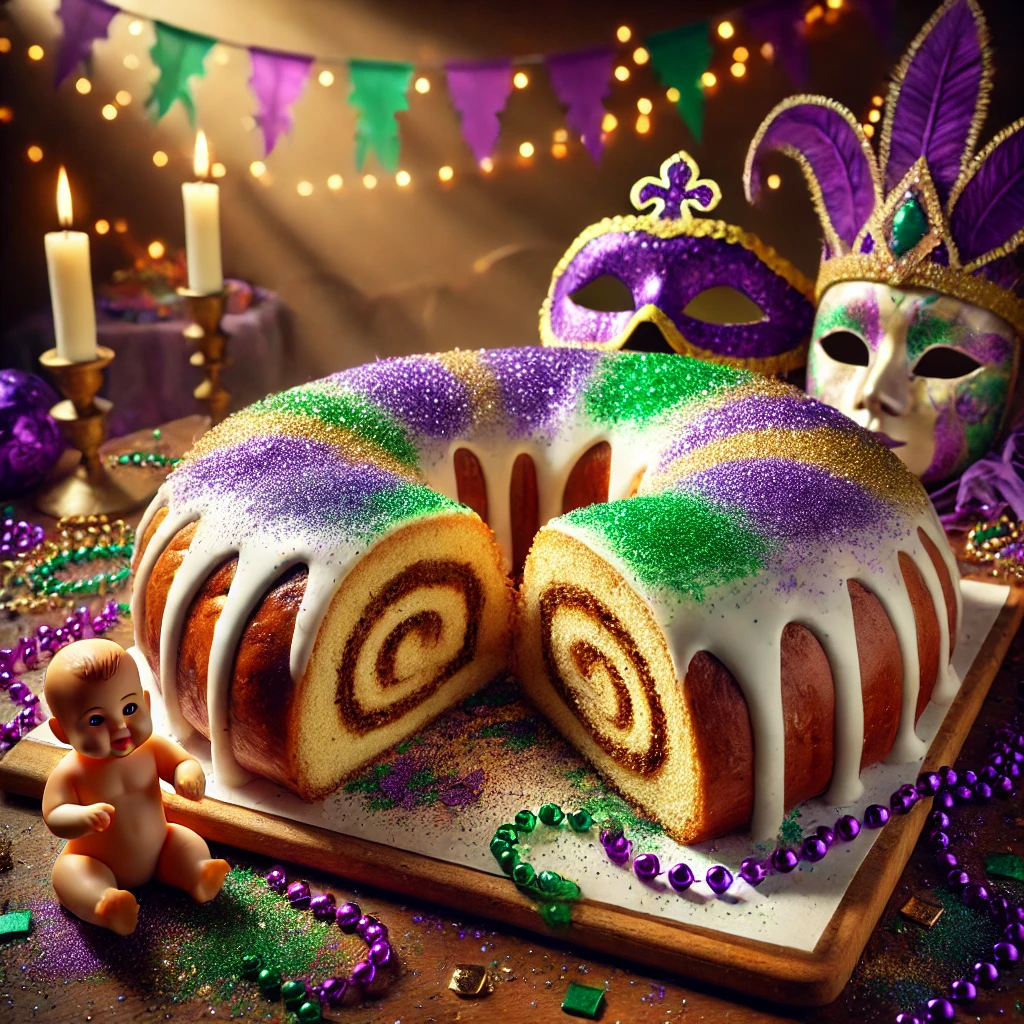
  • A colorful, circular pastry decorated in purple, green, and gold sugar.
  • Hidden inside is a tiny plastic baby (symbolizing Jesus or luck).
    • Whoever finds the baby must buy the next cake or host the next party.
6. Rich, Fatty Foods
  • Mardi Gras means “Fat Tuesday,” the last day to indulge before Lent.
  • Foods vary by culture but often include:
    • Fried foods, meats, cheese, butter, and pastries
    • Pancakes or crêpes (especially in the UK and France)

🎉 Music and Dancing
7. Brass Bands and Jazz
  • Especially in New Orleans, Mardi Gras is filled with live jazz, funk, and brass bands.
  • Street parties and second line parades (impromptu processions) are common.
8. Mardi Gras Balls
  • Formal events hosted by krewes
  • Often include debutante-style presentations, with kings, queens, and elaborate gowns and pageantry

Religious and Historical Traditions
9. Fat Tuesday as Pre-Lenten Celebration
  • Mardi Gras is the final day before Ash Wednesday, the beginning of Lent.
  • It originated as a way to use up rich foods before the fasting season.
10. Burning of the Boeuf Gras
  • Historically, a live fatted ox was paraded to symbolize the end of meat before Lent.
  • Today, Boeuf Gras may be represented as a float or symbol in Rex parades.

Color Symbolism
11. Purple, Green, and Gold
  • Chosen by the Rex Krewe in 1872:
    • Purple = Justice
    • Green = Faith
    • Gold = Power

🌍 Mardi Gras Around the World

12. Carnival (Brazil, Italy, etc.)
  • Brazil: Samba parades, sequins, massive floats
  • Venice: Elegant masquerade balls and baroque masks
  • France: Parades, crêpe feasts, and burning of effigies
13. Shrove Tuesday (UK, Canada, Australia)
  • Known as Pancake Day
  • Traditional pancake races and feasts

May the Joy We Share Today be Rightly Ordered

May the joy we share today be rightly ordered,
tempering abundance with gratitude and care.
As we finish what has been given,
may our hearts be readied for discipline,
our homes for simplicity,
and our lives for deeper love and faithfulness.
Let this day’s gladness prepare us—not distract us—
so that, in honest joy,
we may enter Lent with strength, humility, and peace.

Masks became associated with Mardi Gras through a blend of medieval social custom, religious calendar rhythm, and civic ritual, rather than mere decoration or disguise. In early European Carnival traditions—particularly in France and Italy—masks allowed people to step temporarily outside rigid social hierarchies before the solemn season of Lent. By concealing identity, masks created a rare space where class distinctions, titles, and social roles were suspended, reinforcing the idea that all stood equal at the threshold between feast and fast. When Mardi Gras traditions traveled to the Americas, especially to New Orleans, masks retained this symbolic function while evolving into elaborate works of artistry. This “licensed inversion” loosened social roles—not ethical boundaries—and was meant to humble power, soften rigidity, and prepare the community for discipline and renewal. Over time, as the tradition spread and in some places became detached from its religious rhythm, masking was occasionally misused as anonymity without accountability, distorting its original purpose. Yet this drift was neither universal nor inevitable. In many communities, Mardi Gras continues to be celebrated in its truest form: as ordered joy, communal bonding, artistic expression, and meaningful release that strengthens rather than weakens the soul. When rightly observed, Mardi Gras does not undermine virtue—it supports it, reminding participants that celebration has a place, that equality matters, and that joy, when guided by order and purpose, prepares the heart for discipline, clarity, and renewal.

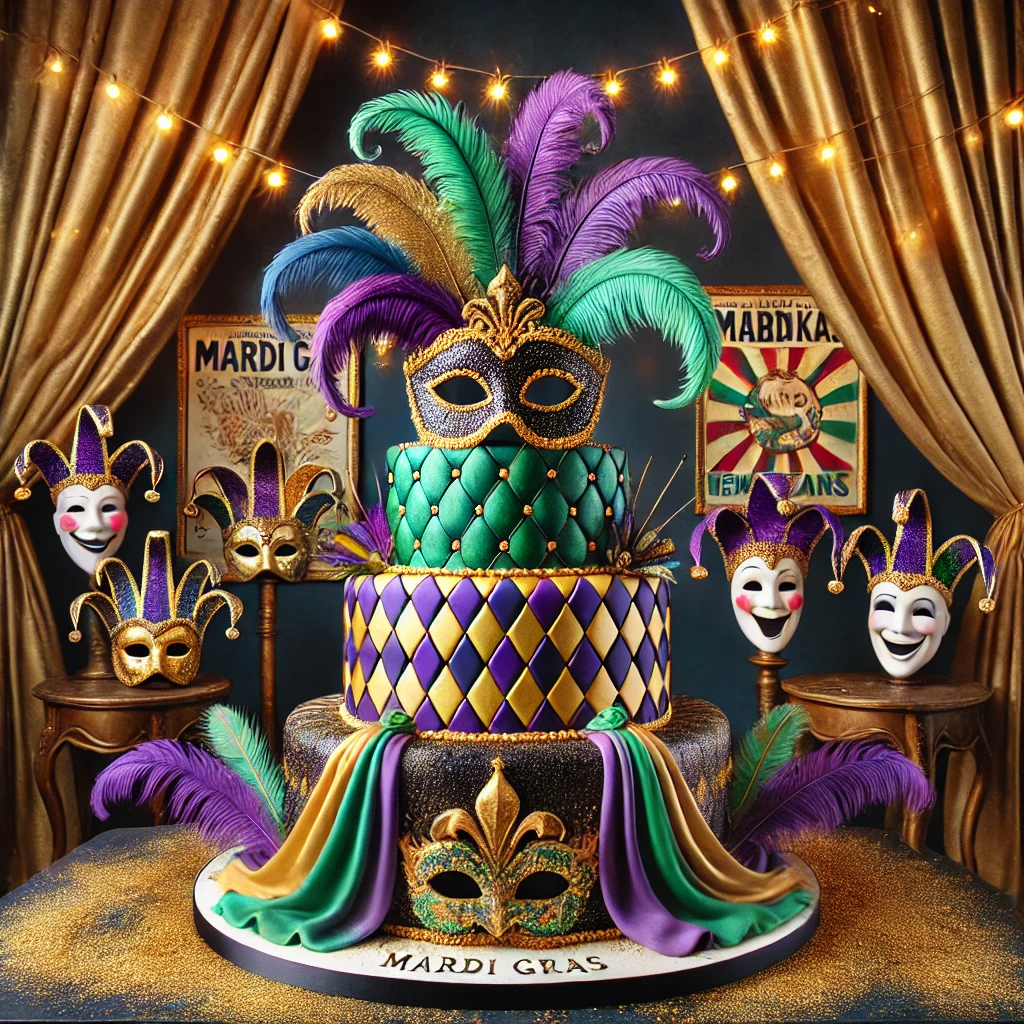
Mardi Gras Cake & Decorating Ideas

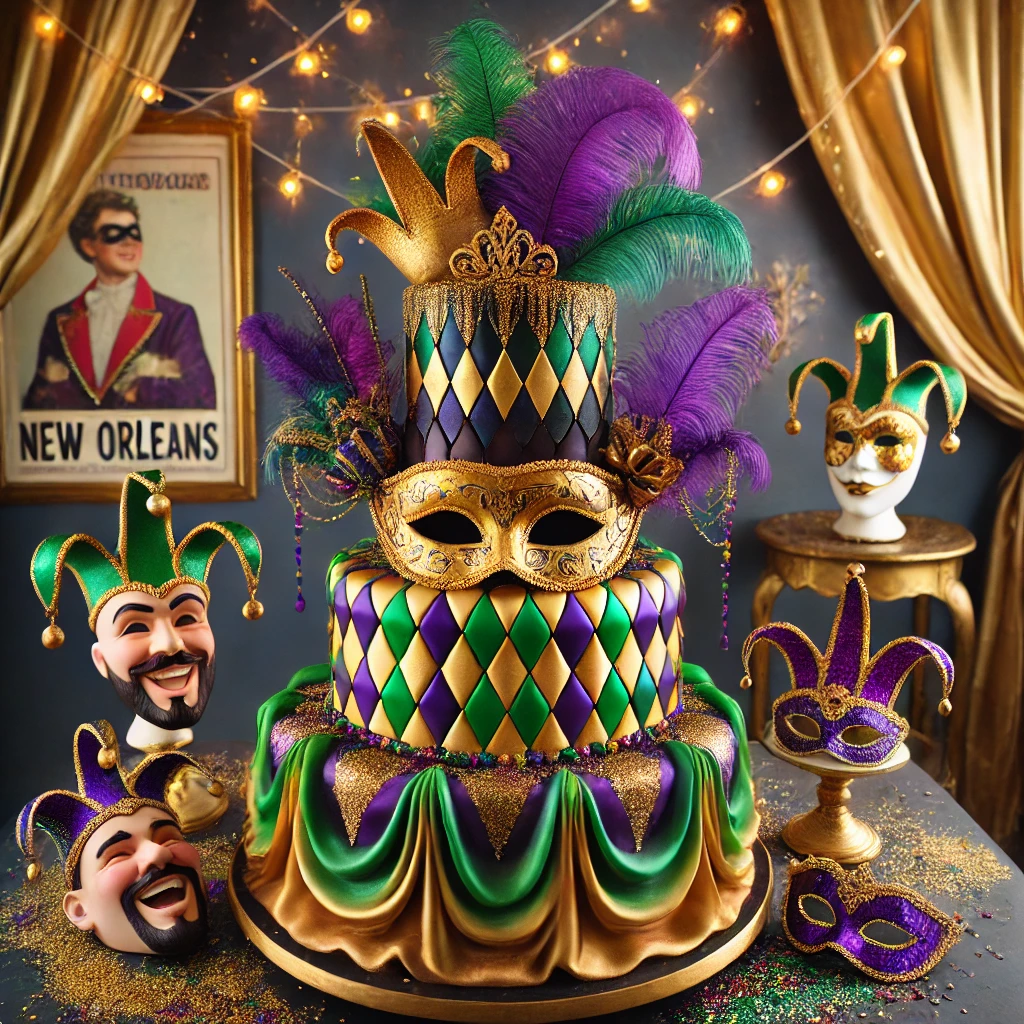
This section is meant to be more than Cake Decorating Ideas… it’s designed to spark inspiration and creativity, awaken tradition, and infuse your special occasions with style, identity, and atmosphere. A color palette becomes a theme. A design becomes a mood. Simple details—like sugared holly leaves or shimmering stars—can set the tone for a gathering and become part of cherished traditions and lasting memories melded with personal touch and love.

Traditional Mardi Gras Dishes

Traditional Mardi Gras Foods
🇺🇸 New Orleans (Louisiana Creole/Cajun Traditions)
🍰 1. King Cake
  • The most iconic Mardi Gras food.
  • A sweet, ring-shaped brioche or cinnamon roll-style pastry.
  • Topped with icing and colored sugar: purple (justice), green (faith), gold (power).
  • Often contains a hidden baby figurine—whoever finds it hosts the next party or buys the next cake.
🥘 2. Gumbo
  • A rich stew made with roux, vegetables (the “holy trinity”: onion, celery, bell pepper), and meats or seafood.
  • Often includes sausage, chicken, shrimp, or crab.
🍤 3. Jambalaya
  • A spiced rice dish cooked with meat, seafood, vegetables, and Creole seasonings.
🍛 4. Étouffée
  • A smothered, saucy dish usually served over rice.
  • Popular with crawfish (crawfish étouffée), shrimp, or crab.
🦐 5. Fried Seafood
  • Fried shrimp, oysters, or catfish—served with remoulade or po’boy-style.
🥖 6. Po’ Boys
  • Classic New Orleans sandwich on French bread, filled with fried shrimp, oysters, or roast beef, and dressed with lettuce, tomato, pickles, and mayo.
🫘 7. Red Beans and Rice
  • A Monday tradition in New Orleans, but commonly served during Mardi Gras week.
  • Cooked with ham hocks or andouille sausage.
🍹 8. Hurricanes & Other Cocktails
  • Fruity and potent, the Hurricane is made with rum, fruit juice, and grenadine.
  • Other favorites: Sazerac, French 75, or classic daiquiris.

🌍 International Mardi Gras / Carnival Foods
🇫🇷 France
🥞 9. Crêpes or Pancakes
  • Eaten on “Shrove Tuesday” (called Mardi Gras in France).
  • Made with butter, eggs, and milk—rich ingredients traditionally forbidden during Lent.
🍩 10. Beignets
  • Deep-fried dough covered in powdered sugar.
  • In New Orleans, they’re a year-round favorite, but especially festive during Carnival.

🇧🇷 Brazil (Carnaval)
🥩 11. Feijoada
  • A rich black bean stew with pork, rice, collard greens, and orange slices.
🧁 12. Brigadeiros
  • Chocolate truffles made with condensed milk, cocoa, and butter.

🇮🇹 Italy
🍩 13. Frittelle / Zeppole / Chiacchiere
  • Fried sweet pastries, often dusted with sugar or filled with cream or custard.

🇩🇪 Germany (Fasching)
🍩 14. Berliner / Krapfen
  • Jelly-filled doughnuts, traditionally eaten on Fat Tuesday (Fetter Dienstag).

🇬🇧 United Kingdom & 🇨🇦 Canada (Shrove Tuesday)
🥞 15. Pancakes with Lemon and Sugar
  • Simple, buttery pancakes made with flour, eggs, and milk, topped with lemon juice and sugar.
Mardi Gras is the last chance to “use up” rich ingredients—like butter, sugar, meat, and eggs—before the Lenten fast. So it’s a celebration of indulgence, flavor, and abundance.

Winter Recipes