











World Day of the Sick

with ORO VALENTIO

Hope that Heals from the Inside Out

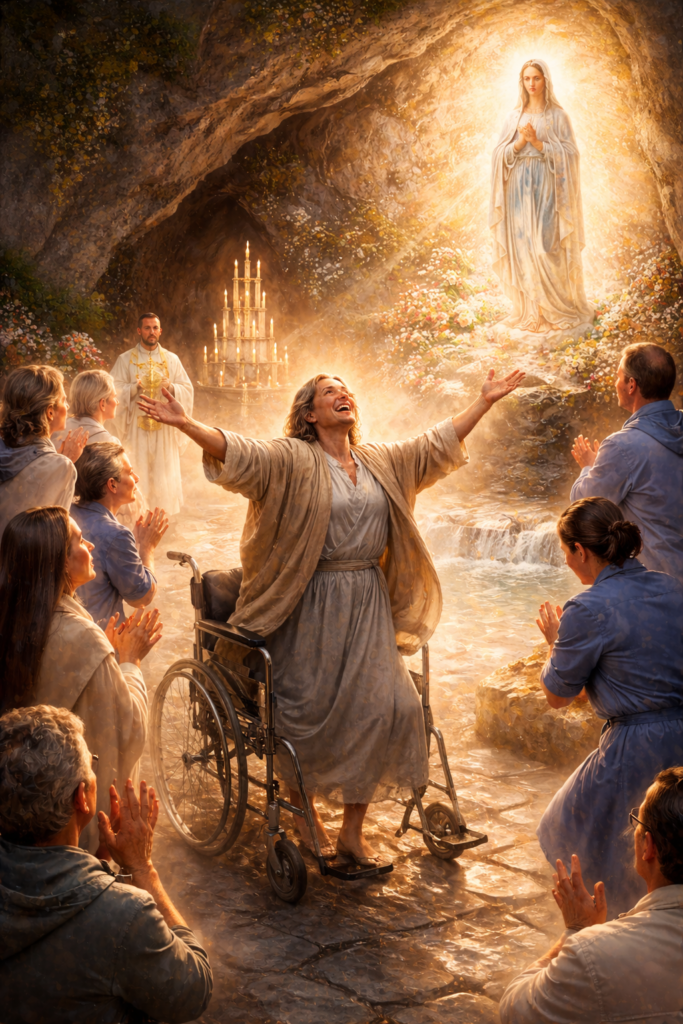
One of the most compelling and rigorously verified healings associated with Our Lady of Lourdes is the case of Antonietta Raco of Italy, a woman who for years suffered from primary lateral sclerosis, a rare, progressive, and incurable neurodegenerative disease that steadily robs the body of movement and control. Her diagnosis was well documented, her decline unmistakable, and her prognosis irreversible by all known medical standards. In 2009, already deeply disabled, she traveled to Lourdes not expecting a cure, but seeking prayer and peace. After entering the spring waters and participating in the rites at the sanctuary, something extraordinary began to unfold: her symptoms gradually disappeared, her strength returned, and her ability to walk and live independently was fully restored—without relapse, without treatment, and without explanation. What followed was not a quick declaration, but sixteen years of exhaustive medical scrutiny by independent physicians, neurologists, and the Lourdes Medical Bureau, who unanimously concluded that her recovery was complete, lasting, and scientifically inexplicable. Only after this prolonged investigation did Church authorities formally recognize the healing as a miracle. What makes this story so arresting is not only the restoration of her body, but the integrity of the process itself: Lourdes does not rush to believe, and very few cases are ever approved. This healing stands as a quiet yet formidable testimony that hope is not naïve, that faith does not reject reason, and that healing—whether physical, spiritual, or both—can still break into the modern world with a force that medicine alone cannot explain.
World Day of the Sick invites the world to pause and look—without fear—at suffering, not as a failure of life, but as a place where love is most urgently needed. It reminds us that illness does not diminish dignity, and weakness does not erase purpose. In the mystery of pain, something deeper is revealed: that healing is not only the restoration of the body, but the strengthening of the soul, the quiet renewal of hope, and the rediscovery of meaning even when answers are incomplete. This day calls families, caregivers, communities, and the suffering themselves into a shared human truth—that no one is meant to carry pain alone.
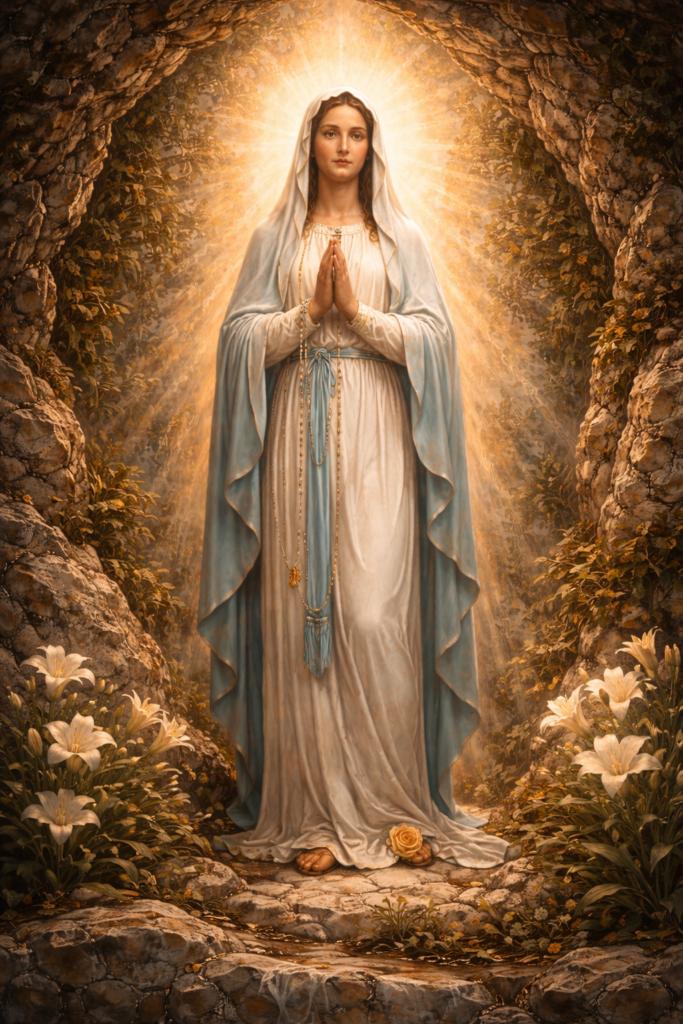
This hope finds a radiant expression in Our Lady of Lourdes, who appeared not in splendor to the powerful, but in gentleness to the humble, offering presence rather than explanation. Lourdes has become a living symbol of interior healing: a place where many come seeking physical cure, yet leave transformed in heart—strengthened by prayer, humility, and trust. There, healing is understood not as escape from suffering, but as grace that flows through it, restoring courage, peace, and the will to love again. World Day of the Sick draws from this same wellspring of hope, proclaiming that even when the body is frail, the human spirit can be renewed; even when the road is heavy, compassion can lift; and even when cure is not given, healing is never withheld. In this light, suffering becomes a place where hope takes root—not shallow optimism, but a steady confidence that love remains present, active, and victorious from the inside out.
World Day of the Sick is closely linked to Our Lady of Lourdes because Lourdes became a living sign that God draws especially near to those who suffer. When the day was instituted by Pope Saint John Paul II, it was deliberately placed near February 11, the feast of Our Lady of Lourdes, to anchor care for the sick not merely in medicine or sympathy, but in hope rooted in presence, dignity, and compassion.
Lourdes revealed something essential: that illness is not a spiritual failure, and weakness is not a sign of abandonment. The countless pilgrims who come to Lourdes—many seeking healing, many simply seeking peace—show that the deepest healing often occurs within, even when the body remains fragile. World Day of the Sick carries this same message to the whole world. It reminds us that the sick are not on the margins of life or faith, but at its heart; that caregiving is a sacred vocation; and that suffering, when met with love, can become a place of profound grace. In this way, Lourdes did not just inspire a feast or a shrine—it helped shape a global day that proclaims a quiet but powerful truth: no one who suffers is forgotten, unseen, or without hope.

The Most Powerful Force in Human History is Sacrifice United with Prayer

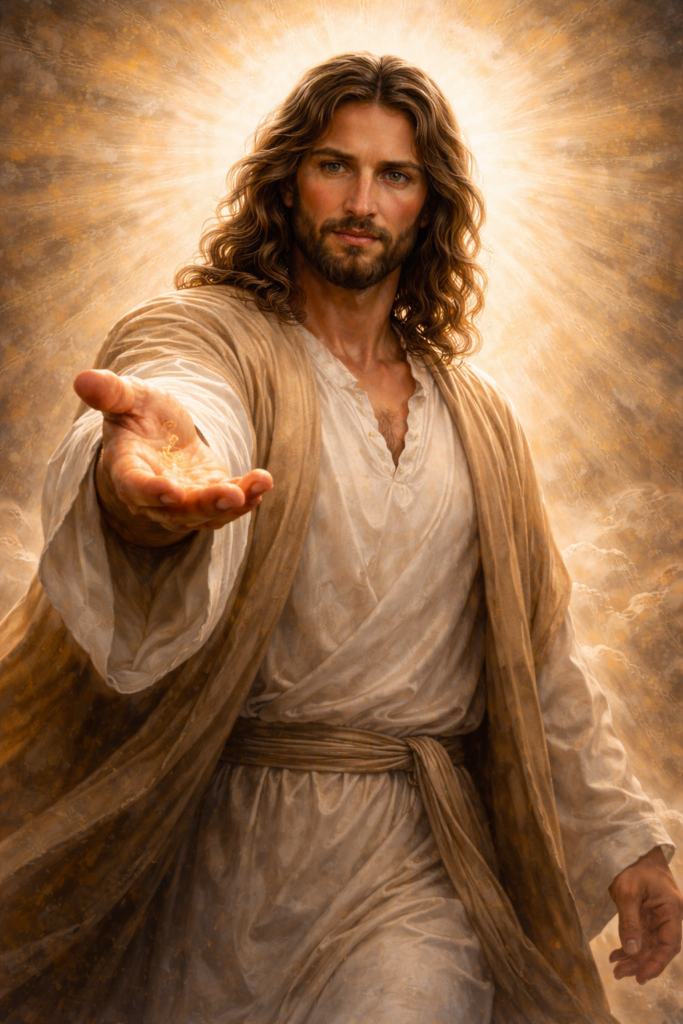
Saint John Paul II gave voice to one of the most piercing truths of the Christian vision when he taught that the most powerful force in human history is sacrifice united with prayer. In this light, Christ’s valuation of suffering becomes unmistakably clear. Suffering, by itself, can crush the human spirit—but when freely offered and lifted in prayer, it becomes an instrument that reshapes history from within. In Jesus Christ, sacrifice and prayer are inseparable: the cross is both total self-gift and total communion with the Father. Christ does not merely endure pain; He offers it, transforming suffering into a deliberate act of love that redeems rather than destroys. Saint John Paul II, who himself carried visible suffering to the world stage, understood that prayer gives suffering direction, and sacrifice gives prayer weight. Together, they become a force stronger than violence, more enduring than power, and more transformative than any human strategy. This union preserves dignity in weakness, releases grace where strength fails, and allows even hidden pain to participate in the saving work of God. In Christ, and through this teaching, suffering is no longer a dead end—it becomes a place where love acts, prayer speaks, and history quietly bends toward redemption.

The story of Our Lady of Lourdes unfolds with a quiet power that has echoed across centuries, precisely because it begins in obscurity rather than grandeur. In 1858, in the small French town of Lourdes, the Virgin Mary appeared not to a scholar, noble, or authority, but to a poor, uneducated young girl—Saint Bernadette Soubirous—at a rocky grotto known as Massabielle. Mary came without spectacle, asking for prayer, humility, and trust, and identifying herself with the mysterious words, “I am the Immaculate Conception,” spoken long before Bernadette could have understood their theological weight. From the earth beneath that humble cave, a spring was revealed—one that continues to flow to this day and has become a sign of God’s mercy touching human fragility. Yet the true miracle of Lourdes has never been limited to physical cures alone; it is the interior transformation of millions who arrive burdened by illness, grief, or doubt and leave strengthened by peace, courage, and hope. Lourdes stands as a living testimony that heaven meets humanity not where it is powerful, but where it is wounded—and that healing, whether of body or soul, begins when love is received with trust.

World Day of the Sick Traditions to Make Your Own

Since the first apparitions of Our Lady of Lourdes in 1858, thousands of healing claims have been reported at the Sanctuary of Lourdes — more than 7,000 cases of people experiencing unexpected recoveries after praying or bathing in the spring waters. But what makes Lourdes truly remarkable is the rigorous scrutiny given to these claims. Out of those thousands of reports, only about 72 have been formally recognised by the Catholic Church as medically inexplicable miracles — meaning they were complete, lasting, and could not be explained by current medical science after exhaustive investigation. This small number in comparison to the total reflects how seriously the Church approaches claims of miraculous healing: a dedicated Medical Bureau at Lourdes examines each case with strict criteria, and only a tiny fraction meet the standard to be declared miraculous. The fact that only a few dozen cases have passed this high bar, despite centuries of pilgrimage and modern medical evaluation, gives profound weight to the belief that healing at Lourdes is not a simple placebo, chance, or misdiagnosis, but — for those recognised — a genuine event that stands outside the known laws of nature.
  • Prayer for the Sick
    Special prayers are offered for those suffering from illness, chronic pain, disability, or emotional distress, emphasizing dignity, hope, and accompaniment rather than cure alone.
  • Anointing of the Sick
    Many churches celebrate the Sacrament of the Anointing of the Sick on this day, reminding the faithful that God’s grace strengthens both body and soul in times of illness.
  • Masses Dedicated to the Sick and Caregivers
    Liturgies focus on Christ the healer and honor doctors, nurses, caregivers, chaplains, and family members who serve the sick with compassion.
  • Marian Devotion, Especially to Our Lady of Lourdes
    Rosaries, Marian prayers, and processions are often offered, invoking Mary’s maternal care and presence with those who suffer.
  • Lighting Candles for Healing and Hope
    Candles are lit for the sick, symbolizing prayer carried into the darkness and trust in God’s abiding presence.
  • Pilgrimages to Lourdes or Local Shrines
    While many travel to Lourdes itself, others make spiritual or local pilgrimages, uniting themselves in prayer with those who cannot travel.
  • Acts of Compassion and Service
    Visiting the sick, writing letters, providing meals, or offering practical help are encouraged as concrete expressions of solidarity.
  • Blessing of the Sick and the Vulnerable
    Clergy often offer special blessings for those who are ill, elderly, or facing medical uncertainty.
  • Reflection on Redemptive Suffering
    Teachings and reflections emphasize that suffering, when united with prayer and love, has meaning and spiritual fruit—even when healing does not come in the expected way.
  • Public Awareness of Human Dignity
    The day calls attention to ethical care, respect for life, and the moral responsibility to protect and honor the vulnerable.

No one who suffers is forgotten, unseen, or without hope

May the gentle presence of Our Lady of Lourdes draw near to all who suffer today, gathering every weakness into the strength of prayer and every sacrifice into the mercy of God.
May those who are ill discover that their suffering, when offered in love, is not fruitless but profoundly powerful; may those who care for them be renewed in compassion, knowing that no act of self-gift is ever small or unseen.
And may the God who meets humanity most intimately in weakness transform pain into prayer, prayer into hope, and hope into a quiet force capable of healing hearts, sustaining courage, and bending history toward love—today, and always.

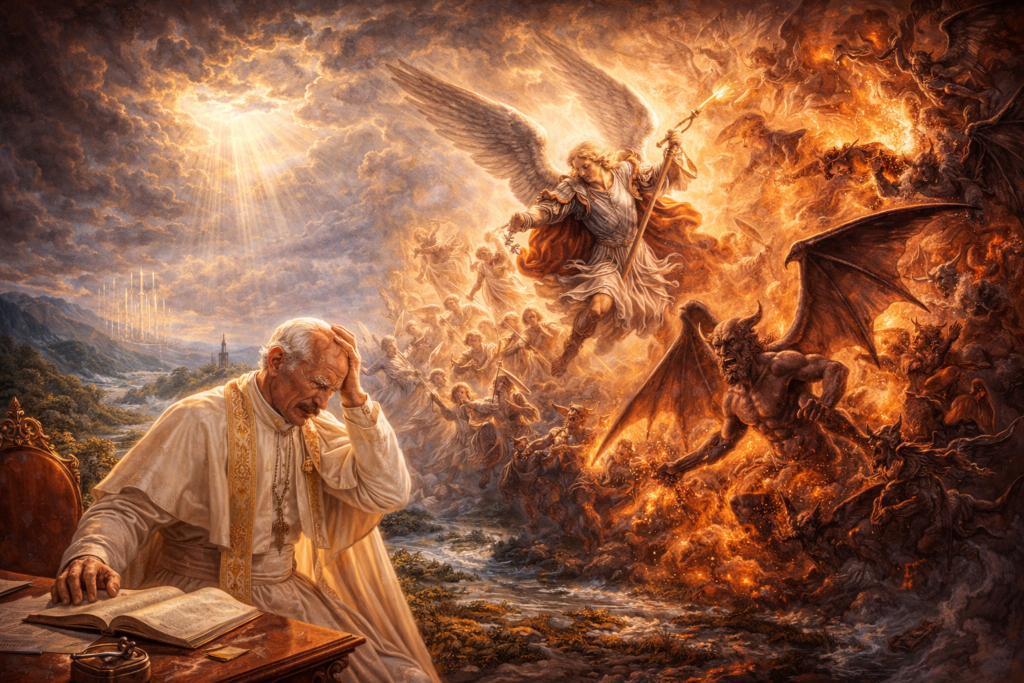
World Day of the Sick reaches far beyond the visible wounds of the body to acknowledge a deeper, often unspoken reality: that human suffering is not only physical, but also spiritual, and that the soul, too, can be wounded, oppressed, and in need of healing. Exorcists such as Fr. Chad Ripperger and Fr. Gabriele Amorth have long emphasized that spiritual affliction—born of despair, sin, trauma, fear, or deception—can weaken the human person just as profoundly as disease weakens the body. This understanding echoes the sobering vision of Pope Leo XIII, who, after witnessing a terrifying glimpse of Satan roaming the earth seeking the ruin of souls, gave the Church the Prayer to Saint Michael as a shield for a world under spiritual assault. World Day of the Sick implicitly embraces this fuller vision of healing: that Christ comes not only to cure illnesses, but to restore freedom where darkness binds, clarity where confusion reigns, and hope where despair has taken root. It affirms that liberation from spiritual oppression, strengthening against evil, and the quiet healing of wounded consciences are as real—and as necessary—as the healing of flesh. In this light, the day becomes a proclamation that no form of suffering is invisible to God, and that true healing is always holistic: body, mind, and soul drawn back into light, truth, and peace.

Prayer to Saint Michael the Archangel

Saint Michael the Archangel,
defend us in battle.
Be our protection against the wickedness and snares of the devil.
May God rebuke him, we humbly pray,
and do thou, O Prince of the heavenly hosts,
by the power of God,
cast into hell Satan,
and all the evil spirits
who prowl about the world
seeking the ruin of souls.
Amen.

Traditional Dishes for World Day of the Sick

Foods Traditionally Associated with World Day of the Sick
Simple, Nourishing Meals
Because the day centers on the ill and the vulnerable, meals are often soft, warm, and easy to digest:
  • Soups and broths (chicken, vegetable, bone broth)
  • Stews with tender vegetables and meats
  • Soft breads or rolls
  • Rice or porridge-style dishes
These reflect care, restoration, and attentiveness to physical weakness.

Foods Shared With or Prepared For the Sick
A core tradition is bringing food to others, rather than focusing on one’s own table:
  • Homemade soups delivered to the ill or elderly
  • Light casseroles or baked dishes meant to nourish
  • Warm drinks such as herbal teas or milk
The act of preparing food becomes an expression of prayer and solidarity.

Bread and Water (Symbolic Simplicity)
In many communities, especially those inspired by Our Lady of Lourdes, meals remain deliberately simple:
  • Plain bread
  • Water or diluted juice
This mirrors the humility of Lourdes itself and recalls dependence on God rather than abundance.

French-Inspired Simple Fare (Cultural Influence of Lourdes)
In places closely tied to Lourdes, especially in France:
  • Rustic country breads
  • Simple vegetable soups
  • Mild cheeses
  • Light fish dishes
Nothing elaborate—just honest, sustaining food.

Foods Avoided
Because of the day’s reflective nature, people often avoid:
  • Rich desserts
  • Heavy feasting
  • Alcohol-centered meals
The tone is gentle, not celebratory.

The Deeper Meaning
World Day of the Sick is not about a particular dish, but about how food is offered. Meals become acts of mercy. Eating becomes mindful. Nourishment becomes prayer. The simplicity of the table reflects the truth the day proclaims: that healing often begins not with abundance, but with care; not with indulgence, but with presence.

Winter Recipes