




















Holy Thursday

with ORO VALENTIO

Love Given to the End

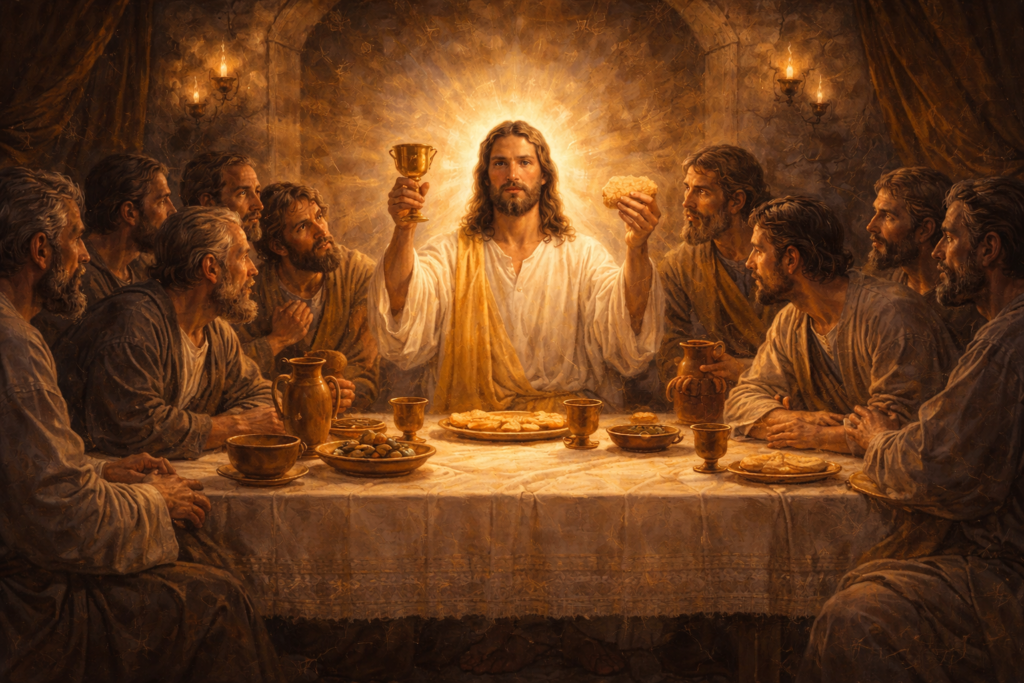
At the Last Supper, Jesus Christ does something more daring than predicting suffering—He gives Himself in advance of it. Knowing that betrayal is already in motion and that abandonment is hours away, He chooses not distance but intimacy, not self-protection but self-gift. He places bread into human hands and calls it His body; He offers wine and names it His blood—binding divine love forever to the ordinary elements of human hunger and need. In that moment, time folds inward: sacrifice is offered before it is endured, forgiveness is extended before it is asked for, and love is given without conditions or guarantees of return. The Last Supper reveals a God who does not wait to be understood before loving, nor withdraw when love will cost everything. It teaches that communion is born not from perfection, but from presence—that God meets humanity not after it has proven faithful, but while it is still capable of failing. And in that quiet room, on the eve of the cross, love establishes its most enduring truth: that it will remain, give, and nourish even when the night closes in.
Holy Thursday stands at the threshold of the Paschal mystery, where love is no longer spoken about, but enacted—deliberately, visibly, and without reserve. On this night, Jesus Christ gathers with His disciples knowing fully what awaits Him, and yet He chooses not withdrawal, but intimacy. He gives Himself first as bread and wine, establishing the Eucharist as a perpetual act of self-gift, a living reminder that God does not remain distant from human hunger, weakness, or need. In the Upper Room, heaven bends low, and divine power reveals itself not through force, but through surrender.
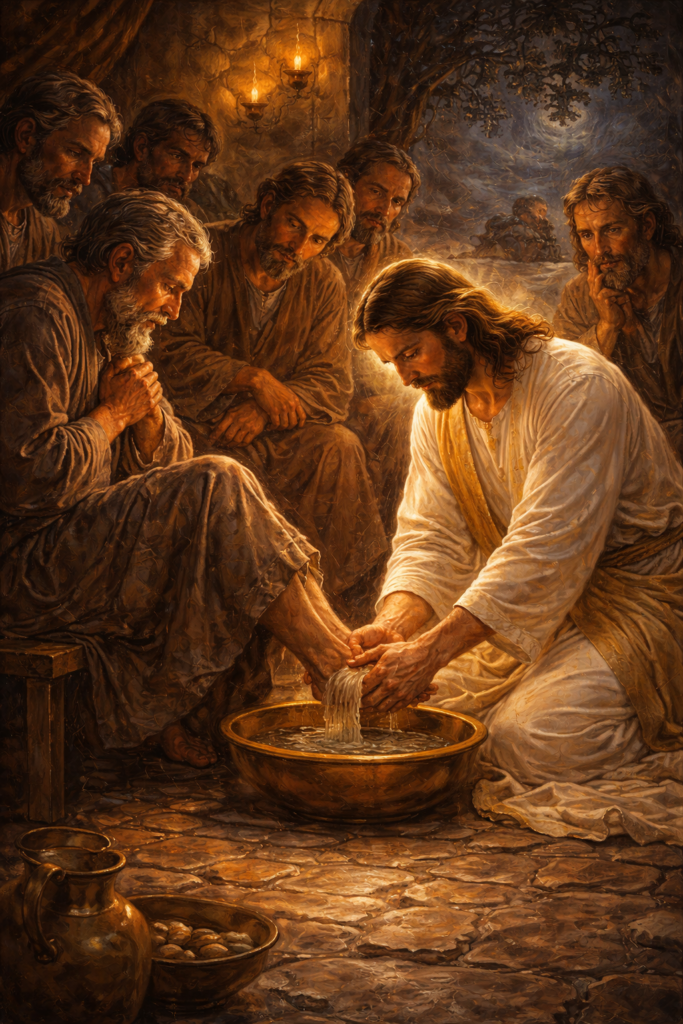
Holy Thursday also overturns every instinct of domination and pride. Christ, Teacher and Lord, kneels to wash the feet of His disciples—including those who will deny Him, abandon Him, and betray Him. This is not symbolic humility; it is a command written in action. Authority is redefined as service. Greatness is measured by willingness to love without condition. On this night, the Church learns that it cannot separate worship from mercy, or prayer from self-giving love.
Yet Holy Thursday carries a quiet ache. After the meal, Christ enters the Garden of Gethsemane, where communion gives way to solitude and resolve is tested by anguish. He asks His friends to stay awake, to keep watch—but they sleep. The contrast is piercing: God remains faithful even when humanity falters. Holy Thursday teaches that love does not retreat when it is not returned; it remains, prays, and endures.
This day invites reflection not only on what Christ instituted, but on what He asks in return. Holy Thursday calls each person to a life shaped by Eucharistic love—received with gratitude, lived through service, and sustained by prayer in the hours of darkness. It is the night that reveals the heart of Christianity: a God who loves first, loves fully, and loves all the way to the end.

The Most Painful Human Suffering without Anesthesia

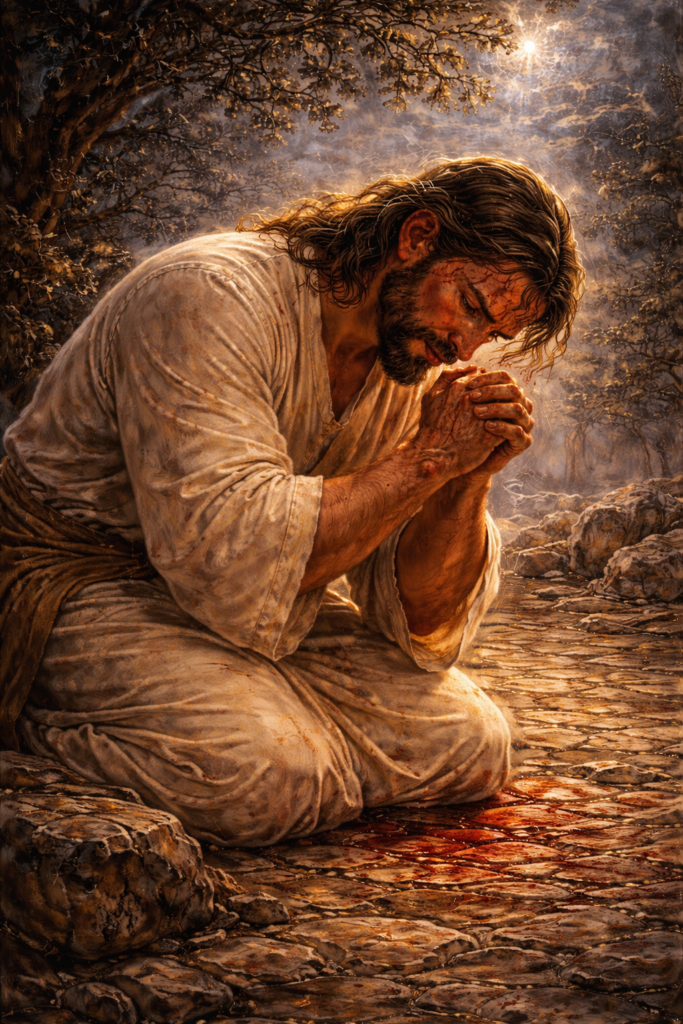
In the Garden of Gethsemane, the agony of Jesus Christ reached a depth that touched both body and soul, and the Gospel account that He “sweat blood” is not poetic exaggeration but a real, medically recognized phenomenon known as hematidrosis. Under extreme psychological and emotional stress, the capillaries surrounding the sweat glands can rupture, causing blood to mix with sweat and seep through the skin. This condition is rare, and it signals suffering of the most intense kind—anguish so severe that the body itself begins to break under the weight of what the soul is bearing. Christ’s blood was already being poured out before a single lash, nail, or thorn touched Him.
Yet the physical suffering, profound as it was, flowed from a far deeper torment. In Gethsemane, Christ stood at the intersection of perfect love and perfect knowledge. He foresaw every soul His sacrifice would make possible to save—and also every soul who would still refuse mercy, reject truth, and choose separation over communion. The agony was not fear of pain alone; it was the anguish of love freely given and freely refused. He knew that His suffering would be sufficient for all, yet effective only for those who would receive it. Every sin, every rejection, every cold indifference pressed upon His heart at once, not as abstraction, but as personal grief. This is why His prayer is so stark, so human, so raw: the will to save every soul burning against the reality of human freedom.
In that moment, Christ did not turn away. He did not withhold Himself because love would be rejected. He accepted the cup fully, choosing obedience not because it would succeed universally, but because love does not calculate outcomes—it gives itself completely. Gethsemane reveals the terrible cost of mercy: that God allows Himself to be wounded by human freedom rather than violate it. The blood that fell in the garden testifies to this truth—that salvation was not achieved cheaply or abstractly, but through a love that entered anguish knowingly, willingly, and alone, so that no soul could ever say they were unloved, unconsidered, or unknown.
This interior suffering reaches its final articulation on the cross in Christ’s cry, “My God, my God, why have you abandoned me?” Far from being a loss of faith, this cry deliberately echoes Psalm 22, a prayer that begins in desolation but ends in trust and vindication. Yet the experience named in the words is real: Christ allows Himself to feel the full darkness that sin produces—the silence, the distance, the sense of abandonment that humanity knows when cut off from God. He does this without ceasing to be united to the Father, but by permitting that unity to be stripped of all felt consolation. He enters even that abyss so that no human being could ever suffer it alone.
The blood in the garden, the acceptance of the cup, and the cry from the cross form a single movement of love. Christ does not bypass guilt, judgment, or consequence; He absorbs them. He does not deny the seriousness of sin; He reveals it by paying its cost Himself. And He does this not because the Father demands suffering for its own sake, but because love chooses to repair what it loves, even when the repair requires passing through darkness. Gethsemane and Calvary are not moments of divine failure, but the most radical expression of mercy: God bearing, in His own flesh and soul, what would otherwise have borne humanity apart forever.
The sweating of blood in Gethsemane is not explained only by fear of physical pain. In the Gospel vision, Jesus Christ enters into a uniquely interior suffering: He freely accepts the full weight of human sin and its consequences in order to heal what humanity could not heal on its own. Sin is not merely the breaking of a rule; it is a rupture of communion with God. Because God is infinite, the disorder introduced by sin exceeds what any finite human act of reparation could restore. This is why Christian theology holds that only God could repair the offense—yet only a human could rightly offer the obedience that was withheld. In Christ, both are united. In Gethsemane, Christ stands at the moment where this burden is consciously embraced. He does not become a sinner, nor does the Father “see Him as guilty” in a moral sense—but He takes upon Himself the real weight, ugliness, shame, and separation that sin produces, allowing it to press fully upon His human soul. Love, when it is perfect, suffers most intensely at the sight of what destroys the beloved. The anguish is so extreme that it manifests physically as hematidrosis: the body responding to a soul under unbearable strain. This is not divine weakness—it is divine love fully consenting to enter the deepest and most painful human suffering without anesthesia.

Holy Thursday Traditions to Make Your Own

  • Mass of the Lord’s Supper
    The central liturgy of Holy Thursday, commemorating the institution of the Eucharist and the priesthood by Jesus Christ at the Last Supper.
  • Washing of Feet (Mandatum)
    A reenactment of Christ washing His disciples’ feet, emphasizing humility, service, and love expressed through action rather than status.
  • Reception of the Eucharist
    The faithful receive Communion with special focus on the Eucharist as Christ’s living self-gift and abiding presence.
  • Transfer of the Blessed Sacrament
    After Mass, the Eucharist is solemnly carried to a place of repose, recalling Christ’s movement to the Garden of Gethsemane.
  • Adoration at the Altar of Repose
    Silent prayer and watchfulness, echoing Christ’s request to His disciples to “remain here and keep watch with me.”
  • Stripping of the Altar
    Altars are cleared and left bare, symbolizing Christ’s abandonment, humiliation, and the coming Passion.
  • Silence of Bells and Instruments
    Church bells and joyful music cease until the Easter Vigil, marking the Church’s entry into the Passion.
  • Family or Community Meals
    Many households share a simple meal together, recalling the intimacy of the Last Supper and the importance of shared presence.
  • Acts of Charity and Service
    Intentional service to others—especially the poor, sick, or marginalized—embodying Christ’s command to love through action.
  • Reflection on the Agony in the Garden
    Personal prayer or Scripture reading focusing on Christ’s obedience, trust, and surrender to the Father’s will.

The Heart of Holy Thursday
Holy Thursday is not only remembered—it is entered. Its traditions teach that love is made real through humility, that authority is fulfilled in service, and that hope begins not after sacrifice, but within it.
When Jesus Christ knelt to wash the feet of His disciples, He overturned the deepest assumptions of power the world has ever held. This was not a symbolic gesture performed for effect, but a deliberate descent into the lowest place—touching dust, fatigue, and vulnerability with reverent hands. In that moment, God redefined authority as service and greatness as love willing to be humiliated for the sake of another. Christ washed the feet of those who would soon flee, deny, and betray Him, revealing that love does not wait for worthiness, nor withdraw when it foresees failure. The act teaches that true holiness is not distance from human messiness, but presence within it; not control over others, but care for them. Foot-washing becomes a sacrament of humility, a command written in action: that anyone who would follow Christ must be willing to kneel, to serve without recognition, and to love without conditions. In lowering Himself, Christ lifts humanity, showing that the path to transformation does not rise through domination, but descends through mercy—and that only love willing to stoop can truly heal the world.

The Source of Strength, Peace, & Confidence

May the love of Jesus Christ, revealed so fully on this holy night, dwell within you as a source of strength, peace, and confidence.
May His humble service teach you the freedom of love given without fear, and His self-gift remind you that every act of generosity participates in a victory already unfolding.
As you remember this night, may your heart be filled with trust—that love freely offered is never wasted, obedience is never unseen, and God is always bringing new life forth, even before the dawn is visible.

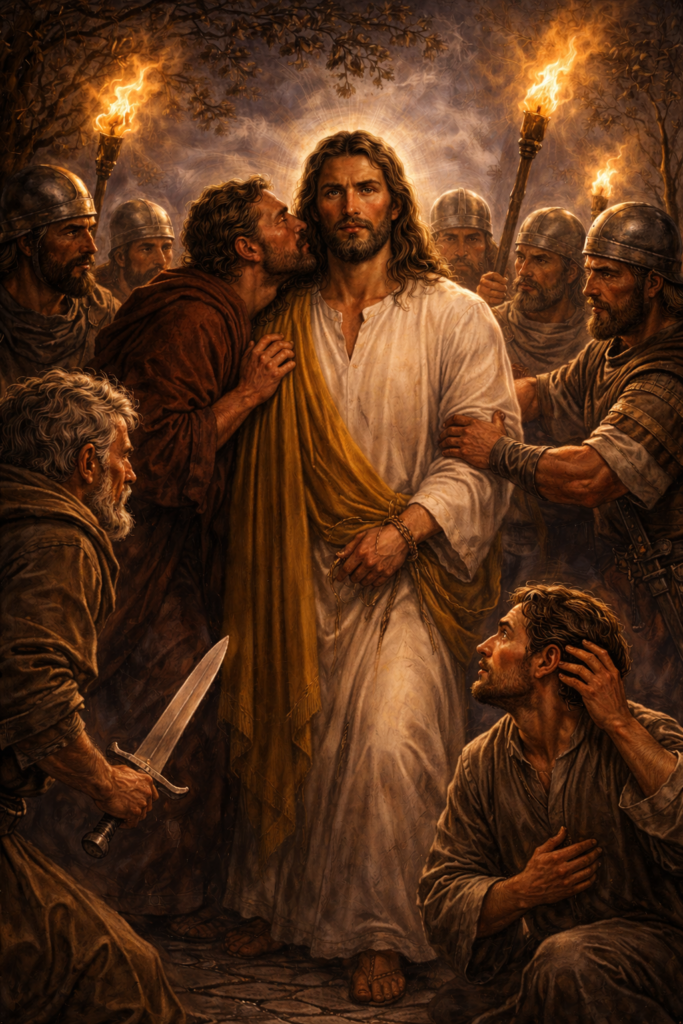
When the moment of arrest came in the darkness of that night, Jesus Christ was not seized against His will—He gave Himself freely. The Gospels are deliberate in showing this: He steps forward, names Himself openly, and when violence erupts in His defense, He stops it at once. Even in the instant of betrayal, He heals—the wounded ear of the servant struck by the sword—offering mercy to an enemy while surrendering Himself to injustice. This is not the failure of His mission, but its deliberate unfolding. Nothing happens by accident; everything proceeds by consent. Christ allows Himself to be bound, led away, and subjected to a brutal night of mockery, interrogation, and imprisonment, knowing fully what dawn will bring. He does not flee suffering, nor resist those who inflict it, because love does not retreat when the cost becomes unbearable. Divine authority is revealed here not as domination, but as the strength to endure freely chosen sacrifice. Humanity reaches out to seize God, and God responds by placing Himself completely into human hands—walking willingly into the darkness so that no suffering, no injustice, and no night of fear would ever be endured alone.

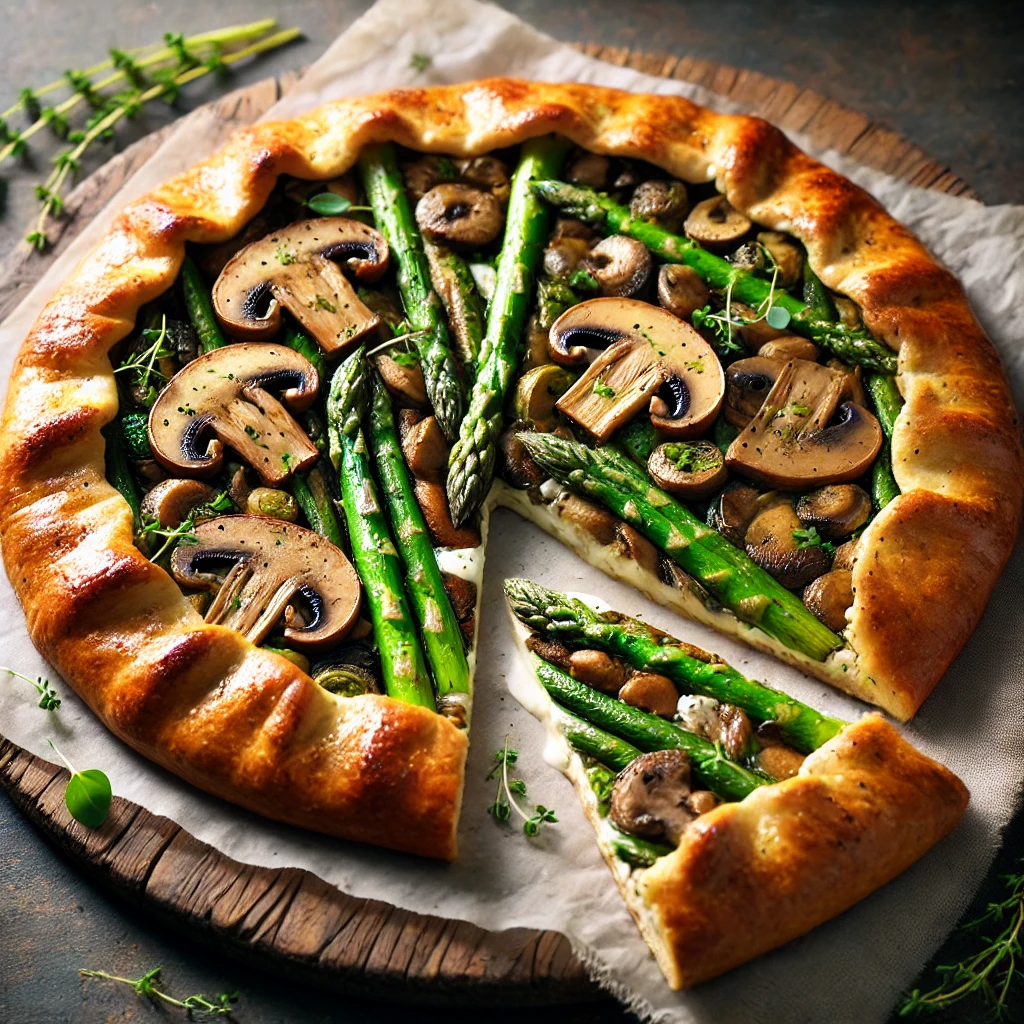
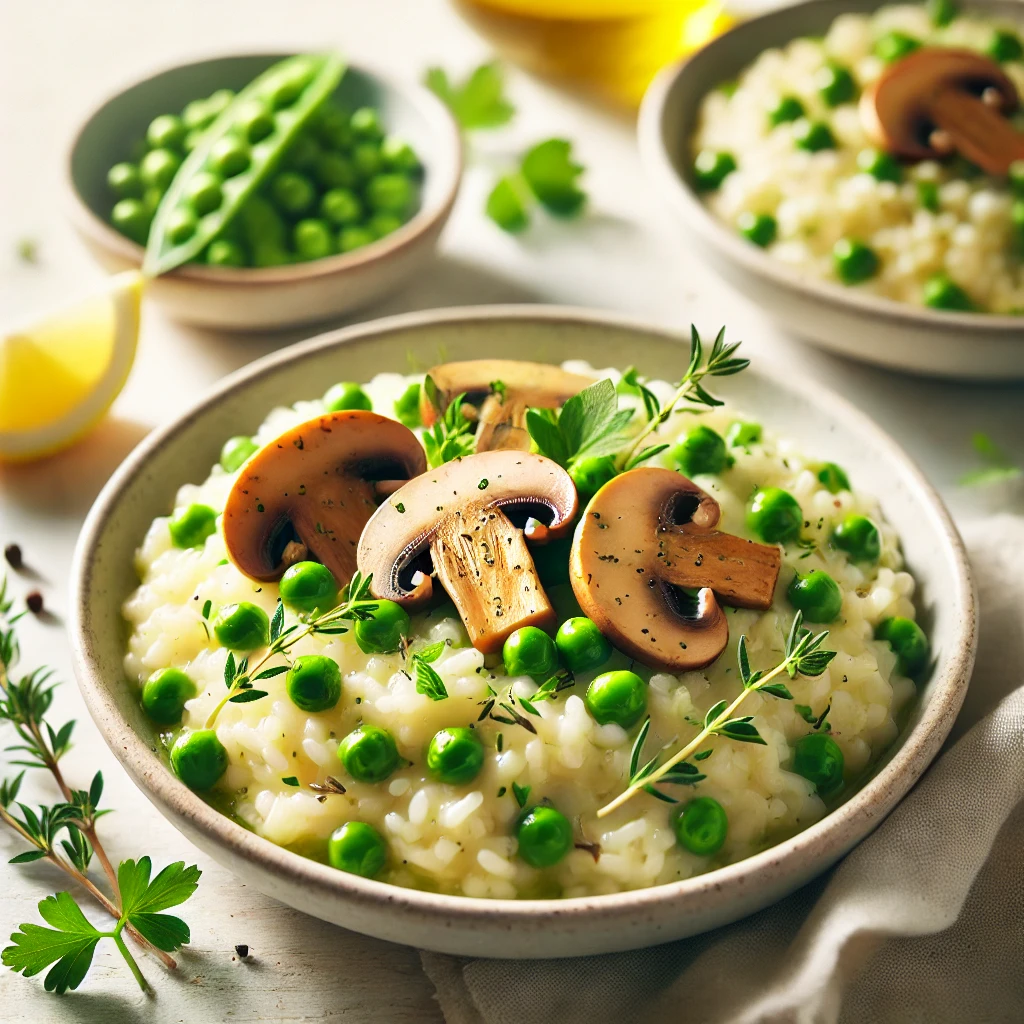
Traditional Holy Thursday Dishes

Foods Traditionally Eaten on Holy Thursday
Bread
  • Unleavened bread or simple loaves are common, recalling the bread blessed and shared by Jesus Christ at the Last Supper.
  • In some households, bread is baked intentionally plain, emphasizing sustenance over indulgence.

Wine or Grape Juice
  • Wine is traditionally associated with the Eucharist and the institution of the New Covenant.
  • In homes, this may be symbolically acknowledged with grape juice or wine at a shared meal.

Simple Meals (Often Meatless)
  • Many cultures favor meatless dishes, anticipating Good Friday fasting:
    • Vegetable soups or broths
    • Lentils or beans
    • Rice dishes
    • Stewed vegetables

Bitter Herbs
  • In continuity with the Passover meal:
    • Horseradish, bitter greens, or herbs recall both suffering and deliverance.
  • These foods quietly connect Holy Thursday to the Jewish roots of the Last Supper.

Cheese, Eggs, and Dairy (In Some Traditions)
  • In parts of Europe, dairy foods appear on Holy Thursday before abstinence intensifies:
    • Fresh cheeses
    • Eggs prepared simply

Symbolic Regional Breads
  • Italy: Simple olive-oil breads or focaccia without embellishment
  • Germany & Central Europe: Plain rolls or herb breads
  • Latin cultures: Light fish dishes or vegetable stews

Foods Shared in Charity
  • A longstanding tradition is preparing food for others:
    • Giving bread or soup to the poor
    • Sharing meals with neighbors or the lonely

Foods Traditionally Avoided
  • Rich desserts
  • Elaborate feasts
  • Alcohol-centered meals
  • Excess or luxury foods
The restraint is intentional: Holy Thursday is intimate, not indulgent.

The Meaning Behind the Table
Holy Thursday food traditions are less about what is eaten and more about how and why. Meals become acts of remembrance. Simplicity becomes reverence. Eating together becomes a form of communion. The table mirrors the truth of the night itself: that love is offered quietly, fully, and without display.

Winter Recipes