

































Memorial Day

with ORO VALENTIO

The last Monday of May

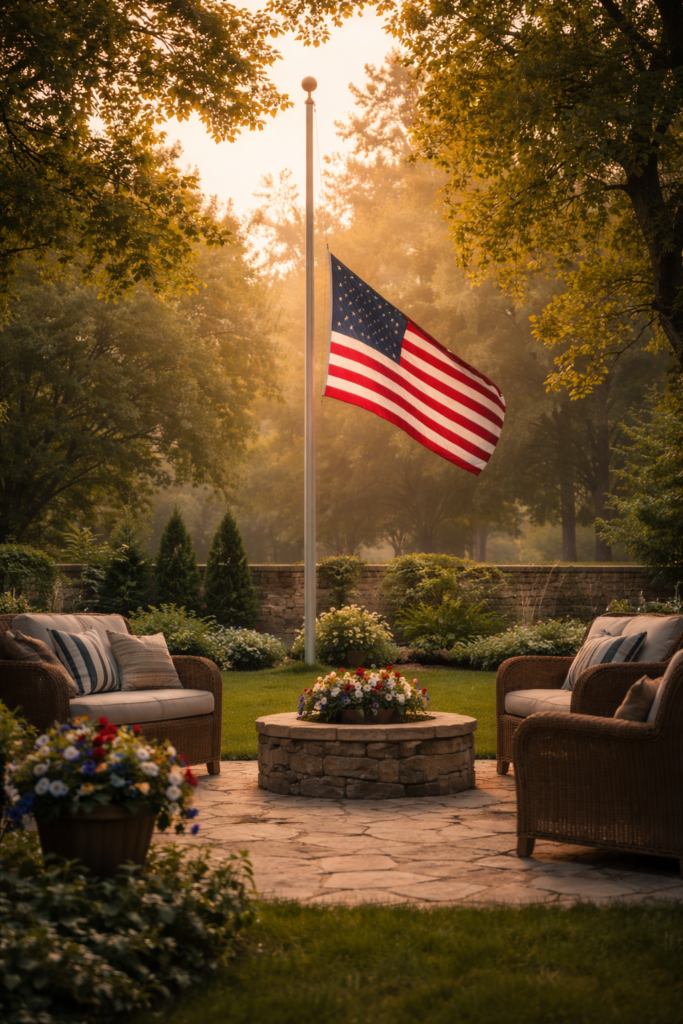
On Memorial Day, the American flag is lowered to half-staff as a solemn and deliberate act of honor—a visual language of reverence that speaks without words. In the early hours of the day, the flag is raised briskly to the top of the pole, symbolizing the strength, valor, and enduring spirit of the nation. Then, it is slowly lowered to half-staff, where it remains until noon. This lowering represents a nation in mourning—a recognition of the lives that were given in service, never to return home. The space above the flag is not empty without meaning; rather, it symbolizes the unseen presence of those who have fallen, a quiet acknowledgment that their sacrifice rises above all. At noon, the flag is raised again to full-staff. This is not a dismissal of remembrance, but a transformation of it. It signifies that while we mourn in the morning, we rise in the afternoon—carrying forward the legacy of those who gave everything. It is a call to live with purpose, to uphold the freedoms secured through sacrifice, and to ensure that their loss was not in vain. In this disciplined movement—from full-staff, to half-staff, and back again—Memorial Day becomes more than a date. It becomes a ritual of alignment: mourning the fallen, honoring their sacrifice, and recommitting to the strength and principles for which they stood.

Memorial Day stands as a solemn and dignified remembrance—a day set apart not merely for reflection, but for reverence. It is a time when the noise of the present quiets, and the enduring weight of sacrifice is brought into focus. Beneath open skies and over fields of rest, we honor those who gave their lives in service to something greater than themselves: the preservation of liberty, the protection of their fellow man, and the enduring strength of a nation forged in conviction.
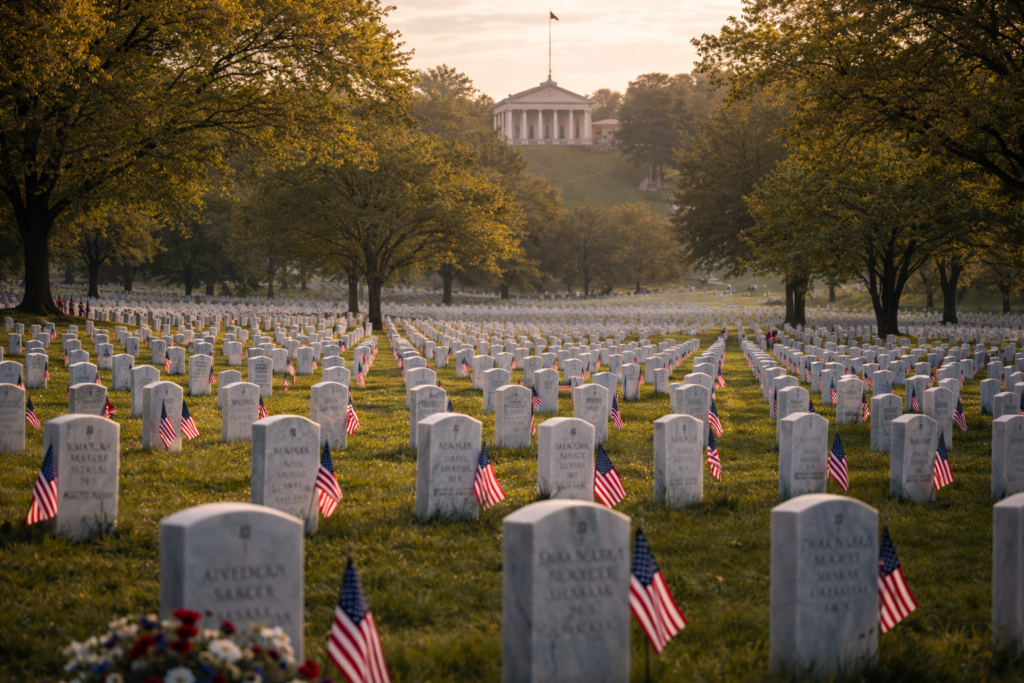
There is a quiet nobility in this remembrance. Flags are raised, not as decoration, but as symbols—each ripple in the wind echoing the lives once lived with courage and resolve. Rows of white markers, aligned with precision, speak without words of unity, discipline, and sacrifice. These are not distant figures of history, but individuals—sons, daughters, brothers—whose absence carved space for the freedoms we now carry.
In the spirit of refined reflection, Memorial Day calls us to more than gratitude—it calls us to alignment. To live well, with purpose and integrity, is to honor those who can no longer do so themselves. It is to recognize that freedom is not self-sustaining; it is upheld through sacrifice, and preserved through character.
Thus, the day becomes not only one of remembrance, but of renewal. A renewal of commitment—to truth, to strength, to the quiet discipline of living a life worthy of what has been given. In this, Memorial Day transcends time. It becomes a bridge between sacrifice and stewardship, reminding us that the highest honor we can offer is not only to remember—but to rise.

Honoring Courage, Sacrifice, and Legacy

Memorial Day is not merely a date on the calendar—it is a consecrated remembrance of sacrifice. It honors the men and women of the United States Armed Forces who gave their lives in service to their country. These are not simply individuals who served; they are those who bore the full cost of that service, laying down their lives so that others might live in freedom.
At its core, Memorial Day celebrates courage expressed in its highest form—the willingness to give everything for a cause beyond oneself. It recognizes the quiet heroism of those who stood in defense of liberty, often in distant lands, under circumstances that demanded strength, resolve, and unwavering commitment.
Yet, this day is not celebratory in the ordinary sense. It is marked by reverence. It is a day to pause, to reflect, and to remember that the freedoms enjoyed today were not freely obtained. They were secured through sacrifice—through lives interrupted, futures surrendered, and families forever changed.
In a refined sense of remembrance, Memorial Day becomes a call to alignment. It asks each of us to live in a way that honors what was given—to pursue truth, to uphold integrity, and to carry forward the strength of those who can no longer stand among us.
Thus, Memorial Day stands as both remembrance and responsibility: to never forget, and to live worthy of the freedom preserved by those who gave all.

Arlington National Cemetery stands as one of the most solemn and revered grounds in the United States—a place where honor is not spoken loudly, but carried quietly across rolling hills of white stone. Spread across hundreds of acres overlooking the nation’s capital, it is the resting place of those who served with courage, duty, and sacrifice. Each headstone, aligned with precision, represents more than a name—it represents a life given in service to something greater. Together, they form a landscape of unity and discipline, where individuality is remembered, yet bound within a greater purpose. The gentle slopes, shaded by enduring trees, create a setting that is both peaceful and profound, inviting reflection rather than spectacle. Above it all, Arlington House watches from its elevated position, a quiet sentinel over the grounds below. From this vantage point, the vastness of sacrifice becomes unmistakable—stretching beyond sight, yet deeply personal in every marker. Arlington is not merely a cemetery; it is a place of living memory. Ceremonies are held, flags are placed, and footsteps soften as visitors move with reverence. Here, time feels different—slowed, weighted, and purposeful. In its stillness, Arlington speaks: not of loss alone, but of legacy. It reminds all who walk its paths that freedom carries a cost, and that the highest honor we can offer is not only to remember—but to live in a way that reflects the sacrifice made on these sacred grounds.

Memorial Day Traditions to Make Your Own

Visiting Cemeteries and Memorials
Families and communities visit places like Arlington National Cemetery to honor the fallen. Graves are often decorated with small American flags, flowers or wreaths, and personal mementos. This act, sometimes called “Decoration Day” (the holiday’s original name), remains one of the most powerful traditions.
The National Moment of Remembrance
At 3:00 PM local time, Americans are encouraged to pause for one minute of silence. This simple act unites the country in a shared moment of reflection, no matter where one is.
Flag Etiquette (Half-Staff)
Flags are flown at half-staff until noon, then raised to full-staff.
  • Morning → mourning the fallen
  • Afternoon → honoring their legacy by continuing forward
Parades and Ceremonies
Many towns hold Memorial Day parades featuring Veterans and active-duty service members, Marching bands, and Honor guards. These events often include speeches, prayers, and ceremonial wreath-laying.
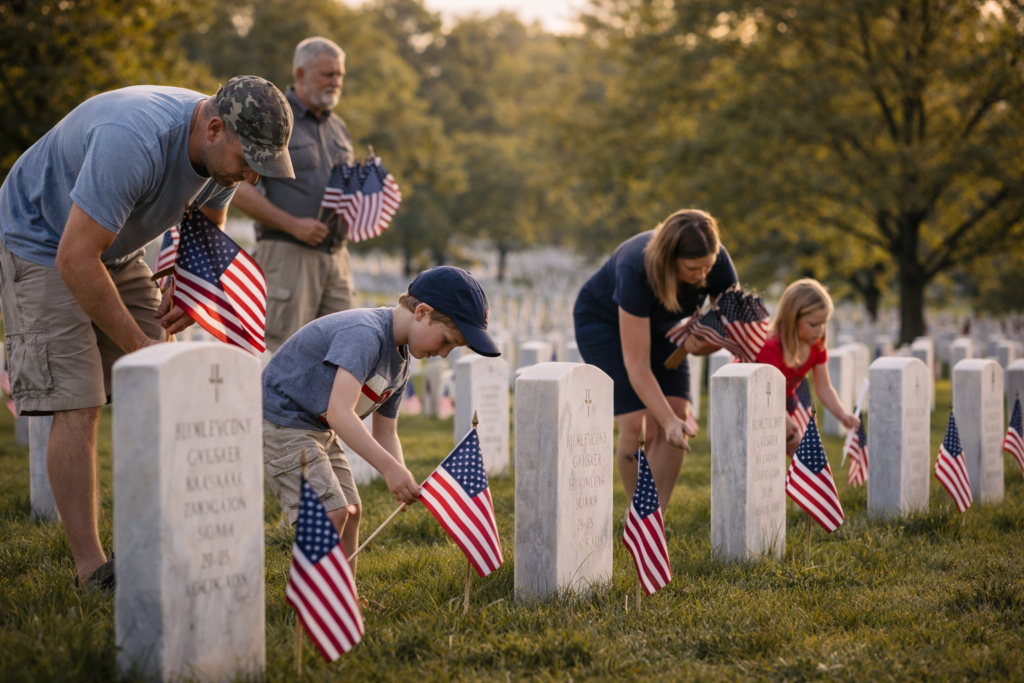
Placing Flags on Graves (Flags In)
Members of the military—especially units like the 3rd U.S. Infantry Regiment—place flags at every grave in national cemeteries.
This tradition is carried out with precision and deep respect.
Family Gatherings and Reflection
While many people gather for barbecues or time outdoors, the deeper tradition includes sharing stories of loved ones who served, teaching younger generations the meaning of the day, and beginning gatherings with a moment of gratitude or prayer.
Wreath-Laying Ceremonies
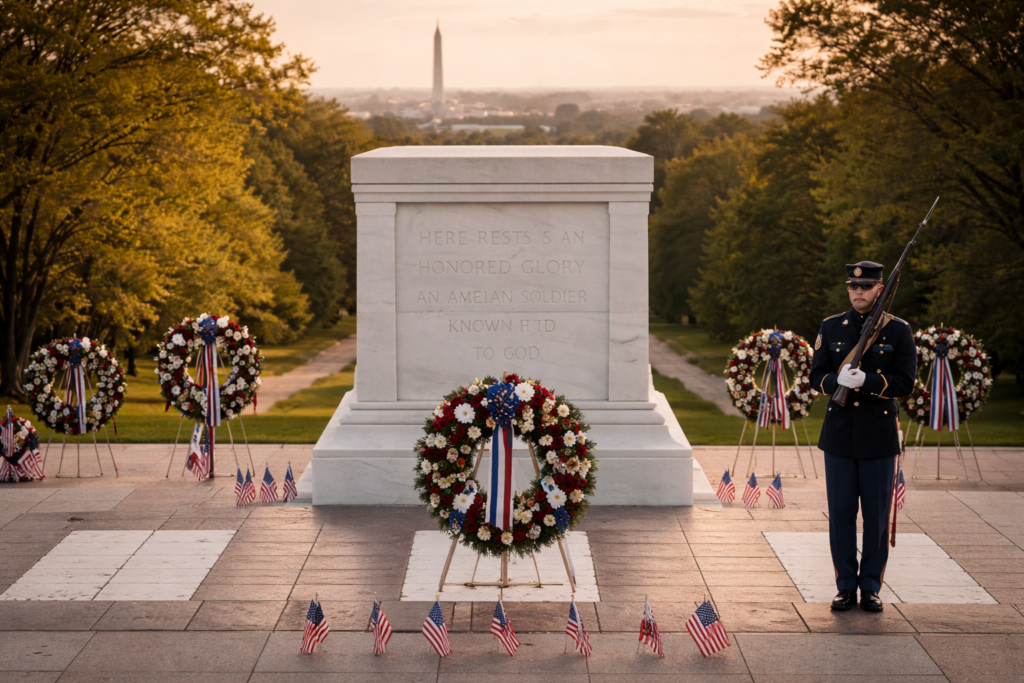
At sites like the Tomb of the Unknown Soldier, formal ceremonies are held where wreaths are placed to honor those who were never identified but never forgotten.
The Tomb of the Unknown Soldier does not honor a single known individual—it holds the remains of unidentified American service members who died in war, representing all who were lost but never identified. Originally, the tomb contained an unknown soldier from World War I, interred in 1921. Later, additional unknowns were added: An unknown from World War II An unknown from the Korean War An unknown from the Vietnam War However, in 1998, the Vietnam unknown was identified through DNA testing as Air Force Lt. Michael Blassie, and his remains were returned to his family. That crypt now remains empty, symbolizing those still missing. Today, the tomb stands as a powerful national symbol—not just for those buried within it, but for all unidentified and missing American service members. It represents sacrifice without recognition, service without name, and honor that transcends identity. Inscribed on the tomb are the words: “Here rests in honored glory an American soldier known but to God.” It is a place where the unknown are not forgotten—but instead, are remembered by an entire nation.

A prayer for our nation's fallen heroes

Placing flags on graves is a quiet yet powerful act of remembrance—one that transforms memory into something visible, intentional, and shared. Each small flag is not merely a symbol of the nation, but a personal acknowledgment that the life beneath that stone mattered, served, and is not forgotten. This tradition traces back to the origins of Memorial Day, once called “Decoration Day,” when families and fellow soldiers would decorate the graves of the fallen with flowers and flags. Over time, the flag became a unifying emblem—representing both the country they served and the sacrifice they made to preserve it. When a flag is placed at a grave, it serves several meanings at once. It is a mark of honor, recognizing the individual’s service. It is a sign of gratitude, offered by a nation that continues to benefit from that sacrifice. And it is a declaration of remembrance—that even though time passes, their legacy does not fade. There is also something deeply human in the act itself. Bending down, placing the flag carefully into the ground, and stepping back—it creates a moment of connection between the living and the fallen. It slows the day, centers the heart, and invites reflection. In fields like Arlington National Cemetery, where thousands of flags stand beside thousands of headstones, the effect is profound. What might appear as a sea of markers becomes a living display of honor—each flag a voice saying, you are remembered, you are honored, and you are not alone.

Heavenly Father,
We come before You in humility and gratitude, remembering those who have given their lives in service to others.
Receive, we pray, the souls of our fallen soldiers—those who stood with courage, who endured hardship, and who gave all in defense of what is right and just. Grant them eternal rest in Your peace, where sacrifice is made whole and honor is everlasting.
Comfort the families who carry their memory each day. Strengthen their hearts with the assurance that their loved ones are not forgotten, and that their legacy lives on.
Watch over all who serve now—guide their steps, guard their lives, and fill them with wisdom, strength, and resolve. Let their actions be rooted in justice, their hearts in integrity, and their purpose aligned with what is good.
Teach us, Lord, to live worthy of the freedom secured through sacrifice. May we walk with gratitude, act with courage, and uphold truth in all that we do.
We remember.
We honor.
We give thanks.
Amen.

Traditional Memorial Day Dishes

Grilled Favorites
  • Burgers – A staple of American gatherings, often cooked outdoors
  • Hot dogs – Simple, nostalgic, and widely enjoyed
  • BBQ ribs or brisket – Slow-cooked meats that bring people together
Classic Sides
  • Potato salad – Creamy, traditional, and served cold
  • Coleslaw – Crisp and refreshing, often paired with BBQ
  • Baked beans – Rich, hearty, and slightly sweet
  • Corn on the cob – Grilled or boiled, a seasonal favorite
Fresh & Seasonal Dishes
  • Watermelon slices – Light, hydrating, and perfect for warm weather
  • Pasta salad – Easy to share and customize
  • Green salads with berries or nuts
Desserts
  • Apple pie – A timeless American classic
  • Strawberry shortcake – Bright, seasonal, and celebratory
  • Flag-themed cakes or cupcakes – Often decorated in red, white, and blue
Beverages
  • Lemonade or iced tea – Refreshing and traditional
  • Sparkling drinks or fruit punches for gatherings

Recipes Engineered for that Spring Feeling