
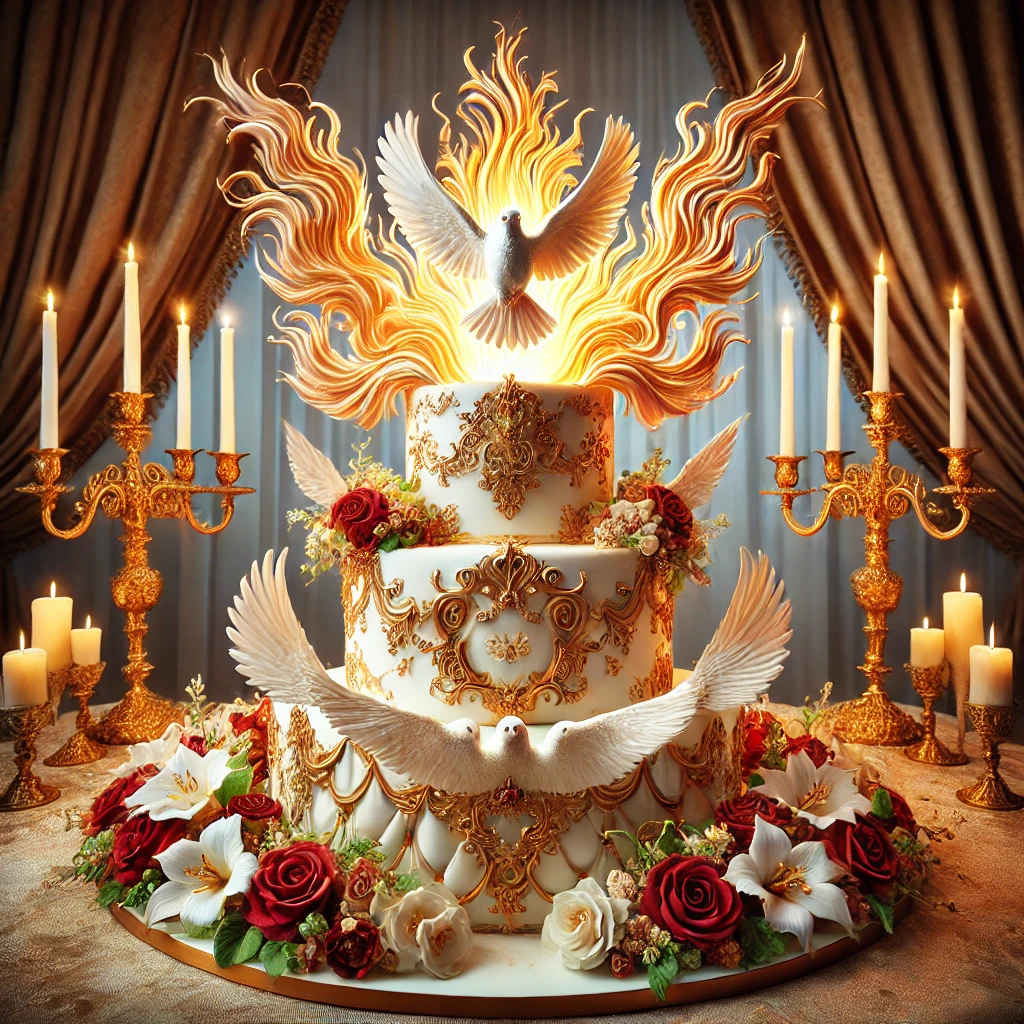
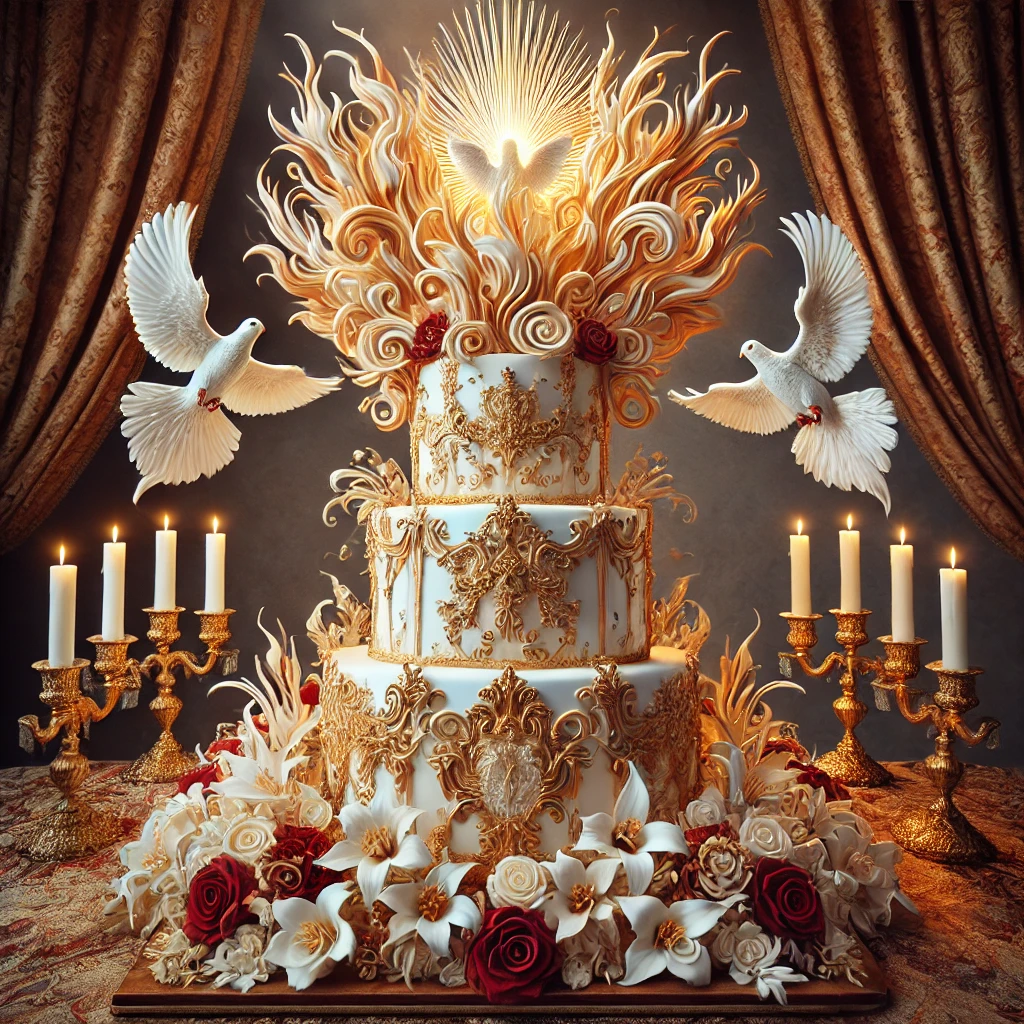
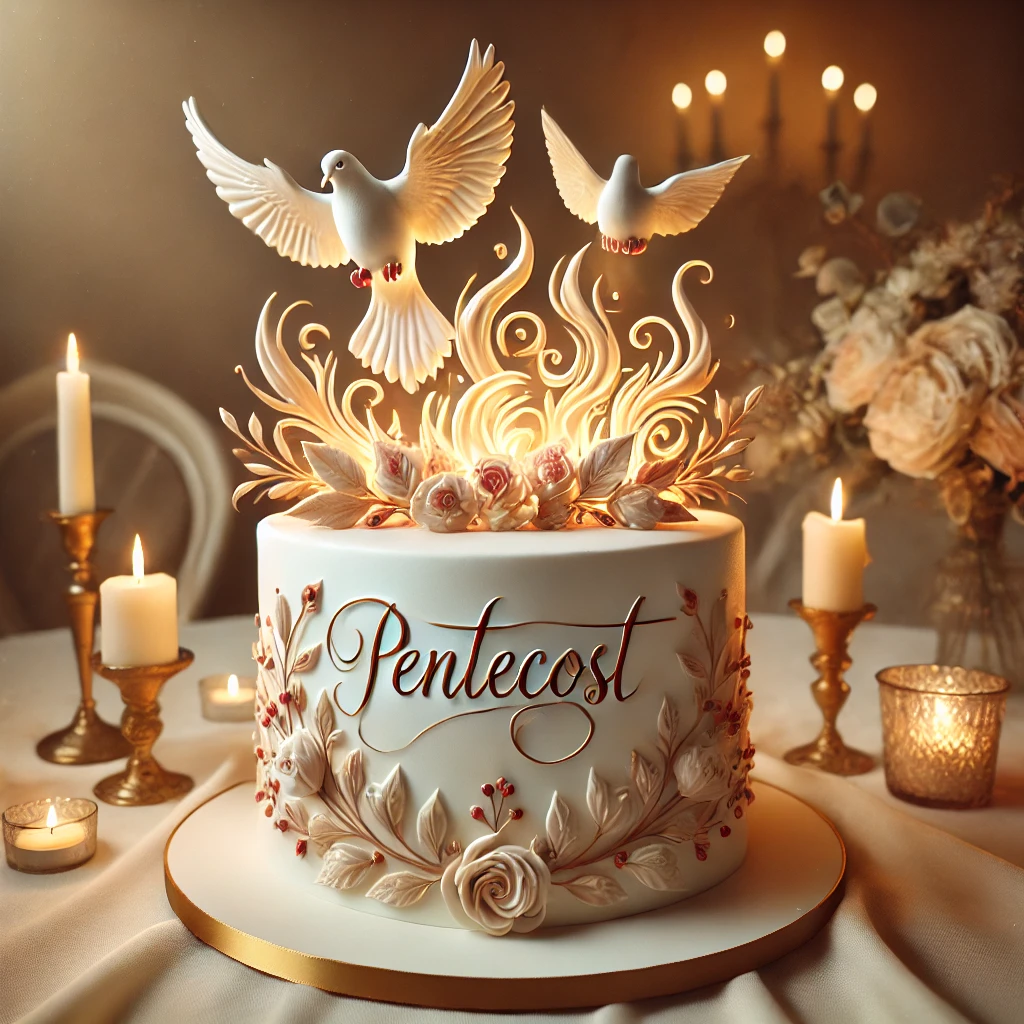
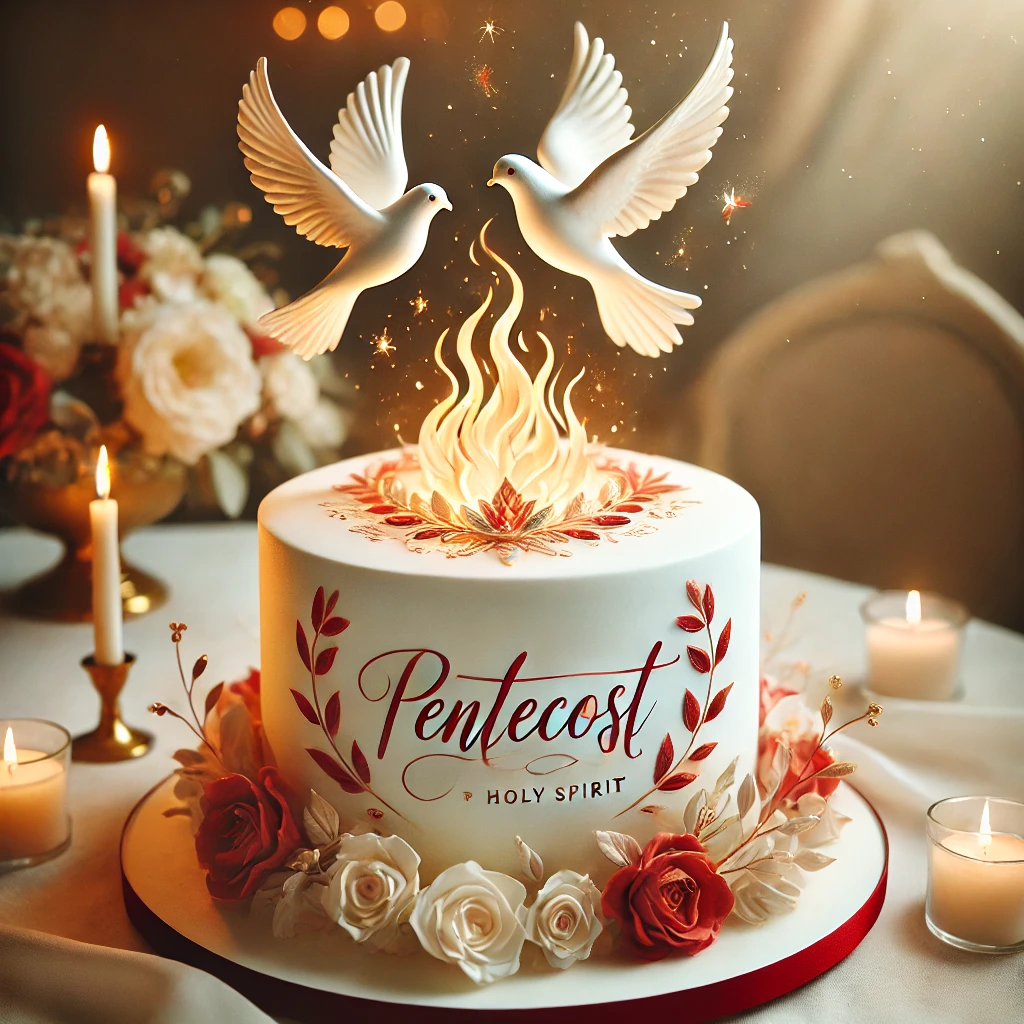























Pentecost

with ORO VALENTIO

50 Days After Easter

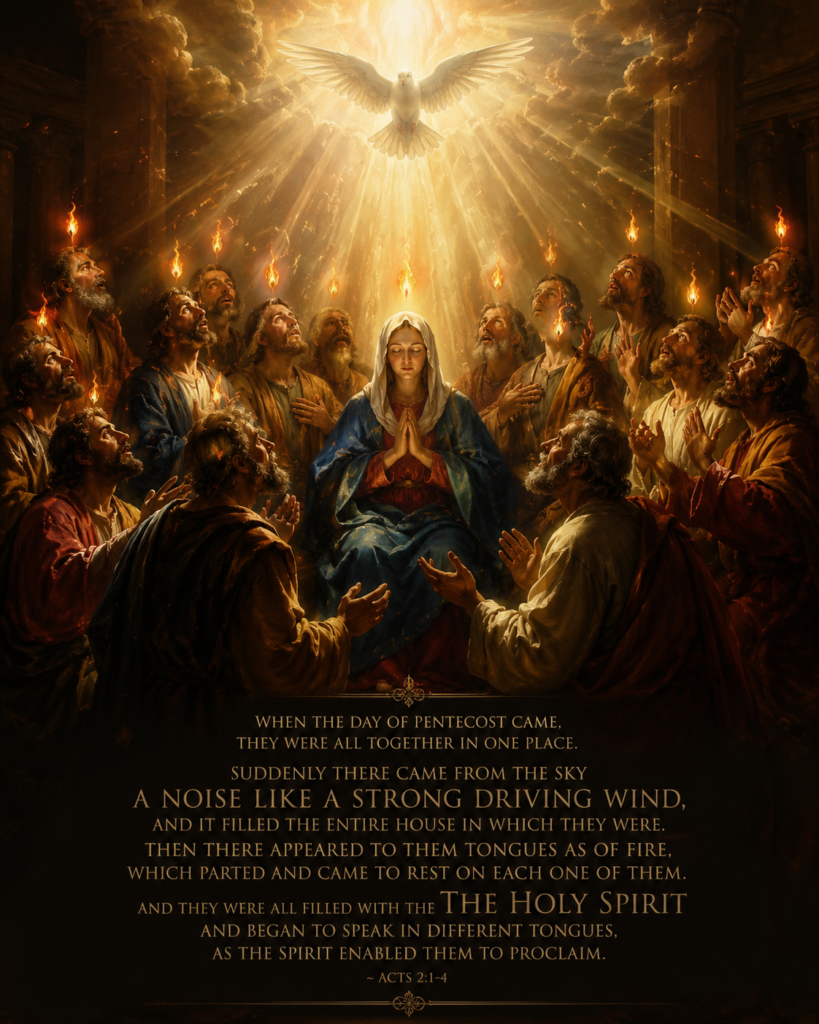
In the Upper Room, where the Apostles waited in prayer for the fulfillment of Christ's promise, Mary stood among them—not merely as a disciple, but as the Mother of the Redeemer and the Mother of the Church. The Holy Spirit who had overshadowed her at the Annunciation (Luke 1:35), bringing forth the Incarnate Word, now descended once more upon the gathered disciples. As she had been present at the birth of Christ in Bethlehem and at the foot of the Cross on Calvary, so too she was present at the birth of the Church on Pentecost. Surrounded by the Apostles, Mary becomes the model of perfect receptivity to the Holy Spirit. Her fiat—"Let it be done unto me according to your word"—had opened the way for Christ's first coming; her prayerful presence now accompanies the Spirit's outpouring upon the Church that would carry Christ to the ends of the earth. The flames resting upon the disciples signify divine power and mission, but Mary's quiet presence reveals the heart of Pentecost: complete surrender to the will of God. She who was full of grace became the living example of how every Christian is called to receive the Holy Spirit—with humility, faith, and unwavering trust. "All these with one accord devoted themselves to prayer, together with the women, and Mary the mother of Jesus." (Acts 1:14) At Pentecost, the Church was born in fire, and Mary was there—praying as a mother for her children.
Pentecost stands as one of the great mysteries of the Christian faith—a moment not merely of inspiration, but of divine fulfillment. Fifty days after the Resurrection and ten days after the Ascension, the promise of Christ was fulfilled as the Holy Spirit descended upon the Apostles and the Blessed Virgin Mary gathered in prayer. What had been foretold by the prophets and promised by the Lord now came to pass: the Third Person of the Blessed Trinity was poured out upon the Church, empowering her to continue Christ’s mission throughout the world.
The event unfolded with signs both powerful and profound. A sound like a mighty rushing wind filled the house, and tongues as of fire came to rest upon those gathered. These were not signs of disorder or chaos, but manifestations of divine presence and action. The wind recalled the breath of God that gives life, while the fire symbolized illumination, purification, and the burning charity of the Holy Spirit. Those who had once hidden in fear were transformed by grace. The Apostles emerged with courage, wisdom, and conviction, proclaiming the Gospel openly and fearlessly.
One of the most remarkable aspects of Pentecost was the miracle of languages. Pilgrims from many nations heard the Apostles proclaiming the mighty works of God in their own tongues. In this, the Church has long seen a reversal of the division symbolized at Babel. The Holy Spirit did not erase human diversity, but united people through truth. Pentecost reveals that authentic unity is not achieved by eliminating differences, but by drawing all peoples into communion through Christ.
Pentecost is therefore far more than a historical event. It marks the public manifestation of the Church and the beginning of her universal mission. The Apostles, strengthened by the Holy Spirit, were sent forth to preach repentance, proclaim salvation, baptize nations, and bear witness to the death and Resurrection of Jesus Christ. The Church was no longer gathered merely in expectation; she was sent forth in power.
The mystery of Pentecost also reveals an enduring spiritual principle: God’s greatest works often begin within the soul. The fire of the Holy Spirit does not destroy but sanctifies. The divine presence enlightens the mind, strengthens the will, and inflames the heart with charity. Through the gifts and fruits of the Holy Spirit, believers are enabled to grow in holiness, discern truth, overcome fear, and live in faithful obedience to God.
Yet Pentecost is not only about personal renewal. The Holy Spirit always moves the believer outward in mission. Those who receive the Spirit are called to become instruments of God’s grace in the world—bearing witness through their words, actions, sacrifices, and charity. The same Spirit who strengthened the Apostles continues to guide, sanctify, and sustain the Church in every age, calling the faithful to live with courage, integrity, and fidelity amid the challenges of the world.
While Pentecost occurred once in salvation history, its grace remains active. The Holy Spirit continues to descend upon souls through the life of the Church, especially through the sacraments, prayer, Sacred Scripture, and faithful discipleship. The Church continually prays for a renewed outpouring of the Spirit, that hearts may be converted, faith strengthened, and the Gospel proclaimed with fresh zeal.
Ultimately, Pentecost is a feast of divine life and mission. It proclaims that God has not left His people orphaned but has sent the Holy Spirit to dwell within them. It reminds believers that holiness is possible, that truth can be known, and that grace is stronger than fear. The same Spirit who transformed a small gathering in Jerusalem into the foundation of a worldwide Church continues to work today, calling every soul to deeper communion with God and sending each believer forth as a witness to Christ’s light and truth.

The Power of the Holy Spirit

The story of Pentecost unfolds in a moment of waiting that turns into one of the most powerful transformations in history. After the ascension of Jesus, His followers gathered together in Jerusalem, uncertain of what would come next but holding firmly to His promise—that they would be given power from above. They remained united, praying and waiting, not yet sent, but being prepared.
Then, suddenly, everything changed.
A sound like a mighty rushing wind filled the entire house where they were gathered. It was not a gentle breeze, but something unmistakable—strong, alive, and impossible to ignore. And then, what appeared to be tongues of fire came to rest upon each of them. This fire did not burn or destroy; it marked, filled, and transformed. In that moment, they were filled with the Holy Spirit.
What followed was just as extraordinary. They began to speak in different languages—languages they had never learned—yet people from many nations who were in Jerusalem could understand them clearly. Parthians, Medes, Egyptians, Romans, and others all heard the same message in their own tongues. What had once divided humanity—language, culture, distance—was suddenly overcome. Confusion gave way to clarity. Division gave way to unity.
Some who witnessed this were amazed, recognizing that something divine was happening. Others doubted, assuming it was chaos or confusion. But then Peter stood forward—no longer hesitant, no longer afraid—and spoke with boldness and authority. The same man who had once faltered now spoke with clarity, explaining that this was the fulfillment of God’s promise: that His Spirit would be poured out upon all people.
That day, hearts were stirred, minds were awakened, and thousands chose to believe. It marked the beginning of something far greater than a single moment—it marked the birth of a movement, the beginning of the Church, and the unfolding of a mission that would spread across the world.
Pentecost is not simply a story of what happened—it is a revelation of what God continues to do through the Holy Spirit. It shows that those who open their hearts to divine grace can be transformed from fear to courage, from uncertainty to faith, and from silence to bold witness. It is the moment when Christ’s promise is fulfilled, when the Church is sent forth in mission, and when ordinary men and women become instruments of God’s work in the world. The same Holy Spirit who descended upon the Apostles continues to guide, strengthen, and sanctify the faithful today, calling every soul to holiness, truth, and communion with God.
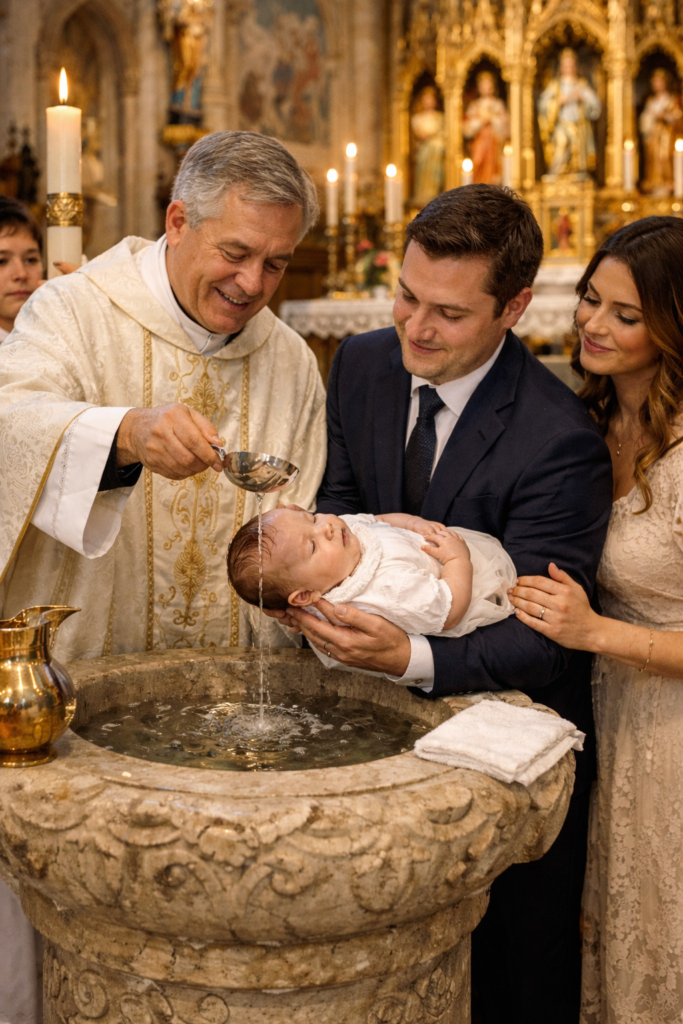
People come to the Church for Baptism and Confirmation because these sacraments are encounters with the living God that transform the soul and mark the beginning and strengthening of a life in Christ. In Baptism, a person is not merely welcomed into a faith community; they are reborn as a child of God. Through water and the Holy Spirit, original sin is washed away, sanctifying grace is bestowed, and the baptized are incorporated into the Body of Christ. For parents presenting their child, Baptism is an act of faith and love—a desire to entrust their son or daughter to God's protection, truth, and mercy from the very beginning of life. It is the foundation of the Christian journey, the doorway through which all other sacraments are received. Confirmation deepens and perfects the grace first received in Baptism. Through the anointing with sacred chrism and the gift of the Holy Spirit, the faithful are strengthened to live as witnesses of Christ. Just as the Apostles were empowered at Pentecost, those who are confirmed receive a fuller outpouring of the Holy Spirit, equipping them with courage, wisdom, and perseverance to remain faithful amid the challenges of the world. Confirmation is not merely a coming-of-age ceremony; it is a sacramental strengthening for the mission of Christian discipleship. Together, Baptism and Confirmation reveal God's plan for His children: first to be born into divine life, then to be fortified by the Holy Spirit for a life of faith and service. People seek these sacraments because they desire more than a meaningful moment—they desire communion with God, the grace to live according to His will, and the strength to follow Christ with conviction. Through these sacred mysteries, the Holy Spirit continues the work begun at Pentecost, forming saints and drawing souls ever deeper into the life of the Church.

Pentecost Traditions to Make Your Own

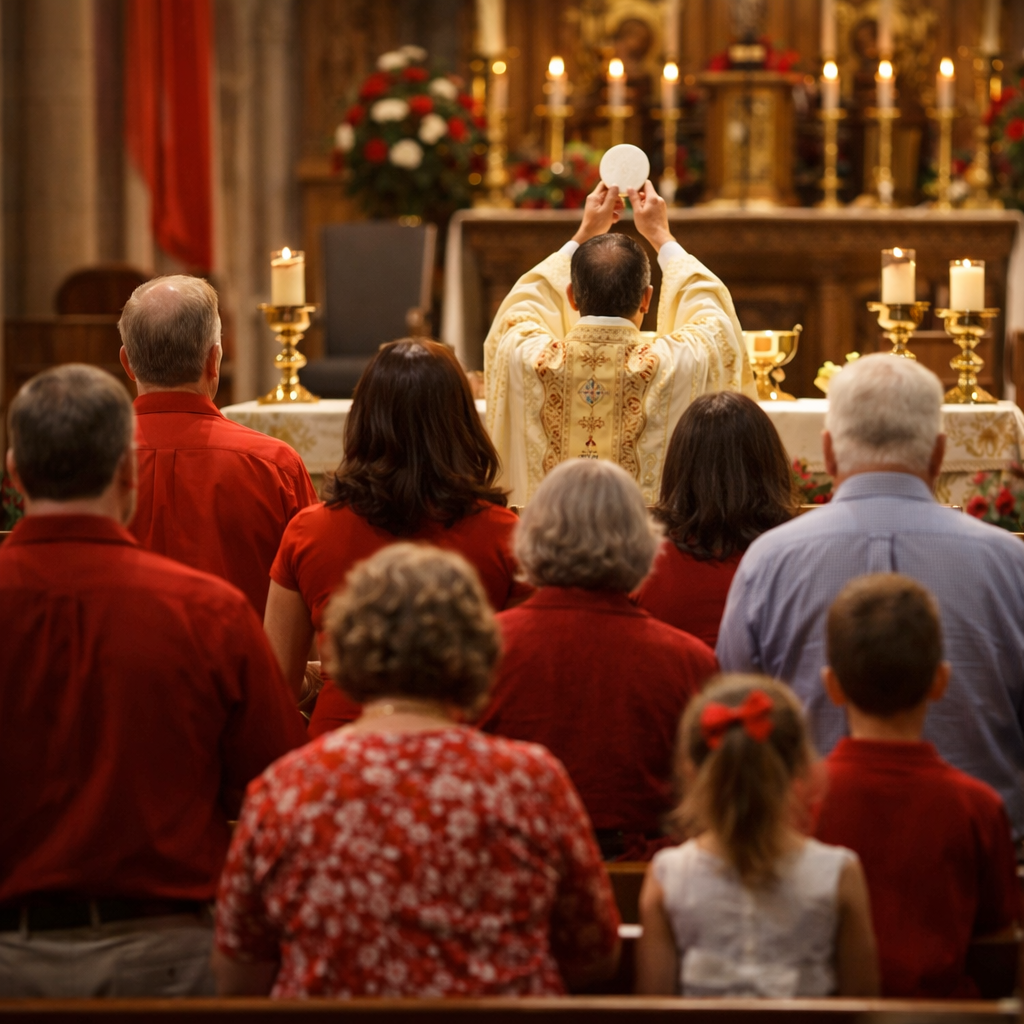
People go to Mass on Pentecost not merely out of tradition, but to celebrate and participate in one of the great mysteries of the Christian faith: the descent of the Holy Spirit upon the Apostles and the public manifestation of the Church. Pentecost commemorates the fulfillment of Christ's promise to send the Holy Spirit, who would guide, strengthen, and sanctify His people. By attending Mass on this feast, the faithful unite themselves to that same divine action, giving thanks to God for the gift of the Holy Spirit and praying for a renewed outpouring of His grace. For many, Pentecost Mass is a profound reminder that the Holy Spirit continues to work within the Church and within every baptized believer. Through the sacred liturgy, the proclamation of Scripture, and the prayers of the Church, the faithful are invited to open their hearts more fully to God's presence. Above all, they encounter Christ in the Holy Eucharist, the source and summit of the Christian life. In receiving Him, believers are strengthened with the grace needed to persevere in faith, grow in holiness, and fulfill their vocation as disciples. Pentecost also highlights the transforming power of the Holy Spirit. The Apostles, once fearful and uncertain, were filled with courage and sent forth to proclaim the Gospel to all nations. Their transformation reminds Christians that holiness and mission are not accomplished by human strength alone, but through the grace of God. The faithful come to Mass seeking wisdom, understanding, fortitude, and the other gifts of the Holy Spirit, asking to be renewed in faith and strengthened for the challenges of daily life. There is also a profound sense of unity expressed in the Pentecost liturgy. People from different backgrounds, cultures, and walks of life gather as one Body in Christ. The miracle of Pentecost revealed that the Gospel was destined for all peoples and nations, and the Church continues to reflect that universal mission. Worshipping together reminds believers that faith is not a solitary journey but a shared participation in the life of the Church founded by Christ and animated by the Holy Spirit. Ultimately, people go to Mass on Pentecost because it is an invitation to deeper communion with God. It is a celebration of the Holy Spirit's presence and action, a renewal of the Church's mission, and a reminder that every Christian is called to holiness and witness. Having received God's grace through Word and Sacrament, the faithful are sent forth, just as the Apostles were sent forth, to live the Gospel with courage, charity, and fidelity in the world.
Church Services and Sacred Liturgy
Pentecost is most profoundly celebrated through the Holy Mass, where the Church commemorates the descent of the Holy Spirit upon the Apostles and the public manifestation of the Church. Scripture readings, especially from Acts 2, recount the coming of the Holy Spirit with wind and fire, while prayers and hymns emphasize divine grace, mission, and the sanctifying work of God. The liturgy is marked by joy and solemnity, celebrating the fulfillment of Christ’s promise to send the Holy Spirit to His people.
Wearing Red
Red is the liturgical color of Pentecost, symbolizing the tongues of fire that descended upon the Apostles and the burning charity of the Holy Spirit. Clergy wear red vestments, and many faithful choose to wear red clothing as a visible expression of their participation in the feast. Churches are often adorned with red banners, flowers, and decorations that reflect the power and presence of the Holy Spirit.
Decorating with Flames, Doves, and Symbols of Wind
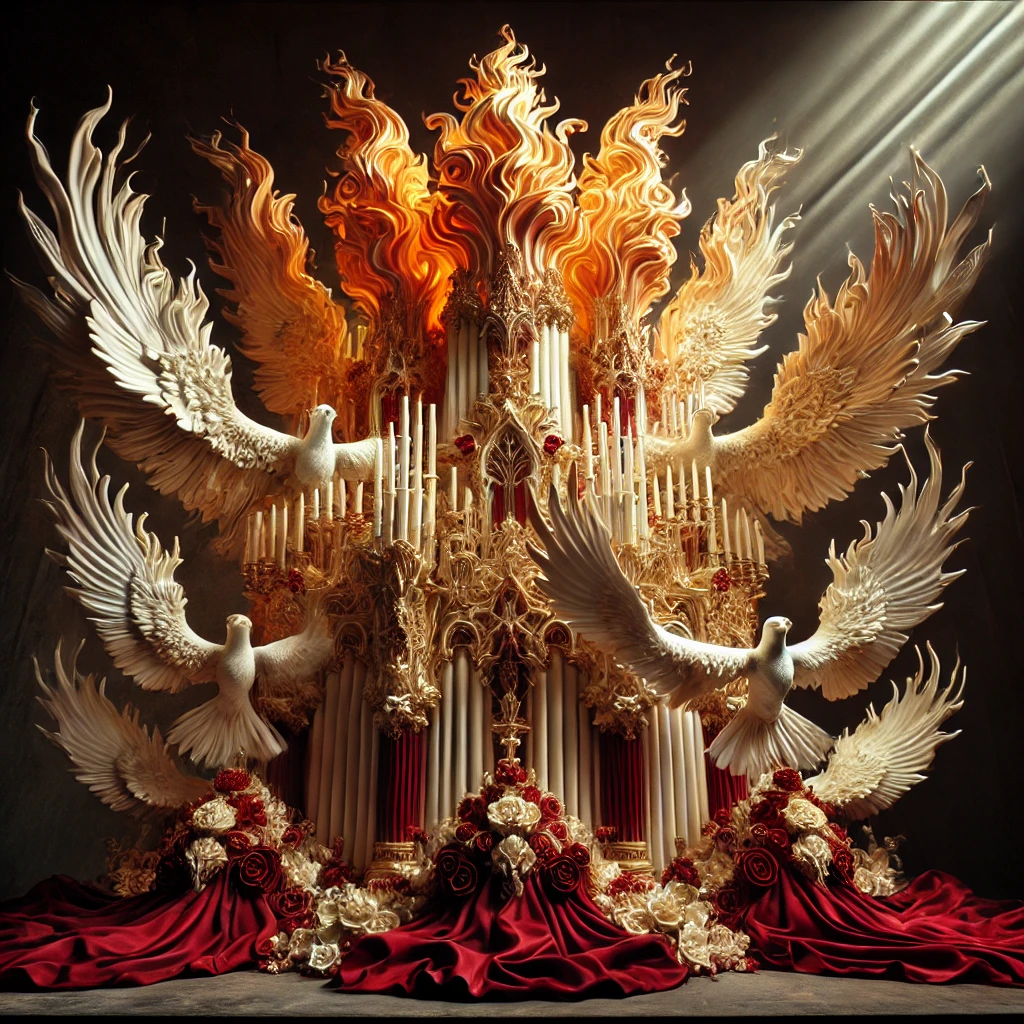
Churches and homes may display artistic representations of flames, doves, and wind, recalling the signs through which the Holy Spirit manifested Himself at Pentecost. Fire symbolizes purification, illumination, and divine love. The wind recalls the life-giving breath of God, while the dove reminds believers of the Holy Spirit’s presence and action throughout salvation history. These symbols help direct the mind toward the mystery of God’s continuing work in the Church.
Sacred Music and Multilingual Worship
Music plays a central role in Pentecost celebrations. Hymns invoking the Holy Spirit and praising God’s mighty works are often sung with particular solemnity. In some communities, Scripture readings, prayers, or hymns are offered in multiple languages, reflecting the Pentecost miracle in which people from many nations heard the Gospel proclaimed in their own tongues. Such practices highlight both the universality of the Church and the unity brought about by the Holy Spirit.
Confirmation and Baptism
Pentecost has a special connection to the sacraments of Baptism and Confirmation. Through Baptism, believers are reborn as children of God and incorporated into the Body of Christ. Through Confirmation, the gifts of the Holy Spirit are strengthened and deepened, equipping the faithful to bear witness to Christ with courage and fidelity. These sacraments reflect the continuing work of Pentecost in the life of the Church.
Feasting and Christian Fellowship
Families, parishes, and communities often gather for festive meals and fellowship following Pentecost liturgies. While customs vary by culture and region, shared meals express gratitude, unity, and the joy of belonging to the family of God. Such gatherings reflect the communal life that has characterized the Church since the earliest days of Christianity.
Prayer for a Renewed Outpouring of the Holy Spirit
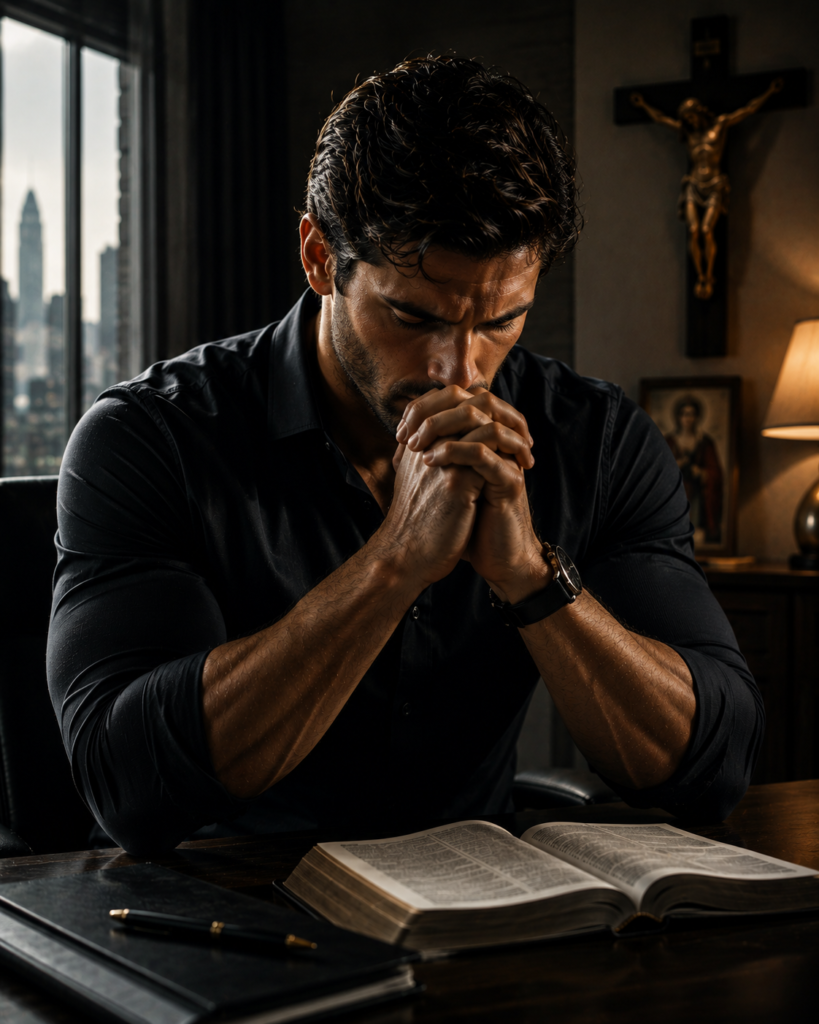
Many Catholics observe Pentecost through intentional prayer, asking for a renewed outpouring of the Holy Spirit in their lives. The faithful pray for wisdom, understanding, counsel, fortitude, knowledge, piety, and holy fear of the Lord. Pentecost becomes a privileged time to seek God’s will, grow in holiness, and ask for the grace to live more faithfully as disciples of Christ.
Acts of Charity, Service, and Evangelization
Pentecost reminds believers that the gifts of the Holy Spirit are given not only for personal sanctification but also for the building up of the Church and the salvation of souls. Many mark the feast through works of mercy, service to those in need, and renewed commitment to sharing the Gospel. Just as the Apostles were sent forth after receiving the Holy Spirit, Christians today are called to bear witness to Christ through both word and deed, bringing His truth, mercy, and love into the world.

With Power, Clarity, & Courage

Heavenly Father,
on this holy Feast of Pentecost, we come before You with grateful hearts, rejoicing in the gift of the Holy Spirit whom Your Son promised to send upon His Church. As You poured out Your Spirit upon the Apostles gathered in prayer, pour Him out anew upon us, that we may be strengthened in faith, renewed in hope, and inflamed with divine charity.
Come, Holy Spirit, and dwell within us. Drive away all fear, doubt, and discouragement. Fill our minds with wisdom and understanding, our hearts with love of God, and our souls with the courage to follow Christ faithfully. Teach us to seek Your will in all things and to walk in the path of holiness.
Ignite within us the fire of Your presence. As the tongues of fire rested upon the Apostles, kindle in us a zeal for the Gospel and a desire to serve You with generous and faithful hearts. Purify what is sinful, strengthen what is weak, heal what is wounded, and guide what has gone astray.
Where there is confusion, grant truth. Where there is division, grant unity. Where there is sorrow, grant hope. Where there is temptation, grant perseverance. May Your gifts of wisdom, understanding, counsel, fortitude, knowledge, piety, and holy fear of the Lord bear abundant fruit within us.
Lord, unite us ever more closely to Your Church. Make us faithful witnesses of Christ in our homes, our communities, and the world. May our words reflect His truth, our actions reveal His charity, and our lives give glory to Your holy name.
We surrender our plans, our fears, our joys, and our sufferings into Your hands. Through the power of the Holy Spirit, transform us into the disciples You call us to be, that we may live faithfully in this life and one day share in the glory of Your heavenly kingdom.
Come, Holy Spirit, fill the hearts of Your faithful and kindle in them the fire of Your love.
Amen.
Pentecost is more than a historical event—it is a reminder that the same Holy Spirit who descended upon the Apostles continues to guide, sanctify, and strengthen the Church today. The fire that filled the Upper Room was not meant for that moment alone; it marked the beginning of the Church's mission, a mission that continues in every generation as men and women are called to open their hearts to God's transforming grace. To welcome the Holy Spirit is to allow God to shape every aspect of our lives. It is an act of faith and surrender that invites divine wisdom into our confusion, courage into our fears, and peace into our struggles. Just as the Apostles were transformed from uncertain followers into bold witnesses of Christ, the Holy Spirit seeks to strengthen us, guide us, and draw us ever deeper into communion with God. The Christian life is not meant to be lived by human strength alone. Pentecost reveals that God does not abandon His people to navigate life's challenges on their own. Through the gift of the Holy Spirit, He enlightens the mind, strengthens the will, and inflames the heart with faith, hope, and charity. Through grace, ordinary men and women become instruments of God's work in the world. This transformation is not merely a matter of inspiration or emotion; it is the work of sanctification. The Holy Spirit refines what is weak, heals what is wounded, and strengthens what is good. He forms saints, strengthens families, renews parishes and communities, and equips believers to bring the light of Christ into a world often marked by confusion, division, and uncertainty. Pentecost invites each of us into the same posture as those gathered in the Upper Room: prayerful, receptive, and open to God's action. Like the Apostles and the Blessed Virgin Mary, we are called to await the Holy Spirit with faith and trust, allowing Him to work within us according to God's will. When we open our hearts more fully to His grace, we discover that faith is not merely a set of beliefs but a living relationship with the Triune God—a relationship that transforms us from within and sends us forth as witnesses of Christ. The fire of Pentecost still burns in the life of the Church. The Holy Spirit continues to call souls to conversion, holiness, and mission. The question is whether we are willing to open our hearts to His grace and allow Him to transform us, so that through our lives Christ may be known, loved, and glorified in the world.

Pentecost Cake & Atmosphere Ideas

Where style, memory, and celebration meet.

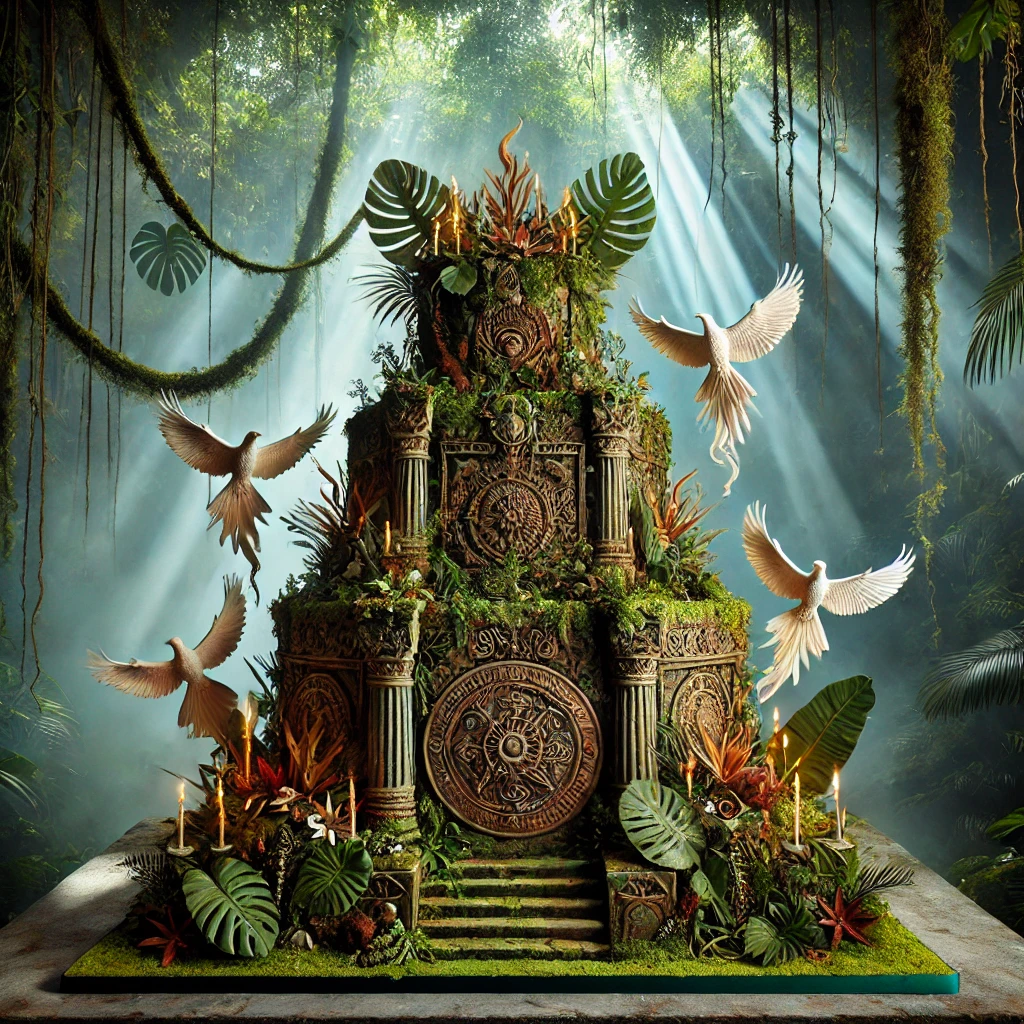
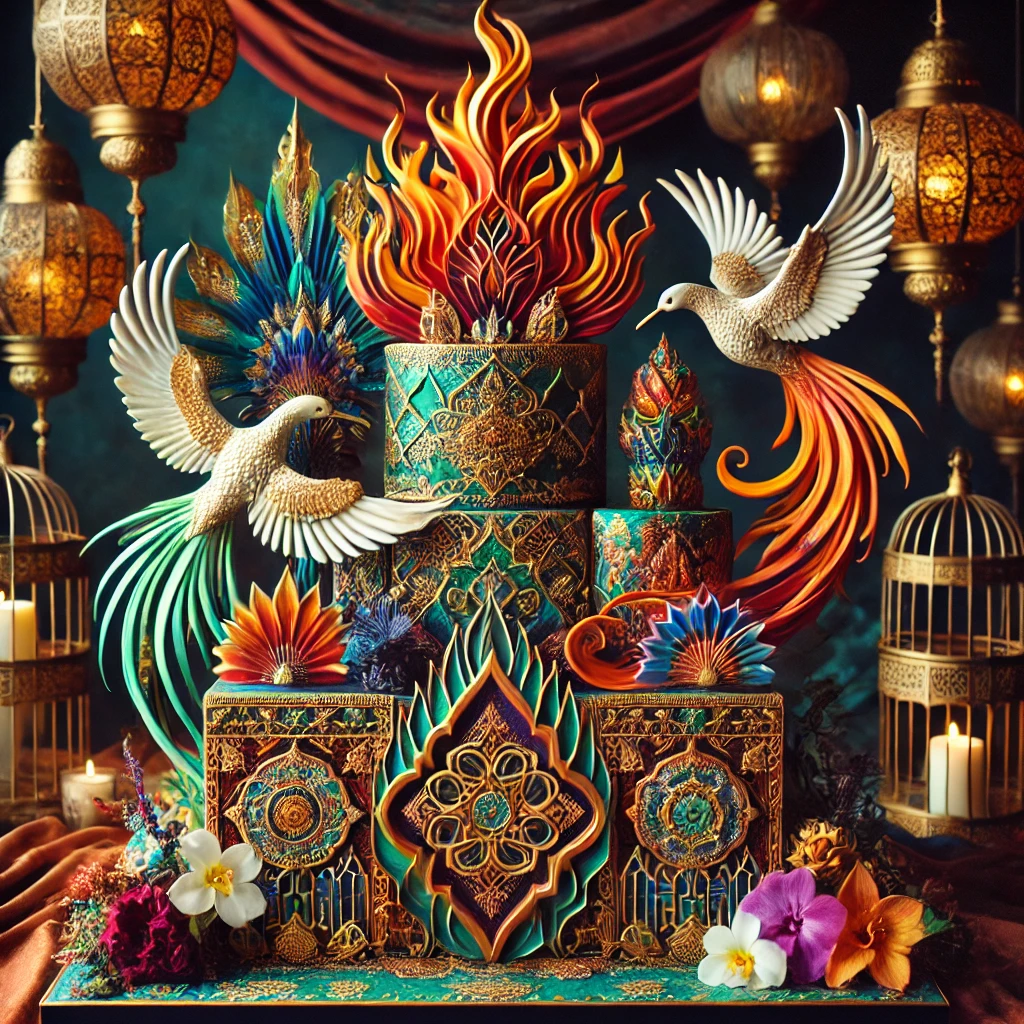
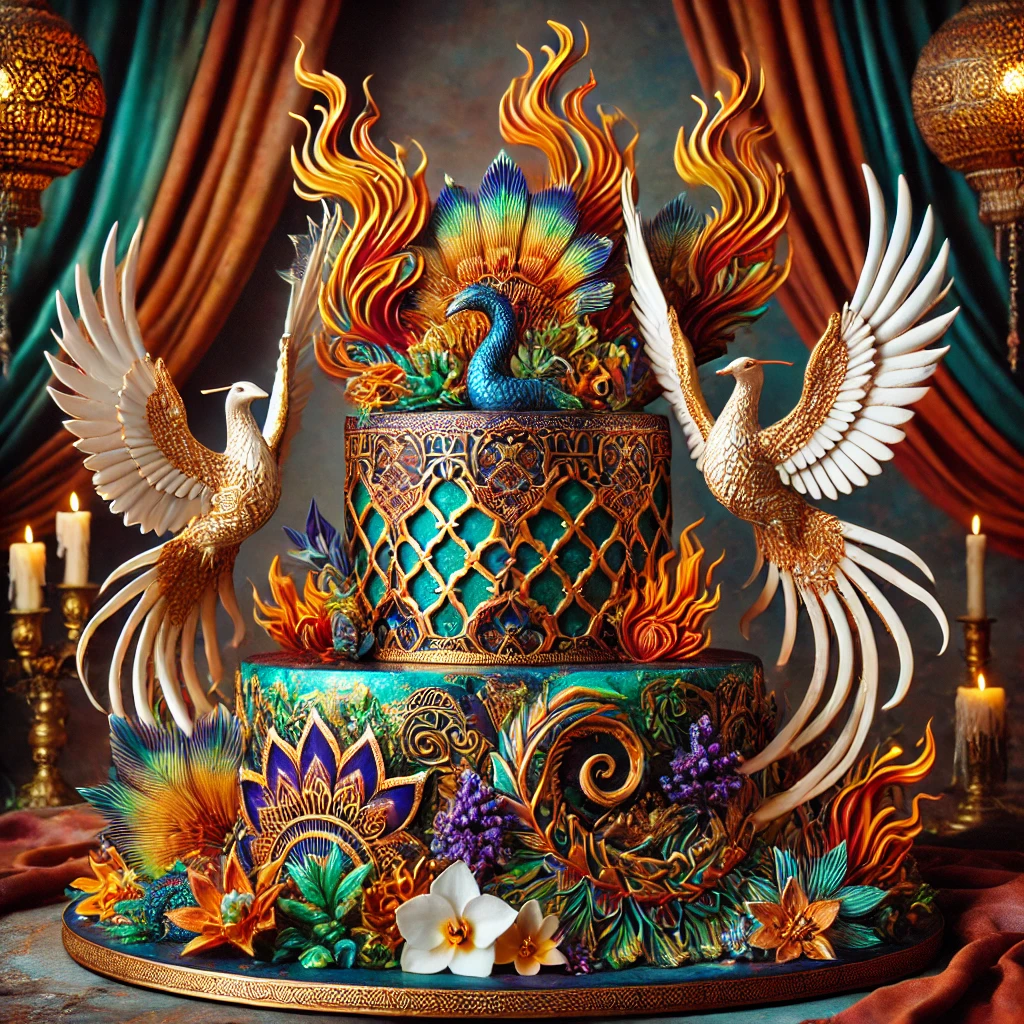
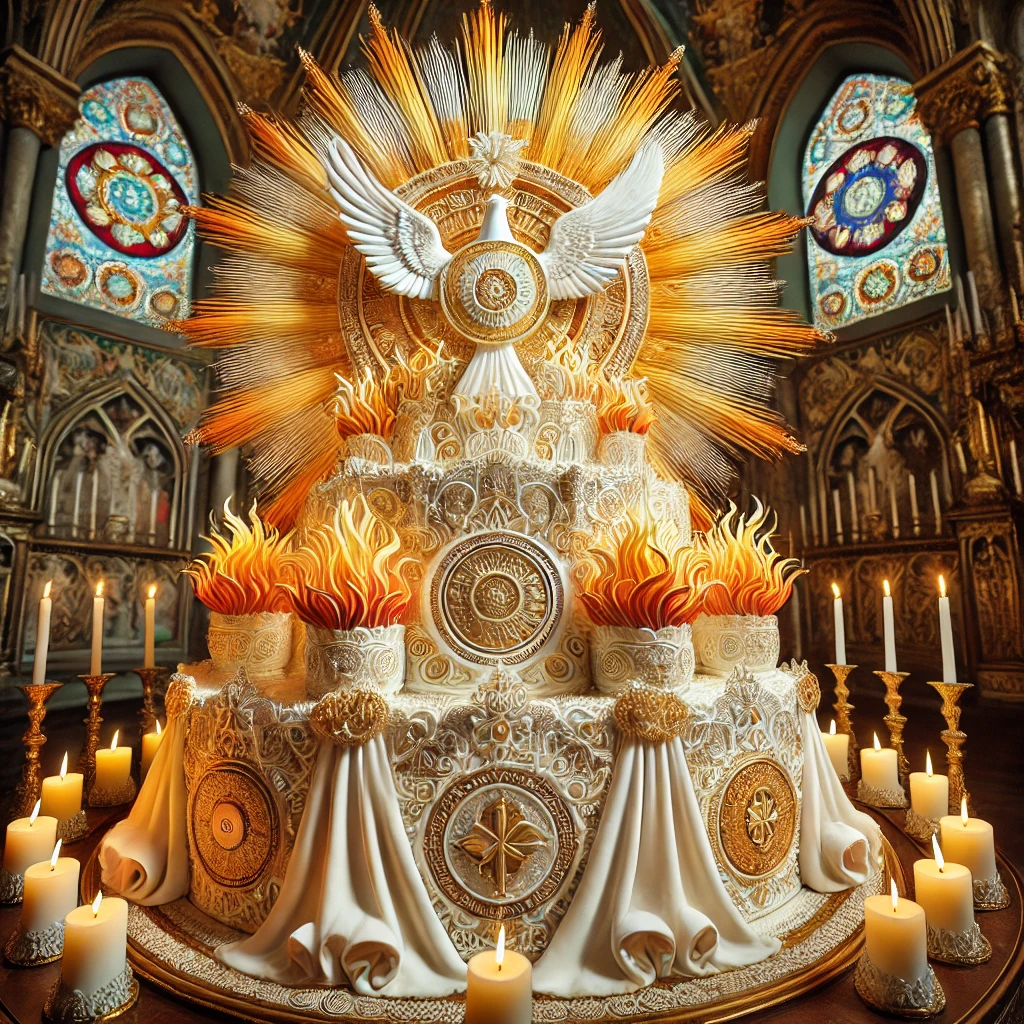
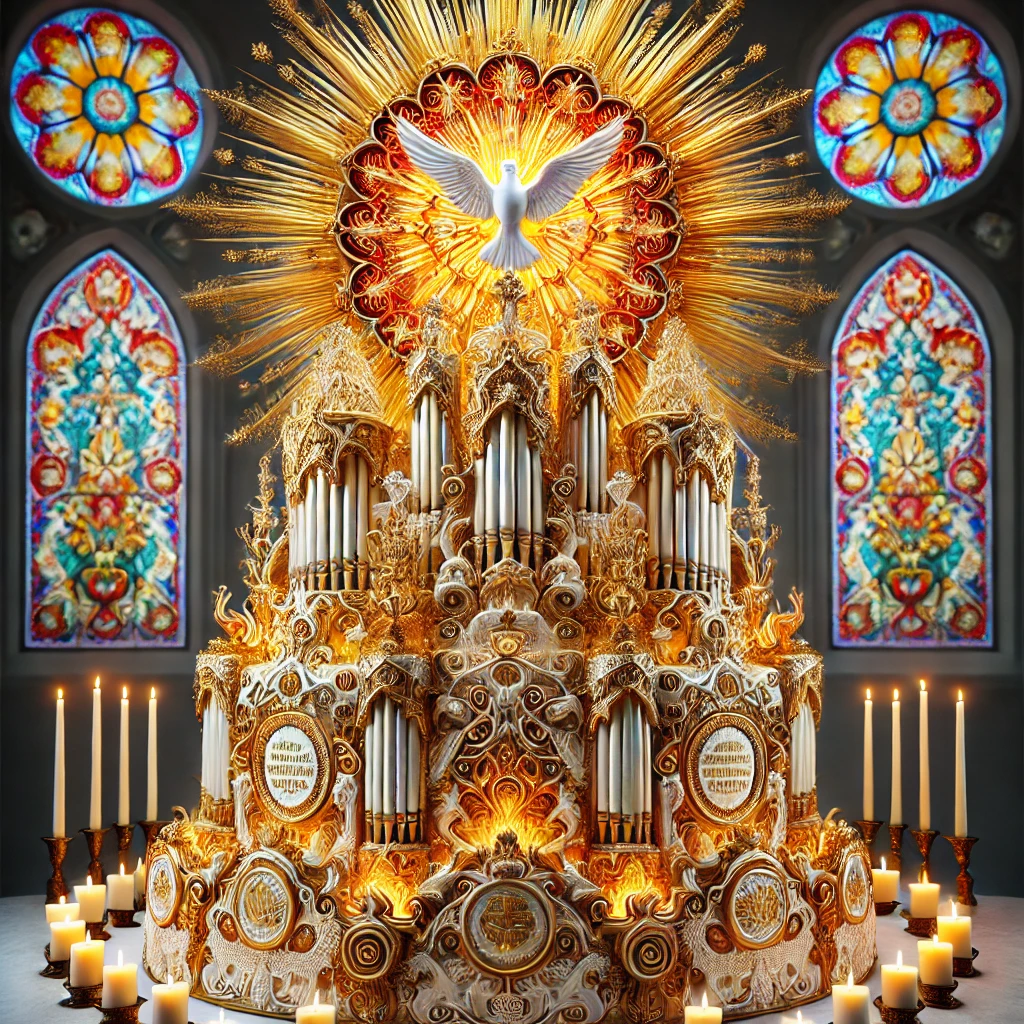
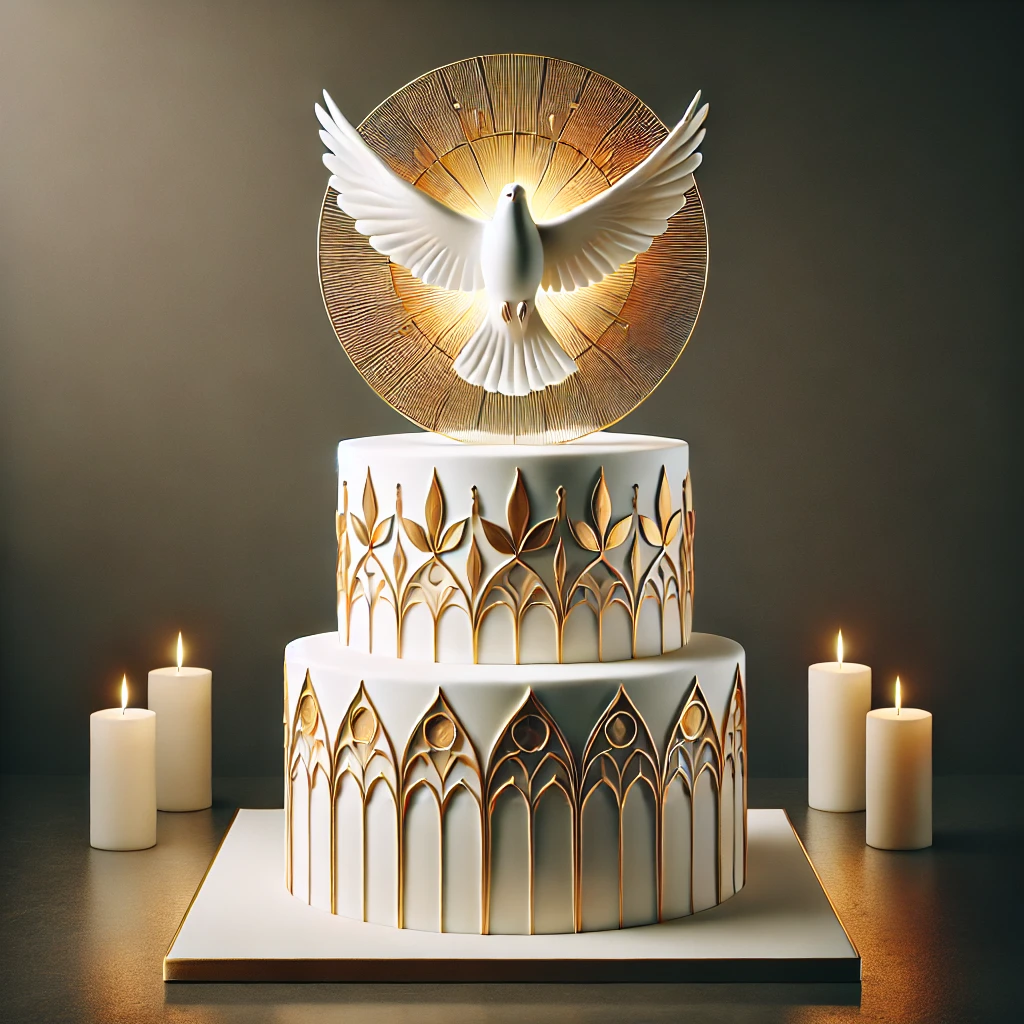
This section is meant to be more than Cake Decorating Ideas… it’s designed to spark inspiration and creativity, awaken tradition, and infuse your special occasions with style, identity, and atmosphere. A color palette becomes a theme. A design becomes a mood. Simple details—like sugared holly leaves or shimmering stars—can set the tone for a gathering and become part of cherished traditions and lasting memories melded with personal touch and love.

Traditional Pentecost Dishes

Red Velvet Cake
This rich, vibrant cake reflects the color of Pentecost—the fire of the Holy Spirit. Its deep red hue symbolizes passion, transformation, and divine presence, while its soft, luxurious texture makes it a centerpiece dessert for the celebration.

Strawberries and Cream
Fresh strawberries, often paired with lightly sweetened cream, represent both the red flames of Pentecost and the sweetness of renewal. This dish is simple yet elegant, highlighting natural abundance and purity.

Roasted Lamb with Herbs
Lamb carries deep biblical significance and is often served as a main dish for Pentecost meals. Roasted with rosemary, garlic, and olive oil, it represents sacrifice, provision, and strength, offering a grounding, savory element to the table.

Flame-Grilled Vegetables
Charred vegetables such as bell peppers, tomatoes, and zucchini echo the imagery of fire. Their smoky flavor and vibrant colors bring both symbolism and nourishment, reflecting refinement and transformation through heat.

Honey Bread or Sweet Rolls
Soft, golden breads sweetened with honey symbolize unity, sustenance, and the shared life of the early Church. Bread has always been central to gatherings, and here it represents both physical and spiritual nourishment.

Pomegranate Salad
With its deep red seeds, pomegranate adds both beauty and meaning. It symbolizes life, abundance, and the many brought into unity through the Spirit. Often paired with greens, nuts, and a light vinaigrette, it offers a refreshing balance.

Spiced Red Wine or Grape Juice
Whether served as wine or a non-alcoholic option, this drink represents both celebration and the shared cup. Warm spices can be added to deepen the flavor, creating a drink that feels both festive and meaningful.

Fire-Roasted Flatbread with Olive Oil and Herbs
Simple yet powerful, this dish reflects ancient traditions of gathering and sharing. The fire-roasted element ties directly into Pentecost symbolism, while olive oil and herbs add richness and depth.

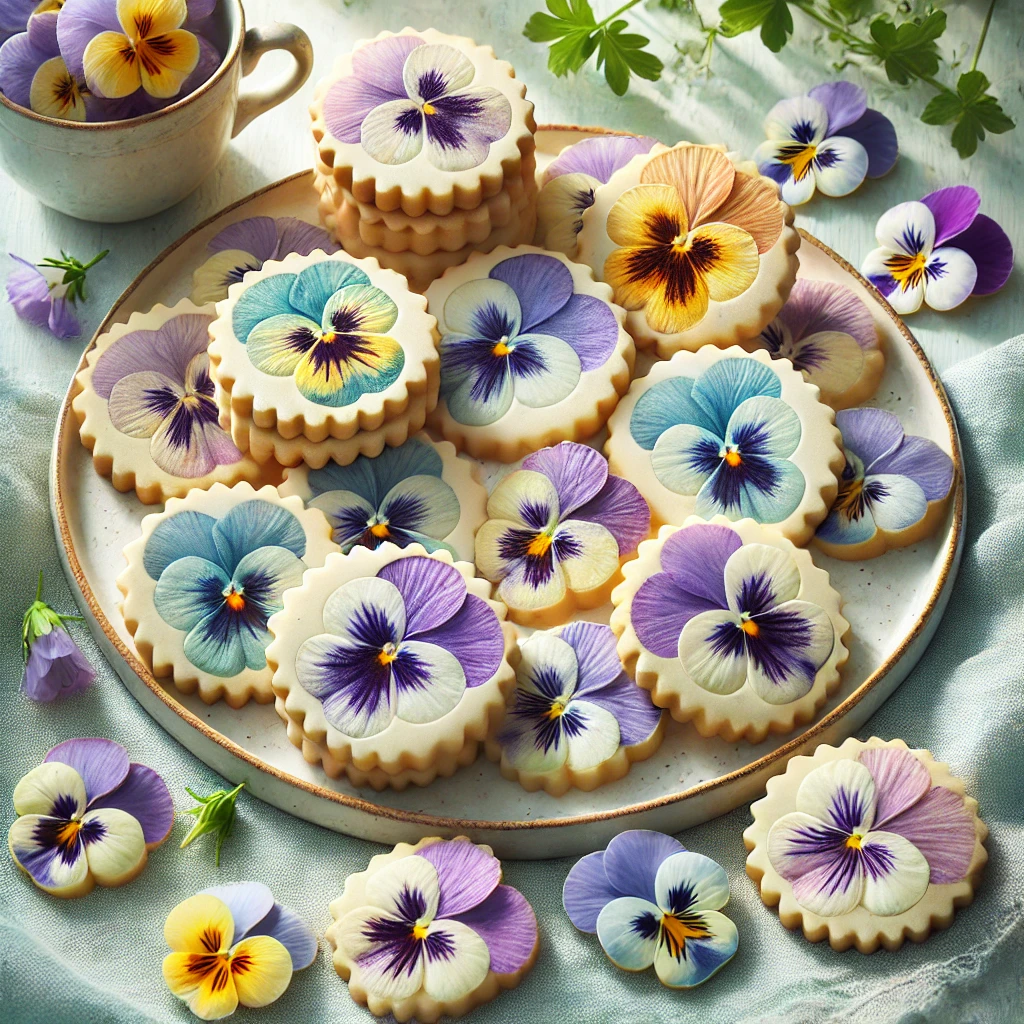
Recipes Engineered for that Spring Feeling