









Independence Day (The Fourth of July)

with ORO VALENTIO

Liberty Claimed, Responsibility Assumed, a Nation Brought Forth

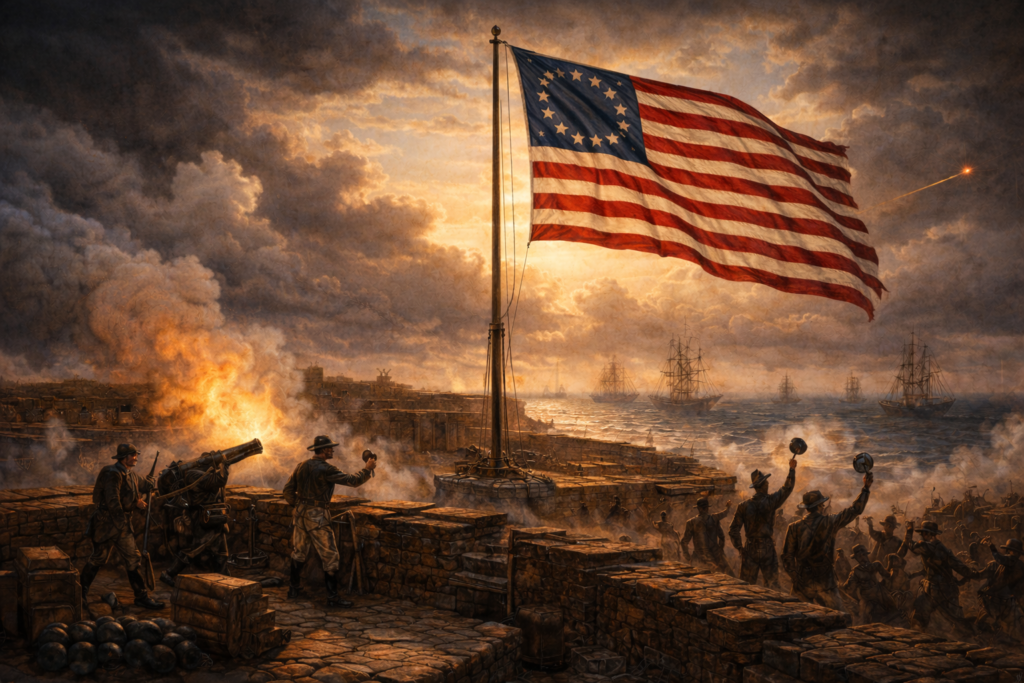
The night when the 15-star, 15-stripe American flag flew over Fort McHenry during the War of 1812 stands as one of the most defining moments in the nation’s early history. Through the long hours of September 13–14, 1814, the fort endured relentless bombardment as British forces attempted to break American resistance. Darkness, smoke, and uncertainty obscured the outcome, leaving observers—among them Francis Scott Key—unable to know whether the fort had fallen. When dawn finally broke and the massive flag was seen still flying, its survival became a visible declaration that the fort, and the nation it represented, had held fast. That single sight transformed a military defense into a lasting national symbol, later immortalized in The Star-Spangled Banner. The flag’s unusual design, its immense scale, and its endurance through the night gave tangible form to resilience, unity, and resolve—marking the moment when survival itself became a statement of identity.
The Fourth of July marks more than the birth of a nation; it marks a deliberate act of moral courage. On July 4, 1776, the American colonies publicly declared that legitimate government rests not on inheritance or force, but on the inherent dignity of the human person and the consent of the governed. Independence Day therefore commemorates a moment when ideals were not merely discussed, but risked—when liberty was claimed at great cost, without certainty of success. The Declaration of Independence did not promise comfort or ease; it bound its signers to one another and to future generations through sacrifice, accountability, and shared responsibility. 
Culturally, the Fourth of July has always balanced celebration with remembrance. Fireworks, music, gatherings, and communal meals express joy and gratitude, but they are rooted in something deeper than festivity alone. The day honors restraint as much as triumph, recognizing that freedom requires discipline, virtue, and vigilance to endure. It recalls a nation “brought forth” not in perfection, but in conviction—aware that independence is not a finished achievement, but a trust to be stewarded.
At its heart, Independence Day is a reflection on ordered liberty: freedom exercised within responsibility, rights sustained by character, and unity preserved through shared principles rather than uniformity. It invites each generation to consider not only what was won, but what must be maintained—through civic duty, moral clarity, and care for the common good. The Fourth of July endures because it does not merely celebrate the past; it calls the present to live worthy of what was declared, and the future to guard what was entrusted.

Ordered Liberty

The design of the American flag evolved alongside the growth of the nation, reflecting both practical necessity and symbolic intention. The original 1777 flag featured 13 stars and 13 stripes, representing the thirteen colonies united in independence. As new states joined the Union, Congress briefly altered the design through the Flag Act of 1795, increasing the flag to 15 stars and 15 stripes to honor Vermont and Kentucky. This version—most famously flown over Fort McHenry during the War of 1812 and immortalized in The Star-Spangled Banner—remains the only official U.S. flag ever to have more than 13 stripes, with stars often arranged in a circle to symbolize unity among equal states. Lawmakers soon realized that continually adding stripes would be impractical and dilute the original meaning, so the Flag Act of 1818 permanently restored the stripes to 13 in tribute to the founding colonies, while establishing the enduring rule that only stars would be added for each new state. From that point forward, the flag became a living record of national growth—its stars increasing with the Union, while its stripes anchored the nation to its revolutionary origins.
Ordered liberty is the defining principle at the heart of the American experiment. It affirms that freedom is not the absence of restraint, but the presence of moral responsibility. Rights are not self-sustaining; they endure only when exercised with discipline, wisdom, and regard for the common good. From its founding vision, the nation understood that liberty divorced from virtue collapses into chaos, while authority without liberty hardens into tyranny. Ordered liberty stands between these extremes, insisting that freedom must be guided by conscience and bounded by law.
This principle places character at the center of citizenship. Laws can protect rights, but only character preserves them. Courage, honesty, self-restraint, and accountability are not optional virtues—they are the infrastructure of a free society. Without them, liberty becomes fragile, easily manipulated, and ultimately surrendered. The strength of the nation, therefore, has never rested solely in institutions or documents, but in the moral formation of its people.
Ordered liberty also explains how unity can exist without sameness. America was never meant to be unified by uniformity of thought, background, or expression, but by shared principles: the dignity of the human person, equality before the law, and responsibility to one another. This form of unity is resilient because it allows difference without division and debate without disintegration. It binds citizens together not by force, but by commitment to a common moral framework.
In this way, ordered liberty is both inheritance and obligation. It is what was claimed at great cost, preserved through sacrifice, and entrusted forward rather than guaranteed. To honor it is not merely to celebrate freedom, but to live in a way that makes freedom sustainable—choosing responsibility over impulse, principle over convenience, and character over comfort.

Independence Day Traditions to Make Your Own

🇺🇸 Independence Day Traditions (United States)
🎆 Public Celebrations
  • Fireworks displays – Evening shows in towns and cities, often choreographed to patriotic music
  • Parades – Featuring marching bands, veterans, first responders, historical reenactors, and decorated floats
  • Reading of the Declaration of Independence – Sometimes done publicly or symbolically at historic sites
🏡 Home & Community Traditions
  • Flying the American flag – On homes, porches, boats, and businesses
  • Red, white & blue decorations – Bunting, banners, lanterns, wreaths, and table settings
  • Community festivals & fairs – Games, pie-eating contests, sack races, and live music
🍔 Food & Gatherings
  • Backyard barbecues & cookouts – Burgers, hot dogs, ribs, corn on the cob
  • Family picnics – Parks, lakes, beaches, and backyards
  • Potlucks & block parties – Neighbors coming together in shared celebration
🎶 Music & Entertainment
  • Patriotic songs – “The Star-Spangled Banner,” “America the Beautiful,” “Yankee Doodle”
  • Concerts & town bands – Especially outdoor summer performances
  • Historical reenactments – Colonial dress, musket demonstrations, and period crafts
🎇 Evening & Symbolic Traditions
  • Sparklers for children – A long-standing (and carefully supervised) favorite
  • Bell ringing – Inspired by early celebrations; sometimes rung at 1:00 PM in honor of liberty
  • Moments of reflection – Remembering the founding ideals of freedom, courage, and self-governance
🌄 Regional & Modern Traditions
  • Beach, lake, or mountain outings – The holiday doubles as a peak summer escape
  • Baseball games – America’s pastime played on America’s birthday
  • Wearing patriotic clothing – From subtle flag pins to full red-white-and-blue outfits
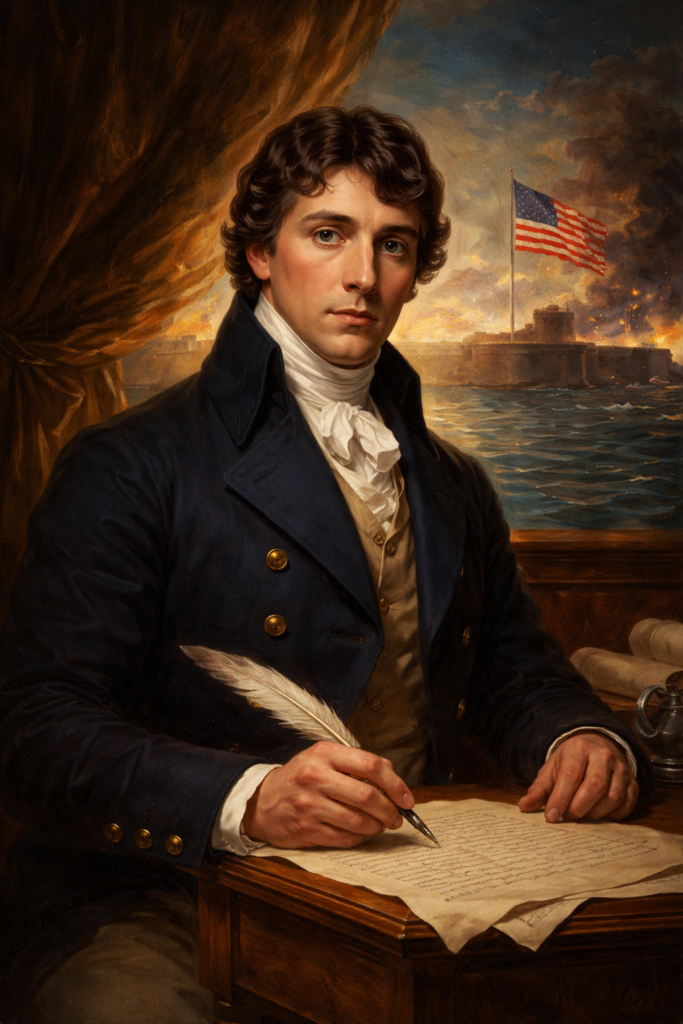
Francis Scott Key was an American lawyer, author, and amateur poet best remembered for writing the words that became “The Star-Spangled Banner,” the national anthem of the United States. In September 1814, during the War of 1812, Key witnessed the British bombardment of Fort McHenry while detained aboard a British ship near Baltimore. As dawn broke and the American flag was still flying over the fort, he was moved to write a poem titled “Defence of Fort M’Henry,” capturing the resilience and resolve of the young nation. The poem was later set to the tune of a popular British song and gradually gained patriotic significance, eventually being adopted as the official national anthem in 1931. Key’s words have since become one of the most enduring symbols of American perseverance and national identity.

Steadfast in Courage, Faithful to Truth

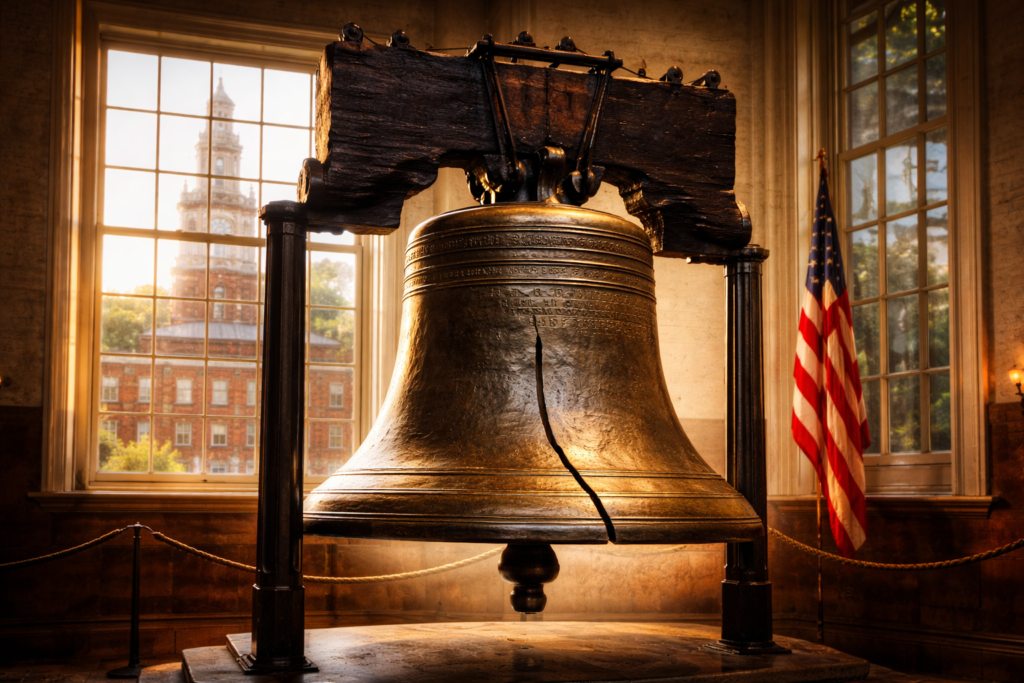
The Liberty Bell stands as one of the most enduring symbols of American liberty, not because it rang perfectly, but because it did not. Cast in the 18th century and originally used to summon lawmakers and mark public announcements, the bell bears the biblical inscription “Proclaim LIBERTY throughout all the land unto all the inhabitants thereof.” Over time, a crack formed—eventually rendering it unusable—yet this imperfection only deepened its meaning. By the 19th century, abolitionists adopted the Liberty Bell as a powerful emblem of freedom unfinished and justice still demanded, seeing in its silence a reminder that liberty must be lived out, not merely declared. Today, the Liberty Bell represents the moral weight of the American promise: liberty proclaimed, tested by history, imperfectly realized, and continually calling each generation to carry its message forward with integrity and resolve.

May we be worthy of the freedom entrusted to us—
steadfast in courage, faithful to truth,
and united in our resolve to preserve liberty for generations yet to come.
May God bless this land, its people, and the enduring hope of freedom. Amen.
🇺🇸

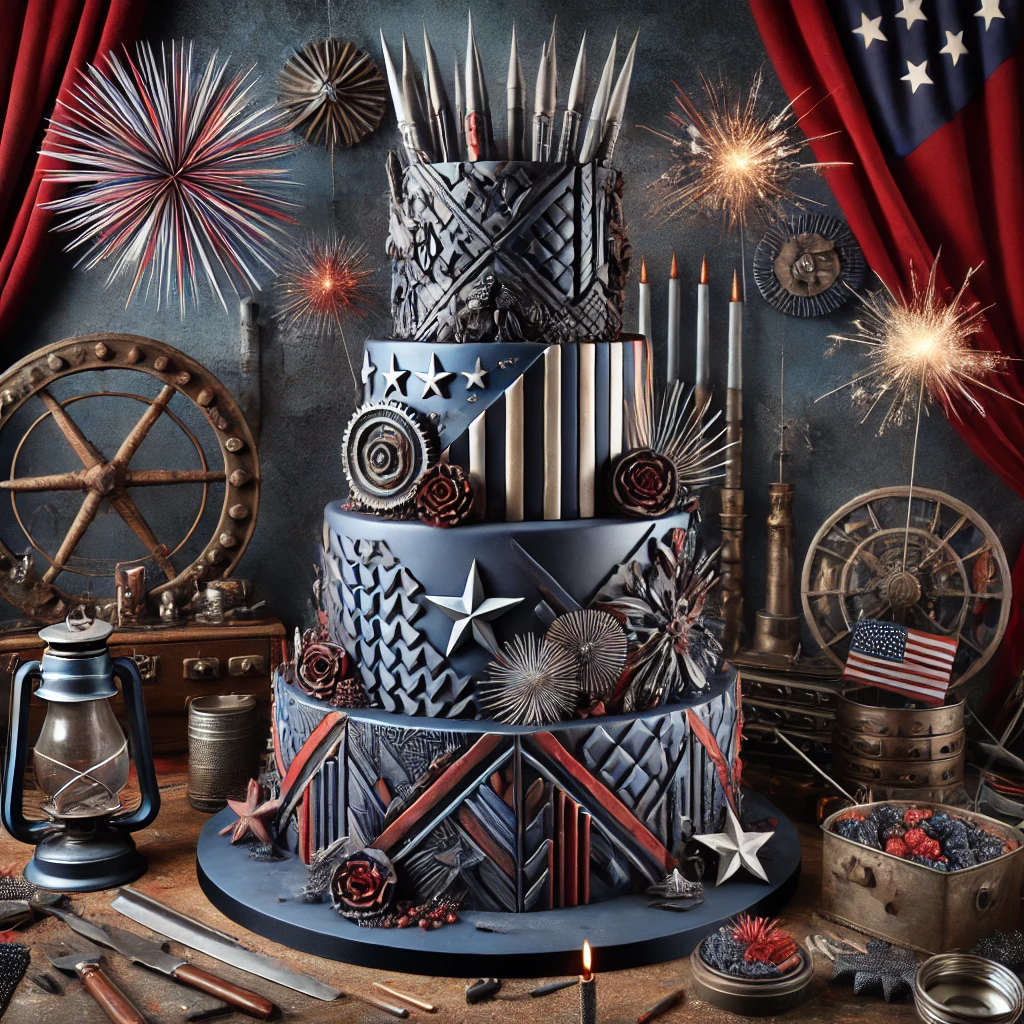
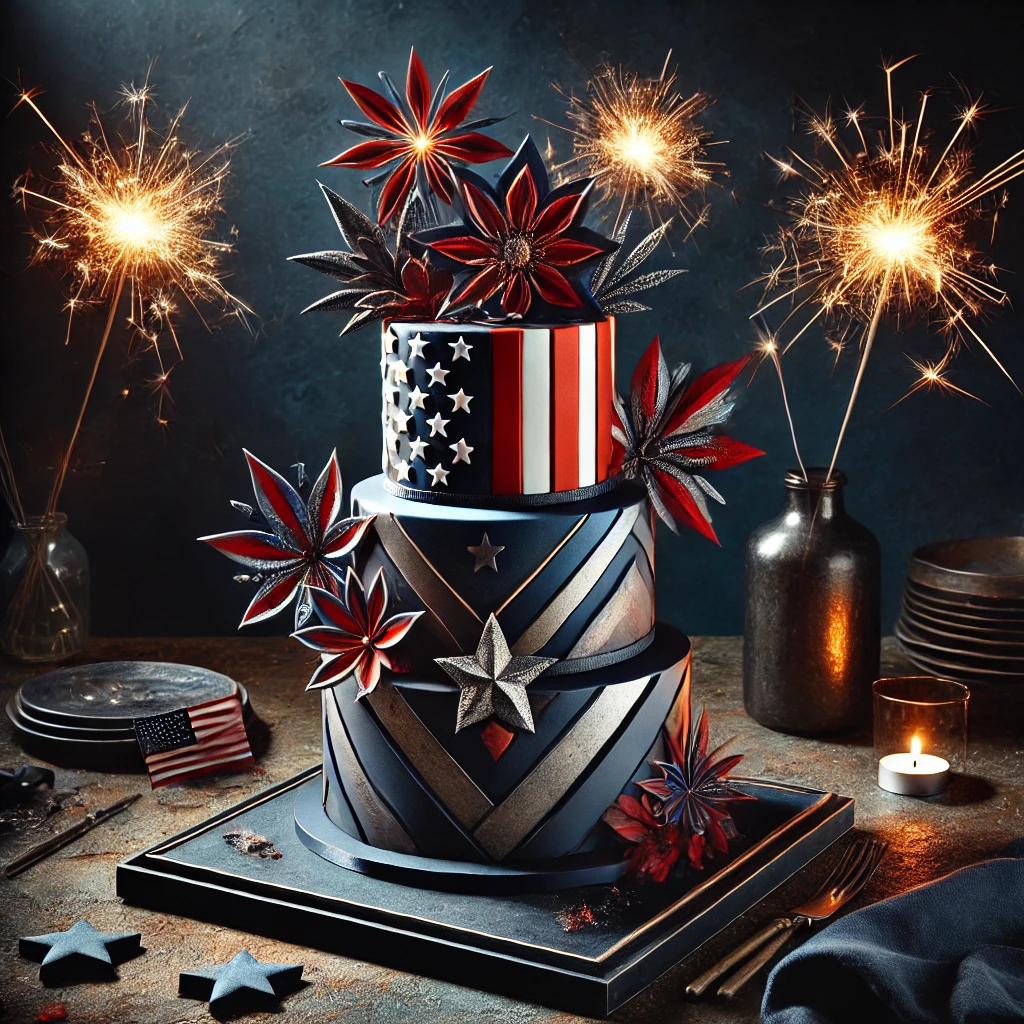
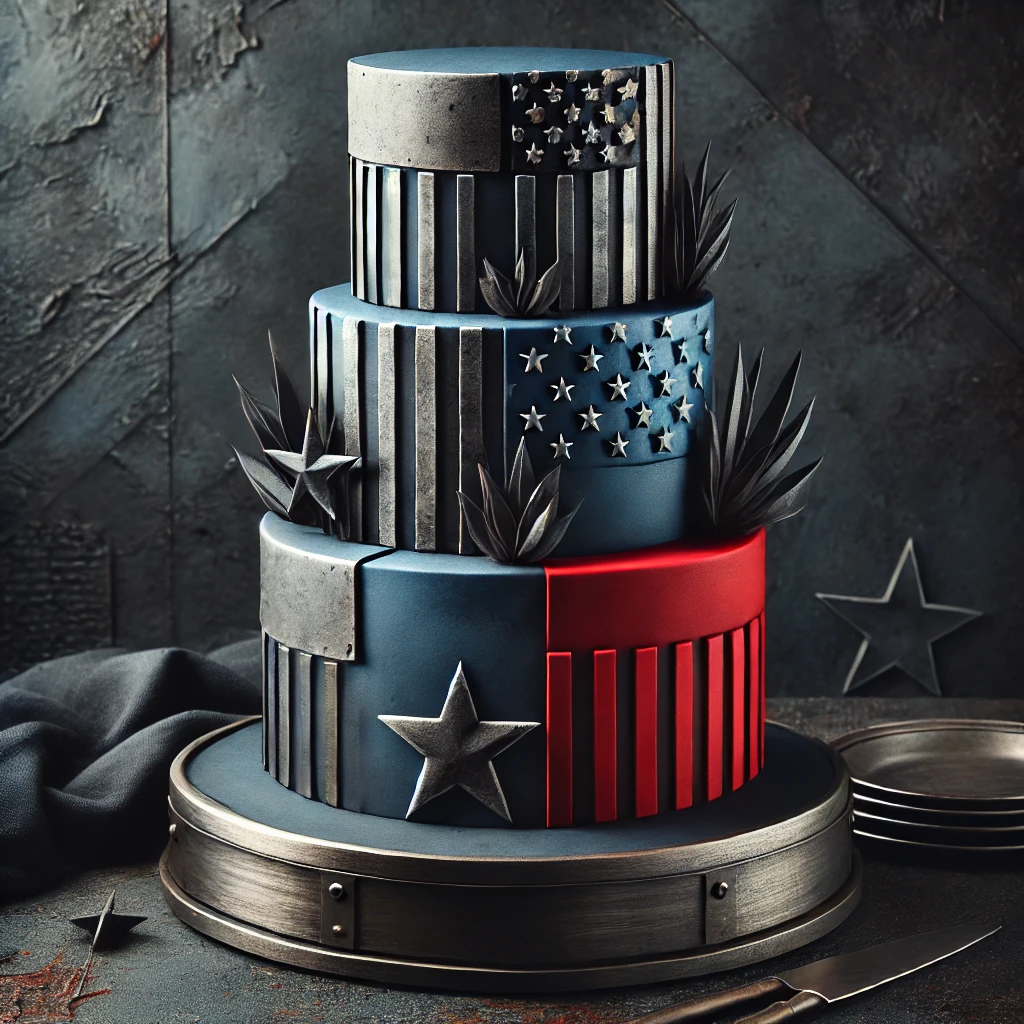
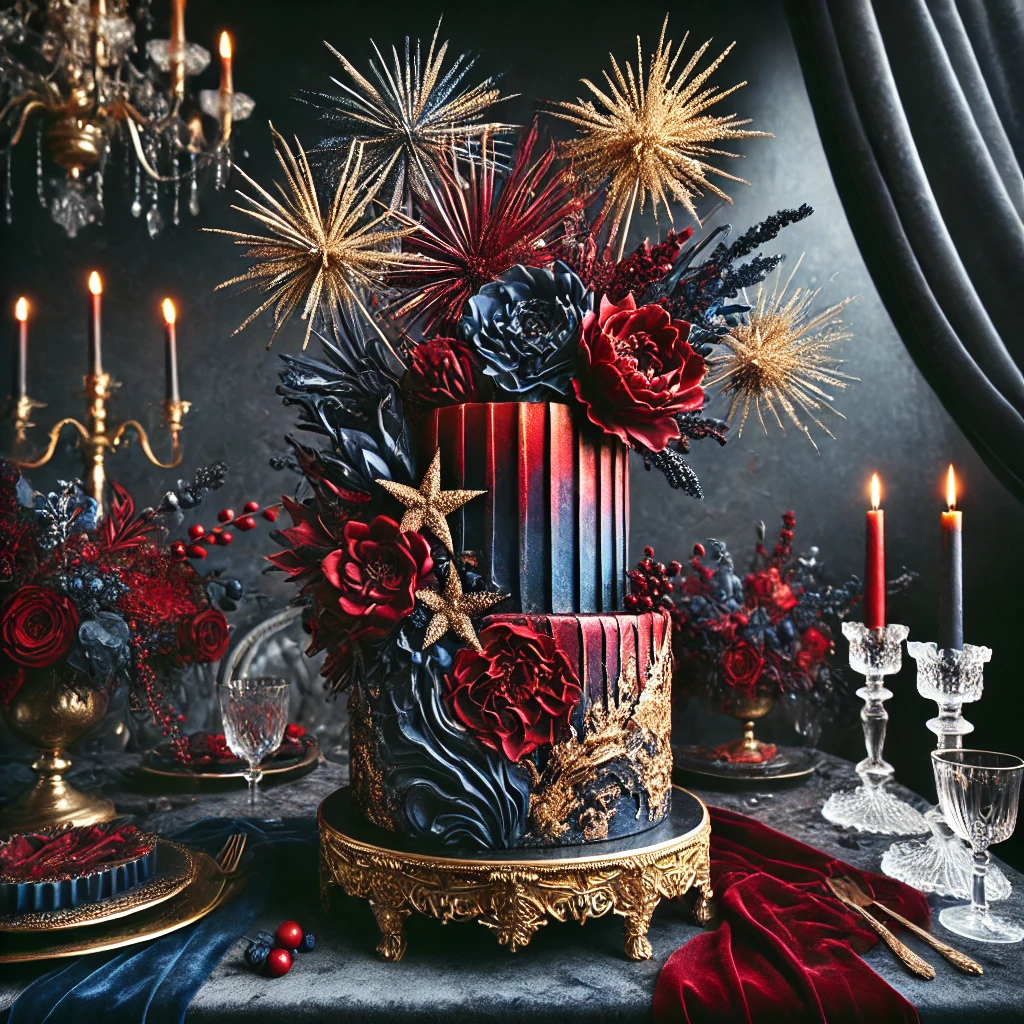
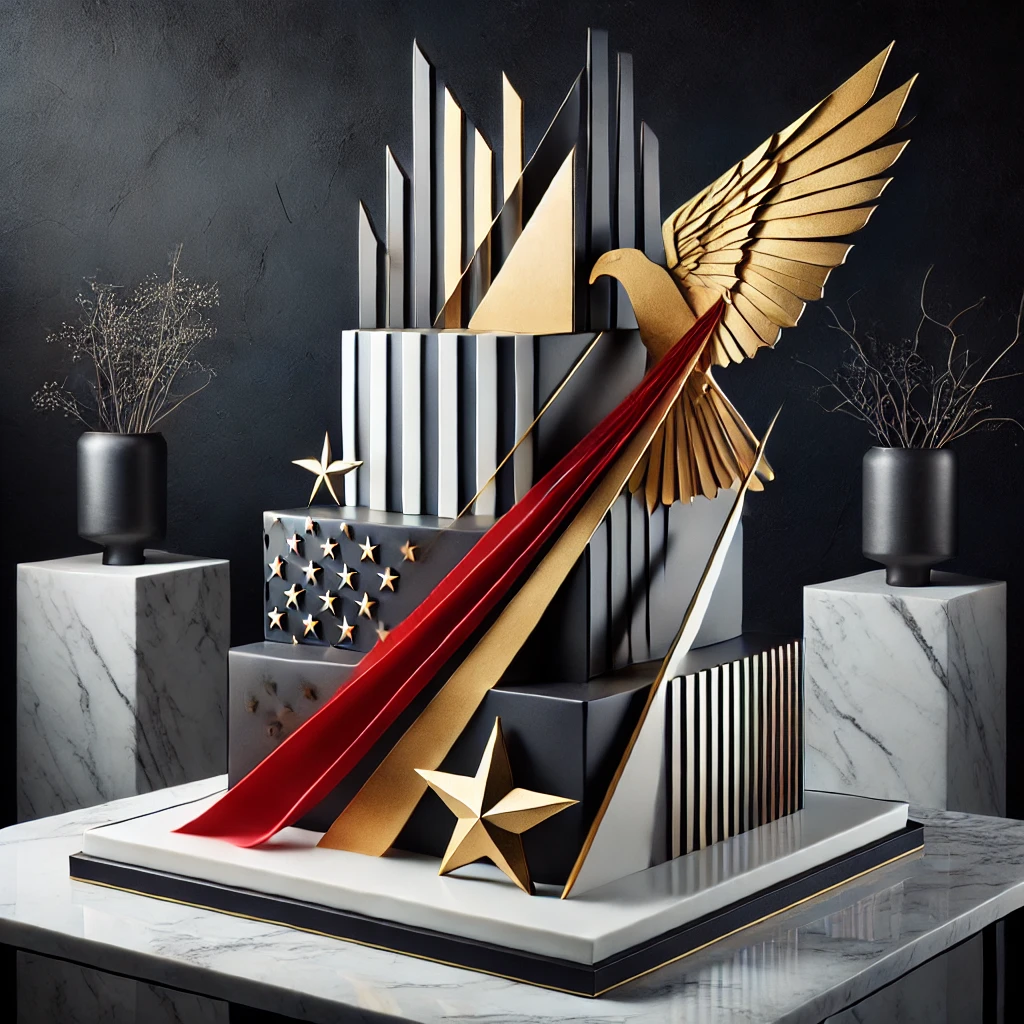
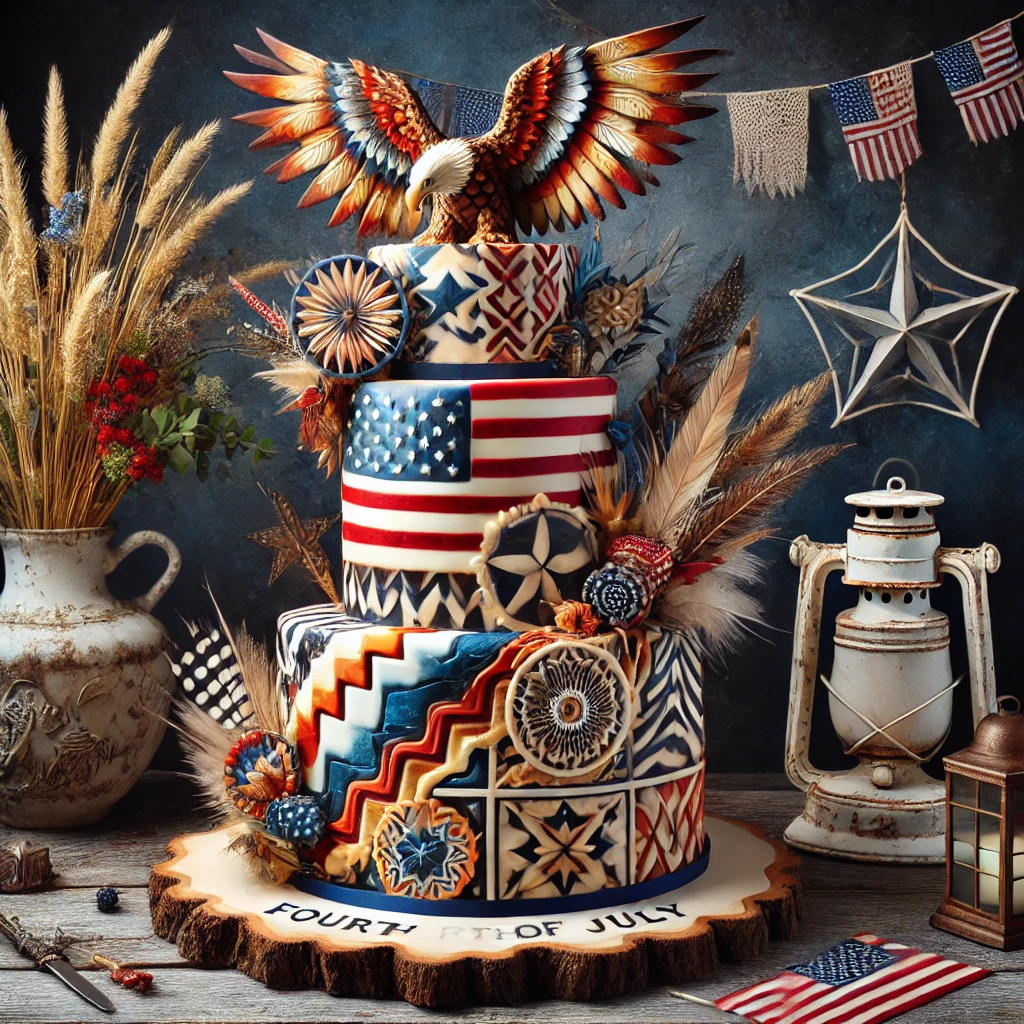
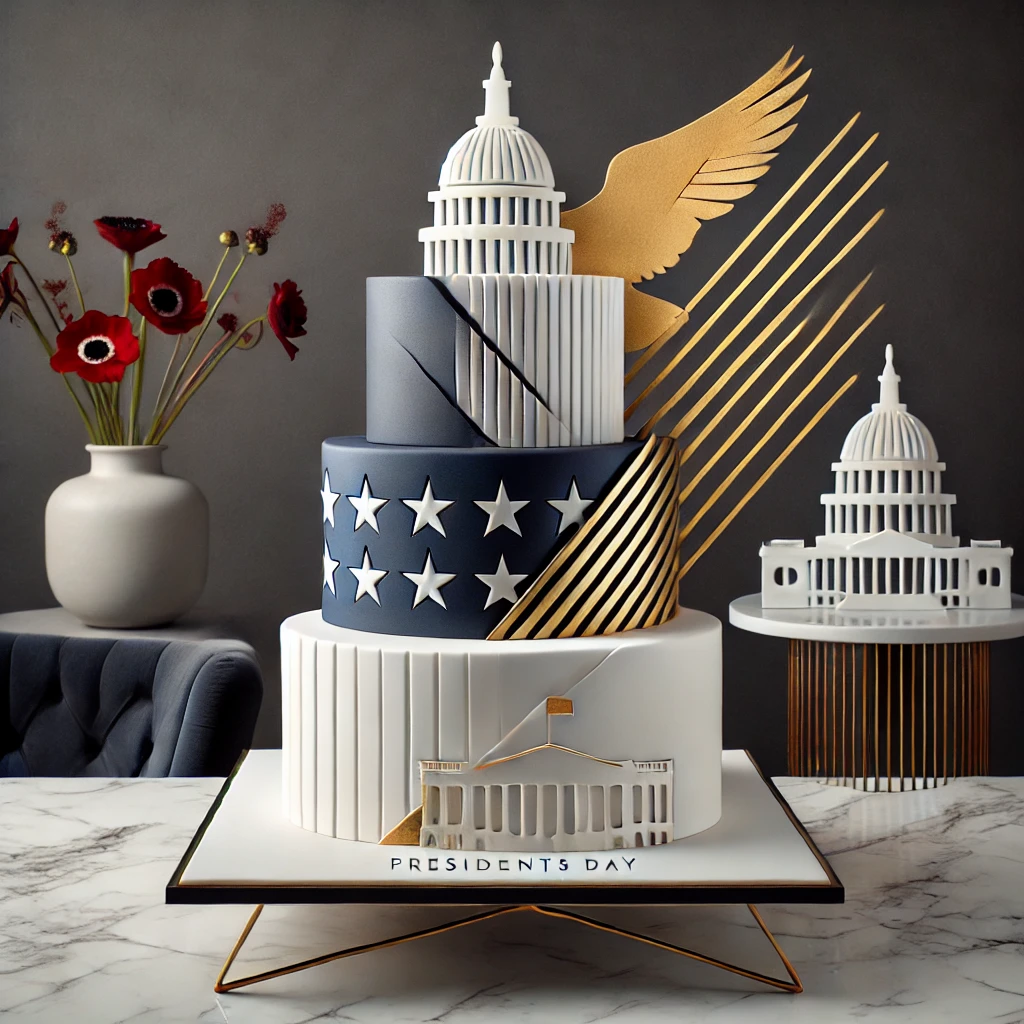
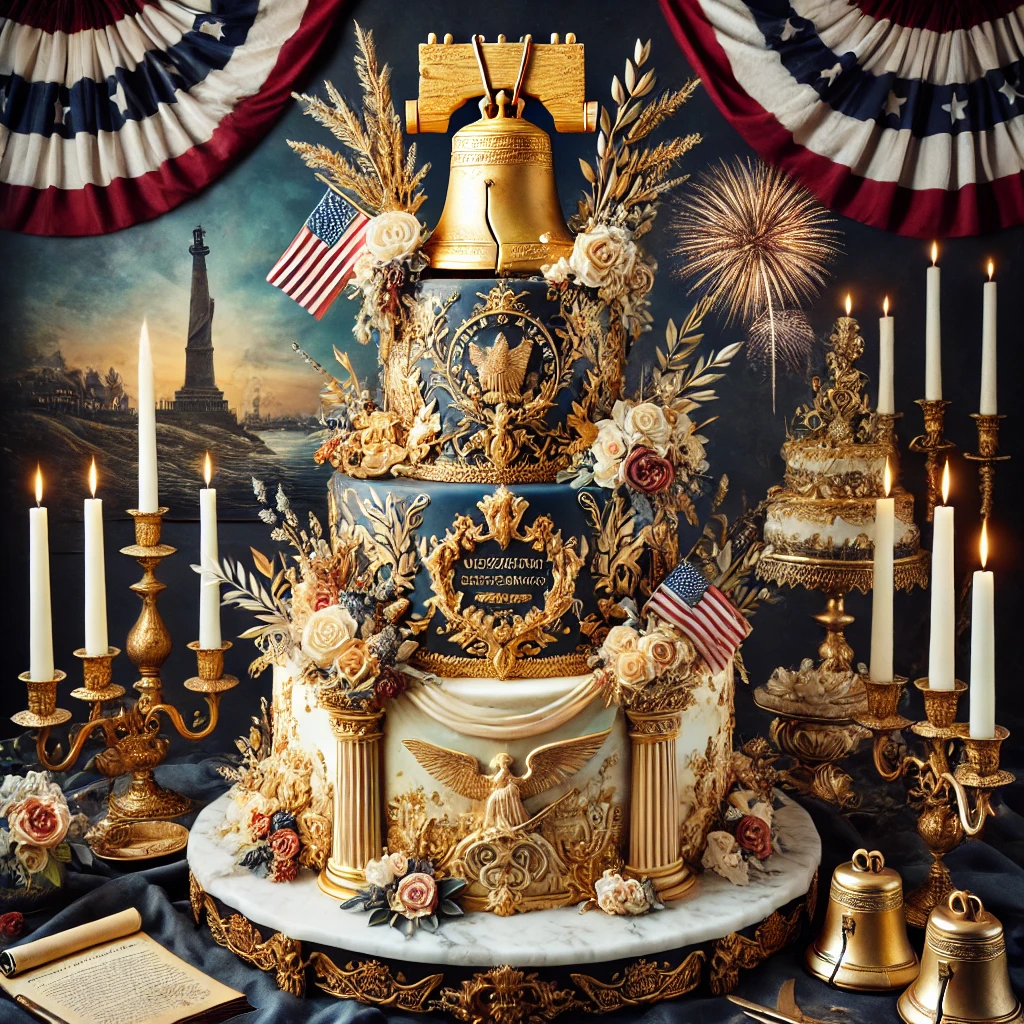
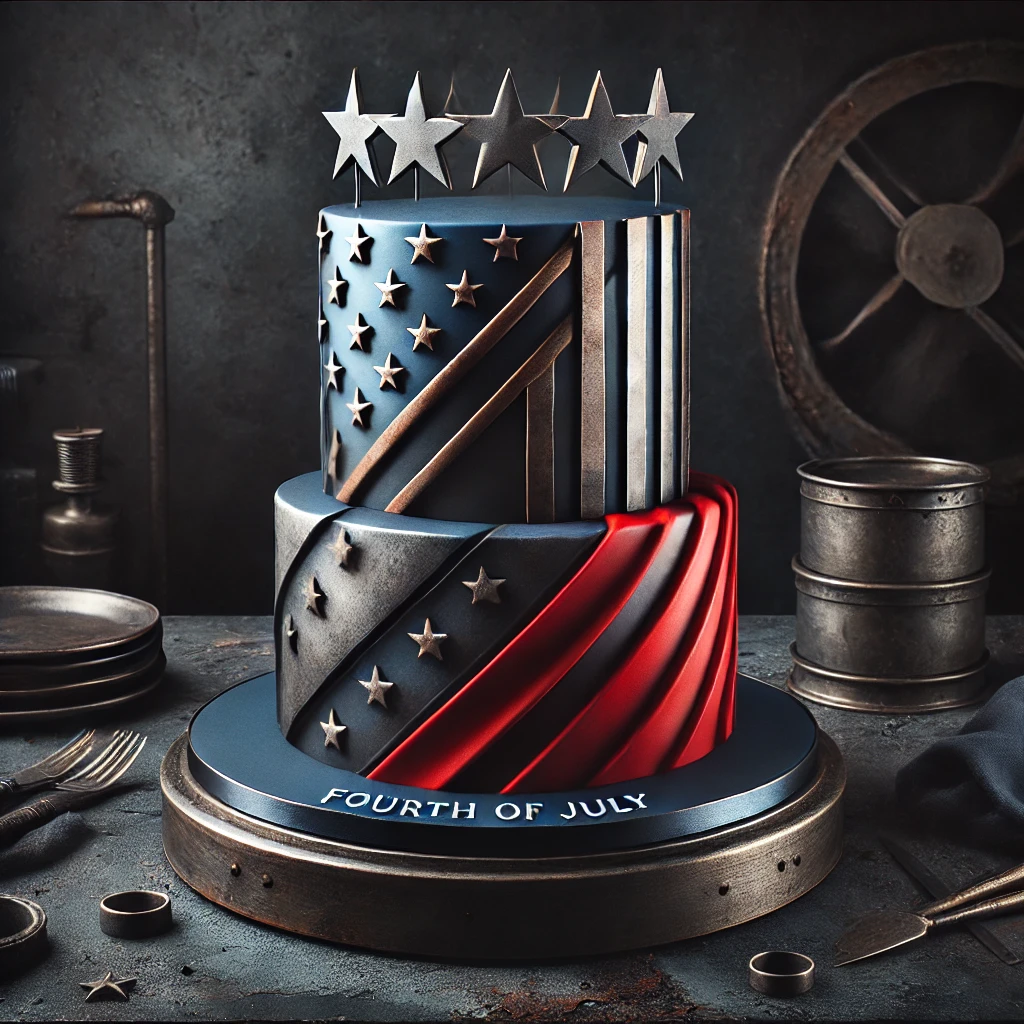
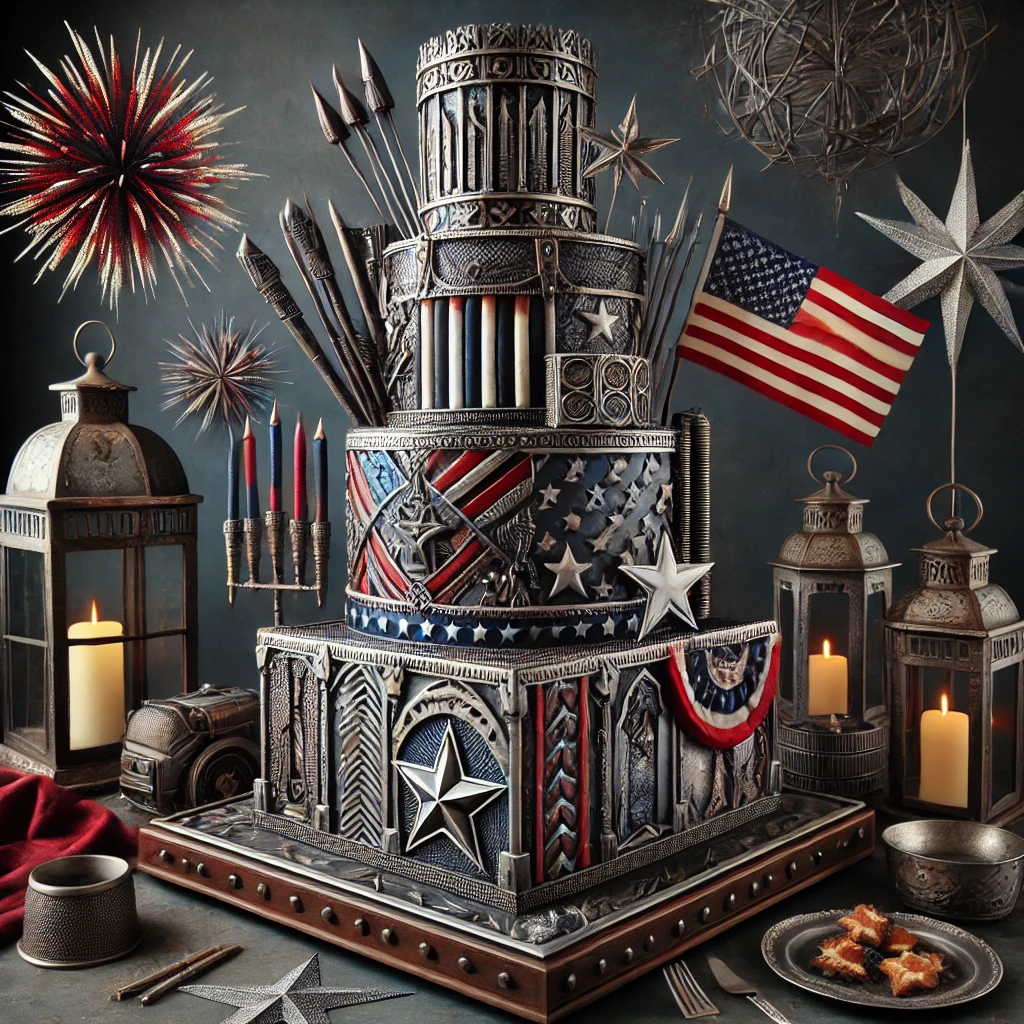
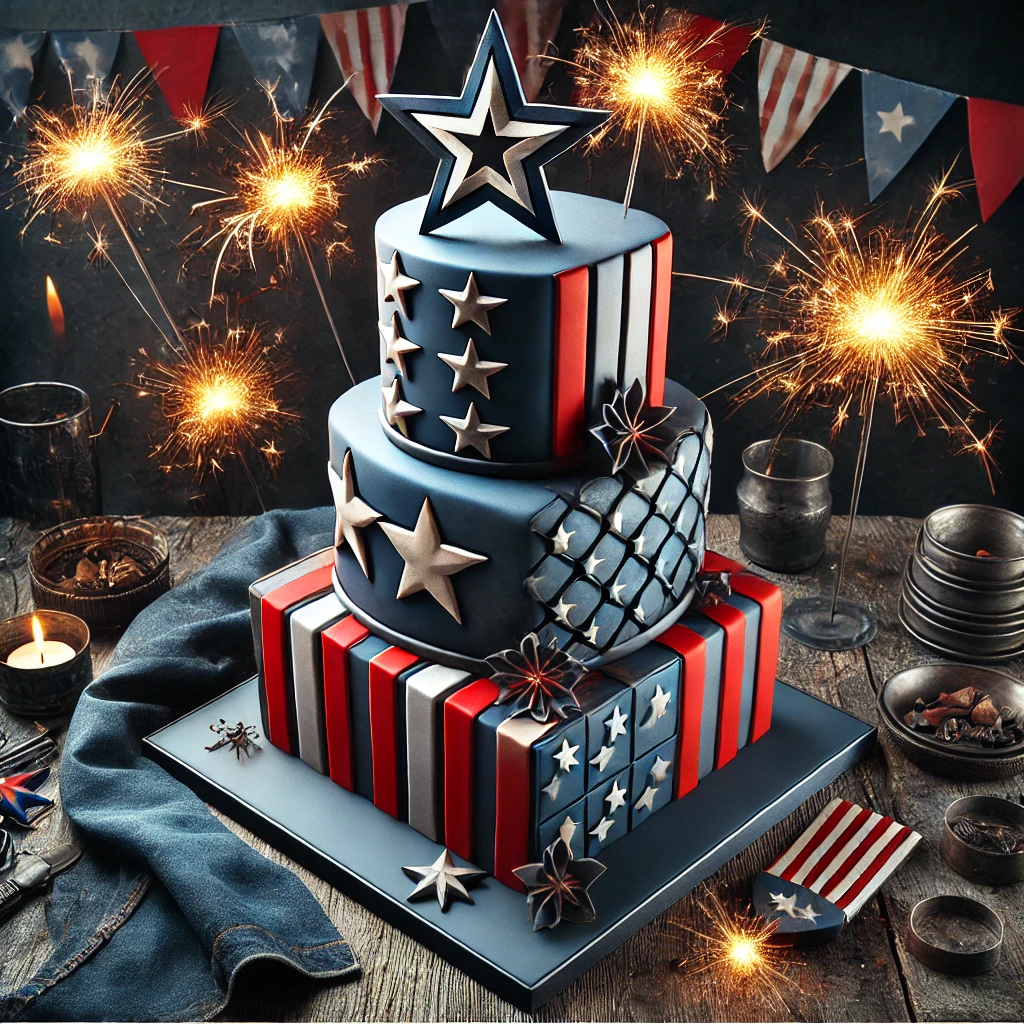
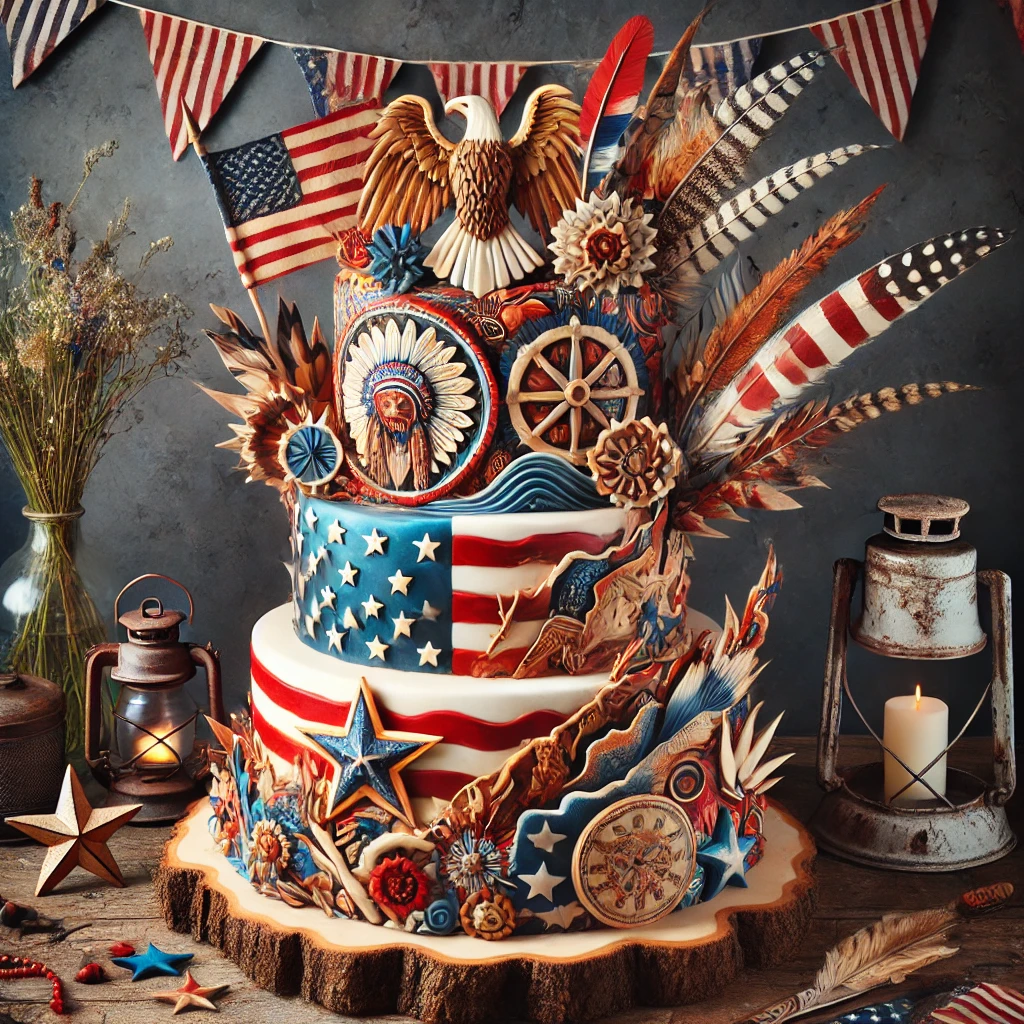
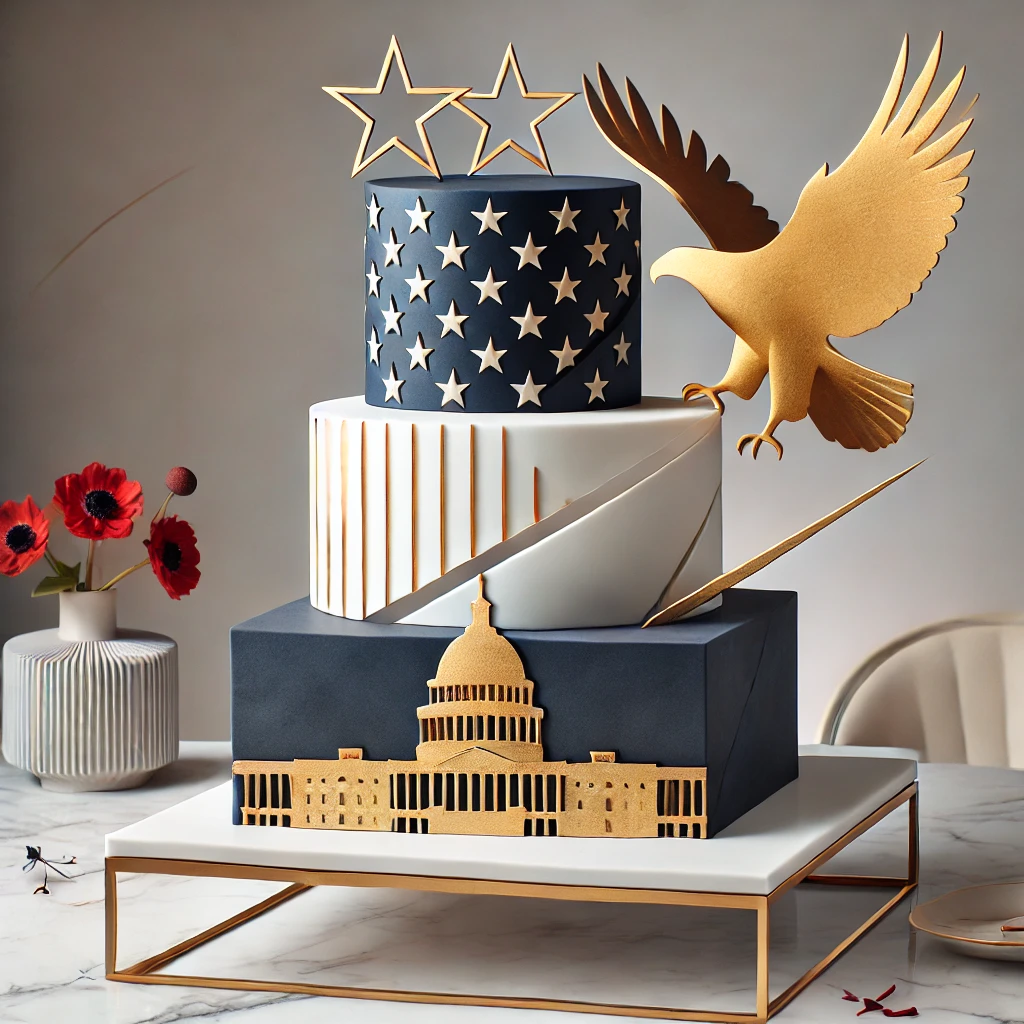
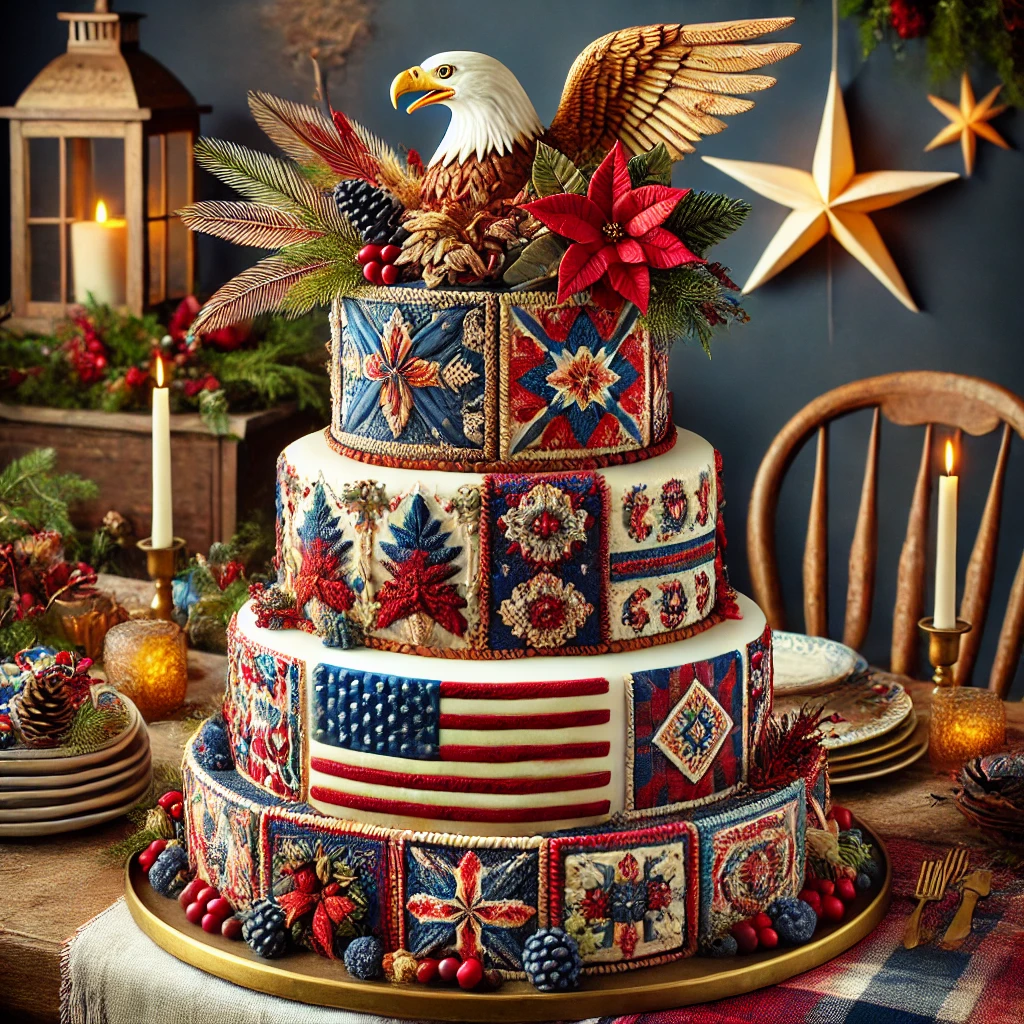
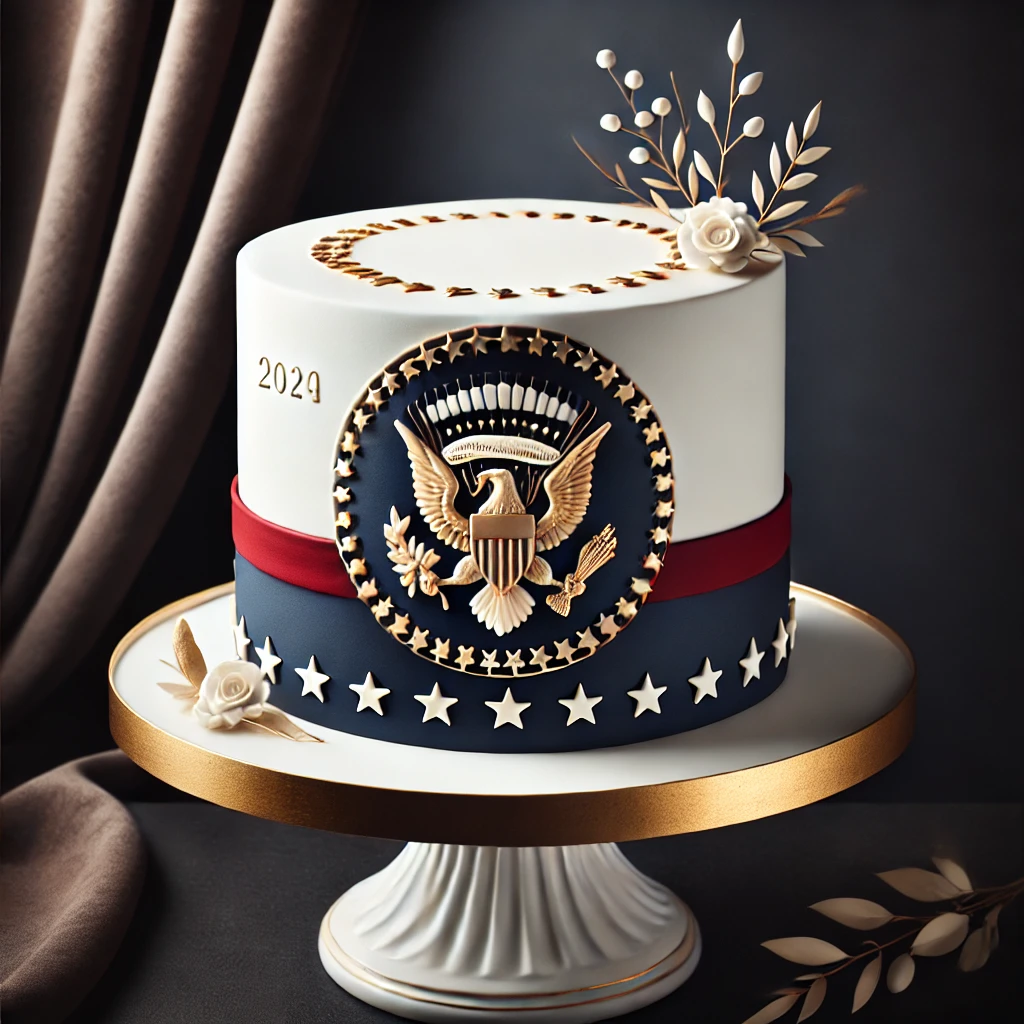
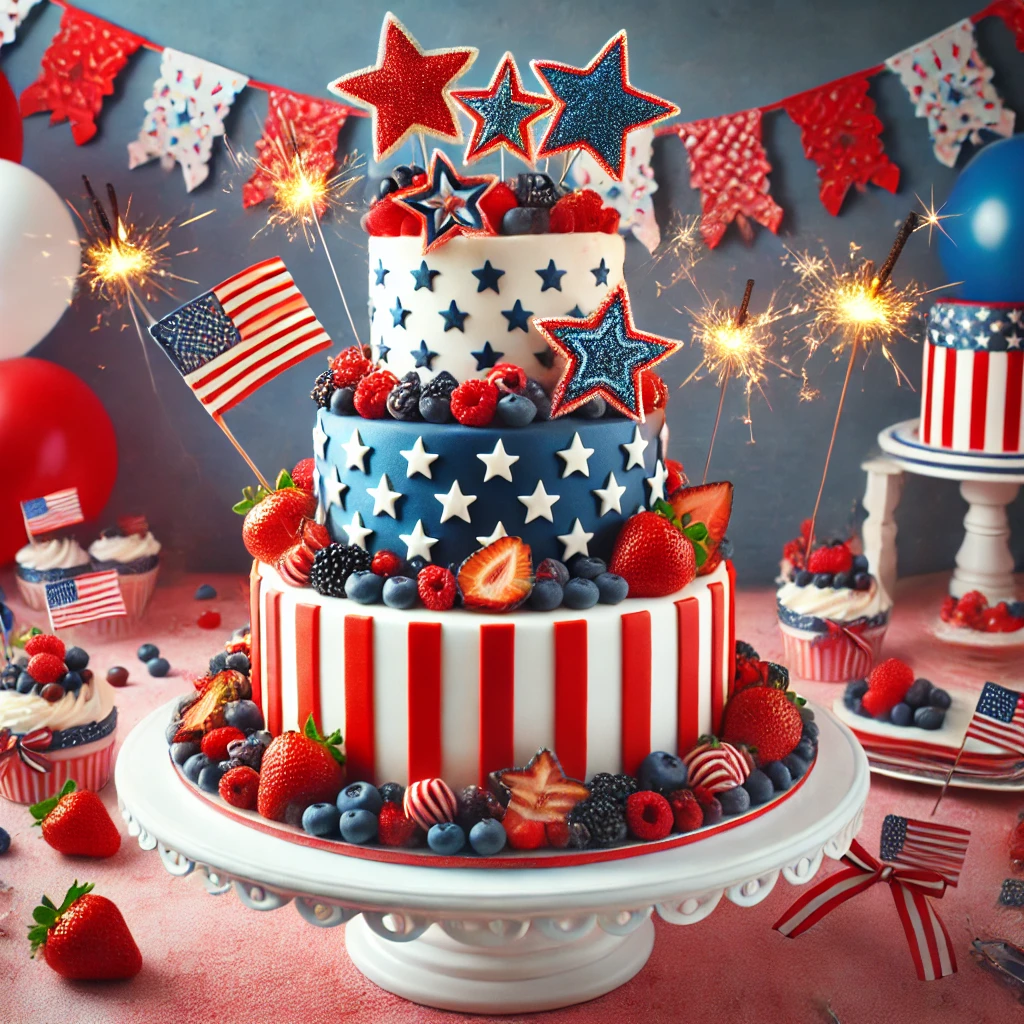
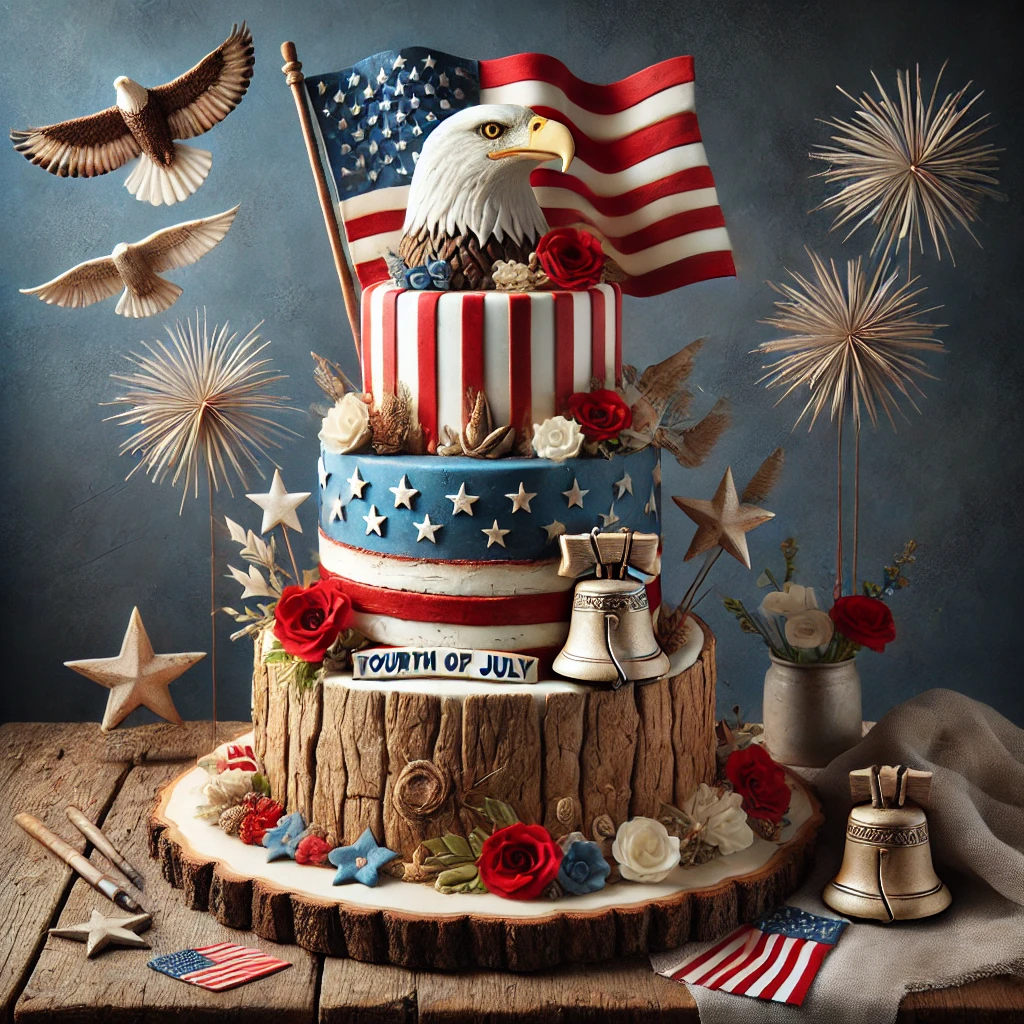
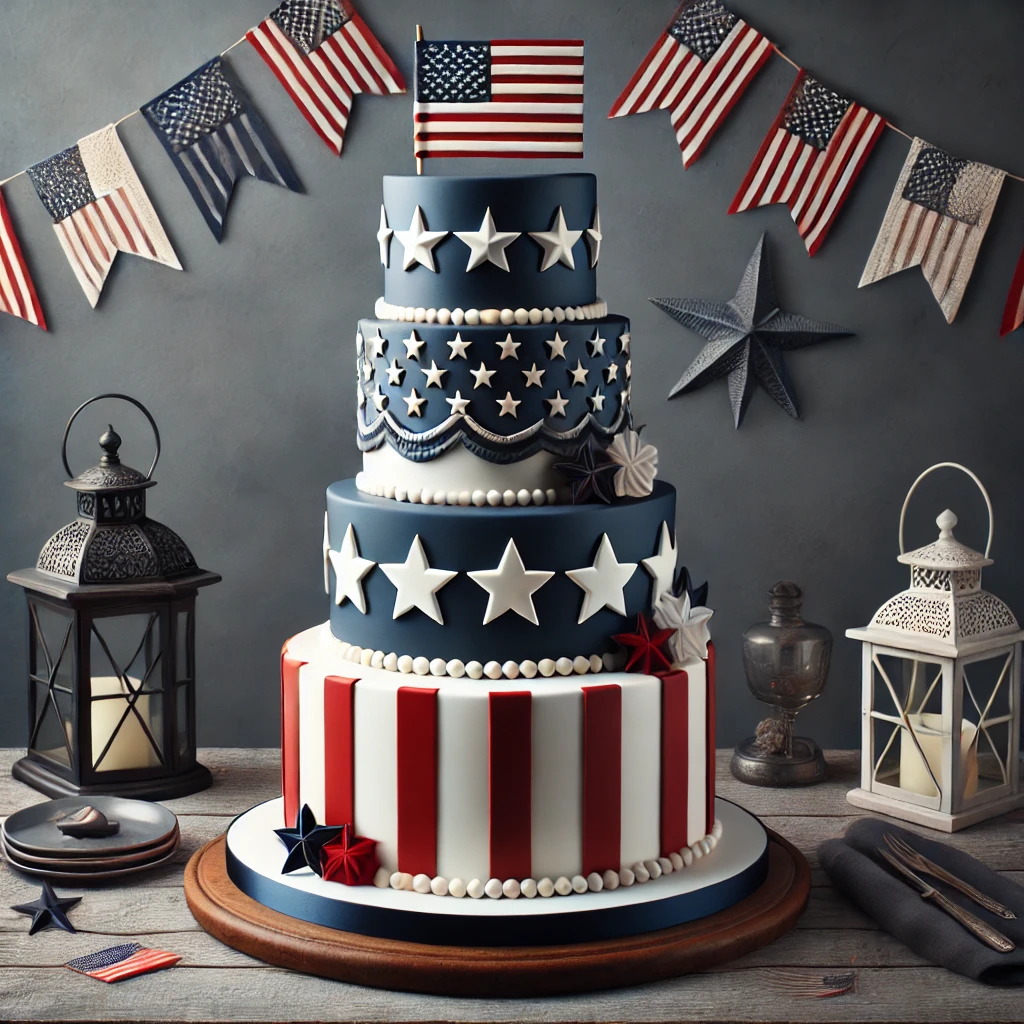
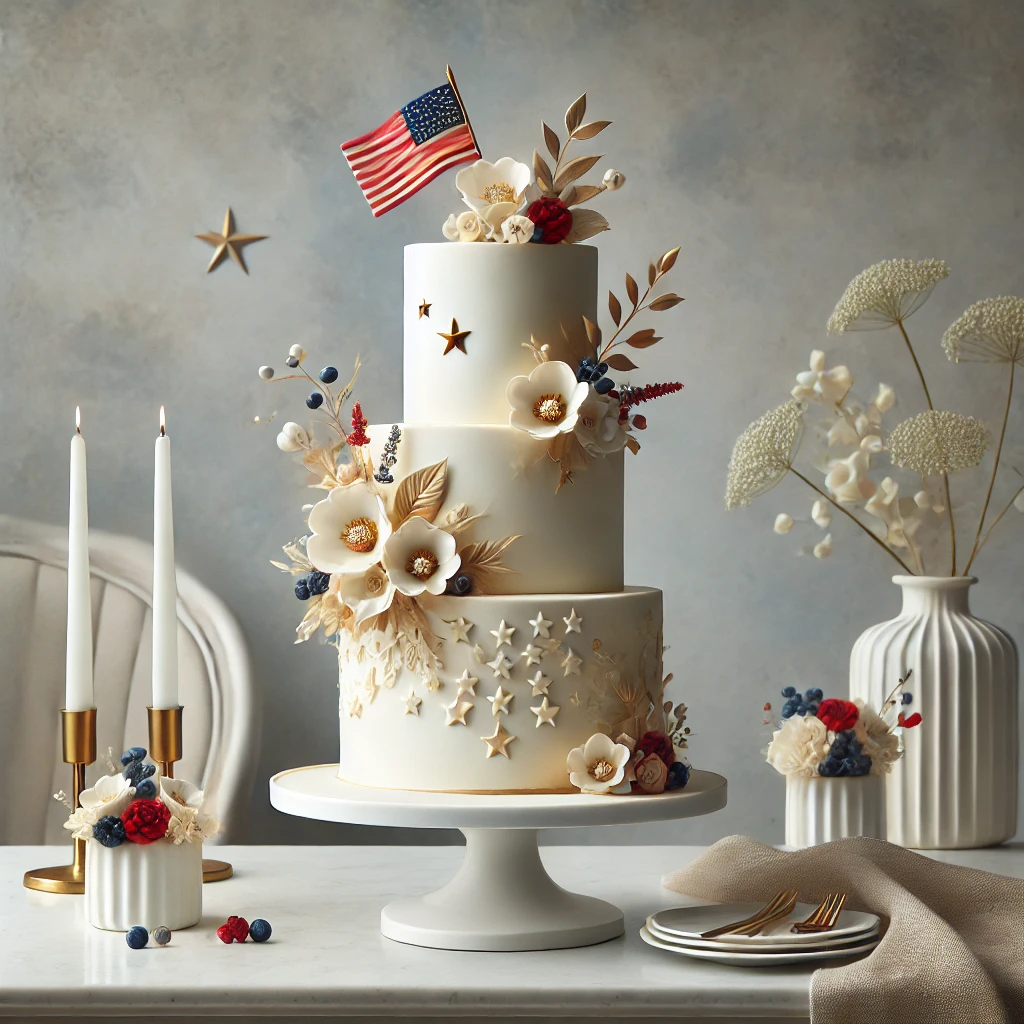
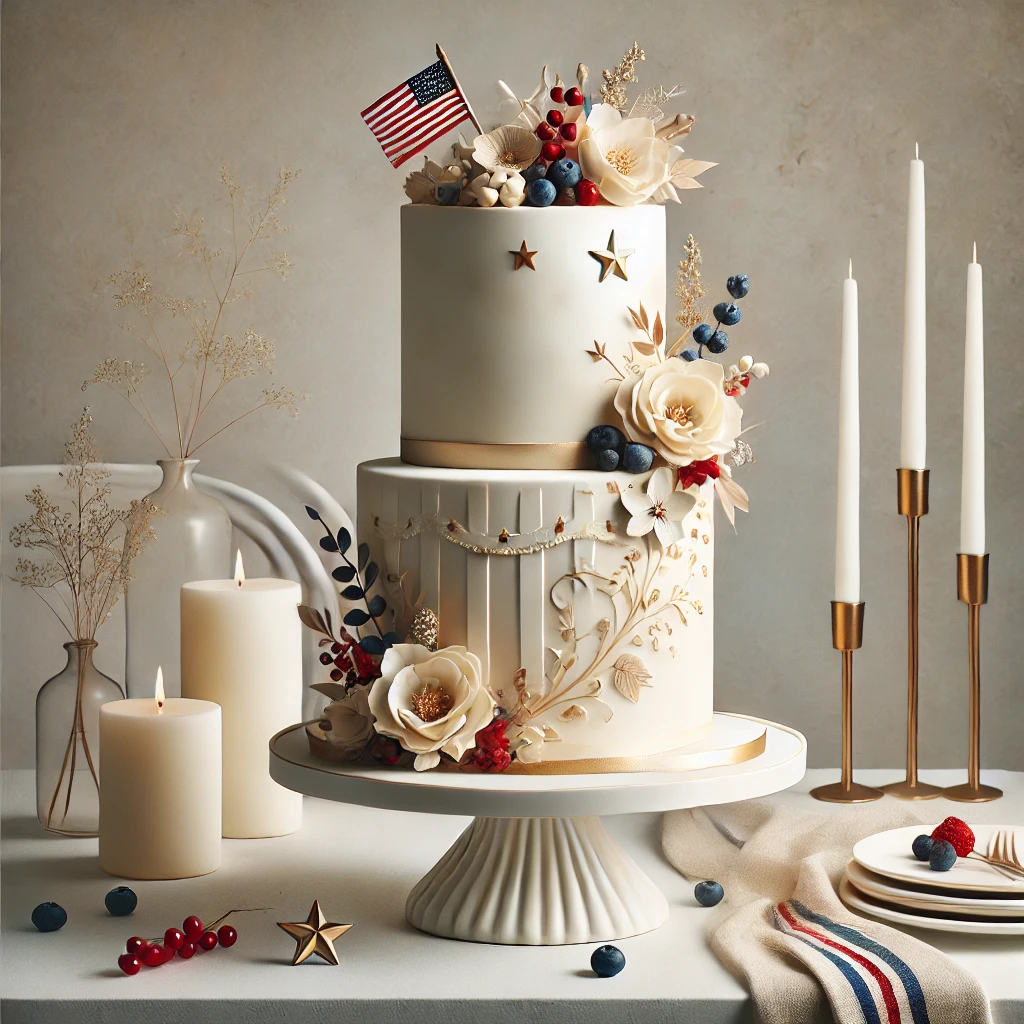
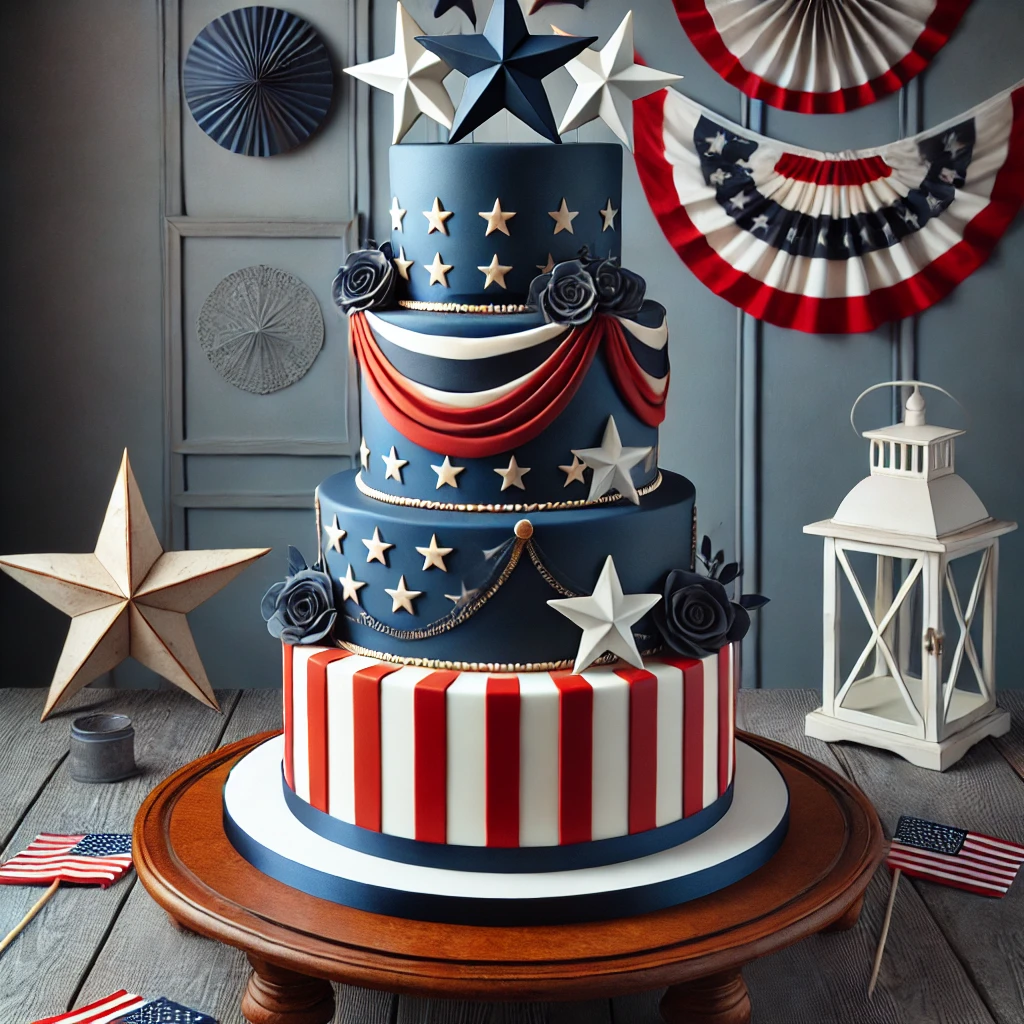
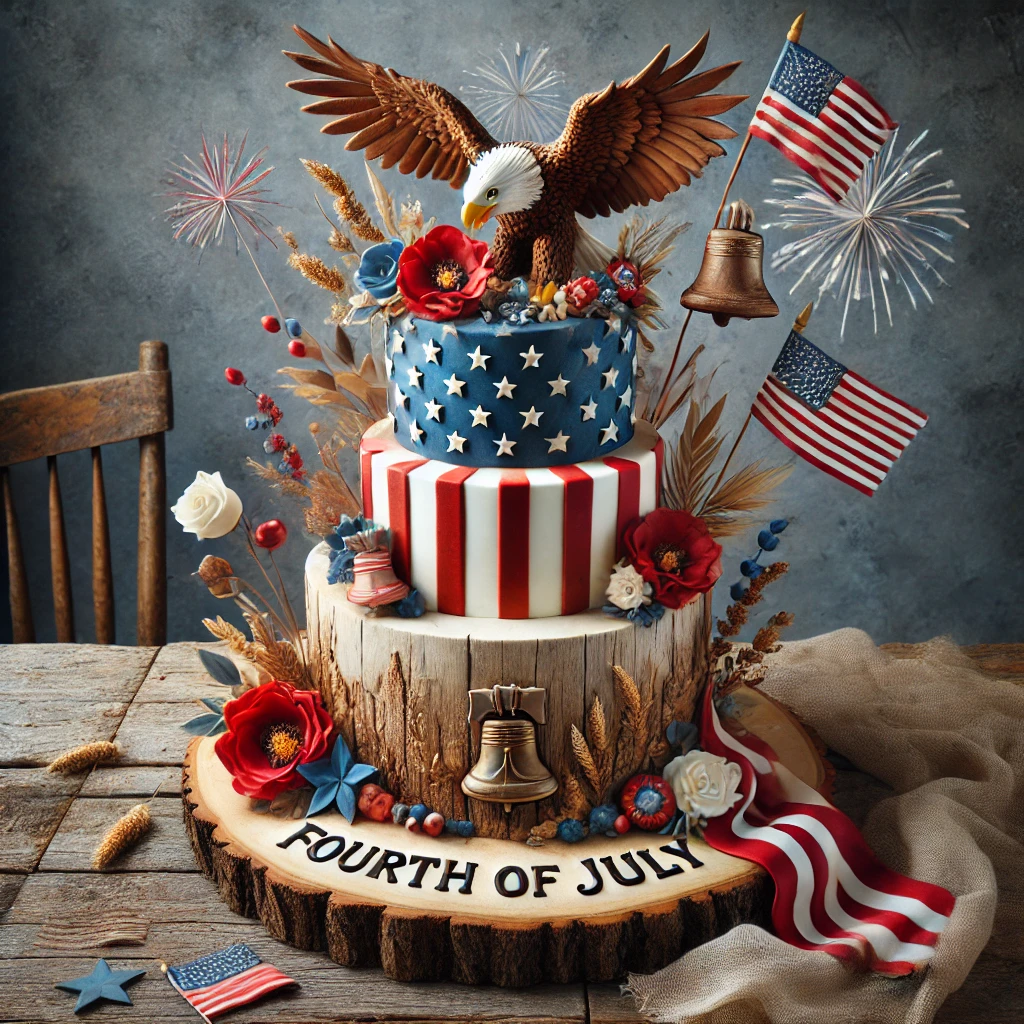
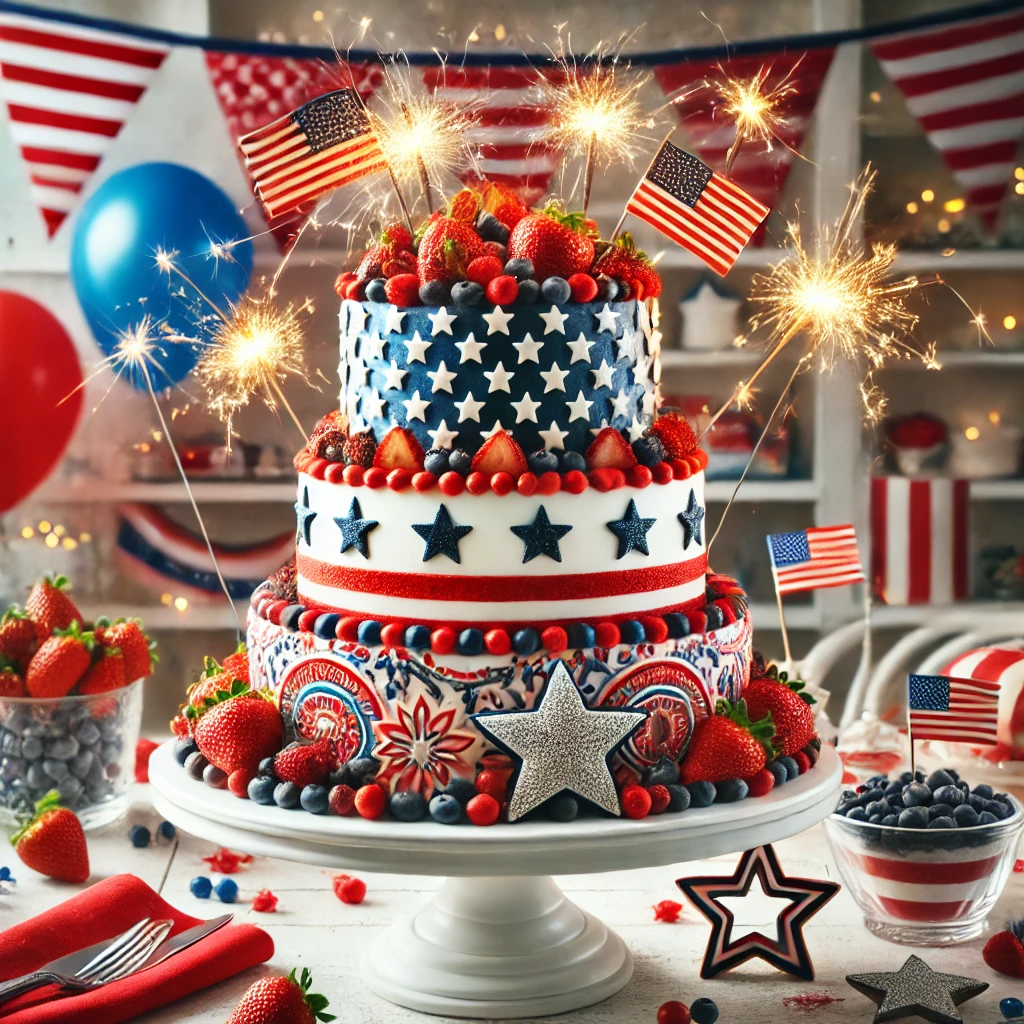
Independence Day Cake & Atmosphere Ideas

Where style, memory, and celebration meet.

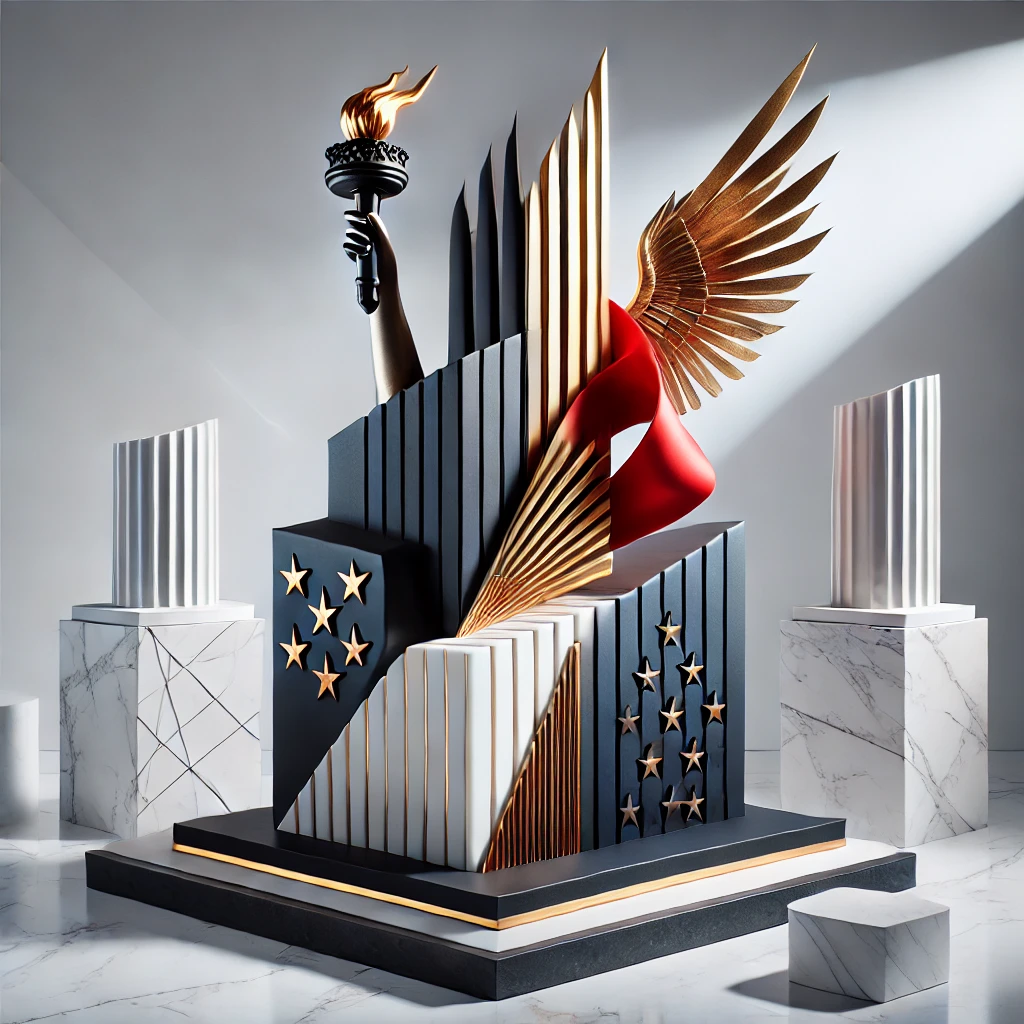
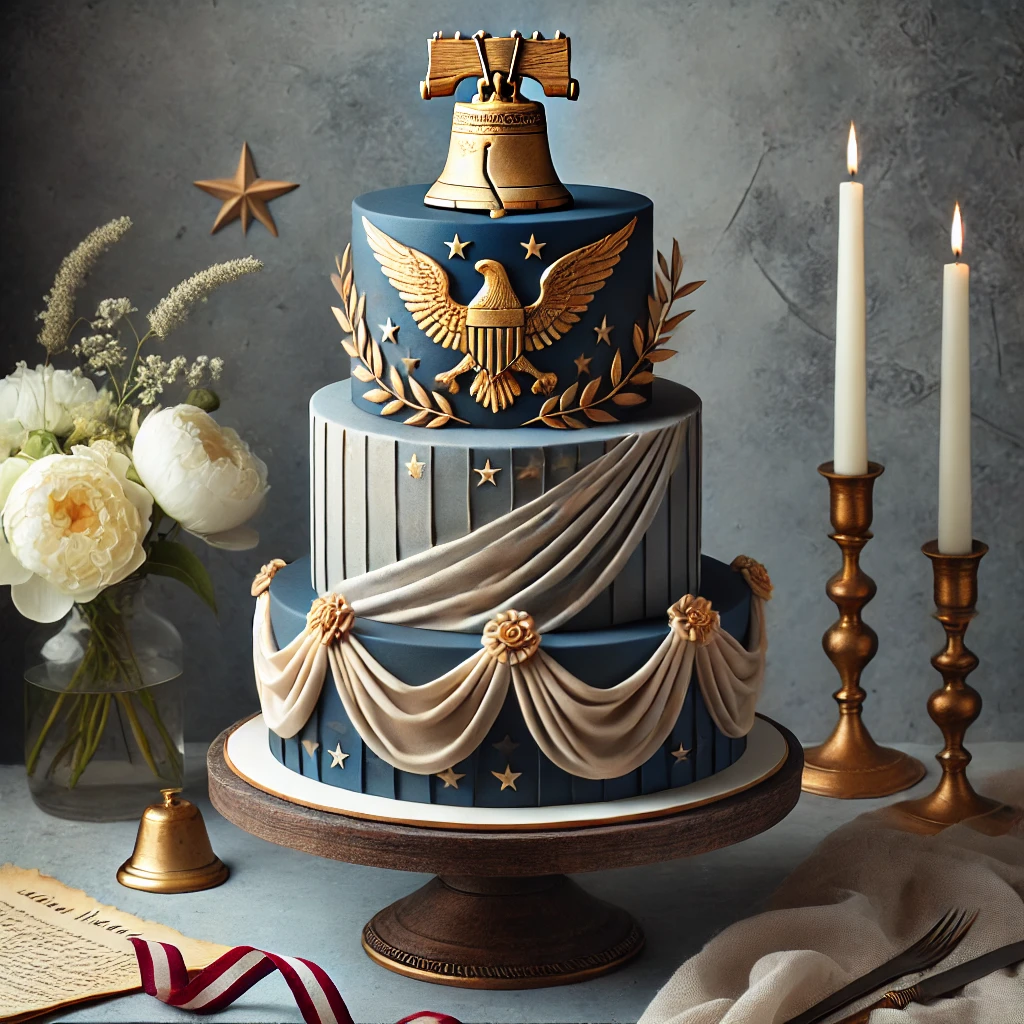
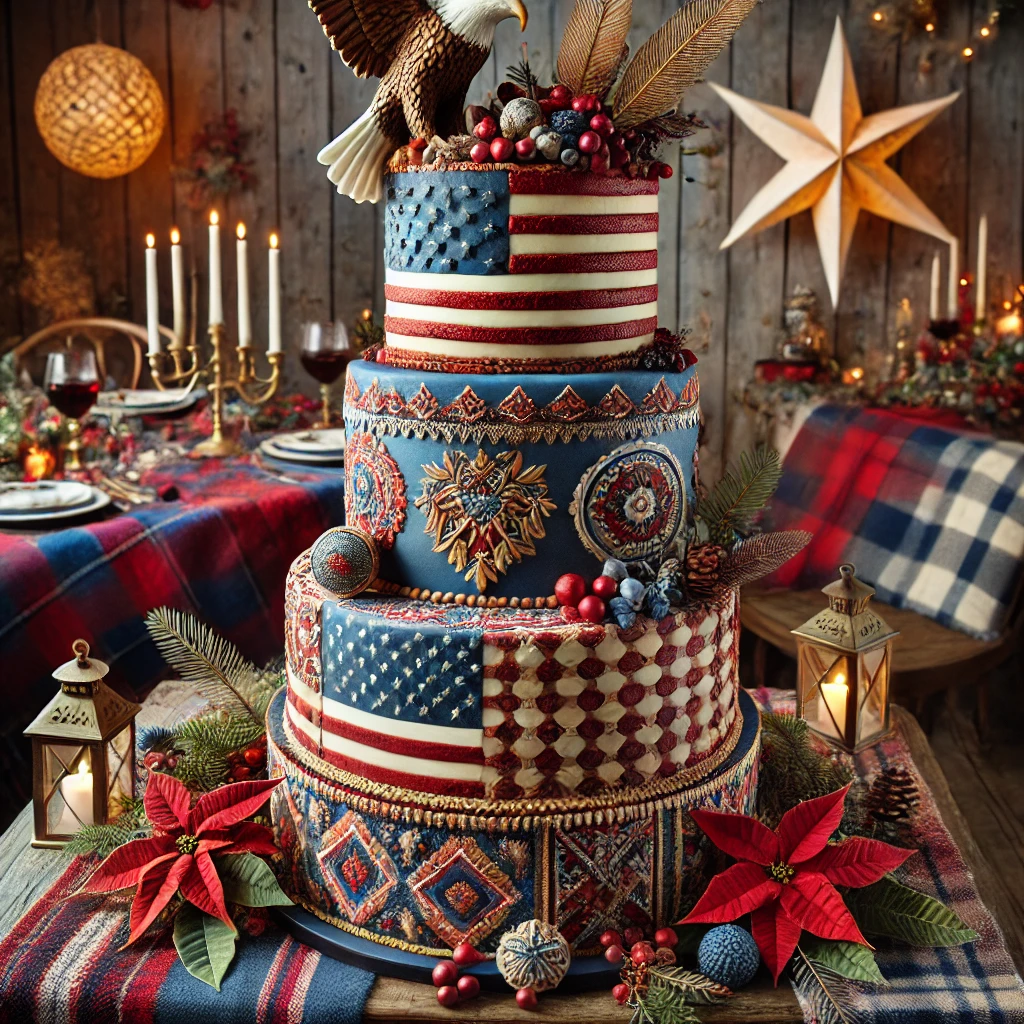
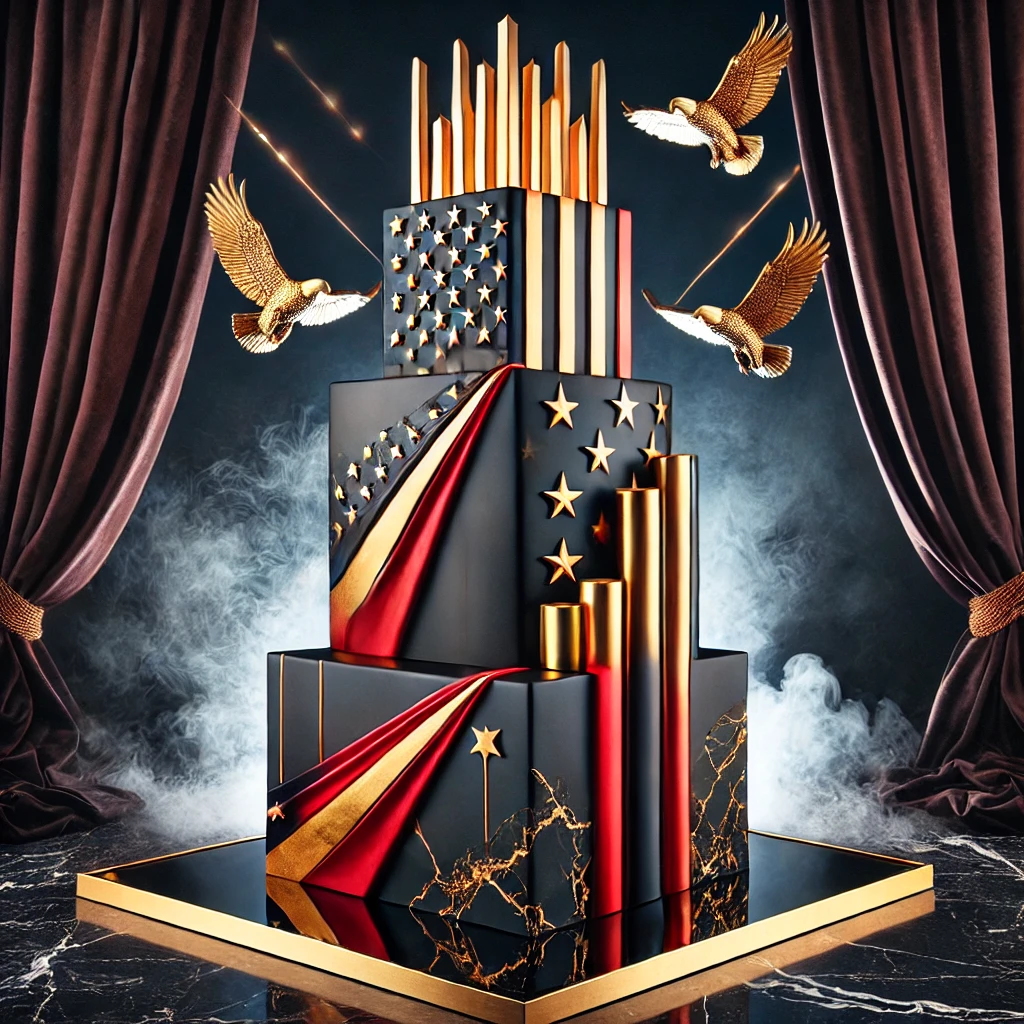
This section is meant to be more than Cake Decorating Ideas… it’s designed to spark inspiration and creativity, awaken tradition, and infuse your special occasions with style, identity, and atmosphere. A color palette becomes a theme. A design becomes a mood. Simple details—like sugared holly leaves or shimmering stars—can set the tone for a gathering and become part of cherished traditions and lasting memories melded with personal touch and love.

Traditional Independence Day Dishes

🇺🇸 Traditional 4th of July Foods
🍔 Grilled & Barbecue Favorites
  • Hamburgers – a summer cookout staple
  • Hot dogs – often served with mustard, ketchup, relish, onions
  • BBQ ribs or pulled pork
  • Grilled chicken
  • Bratwursts or sausages

Many families and communities host cookouts, backyard barbecues, or park picnics.


🌽 Classic Sides
  • Corn on the cob – often grilled or boiled, served with butter
  • Potato salad
  • Coleslaw
  • Baked beans
  • Macaroni and cheese
  • Pasta salad (often red, white, and blue-themed)

🥗 Lighter & Picnic Options
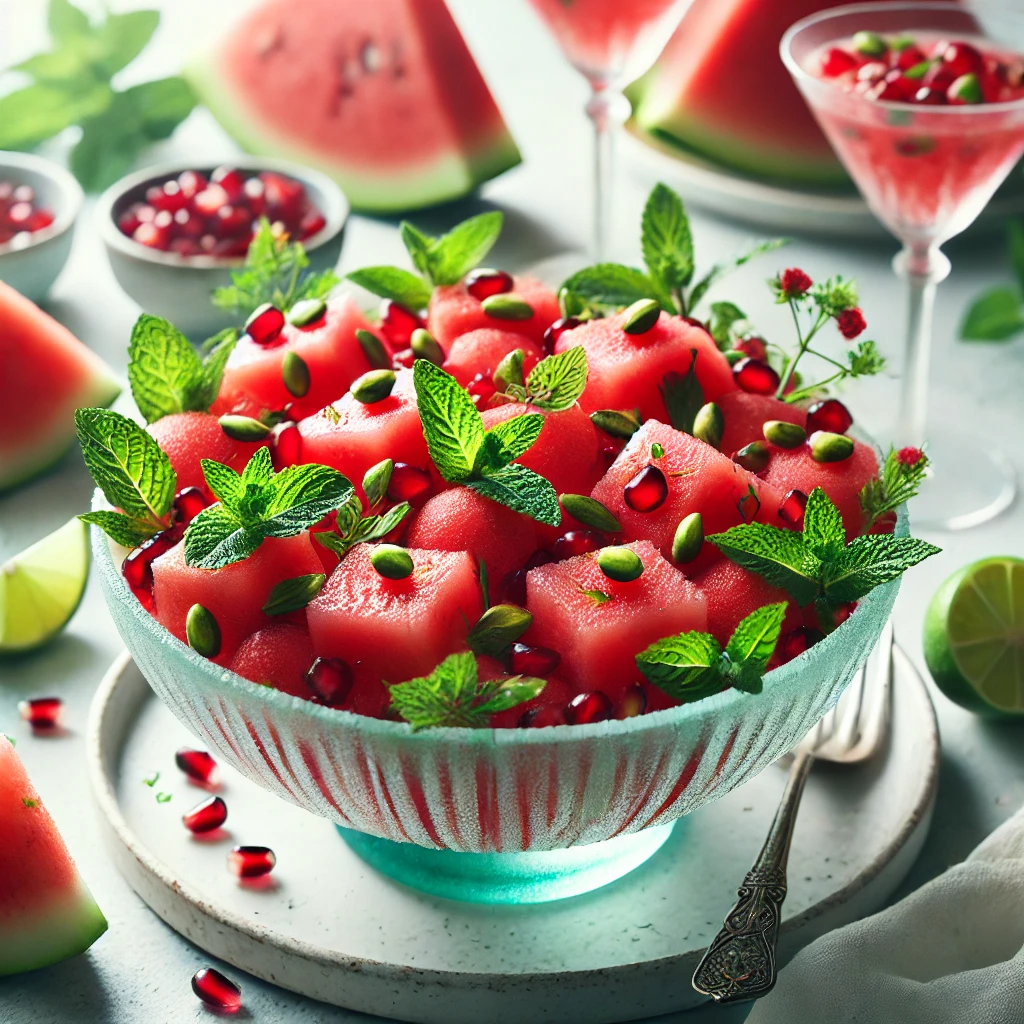
  • Watermelon slices
  • Fresh fruit salad – sometimes shaped like stars or made with berries for patriotic colors
  • Deviled eggs
  • Chips and dip – salsa, guacamole, queso, or onion dip

🍰 Festive Desserts
  • American flag cakes – decorated with berries and whipped cream
  • Strawberry shortcake
  • Blueberry pie / Cherry pie / Apple pie
  • Patriotic cupcakes or cookies
  • Jell-O desserts – in red, white, and blue layers

🍹 Drinks
  • Lemonade / Iced tea
  • Soda and sparkling water
  • Beer – especially craft and domestic
  • Red, white, and blue cocktails (layered or garnished with berries)
  • Snow cones or slushies

🎆 Cultural Traditions That Influence the Menu
  • Regional BBQ styles (e.g., Carolina pulled pork, Texas brisket, Kansas City ribs)
  • Immigrant traditions – in diverse communities, you might find tacos, lumpia, samosas, or egg rolls alongside burgers
  • Potluck parties – guests bring a variety of dishes, blending cuisines

🎇 Beyond the Food
  • Fireworks, parades, concerts, and outdoor games are often part of the celebration—and the food tends to be casual, shareable, and travel-friendly.

Recipes