


























Martin Luther King Jr. Day

with ORO VALENTIO

Observed the third Monday in January

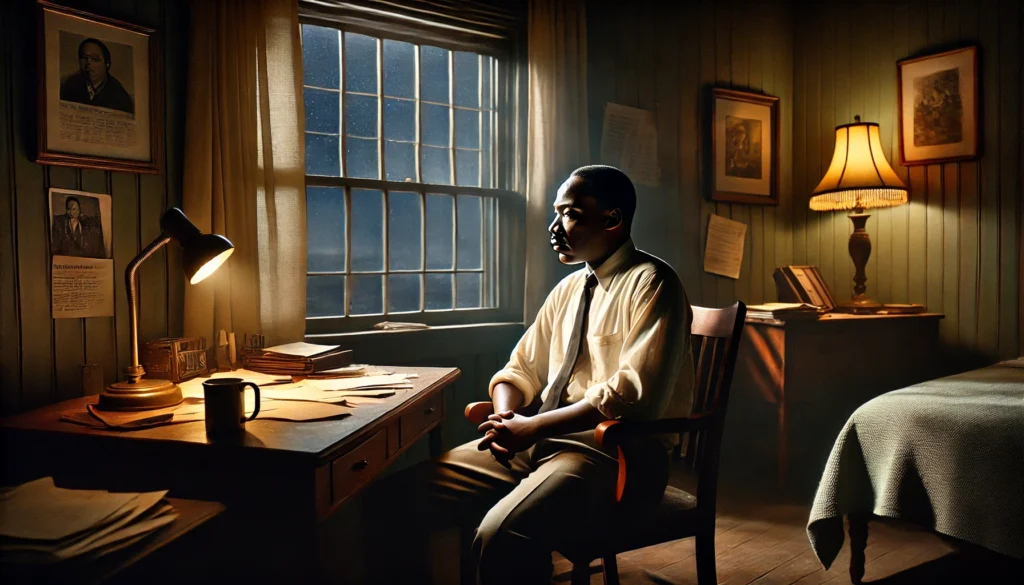
Martin Luther King Jr. was born on January 15, 1929, in Atlanta, Georgia, into a deeply rooted Baptist family committed to Christian faith and social justice. His father, Rev. Martin Luther King Sr., was a prominent pastor at Ebenezer Baptist Church, and his mother, Alberta, was a schoolteacher. King was a gifted student, entering Morehouse College at age 15, and later earning a Ph.D. in Systematic Theology from Boston University. Ordained as a Baptist minister, he became pastor of Dexter Avenue Baptist Church in Montgomery, Alabama, in 1954. Influenced by the Gospel of Jesus Christ, Gandhian nonviolence, and Western philosophy, King emerged as the leading voice of the Civil Rights Movement, calling for justice, racial equality, and love of enemies as essential Christian and moral imperatives.

In the United States, Martin Luther King Jr. Day is observed as a solemn act of remembrance and reflection—a day set apart not for leisure, but for conscience. It honors the life and legacy of Martin Luther King Jr., whose unwavering commitment to justice, nonviolence, and human dignity reshaped the moral landscape of the nation. More than a historical commemoration, the day calls Americans to examine the values by which they live and the responsibilities they carry toward one another.

Unlike many federal observances, Martin Luther King Jr. Day is deeply inward-facing. Communities revisit Dr. King’s words, sermons, and letters—listening not only to his vision of equality, but to his insistence on moral courage, disciplined love, and peaceful resistance in the face of injustice. His leadership is remembered not as forceful domination, but as principled restraint—strength expressed through humility, sacrifice, and unwavering conviction.
The day is also widely recognized as a day of service, reflecting Dr. King’s belief that lasting change is built through action rooted in compassion. Americans volunteer, gather in dialogue, and engage in acts of service that honor his conviction that progress begins at the local level—with individuals choosing to serve the common good.
At its heart, Martin Luther King Jr. Day is a reminder that freedom is not static, justice is not automatic, and unity requires continual effort. It is a call to live with integrity, to speak with courage, and to carry forward a vision of a nation guided not by division or fear, but by conscience, dignity, and hope.

A Day of Conscience, Courage, and Moral Clarity

Martin Luther King Jr. is most famous for his leadership in the American Civil Rights Movement, where he championed nonviolent resistance to combat racial segregation, injustice, and inequality. Inspired by his Christian faith and the example of Mahatma Gandhi, King organized and led pivotal actions such as the Montgomery Bus Boycott (1955–56), the Birmingham Campaign (1963), and the historic March on Washington (1963), where he delivered his iconic “I Have a Dream” speech. He worked tirelessly to secure civil rights legislation, including the Civil Rights Act of 1964 and the Voting Rights Act of 1965. Awarded the Nobel Peace Prize in 1964, King is remembered not only for his powerful oratory and moral courage but for his unwavering commitment to justice, peace, and the dignity of every human person.
Martin Luther King Jr. taught that true leadership does not seek to overpower, but to awaken. His commitment to nonviolence was not an avoidance of conflict, but a disciplined refusal to surrender moral ground. In choosing peaceful resistance, he affirmed that justice pursued without love corrodes the very freedom it seeks to secure.
Nonviolence, as Dr. King lived it, demanded courage greater than force. It required restraint under provocation, clarity under pressure, and faith that truth—patiently and persistently lived—possesses transformative power. His leadership reminds us that moral authority is not granted by position, but earned through integrity, sacrifice, and unwavering commitment to human dignity.
Martin Luther King Jr. Day calls each generation to measure its actions not by convenience or consensus, but by conscience. It asks whether we are willing to lead with restraint, to speak with courage, and to pursue justice in a manner worthy of the peace we seek to build.

His dream, rooted in faith, justice, and peace, endures

Martin Luther King Jr. Day Traditions to Make Your Own

🤲 Day of Service
Martin Luther King Jr. Day is widely known as “a day on, not a day off.” Communities across the country organize volunteer efforts—food drives, neighborhood cleanups, mentoring programs, and charitable outreach—reflecting Dr. King’s belief that justice is advanced through active service and love in action.

⛪ Faith & Reflection Services
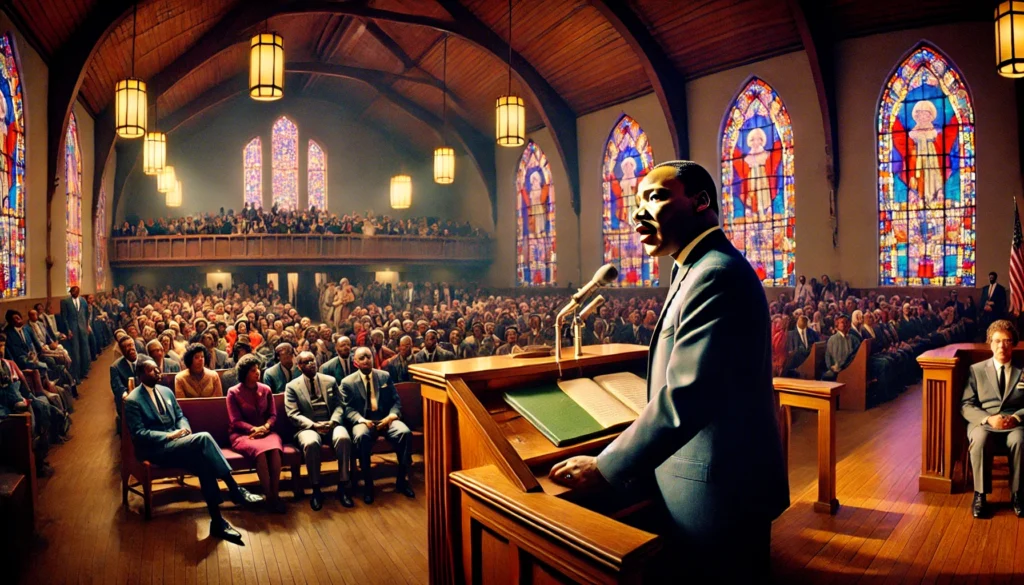
Churches and faith communities hold prayer services, sermons, and reflections centered on justice, reconciliation, nonviolence, and moral responsibility. These gatherings emphasize Dr. King’s roots as a minister and the spiritual foundation of his leadership.

📖 Reading & Listening to Dr. King’s Words
Families, schools, and institutions revisit Dr. King’s speeches and writings—especially “I Have a Dream,” “Letter from Birmingham Jail,” and his sermons. Public readings and broadcasts remain central to the day, reinforcing the power of disciplined speech and moral clarity.

🕊️ Peaceful Commemorations & Marches
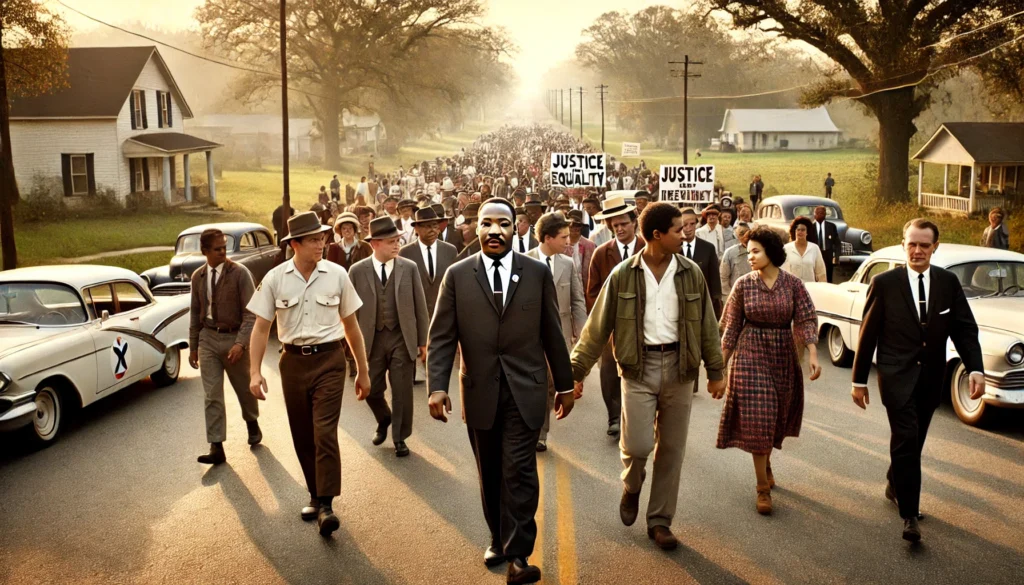
In many cities, peaceful marches, memorial walks, and vigils are held to honor the civil rights movement. These gatherings echo the tradition of nonviolent assembly and collective witness that defined Dr. King’s leadership.

🏛️ Educational Programs
Schools, universities, libraries, and museums host lectures, panel discussions, and historical exhibits exploring civil rights history, constitutional equality, and ethical leadership. The focus is on understanding—not celebration alone, but learning and responsibility.

🕯️ Candlelight Vigils
Some communities observe the day with evening candlelight vigils, symbolizing vigilance, remembrance, and the ongoing call to moral courage. The light represents truth carried forward rather than concluded.

🤝 Dialogue & Reconciliation
MLK Day often includes community conversations addressing justice, unity, and social responsibility. These dialogues reflect Dr. King’s insistence that progress requires listening, restraint, and mutual recognition of human dignity.

The Unifying Purpose
Martin Luther King Jr. Day honors Martin Luther King Jr. not through festivity, but through action guided by conscience. Its traditions center on service over spectacle, reflection over rhetoric, and moral responsibility over convenience.
The day asks a simple but enduring question:
How will we carry forward what justice requires of us now?
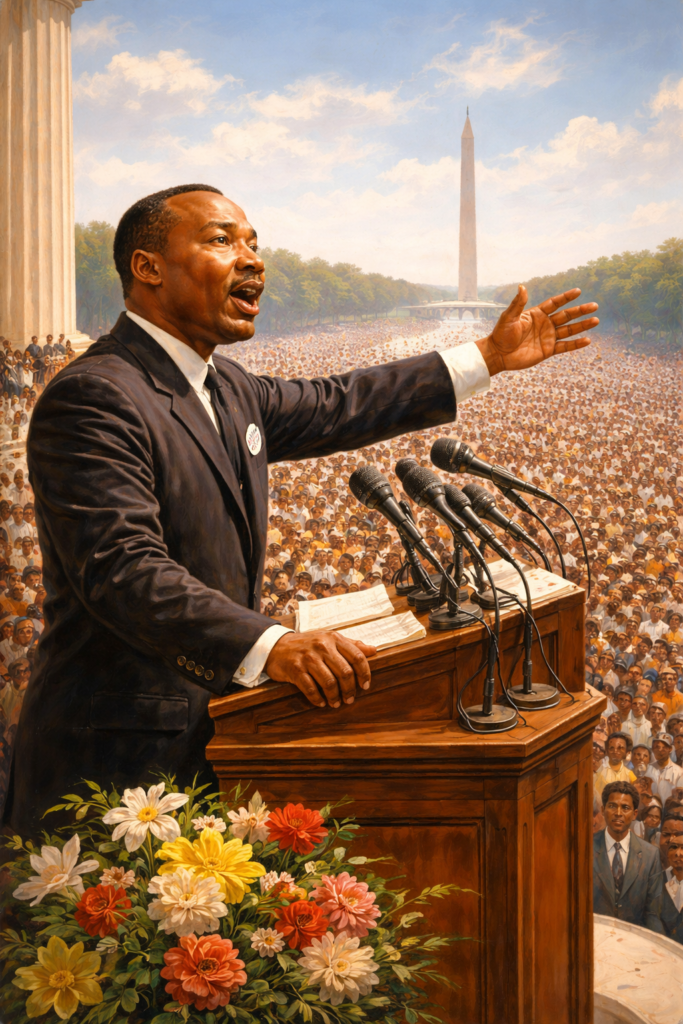
On August 28, 1963, during the March on Washington for Jobs and Freedom, Dr. Martin Luther King Jr. delivered his legendary "I Have a Dream" speech from the steps of the Lincoln Memorial, proclaiming a vision of racial equality, justice, and brotherhood before a crowd of over 250,000 people. His powerful words—calling for a nation where children “will not be judged by the color of their skin but by the content of their character”—became a moral compass for America and a defining moment in the struggle for civil rights. But less than five years later, on April 4, 1968, that voice was tragically silenced. While standing on the balcony of the Lorraine Motel in Memphis, Tennessee, where he had come to support striking Black sanitation workers, Dr. King was shot by an assassin’s bullet. He was rushed to the hospital but pronounced dead at 7:05 PM. The news of his murder sent shockwaves across the country and around the world, sparking grief, anger, and riots in more than 100 cities. At just 39 years old, Dr. King’s life was cut short by hatred, even as he preached love. His death marked a sorrowful moment in American history—but his dream, rooted in faith, justice, and peace, endures as a beacon of hope for all.

On Nonviolence and Moral Leadership

The phrase “the arc of the moral universe is long, but it bends toward justice,” often quoted by Martin Luther King Jr. (and originally phrased by Rev. Theodore Parker), expresses the conviction that history, though marked by suffering and injustice, ultimately moves toward moral truth and justice. Rooted in natural law and divine providence, it reflects the belief that an objective moral order, given by God, governs the universe — and that faithful acts of virtue, nonviolence, and resistance to evil help bend the course of history toward righteousness, in cooperation with God's hidden, guiding hand.

May courage be guided by conscience,
and conviction tempered by love.
May strength never abandon humility,
nor justice lose its compassion.
As we remember the life and witness of Martin Luther King Jr.,
may we be reminded that peace is not passive,
truth is not silent,
and the moral arc is shaped by those willing to bend their lives toward it.

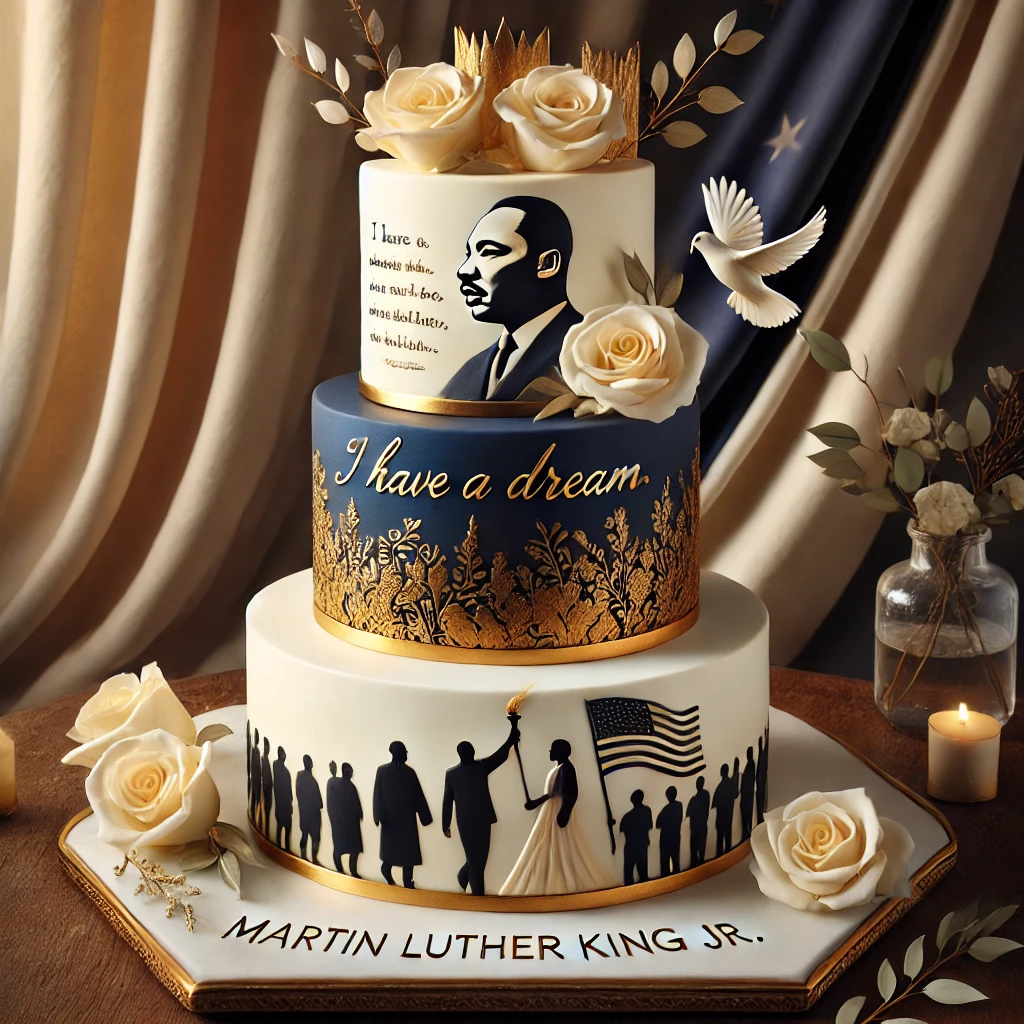
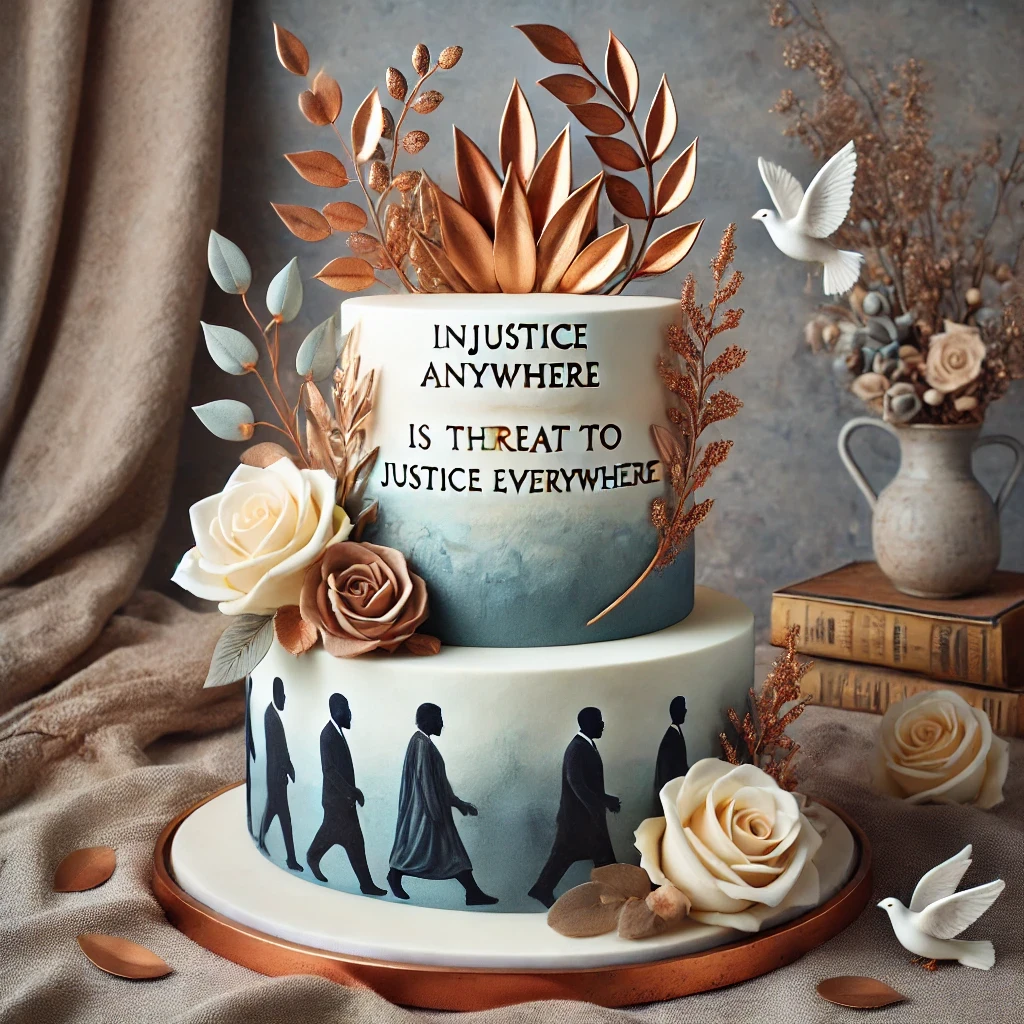
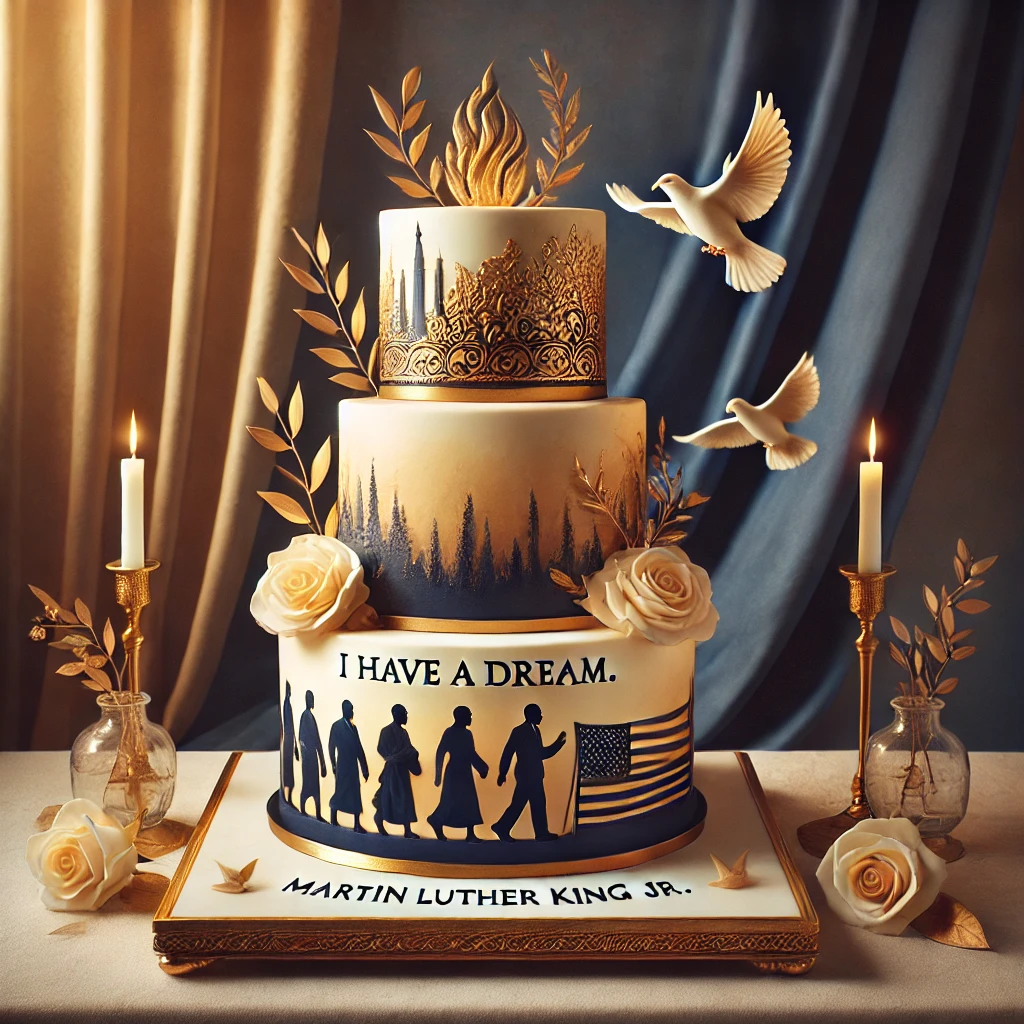
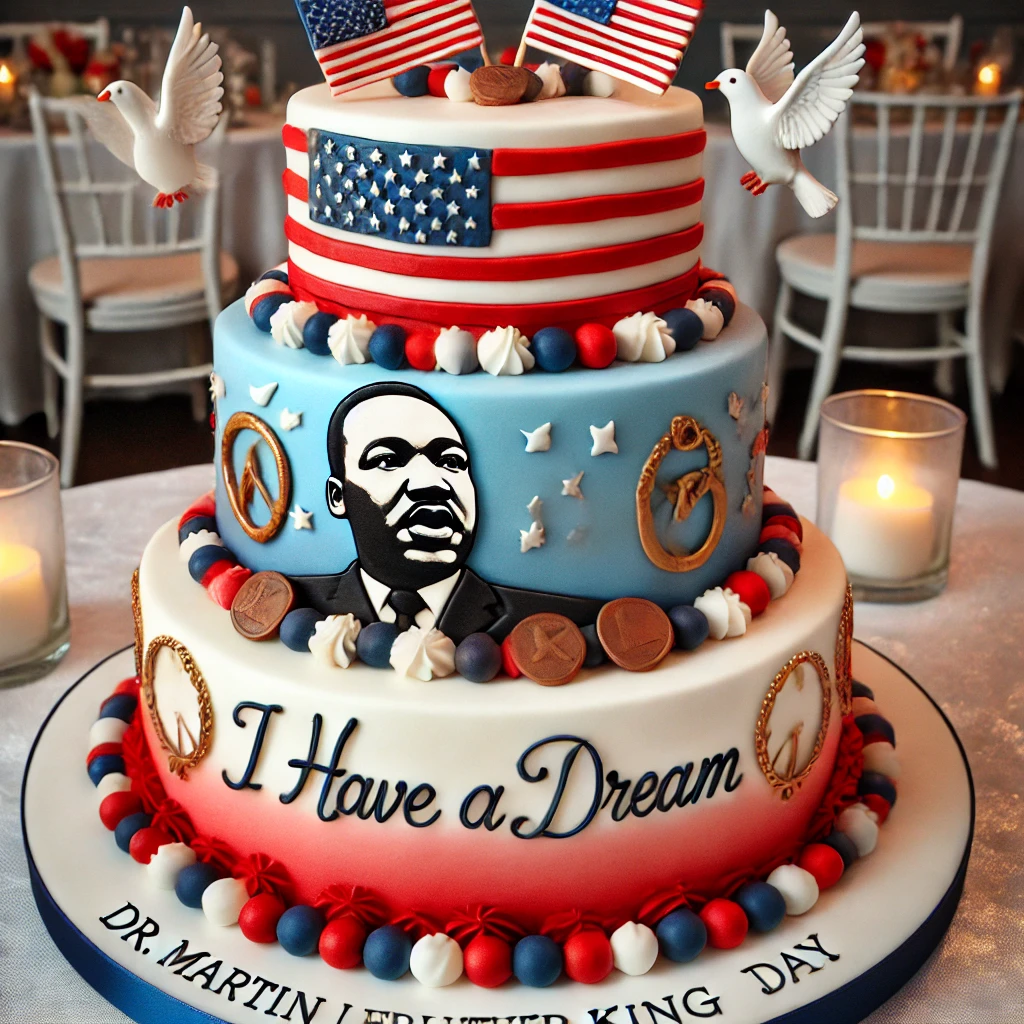
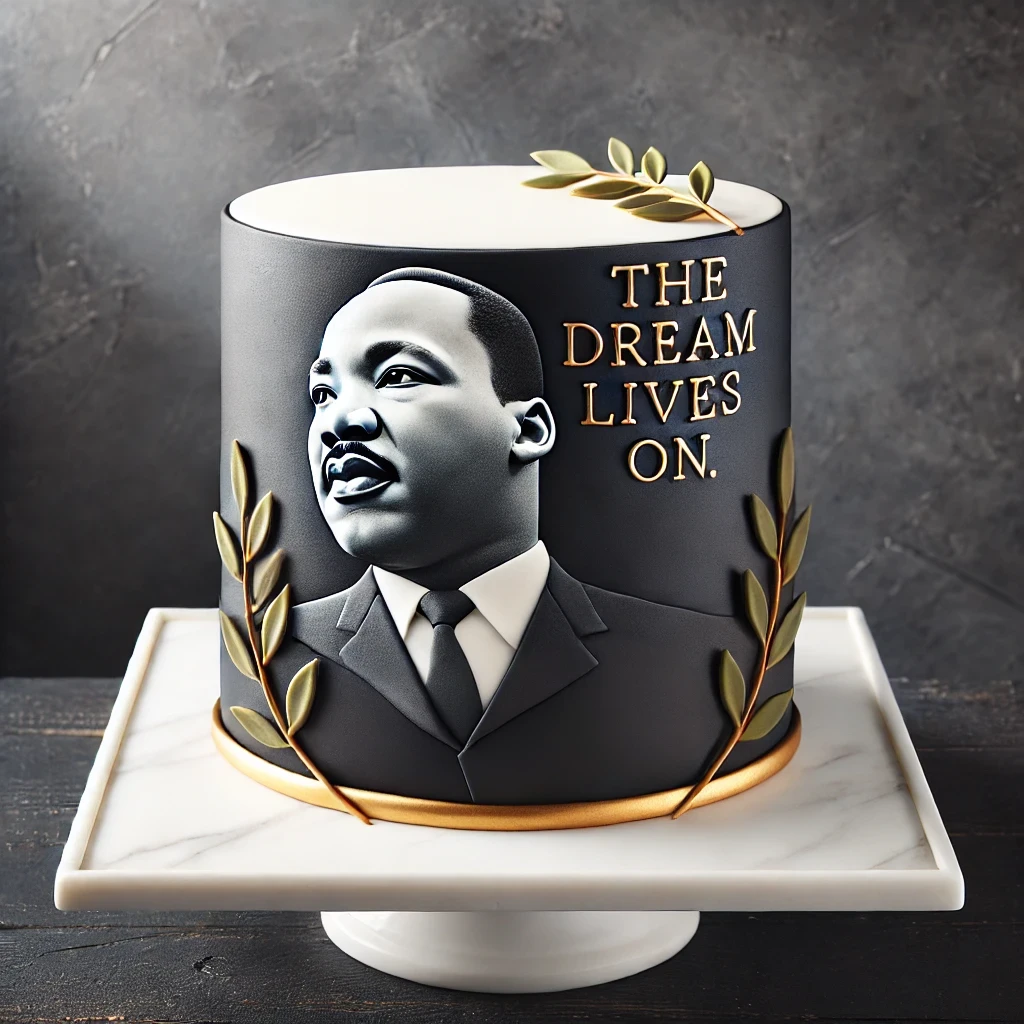
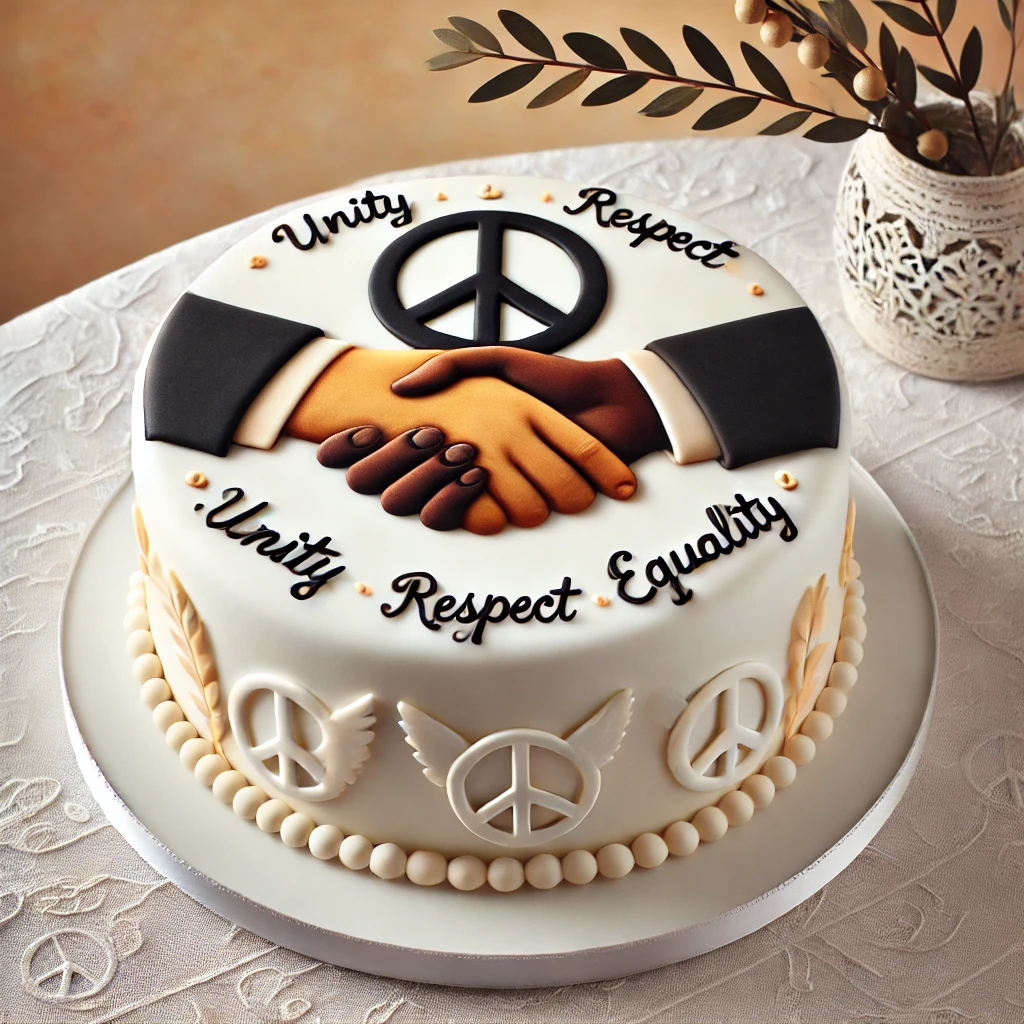
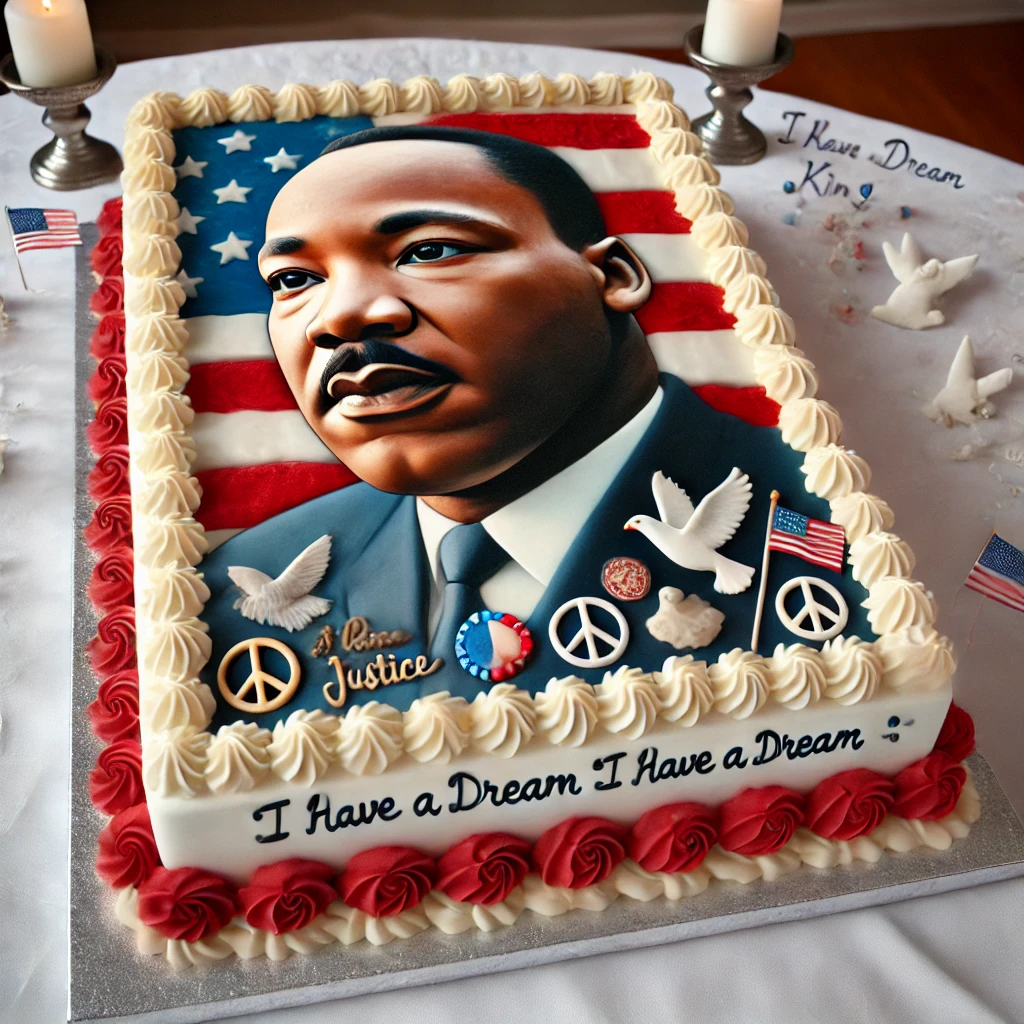
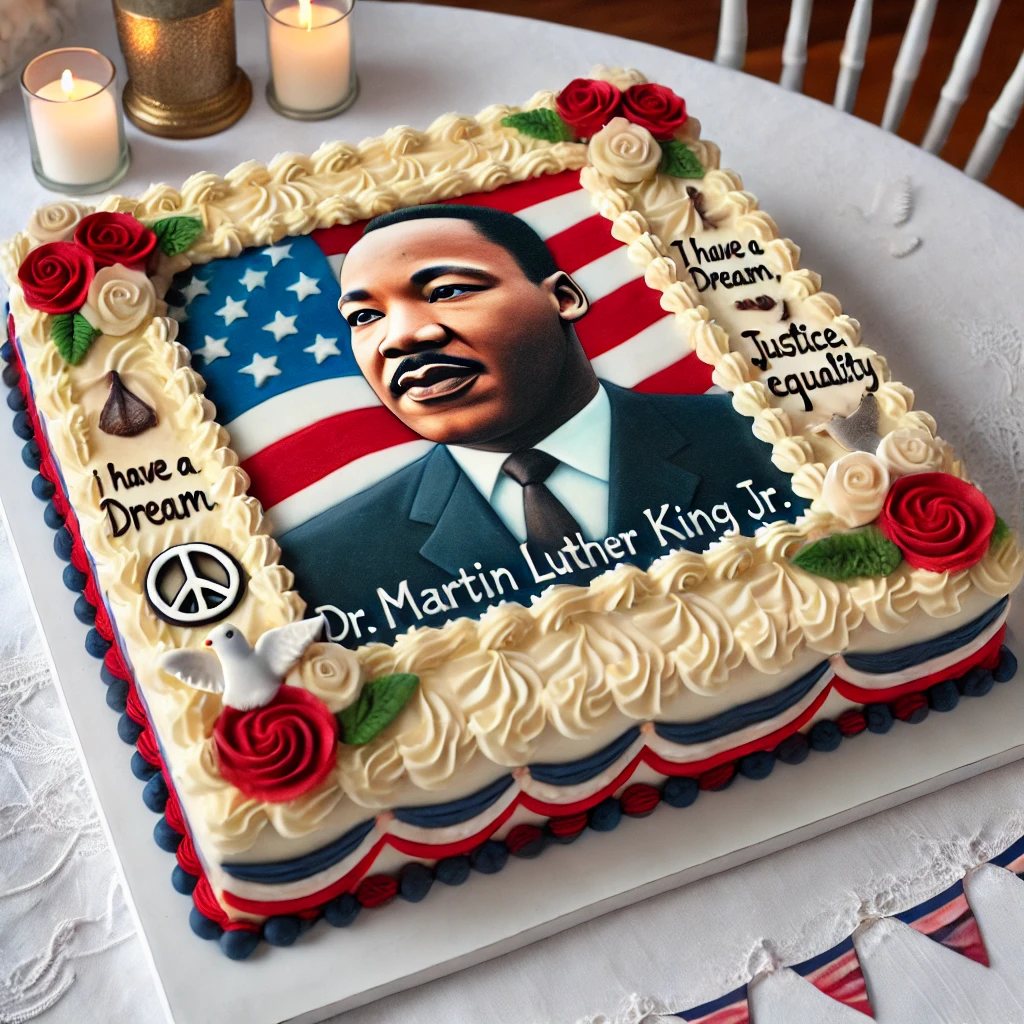
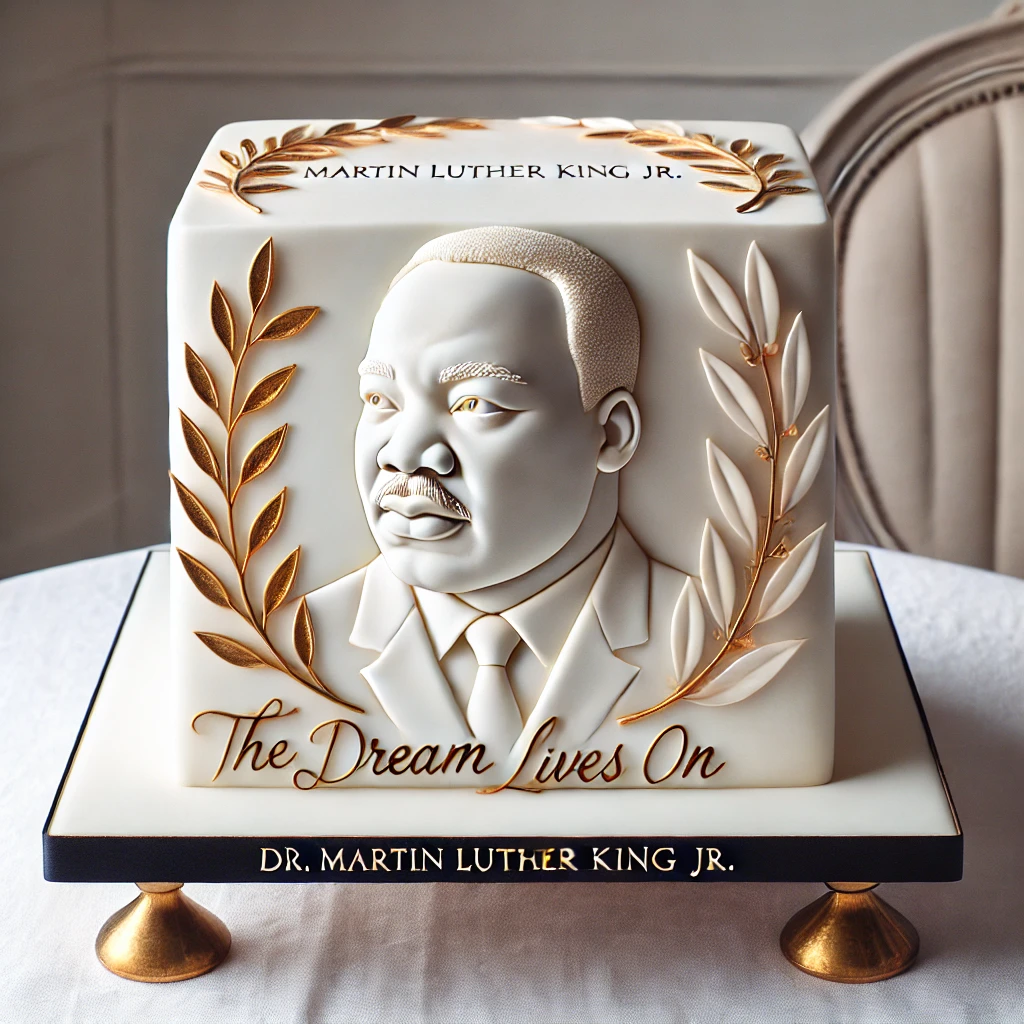
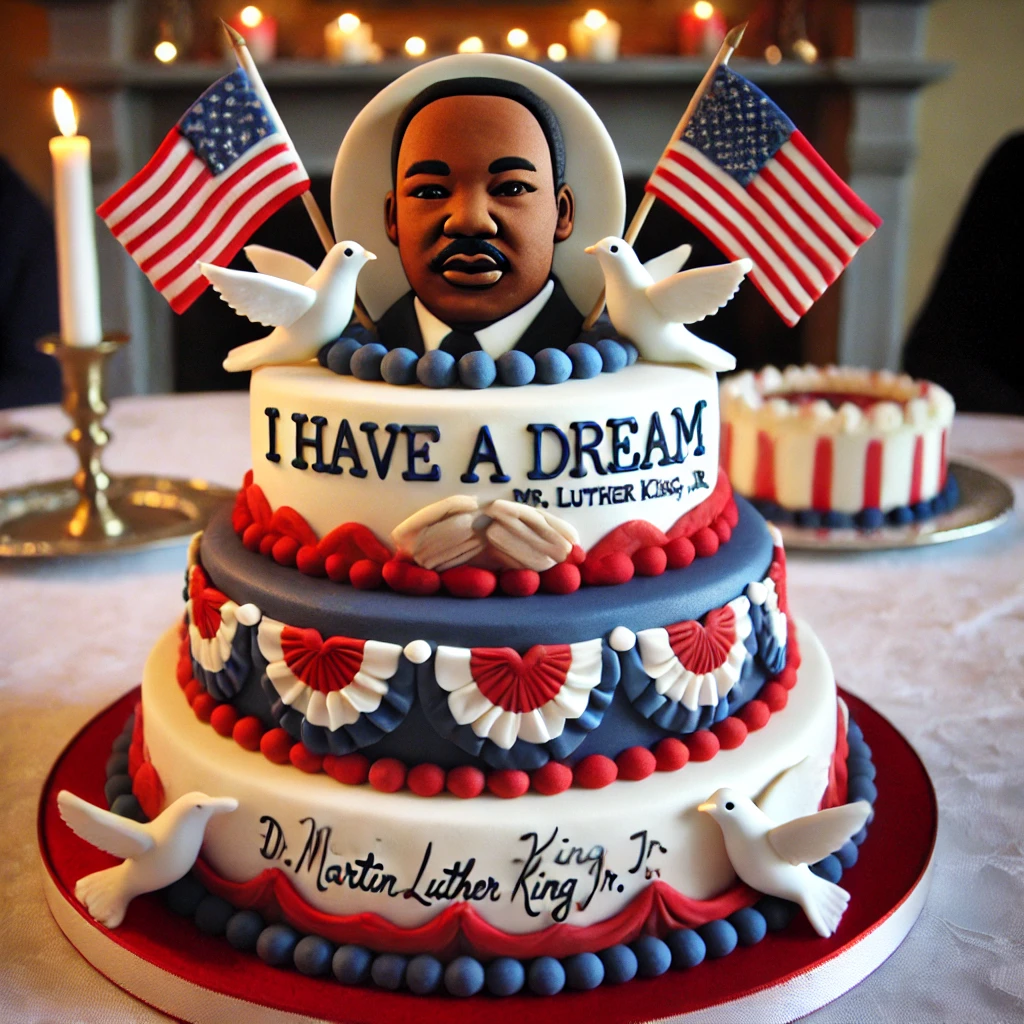
Martin Luther King Jr. Day Cake Decorating Ideas

This section is meant to be more than Cake Decorating Ideas… it’s designed to spark inspiration and creativity, awaken tradition, and infuse your special occasions with style, identity, and atmosphere. A color palette becomes a theme. A design becomes a mood. Simple details—like sugared holly leaves or shimmering stars—can set the tone for a gathering and become part of cherished traditions and lasting memories melded with personal touch and love.

Traditional Martin Luther King Jr. Day Dishes

MLK Day is often marked by shared meals following service projects, church gatherings, or commemorative events. These meals emphasize fellowship and unity, reflecting Dr. King’s belief that dignity and justice are lived out in community.

🌿 Traditional Southern & African American Heritage Foods
Because Martin Luther King Jr. was raised in the American South, many MLK Day meals draw from Southern and African American culinary traditions, including:
  • Collard greens – endurance, sustenance, and hope
  • Black-eyed peas – humility and prosperity
  • Cornbread – nourishment and simplicity
  • Macaroni and cheese – comfort and care
  • Fried or baked chicken – shared family-style nourishment
  • Sweet potatoes or yams – resilience and rootedness
These foods are not ceremonial in the religious sense, but cultural expressions of continuity, survival, and care.

🍞 Simple, Accessible Foods
MLK Day meals are typically modest and inclusive, reflecting the spirit of service rather than indulgence. The focus is on food that can be shared widely, prepared in volume, and offered generously—mirroring the ethic of hospitality central to the civil rights movement.

☕ Fellowship Foods
Coffee, tea, and simple desserts (such as pound cake or bread pudding) are often served in church halls or community centers, encouraging conversation, reflection, and connection after formal observances.

Winter Recipes