Orthodox Christmas
with ORO VALENTIO
Honoring the Mystery
In the United States, Orthodox Christmas—celebrated on January 7—is observed with reverent quiet and ancient continuity. Kept by Eastern Orthodox Christians who follow the Eastern Orthodox Church and the Julian calendar, the day preserves a rhythm of sacred time that moves deliberately, resisting haste and honoring mystery.
Orthodox Christmas is not merely a later date on the calendar; it is the culmination of a deeply ascetic and devotional season. The Nativity is approached through fasting, prayer, and spiritual preparation, emphasizing inner purification over outward display. When Christmas arrives, it does so not with spectacle, but with awe—received as a holy reality rather than a cultural event.
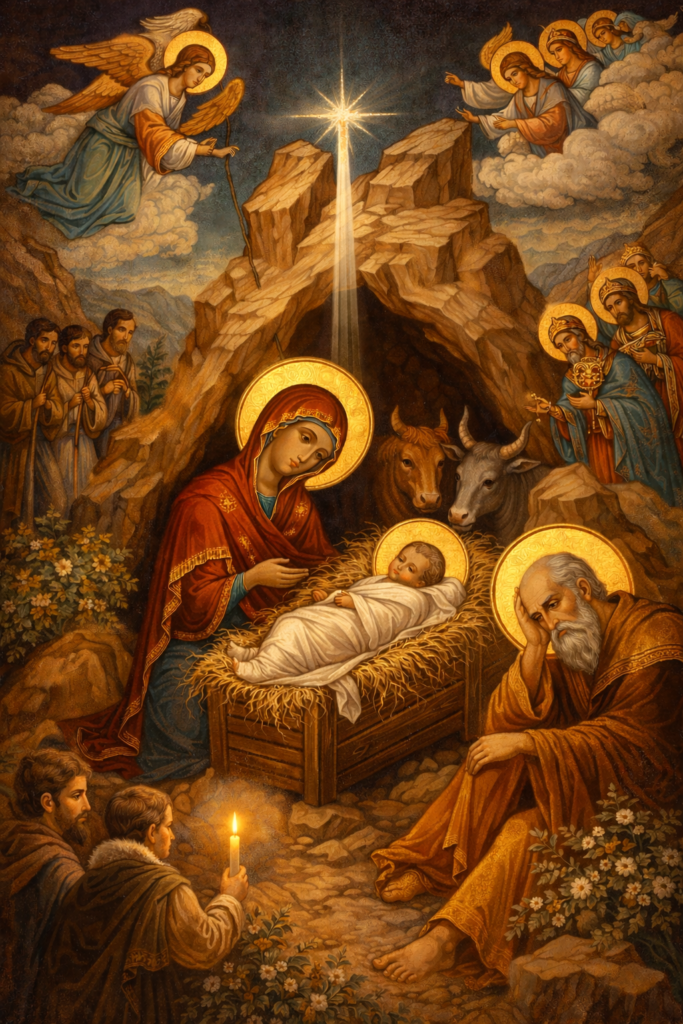
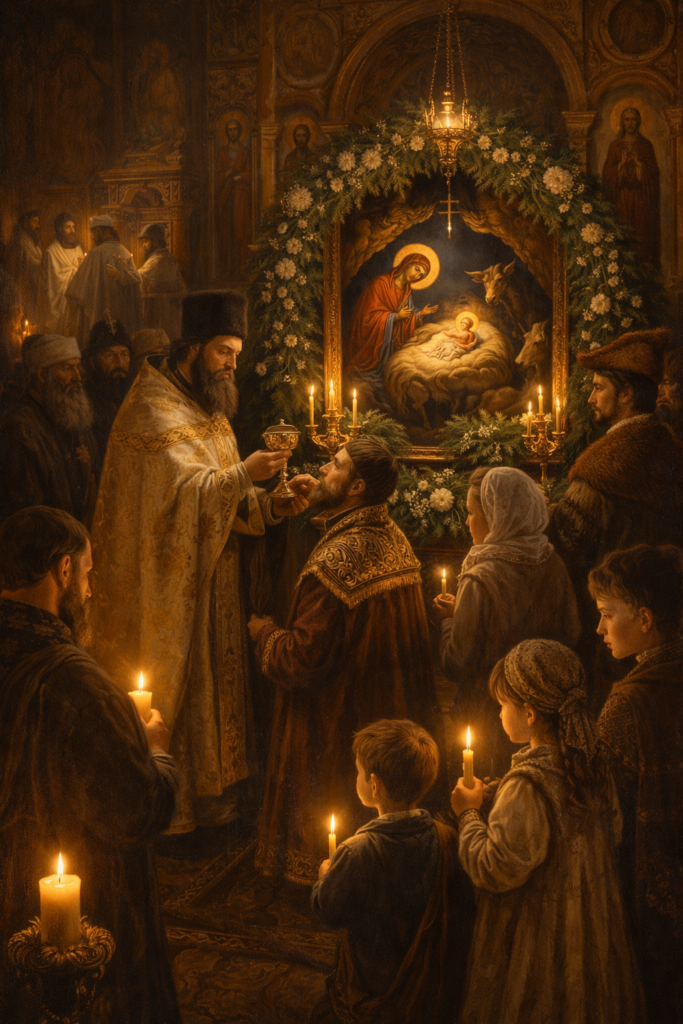
Liturgical life stands at the heart of the observance. Candlelit vigils, ancient hymns, incense, and sacred icons draw worshippers into a living continuity with the early Church. The Nativity is proclaimed not as a distant story, but as an eternal truth—Christ born into time, yet standing outside it. Gold-leaf icons and chant-filled sanctuaries reflect a theology where heaven and earth meet quietly, without excess.
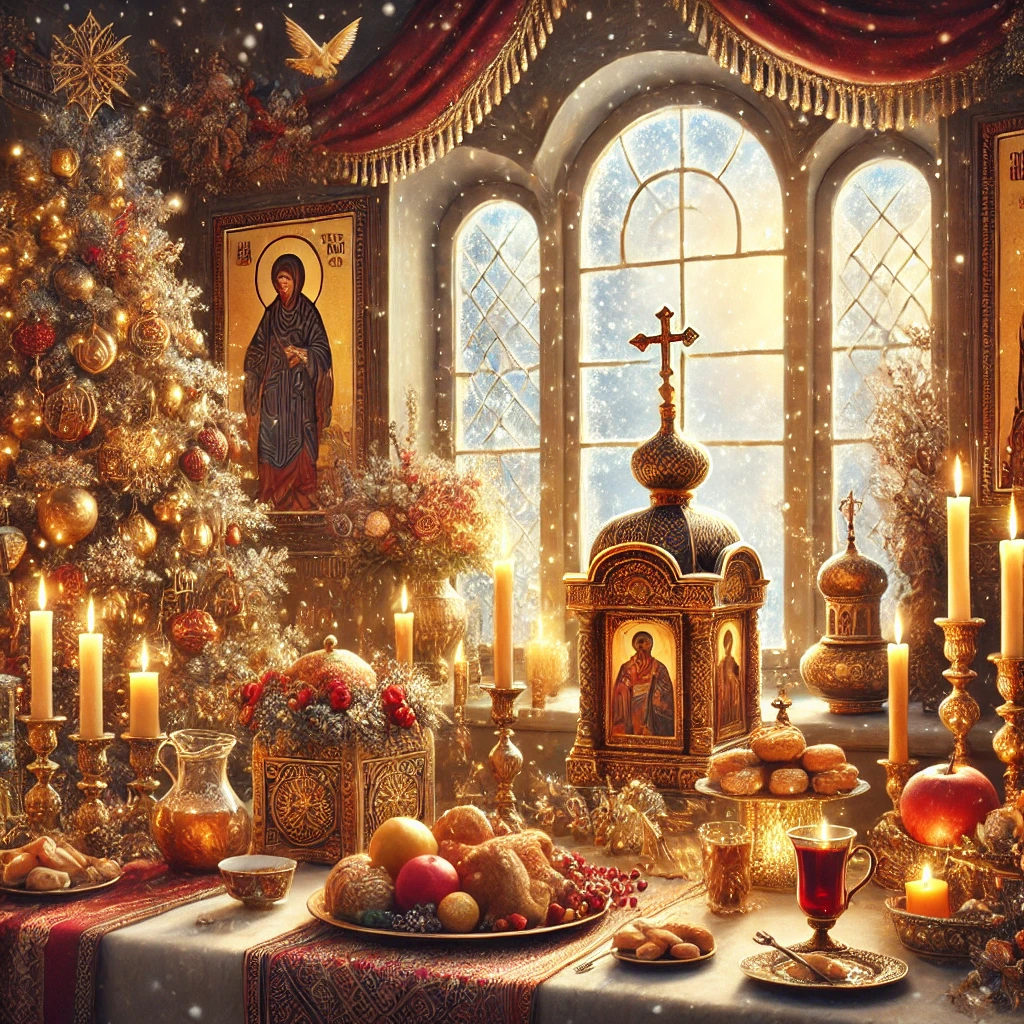
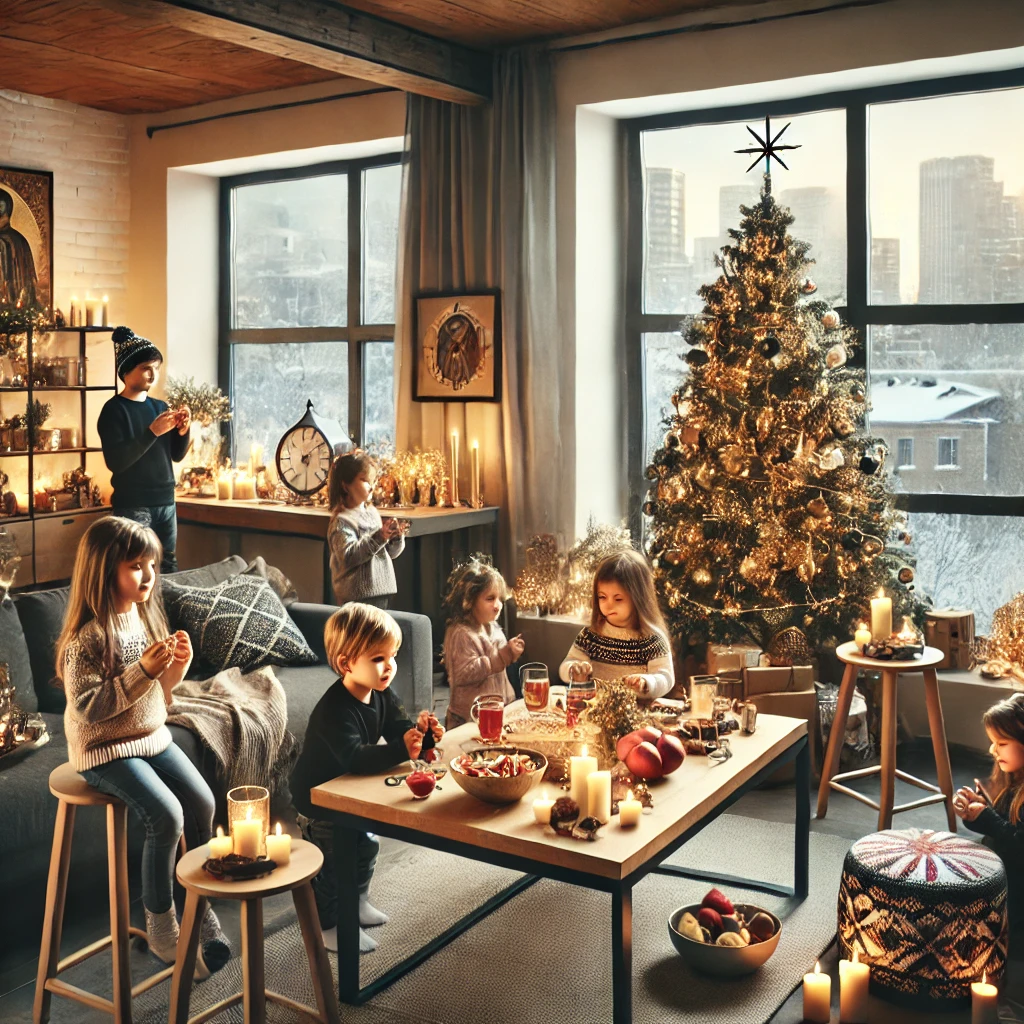
In Orthodox homes, Christmas is marked by simplicity and meaning. Meals often follow the conclusion of the fast, shared with gratitude and restraint. Traditions emphasize hospitality, humility, and remembrance—honoring not only the birth of Christ, but the discipline that prepared the heart to receive Him.
The Same Christmas, Kept on an Ancient Calendar
In the first millennium of Christianity there existed one universal Church, spread across the Mediterranean world and beyond, united in its confession of faith, sacramental life, apostolic succession, and reverence for the teachings handed down from the apostles, even as Eastern and Western regions expressed that shared faith through different languages, cultures, and liturgical styles; from this common and ancient foundation arise what are now known as the Eastern Orthodox Church, the Roman Catholic Church, and the Oriental Orthodox Churches, all of which trace their lineage directly to the earliest centuries of Christianity and continue to preserve the core doctrines, sacraments, and spiritual inheritance of the early Church. While historical separations later occurred—most notably between East and West over questions of authority and governance—these divisions arose within a shared apostolic family rather than from a rejection of the original faith, and each tradition continues to understand itself as faithfully safeguarding what it received from the undivided Church. Calendar differences and cultural developments that followed were secondary expressions of this diversity, not a loss of theological continuity. Protestant movements, emerging much later in the 16th century, arose from a different historical moment and approach to reform, yet even here the ancient churches recognize a shared devotion to Christ and Scripture. Taken together, the story of Christianity is not one of isolated traditions competing for legitimacy, but of a deeply interconnected family of churches whose common origins, shared reverence for Christ, and enduring pursuit of truth continue to testify to a profound underlying unity that long predates later divisions.
Despite any separations, these churches remain profoundly connected by what stands at the heart of the Christian faith: the Incarnation of Jesus Christ (celebrated on Christmas)—God entering the world in humility, light, and love for the salvation of humanity. Across these traditions, Christmas proclaims the same essential truth: that Christ was born supernaturally, that Mary bore Him in purity, and that the mystery of God-with-us transcends time, culture, and divisions. Even as calendars, customs, and expressions differ, the Nativity continues to serve as a unifying center, reminding Christians across these ancient communions—and even later Protestant communities—that their shared origin and deepest hope rest in the common joy of Christ’s birth, which has been confessed, celebrated, and cherished since the very beginning.
| Group | Origin | Authority Model | Sacraments | Calendar |
|---|---|---|---|---|
| Eastern Orthodox | Undivided early Church | Conciliar (bishops in council) | Fully sacramental | Julian / Revised Julian |
| Roman Catholic | Western Church of the undivided Church | Papal (centralized) | Fully sacramental | Gregorian |
| Oriental Orthodox | Pre-451 split (Christological) | Conciliar (non-Chalcedonian) | Fully sacramental | Julian-based |
| Protestant (Magisterial) | 16th-century Reformation | Scripture alone (varies by denomination) | Reduced (usually 2) | Gregorian |
| Evangelical / Non-Denominational | Post-Reformation, modern era | Local or individual authority | Symbolic ordinances | Gregorian |
Eastern Orthodoxy, Roman Catholicism, and Oriental Orthodoxy all descend directly from the ancient Christian Church and remain sacramental communions, while Protestantism and later non-denominational movements arose in the modern era as reform or reinterpretive breaks from that original ecclesial and theological continuity.
Orthodox Christmas Traditions To Make Your Own
The Nativity Fast (40 days)
Orthodox Christians prepare for Christmas through fasting, prayer, and almsgiving from mid-November until Christmas Eve, emphasizing inner readiness rather than early celebration.Strict Christmas Eve Fast
Christmas Eve is often observed with heightened restraint—sometimes until the first star appears—symbolizing watchful expectation for Christ’s birth.Night Vigil & Divine Liturgy
Christmas is celebrated liturgically, often beginning late at night, with hymns, Scripture, incense, and the Divine Liturgy welcoming Christ before any feasting begins.Veneration of the Nativity Icon
Rather than a decorative focus on manger scenes, Orthodox homes and churches prominently display and venerate the Nativity icon, rich with theological symbolism.Christ Is Born! / Glorify Him!
The traditional greeting replaces “Merry Christmas,” reflecting worship rather than sentiment.Breaking the Fast After Liturgy
Feasting begins only after Christ is received in worship, reinforcing that celebration is a response to the Incarnation, not a substitute for it.Emphasis on Light Entering Darkness
Christmas is understood as God entering the fallen world quietly and humbly, often symbolized by candles, darkness giving way to light, and the cave imagery of the Nativity.
🌍 Regional Orthodox Christmas Traditions (examples)
Twelve-Dish Vigil Supper (Slavic traditions)
A meatless meal representing the apostles, typically including grains, honey, dried fruits, and symbolic foods of life and hope.Blessing of Homes
Priests visit homes after Christmas to bless families with holy water, prayers, and the Nativity proclamation.Carol Processions & Hymns
Traditional carols (kolyadki, kalanda, etc.) are sung, often carrying strong theological content rather than purely festive themes.Straw or Evergreen Symbolism
Straw under the tablecloth or evergreen branches recall the humility of Christ’s birth and eternal life.Extended Feast Days
Christmas is not a single day but part of a liturgical season, with continued celebration through Theophany (Epiphany).
Sacred Things Unfold Slowly
Orthodox Christmas invites us to slow the soul, to honor preparation as sacred, and to receive the Light not as spectacle—but as truth.
May the Light born in stillness dwell quietly within you.
May the discipline of preparation give way to lasting peace,
and the mystery of the Nativity deepen faith beyond words.
As Christ enters the world without haste or display,
may His presence order the heart, steady the soul,
and illuminate the path ahead.
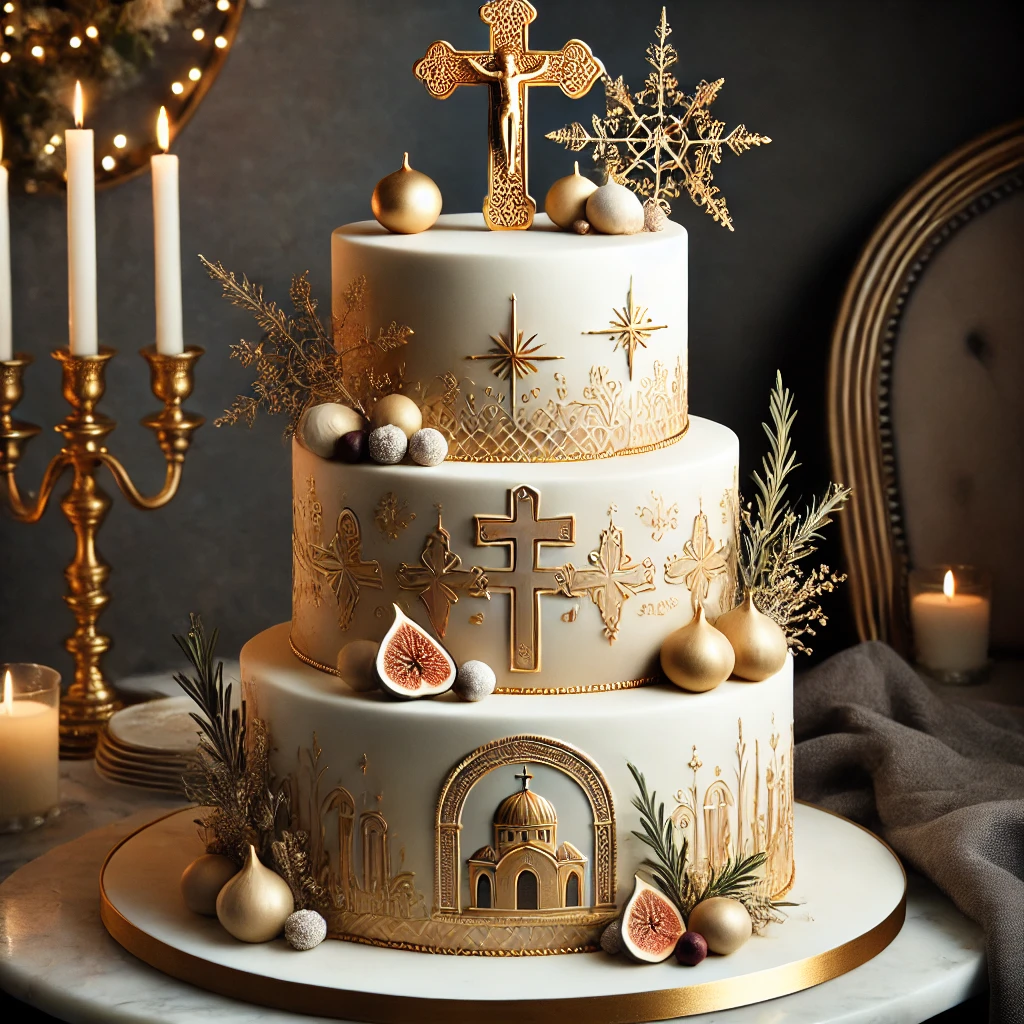
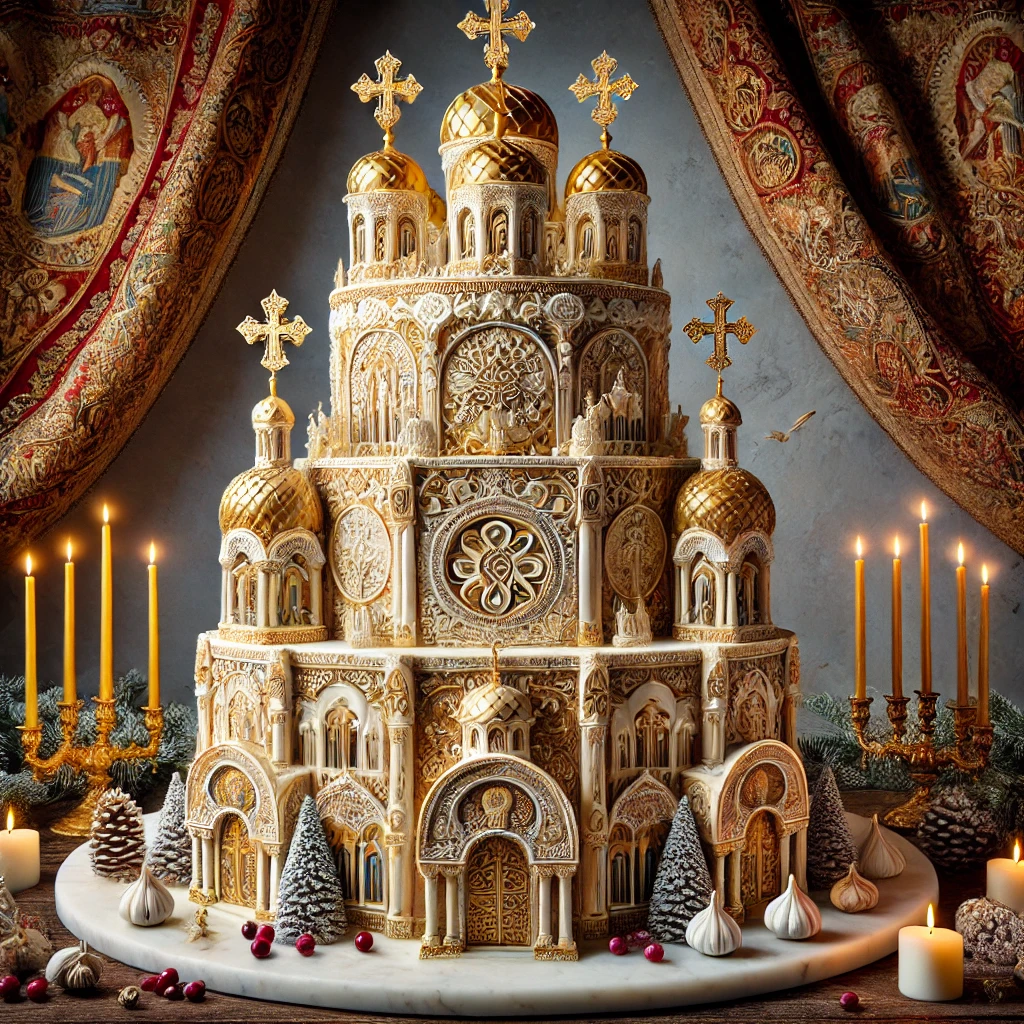
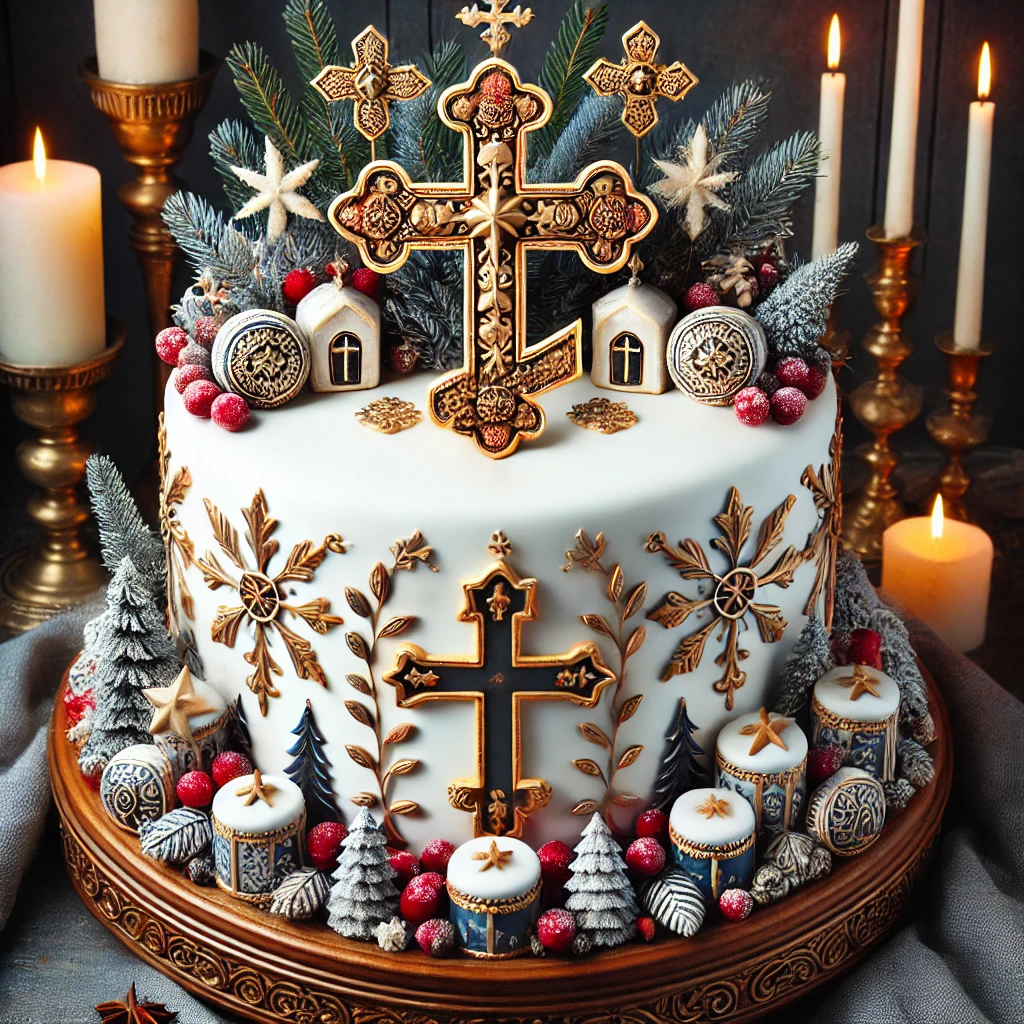
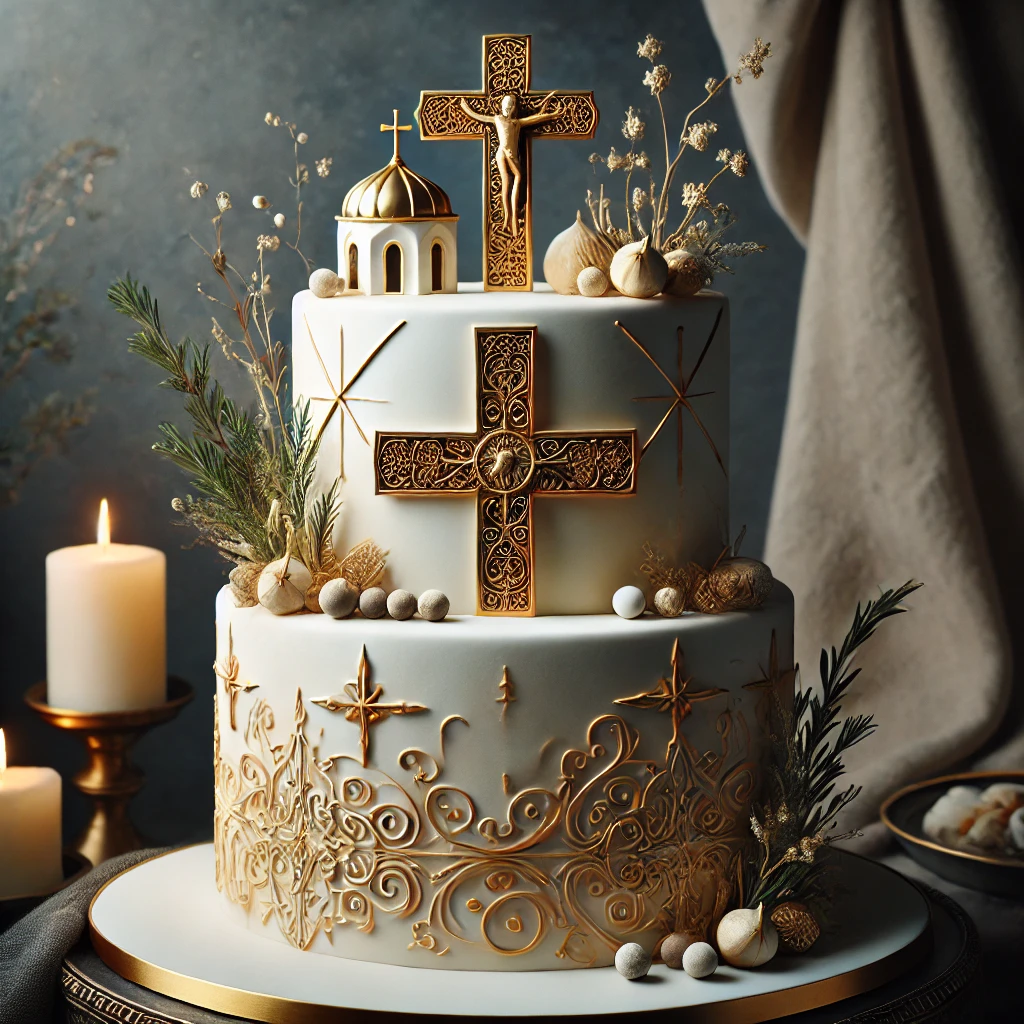
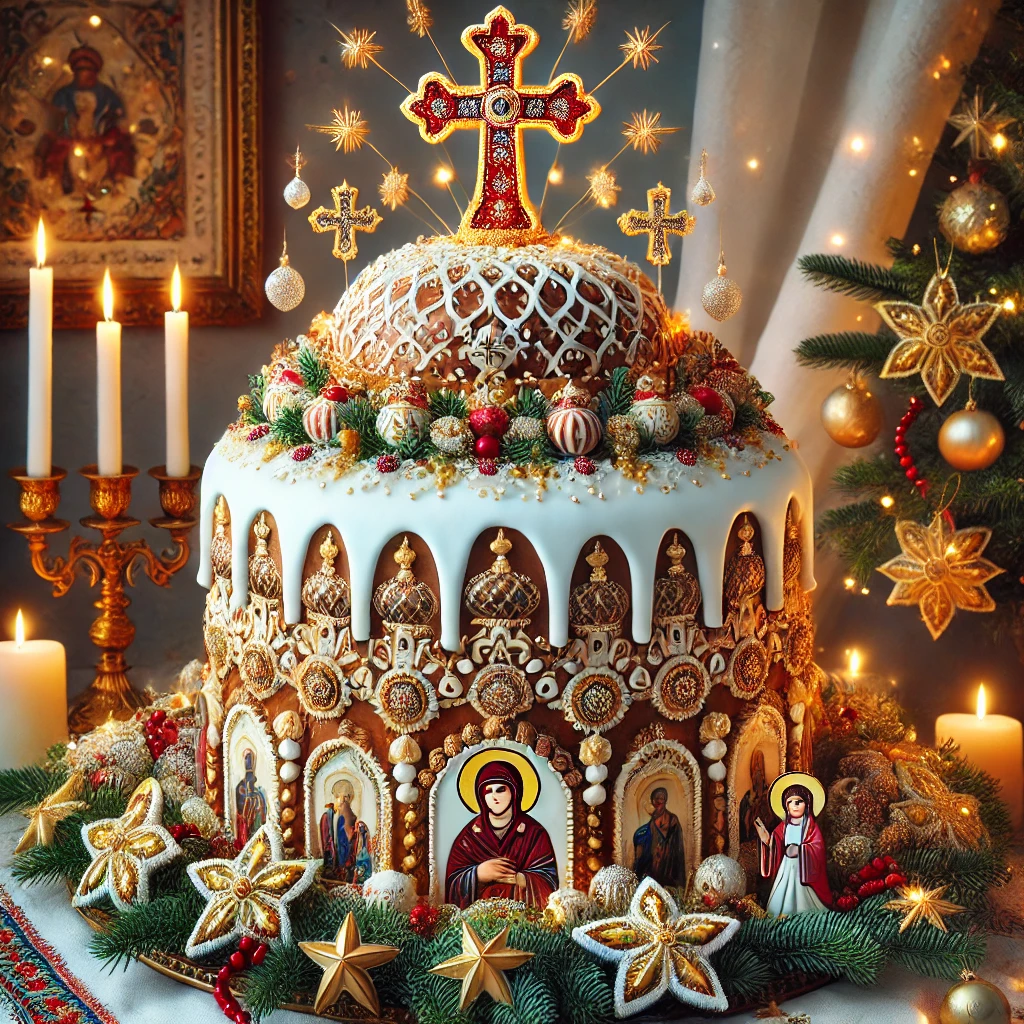
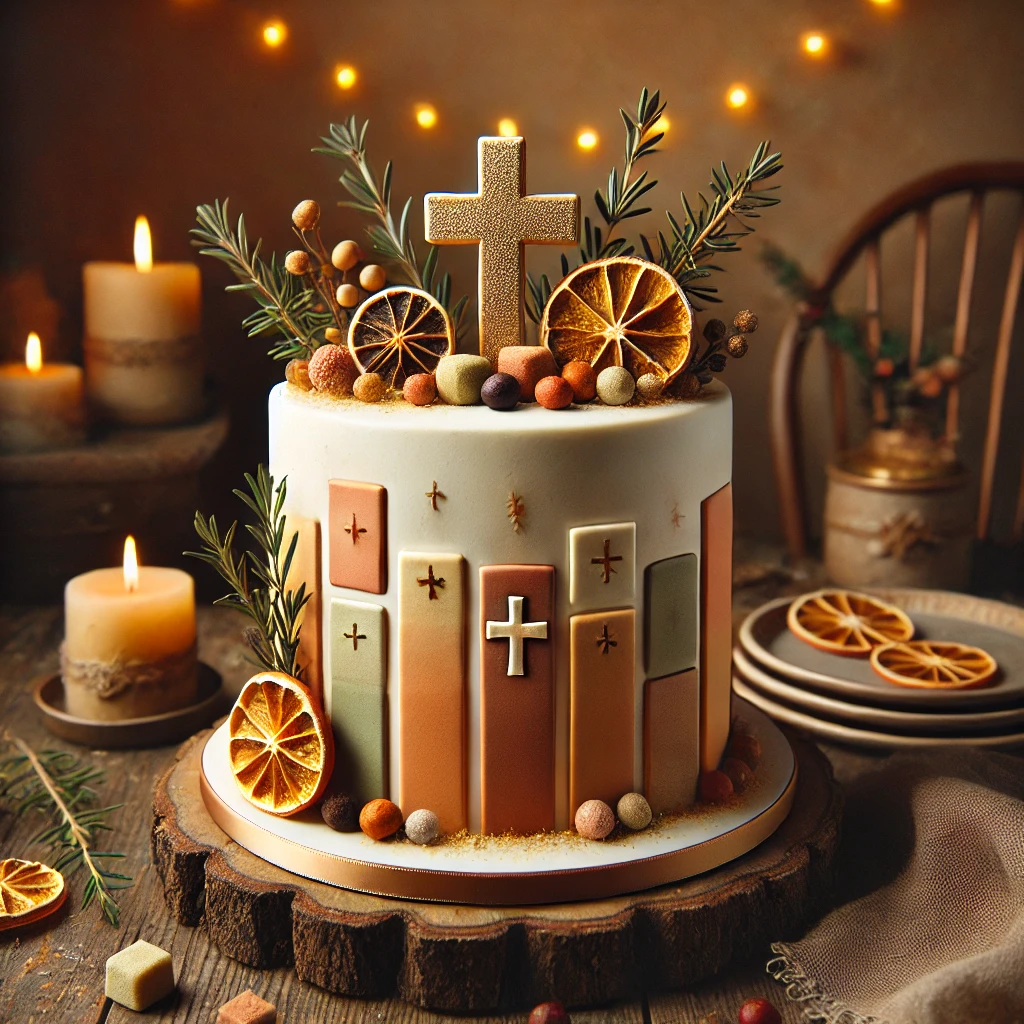
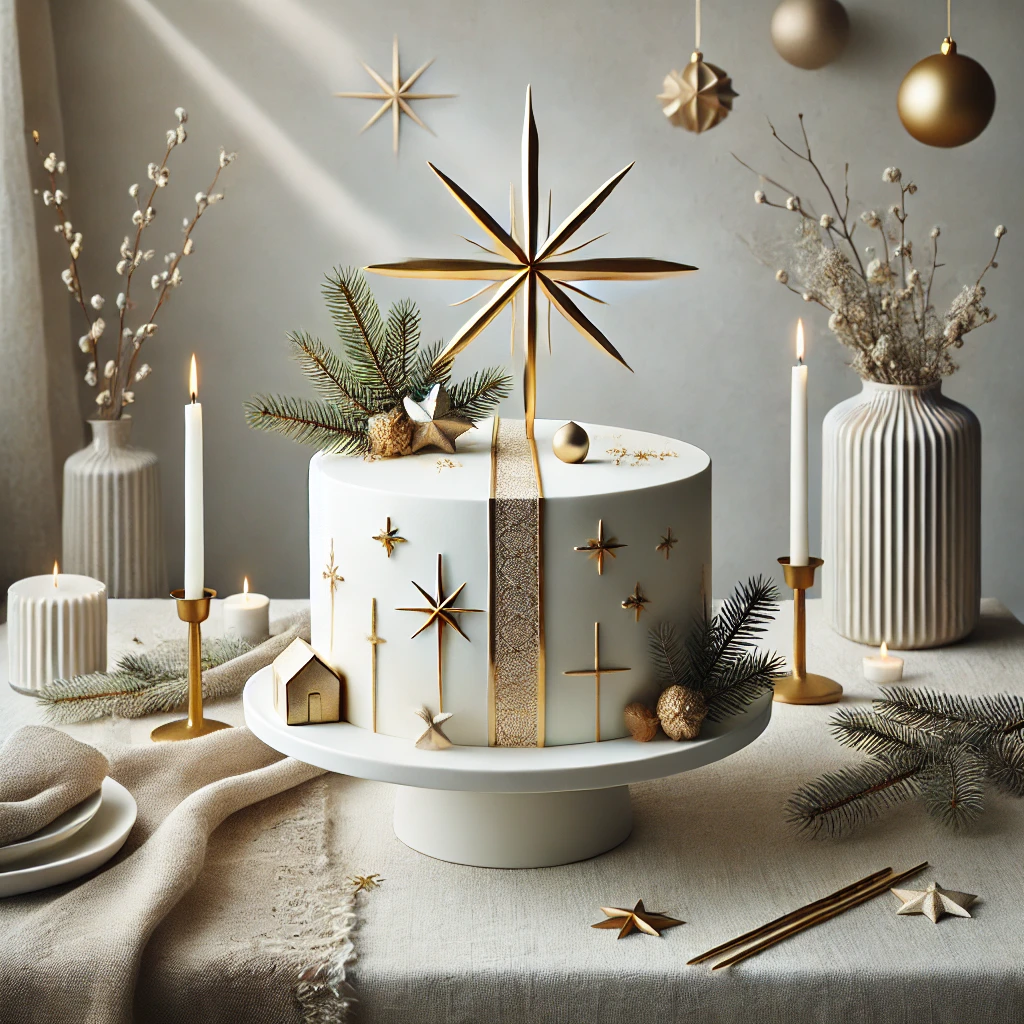
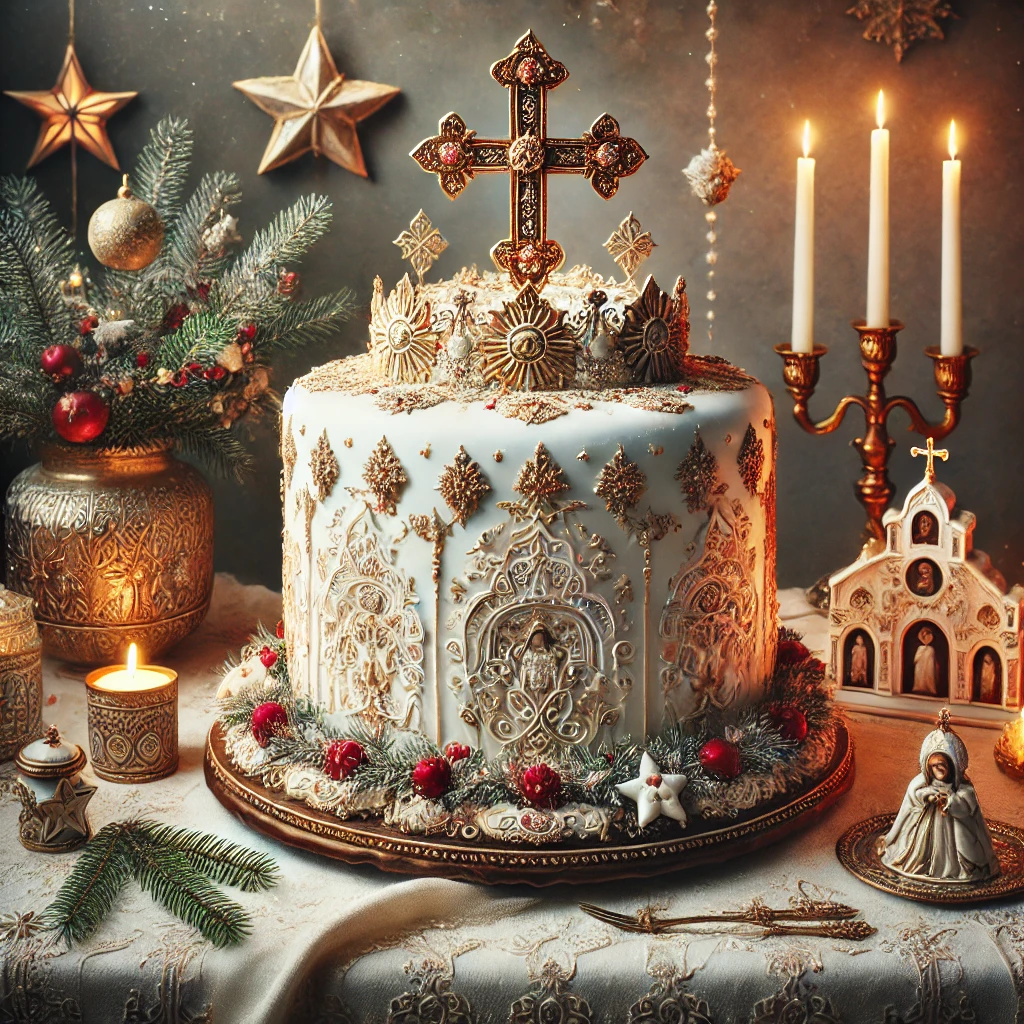
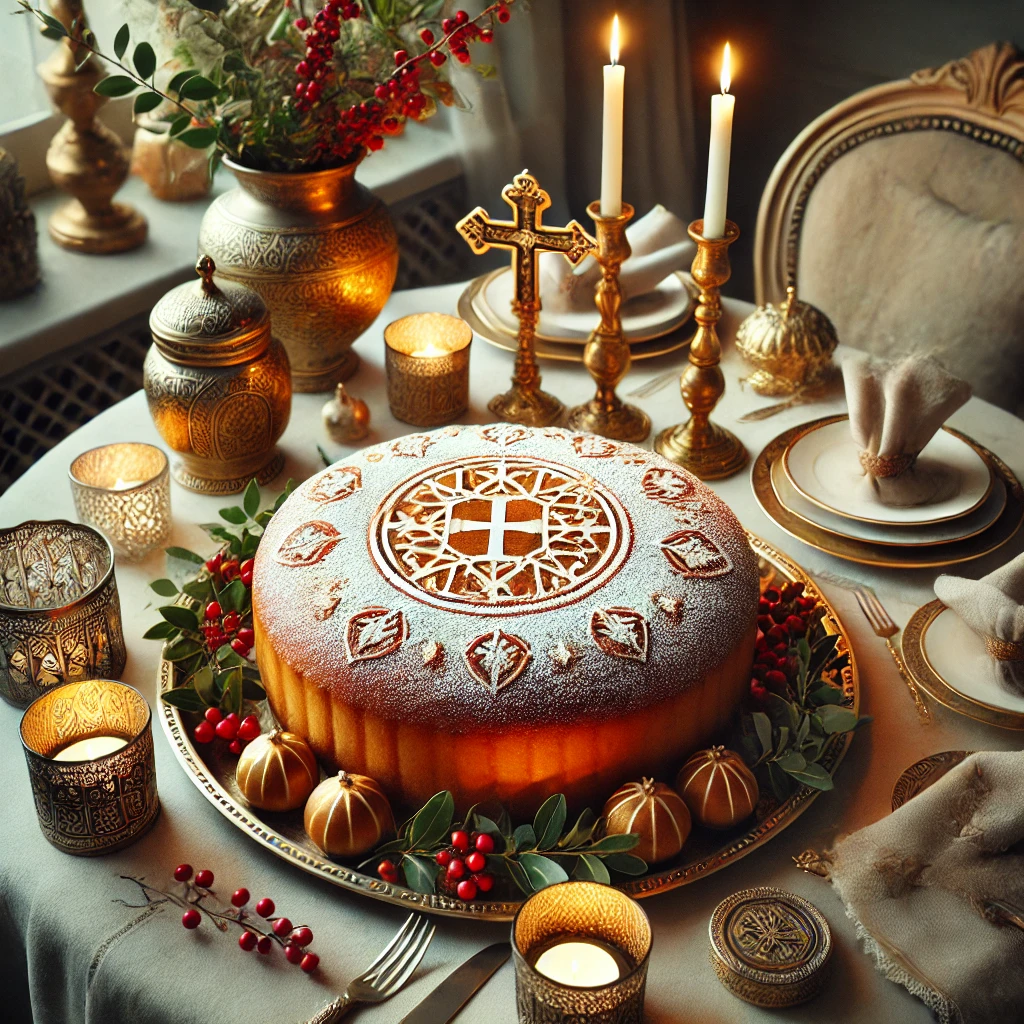
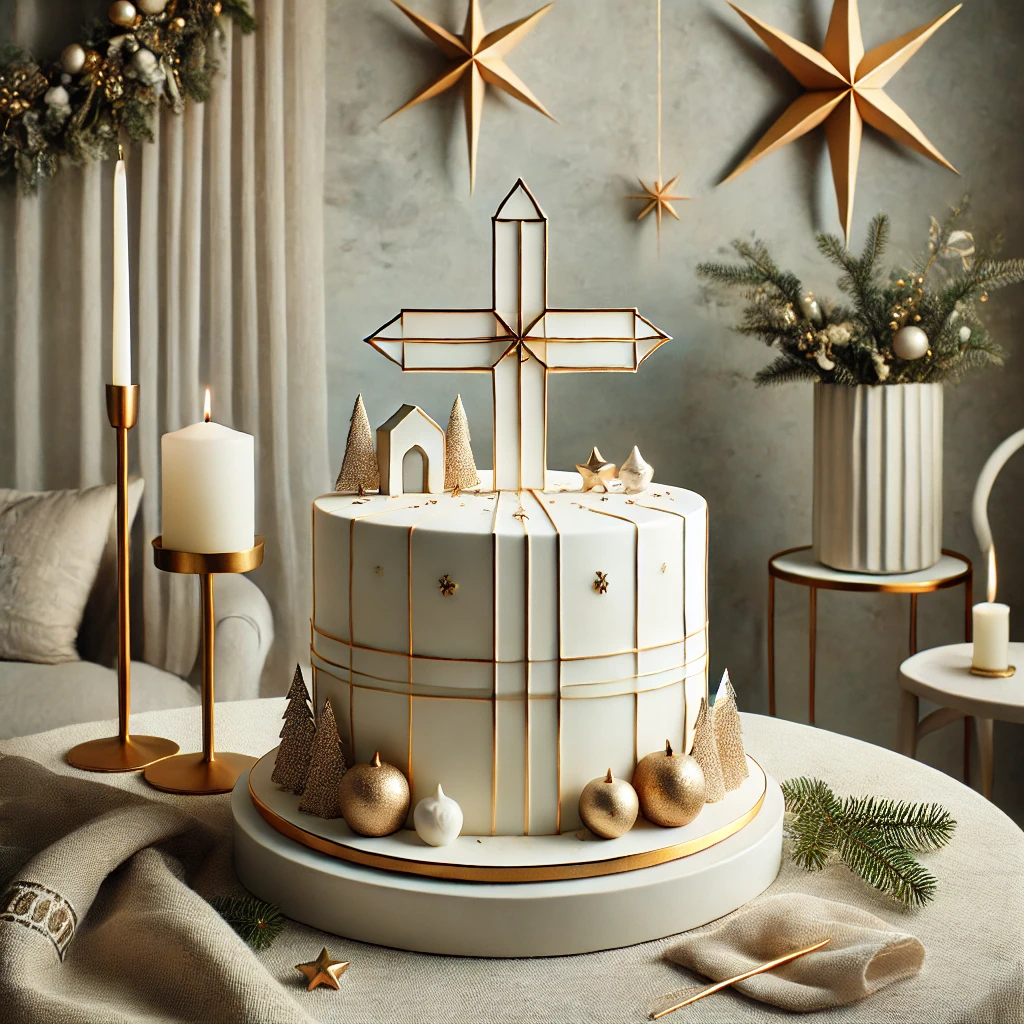
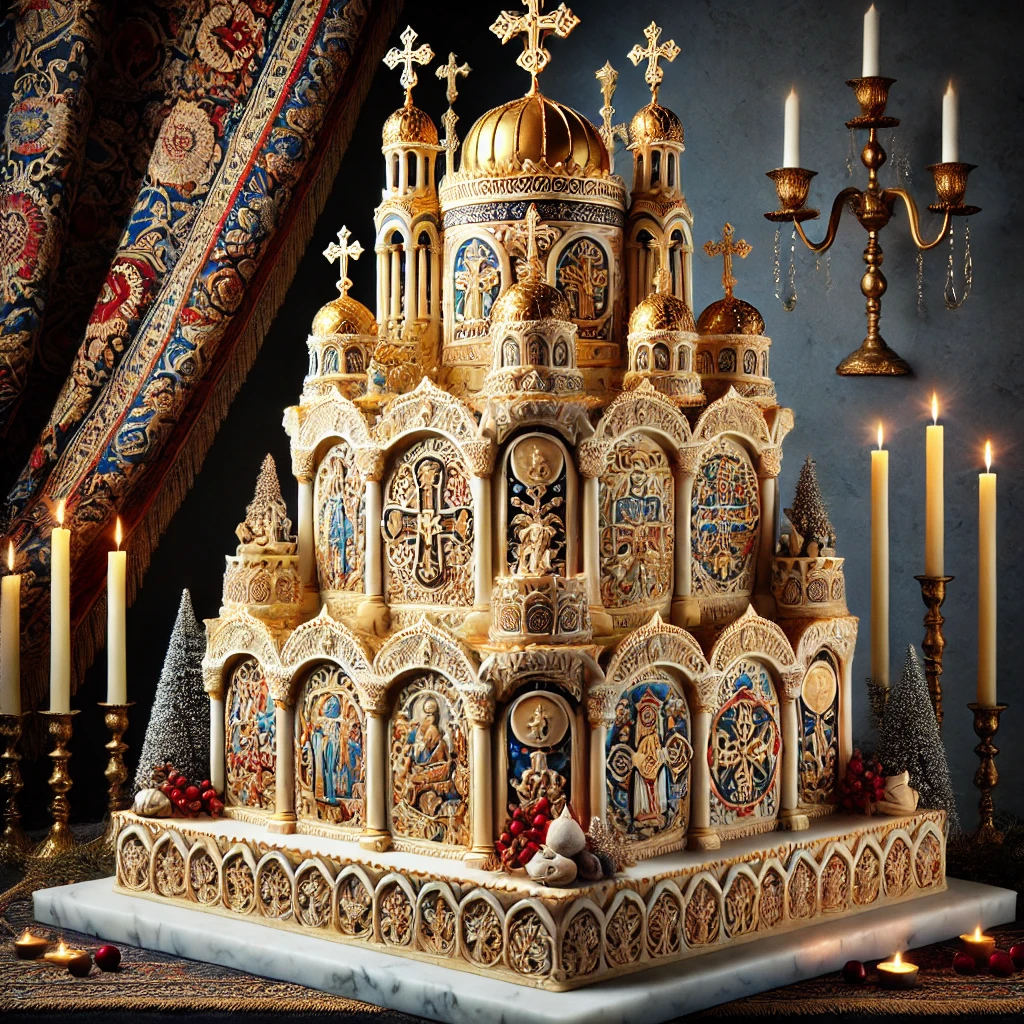
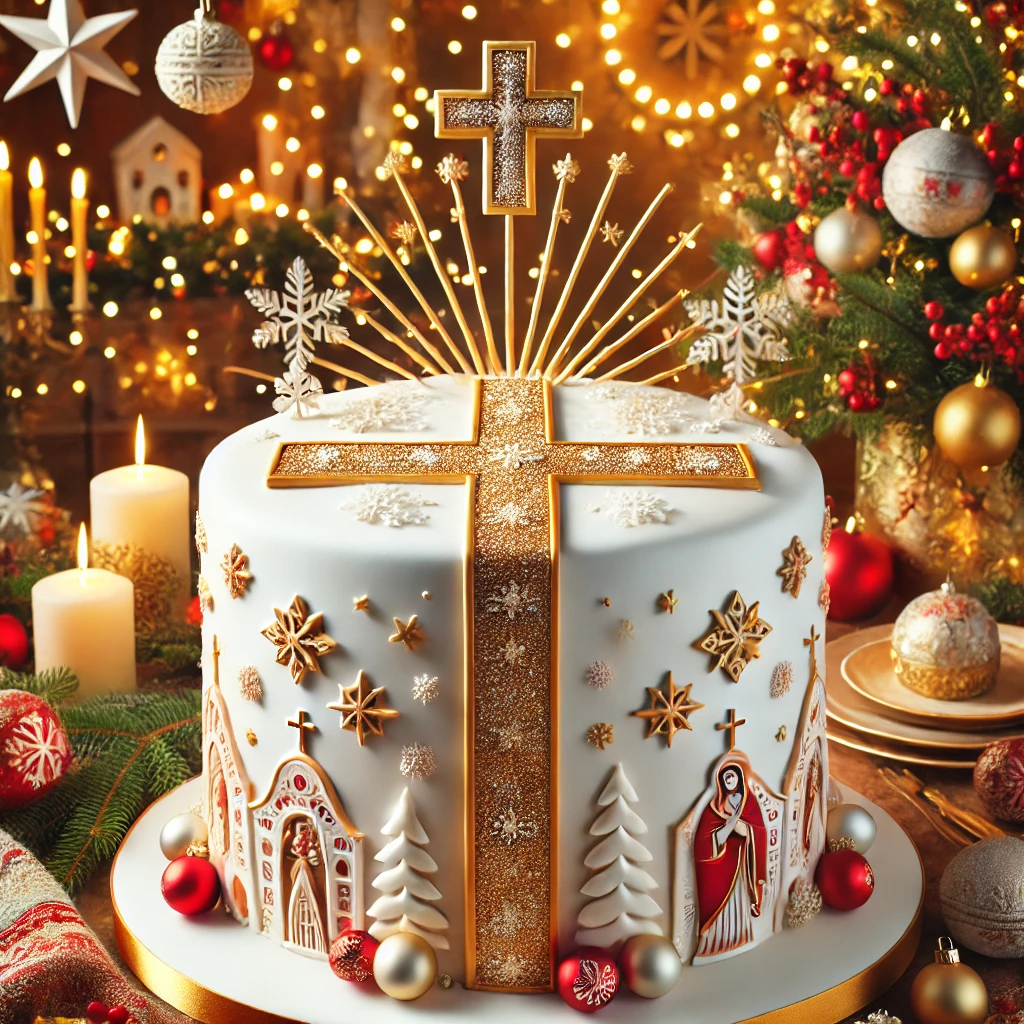
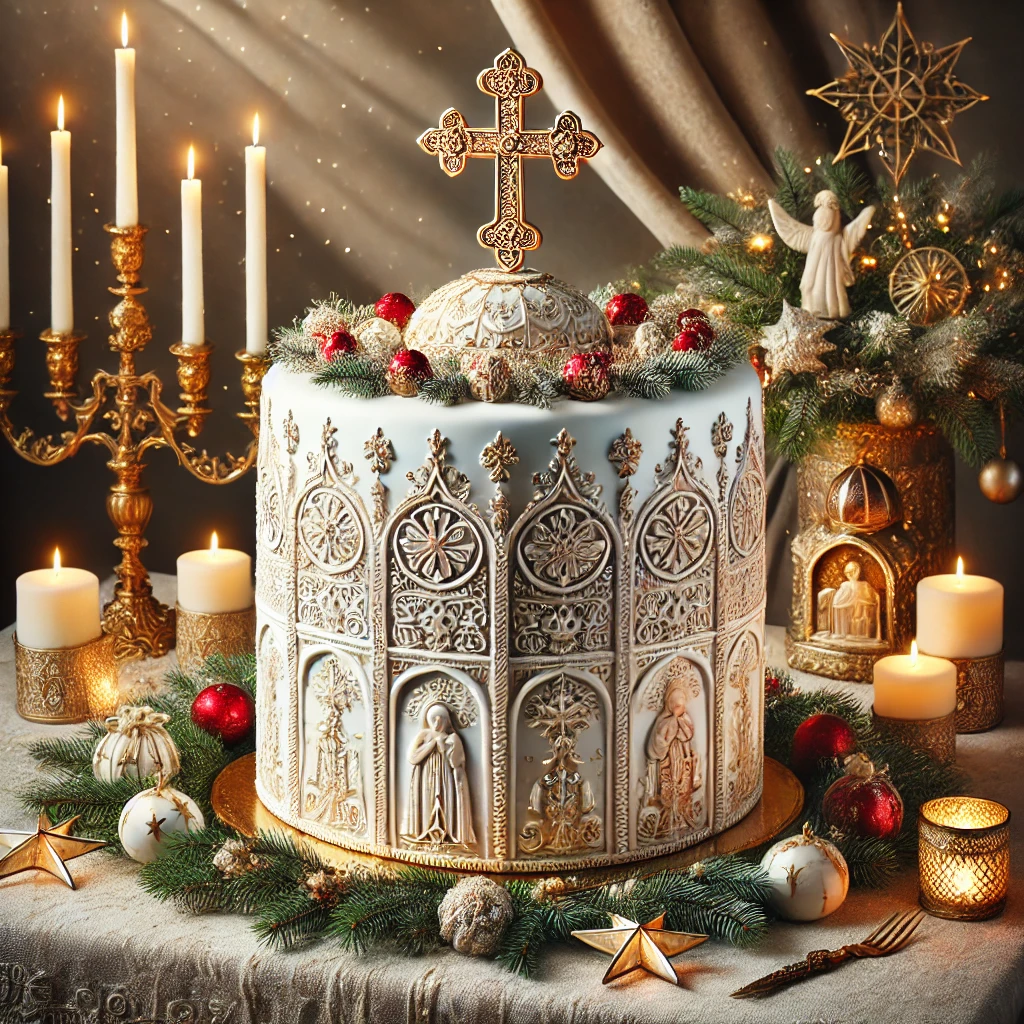
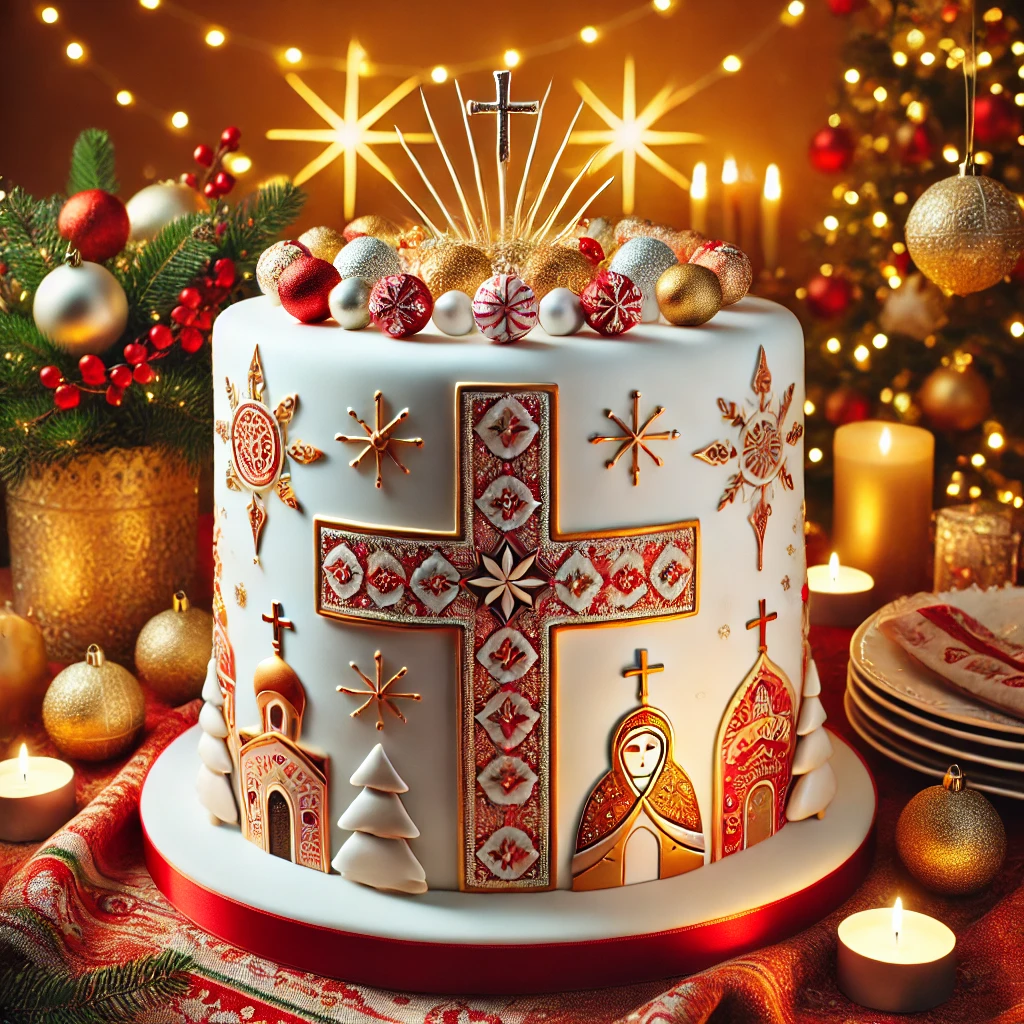
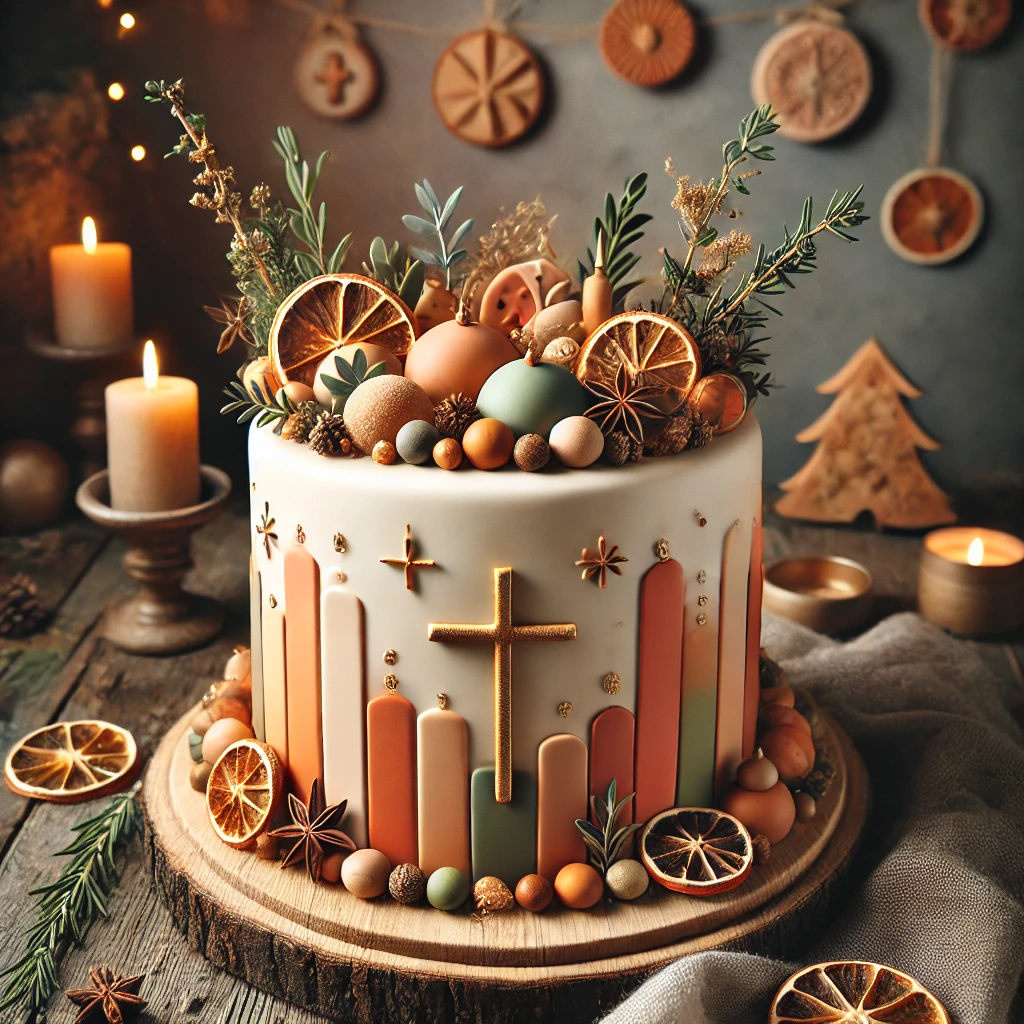
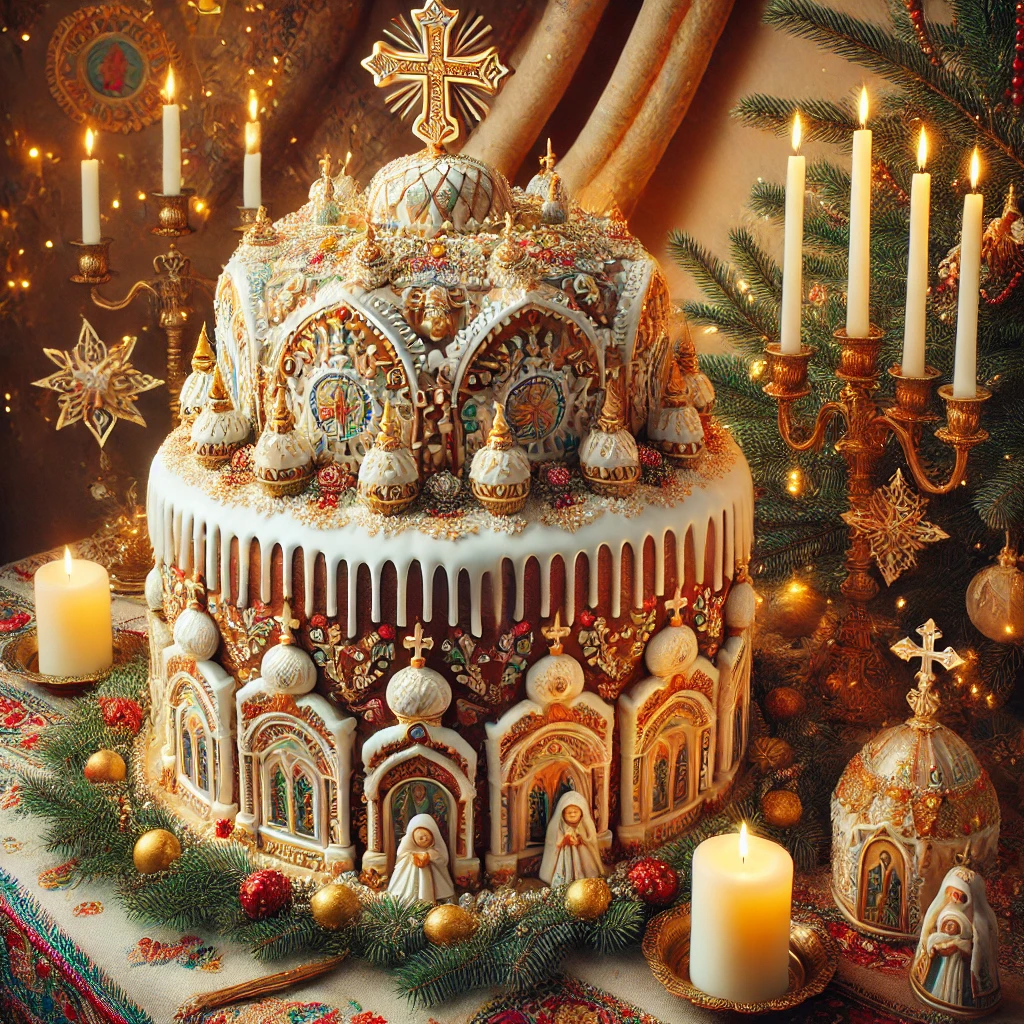
Orthodox Christmas Cake & Atmosphere Ideas
Where style, memory, and celebration meet.
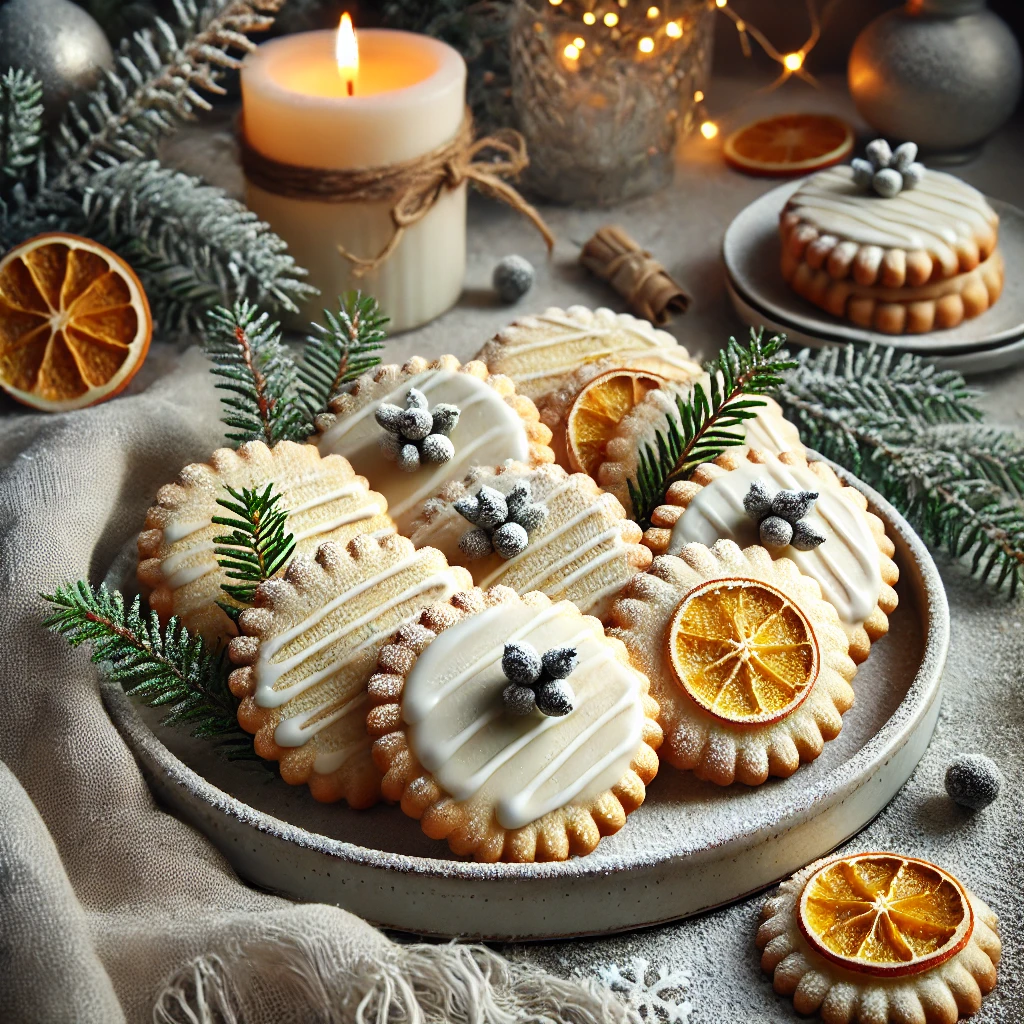
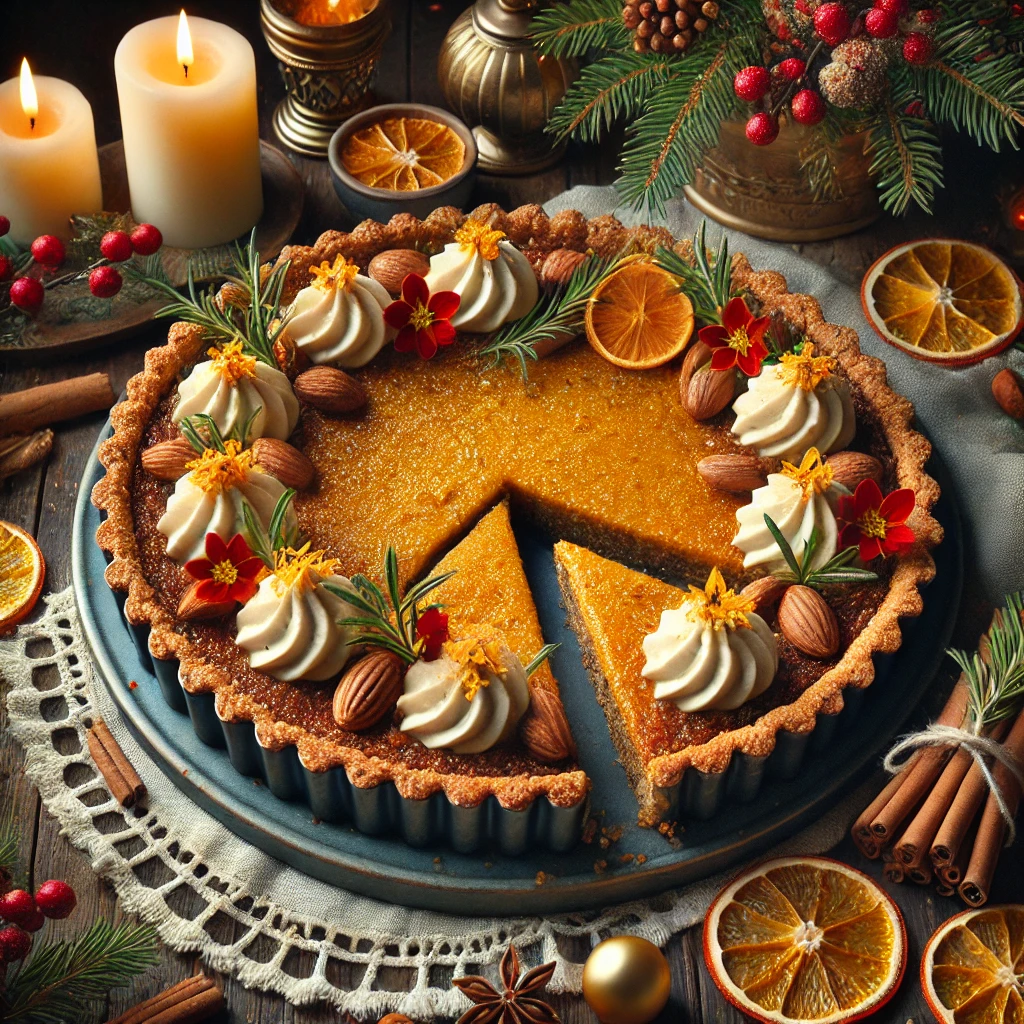
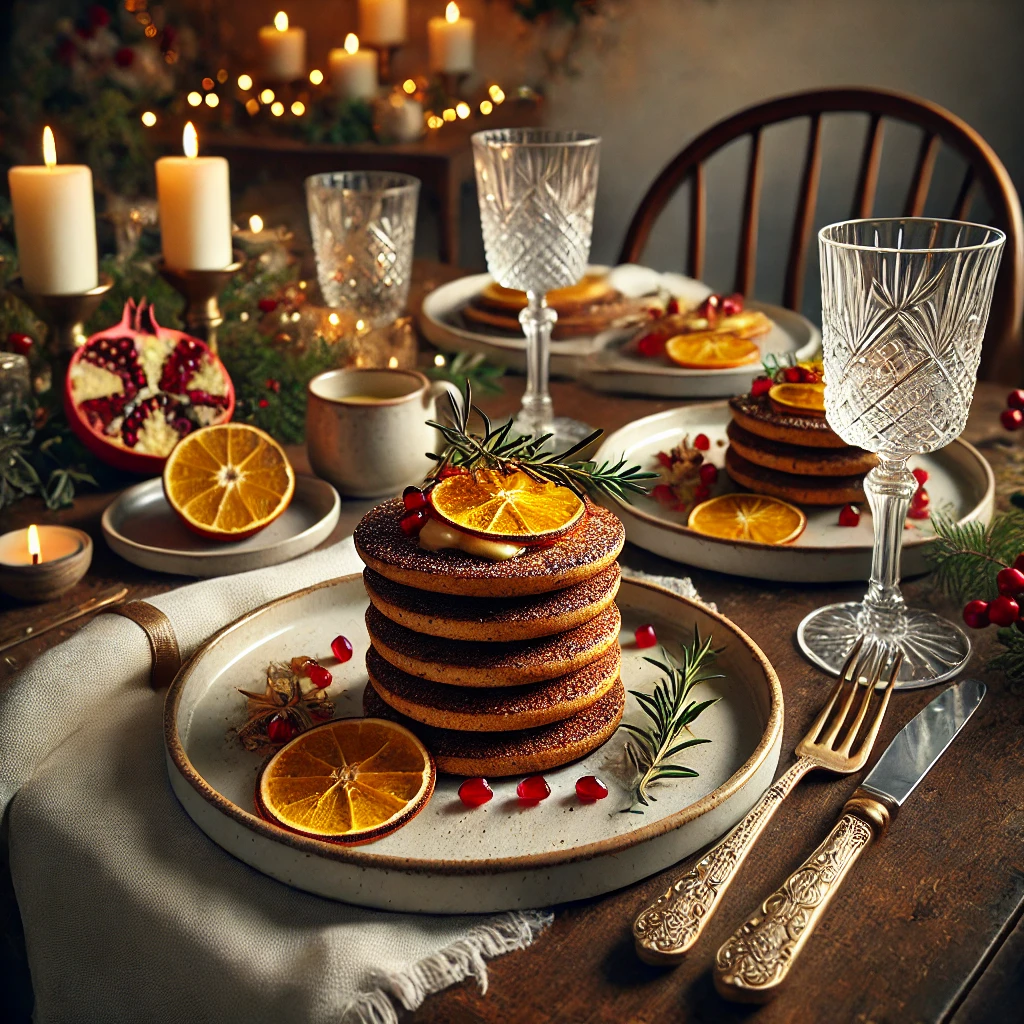
This section is meant to be more than Cake Decorating Ideas… it’s designed to spark inspiration and creativity, awaken tradition, and infuse your special occasions with style, identity, and atmosphere. A color palette becomes a theme. A design becomes a mood. Simple details—like sugared holly leaves or shimmering stars—can set the tone for a gathering and become part of cherished traditions and lasting memories melded with personal touch and love.
Traditional Orthodox Christmas Dishes
Christmas Eve (Fast Day) Foods
(Eaten before the Nativity Liturgy or after the first star appears)
These foods are meatless and dairy-free, reflecting watchful preparation.
Common Christmas Eve foods
Grains (wheat, barley, rice) – life, resurrection, abundance
Beans or lentils – humility and sustenance
Vegetable stews or soups
Cabbage dishes (often stuffed with rice or mushrooms)
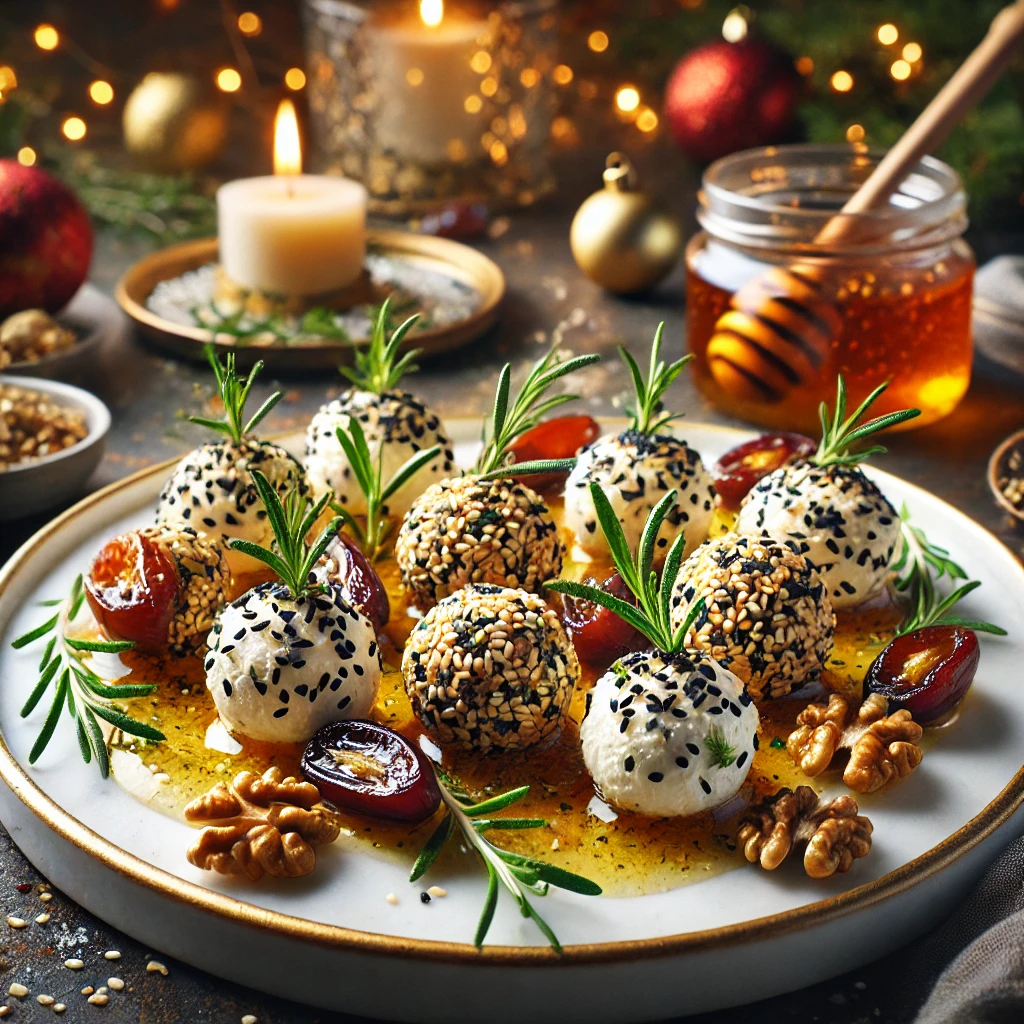
Dried fruits and nuts – sweetness of God’s promises
Honey – Christ’s gentleness and divine sweetness
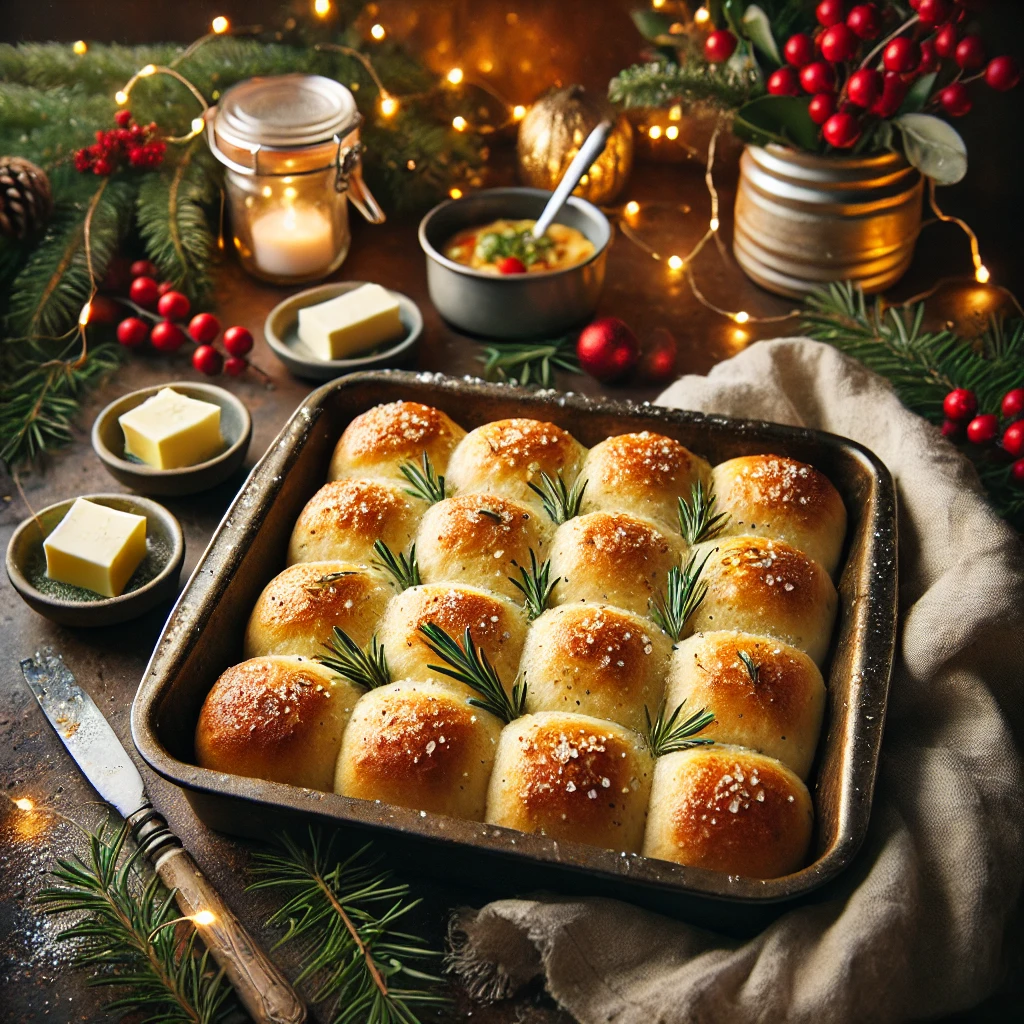
Flatbreads or simple loaves
Famous traditional dish
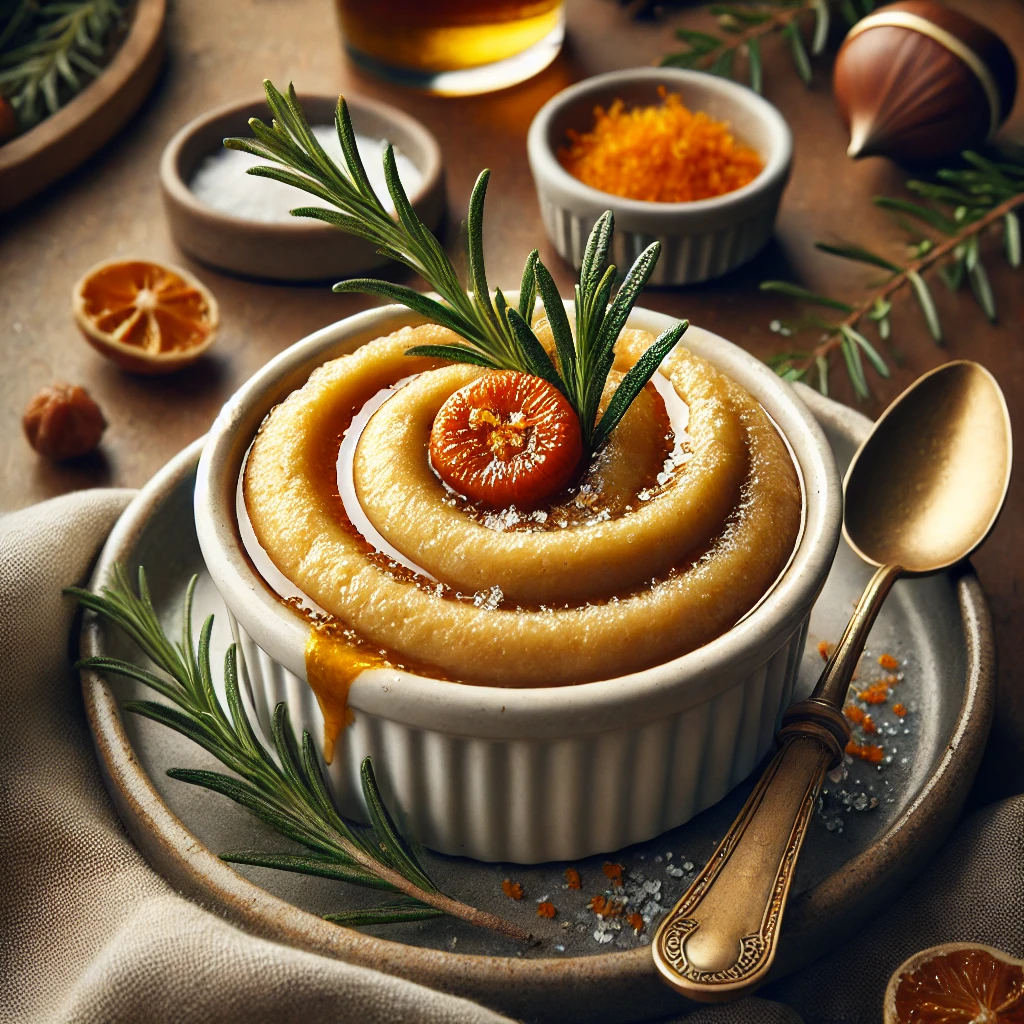
Kutya (Koliva) – sweet wheat pudding with honey, poppy seeds, and nuts
Symbolizes eternal life and Christ as the “grain of wheat”
Some traditions prepare 12 dishes, representing the Apostles.
🌟 Christmas Day Feast Foods
(Eaten after the Divine Liturgy—this is when the fast is fully broken)
Common across Orthodox cultures
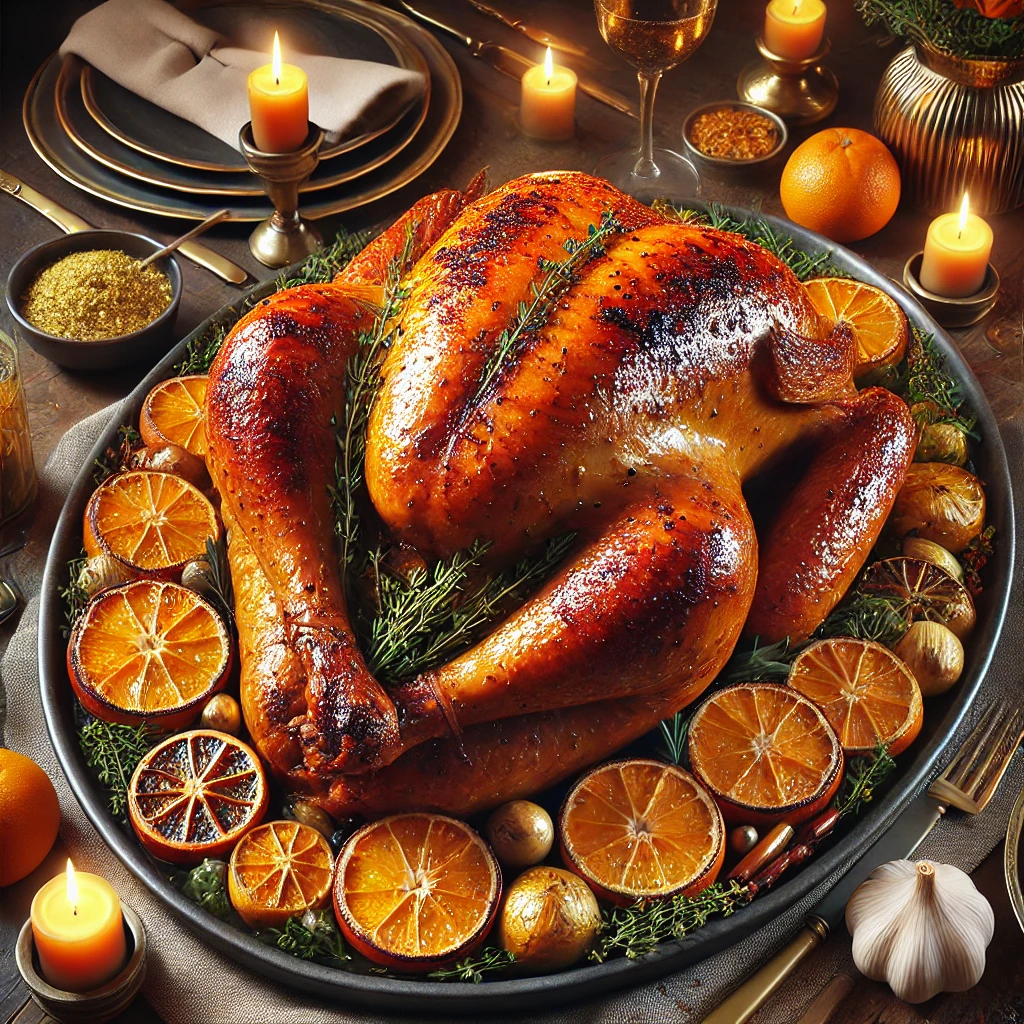
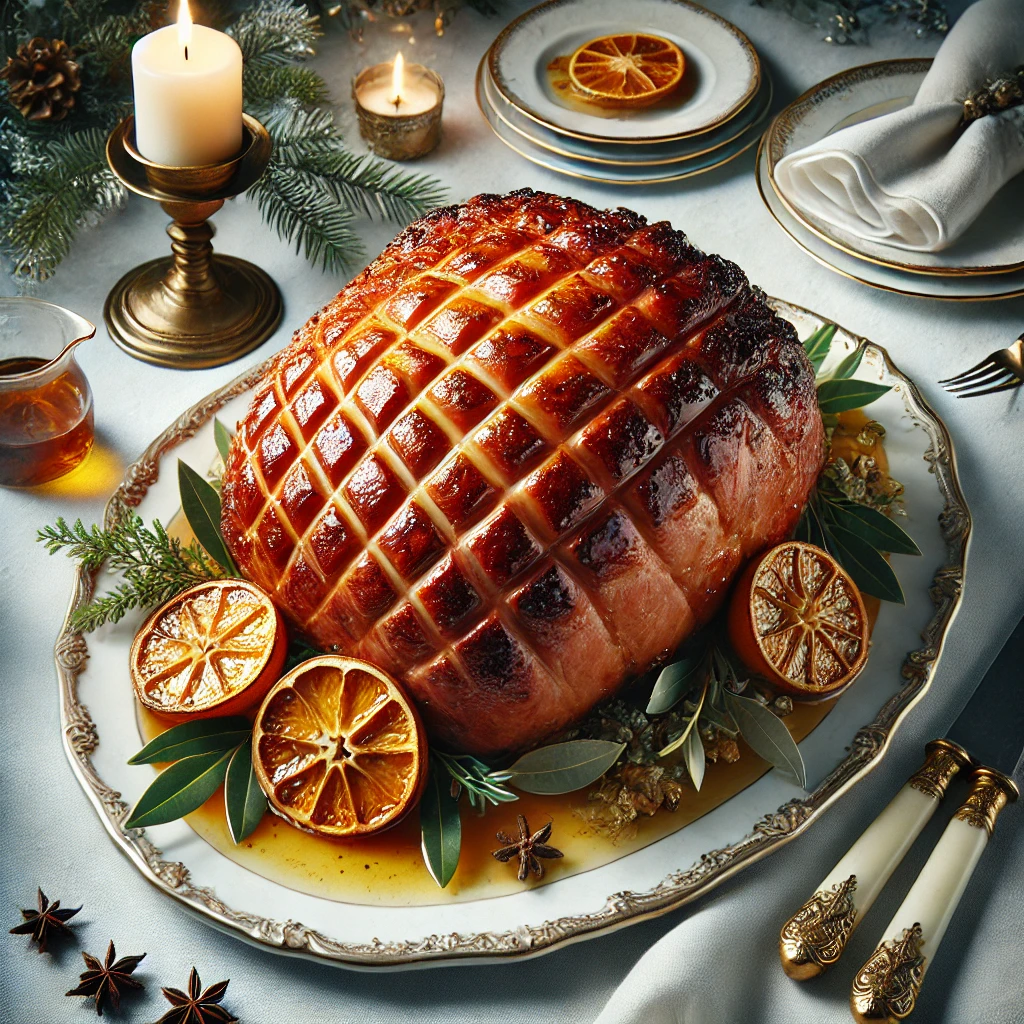
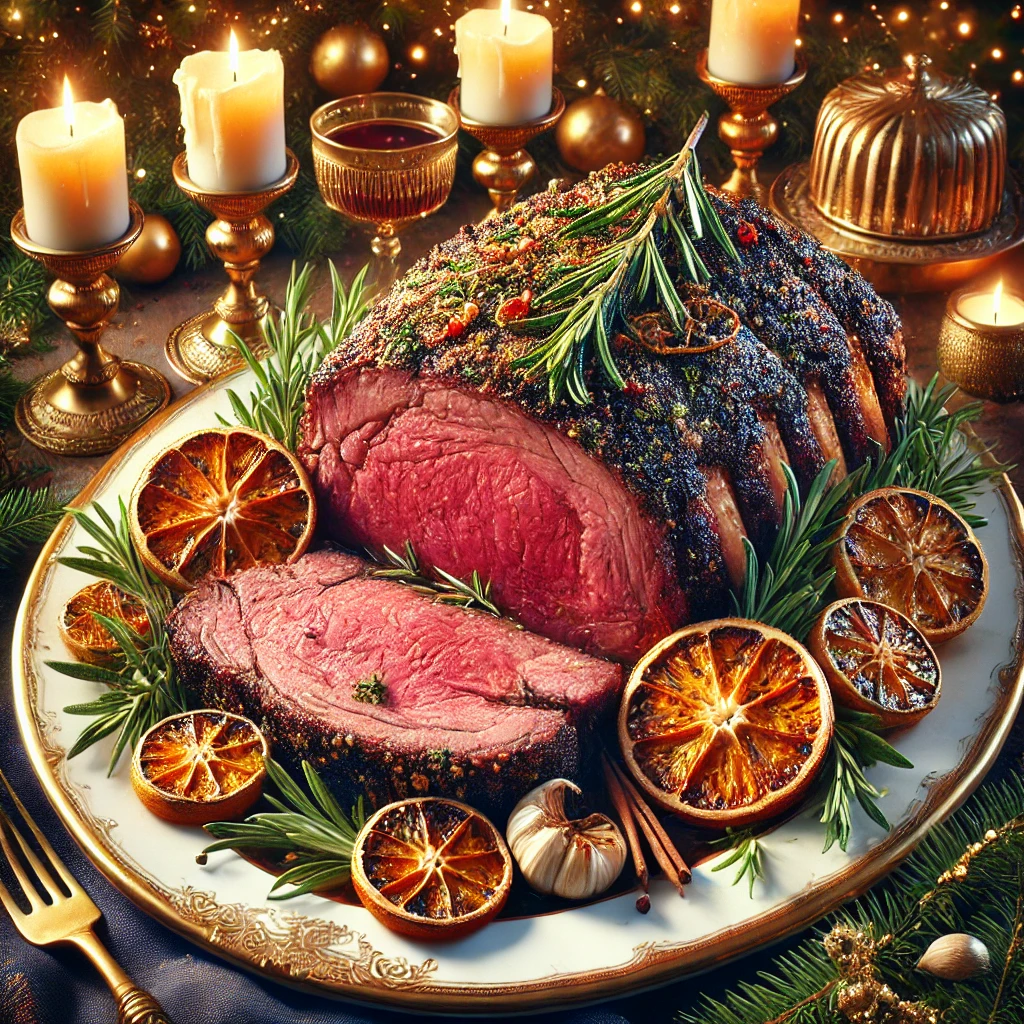
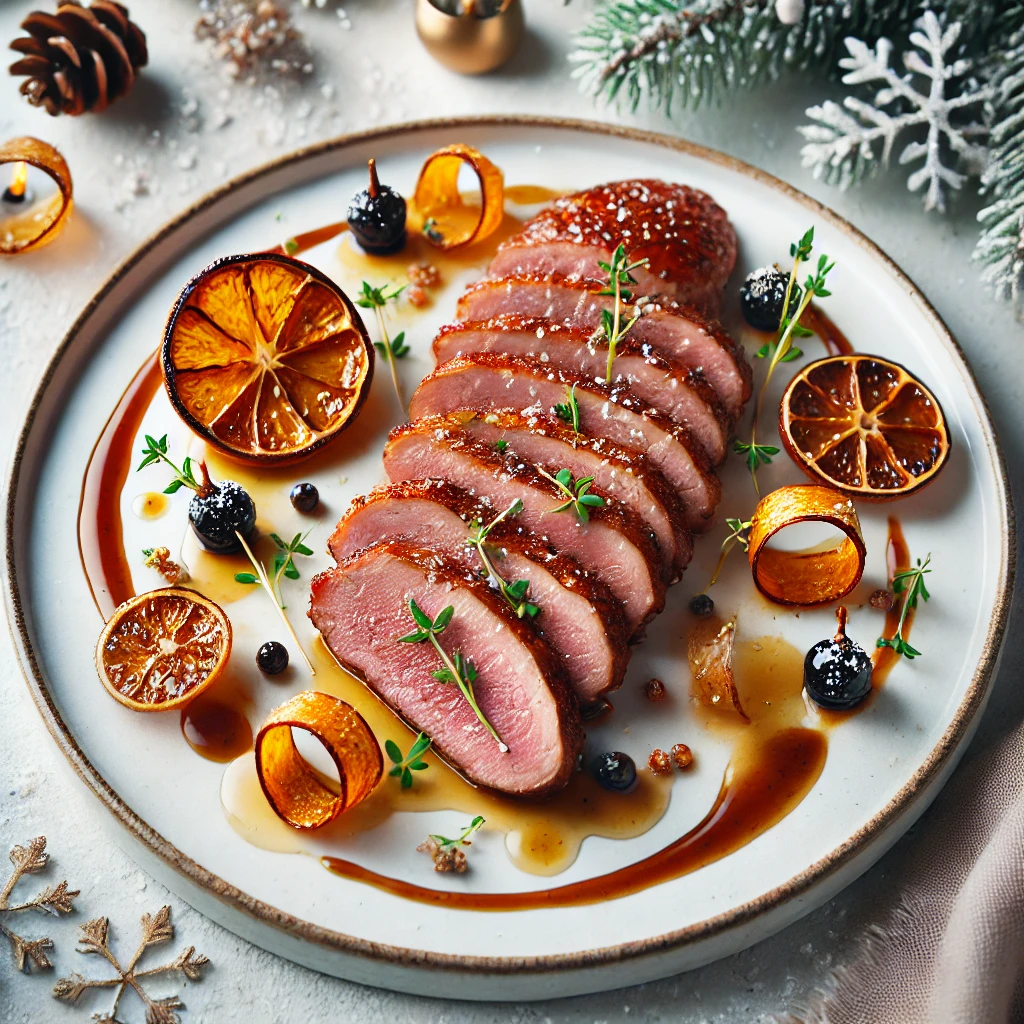
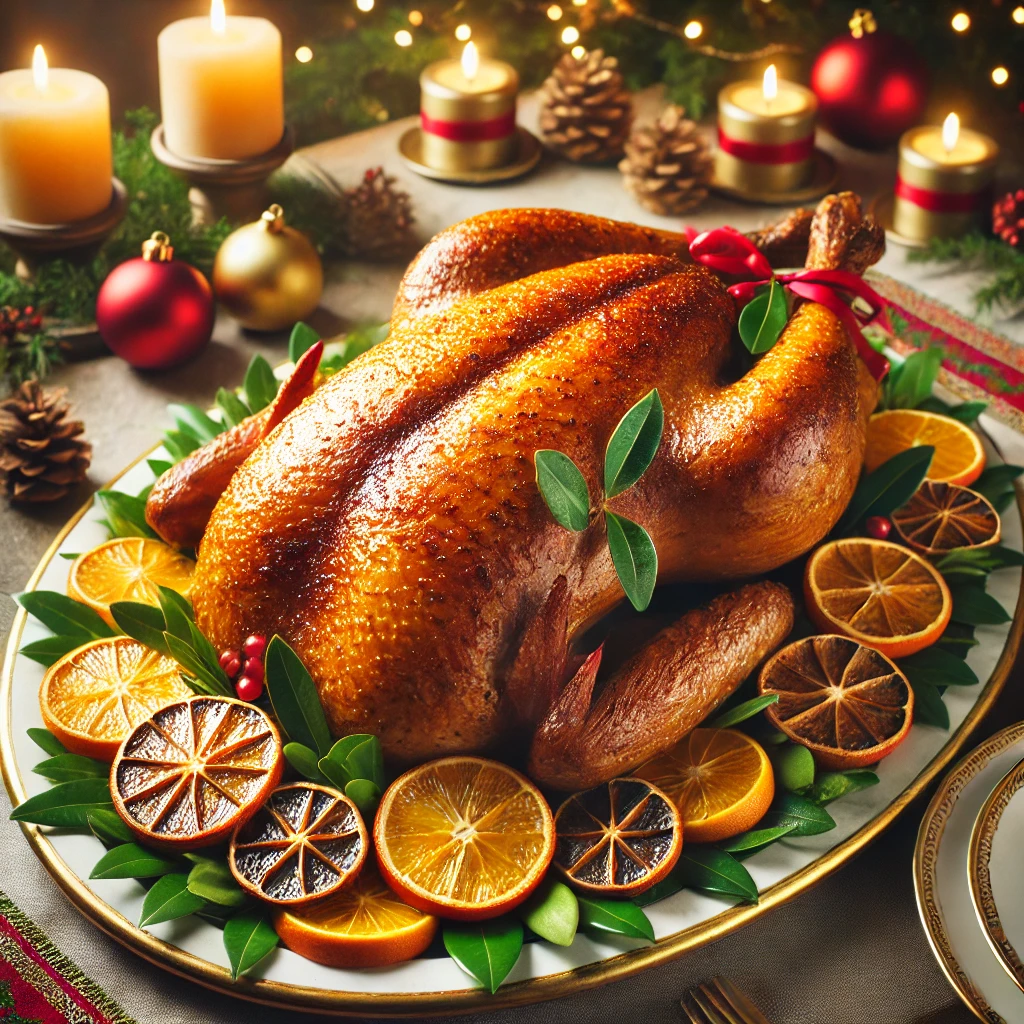
Roasted meats (lamb, pork, beef, or poultry depending on region)
Cheese and dairy dishes
Eggs (often symbolizing new life)
Rich breads and pastries
Wine (used reverently, not excessively)
This feast expresses joy after restraint, not indulgence without meaning.
🌍 Regional Orthodox Christmas Foods
Eastern Europe & Slavic traditions
Roast pork or goose
Sausages
Pierogi or dumplings
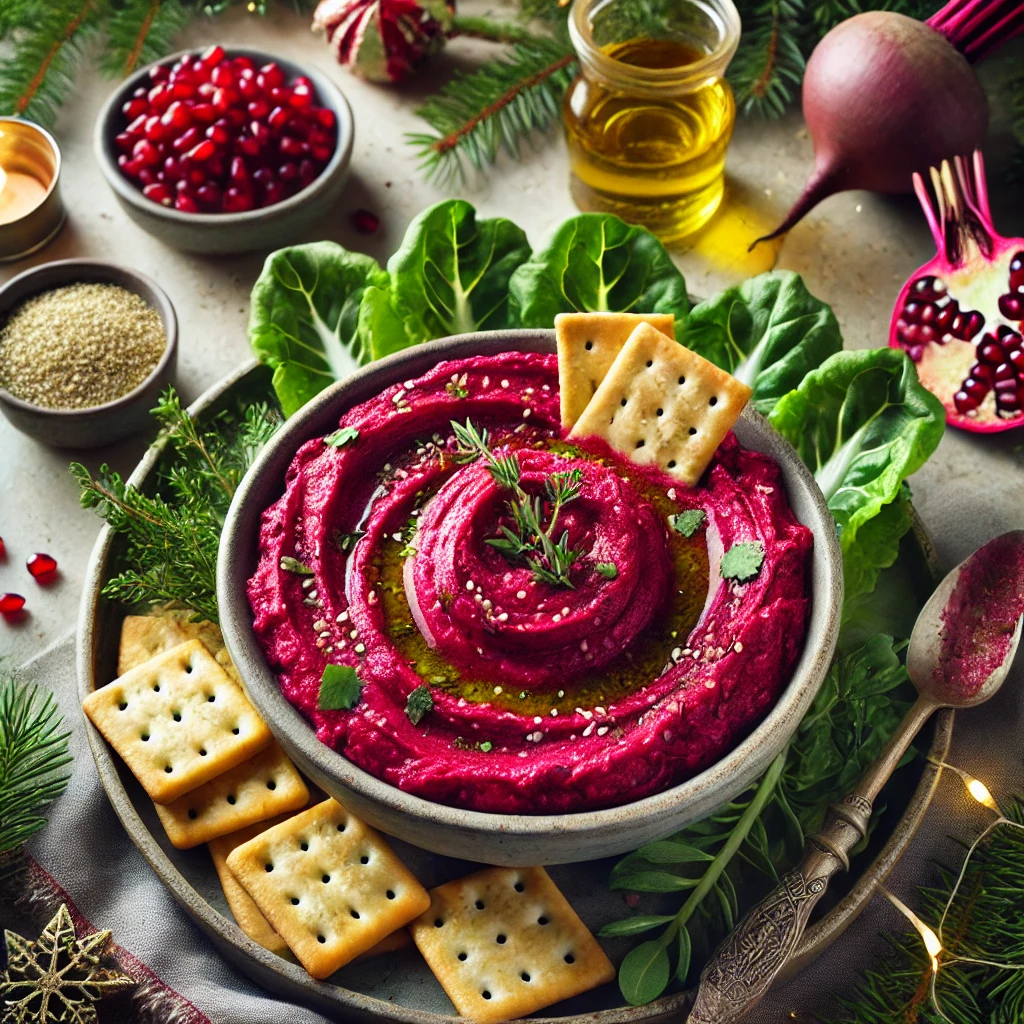
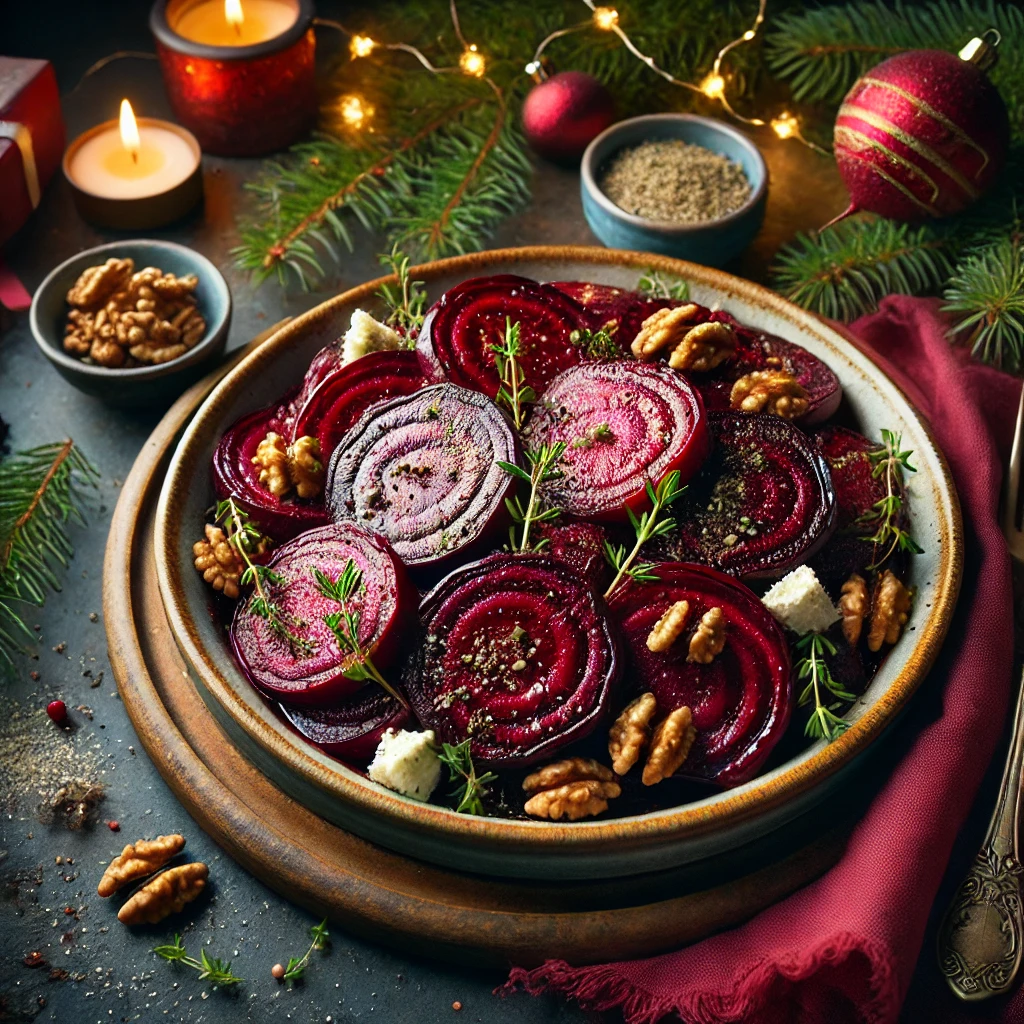
Beet, mushroom, or cabbage soups
Honey cakes and nut rolls
Greek & Mediterranean traditions
Christopsomo (“Christ Bread”) — a decorated loaf blessed and shared
Roast lamb or goat
Stuffed grape leaves
Honey pastries (melomakarona, baklava)
Middle Eastern Orthodox traditions
Spiced rice and meat dishes
Flatbreads and lentil soups
Dates and nuts
Sweet semolina desserts
Ethiopian & Eritrean Orthodox
Long fasts followed by rich stews (doro wat)
Flatbread (injera)
Communal eating after liturgy