

















Palm Sunday

with ORO VALENTIO

The Sunday Before Easter Sunday

Palm Sunday marks the beginning of the most sacred week in the Christian story—the moment when Christ enters Jerusalem to accomplish the mission for which He came into the world. The event appears at first to be a celebration, but beneath the joyful surface lies a profound mystery of divine love, sacrifice, and redemption.
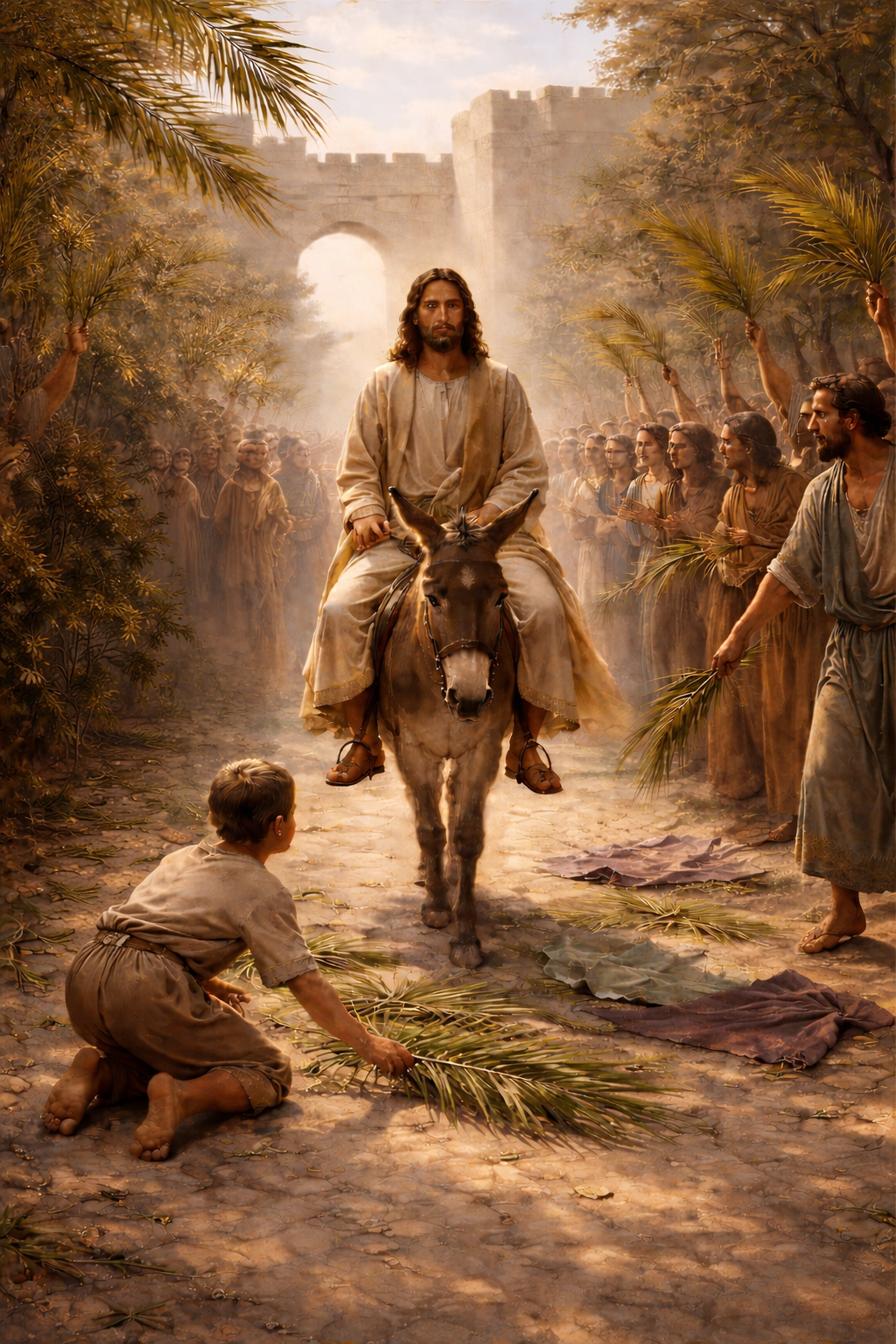
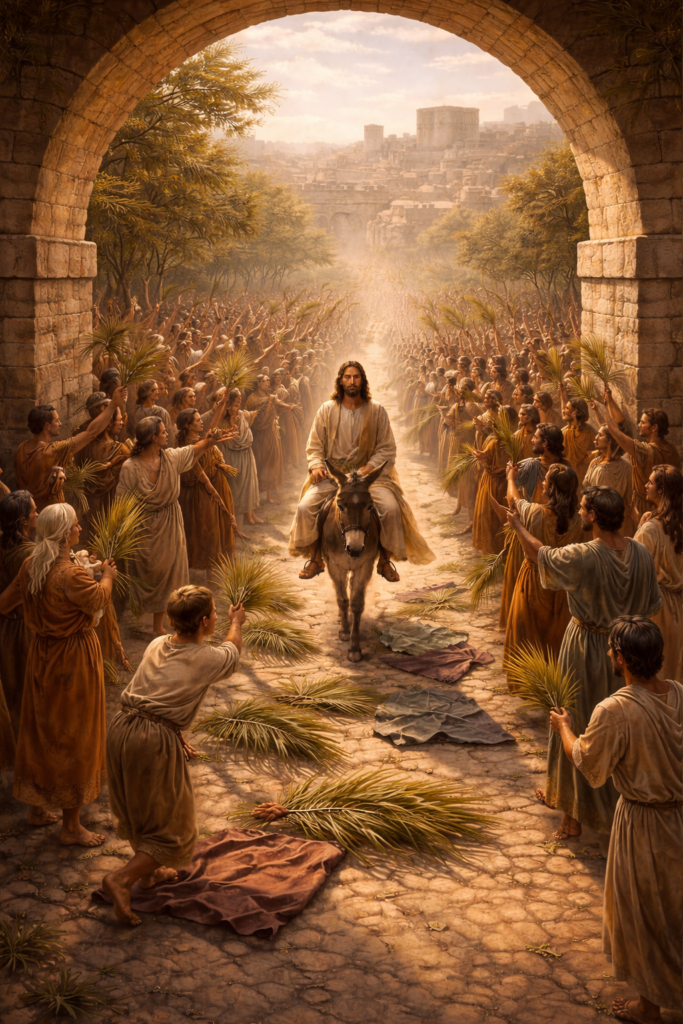
As Jesus approaches Jerusalem, He chooses to enter the city riding a donkey rather than a warhorse. This detail is deeply meaningful. In ancient times kings who came in conquest rode powerful horses, but kings who came in peace rode humble animals. By entering the city this way, Christ reveals the nature of His kingdom: not one built by force, power, or domination, but by truth, humility, and sacrificial love.
The crowds greet Him by spreading cloaks on the road and waving palm branches—symbols of victory and honor. They cry out with joy, proclaiming Him the Son of David and the One who comes in the name of the Lord. For a moment the city erupts in celebration. Yet the deeper truth is sobering.
Many who cheer on this day do not yet understand the kind of King they are welcoming. They expect liberation through political power, but Christ has come to bring a far greater freedom—the liberation of the human soul from sin, fear, and death itself. Palm Sunday therefore holds a powerful tension: a celebration that already carries the shadow of the cross.
Within a few days the same city that shouts praises will echo with cries for His crucifixion. This reveals something profound about the human condition. The human heart can recognize goodness and yet still struggle to accept the path of sacrifice and truth that goodness requires.
Christ enters Jerusalem knowing exactly what awaits Him. He knows the betrayal. He knows the suffering. He knows the cross. And still He goes forward.
Palm Sunday carries a profound connection to the ancient Passover tradition described in Exodus. In the Jewish observance of Passover, families were instructed to select a lamb on the tenth day of the month and keep it until the day of sacrifice. This selection occurred four days before the feast itself. According to the Gospel timeline, the entry of Christ into Jerusalem took place during this exact time when Passover lambs were being chosen throughout the city and surrounding regions. The symbolism is striking: while households were preparing lambs for the Passover sacrifice, Jesus entered Jerusalem, knowingly approaching the suffering that would follow. In this moment, the events of the Exodus and the unfolding of Holy Week converge, revealing a powerful theological meaning—just as the Passover lamb once marked deliverance, Christ presents Himself as the Lamb who will bring a greater redemption. This timing highlights the deep continuity between the ancient covenant and the fulfillment that Christians recognize in the events of the Passion.

Palm Sunday Reveals the Tragedy of the Human Heart

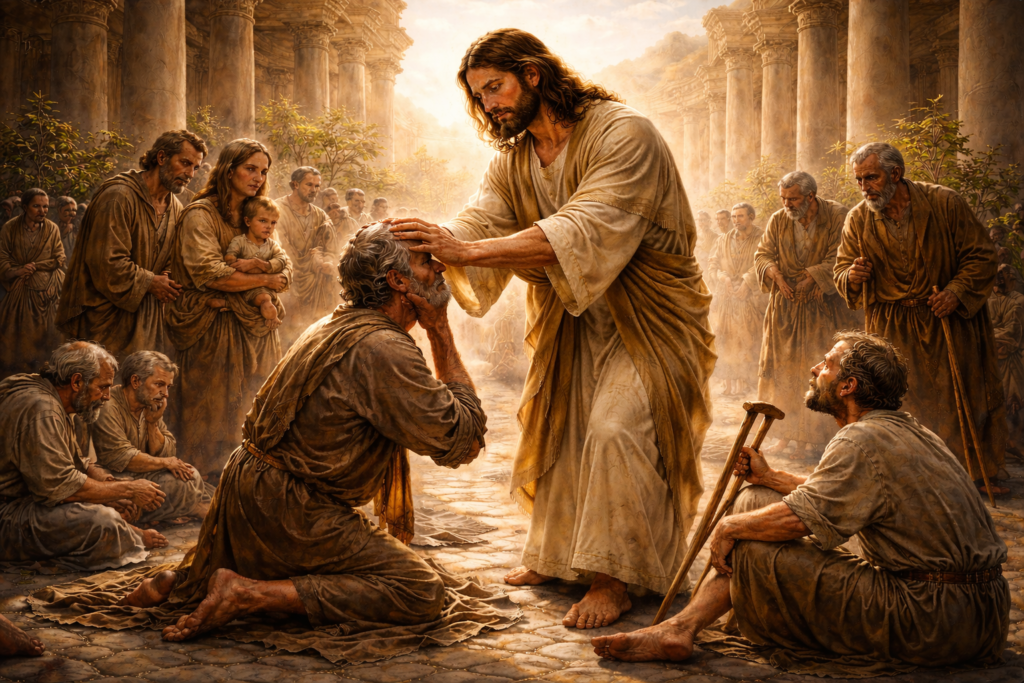
During the days immediately following Palm Sunday, as Jesus taught in Jerusalem and the tension around Him grew, the Gospels record that He continued performing acts of mercy within the Temple itself. After cleansing the Temple courts and restoring the sacred space that had been overtaken by commerce, those who were suffering—the blind and the lame—came to Him, and He healed them there (Matthew 21:14). This moment carries profound meaning when viewed in light of Palm Sunday. The same King who had entered Jerusalem not with armies but with humility, riding on a donkey, now revealed the true nature of His kingdom: a kingdom where power is expressed through compassion and where the forgotten are welcomed into the very heart of God’s house. In earlier tradition, the blind and the lame were sometimes viewed as ritually excluded from sacred spaces, yet here they are brought into the Temple and restored. Even as opposition against Him intensifies and the path toward the cross draws nearer, Jesus continues to heal, to comfort, and to restore the broken. In this way, the days following Palm Sunday reveal the heart of His mission—while the world prepares to reject Him, He continues pouring out mercy, demonstrating that His kingdom is not one of political triumph, but one in which the wounded are healed, the outcast are embraced, and love remains faithful even in the face of suffering.
Palm Sunday reveals one of the most searching truths about the human soul: the same voices that cry out in praise can, when disappointed, turn with astonishing speed toward rejection. The crowd welcomed Christ so long as He appeared to be the answer they wanted, the deliverer they had imagined, the king who might fulfill their expectations. But when it became clear that He had not come to flatter human ambition, uphold worldly power, or remove suffering on human terms, many hearts hardened. This is not merely a lesson about a crowd long ago; it is a mirror held before every person. We, too, often welcome truth when it comforts us, blesses our plans, or seems to confirm our desires. Yet when truth exposes our pride, calls us to repentance, asks us to forgive, to surrender, to change, or to carry the cross rather than escape it, something within us resists. Palm Sunday uncovers that inner conflict with painful clarity: the human heart can admire holiness and still flee from the cost of becoming holy. And yet this is precisely where grace enters. Christ does not turn away from the fickleness of the crowd or the instability of the human heart. He rides forward knowingly, loving those who misunderstand Him, remaining faithful even to those who will abandon Him. In this mystery lies a deeply transformative call: to stop shaping God in the image of our preferences, and instead allow our hearts to be remade by the truth He brings. Palm Sunday invites each soul to move beyond shallow admiration into true conversion, to welcome not merely a Savior who pleases us, but the Lord who can heal, purify, and change us from within.

Of Rumors & Accusations

When Jesus entered Jerusalem on Palm Sunday, the crowd greeted Him with words and symbols that carried deep historical and spiritual meaning. As they cried out, “Hosanna! Blessed is He who comes in the name of the Lord,” they were quoting Psalm 118, a psalm sung during the Passover pilgrimage to Jerusalem. The word Hosanna originally meant “Save us now,” making their praise both a joyful welcome and a heartfelt plea for deliverance. At the same time, the people waved palm branches—an image that would have been immediately recognized as a symbol of victory and national freedom. About a century and a half earlier, during the Maccabean revolt, palm branches had been waved to celebrate the liberation of Jerusalem from foreign oppression, and they had come to represent hope for renewed independence. By combining these two powerful signs—shouting a psalm of salvation and waving branches associated with victory—the crowd was proclaiming Jesus as the long-awaited king who would bring freedom to their people. Yet while many expected a political liberator who would overthrow earthly rulers, Christ had come to accomplish a far deeper deliverance: not freedom from a human empire, but freedom from sin, fear, and death itself. In this moment of Palm Sunday celebration, the hopes of the people were genuine, but the salvation Jesus came to bring would reach far beyond what they yet understood.

Palm Sunday begins with a scene of great triumph, yet within only a few days the atmosphere in Jerusalem changes dramatically. The people who welcomed Jesus with palm branches and cries of “Hosanna” were largely expecting a king who would overthrow oppression and restore political strength and prosperity to their nation. Their hopes had been shaped by generations of suffering under foreign rule, and many believed the Messiah would lead a visible, earthly victory against Rome. But as the week unfolded, it became clear that Jesus was not organizing a revolt or seeking power in the way many had imagined. Instead of rallying armies, He spoke of humility, repentance, sacrifice, and a kingdom not established by force. At the same time, influential religious leaders—who felt their authority threatened by His growing following—actively worked to turn public opinion against Him. The Gospels describe how they persuaded and stirred up crowds, and in a crowded city during Passover, rumors and accusations could spread quickly, creating confusion, fear, and suspicion among the people. As expectations collapsed and pressure mounted, the enthusiasm that once filled the streets began to fade. What began as celebration slowly gave way to rejection, revealing how easily human expectations, rumors, and influence can distort the perception of truth. Yet within this dramatic reversal lies one of the deepest spiritual lessons of Holy Week: what appeared to be defeat—the suffering and crucifixion of Christ—became the very means through which the greatest victory was accomplished. Palm Sunday therefore reminds us that divine triumph often unfolds through humility, sacrifice, and love rather than through the power and success that the world expects.

Palm Sunday Traditions to Make Your Own

Blessing of Palm Branches
At the beginning of the Palm Sunday liturgy, palm branches are blessed and distributed to the faithful. These palms commemorate the branches laid before Christ as He entered Jerusalem and serve as a visible reminder of His kingship and humility.
Processions with Palms
Many parishes hold a procession in which the congregation carries blessed palm branches while hymns and prayers are offered. This procession recalls the joyful crowd that accompanied Jesus as He entered the city.
Keeping Blessed Palms in the Home
Families often place blessed palms behind crucifixes, sacred images, or near entryways in their homes. These palms serve as a sign of Christ’s protection and as a reminder of the beginning of Holy Week.
Folding Palms into Crosses
In many communities, people weave their palm branches into small crosses or other devotional shapes. These are kept throughout the year as a symbol of Christ’s victory through the cross.
Reading the Passion Narrative
During Palm Sunday services, the Passion of Christ is traditionally read aloud, often with multiple readers representing different voices in the Gospel account. This reading reminds the faithful that the joyful entry into Jerusalem leads directly toward the events of the crucifixion.
Beginning of Holy Week Reflection
Palm Sunday marks the opening of the most sacred week of the Christian year. Many families use this day to begin a period of deeper prayer, reflection, and preparation for the remembrance of Christ’s suffering and resurrection.
Returning Palms for Ash Wednesday
Blessed palms from the previous year are often saved and later returned to the church to be burned. The ashes from these palms are then used the following year for Ash Wednesday, connecting the cycles of repentance and renewal.
Decorating with Palms and Greenery
Homes and churches may be adorned with palm branches or greenery on this day. The natural branches symbolize victory, life, and the hope that Christ brings to the world.
Acts of Charity
Because the day begins Holy Week, many believers choose to accompany their prayer with acts of generosity—visiting the sick, helping those in need, or offering time and resources to others as a way of imitating Christ’s love.
Teaching Children the Story
Families often retell the story of Jesus entering Jerusalem to children, sometimes reenacting the procession with palms. This helps younger generations understand both the joy of the welcome and the deeper meaning of the week that follows.
Palm Sunday carries a profound connection to the ancient Passover tradition described in Exodus. In the Jewish observance of Passover, families were instructed to select a lamb on the tenth day of the month and keep it until the day of sacrifice. This selection occurred four days before the feast itself. According to the Gospel timeline, the entry of Christ into Jerusalem took place during this same period when Passover lambs were being chosen throughout the city and surrounding regions. The symbolism is striking: while households were preparing lambs for the Passover sacrifice, Jesus entered Jerusalem, knowingly approaching the suffering that would follow. In this moment, the events of the Exodus and the unfolding of Holy Week converge, revealing a powerful theological meaning—just as the Passover lamb once marked deliverance, Christ presents Himself as the Lamb who will bring a greater redemption. This timing highlights the deep continuity between the ancient covenant and the fulfillment that Christians recognize in the events of the Passion.

Walk Faithfully with Him

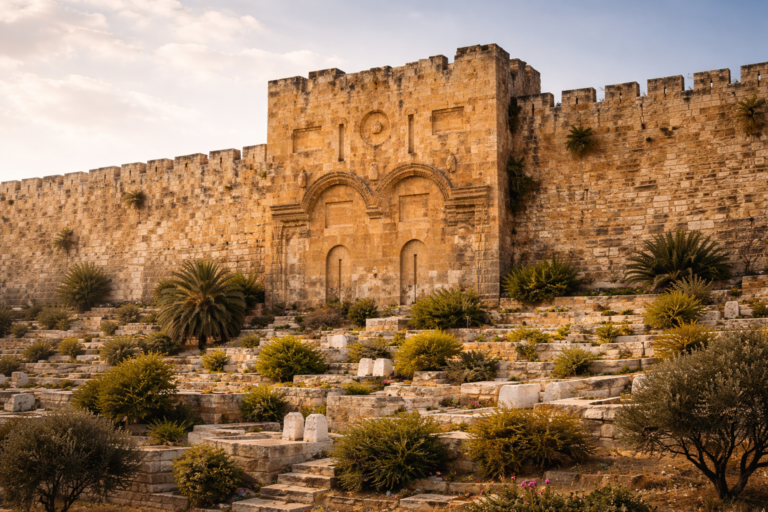
Many scholars believe that when Jesus entered Jerusalem on Palm Sunday, He approached the city from the east, the direction of the Eastern Gate, sometimes called the Golden Gate, a gate long associated with messianic expectation in Jewish tradition. This entrance carried deep symbolic meaning. In the days leading up to Passover, lambs destined for sacrifice were brought into Jerusalem as families prepared for the feast that commemorated Israel’s deliverance. In this setting, Christ—already foretold in the sacred writings and later proclaimed by John the Baptist as the Lamb of God—entered the city knowing the sacrifice that awaited Him. The gate itself still stands today within the eastern wall of Jerusalem’s Temple Mount, facing the Mount of Olives, though it has been sealed shut for centuries. The structure visible today dates to around the 6th or 7th century and was later sealed in the 16th century during the Ottoman period. Its presence continues to carry deep spiritual symbolism, reminding believers of the moment when the humble King entered Jerusalem in peace and began the final steps toward the sacrificial love that would soon be revealed during Holy Week.
May the King who entered Jerusalem in humility fill your heart with peace and courage.
As the palm branches were laid before His path,
may you lay before Him your hopes,
your burdens, and your life.
May the Lord who came not to conquer by force but to heal and redeem
strengthen you to walk faithfully with Him through the days ahead.
And may His mercy guide you from the joy of Palm Sunday
through the mystery of the cross and into the light of the resurrection.
Amen.

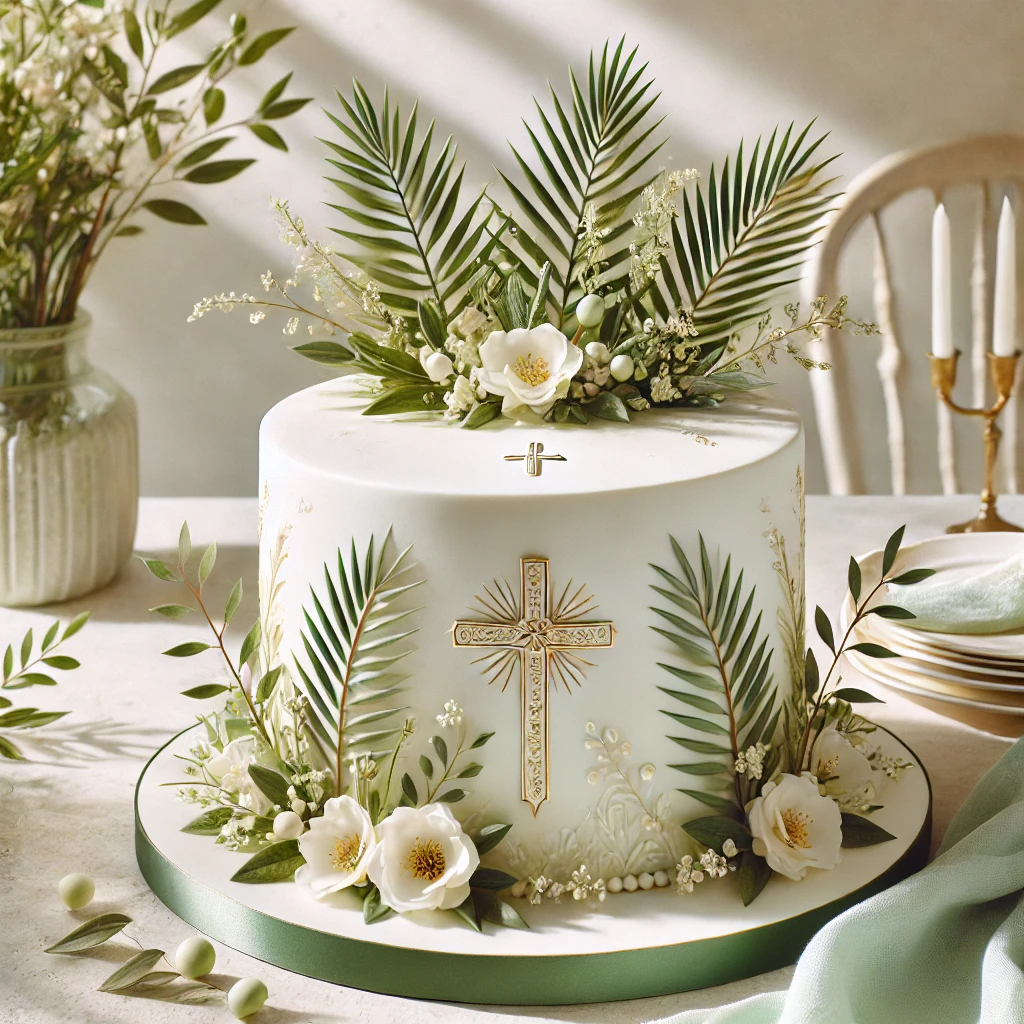
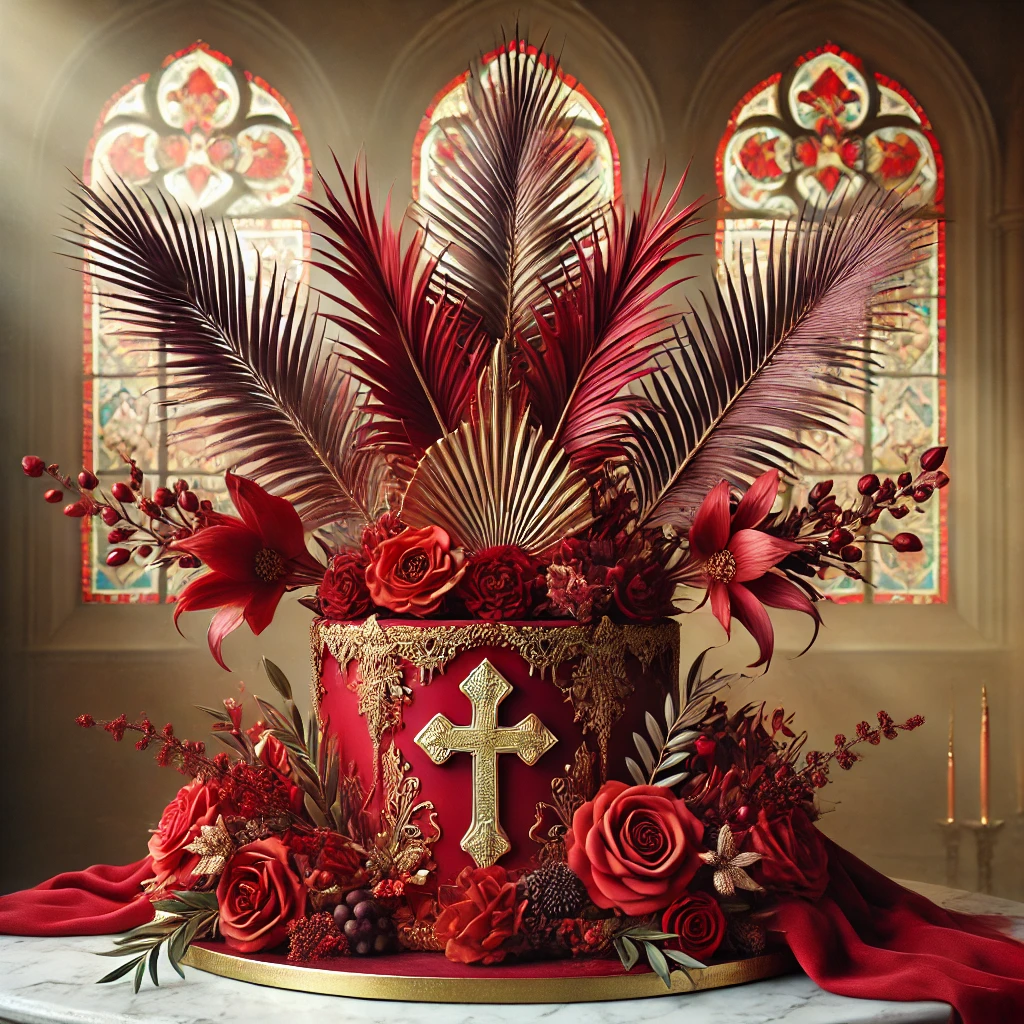
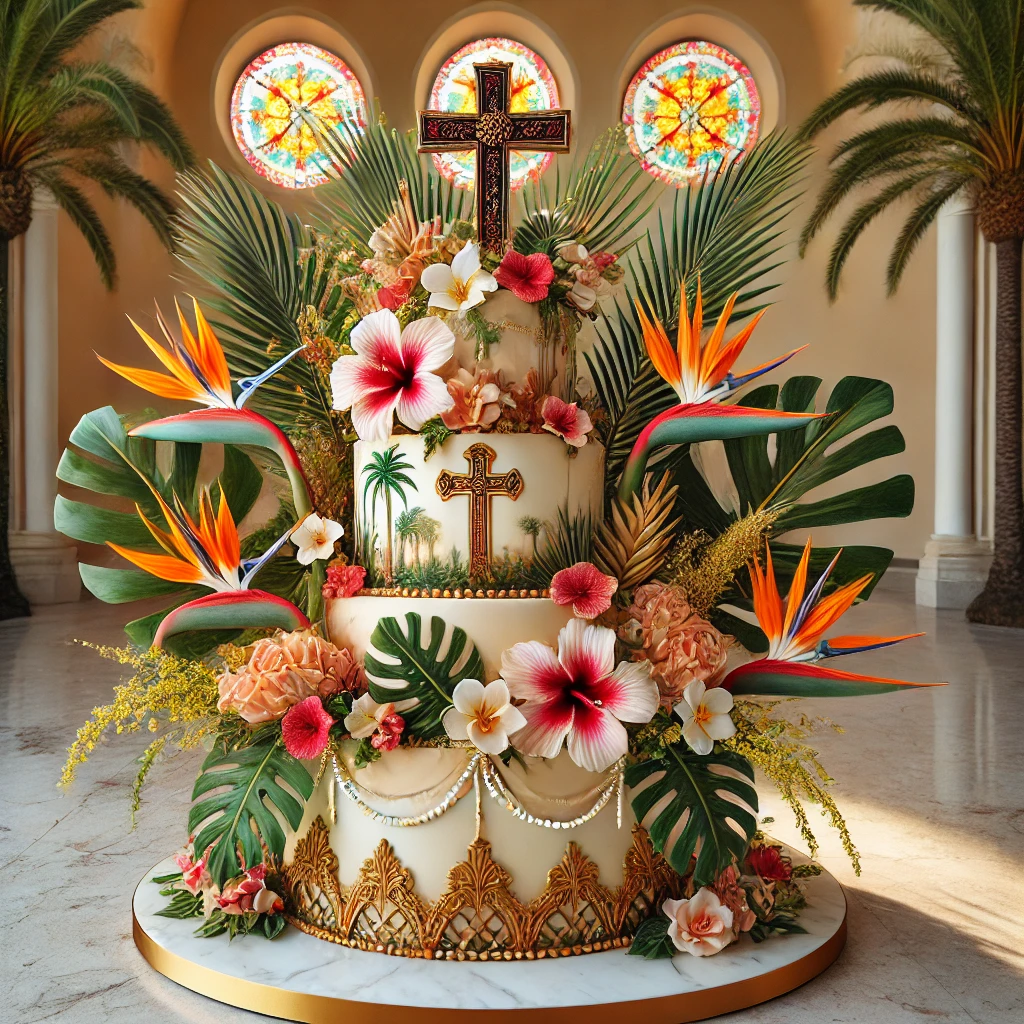
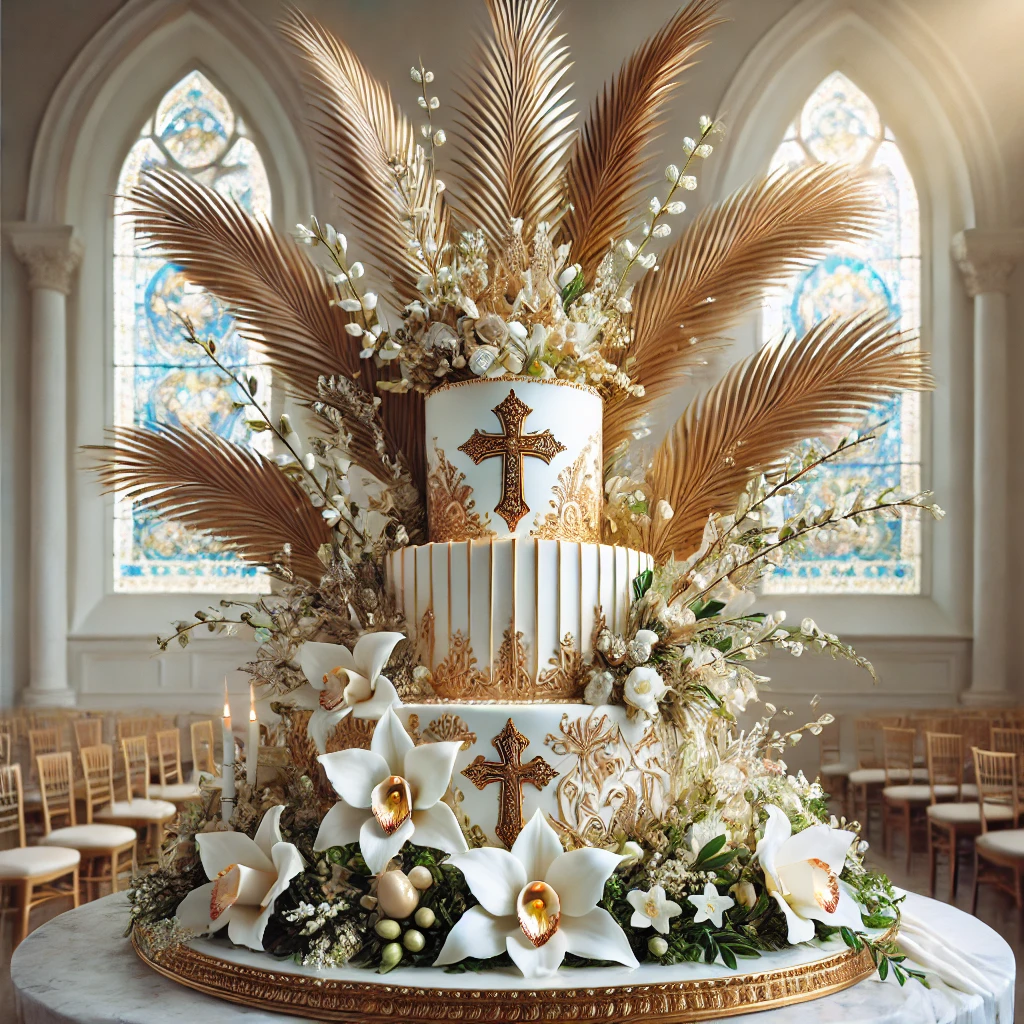
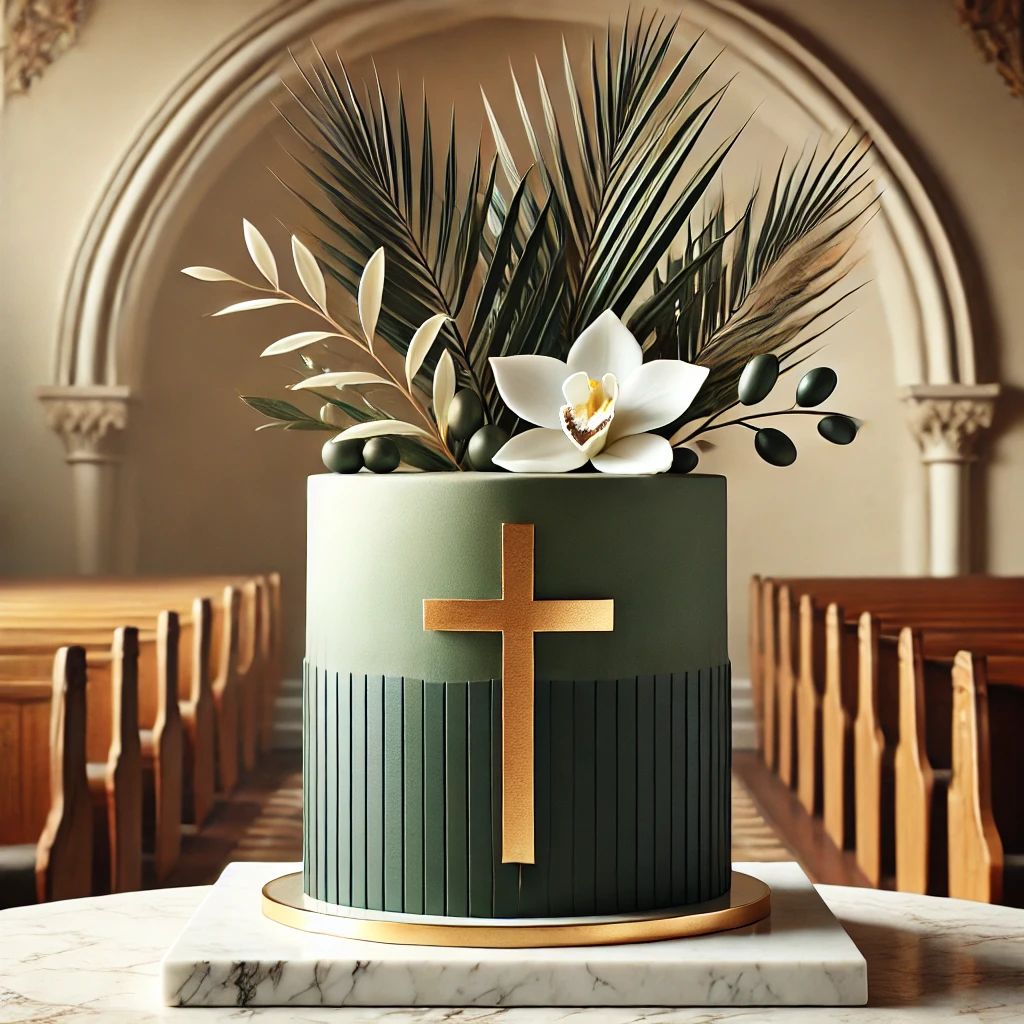
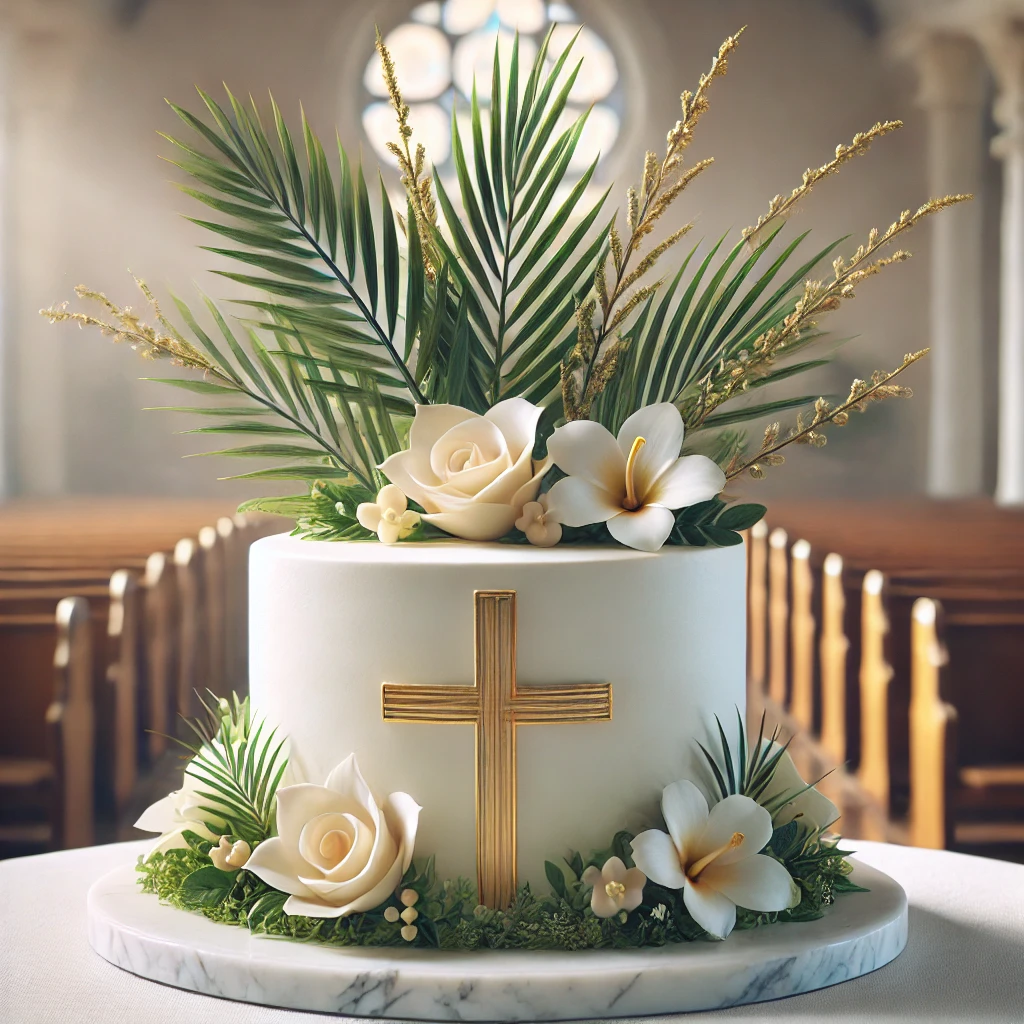
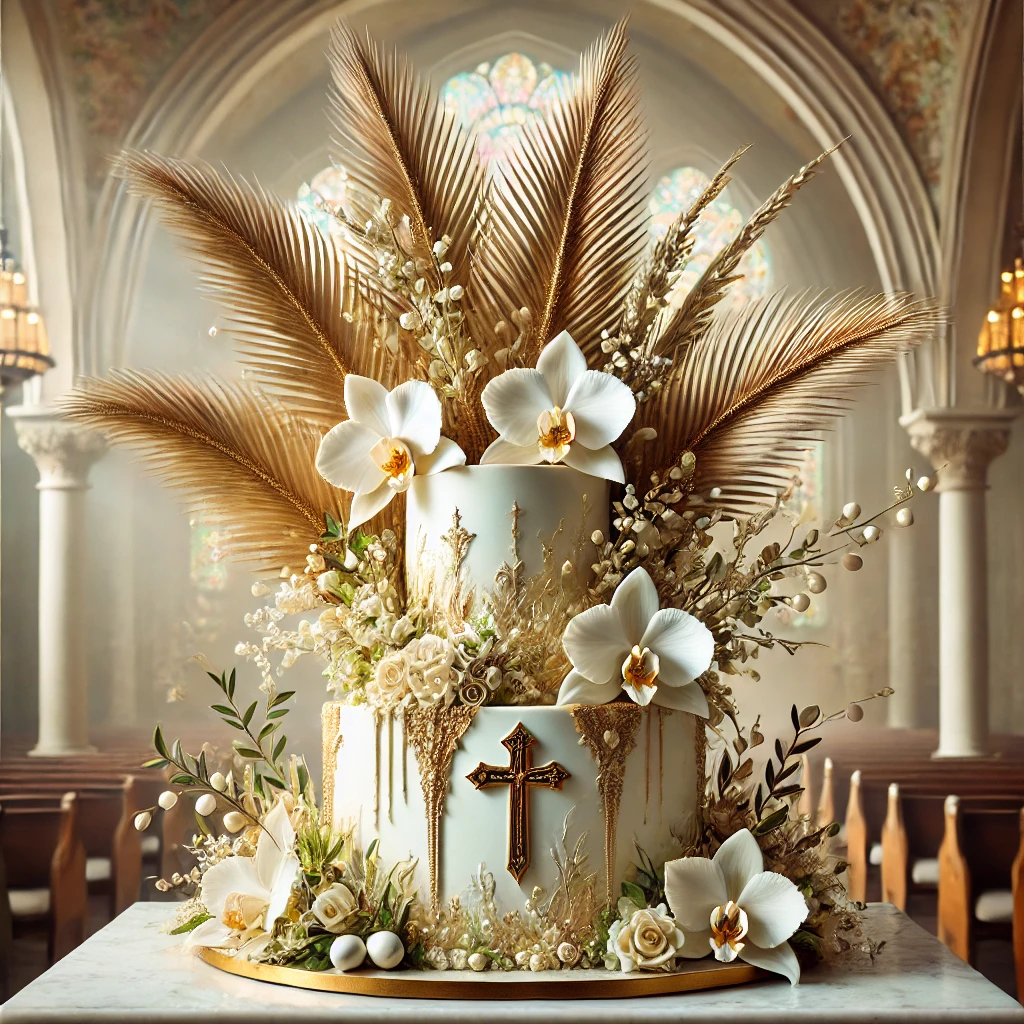
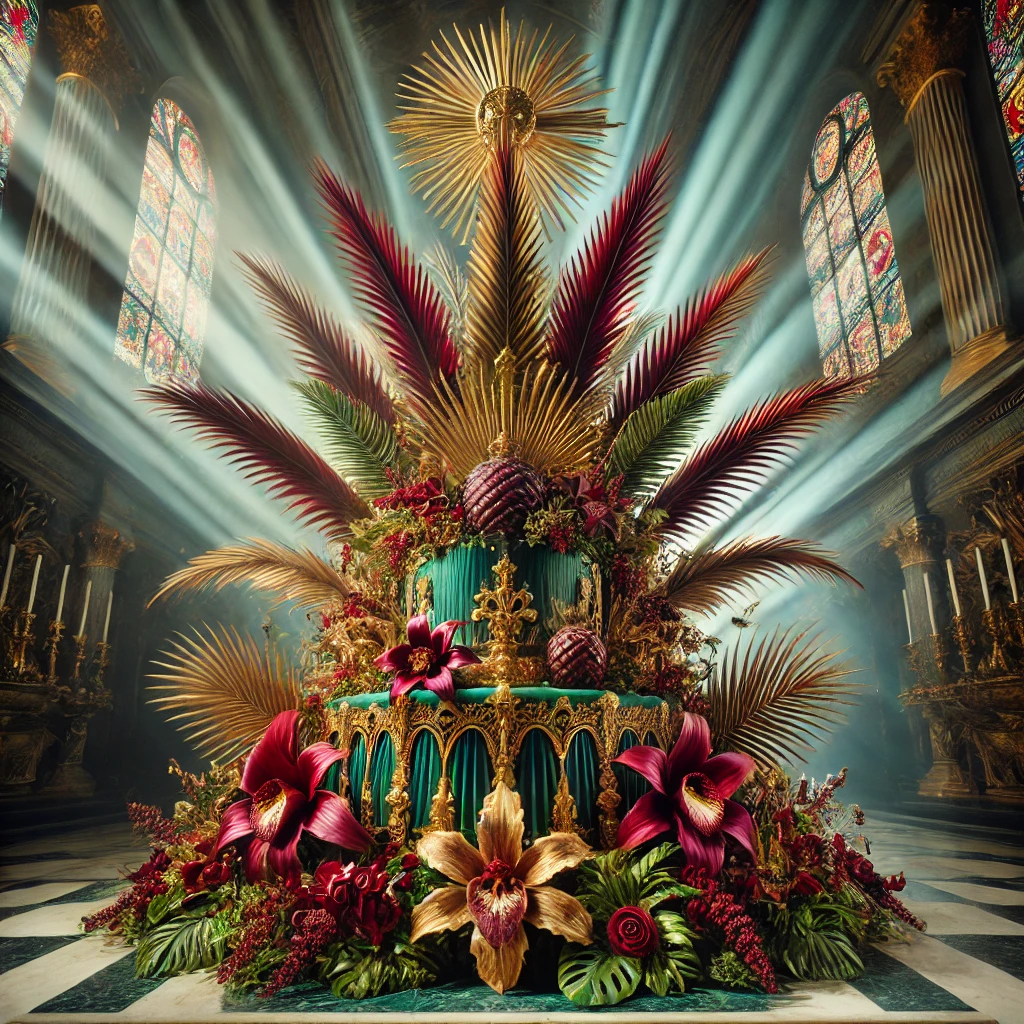
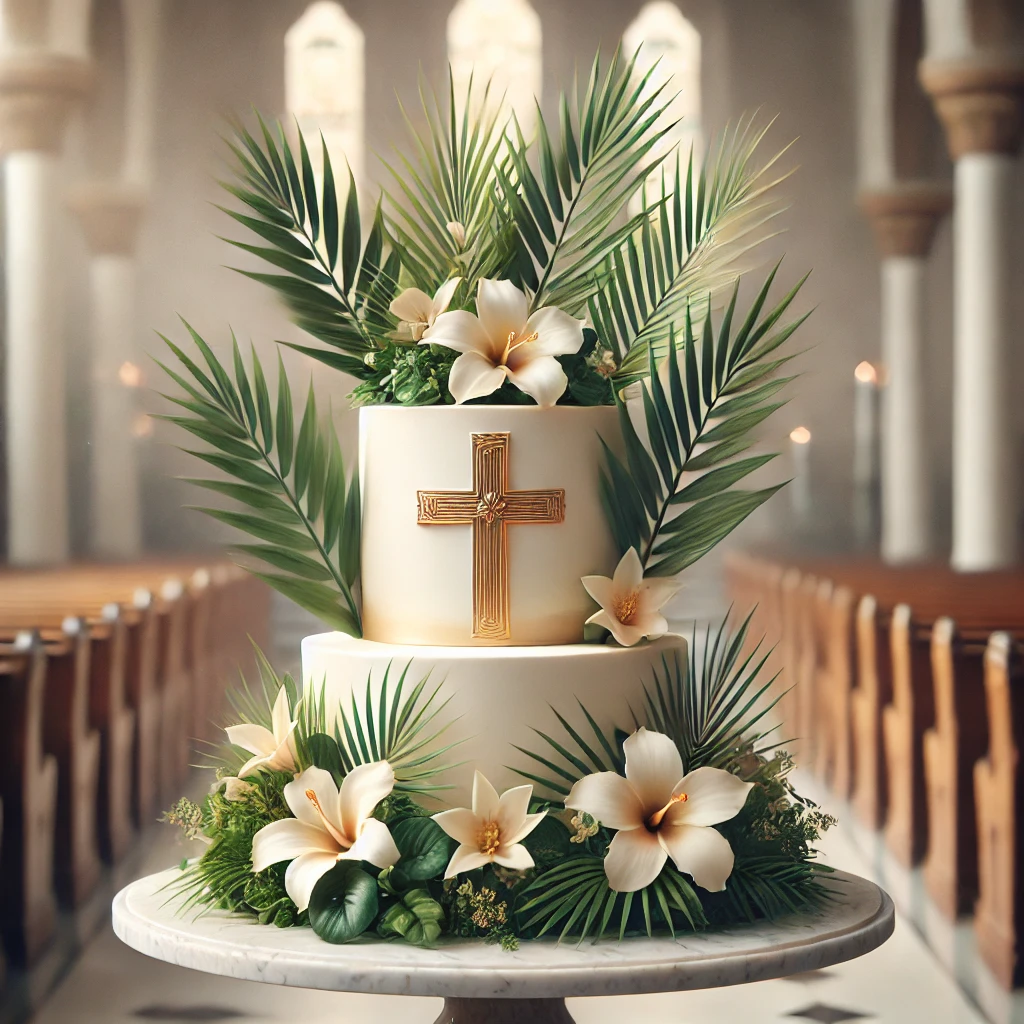
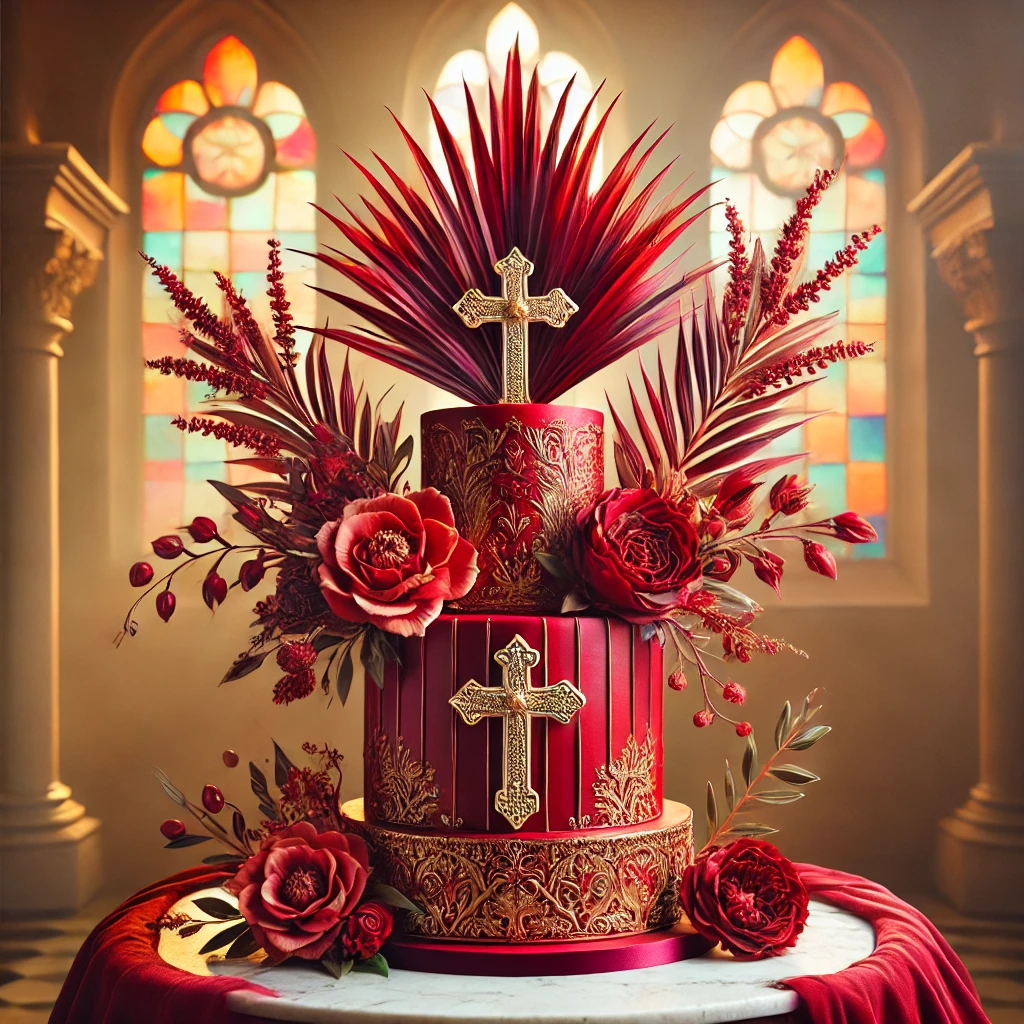
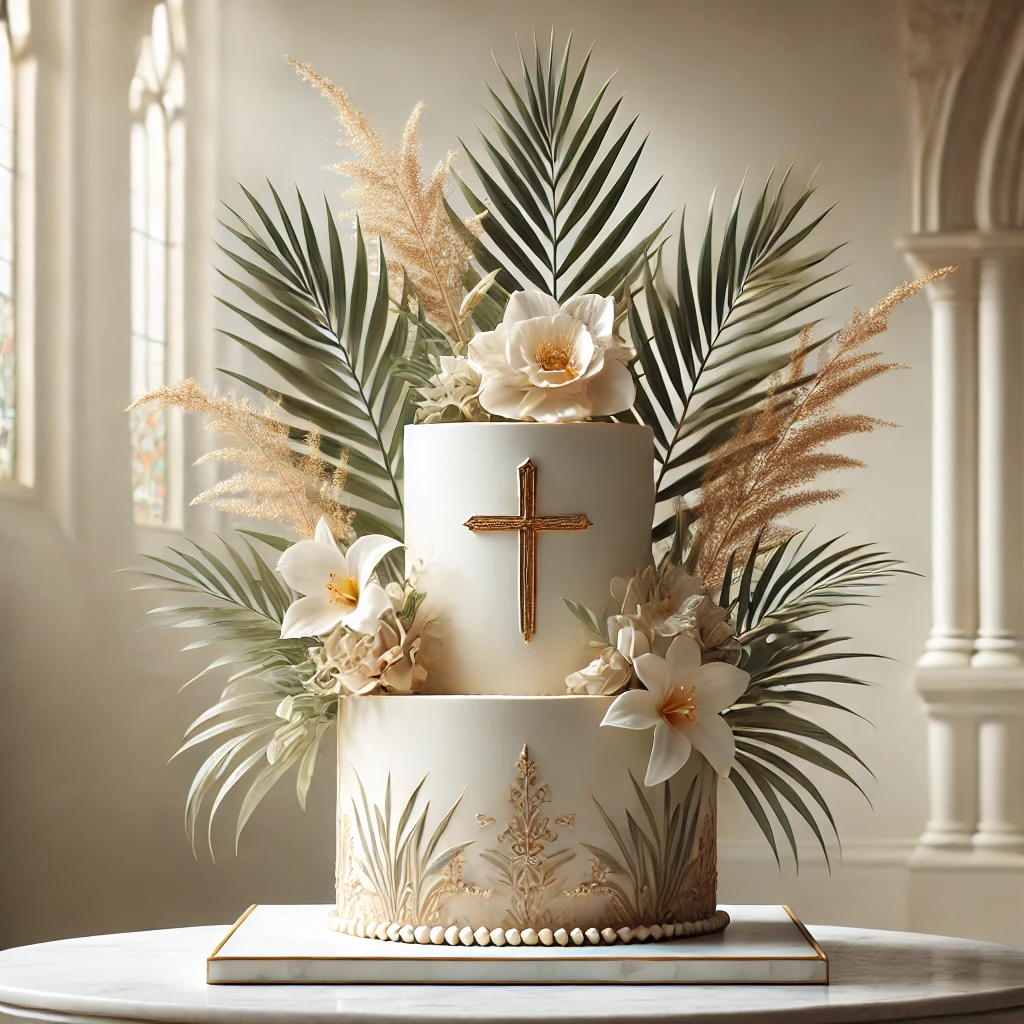
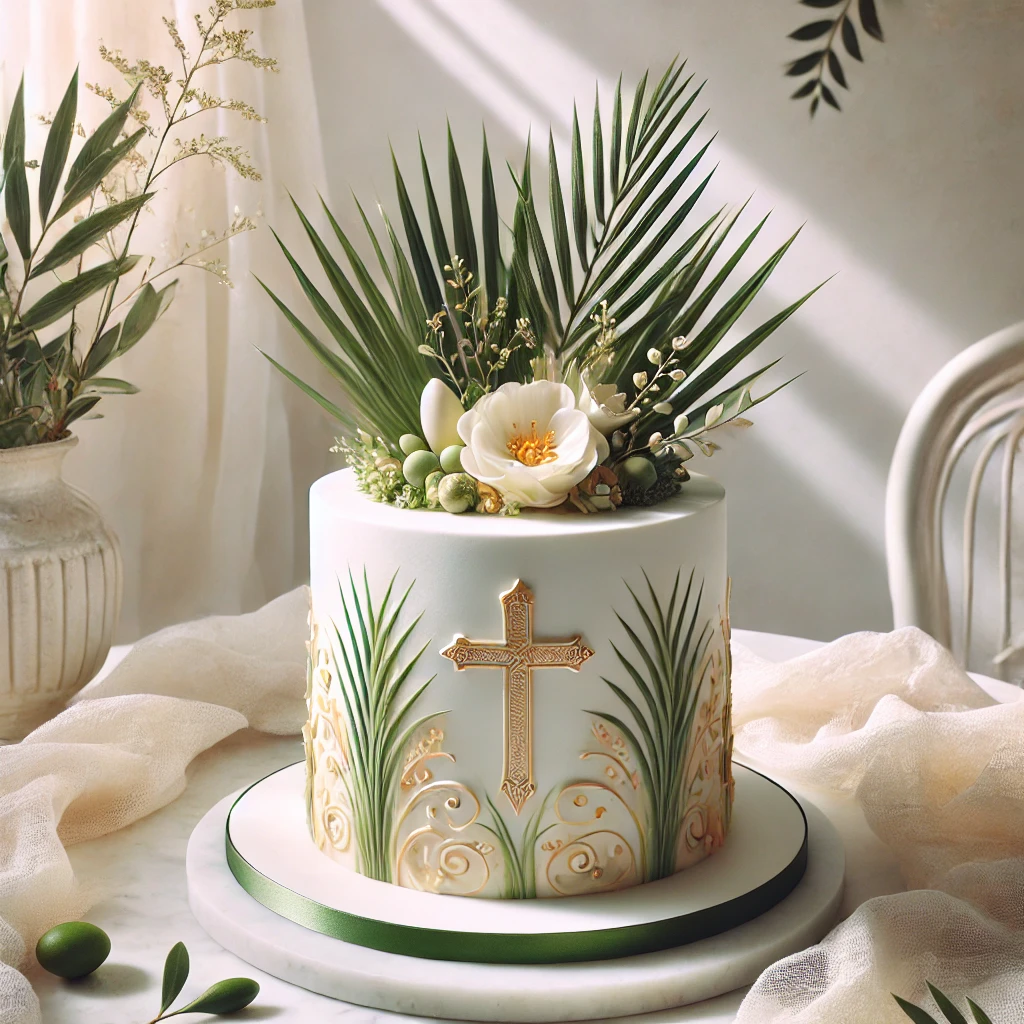
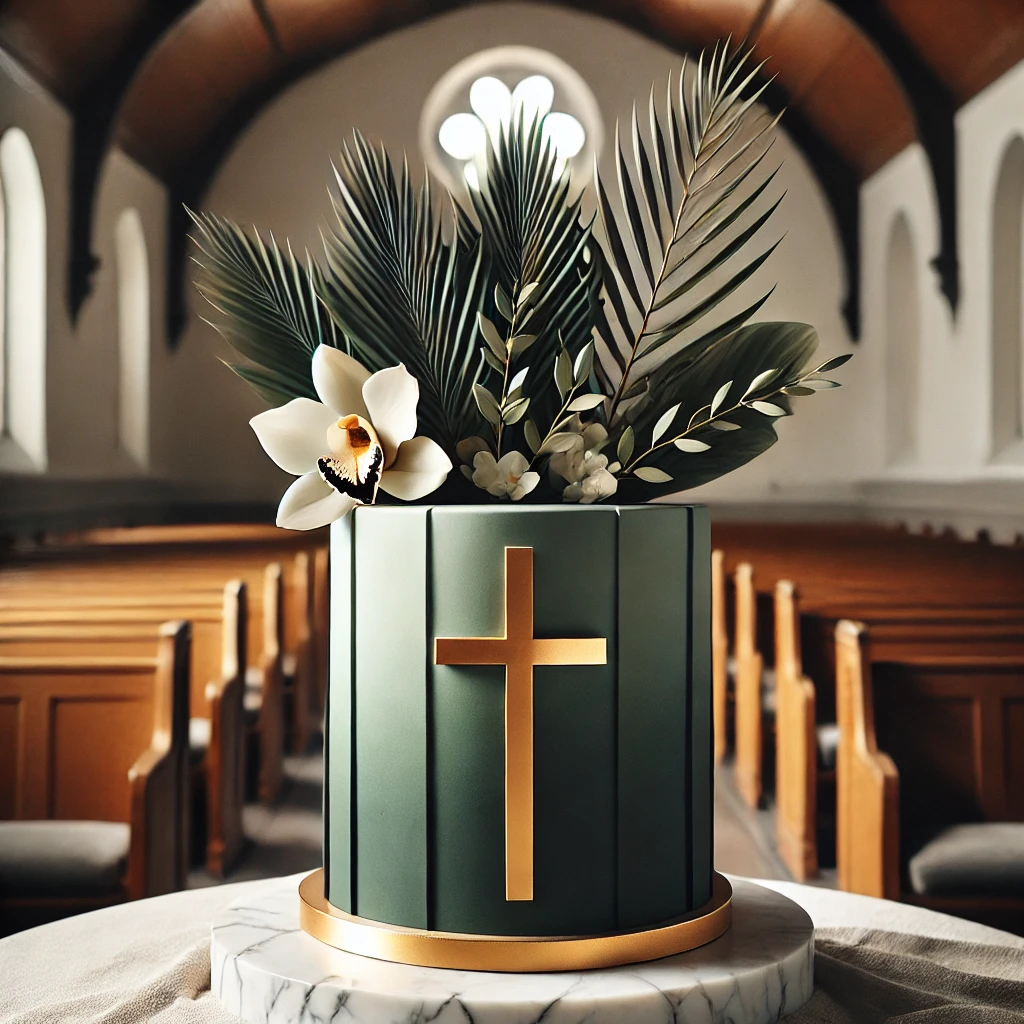
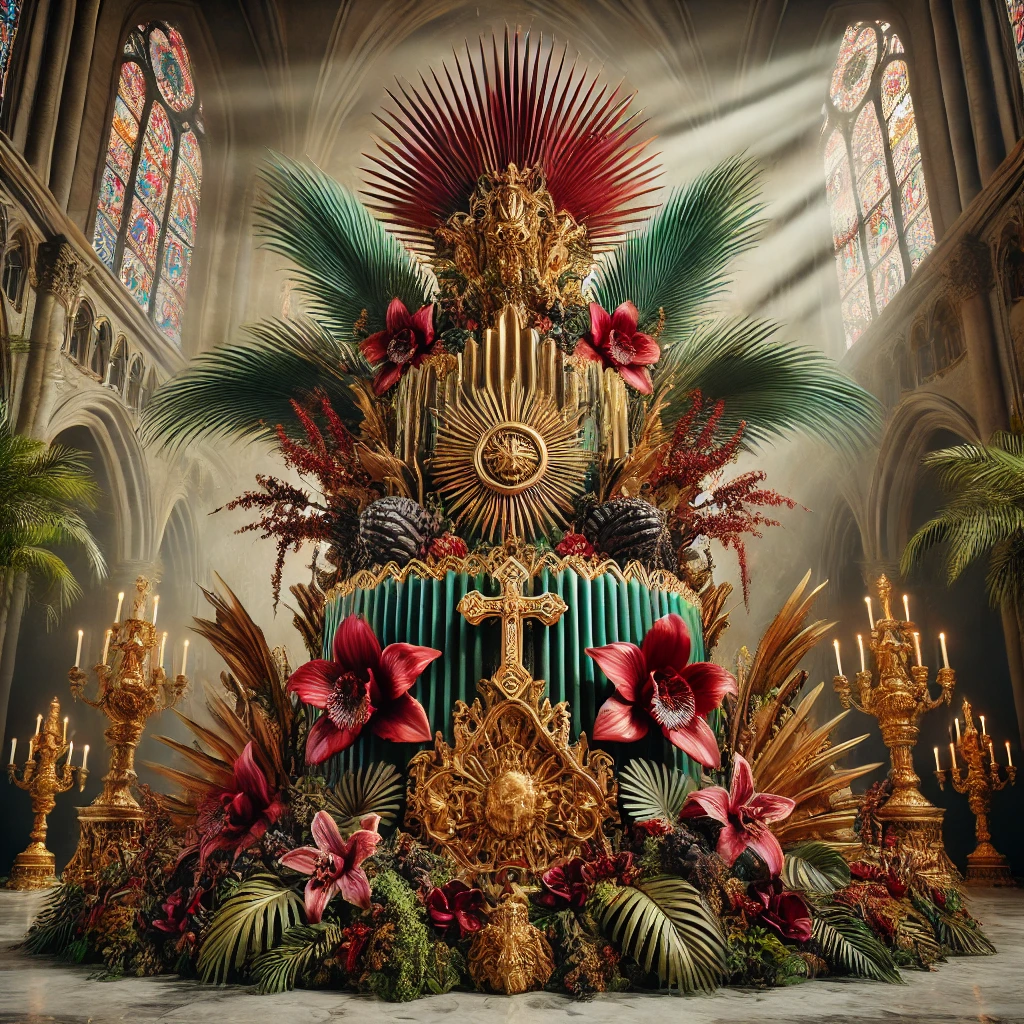
Palm Sunday Cake & Atmosphere Ideas

Where style, memory, and celebration meet.

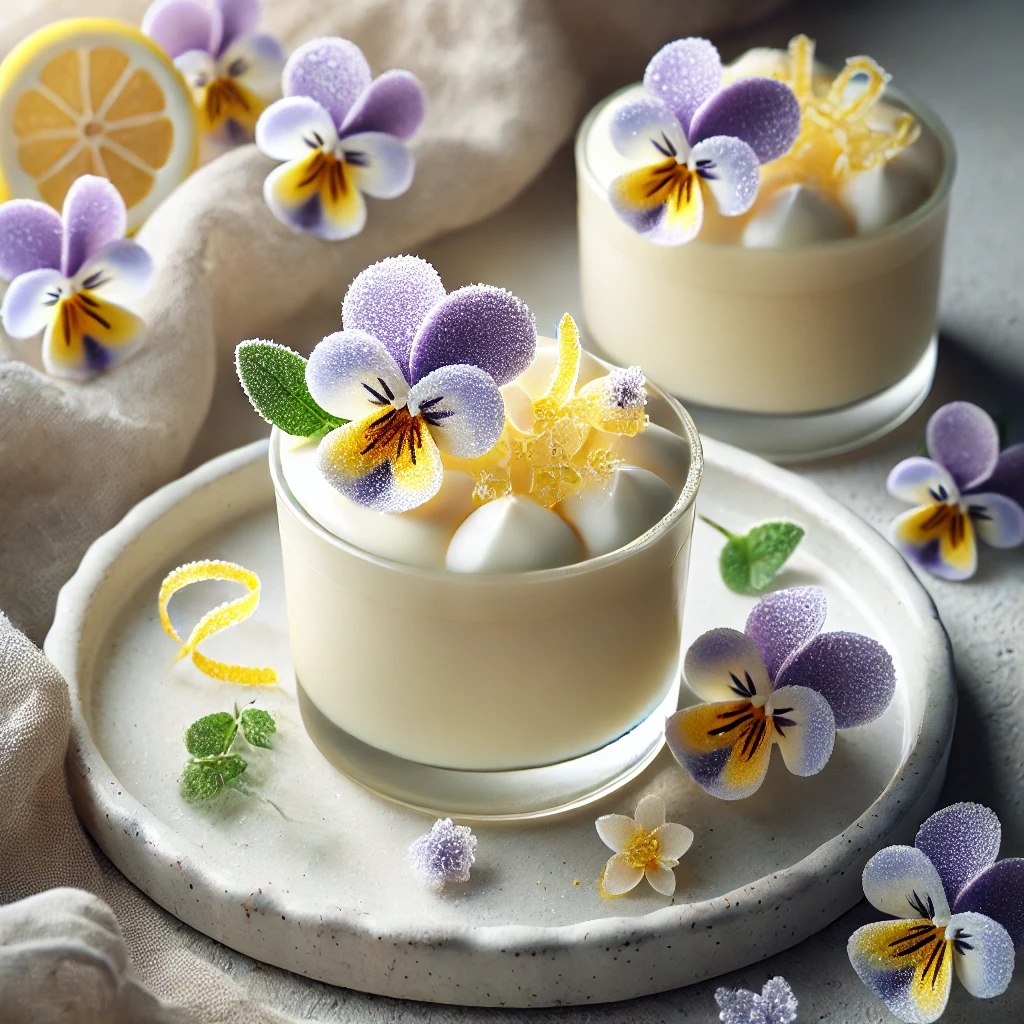
This section is meant to be more than Cake Decorating Ideas… it’s designed to spark inspiration and creativity, awaken tradition, and infuse your special occasions with style, identity, and atmosphere. A color palette becomes a theme. A design becomes a mood. Simple details—like sugared holly leaves or shimmering stars—can set the tone for a gathering and become part of cherished traditions and lasting memories melded with personal touch and love.

Traditional Palm Sunday Dishes

Fish Dishes
Because Lent traditionally avoids meat, fish is a common Palm Sunday meal. Families may prepare baked fish, grilled fish with herbs, or fish stews. In Mediterranean countries, dishes such as lemon-garlic fish or olive-oil roasted fish are common.
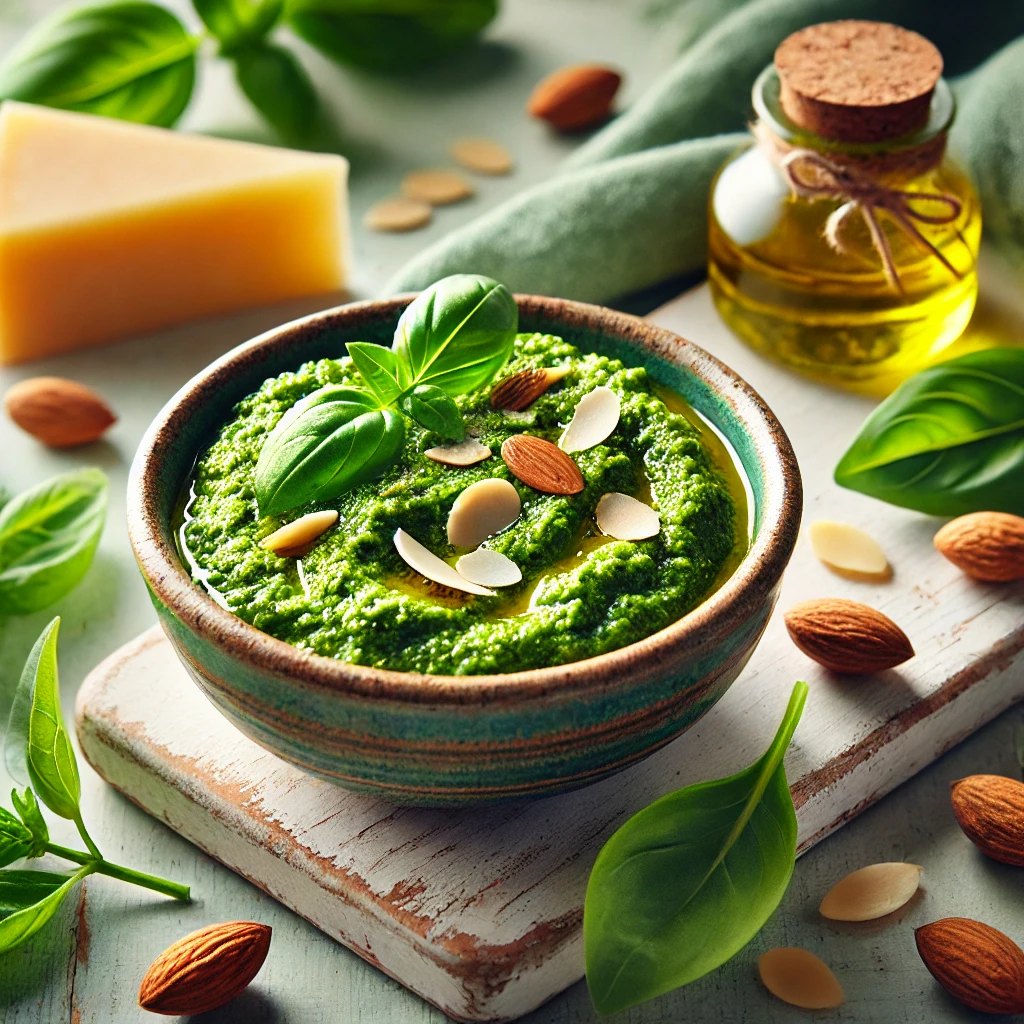
Bread and Olive Oil
Simple breads served with olive oil are traditional in many regions. Olive oil recalls the Mount of Olives, from which Jesus descended before entering Jerusalem, while bread reflects both hospitality and the deeper symbolism of Christ as the Bread of Life.
Olives and Mediterranean Vegetables
Olives, figs, lentils, chickpeas, and fresh vegetables are frequently included, especially in Middle Eastern and Mediterranean traditions. These foods reflect the agricultural landscape of the Holy Land.
Palm Sunday Sweet Breads
In some European traditions, families prepare braided or decorated sweet breads for the day. These breads may be shaped into crosses or wreaths to symbolize victory and the coming resurrection.
Fig or Date Desserts
Because figs and dates were common foods in biblical lands, desserts made from these fruits sometimes appear on Palm Sunday tables. Date cakes, fig pastries, or honey-sweetened breads reflect the flavors of the region where the Gospel events took place.
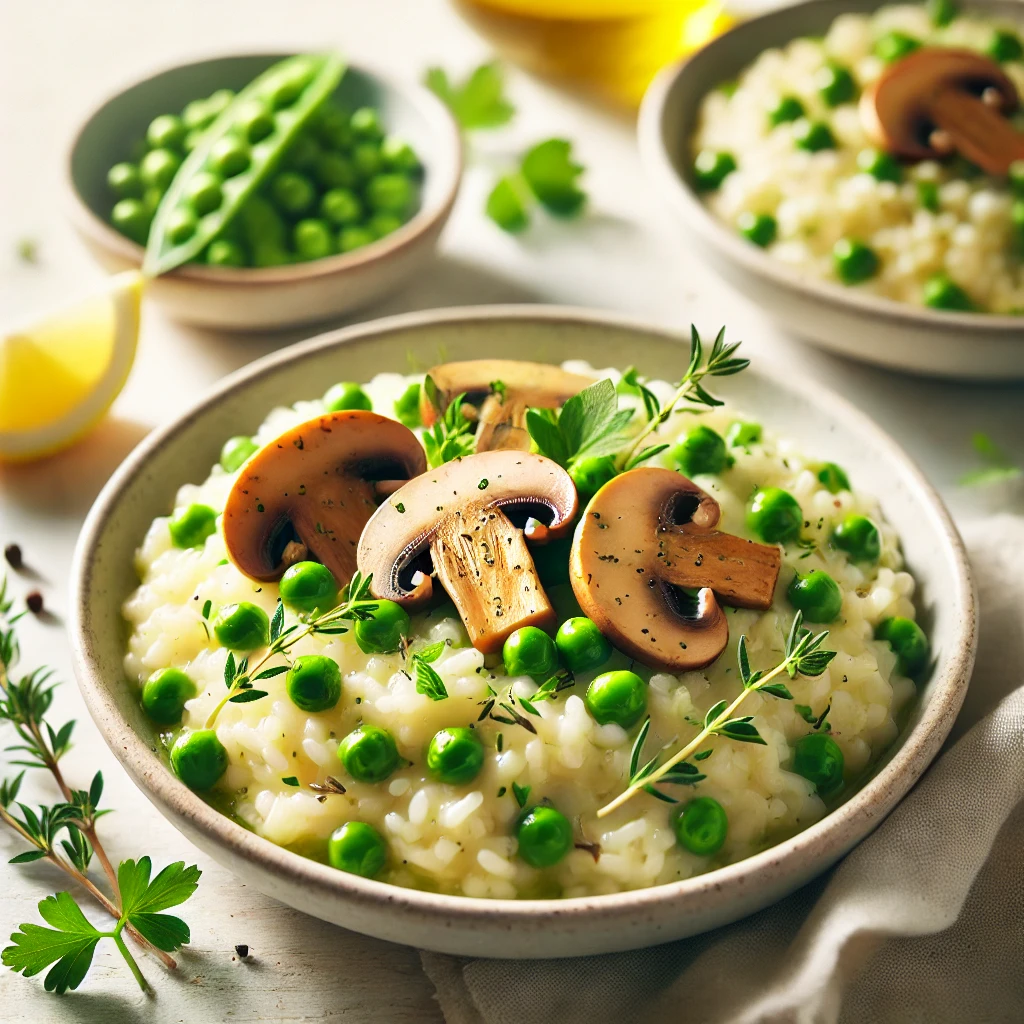
Rice and Vegetable Dishes
Rice with herbs, vegetables, or legumes is a simple Lenten meal in many cultures. Dishes like lentil rice, vegetable pilaf, or stuffed grape leaves are common in Middle Eastern Christian households.
Light Spring Meals
In many families today, Palm Sunday meals are intentionally lighter and simpler than Easter meals. The focus is less on feasting and more on beginning the solemn reflection that leads into Holy Week.
Early Christian communities often approached Palm Sunday with a spirit of quiet preparation rather than celebration, and their foods reflected this reverence. Several traditions from the Byzantine world, the early Mediterranean Church, and medieval Christian communities give us fascinating glimpses into how believers marked the beginning of Holy Week.
Lentil and Herb Stews
In the early Christian communities of the Eastern Mediterranean, lentils were one of the most common Lenten foods. Simple stews made from lentils, onions, garlic, olive oil, and wild herbs were eaten on Palm Sunday. Lentils were valued not only because they were inexpensive and filling, but also because they symbolized humility and sustenance during fasting.
Olives, Bread, and Wild Greens
Historical sources describe Palm Sunday meals that consisted primarily of rustic bread, olives, and bitter greens such as chicory or dandelion. The bitterness of the greens reminded believers of the suffering that Christ would soon endure, while the olives symbolized peace and the Mount of Olives where Jesus prayed before His arrest.
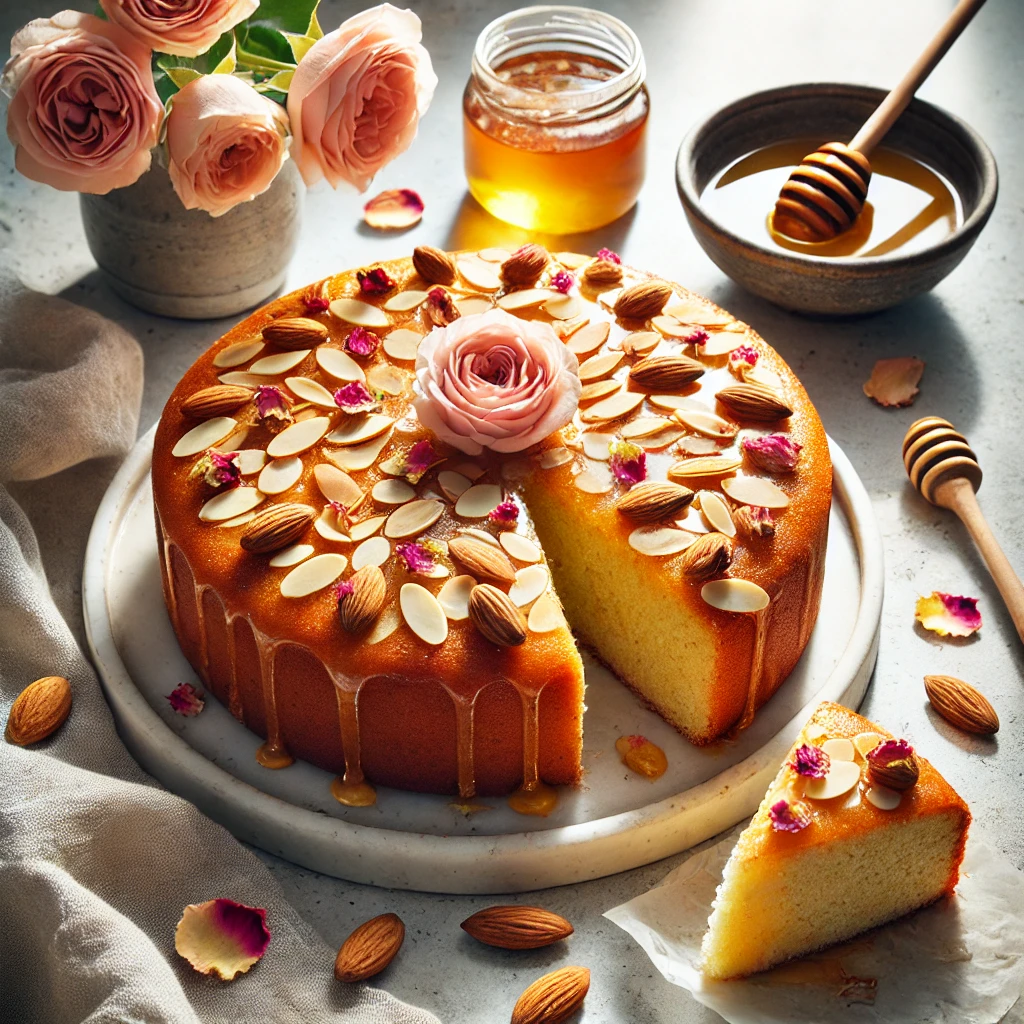
Honey Cakes and Sesame Sweets
In parts of the Byzantine world, small honey cakes or sesame sweets were sometimes prepared on Palm Sunday. These simple treats symbolized the sweetness of salvation and the hope of the resurrection that would follow the sorrow of Holy Week. Honey was especially meaningful in early Christian symbolism because it represented the goodness and promise of God.
Date and Fig Dishes
Dates and figs were staples in the biblical lands, and early Christians often incorporated them into Palm Sunday meals. Dried figs might be stewed with honey and spices, or dates might be served alongside bread and nuts. These fruits connected believers with the landscape of the Holy Land and the agricultural world of the Gospel story.
Palm-Shaped Pastries
By the medieval period in some parts of Europe, bakers began shaping pastries or breads into palm leaves to commemorate the branches laid before Christ. These decorative breads were often lightly sweetened and shared among families after church services.
Herbed Rice and Chickpeas
In Middle Eastern Christian traditions, dishes of rice cooked with chickpeas, parsley, and olive oil became common Palm Sunday foods. These meals were simple, nourishing, and consistent with the Lenten fast while still allowing families to gather around a shared table.
Early “Holy Week Fast” Meals
Some early Christian communities intentionally ate very modest meals on Palm Sunday to begin the spiritual discipline of Holy Week. Bread, water, olives, and a small portion of vegetables were sometimes chosen as a way to enter the coming days of reflection with humility.

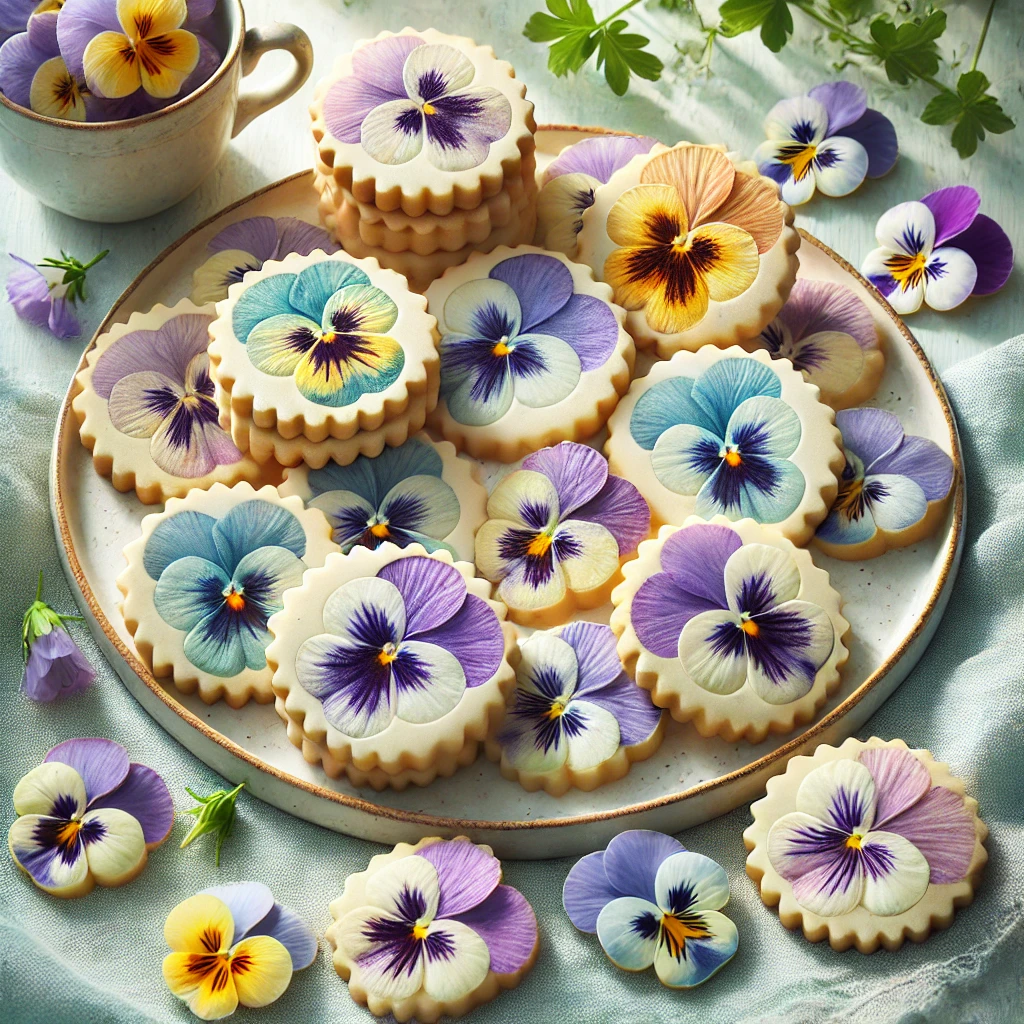
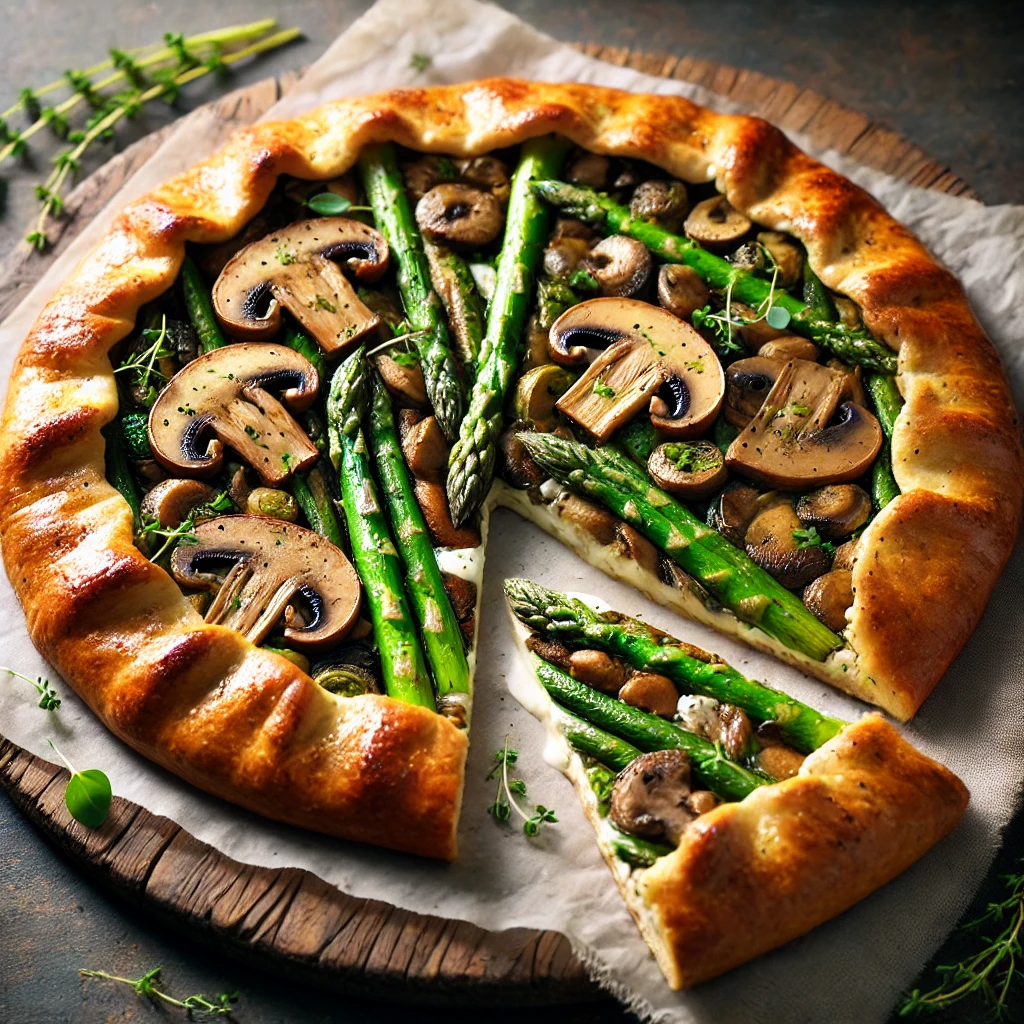
Recipes Engineered for that Spring Feeling