




















Pentecost

with ORO VALENTIO

50 Days After Easter

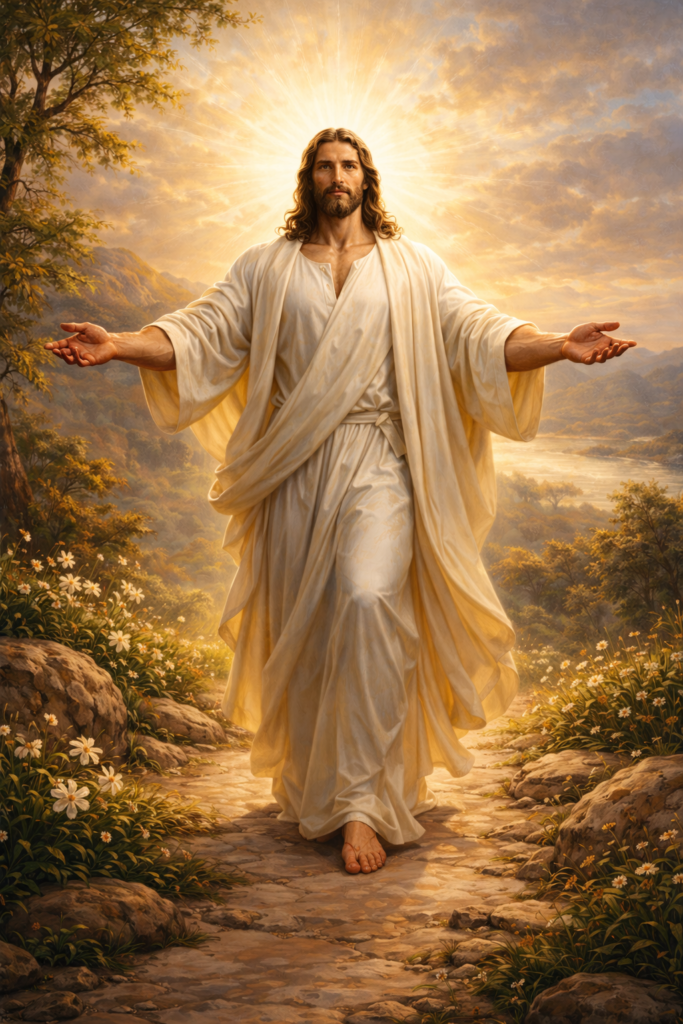
On Easter morning, the Resurrection unfolds not as a single dramatic revelation, but as a carefully ordered movement of mercy, understanding, and restoration. The risen Jesus Christ first appears to Mary Magdalene in the quiet near the tomb, where the world’s greatest victory enters history through personal recognition—her grief answered by her name spoken aloud. Later that same day, He walks with two disciples on the road to Emmaus, unrecognized, teaching them patiently and reassembling hope through Scripture before revealing Himself in the breaking of bread. Only then, as evening falls, does He appear to the gathered disciples behind locked doors, not to astonish them with power, but to heal them with peace and show them His wounds. The sequence itself is the theology: love awakens faith, truth forms understanding, and mercy restores community. Easter morning teaches that resurrection does not rush past the human heart—it meets it where it is, leads it step by step, and gathers it back into courage, meaning, and mission.
Pentecost stands as a radiant moment of awakening—an event not defined merely by history, but by a profound shift in human capacity and divine connection. It emerges after a season of waiting, when uncertainty lingered and direction seemed veiled, and transforms that stillness into unmistakable clarity. On this day, the Spirit descended like a rushing wind and tongues of fire, not as symbols of chaos, but as precise and powerful instruments of refinement. What was once hesitant became resolute. What was once hidden became illuminated. Ordinary individuals, previously marked by fear and limitation, were suddenly filled with boldness, wisdom, and an unshakable sense of purpose.
There is a striking elegance to Pentecost—it is not forceful domination, but divine infusion. It is the moment where heaven meets humanity not from afar, but from within. Language barriers dissolved as voices aligned in understanding, demonstrating that true unity is not achieved through uniformity, but through a higher synchronization of spirit and truth. This was not merely a miracle to be witnessed, but a model to be embodied: that when the internal world is rightly ordered, the external world begins to respond in harmony.
Pentecost reveals a deeper principle—that power is most transformative when it is internalized. The fire did not consume; it refined. The wind did not scatter; it directed. It reminds us that strength is not simply physical or visible, but spiritual and foundational—anchored in clarity, conviction, and alignment with something greater than oneself. It is the birth of courage that speaks truth without hesitation, of wisdom that discerns beyond surface appearances, and of unity that transcends division.
This day also marks the beginning of outward movement—the transition from preparation to action. Those who were once gathered in waiting were now sent with purpose. Pentecost calls each person not only to receive, but to carry—to become vessels of light, integrity, and truth in a world that often drifts toward confusion. It is an invitation to step into a life of intentional influence, where every word, action, and decision reflects a deeper alignment with divine order.
In its essence, Pentecost is not confined to a single moment in time. It is a pattern—a continual opportunity for renewal, empowerment, and refinement. It asks us to consider where we are being called to rise, where fear must give way to courage, and where division must yield to unity. It is a reminder that the same Spirit that once ignited a small gathering into a transformative force is still active, still available, and still calling individuals to live with strength, clarity, and unwavering purpose.

The Pentecost Story

The story of Pentecost unfolds in a moment of waiting that turns into one of the most powerful transformations in history. After the ascension of Jesus, His followers gathered together in Jerusalem, uncertain of what would come next but holding firmly to His promise—that they would be given power from above. They remained united, praying and waiting, not yet sent, but being prepared.
Then, suddenly, everything changed.
A sound like a mighty rushing wind filled the entire house where they were gathered. It was not a gentle breeze, but something unmistakable—strong, alive, and impossible to ignore. And then, what appeared to be tongues of fire came to rest upon each of them. This fire did not burn or destroy; it marked, filled, and transformed. In that moment, they were filled with the Holy Spirit.
What followed was just as extraordinary. They began to speak in different languages—languages they had never learned—yet people from many nations who were in Jerusalem could understand them clearly. Parthians, Medes, Egyptians, Romans, and others all heard the same message in their own tongues. What had once divided humanity—language, culture, distance—was suddenly overcome. Confusion gave way to clarity. Division gave way to unity.
Some who witnessed this were amazed, recognizing that something divine was happening. Others doubted, assuming it was chaos or confusion. But then Peter stood forward—no longer hesitant, no longer afraid—and spoke with boldness and authority. The same man who had once faltered now spoke with clarity, explaining that this was the fulfillment of God’s promise: that His Spirit would be poured out upon all people.
That day, hearts were stirred, minds were awakened, and thousands chose to believe. It marked the beginning of something far greater than a single moment—it marked the birth of a movement, the beginning of the Church, and the unfolding of a mission that would spread across the world.
Pentecost is not simply a story of what happened—it is a revelation of what is possible. It shows that when people are aligned, open, and willing, they can be filled with a strength beyond themselves. It is a reminder that fear can be replaced with courage, silence with boldness, and division with unity. It is the moment where waiting turns into action, where promise becomes reality, and where ordinary lives are transformed into vessels of purpose, clarity, and enduring impact.
 
 
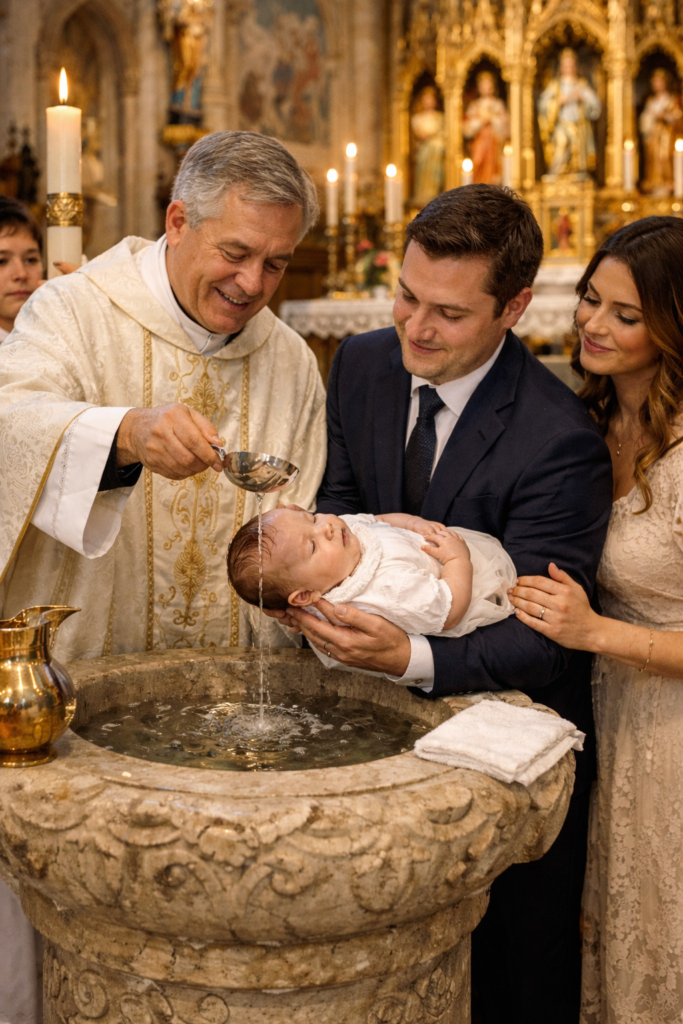
People go to church for baptism and confirmation because these moments mark more than tradition—they mark transformation, identity, and commitment at a deeply spiritual level. Baptism is often seen as a beginning: a sacred entry into the life of faith, where a person is symbolically cleansed, renewed, and welcomed into a larger spiritual family. For parents bringing a child, it reflects both devotion and responsibility—a desire to root their child’s life in truth, protection, and purpose from the very start. It is not just about the moment itself, but about what it sets in motion: a life shaped by faith, guided by something greater than circumstance. Confirmation, on the other hand, represents a strengthening and personal claiming of that faith. Where baptism is received, confirmation is chosen. It is a step into maturity—an acknowledgment that belief is no longer inherited alone, but embraced with intention. Through confirmation, individuals seek a deeper filling of the Holy Spirit, asking for clarity, courage, and resilience to live out their convictions in a world that often challenges them. It is about becoming steady, grounded, and unwavering—aligned not just in belief, but in action. Together, baptism and confirmation form a powerful progression: from being welcomed into faith to standing firmly within it. People go to church for these sacraments because they are seeking more than symbolism—they are seeking alignment, identity, and strength. They are choosing to anchor their lives in something enduring, to be shaped not only by the world around them, but by a deeper, guiding presence that calls them to live with purpose, integrity, and conviction.

Pentecost Traditions to Make Your Own

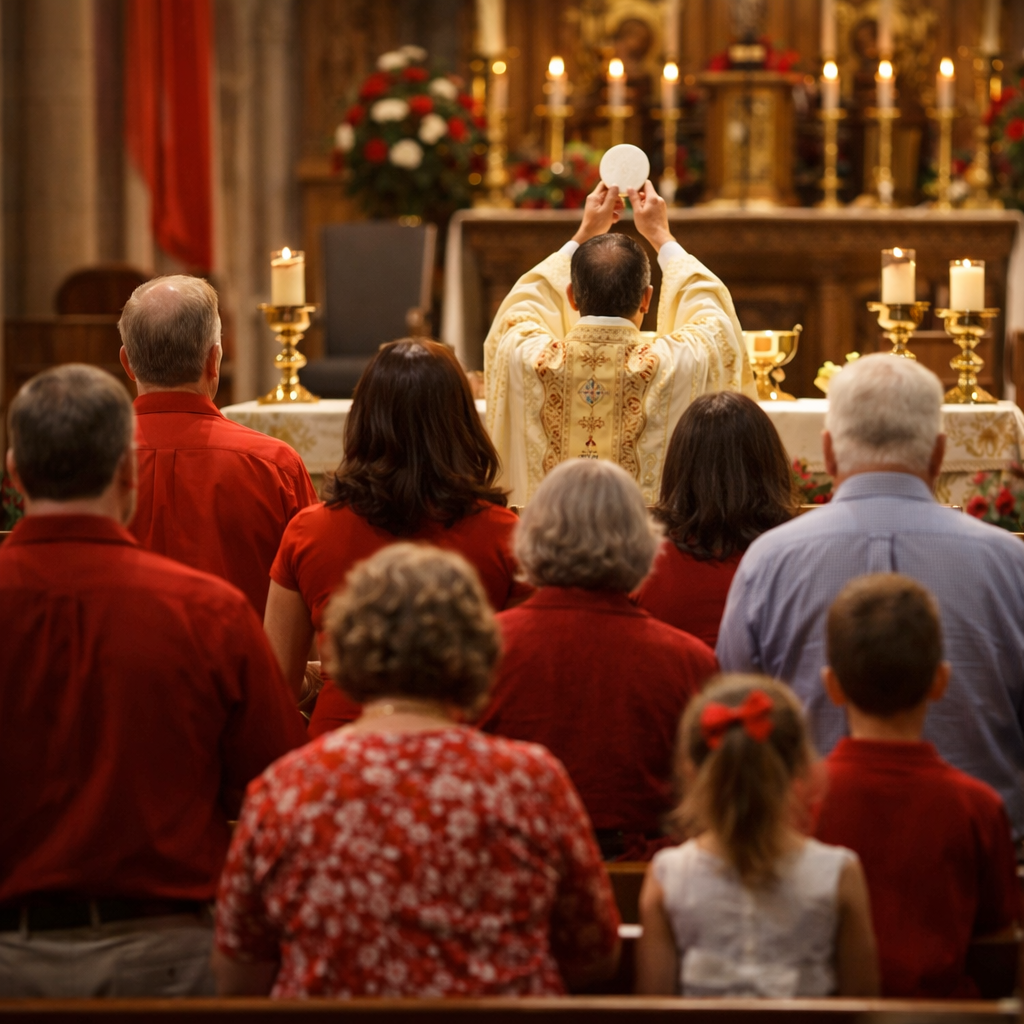
People go to Mass on Pentecost not simply out of tradition, but out of a deep desire to reconnect with the source of strength, clarity, and purpose that the day represents. Pentecost marks the moment when the Holy Spirit descended and transformed ordinary individuals into bold, unified messengers, and attending Mass becomes a way of stepping back into that same moment of renewal. It is an intentional act—choosing to pause, to gather, and to open oneself to being filled again with direction and conviction. For many, Mass on Pentecost is about receiving what cannot be manufactured on one’s own: clarity in confusion, courage in hesitation, and peace in uncertainty. The liturgy, the readings, the prayers, and especially the consecration become more than ritual—they become a re-alignment. It is a time to reflect on where one stands, where one is being called, and what must be strengthened within. Just as the early believers were gathered before being sent out, those attending Mass today come to be renewed before returning to their daily lives with greater purpose. There is also a powerful sense of unity that draws people in. Pentecost is, at its core, a celebration of connection—of barriers being broken and people being brought into harmony through something greater than themselves. Sitting among others, dressed in the same symbolic color, sharing in the same sacred moment, reinforces that faith is not a solitary path but a shared movement. It reminds individuals that they are part of something living, active, and enduring. Ultimately, people go to Mass on Pentecost because it is an invitation—to be filled, to be refined, and to be sent. It is a moment to receive strength not just for oneself, but to carry forward into the world. It calls each person to move beyond passive belief and into active, intentional living—guided by truth, strengthened by spirit, and grounded in a purpose that reaches beyond the ordinary.
 
Church Services and Readings
Pentecost is most deeply observed through vibrant church gatherings that focus on the coming of the Holy Spirit. Scripture readings from Acts 2 recount the moment of divine descent, often accompanied by sermons centered on renewal, empowerment, and spiritual awakening. Many services carry a heightened sense of celebration, reflecting the birth of the early Church and the movement of faith into the world.

Wearing Red
Red is the defining color of Pentecost, symbolizing the tongues of fire and the presence of the Holy Spirit. Congregants and clergy often wear red garments, ties, or dresses as a visual expression of spiritual ignition, passion, and divine energy. Churches may also be adorned in red fabrics and banners, creating an atmosphere of warmth and intensity.

Decorating with Flames and Symbols of Wind
Sanctuaries and homes are sometimes decorated with imagery representing fire and wind—two powerful symbols of the Spirit’s arrival. Artistic depictions of flames, doves, or flowing ribbons are used to reflect movement, transformation, and divine breath. These elements serve as visual reminders of unseen strength made visible.

Singing and Multilingual Worship
Music plays a central role, often emphasizing unity across cultures and languages. Some communities incorporate multiple languages into songs or readings, honoring the moment when people of different tongues understood one another. This tradition highlights harmony, connection, and the universal reach of the message.

Confirmation and Baptisms
Pentecost is a meaningful time for confirmations and baptisms in many Christian traditions. These ceremonies reflect personal commitment and spiritual renewal, aligning with the theme of receiving and being filled with the Holy Spirit. It becomes a moment of stepping forward with clarity and intention.

Feasting and Community Gatherings
Families and communities often gather for shared meals, celebrating togetherness and unity. Tables may include festive dishes, breads, and seasonal foods, symbolizing abundance and shared life. The act of gathering reinforces the idea that faith is not lived in isolation, but in connection.

Prayer for Renewal and Guidance
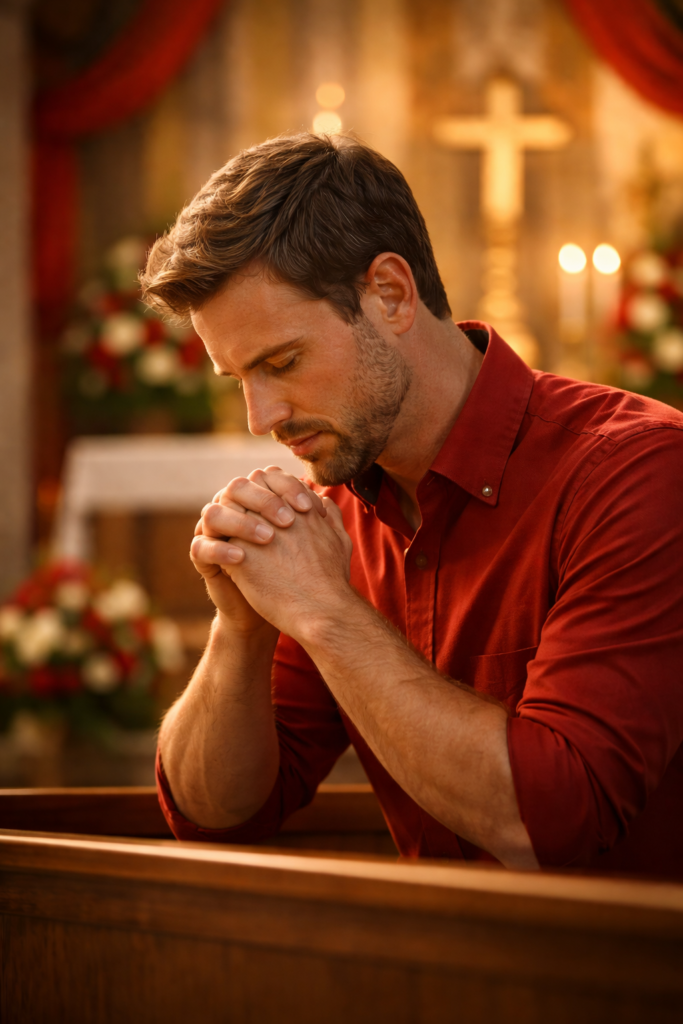
Many observe Pentecost through intentional prayer, asking for clarity, strength, and guidance in their lives. It is a time to reflect on one’s direction, to seek alignment with purpose, and to invite the Spirit to refine and strengthen the inner life.

Acts of Service and Outreach
In the spirit of being “sent out,” some choose to mark Pentecost through acts of service—helping others, supporting their community, or sharing encouragement. This outward expression reflects the transition from receiving to giving, from being filled to actively living out that fullness.

A Prayer for Pentecost

Heavenly Father,
on this sacred day of Pentecost, we come before You with open hearts, seeking the presence of Your Holy Spirit. Just as You filled Your people with power, clarity, and courage, we ask that You fill us now—renewing our minds, strengthening our spirits, and guiding our steps. Let Your Spirit move within us like a mighty wind, clearing away fear, doubt, and distraction, and replacing them with boldness, peace, and unwavering purpose.
Ignite within us a holy fire—not one that consumes, but one that refines, strengthens, and illuminates. Teach us to speak with truth, to act with integrity, and to live with intention. Where there is confusion, bring understanding. Where there is division, bring unity. Where there is hesitation, bring courage to step forward in faith.
Lord, align our hearts with Your will. Help us not only to receive Your Spirit, but to carry it into the world—to be a light to others, steady and unwavering. Let our lives reflect Your presence in all that we do, so that through us, others may see truth, hope, and strength.
We surrender our plans, our fears, and our limitations to You, trusting that through Your Spirit, we are made capable of far more than we could ever accomplish alone.
Come, Holy Spirit—fill us, guide us, and send us.
Amen.
 
 
We pray a Pentecost prayer because it is a deliberate act of opening ourselves to the same power, clarity, and presence that transformed the first believers. It is not simply about speaking words—it is about inviting the Holy Spirit to move within us, to reorder what is unsettled, and to strengthen what feels weak. Just as those gathered at Pentecost waited to be filled, prayer becomes our way of stepping into that same posture of readiness and surrender. At its core, praying this prayer is about alignment. Life can pull us in many directions—emotionally, mentally, and spiritually—and over time, it is easy to lose clarity or become weighed down by uncertainty. The Pentecost prayer draws us back to center. It asks for wisdom where there is confusion, courage where there is hesitation, and peace where there is unrest. It is a way of realigning our inner world with a higher order, so that what flows out of us—our actions, words, and decisions—reflect strength and truth. There is also a deeper purpose: transformation. The Holy Spirit is not passive; it refines, strengthens, and equips. When we pray, we are not just asking to feel better—we are asking to become better. We are asking to be shaped into people who can stand firm, speak clearly, and act with integrity regardless of circumstances. It is a prayer for empowerment, not comfort alone. We also pray it because we are not meant to walk alone. Pentecost reminds us that God’s presence is not distant—it is near, active, and willing to guide. Prayer becomes the connection point, the place where we intentionally step into that relationship and allow ourselves to be led rather than relying solely on our own understanding. Ultimately, we pray the Pentecost prayer because it moves us from passive belief into active living. It shifts us from simply knowing about faith to being filled with it. It prepares us not just to receive, but to go—to carry strength, clarity, and light into the world with purpose and conviction.

Pentecost Cake & Atmosphere Ideas

Where style, memory, and celebration meet.

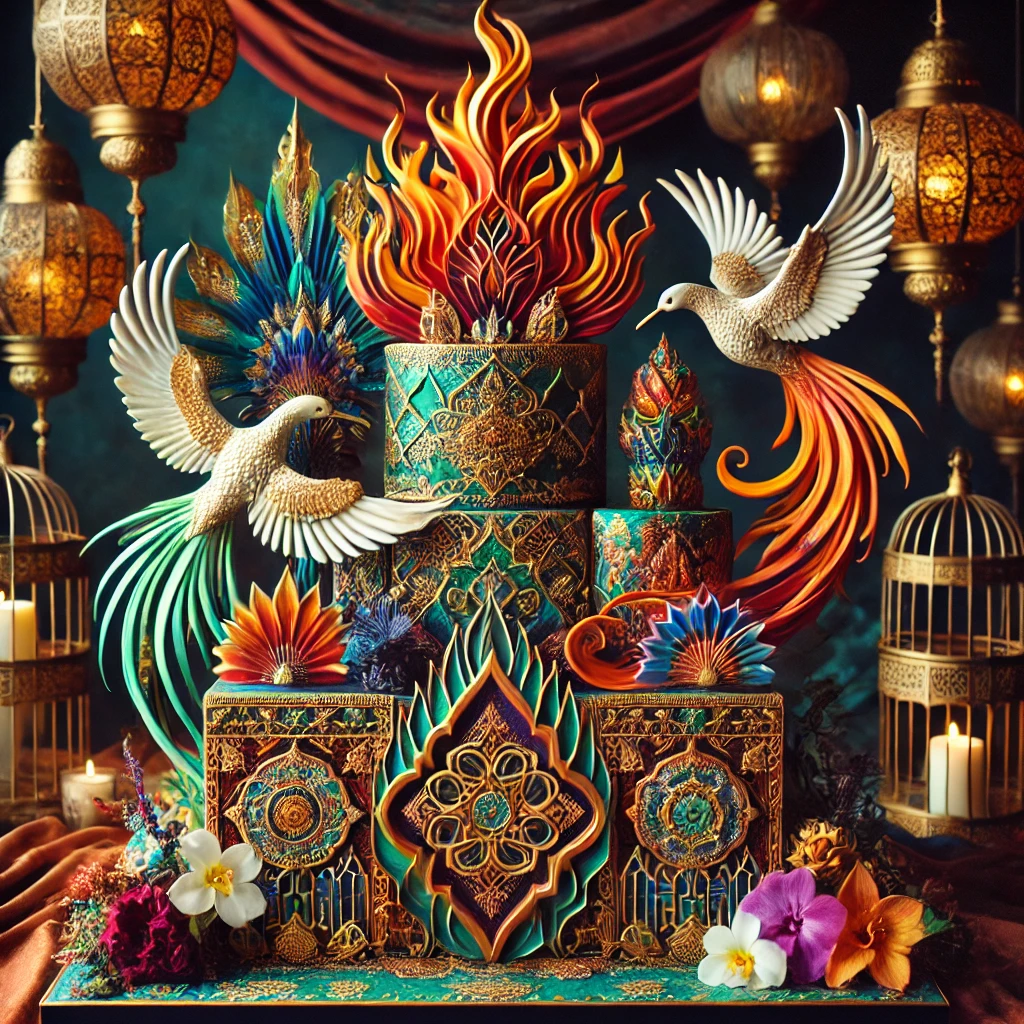
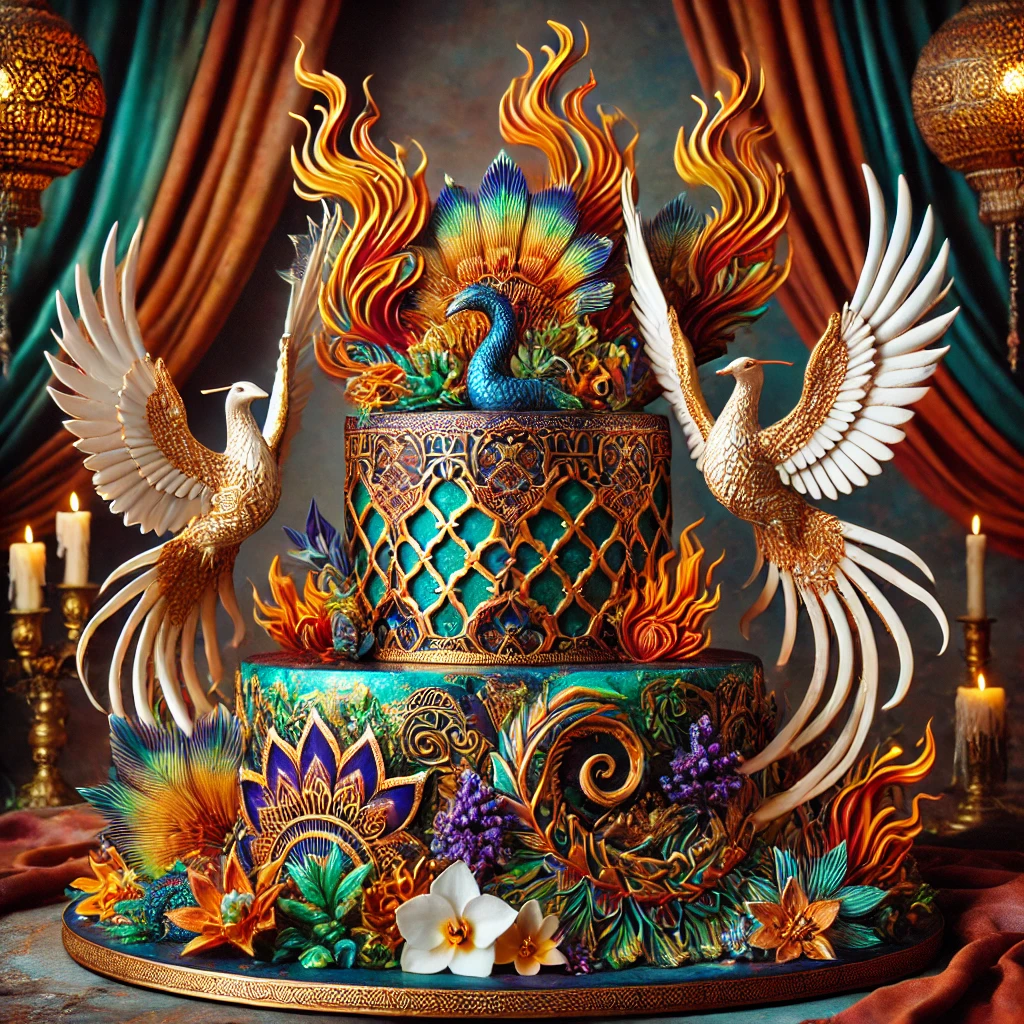
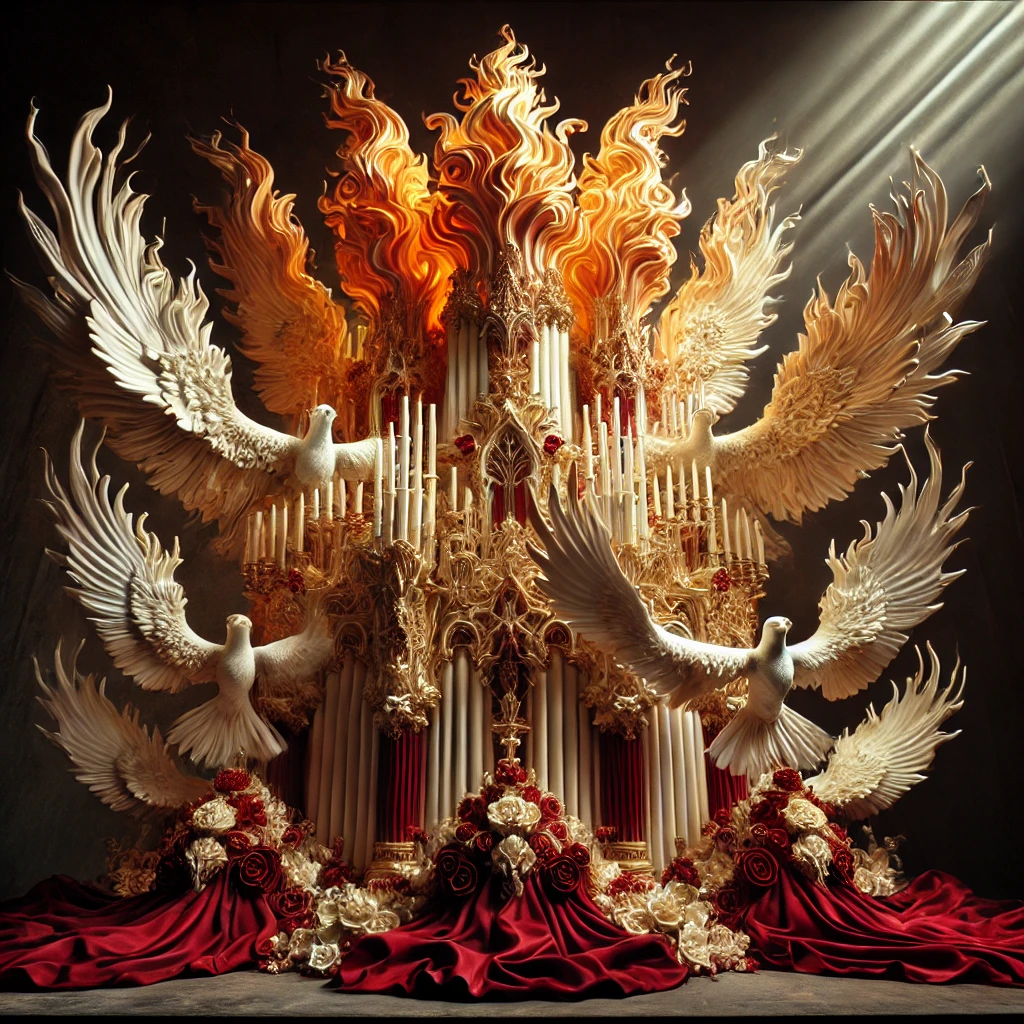
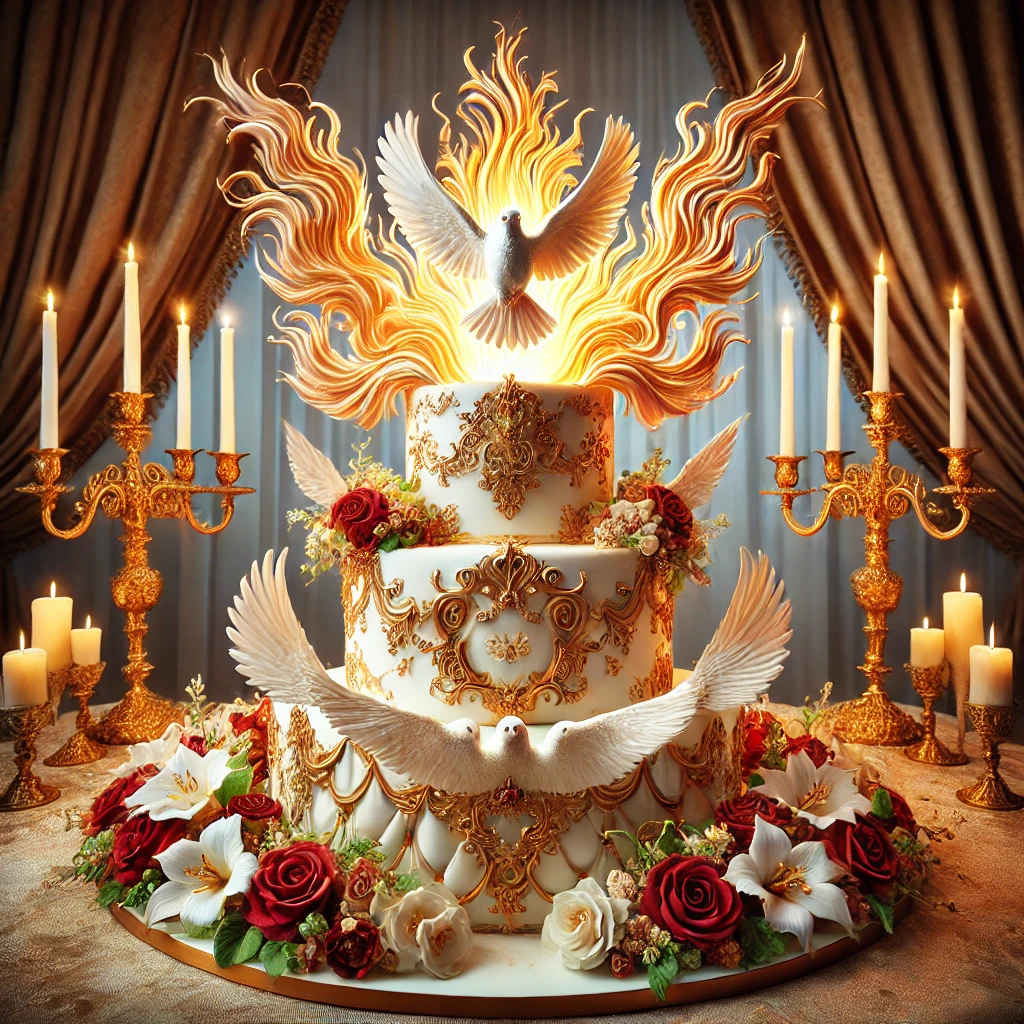
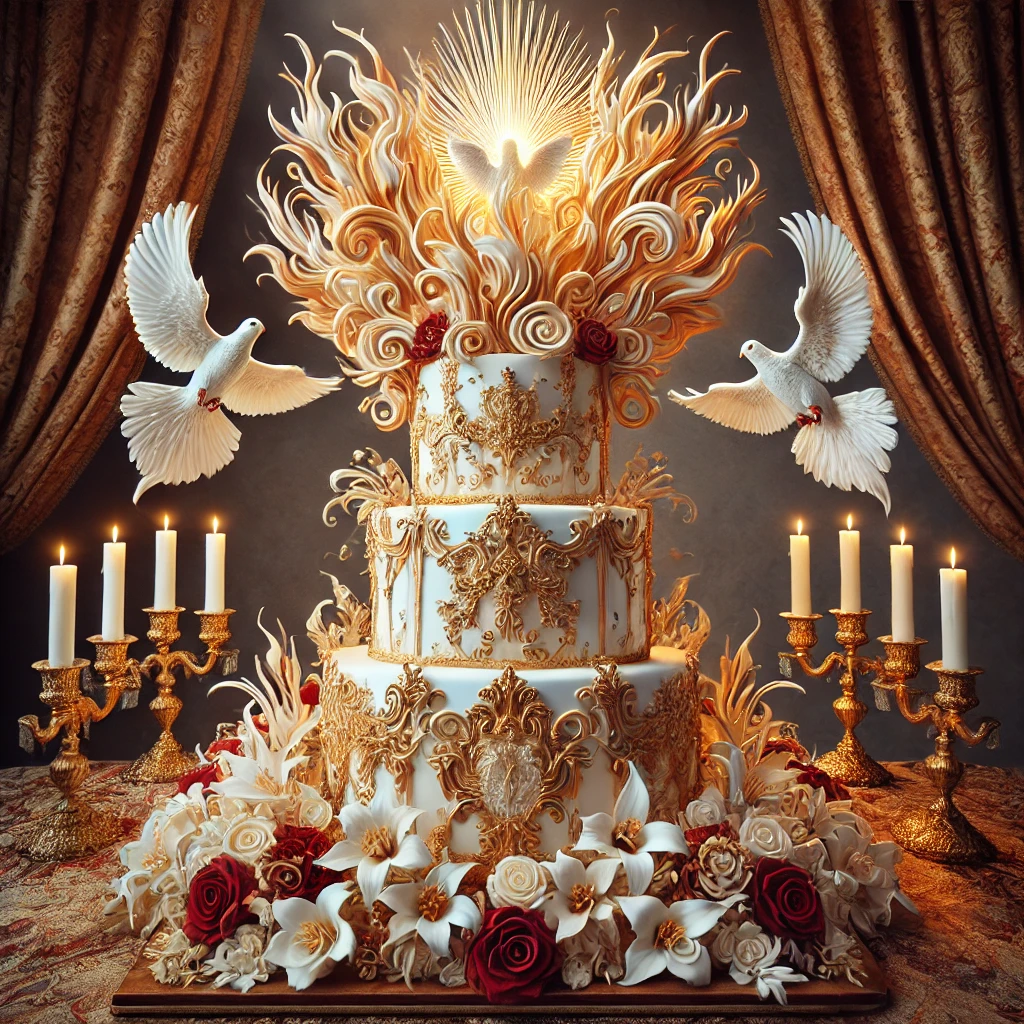
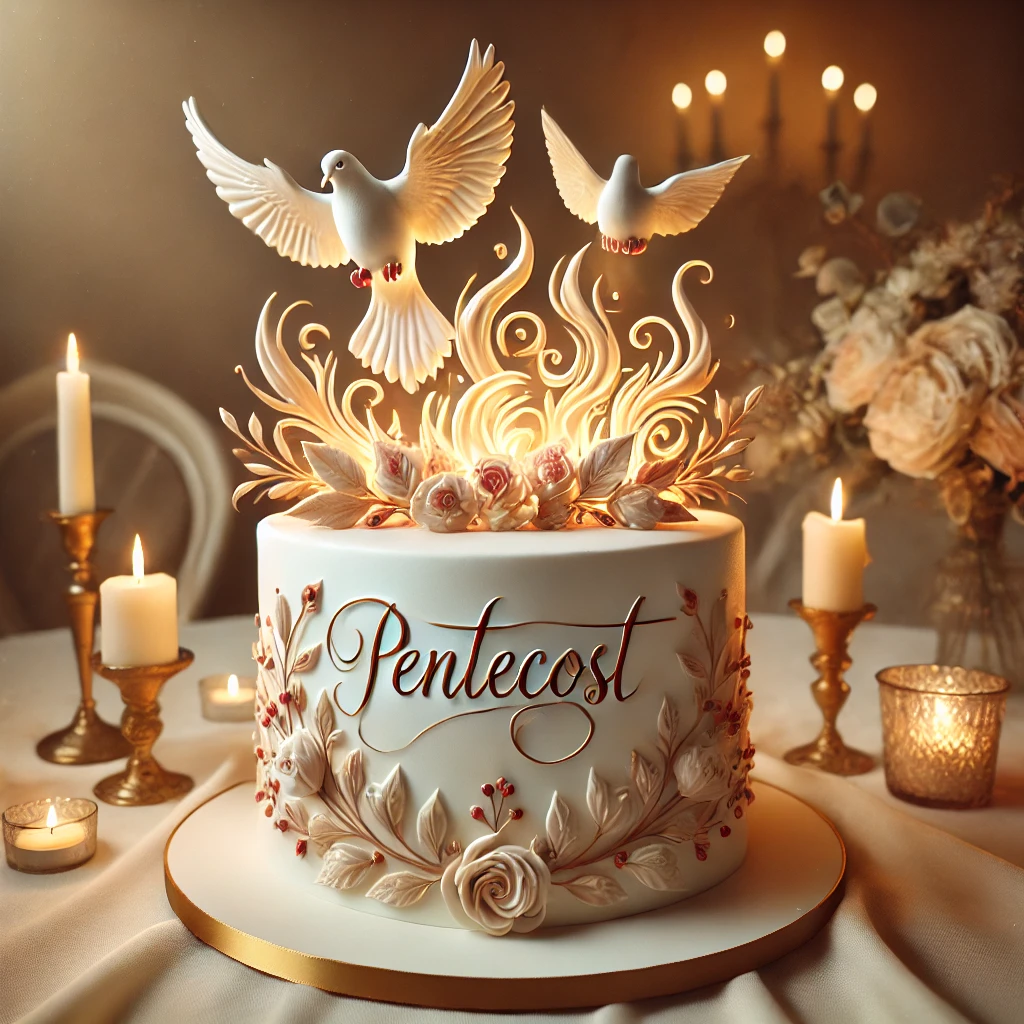
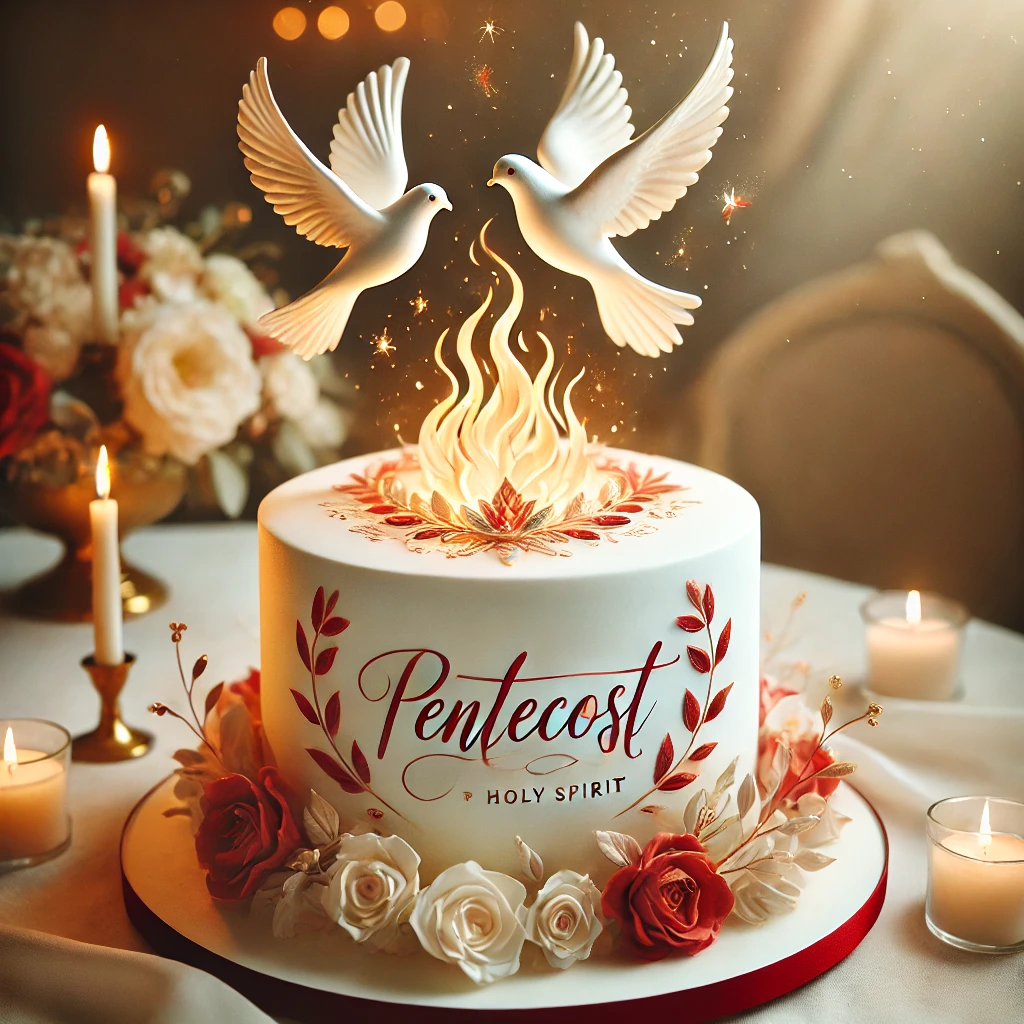
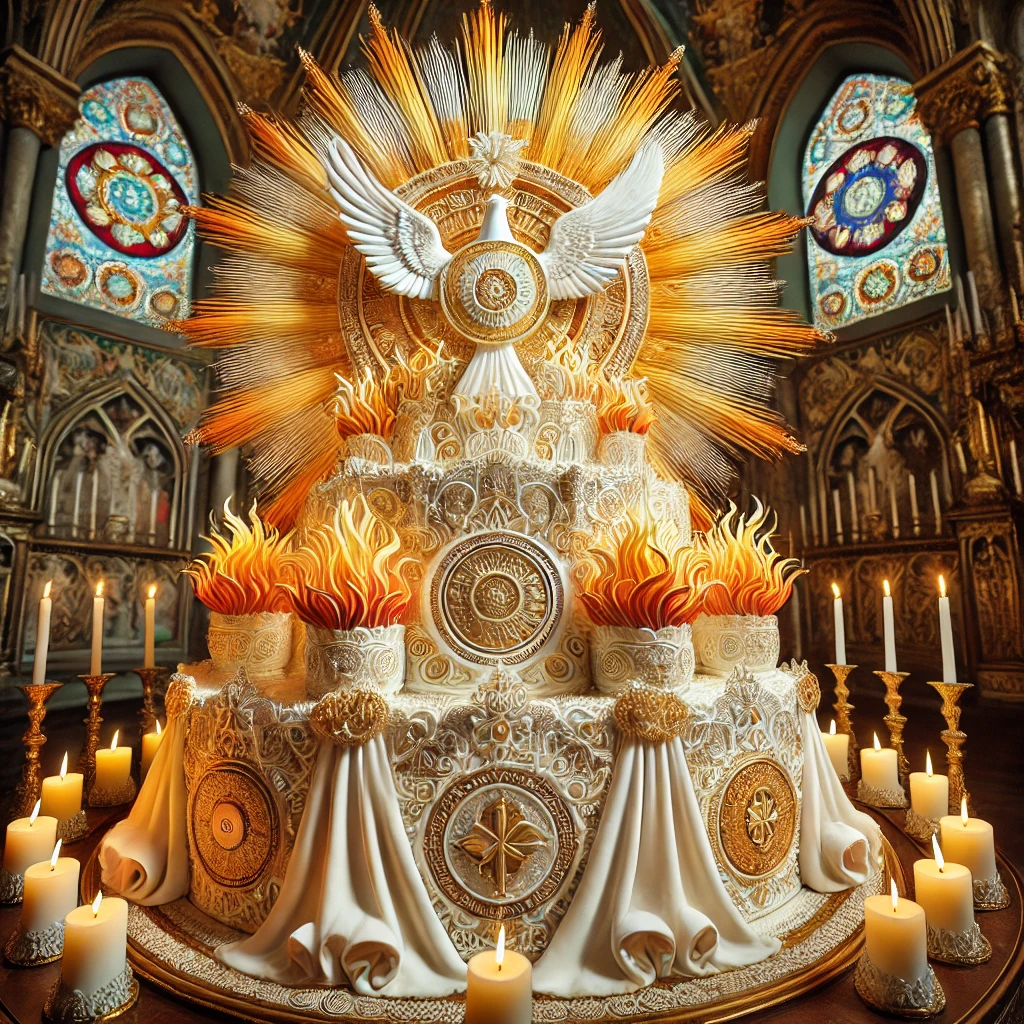
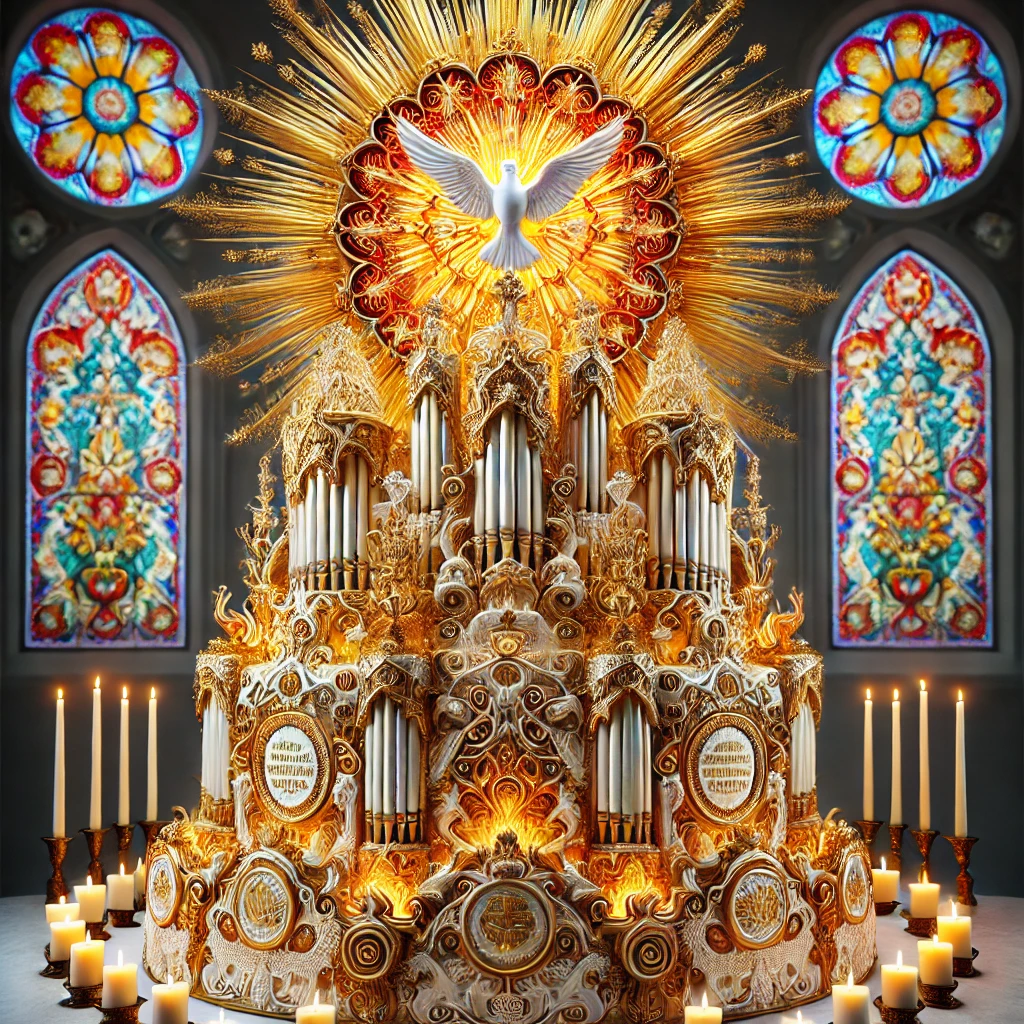
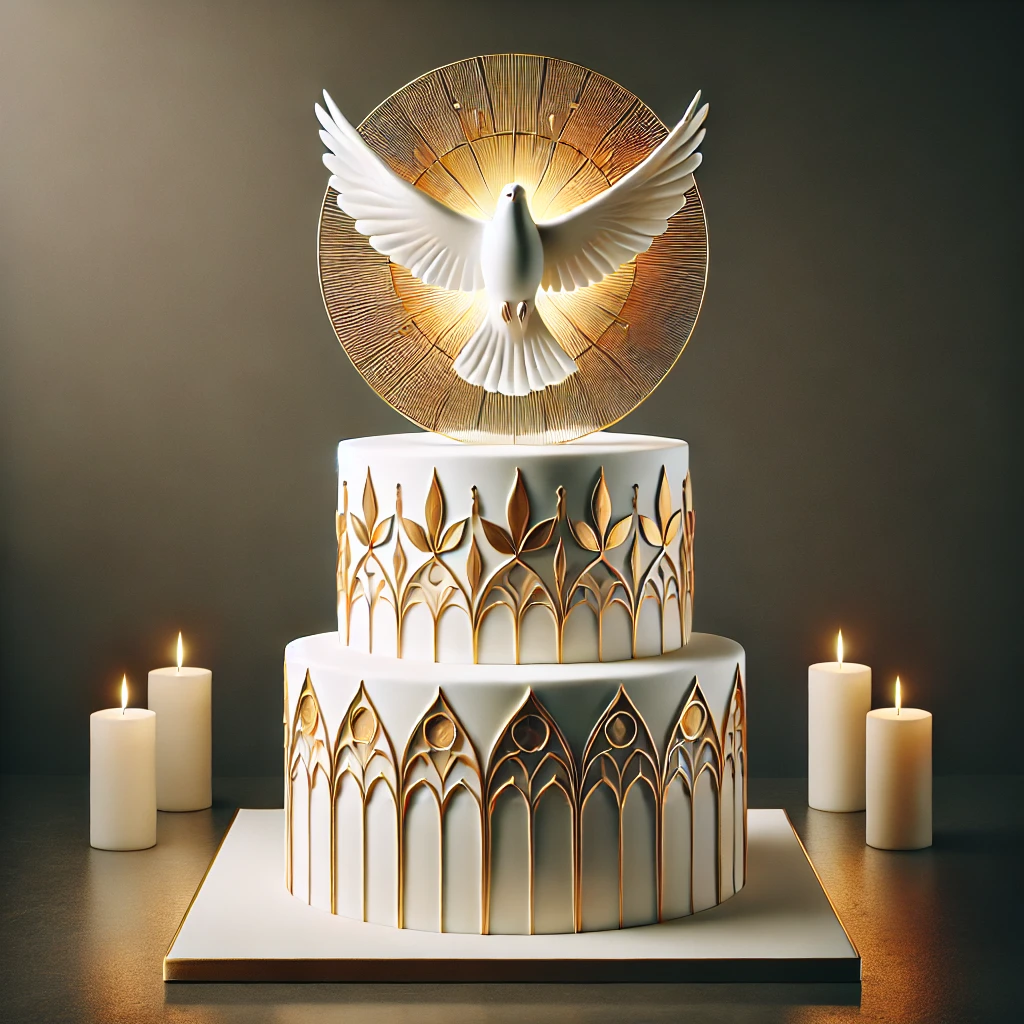
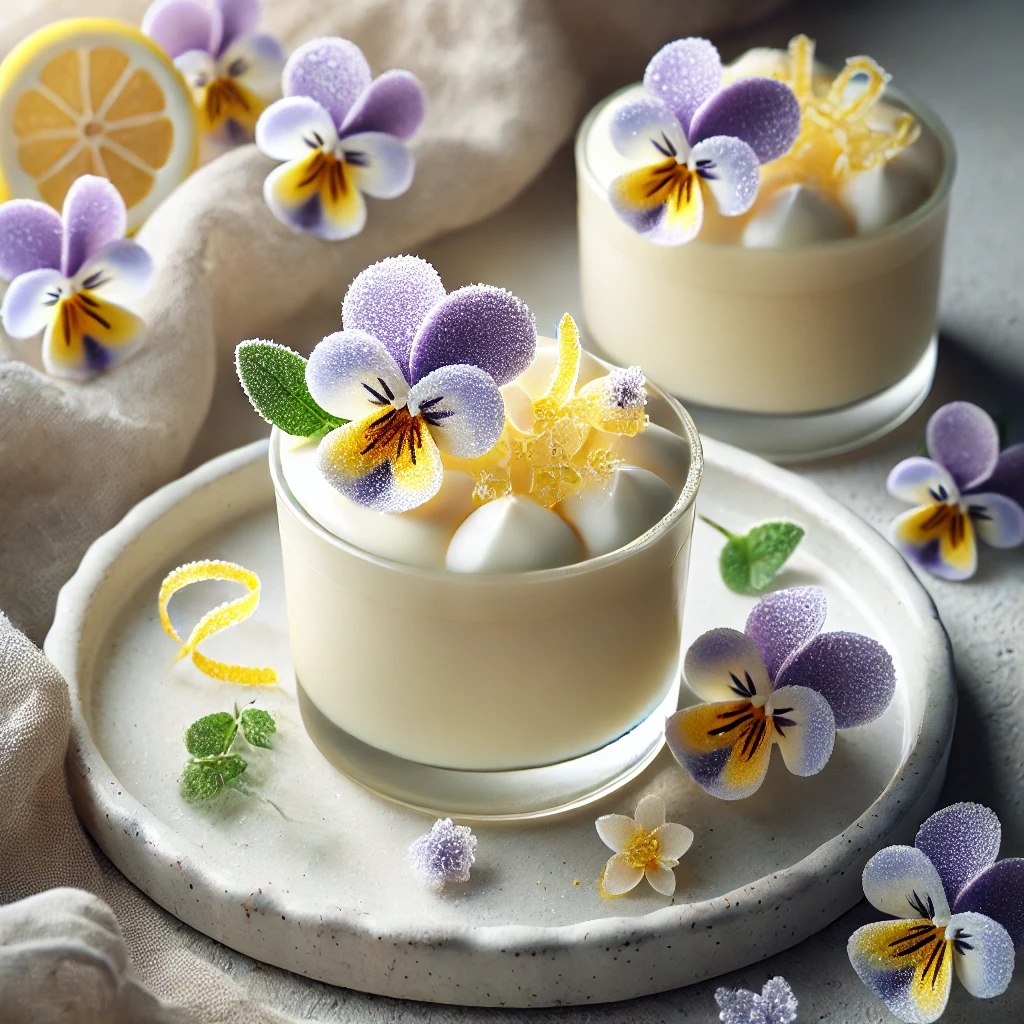
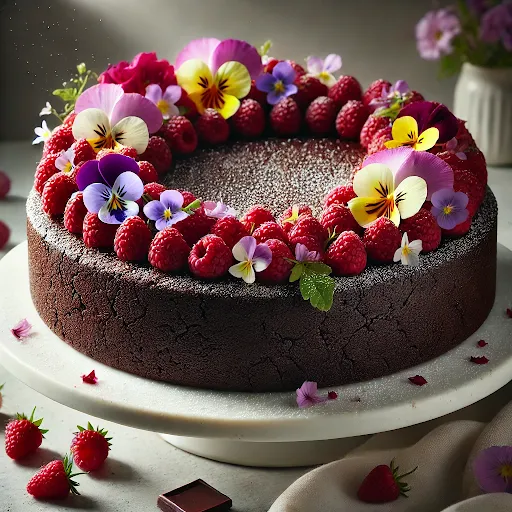
This section is meant to be more than Cake Decorating Ideas… it’s designed to spark inspiration and creativity, awaken tradition, and infuse your special occasions with style, identity, and atmosphere. A color palette becomes a theme. A design becomes a mood. Simple details—like sugared holly leaves or shimmering stars—can set the tone for a gathering and become part of cherished traditions and lasting memories melded with personal touch and love.

Traditional Pentecost Dishes

Red Velvet Cake
This rich, vibrant cake reflects the color of Pentecost—the fire of the Holy Spirit. Its deep red hue symbolizes passion, transformation, and divine presence, while its soft, luxurious texture makes it a centerpiece dessert for the celebration.

Strawberries and Cream
Fresh strawberries, often paired with lightly sweetened cream, represent both the red flames of Pentecost and the sweetness of renewal. This dish is simple yet elegant, highlighting natural abundance and purity.

Roasted Lamb with Herbs
Lamb carries deep biblical significance and is often served as a main dish for Pentecost meals. Roasted with rosemary, garlic, and olive oil, it represents sacrifice, provision, and strength, offering a grounding, savory element to the table.

Flame-Grilled Vegetables
Charred vegetables such as bell peppers, tomatoes, and zucchini echo the imagery of fire. Their smoky flavor and vibrant colors bring both symbolism and nourishment, reflecting refinement and transformation through heat.

Honey Bread or Sweet Rolls
Soft, golden breads sweetened with honey symbolize unity, sustenance, and the shared life of the early Church. Bread has always been central to gatherings, and here it represents both physical and spiritual nourishment.

Pomegranate Salad
With its deep red seeds, pomegranate adds both beauty and meaning. It symbolizes life, abundance, and the many brought into unity through the Spirit. Often paired with greens, nuts, and a light vinaigrette, it offers a refreshing balance.

Spiced Red Wine or Grape Juice
Whether served as wine or a non-alcoholic option, this drink represents both celebration and the shared cup. Warm spices can be added to deepen the flavor, creating a drink that feels both festive and meaningful.

Fire-Roasted Flatbread with Olive Oil and Herbs
Simple yet powerful, this dish reflects ancient traditions of gathering and sharing. The fire-roasted element ties directly into Pentecost symbolism, while olive oil and herbs add richness and depth.

Recipes Engineered for that Spring Feeling