




















Holy Saturday
with ORO VALENTIO
The Silence that Holds the Promise
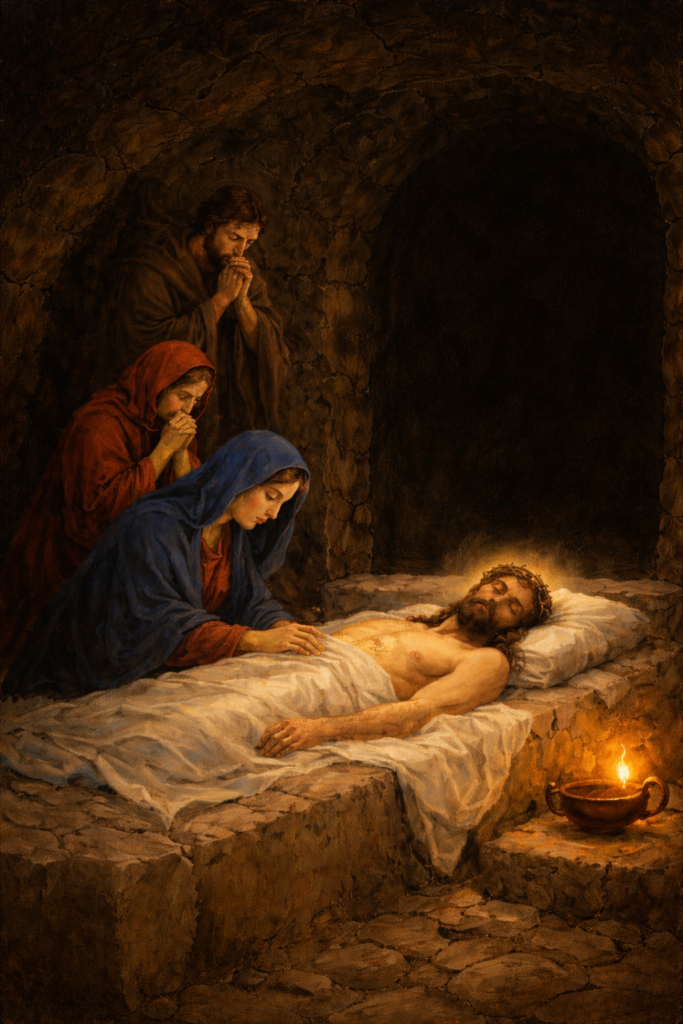
Holy Saturday is the quiet heart of the Christian year. It stands between the agony of Good Friday and the joy of Easter Sunday, marked not by action or celebration, but by stillness. On this day, Christ lies in the tomb. The work of the Cross is complete, yet its victory has not yet been revealed. Heaven seems silent, the earth waits, and hope is held in suspension.
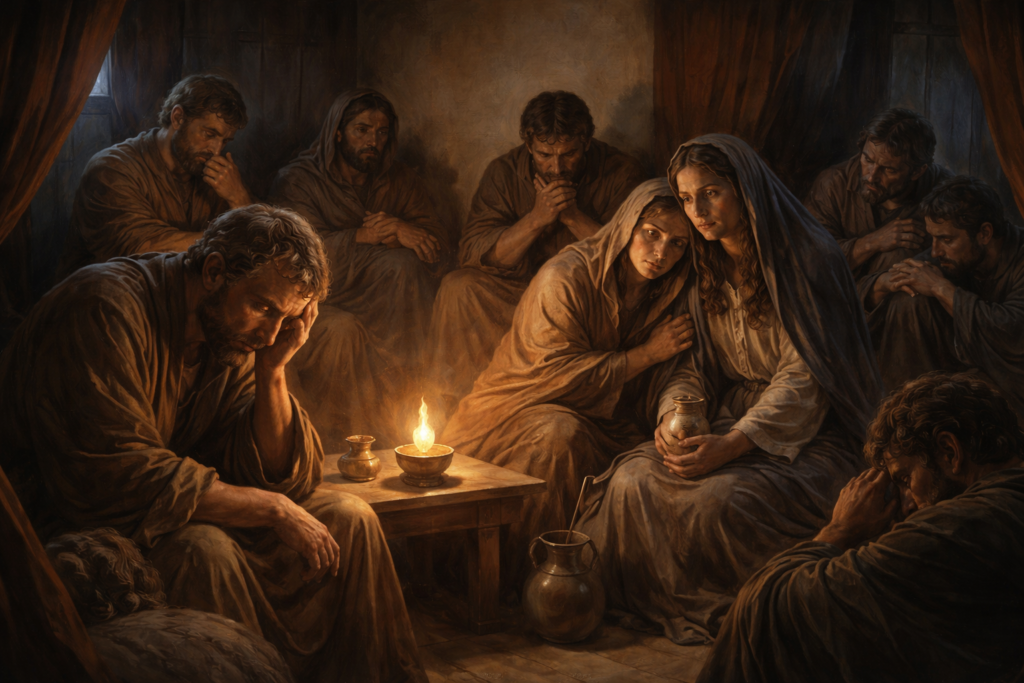
This day invites believers into a profound mystery: the experience of waiting when God appears absent. The disciples do not yet understand the Resurrection. The promises of Christ remain true, but unseen. Holy Saturday honors this space of uncertainty—a space familiar to every human heart that has known grief, loss, or seemingly unanswered prayer. It teaches that God is at work even when nothing seems to be happening.
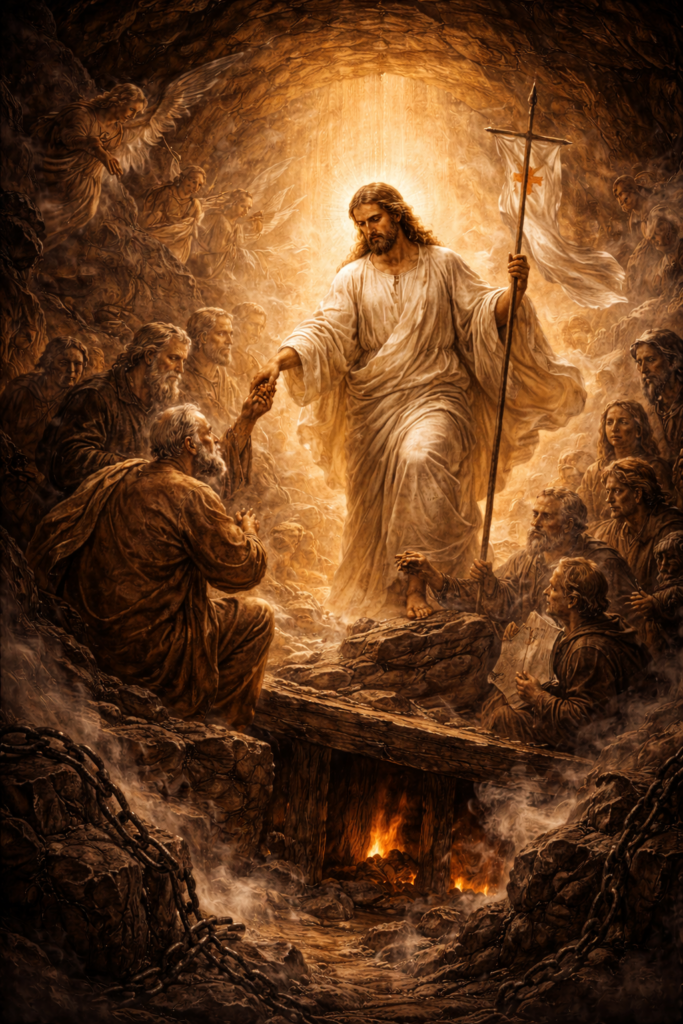
Holy Saturday is the day that Christ descended to the realm of the dead, reaching into the deepest places of human brokenness to redeem what was lost. No place is untouched by His saving presence—not even death itself. What looks like defeat is, in truth, the final quiet movement before triumph.
Holy Saturday reminds us that waiting is not wasted time. Silence is not abandonment. The tomb is not the end. It is the day that teaches trust—trust that God’s promises are fulfilled not on our schedule, but in His perfect time. The Church waits, watches, and keeps vigil, confident that dawn is coming.
Easter is born from this stillness. And so Holy Saturday stands as a sacred pause, holding sorrow and hope together, preparing the world for resurrection.
The Mystery of Hope in the Darkness
Holy Saturday reveals the purpose hidden within the silence between death and resurrection. It is the day when Christ fully enters the reality of human death—not only through His body laid in the tomb, but through His soul entering the realm of the dead: a state of waiting, not punishment; a condition of separation from the fullness of life rather than a place of torment. This descent is often misunderstood. It was not a journey into hell as condemnation, nor a negotiation with evil, nor a continuation of suffering. It was a deliberate entry into death itself, where humanity had long awaited redemption. Christ does not descend as one overpowered, but as one who fills that realm with His presence, declaring that even there, God has come.
This descent is not defeat, but fulfillment. Nothing remains beyond the reach of redemption—not suffering, not abandonment, not the grave itself. Holy Saturday teaches that salvation is not rushed, pain is not bypassed, and darkness is not denied. Instead, God enters it fully, transforms it from within, and prepares the way for resurrection. It is the day that proclaims there is no depth love cannot descend into, and no time in history in which God is absent or inactive. Even when nothing appears to be happening, redemption is already at work.
Holy Saturday stands at the most hushed and fragile point of the Christian story—the threshold between death and life. Christ lies in the tomb, the disciples are scattered and grieving, and heaven itself seems silent. To the human eye, death appears to have won. Yet this day carries a profound and hidden tension: while nothing outwardly changes, everything is being transformed. Holy Saturday teaches us that God often works most powerfully in silence, accomplishing victory not through spectacle, but through faithful presence in the depths of human loss.
As late Chief Exorcist of Rome, Gabriel Amorth reflected, Christ’s descent into the realm of the dead “tore open the kingdom of darkness,” revealing that the devil’s apparent triumphs are never final. What looks like defeat is, in truth, the undoing of evil from within. Christ enters the deepest place of human abandonment not as a captive, but as a conqueror, filling even death itself with His light. Holy Saturday reminds us that evil’s power is always limited, and that God’s victory often unfolds invisibly before it is revealed openly.
For us, Holy Saturday becomes a school of hope. It teaches us how to wait—faithfully, patiently, and without despair—when prayers seem unanswered and the future unclear. It invites us to trust that God is still at work, even when we cannot yet see the resurrection. As John of the Cross beautifully expressed, “Hope means to keep the eyes fixed on the light while walking in the dark.” Holy Saturday assures us that the darkness is never the end of the story—and that dawn is already on its way.
Holy Saturday Traditions to Make Your Own
1. The Great Silence
Holy Saturday is marked by profound silence.
No Mass is celebrated during the day
Altars remain bare
The Church intentionally refrains from outward celebration
This silence mirrors Christ in the tomb and teaches the faithful to wait without resolution.
2. Fasting and Abstinence (Traditionally)
Historically, Holy Saturday was a strict fast day, often extending the Good Friday fast until sunset.
Many Christians today continue fasting or eating very simply
The fast is broken only with the Easter Vigil
The fast embodies desolation and watchful hope.
3. Prayer at the Tomb
In many traditions:
Churches leave the tabernacle empty
The faithful pray before a symbolic tomb or darkened sanctuary
The focus is on mourning, waiting, and trust
This is prayer without consolation.
4. Meditation on Christ’s Descent into Death
Holy Saturday uniquely commemorates Christ entering death itself:
Reflecting on His descent to the realm of the dead
Remembering that no place is untouched by His presence
Reading texts that emphasize darkness, silence, and waiting
This is not a day of preaching triumph, but of hidden victory.
5. Reading of Lamentation Texts
Traditionally associated Scripture includes: Psalm 88 (the darkest psalm), Lamentations, and prophecies that speak of the grave, silence, and hope deferred. These readings legitimize sorrow while remaining prayerful.
6. Preparation for the Easter Vigil
Holy Saturday is also a day of quiet preparation:
Candles prepared
Churches cleaned and adorned discreetly
Baptismal waters prepared
Nothing is celebrated yet—but everything is being readied.
7. Waiting with Mary
Tradition holds that this day uniquely belongs to Mary, who waits in faith without consolation.
Many pray the Rosary or Marian prayers
She represents faith that trusts without seeing
Mary’s hope stands firm while all else seems lost.
8. The Easter Vigil (After Nightfall)
The day culminates—but does not end—until night:
New fire is lit
Light breaks the darkness
The Church moves from silence into proclamation
The Vigil is technically Easter, which is why Holy Saturday remains unresolved until night.
9. Stillness, Not Productivity
Spiritually, Holy Saturday discourages busyness, noise, and premature celebration. Instead, it invites stillness, presence, and trust without answers.
God was already preparing the dawn...
May the stillness of this day teach you
that waiting is not abandonment,
that silence is not absence,
and that love is often accomplishing its deepest work
where no light is yet visible.
When faith feels stripped of comfort
and hope must exist without reassurance,
may you remain turned toward God—
not because you see the way forward,
but because you trust the One who holds it.
May you learn, in this holy pause,
that desolation with Christ
is never the same as darkness without Him.
And when the silence finally breaks
and the night gives way to dawn,
may your heart recognize the resurrection
as something that was already moving toward you
while you waited in the dark.
Go in peace.
Remain in hope.
The stone is not the end.
Traditional Holy Saturday Dishes
1. Fasting or Very Simple Eating
Historically, Holy Saturday was a continuation of the Good Friday fast.
-
One simple meal, or very light foods
-
No feasting, no rich dishes
-
In many traditions, the fast lasted until the Easter Vigil
The goal is restraint, not celebration.
2. Bread and Water (or Bread Alone)
In stricter traditions:
-
Plain bread
-
Water or unsweetened tea
This mirrors mourning and waiting rather than nourishment for pleasure.
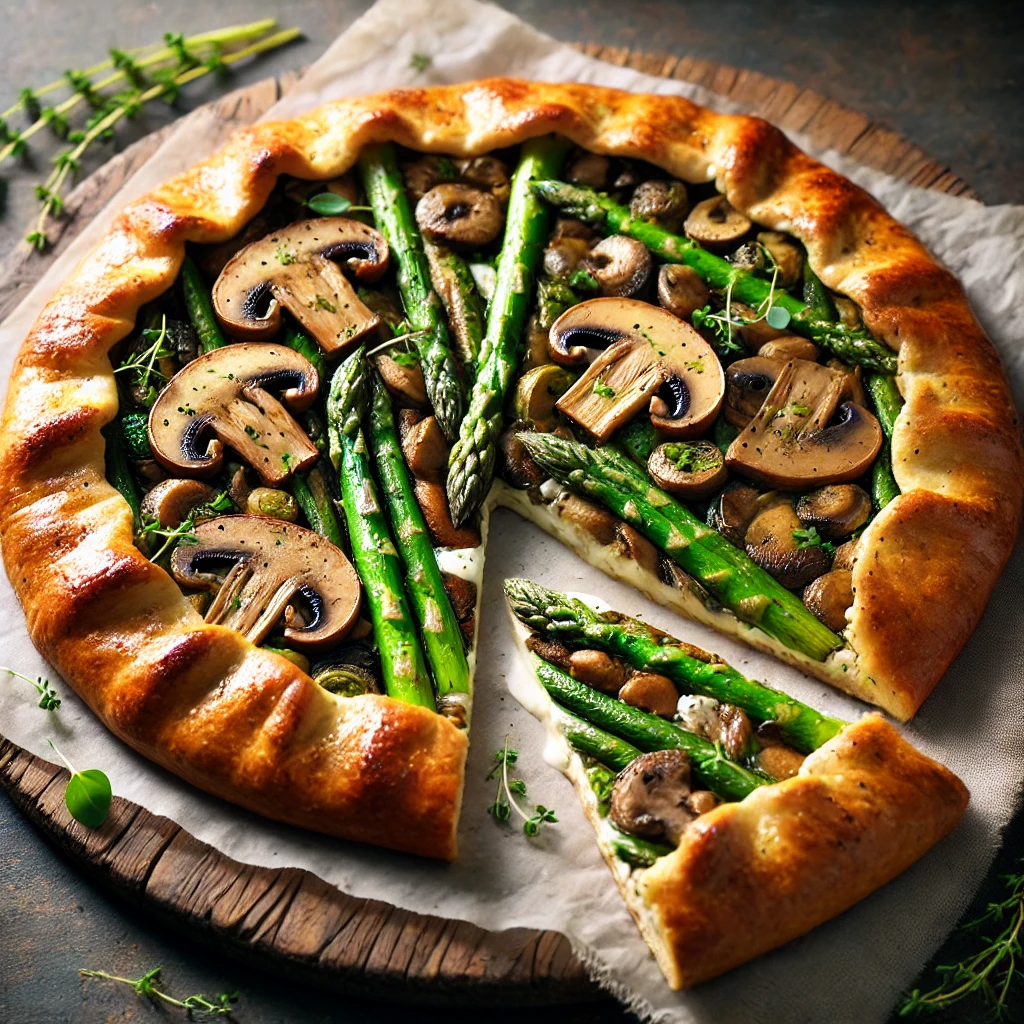
3. Vegetable-Based Foods
Where some food is eaten, it is typically:
-
Boiled or roasted vegetables
-
Soups made from vegetables or legumes
-
Simple grains (rice, barley, lentils)
Nothing festive. Nothing indulgent.
4. No Meat, No Dairy, No Eggs (Traditionally)
Across many cultures:
-
Meat is avoided
-
Dairy and eggs are avoided
-
Fats are minimal or absent
This is why eggs—so central to Easter—are intentionally withheld until resurrection joy.
5. Leftovers from Lent
In some households:
-
Remaining Lenten foods are eaten simply
-
Nothing new or special is prepared
-
Cooking is kept minimal
The kitchen reflects the tomb: quiet and waiting.
6. No Sweets or Desserts
Desserts are traditionally forbidden on Holy Saturday.
-
No sugar-heavy foods
-
No pastries
-
No celebratory baking
Sweetness belongs to Easter.
7. Cultural Exceptions (Still Restrained)
In some regions, families prepare—but do not eat—Easter foods:
-
Baking Easter bread but not tasting it
-
Coloring eggs but not consuming them
-
Preparing meats to be blessed later