















































St. Francis of Assisi

with ORO VALENTIO

October 4th

St. Francis of Assisi’s Day, observed each year on October 4th, is a profound and deeply reflective celebration of a life that reshaped the understanding of faith, humility, and humanity’s relationship with the world around it. Saint Francis of Assisi was born into comfort and privilege in Assisi, Italy, yet his story is one of radical transformation—a turning away from material wealth and worldly ambition toward a life fully surrendered to God. This day is not merely a remembrance of a historical figure, but an invitation to step into the spirit of his life: one marked by simplicity, reverence, courage, and an unwavering commitment to love in its purest form.
As a young man, Francis sought the same pursuits as many—recognition, success, and a sense of purpose shaped by society’s expectations. Yet, through a series of spiritual awakenings, he began to see that true fulfillment did not lie in accumulation or status, but in surrender. He famously renounced his inheritance, choosing instead a life of poverty, not as deprivation, but as liberation. In doing so, he demonstrated that freedom is often found not in what we gain, but in what we are willing to release. His life became a living testimony that joy is not dependent on external conditions, but flows from alignment with a higher calling.
St. Francis’s Day invites reflection on this radical reordering of priorities. It asks individuals to consider where they place their value—on possessions, recognition, and control, or on faith, service, and connection. His example encourages a life rooted in gratitude rather than entitlement, in stewardship rather than consumption. He saw the world not as something to be dominated, but as something sacred to be honored. The sun, the moon, the wind, the animals—all were, to him, brothers and sisters in creation. This perspective reshapes how one approaches daily life, calling for mindfulness in how we treat the environment, how we interact with others, and how we carry ourselves in the world.

Make Me an Instrument of Your Peace

Lord, make me an instrument of Your peace.
Where there is hatred, let me sow love;
where there is injury, pardon;
where there is doubt, faith;
where there is despair, hope;
where there is darkness, light;
and where there is sadness, joy.
O Divine Master, grant that I may not so much seek
to be consoled as to console;
to be understood as to understand;
to be loved as to love.
For it is in giving that we receive,
it is in pardoning that we are pardoned,
and it is in dying that we are born to eternal life.
Amen.
The well-known “Make me an instrument of Your peace” prayer is commonly attributed to St. Francis of Assisi, but that attribution does not hold up historically. The text does not appear anywhere in his verified writings, nor in the early Franciscan sources that carefully preserve his words. In fact, the prayer only emerges in France in the early 20th century, many centuries after his death, and was later linked to him because it so closely mirrors the spirit of his life—humility, self-sacrifice, and radical charity. So while the prayer is deeply Franciscan in tone and theology, it is not authentically his, and it’s more accurate to see it as a later composition that reflects his legacy rather than a direct expression of his voice.
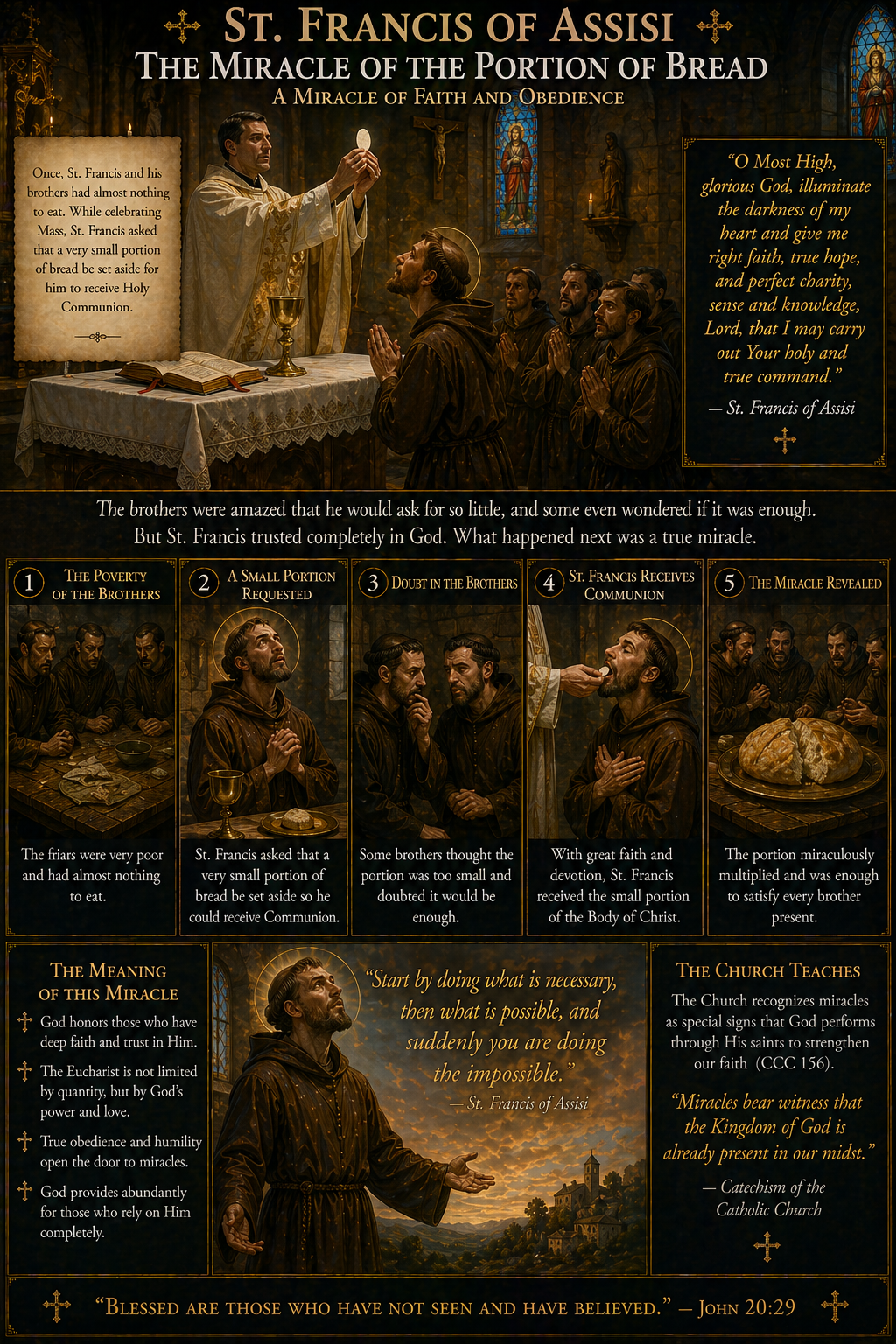
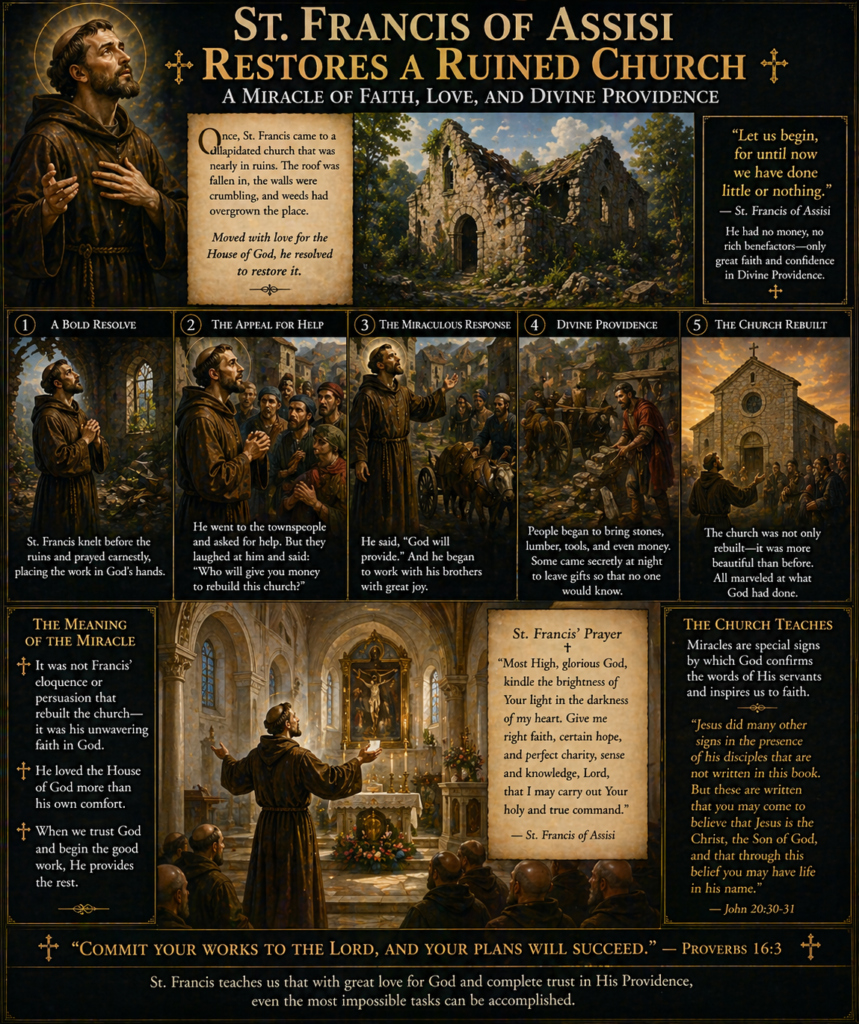
The prayer “Most High, glorious God…”—authentically written by St. Francis of Assisi—reveals the very core of his spirituality: a soul that knows it cannot act, love, or even see rightly without God first transforming it from within. When Francis asks God to “enlighten the darkness of my heart,” he is acknowledging the reality of human weakness and the need for divine grace to heal and guide him. His request for “right faith, certain hope, and perfect charity” reflects the theological virtues, showing that he desires not worldly success, but complete alignment with God’s truth and love. Even his plea for “sense and knowledge” is not about intellectual achievement, but about practical wisdom—the ability to carry out God’s will faithfully in real life. Ultimately, the prayer is not emotional or sentimental, but deeply strong and resolute: it is the cry of a man who wants to obey God completely, no matter the cost, and to be inwardly transformed so that every action flows from divine light rather than his own will.
Most High, glorious God,
enlighten the darkness of my heart.
Give me right faith,
certain hope,
and perfect charity,
sense and knowledge, Lord,
that I may carry out
Your holy and true command.
Amen.

A Man of Courage

Beyond his relationship with nature, Francis’s life was also defined by service to the poor, the sick, and the marginalized. He did not simply speak about compassion—he embodied it. He cared for lepers, embraced those whom society rejected, and walked alongside those in suffering. His actions challenge the tendency to distance ourselves from discomfort and instead encourage a posture of presence and empathy. St. Francis’s Day, therefore, becomes a call to action: to serve where there is need, to bring light where there is darkness, and to extend kindness where it is least expected. The spiritual depth of this day also lies in its emphasis on inner transformation. Francis understood that true change begins within. His life was anchored in prayer, reflection, and a continual seeking of God’s will. This inward focus did not isolate him from the world; rather, it equipped him to engage with it more meaningfully. His famous prayer, often associated with his name, reflects this orientation: a desire not to be served, but to serve; not to be understood, but to understand; not to seek comfort, but to bring peace. These principles form a blueprint for a life that transcends self-centeredness and moves toward purposeful, impactful living.  St. Francis of Assisi’s Day also carries a quiet but powerful message about courage. To live as Francis did required a willingness to go against societal norms, to be misunderstood, and to walk a path that few are willing to take. His life reminds us that authenticity often demands sacrifice, and that true strength is found in integrity. This aligns deeply with the idea that a person’s life is strongest when it is internally consistent—when beliefs, actions, and values are in harmony. In this way, the day is not only spiritual, but also deeply practical, offering guidance on how to live with clarity and conviction.

St. Francis of Assisi’s Day also carries a quiet but powerful message about courage. To live as Francis did required a willingness to go against societal norms, to be misunderstood, and to walk a path that few are willing to take. His life reminds us that authenticity often demands sacrifice, and that true strength is found in integrity. This aligns deeply with the idea that a person’s life is strongest when it is internally consistent—when beliefs, actions, and values are in harmony. In this way, the day is not only spiritual, but also deeply practical, offering guidance on how to live with clarity and conviction.

St. Francis of Assisi's Day Traditions to Make Your Own

Blessing of the Animals
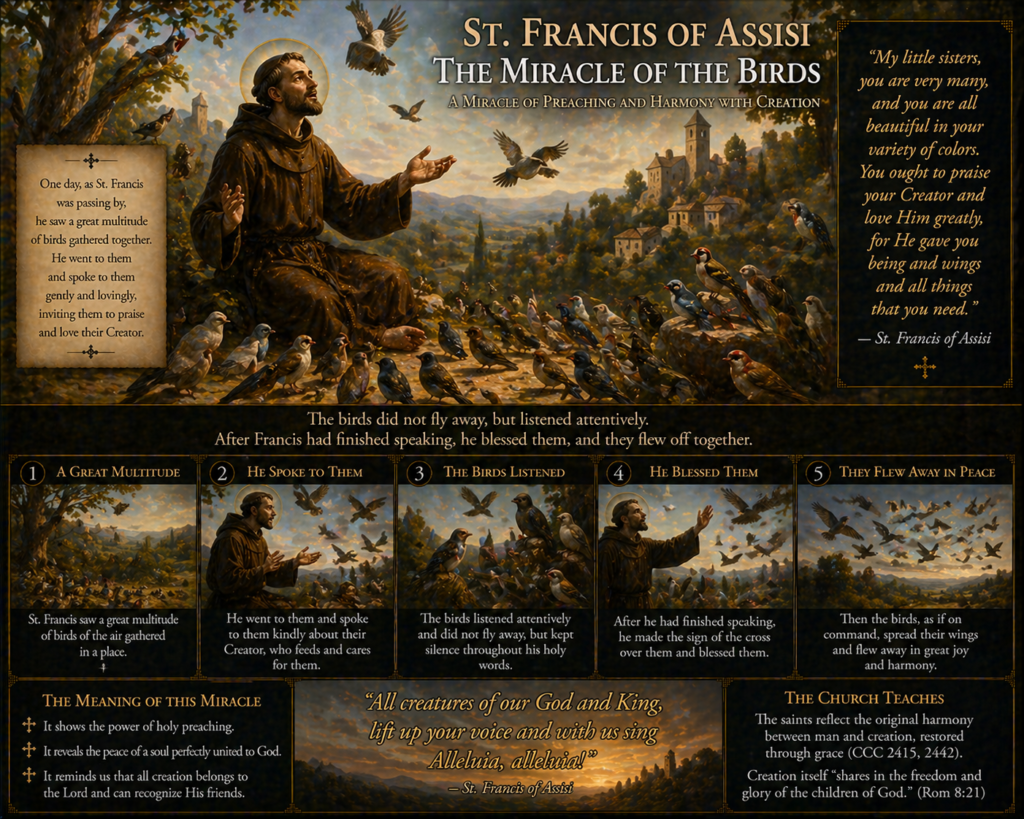
This is probably the most well-known tradition. People bring pets (dogs, cats, birds—even farm animals) to church. A priest gives them a special blessing. This reflects St. Francis’s belief that animals are part of God’s creation and deserve care
Nature-focused celebrations
  • Outdoor services or prayers in gardens or parks
  • Emphasis on caring for the environment
  • Some communities organize clean-ups or tree planting
Special church services
  • Readings about St. Francis’s life
  • Prayers for peace, humility, and care for the poor
  • Singing or reciting the “Canticle of the Creatures” (his famous poem praising God through nature)
Acts of charity
  • Donating food, clothing, or money to the poor
  • Volunteering at shelters or community programs
  • Reflecting his life of poverty and service
Simple meals or fasting
  • Some people choose to eat very simply that day
  • It’s a way of honoring his commitment to humility and detachment from wealth
Storytelling (especially for kids)
  • Telling stories like St. Francis and the Wolf of Gubbio
  • Teaching kindness toward animals and others

Find Richness in Purpose and Presence

Heavenly Father,
on this day we remember Saint Francis of Assisi,
a servant who walked in humility, love, and unwavering devotion to You.
We ask that You shape our hearts in the same spirit—
to seek not greatness in the eyes of the world,
but faithfulness in the quiet places where You dwell.
Teach us to live simply,
to release what we do not need,
and to find richness not in possession,
but in purpose and presence.
Let our lives reflect a deep trust in Your provision,
so that we may walk freely, unburdened by fear or excess.
Give us the courage to love boldly,
especially where it is difficult.
Where there is suffering, let us bring comfort.
Where there is division, let us bring peace.
Where there is loneliness, let us bring presence.
Make us instruments of Your compassion,
willing to step into places others avoid.
Refine our hearts, Lord,
so that we seek not to be praised, but to serve;
not to be understood, but to understand;
not to be lifted up, but to lift others.
Let humility become our strength,
and kindness our daily practice.
Grant us a spirit of peace that does not depend on circumstance,
but is rooted deeply in You.
And as we walk through our days,
may our actions quietly reflect Your truth—
steady, sincere, and full of grace.
We thank You for the example of Francis,
and for the reminder that a life surrendered to You
is a life that truly flourishes.
Amen.

St. Francis of Assisi's Day Cake & Atmosphere Ideas

Where style, memory, and celebration meet.

This section is meant to be more than Cake Decorating Ideas… it’s designed to spark inspiration and creativity, awaken tradition, and infuse your special occasions with style, identity, and atmosphere. A color palette becomes a theme. A design becomes a mood. Simple details—like sugared holly leaves or shimmering stars—can set the tone for a gathering and become part of cherished traditions and lasting memories melded with personal touch and love.

Traditional St. Francis of Assisi's Day Dishes

 Simple & traditional foods
These reflect his life of poverty and simplicity:
  • Rustic bread (Italian-style)
    Serve with olive oil or herbs
  • Vegetable soup (minestrone or lentil)
    Very traditional and humble
  • Cheese and olives platter
  • Roasted vegetables (zucchini, eggplant, carrots)

 Nature-inspired dishes
Because St. Francis loved creation:
  • Garden salad with edible flowers
  • Herb focaccia (rosemary, thyme)
  • Stuffed vegetables (peppers, tomatoes, squash)
  • Wild mushroom pasta or risotto

 Simple protein options
Traditionally modest (often no rich meats):
  • Grilled or baked fish
  • Bean dishes (white beans, chickpeas, lentils)
  • Egg-based dishes (like a simple frittata)

 Desserts (you already started this!)
Keep them simple or nature-themed:
  • Honey cake (symbol of natural sweetness)
  • Apple or pear tart
  • Nut-based desserts (almond cake, biscotti)
  • Your St. Francis-themed cakes (with animals, nature, etc.)

 Symbolic foods you could include
  • Bread → humility
  • Water or simple wine → simplicity
  • Fruit → God’s creation
  • Honey → goodness of nature

 Fun idea (especially for a website or event)
Make it a “St. Francis Table”:
  • rustic wooden boards
  • greenery and flowers
  • simple foods arranged beautifully
  • maybe even small animal decorations or images

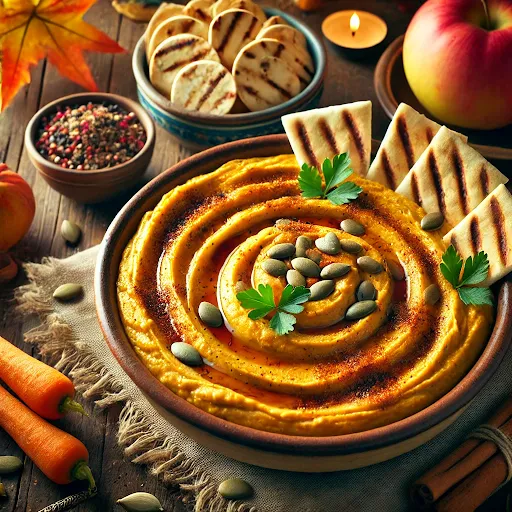
Recipes Engineered for Autumn Glory