
























Our Lady of Fatima
with ORO VALENTIO
May 13th
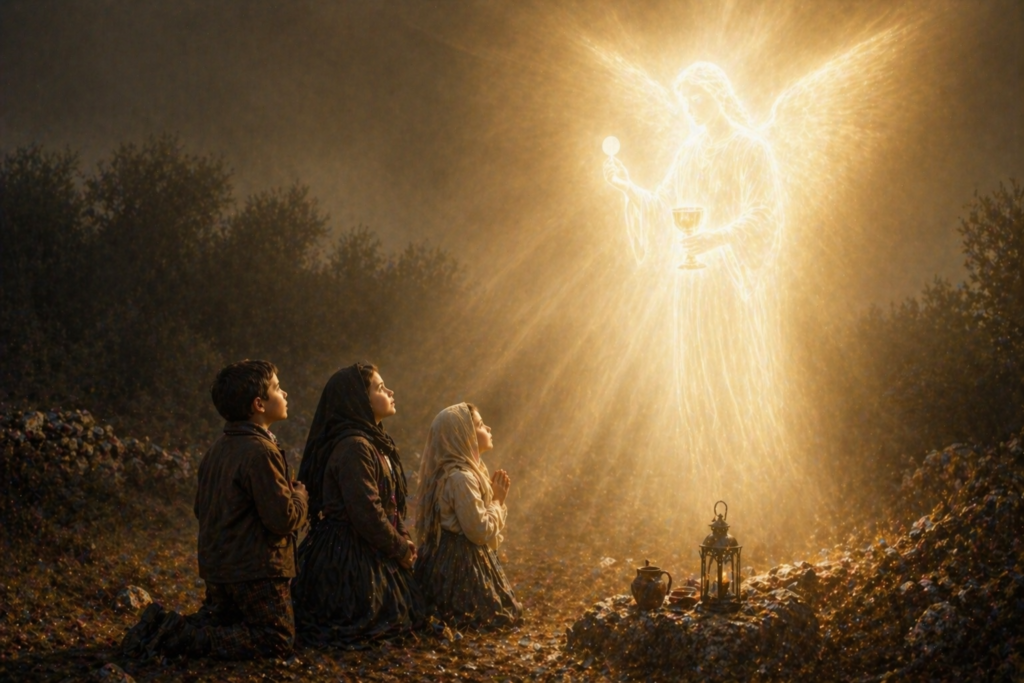
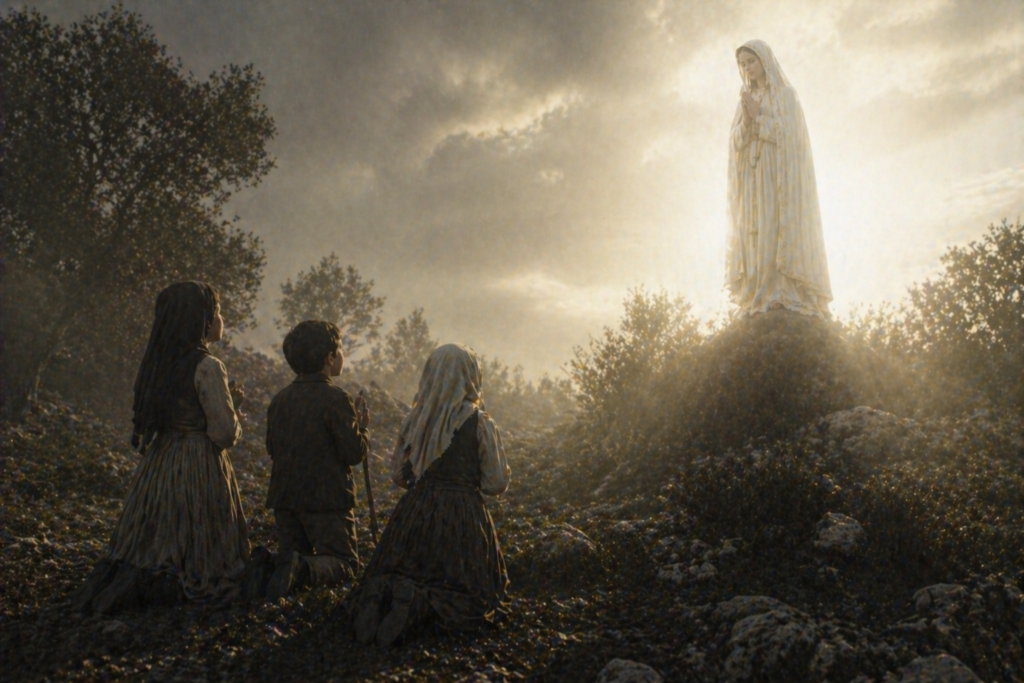
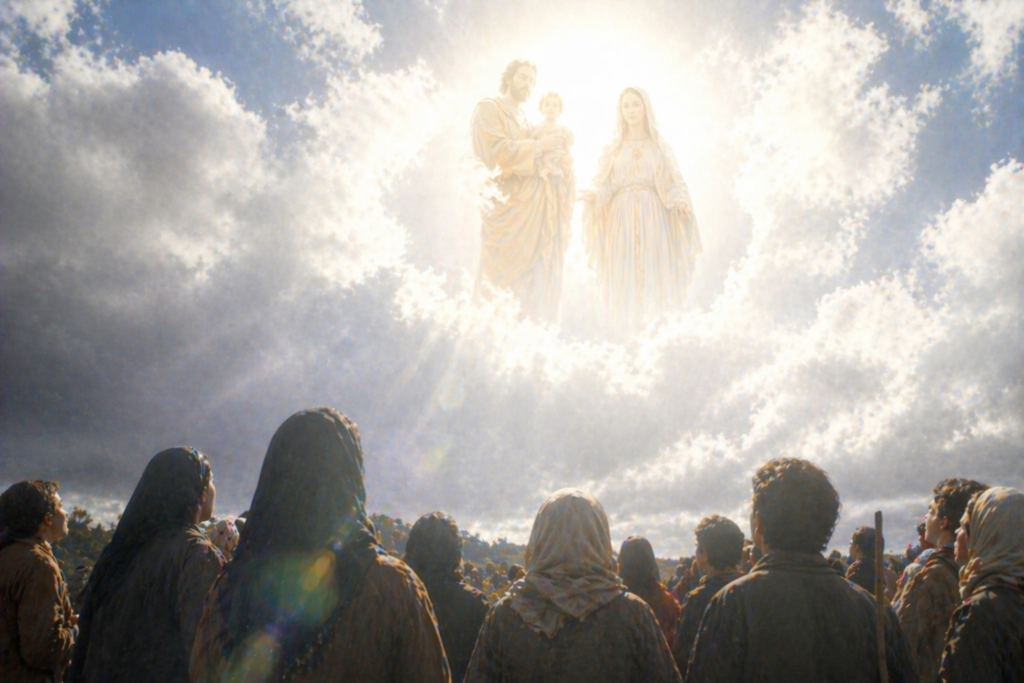
Our Lady of Fatima stands as one of the most profound and sobering moments in modern spiritual history—a convergence of heaven’s mercy and truth offered to a world on the brink of upheaval. In 1917, in the rural countryside of Fátima, three young shepherd children—Lúcia dos Santos and her cousins Francisco Marto and Jacinta Marto—were chosen to receive a series of apparitions from the Blessed Virgin Mary. Appearing as a woman clothed in brilliant light, she did not come with spectacle for its own sake, but with a message of striking clarity: humanity must return to God, or face the consequences of drifting further into disorder. Her presence carried both maternal gentleness and unwavering authority, revealing that divine love is inseparable from divine truth.
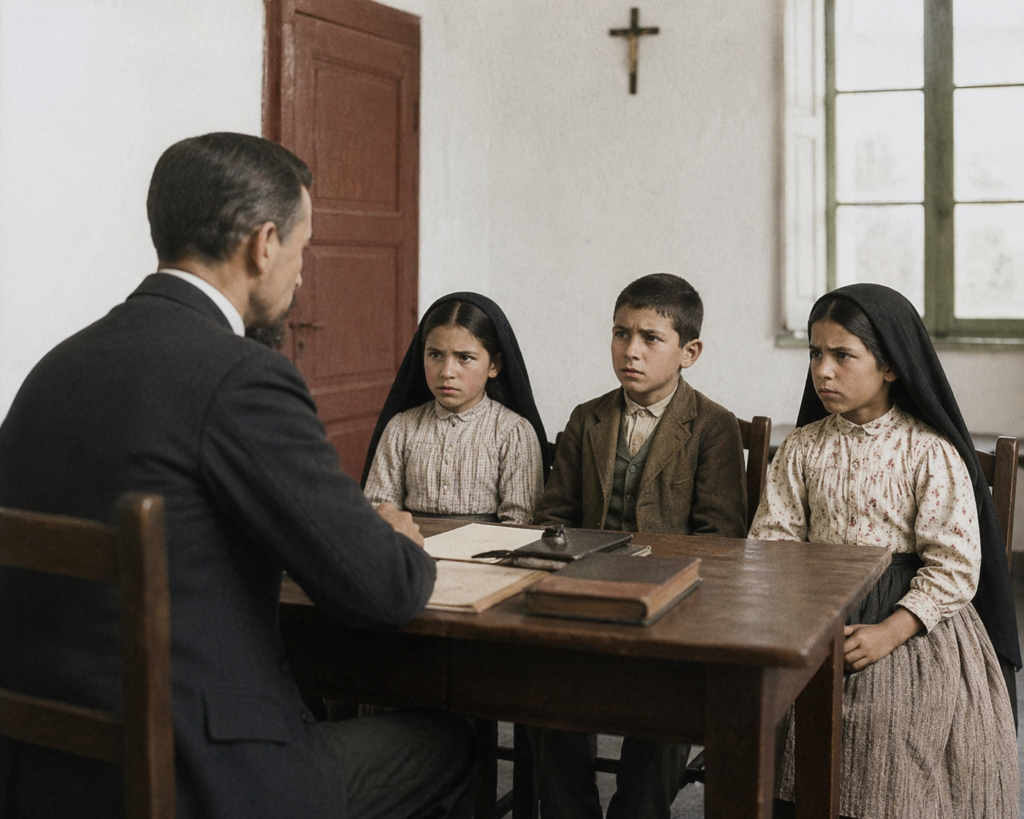
Over the course of six apparitions from May to October, she called for daily prayer—especially the Rosary—alongside repentance, sacrifice, and devotion to her Immaculate Heart. These were not presented as abstract religious acts, but as precise remedies for a world increasingly marked by conflict, moral confusion, and spiritual blindness. The children themselves embodied this call with remarkable seriousness, embracing lives of humility, prayer, and quiet suffering well beyond their years. Their witness demonstrated that true strength is not loud or forceful, but disciplined, faithful, and anchored in something higher than circumstance.
The message entrusted to them also included what have come to be known as the “secrets of Fatima,” revelations that pointed toward both the spiritual realities of sin and the unfolding trials of the twentieth century. There was a sobering vision of the consequences of turning away from God, as well as prophetic warnings about war, persecution, and the suffering of the faithful. Yet even within these warnings, there remained a consistent thread of hope: that through conversion, prayer, and steadfast devotion, the course of history itself could be influenced. It was a reminder that the actions of individuals—when aligned with truth—carry weight far beyond what is seen.
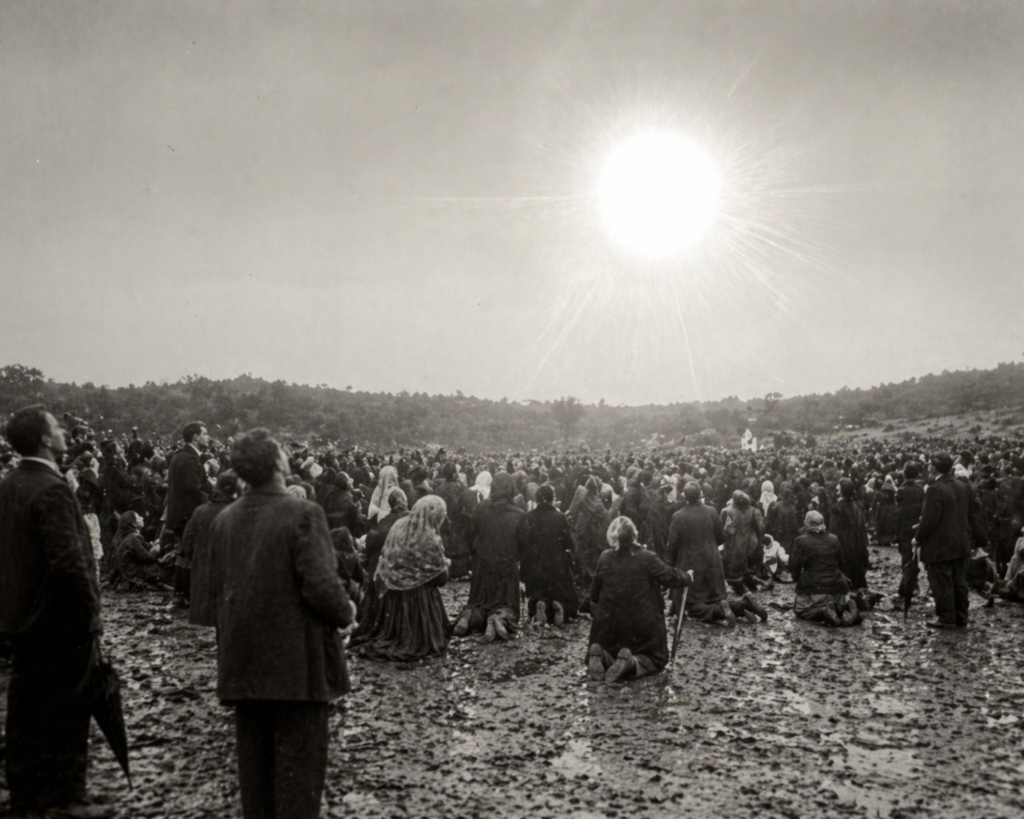
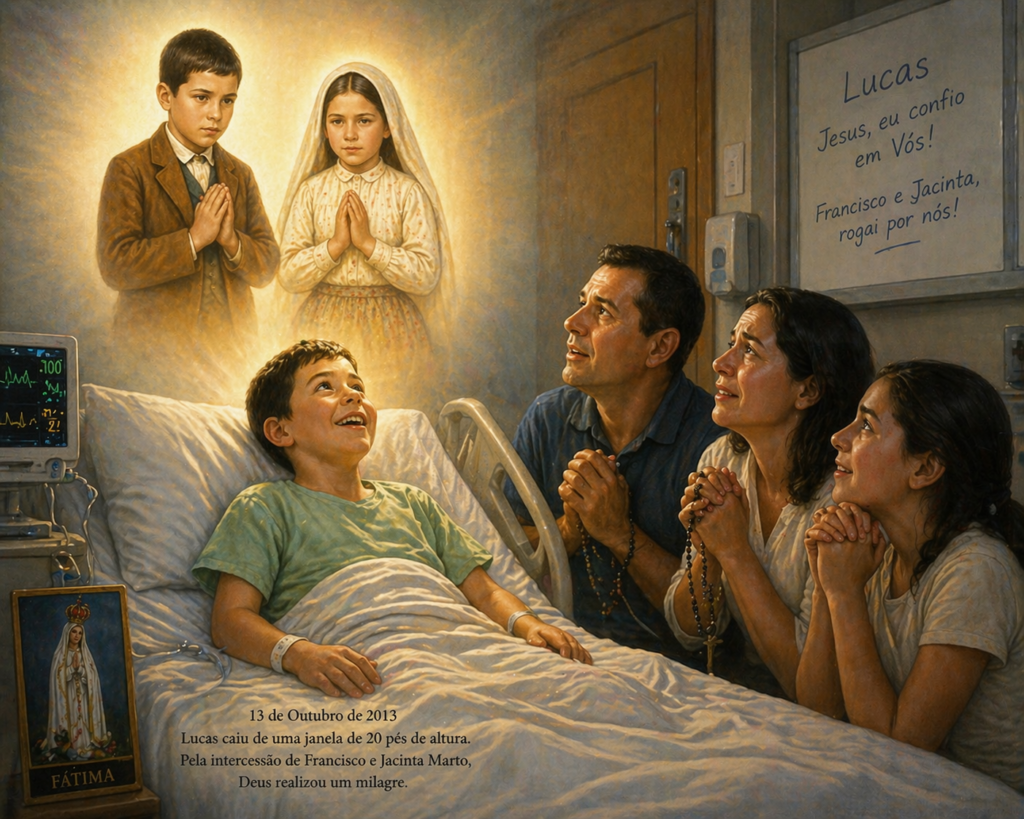
The events culminated on October 13, 1917, in what is widely known as the “Miracle of the Sun,” witnessed by tens of thousands. In that moment, the natural world itself seemed to respond to the divine, reinforcing that what had been revealed in silence and simplicity was not meant to remain hidden. Yet even this extraordinary sign pointed back to a deeper reality: that faith is not built on spectacle, but on the quiet, daily decision to live rightly.
At its heart, the message of Fatima is not confined to a single place or time. It is a call to refinement—to strip away excess, disorder, and complacency, and to return to a life of clarity, discipline, and reverence. It speaks to the interior life as much as the external world, emphasizing that true transformation begins within the soul. In a culture often driven by immediacy and distraction, Fatima stands as a counterpoint: a reminder that enduring strength is cultivated through prayer, sacrifice, and alignment with what is eternal.
Ultimately, it is a message of both warning and promise. It does not deny the reality of hardship or consequence, but it affirms that restoration is always possible. Through devotion, integrity, and a steadfast turning toward God, even the most fractured conditions can be reordered into harmony. The legacy of Fatima endures not merely as an event to be remembered, but as a standard to be lived—calling each generation to rise with purpose, to act with conviction, and to pursue a life shaped by truth, purity, and unwavering faith.
The Miracle of the Sun & the Secrets of Fatima
The messages associated with the apparitions of Our Lady of Fatima in Fátima in 1917 center on a unified call to prayer, repentance, and conversion, but they are often remembered in a more structured way as the “three secrets of Fatima,” entrusted to the children Lúcia dos Santos, Francisco Marto, and Jacinta Marto.
The Core Message
Across all the apparitions, the consistent themes were:
Daily prayer, especially the Rosary
Repentance and conversion of life
Reparation for sin
A warning about the consequences of sin for individuals and the world
This was not presented as abstract spirituality, but as something urgent and practical—something meant to change how people live.
The “Three Secrets” of Fatima
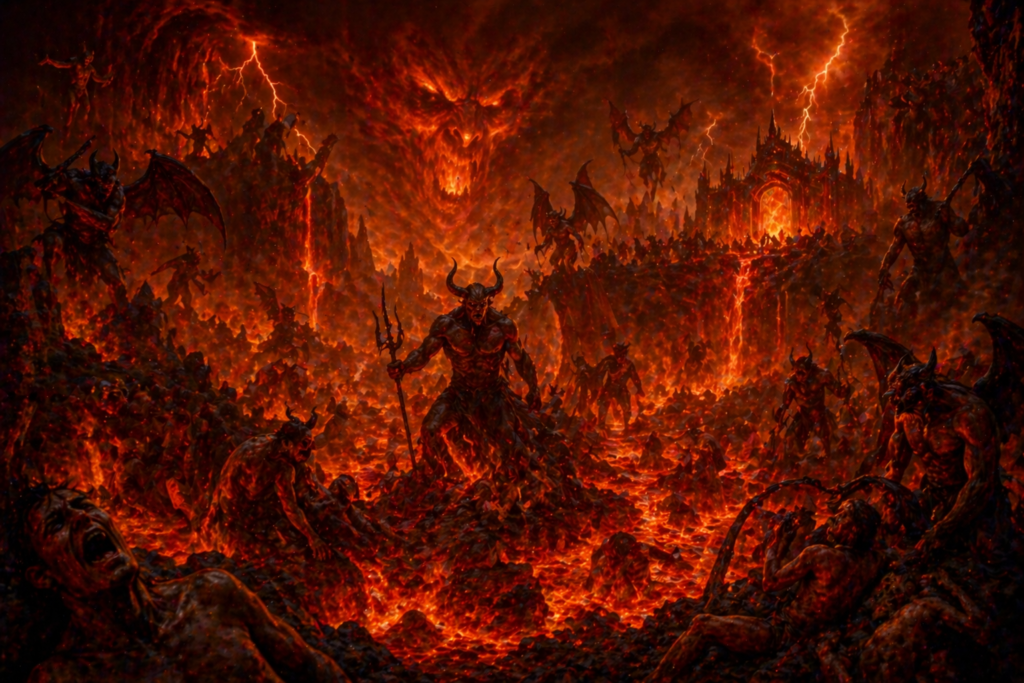
First Secret: A Vision of Hell
The children were shown a vivid vision of hell, emphasizing:
The reality of eternal separation from God
The seriousness of sin
The need for prayer and sacrifice for the salvation of souls
This part of the message strongly shaped the urgency of everything that followed.
Second Secret: War, Russia, and Devotion
The second part included:
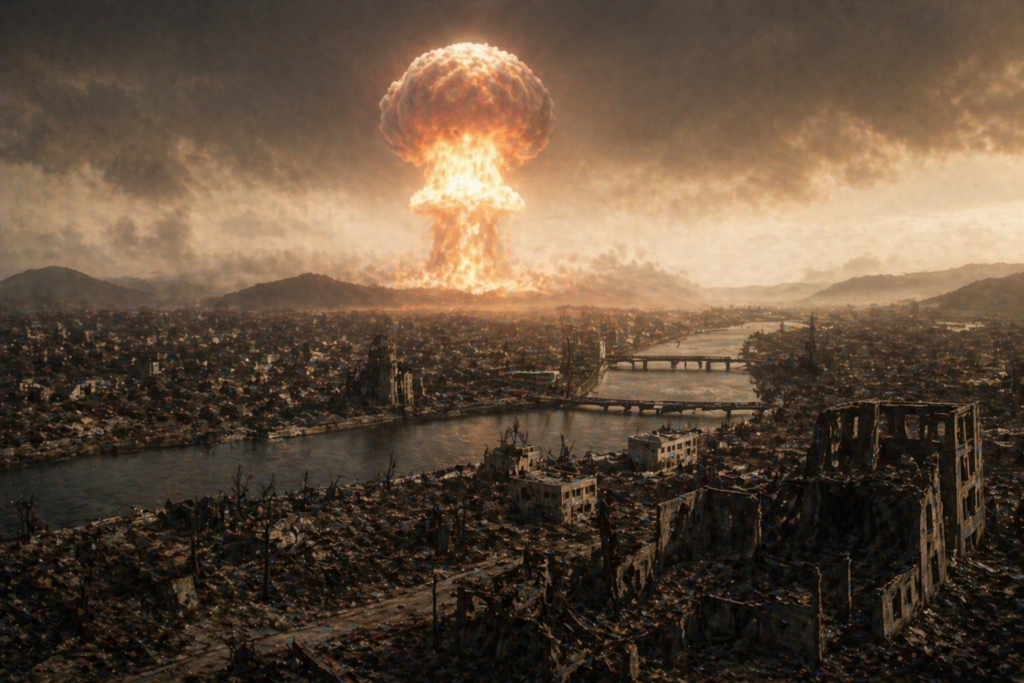
A prediction that World War I would end, but that a worse war would come if people did not repent (understood as World War II)
A warning about the spread of errors (often interpreted as atheistic communism) from Russia
A request for specific acts of devotion and consecration
It emphasized that history itself is affected by moral and spiritual choices.
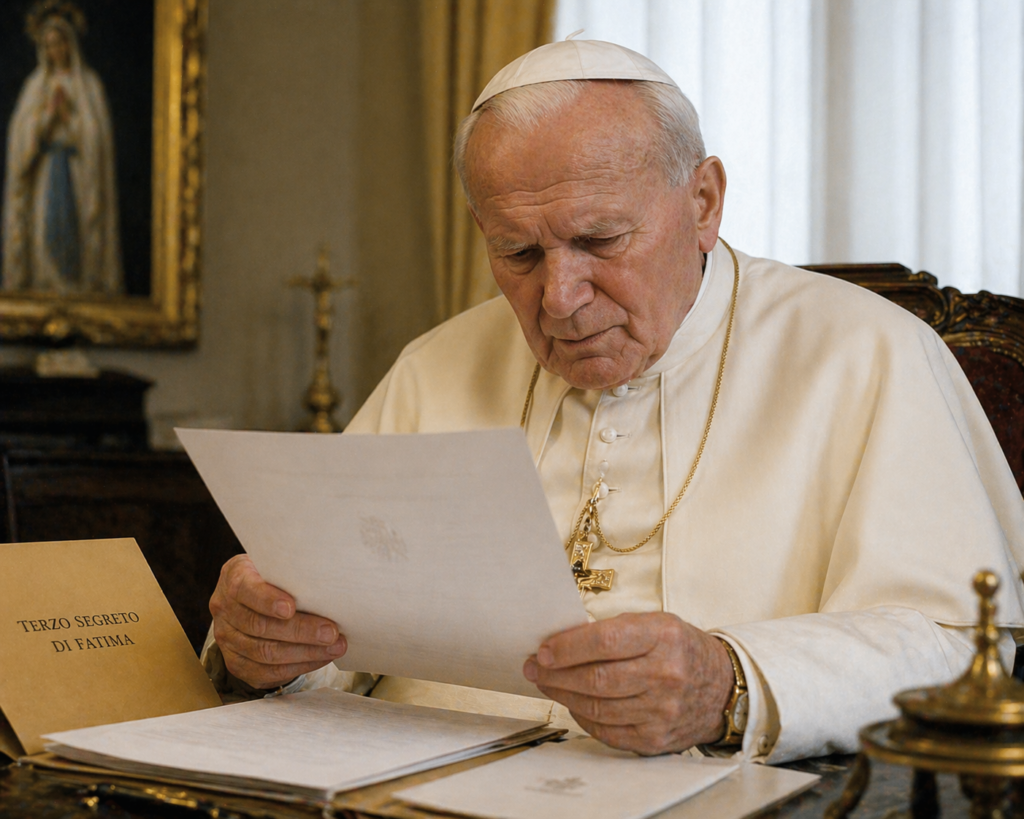
The Third Secret (The One Kept in the Vatican)
The third secret was:
Written down later by Lúcia dos Santos
Sealed and sent to the Vatican
Intended, according to instructions, to be revealed by 1960
For decades, it remained confidential, which led to widespread speculation.
What Was Eventually Revealed
In the year 2000, under Pope John Paul II, the Vatican released the text. It described a symbolic vision:
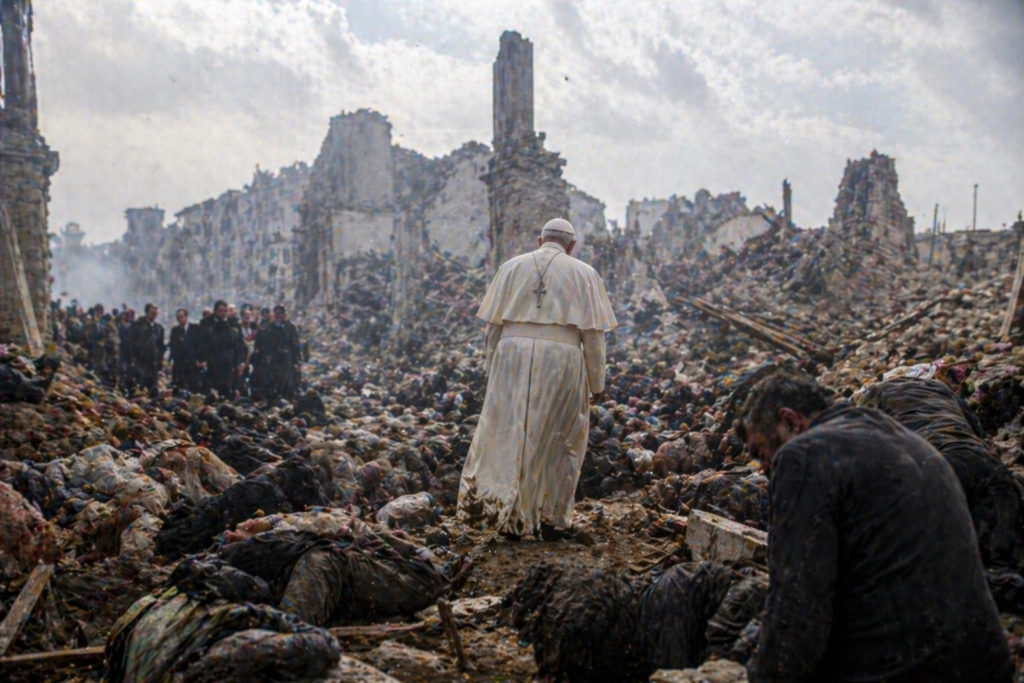
A “bishop dressed in white” (interpreted as the Pope)
A devastated world, with suffering and destruction
The Pope walking through a ruined city filled with corpses
His eventual martyrdom, along with bishops, priests, and laypeople
Angels collecting the blood of martyrs
How It Is Interpreted
The Church presented this vision as:
A prophetic and symbolic depiction of persecution
A reflection of the suffering of the Church in the 20th century
Closely connected to events like the attempted assassination of Pope John Paul II in 1981
Importantly, it was not presented as a fixed prediction of unavoidable events, but as a conditional warning—consistent with the broader message of Fatima.
The Controversy
Some have argued that:
The full secret was not revealed
Or that there may be an additional explanatory text
However, the Vatican has consistently maintained that:
The complete third secret was published in 2000
Nothing essential remains hidden
The Deeper Meaning
Taken together, the messages of Fatima are not primarily about secrets or predictions—they are about:
The reality of sin and its consequences
The need for repentance and prayer
The role of sacrifice and intercession
The seriousness of human freedom
Writers like Fr. Chad Ripperger often emphasize that Fatima is ultimately a call to spiritual responsibility—that what people do, personally and collectively, has real consequences both in this life and beyond.
The Feast of Our Lady of Fátima commemorates the moment in 1917 when the stillness of the fields of Fátima was pierced by a light not of this world, and three humble shepherd children—Lucia, Francisco, and Jacinta—were entrusted with a message that would echo far beyond their time. This observance is not merely a remembrance of an extraordinary event, but a living invitation—one that calls each generation to return to what is pure, ordered, and enduring. It honors the profound reality that heaven often speaks in quiet places, choosing simplicity over grandeur, and entrusting eternal truths to those who are willing to receive them with openness and humility.
At its core, this day reflects a call to refinement—of the soul, the mind, and the will. The message associated with Fátima centers on prayer, repentance, and a deliberate turning toward what is true. It challenges the distractions and disorder that can cloud judgment and weaken resolve, urging instead a life structured by discipline, clarity, and reverence. In this way, it becomes more than a historical commemoration; it becomes a framework for transformation, inviting individuals to examine their lives, correct what is misaligned, and pursue a higher standard of being.
Equally, the observance honors the response of the children themselves—their unwavering faith, their courage under pressure, and their willingness to carry a message far greater than themselves. Their example stands as a testament to the strength found in humility and the power of conviction rooted in truth. Through them, the meaning of this day is elevated, reminding us that even the smallest voices can bear messages of great significance when grounded in sincerity and purpose.
In its fullness, the Feast of Our Lady of Fátima stands as a point of return—a call to step away from noise and fragmentation, and to realign with what is lasting and life-giving. It invites a renewed commitment to intentional living, where actions are guided by clarity, strengthened by discipline, and elevated by a deep awareness of the unseen grace that continues to move quietly, yet powerfully, through the world.
Our Lady of Fatima Traditions to Make Your Own
Rosary Prayer
A central tradition of the day, the Rosary is prayed with intention and reverence, reflecting the call to return to disciplined, focused devotion. It serves as both meditation and alignment, guiding the mind and spirit toward clarity, repentance, and peace.
Candlelight Processions
Individuals and communities gather in quiet movement, carrying candles as symbols of truth and light. These processions emphasize stillness, unity, and reflection, often culminating in shared prayer and a renewed sense of purpose.
Pilgrimage
Journeys—whether to renowned shrines or local places of worship—represent an outward expression of an inward return. Pilgrimage embodies discipline, sacrifice, and the desire to step away from distraction in pursuit of spiritual renewal.
Fasting and Sacrifice
Many observe the day through intentional acts of restraint, offering up small sacrifices as a means of refining the will. These practices deepen awareness, strengthen resolve, and foster a spirit of humility and devotion.
Sacred Home Arrangement
Homes are prepared with care, often featuring candles, white linens, fresh flowers, and Marian imagery. This intentional environment reflects purity, order, and reverence, creating a space conducive to reflection and prayer.
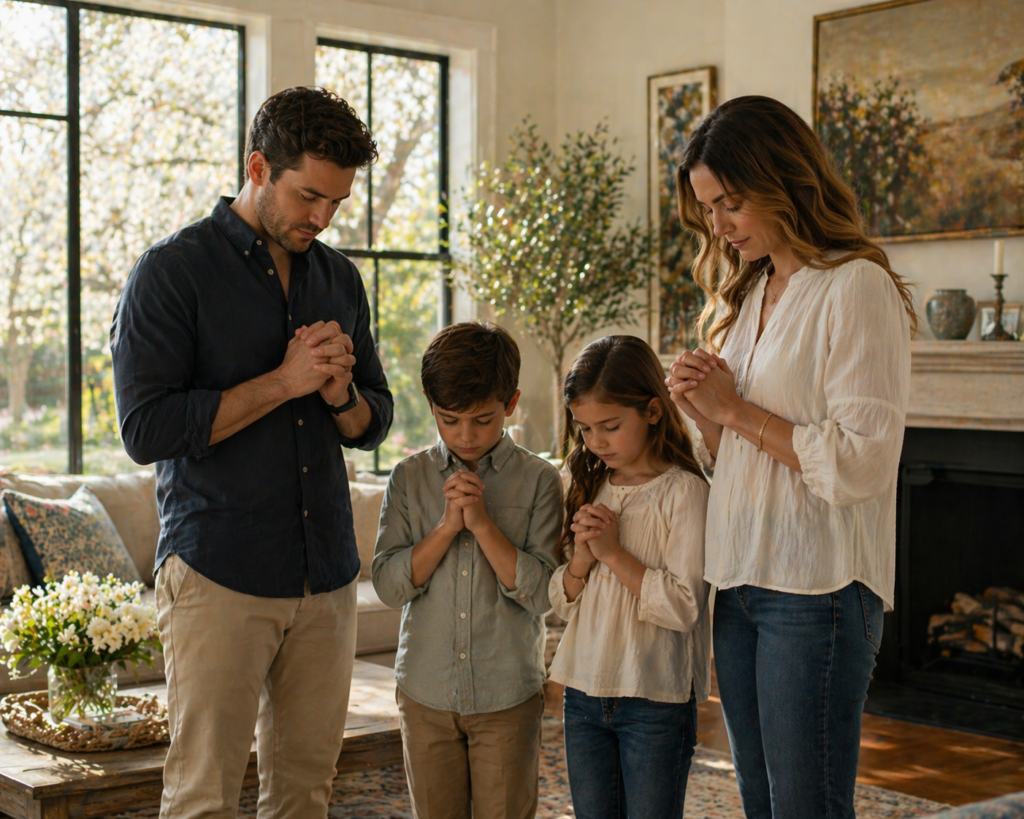
Family and Communal Prayer
Families and communities come together in unity, reading the account of the apparitions, praying collectively, and reflecting on how to embody the message in daily life. These gatherings reinforce shared values and a commitment to living with clarity and purpose.
Guide Our Hearts Away From Distraction & Disorder
O Blessed Lady of Fátima,
you who appeared in radiant light and spoke with gentle authority,
we turn to you with humility and trust.
Teach us to pray with sincerity,
to seek truth with clarity,
and to live with discipline and devotion in all that we do.
Guide our hearts away from distraction and disorder,
and lead us toward what is pure, steadfast, and enduring.
Help us to embrace repentance with courage,
to choose what is right with conviction,
and to carry peace into the world through our words and actions.
As you entrusted your message to humble souls,
make us willing vessels of what is good and true.
Strengthen our faith, refine our spirit,
and draw us ever closer to a life aligned with purpose and grace.
Remain with us, watch over us,
and lead us always toward the light that does not fade.
Amen.
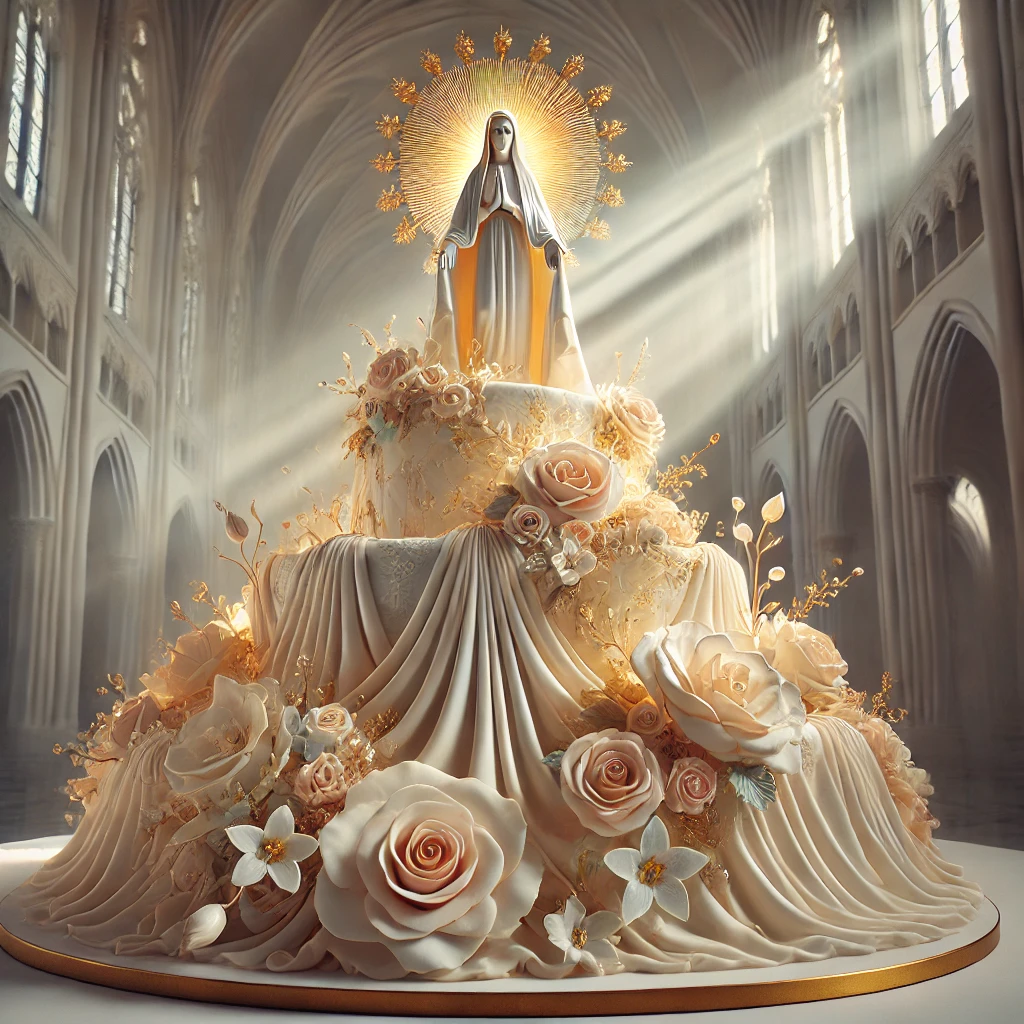
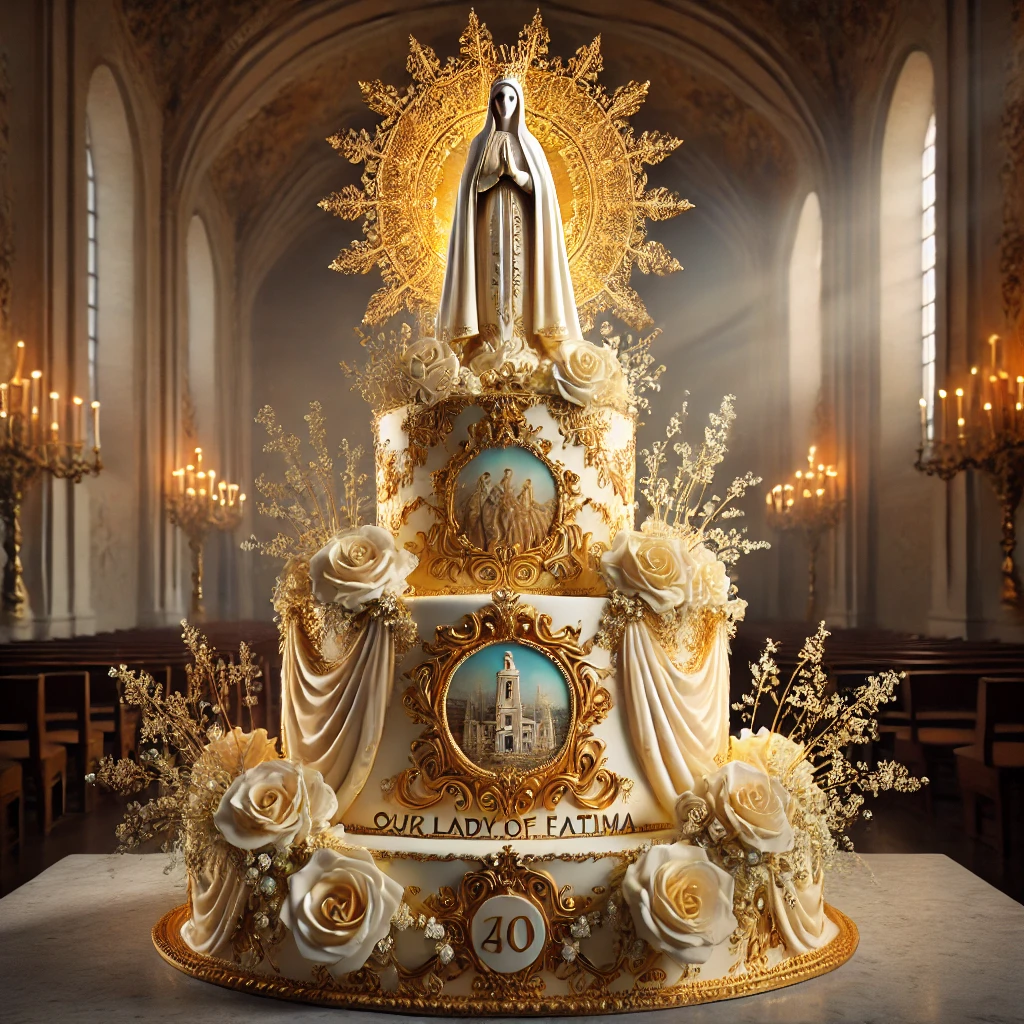
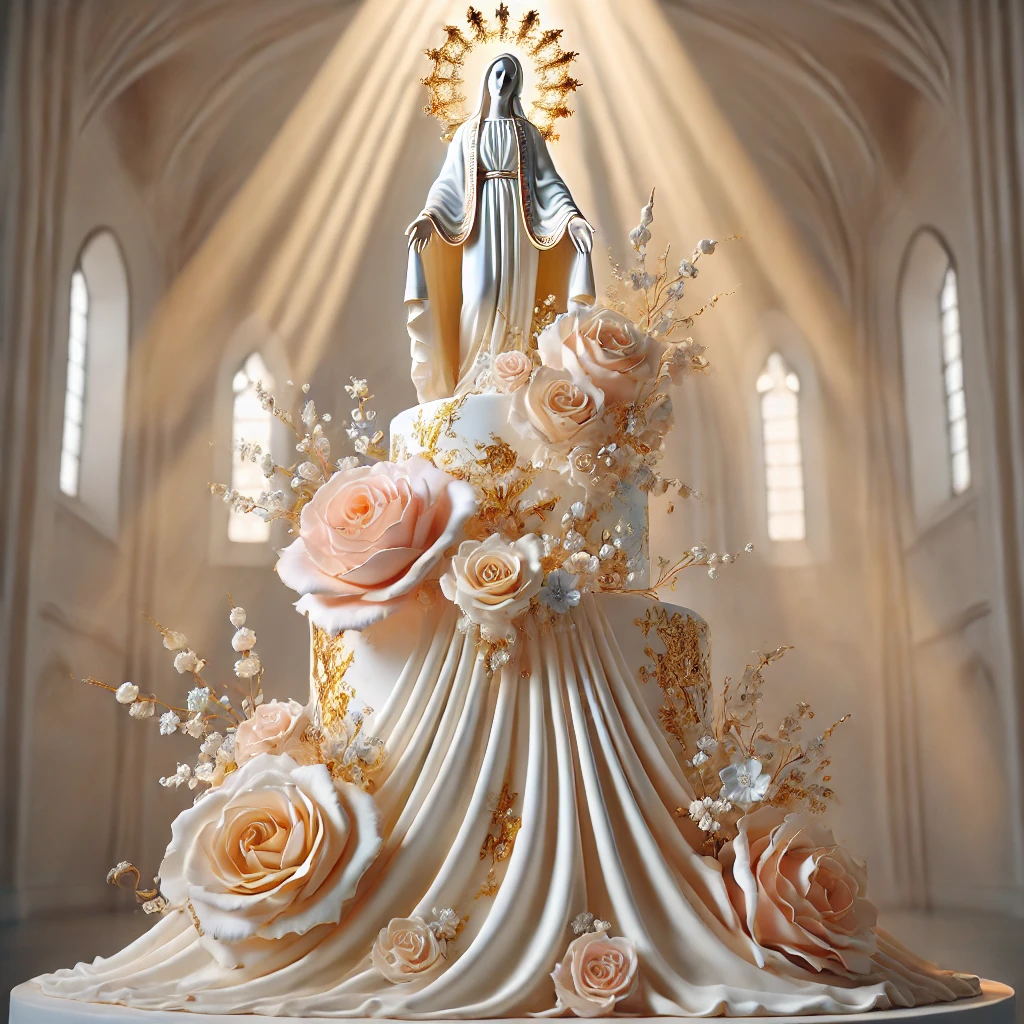
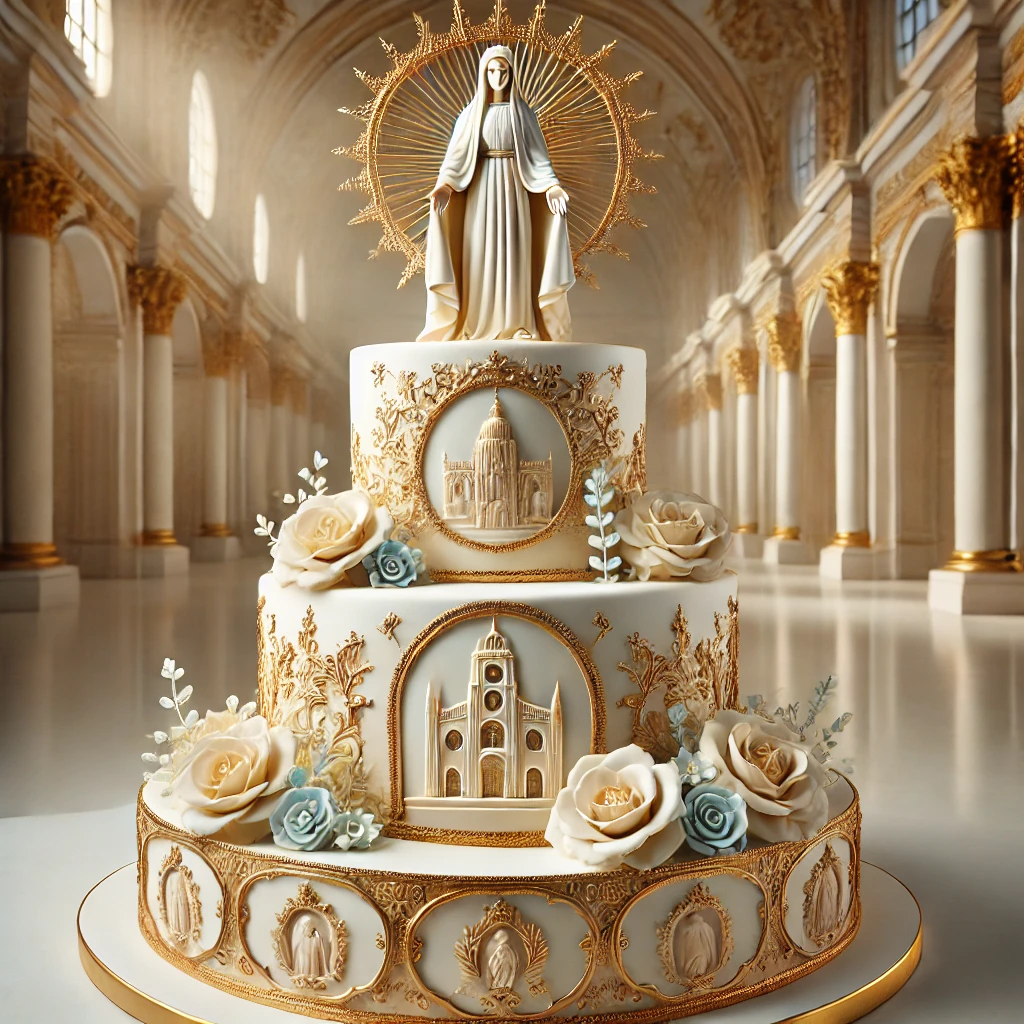
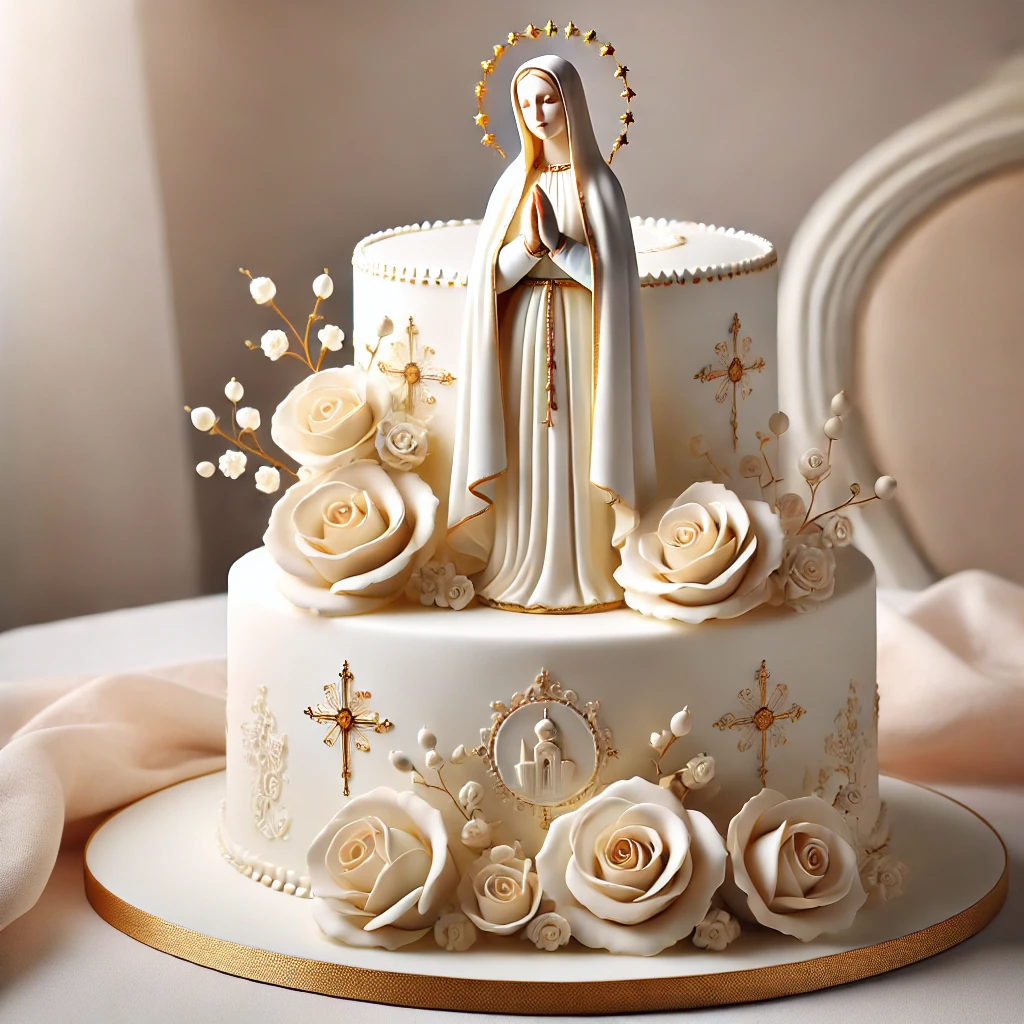
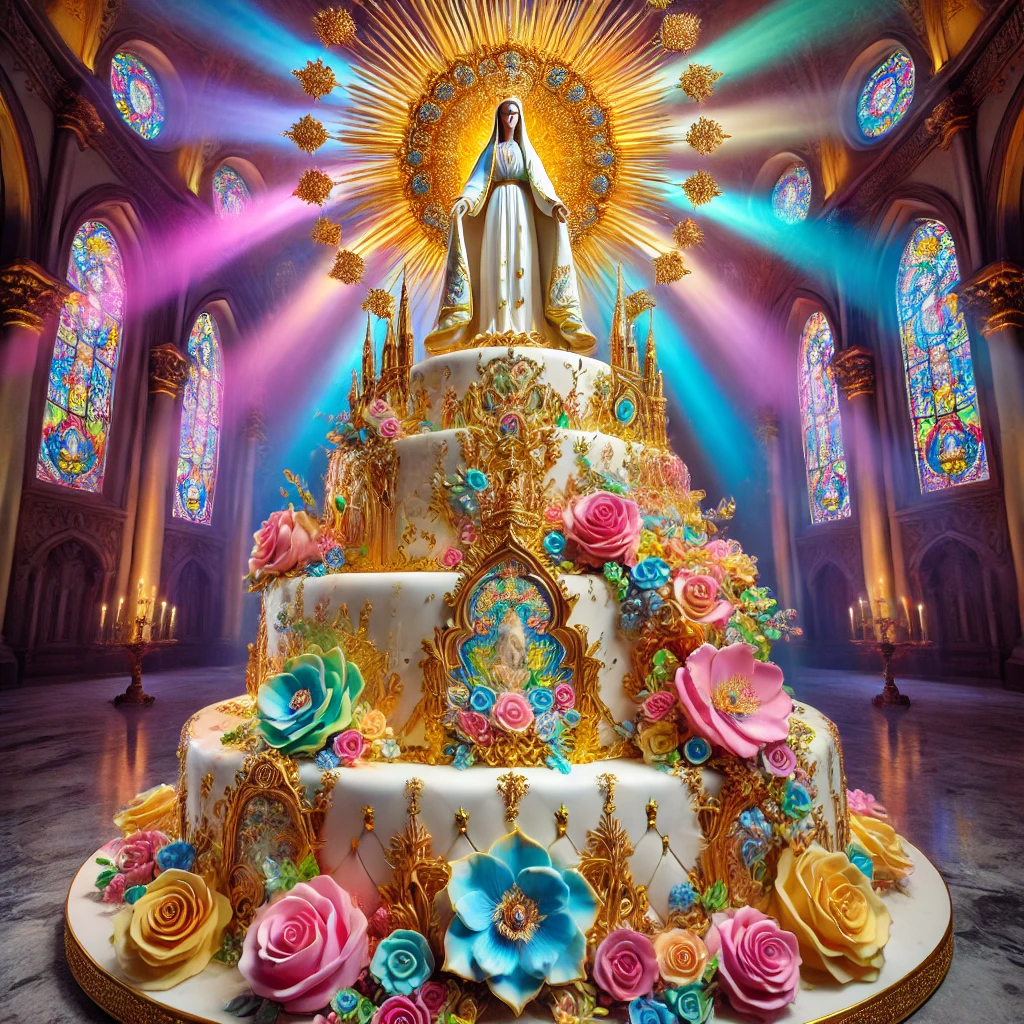
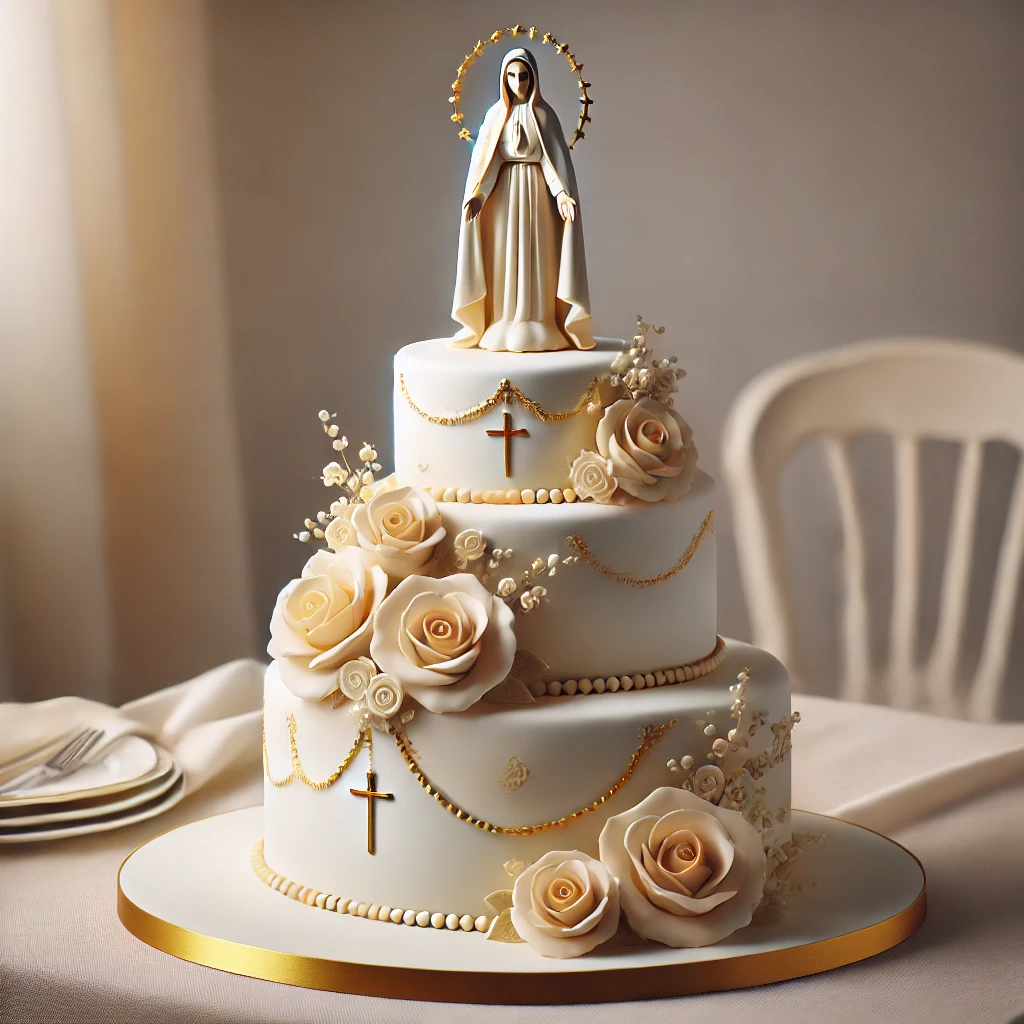
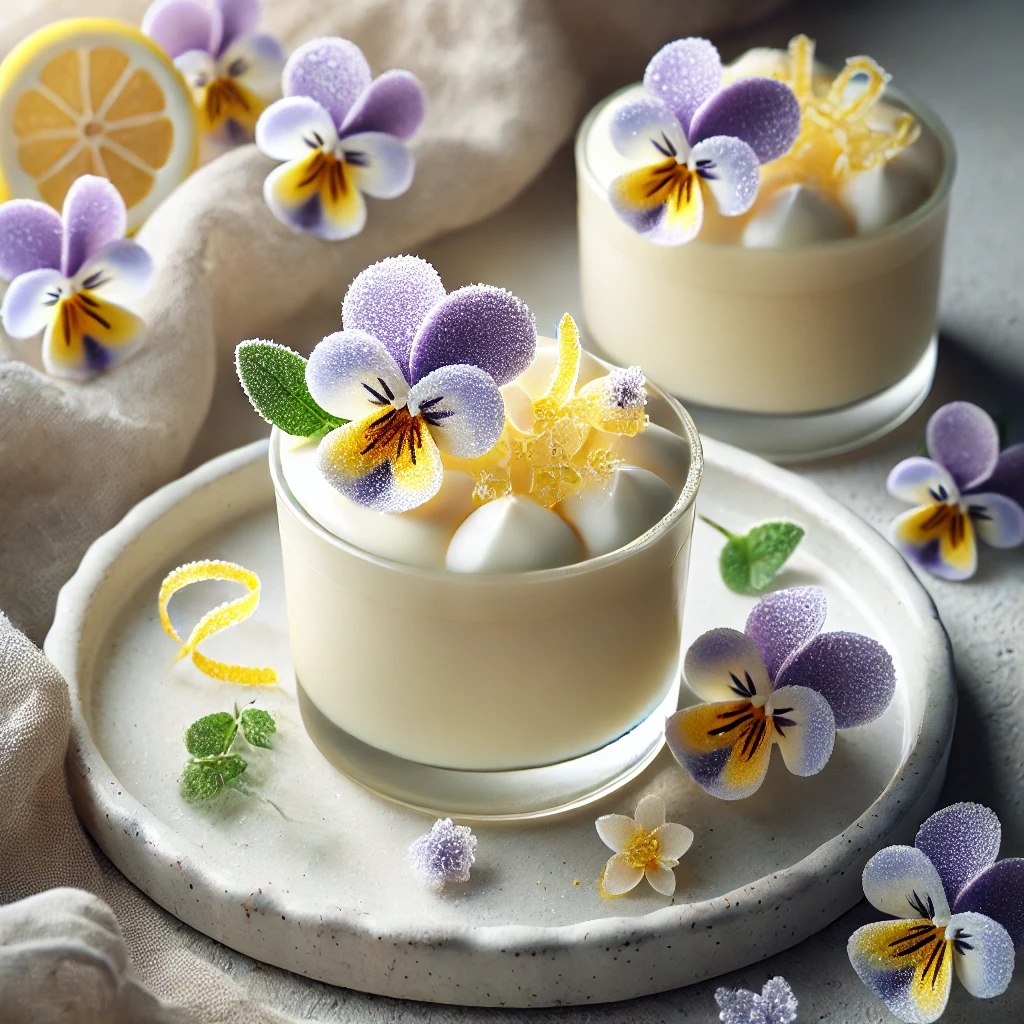
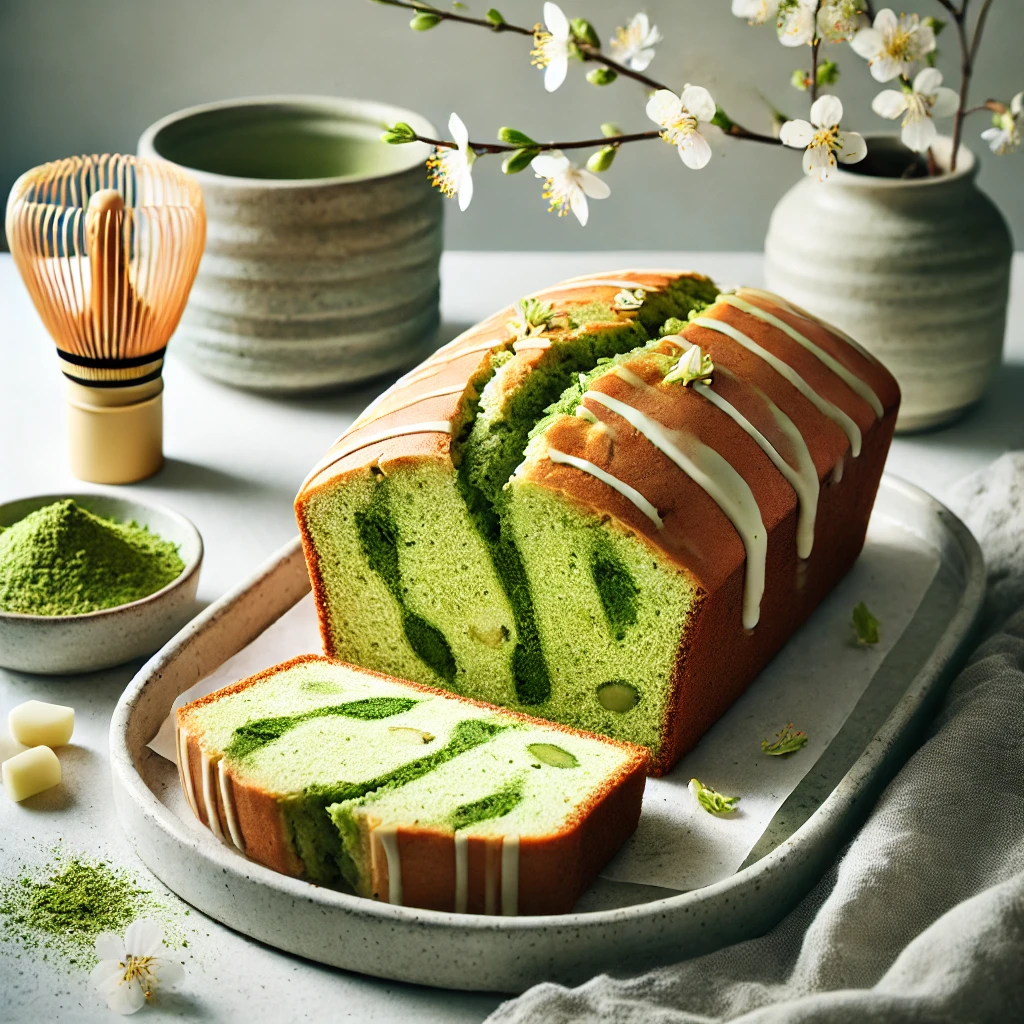
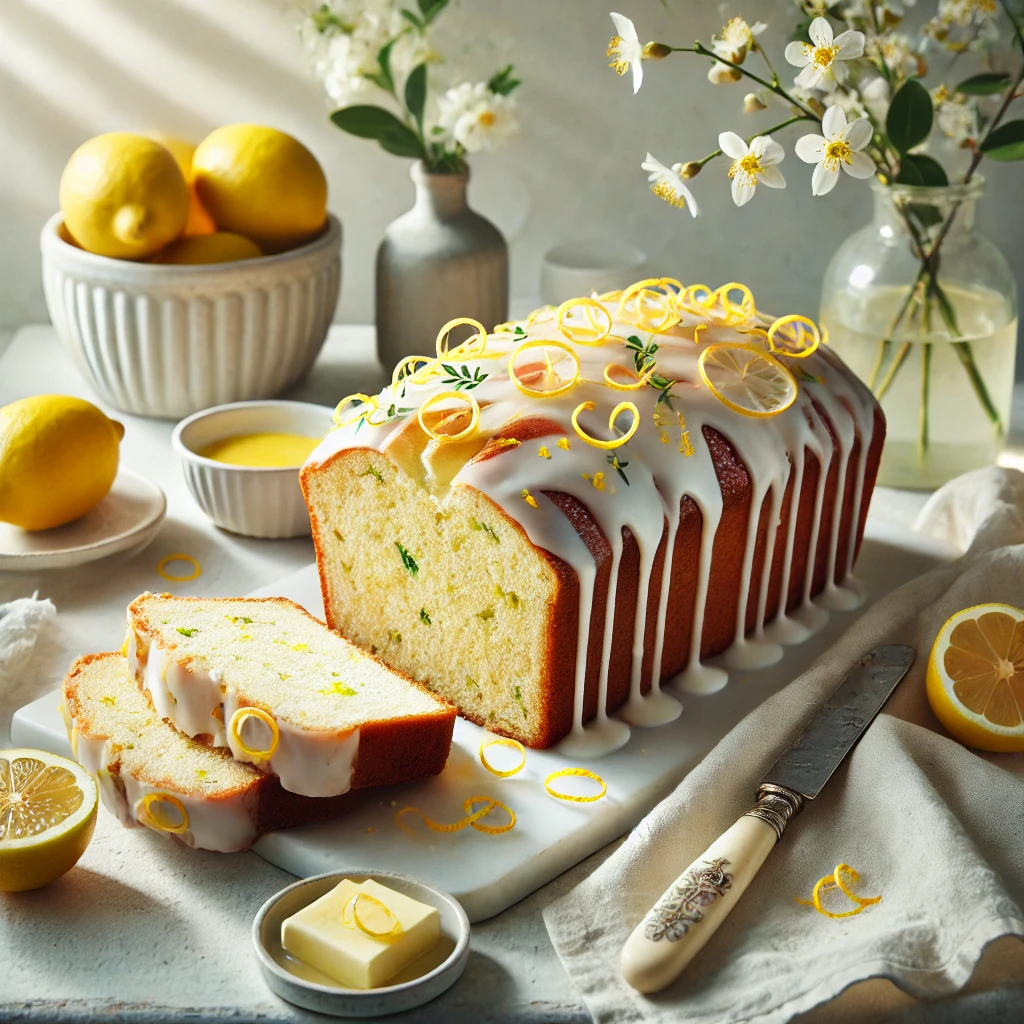
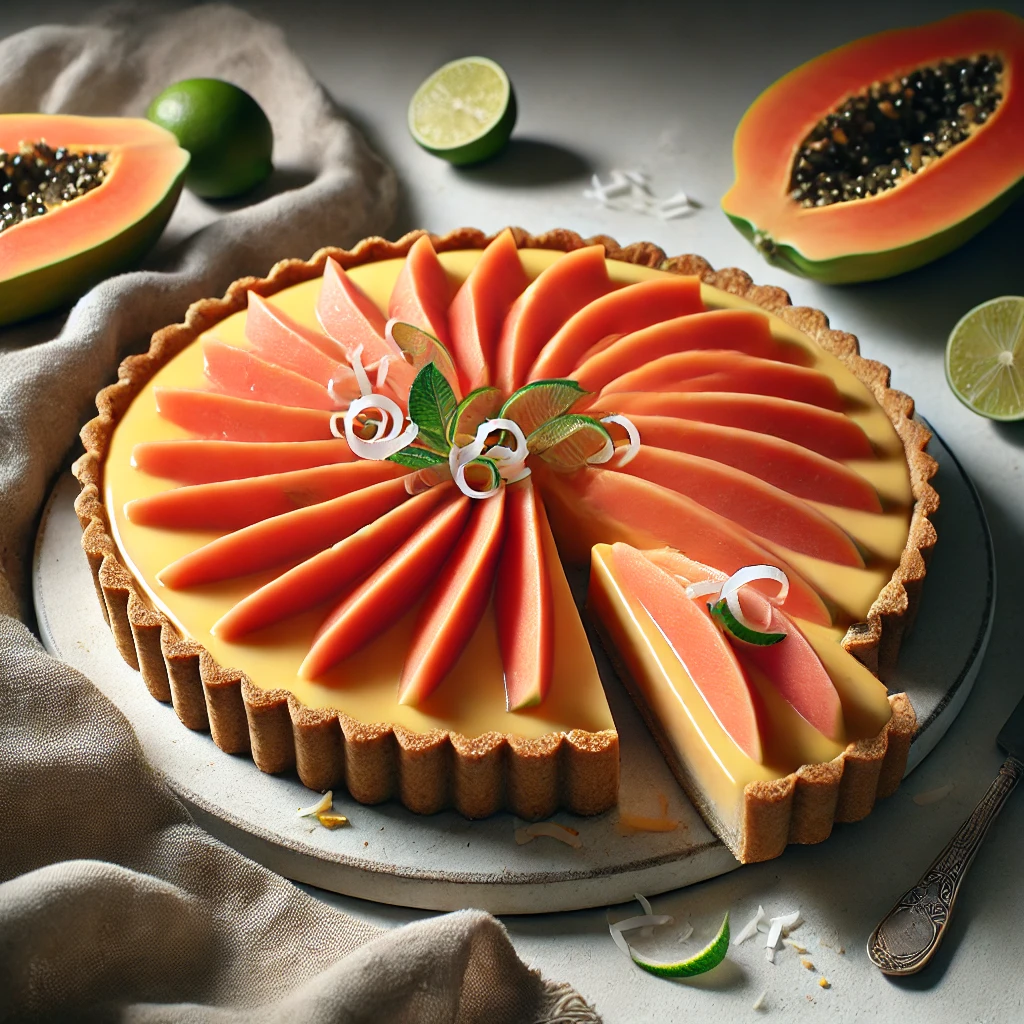
Our Lady of Fatima Cake & Atmosphere Ideas
Where style, memory, and celebration meet.
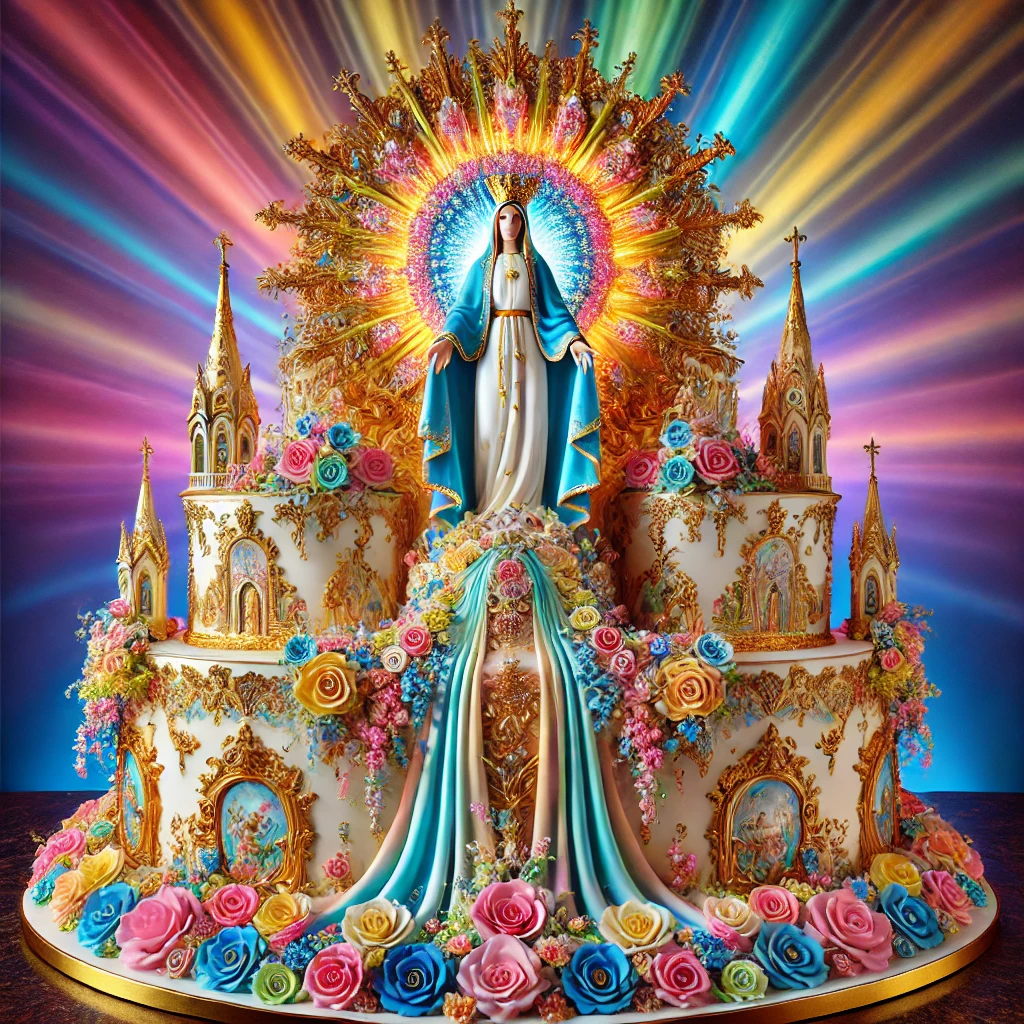
This section is meant to be more than Cake Decorating Ideas… it’s designed to spark inspiration and creativity, awaken tradition, and infuse your special occasions with style, identity, and atmosphere. A color palette becomes a theme. A design becomes a mood. Simple details—like sugared holly leaves or shimmering stars—can set the tone for a gathering and become part of cherished traditions and lasting memories melded with personal touch and love.