






















Our Lady of Fatima

with ORO VALENTIO

May 13th

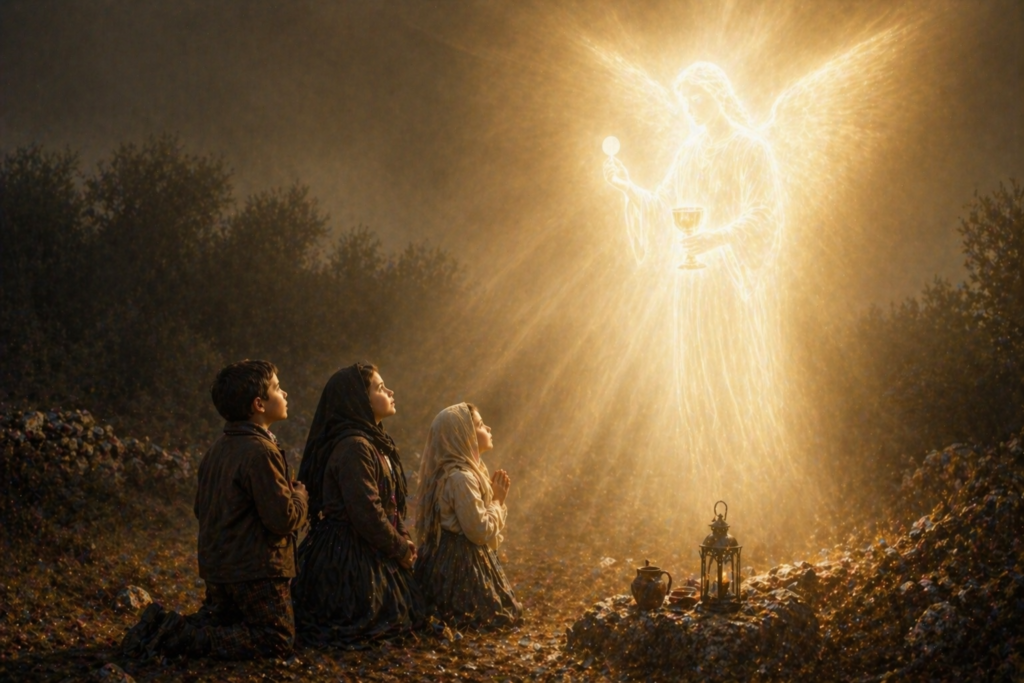
Before the apparitions of Our Lady of Fatima in 1917, the three shepherd children—Lúcia dos Santos, Francisco Marto, and Jacinta Marto—were prepared by a series of profound angelic visitations in 1916, in which a radiant figure identified as the Angel of Peace or Angel of Portugal, often associated with Saint Michael the Archangel, appeared to them not as something merely seen, but as a presence of light and reverence; he taught them prayers of deep adoration and reparation, urging them to offer sacrifices for sinners and to console God for the offenses committed against Him, and in one of the most striking moments, he appeared holding a Eucharistic Host and a Chalice, from which drops of blood fell, emphasizing the reality of the Eucharist and the need for reverence and reparation, even giving Communion to the children in a mystical way, thereby forming them spiritually and preparing them for the later apparitions, instilling in them a seriousness, humility, and devotion that would shape everything that followed.
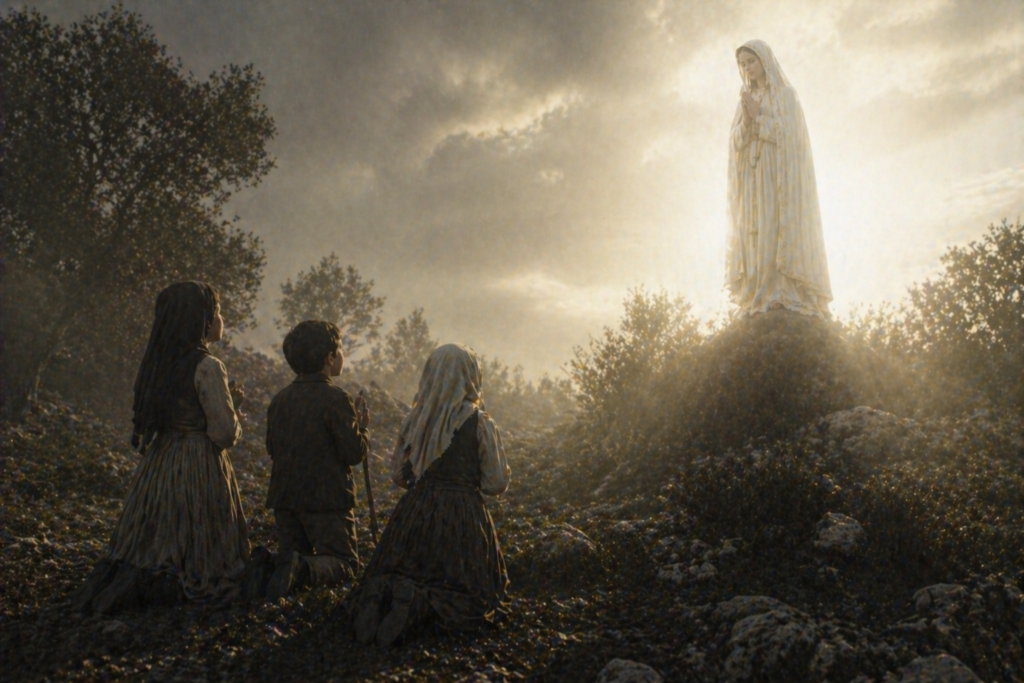
In the pastoral stillness of Fátima, Portugal, three young shepherd children—Lucia, Francisco, and Jacinta—encountered a moment that would transcend time and geography. While tending their flocks, they witnessed a radiant Lady clothed in light, whose presence carried both serenity and profound authority. She entrusted them with a message centered on prayer, repentance, and spiritual renewal, inviting not only the children, but all of humanity, into a deeper alignment with truth and devotion. Despite their youth, the children responded with remarkable courage and faith, faithfully sharing what they had seen and heard. The events at Fátima stand as a powerful reminder that clarity, conviction, and transformation are often revealed in simplicity—and that even the most humble individuals can become vessels for messages that inspire generations.
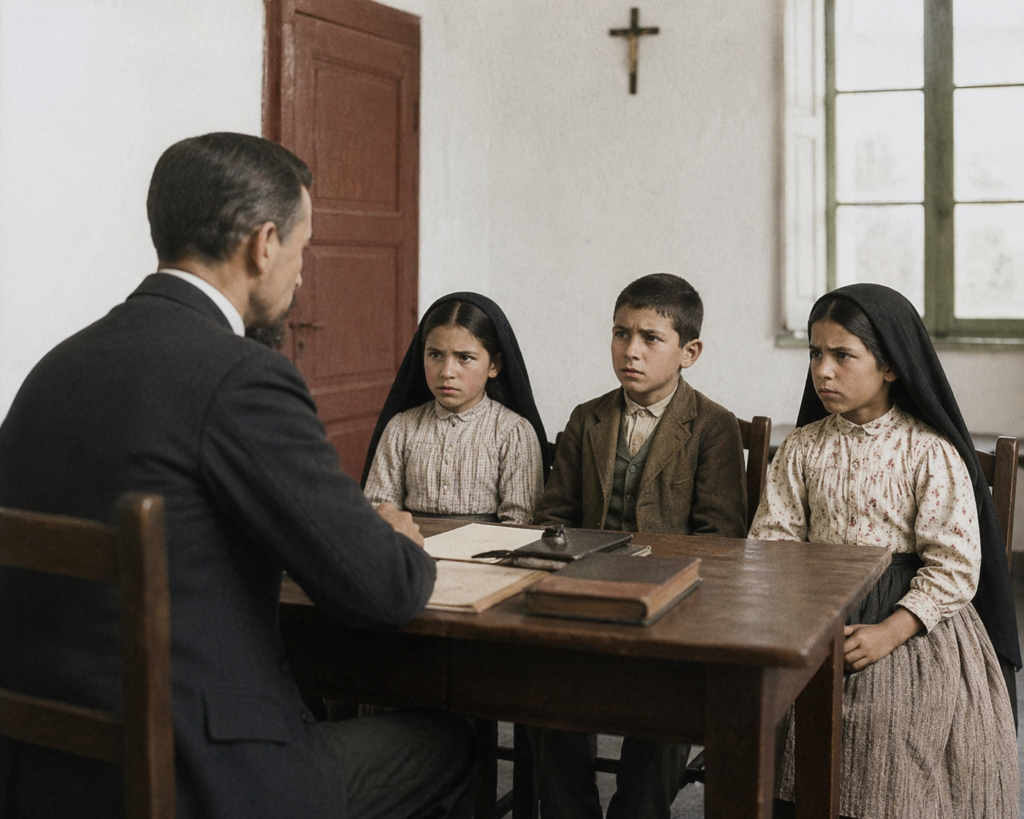
In August 1917, the three children—Lúcia dos Santos, Francisco Marto, and Jacinta Marto—were arrested by the local civil authority of Vila Nova de Ourém, Artur de Oliveira Santos, who opposed religion and sought to suppress the growing attention surrounding the apparitions of Our Lady of Fatima; the children were taken from their homes, imprisoned with adult detainees, and interrogated separately under intense pressure to reveal the so-called “secrets” or admit they had fabricated the events, and in an effort to break their resolve, the administrator threatened them with death, even suggesting they would be killed one by one—at times giving the impression that the others had already been executed, with one version of the threat involving being placed in boiling oil, which, though likely a psychological tactic, was believed to be real by the children; remarkably, despite fear and distress—especially for young Jacinta—they refused to betray what they believed had been entrusted to them, remaining steadfast even when told the others had already died, demonstrating a striking loyalty and willingness to suffer rather than deny the truth; this episode reveals that the message of Fatima was not received easily but met with resistance and real intimidation, and it underscores the credibility of the children’s testimony, as noted by figures like Fr. Gabriel Amorth, showing that under serious pressure and fear, they did not break.
Our Lady of Fatima stands as one of the most profound and sobering moments in modern spiritual history—a convergence of heaven’s mercy and truth offered to a world on the brink of upheaval. In 1917, in the rural countryside of Fátima, three young shepherd children—Lúcia dos Santos and her cousins Francisco Marto and Jacinta Marto—were chosen to receive a series of apparitions from the Blessed Virgin Mary. Appearing as a woman clothed in brilliant light, she did not come with spectacle for its own sake, but with a message of striking clarity: humanity must return to God, or face the consequences of drifting further into disorder. Her presence carried both maternal gentleness and unwavering authority, revealing that divine love is inseparable from divine truth.
Over the course of six apparitions from May to October, she called for daily prayer—especially the Rosary—alongside repentance, sacrifice, and devotion to her Immaculate Heart. These were not presented as abstract religious acts, but as precise remedies for a world increasingly marked by conflict, moral confusion, and spiritual blindness. The children themselves embodied this call with remarkable seriousness, embracing lives of humility, prayer, and quiet suffering well beyond their years. Their witness demonstrated that true strength is not loud or forceful, but disciplined, faithful, and anchored in something higher than circumstance.
The message entrusted to them also included what have come to be known as the “secrets of Fatima,” revelations that pointed toward both the spiritual realities of sin and the unfolding trials of the twentieth century. There was a sobering vision of the consequences of turning away from God, as well as prophetic warnings about war, persecution, and the suffering of the faithful. Yet even within these warnings, there remained a consistent thread of hope: that through conversion, prayer, and steadfast devotion, the course of history itself could be influenced. It was a reminder that the actions of individuals—when aligned with truth—carry weight far beyond what is seen.
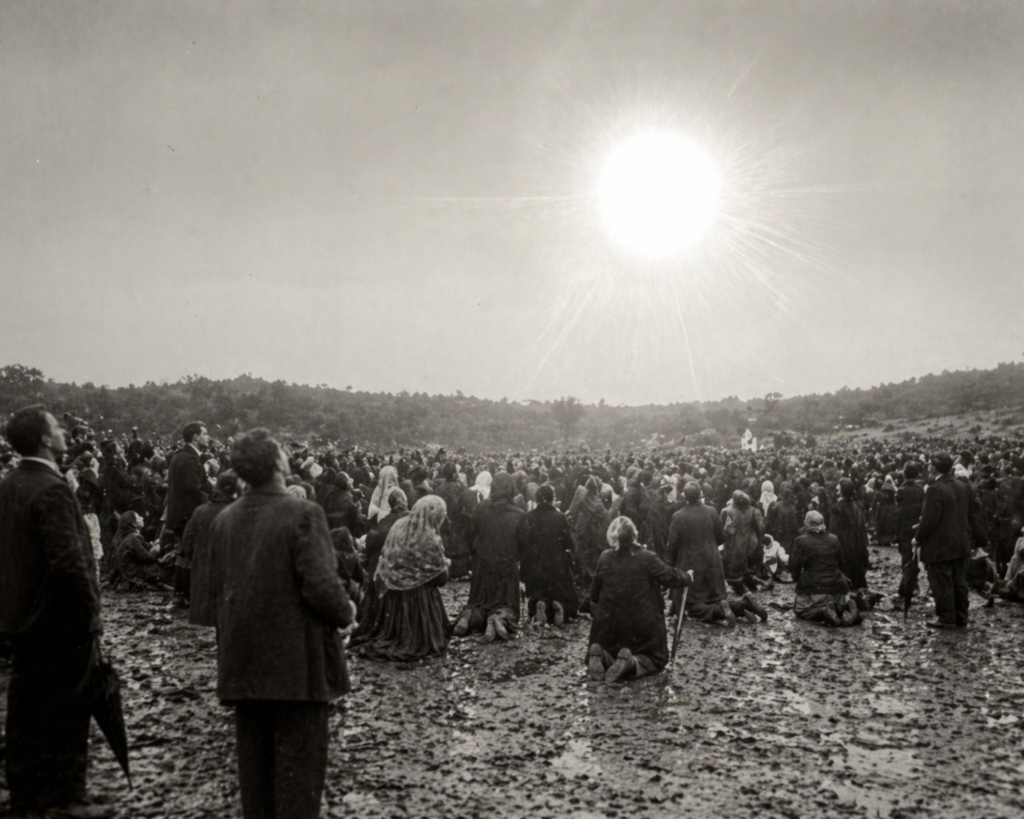
The events culminated on October 13, 1917, in what is widely known as the “Miracle of the Sun,” witnessed by tens of thousands. In that moment, the natural world itself seemed to respond to the divine, reinforcing that what had been revealed in silence and simplicity was not meant to remain hidden. Yet even this extraordinary sign pointed back to a deeper reality: that faith is not built on spectacle, but on the quiet, daily decision to live rightly.
At its heart, the message of Fatima is not confined to a single place or time. It is a call to refinement—to strip away excess, disorder, and complacency, and to return to a life of clarity, discipline, and reverence. It speaks to the interior life as much as the external world, emphasizing that true transformation begins within the soul. In a culture often driven by immediacy and distraction, Fatima stands as a counterpoint: a reminder that enduring strength is cultivated through prayer, sacrifice, and alignment with what is eternal.
Ultimately, it is a message of both warning and promise. It does not deny the reality of hardship or consequence, but it affirms that restoration is always possible. Through devotion, integrity, and a steadfast turning toward God, even the most fractured conditions can be reordered into harmony. The legacy of Fatima endures not merely as an event to be remembered, but as a standard to be lived—calling each generation to rise with purpose, to act with conviction, and to pursue a life shaped by truth, purity, and unwavering faith.

The Miracle of the Sun & the Secrets of Fatima

The Miracle of the Sun is one of the most well-known and widely attested public phenomena associated with the apparitions of Our Lady of Fatima in Fátima, Portugal, in 1917, culminating on October 13 when an estimated 50,000 to 70,000 people gathered at the Cova da Iria after three shepherd children—Lúcia dos Santos and her cousins Francisco Marto and Jacinta Marto—reported earlier apparitions of the Virgin Mary urging prayer, repentance, and conversion, and promising a public sign in October; despite heavy rain that left the crowd drenched and the ground muddy, witnesses around midday reported that the rain suddenly ceased, the clouds parted, and the sun appeared as a dull, silvery disk that could be looked at directly, after which it seemed to spin or “dance,” emit multicolored rays across the landscape, and move in a zigzag pattern or even plunge toward the earth, prompting many to cry out, fall to their knees, or pray aloud in fear and awe, some believing the end of the world was at hand, and when the phenomenon ended, many testified that their soaked clothing and the muddy ground had become unexpectedly dry, a detail often cited as especially striking; what makes the event particularly notable is the breadth of testimony, as both believers and skeptics reported unusual solar activity, secular newspapers documented the occurrence, and although accounts varied (including some people claiming miraculous healings both physically & spiritually), they consistently described similar core elements, leading to the general understanding that this was not a physical alteration of the sun itself but a localized supernatural sign permitted by God to confirm the message of the apparitions—namely prayer, especially the Rosary, repentance, and reparation for sin—and after investigation the Church declared the apparitions “worthy of belief” in 1930, with the Miracle of the Sun standing as their most dramatic public sign, continuing to draw attention not only for its extraordinary nature but for the deeper call it represents: to take seriously the realities of faith, moral responsibility, and the eternal destiny of the soul.
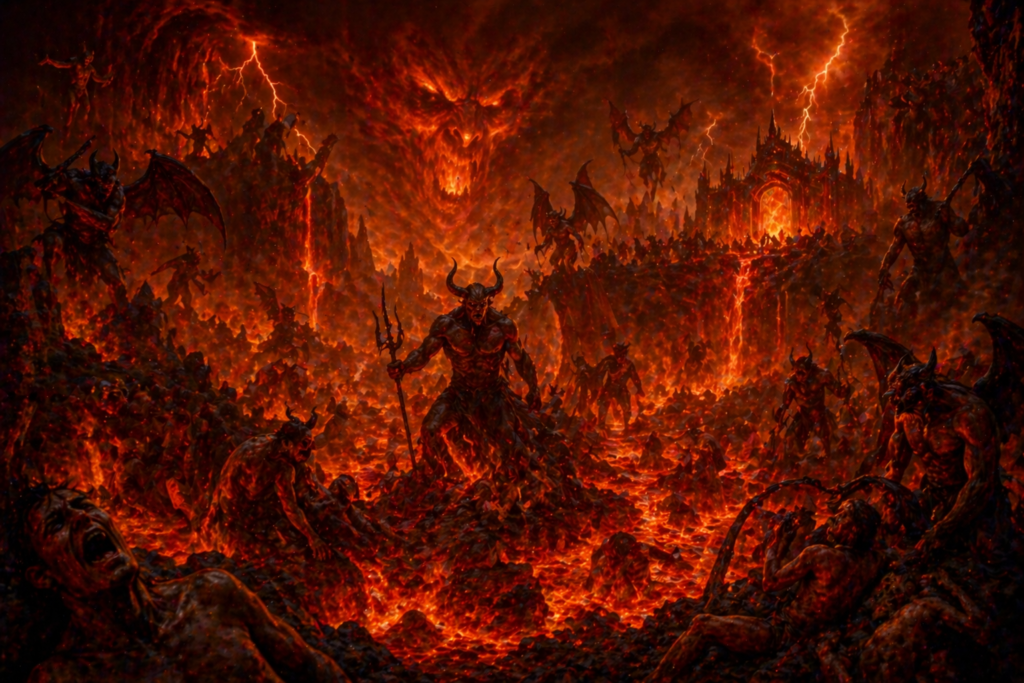
The first secret entrusted to the children at Fatima was a vision meant to shake the soul awake: they were shown hell not as an abstract idea, but as a terrifying reality—a vast abyss of fire where souls, having freely rejected God, endured a state of profound anguish and loss, their suffering not merely physical but deeply spiritual, marked by isolation, despair, and the absence of all that is good; the sight impressed upon the children a horror so intense that it revealed, with unmistakable clarity, the eternal consequences of sin and the gravity of human choice, yet even this was not given to condemn, but to warn and to call—because within the severity of the vision was a profound mercy, a plea to turn back while there is still time, to pray, to make reparation, and to live with purpose.
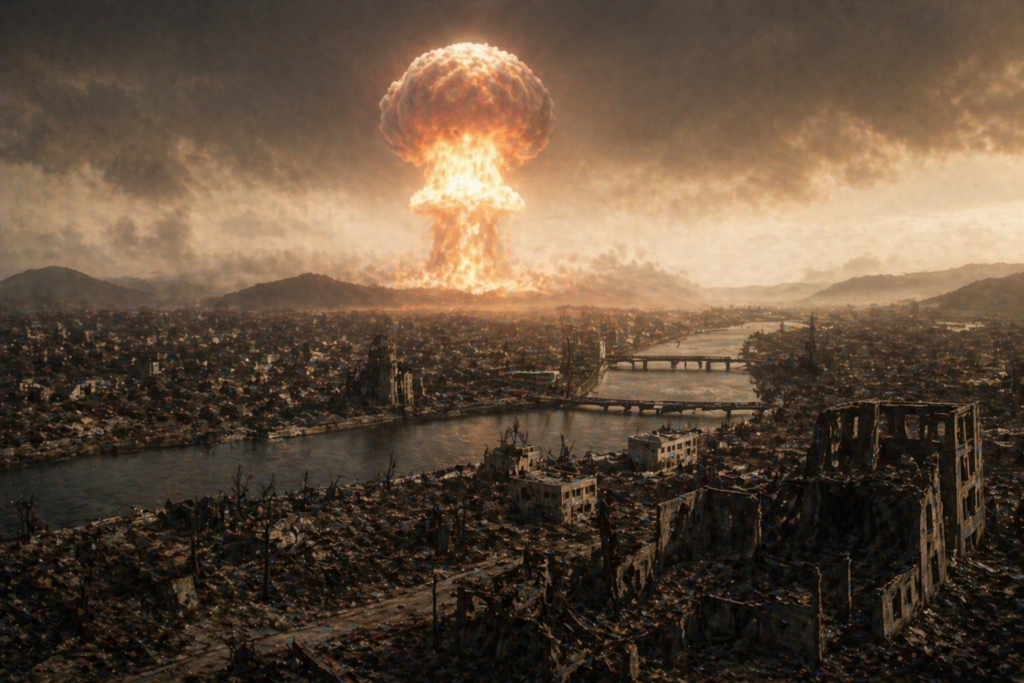
The second secret of Fatima unfolds as a sobering revelation that history itself is not random, but deeply tied to the moral and spiritual state of humanity: the children were told that the First World War would soon end, yet if mankind did not turn away from sin, a far worse conflict would arise under the reign of a future pope—fulfilled in what is understood as the devastation of World War II—accompanied by signs in the heavens, such as an unusual light, as a warning from God; at its heart was also a grave warning about Russia, which would “spread its errors throughout the world,” leading to widespread suffering, persecution of the faithful, and the rise of ideologies opposed to God, disrupting nations and souls alike; yet this message was not one of despair but of conditional prophecy, because intertwined with it was a call to specific acts of reparation and devotion—particularly prayer, sacrifice, and consecration—through which the course of events could be mitigated, showing that even on the scale of nations, human freedom and response to grace truly matter; ultimately, the second secret stands as a profound reminder that sin has consequences not only for individuals but for entire civilizations, and that repentance, prayer, and fidelity to God are not merely private acts, but forces capable of shaping the destiny of the world.
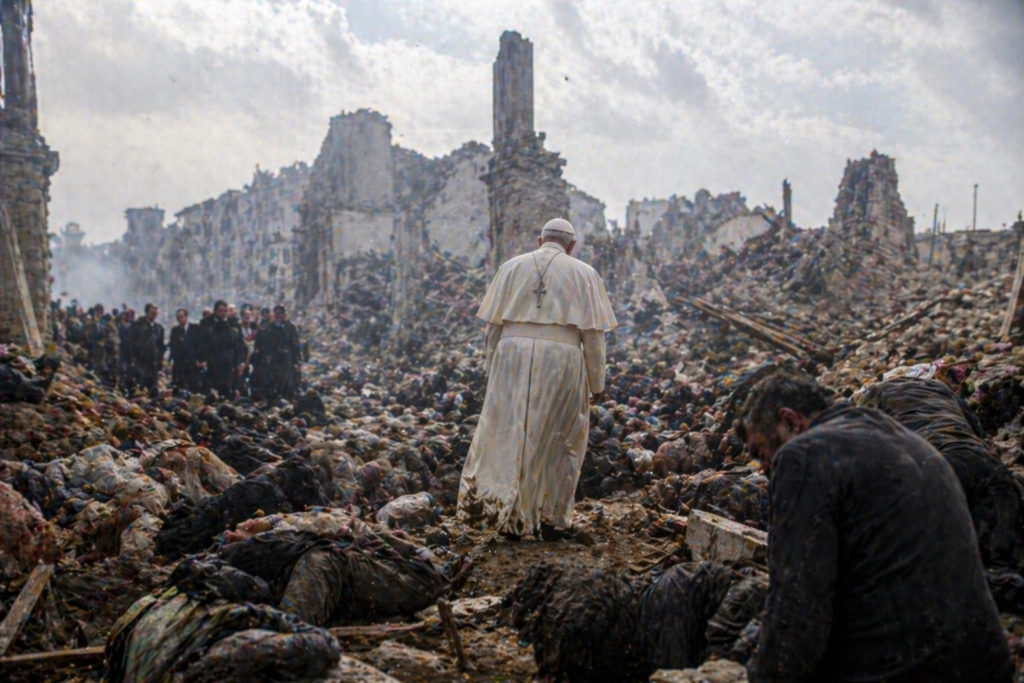
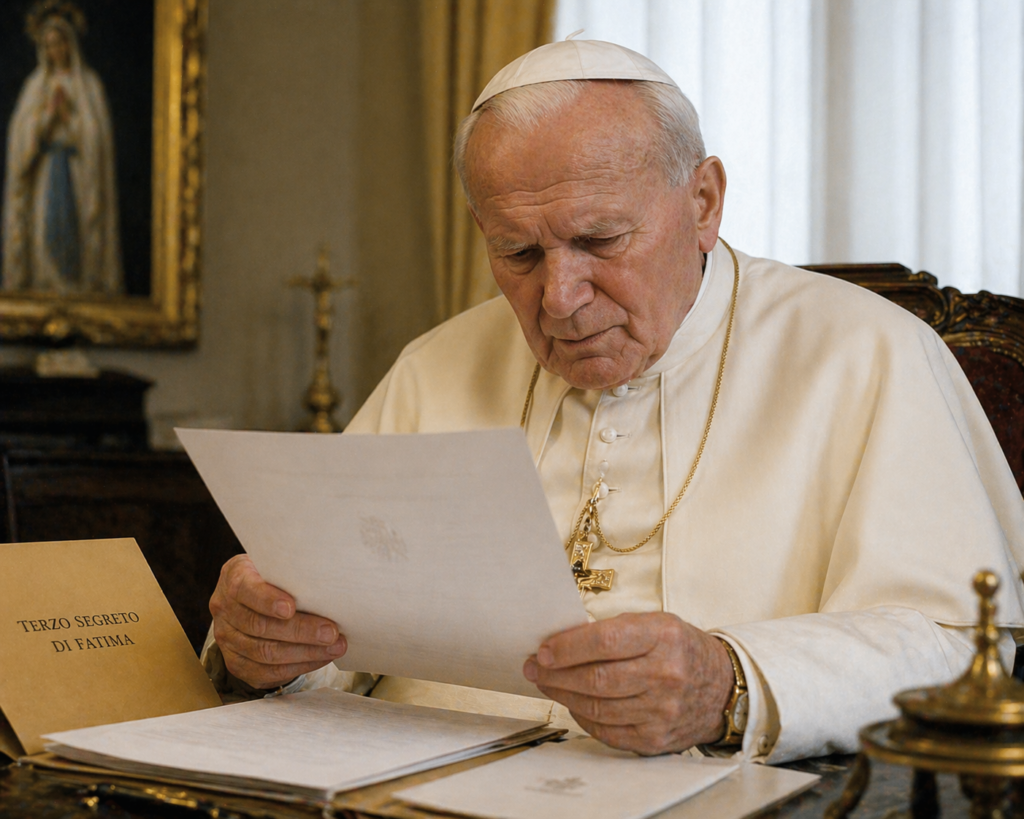
The third secret of Fatima, later written down by Lúcia dos Santos and preserved for decades before being revealed under Pope John Paul II, presents a stark and deeply symbolic vision: a “bishop dressed in white,” understood to represent the Pope, walks through a world devastated—cities in ruins, bodies of the dead scattered along his path—accompanied by bishops, priests, and faithful souls who, one by one, suffer persecution and martyrdom, until he himself is struck down beneath a cross, while angels gather the blood of the martyrs as an offering before God; this is not merely an image of past events, but a revelation of the cost of fidelity in a world that turns away from truth, showing that the Church will pass through suffering, contradiction, and apparent defeat, yet that none of this is meaningless, because every sacrifice, every act of faithfulness, is seen and gathered by God; the vision confronts us with a serious reality—that the rejection of God leads not only to personal loss but to widespread destruction, confusion, and suffering across the world—yet at the same time it is a call to conversion, because it reveals that history is not fixed, that suffering can be united to something redemptive, and that each person is being asked to choose: to live in complacency and drift with a world that forgets God, or to stand firm in faith, prayer, and sacrifice, knowing that even in the darkest moments, fidelity carries eternal weight and nothing offered to God is ever lost.
Here is the full text of the Third Secret of Fatima as officially published by the Vatican in 2000 under Pope John Paul II, written by Lúcia dos Santos: “After the two parts which I have already explained, at the left of Our Lady and a little above, we saw an Angel with a flaming sword in his left hand; flashing, it gave out flames that looked as though they would set the world on fire; but they died out in contact with the splendor that Our Lady radiated toward him from her right hand. Pointing to the earth with his right hand, the Angel cried out in a loud voice: ‘Penance, Penance, Penance!’ And we saw in an immense light that is God: ‘something similar to how people appear in a mirror when they pass in front of it’ a Bishop dressed in white ‘we had the impression that it was the Holy Father’. Other Bishops, Priests, men and women Religious going up a steep mountain, at the top of which there was a big Cross of rough-hewn trunks as of a cork-tree with the bark; before reaching there the Holy Father passed through a big city half in ruins and half trembling with halting step, afflicted with pain and sorrow, he prayed for the souls of the corpses he met on his way; having reached the top of the mountain, on his knees at the foot of the big Cross he was killed by a group of soldiers who fired bullets and arrows at him, and in the same way there died one after another the other Bishops, Priests, men and women Religious, and various lay people of different ranks and positions. Beneath the two arms of the Cross there were two Angels each with a crystal aspersorium in his hand, in which they gathered up the blood of the Martyrs and with it sprinkled the souls that were making their way to God.”
The messages associated with the apparitions of Our Lady of Fatima in Fátima in 1917 center on a unified call to prayer, repentance, and conversion, but they are often remembered in a more structured way as the “three secrets of Fatima,” entrusted to the children Lúcia dos Santos, Francisco Marto, and Jacinta Marto.

The Core Message
Across all the apparitions, the consistent themes were:
  • Daily prayer, especially the Rosary
  • Repentance and conversion of life
  • Reparation for sin
  • A warning about the consequences of sin for individuals and the world
This was not presented as abstract spirituality, but as something urgent and practical—something meant to change how people live.

The “Three Secrets” of Fatima
First Secret: A Vision of Hell
The children were shown a vivid vision of hell, emphasizing:
  • The reality of eternal separation from God
  • The seriousness of sin
  • The need for prayer and sacrifice for the salvation of souls
This part of the message strongly shaped the urgency of everything that followed.

Second Secret: War, Russia, and Devotion
The second part included:
  • A prediction that World War I would end, but that a worse war would come if people did not repent (understood as World War II)
  • A warning about the spread of errors (often interpreted as atheistic communism) from Russia
  • A request for specific acts of devotion and consecration
It emphasized that history itself is affected by moral and spiritual choices.

The Third Secret (The One Kept in the Vatican)
The third secret was:
  • Written down later by Lúcia dos Santos
  • Sealed and sent to the Vatican
  • Intended, according to instructions, to be revealed by 1960
For decades, it remained confidential, which led to widespread speculation.

What Was Eventually Revealed
In the year 2000, under Pope John Paul II, the Vatican released the text. It described a symbolic vision:
  • A “bishop dressed in white” (interpreted as the Pope)
  • A devastated world, with suffering and destruction
  • The Pope walking through a ruined city filled with corpses
  • His eventual martyrdom, along with bishops, priests, and laypeople
  • Angels collecting the blood of martyrs

How It Is Interpreted
The Church presented this vision as:
  • A prophetic and symbolic depiction of persecution
  • A reflection of the suffering of the Church in the 20th century
  • Closely connected to events like the attempted assassination of Pope John Paul II in 1981
Importantly, it was not presented as a fixed prediction of unavoidable events, but as a conditional warning—consistent with the broader message of Fatima.

The Controversy
Some have argued that:
  • The full secret was not revealed
  • Or that there may be an additional explanatory text
However, the Vatican has consistently maintained that:
  • The complete third secret was published in 2000
  • Nothing essential remains hidden

The Deeper Meaning
Taken together, the messages of Fatima are not primarily about secrets or predictions—they are about:
  • The reality of sin and its consequences
  • The need for repentance and prayer
  • The role of sacrifice and intercession
  • The seriousness of human freedom
Writers like Fr. Chad Ripperger often emphasize that Fatima is ultimately a call to spiritual responsibility—that what people do, personally and collectively, has real consequences both in this life and beyond.
The Feast of Our Lady of Fátima commemorates the moment in 1917 when the stillness of the fields of Fátima was pierced by a light not of this world, and three humble shepherd children—Lucia, Francisco, and Jacinta—were entrusted with a message that would echo far beyond their time. This observance is not merely a remembrance of an extraordinary event, but a living invitation—one that calls each generation to return to what is pure, ordered, and enduring. It honors the profound reality that heaven often speaks in quiet places, choosing simplicity over grandeur, and entrusting eternal truths to those who are willing to receive them with openness and humility.
At its core, this day reflects a call to refinement—of the soul, the mind, and the will. The message associated with Fátima centers on prayer, repentance, and a deliberate turning toward what is true. It challenges the distractions and disorder that can cloud judgment and weaken resolve, urging instead a life structured by discipline, clarity, and reverence. In this way, it becomes more than a historical commemoration; it becomes a framework for transformation, inviting individuals to examine their lives, correct what is misaligned, and pursue a higher standard of being.
Equally, the observance honors the response of the children themselves—their unwavering faith, their courage under pressure, and their willingness to carry a message far greater than themselves. Their example stands as a testament to the strength found in humility and the power of conviction rooted in truth. Through them, the meaning of this day is elevated, reminding us that even the smallest voices can bear messages of great significance when grounded in sincerity and purpose.
In its fullness, the Feast of Our Lady of Fátima stands as a point of return—a call to step away from noise and fragmentation, and to realign with what is lasting and life-giving. It invites a renewed commitment to intentional living, where actions are guided by clarity, strengthened by discipline, and elevated by a deep awareness of the unseen grace that continues to move quietly, yet powerfully, through the world.
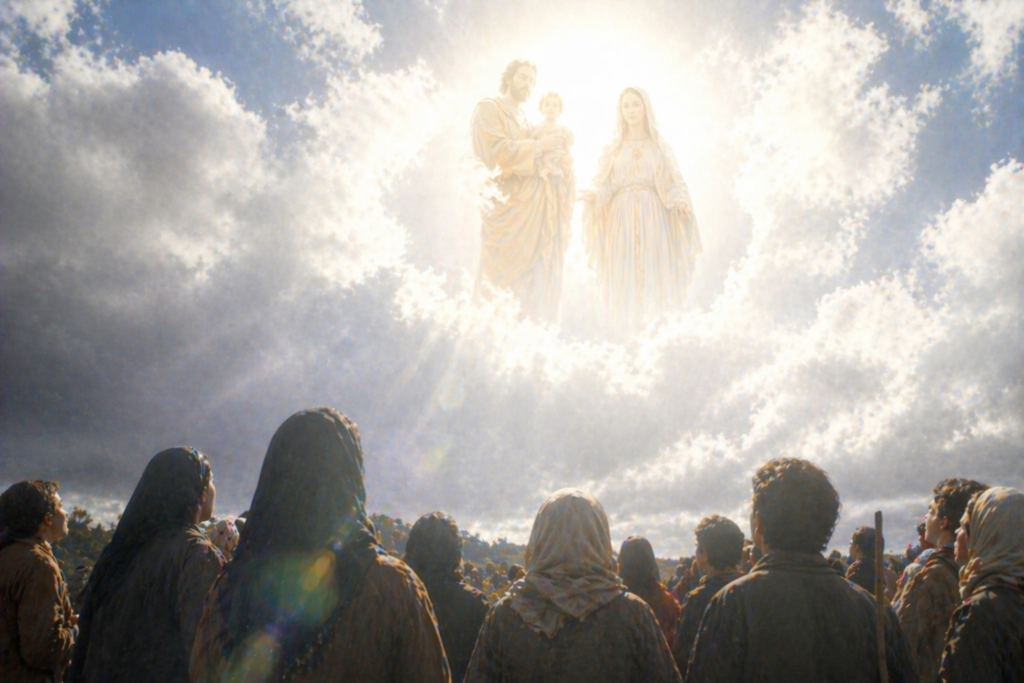
On October 13, 1917, during the final apparition of Our Lady of Fatima—the same day as the Miracle of the Sun—the children, especially Lúcia dos Santos, reported a series of extraordinary visions unfolding in the sky, among which they saw Saint Joseph holding the Child Jesus, both of whom appeared within the opened sun and raised their hands in blessing over the world, while Our Lady stood beside them in the form of Our Lady of the Rosary; this vision later expanded to include Christ as an adult and Our Lady in another aspect, often associated with sorrow and contemplation, revealing a fullness of divine presence and mission, and carrying profound meaning—St. Joseph as protector of the family and the Church, the Child Jesus as the source of divine authority and mercy, and the Holy Family as the model of order, obedience, and the sanctity of family life; coming at the climax of the apparitions, this moment serves not merely as a vision but as an answer to the earlier warnings of sin, suffering, and loss, pointing instead toward restoration through humility, obedience, and a return to God, where the world is renewed through Christ and rightly ordered relationships, a theme often emphasized by writers like Fr. Chad Ripperger, who highlight the crucial role of St. Joseph as a figure of strength, protection, and quiet fidelity in times of crisis, making this vision ultimately one of profound hope, showing that after all the warnings, heaven reveals not only what is wrong, but what restores everything.

Our Lady of Fatima Traditions to Make Your Own

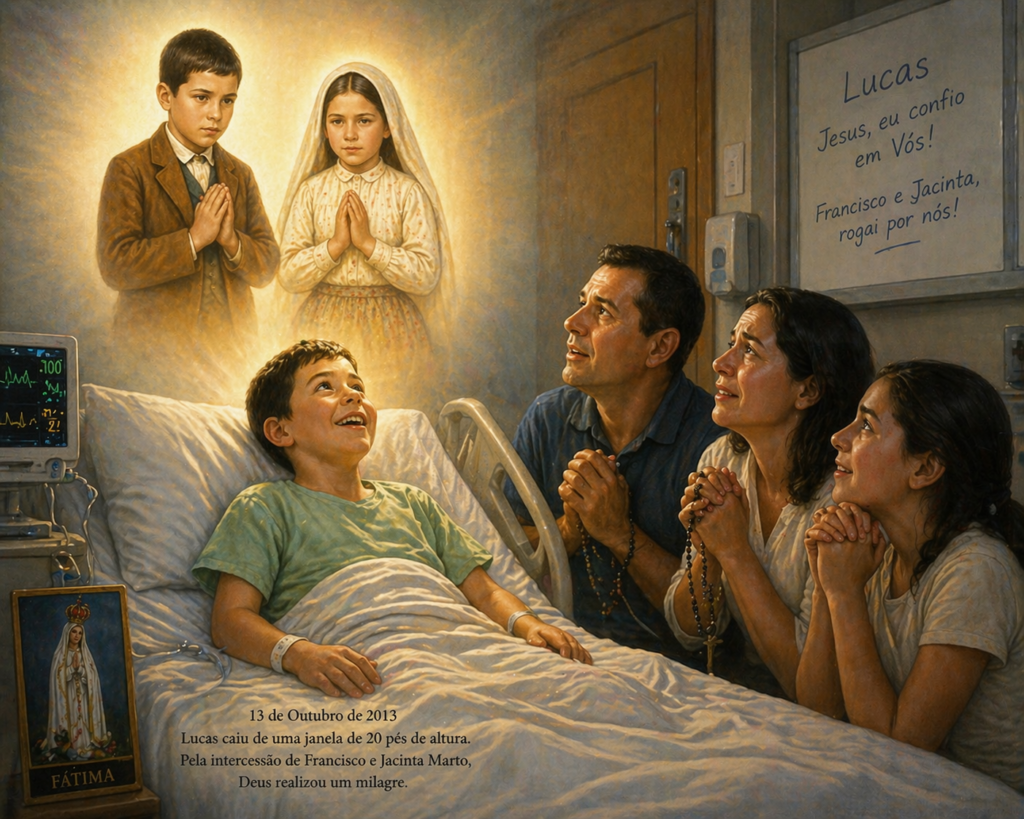
There have been several miracles attributed to the intercession of the Fatima children, especially Francisco Marto and Jacinta Marto, whose canonization required rigorously verified cases. The most well-known occurred in Brazil in 2013, when a young boy named Lucas fell approximately 20 feet from a window and suffered severe traumatic brain injuries that left him in critical condition with little hope of survival; after his family and community prayed specifically for the intercession of Francisco and Jacinta, he experienced a sudden, complete, and lasting recovery with no neurological damage, a healing that medical experts were unable to explain and which was formally approved by the Church under Pope Francis, leading to their canonization in 2017. An earlier miracle, recognized under Pope John Paul II in 2000 for their beatification, involved the sudden and complete healing of a woman in Portugal from a serious medical condition that likewise had no scientific explanation. While Lúcia dos Santos has not yet had a miracle formally approved for canonization, many private testimonies of favors attributed to her intercession exist. These miracles meet strict criteria—they must be rapid, complete, lasting, and medically inexplicable—demonstrating the Church’s careful scrutiny and highlighting that, despite their young age and simple lives, the spiritual influence of these children continues to be affirmed through extraordinary and verifiable healings.
Rosary Prayer
A central tradition of the day, the Rosary is prayed with intention and reverence, reflecting the call to return to disciplined, focused devotion. It serves as both meditation and alignment, guiding the mind and spirit toward clarity, repentance, and peace.
Candlelight Processions
Individuals and communities gather in quiet movement, carrying candles as symbols of truth and light. These processions emphasize stillness, unity, and reflection, often culminating in shared prayer and a renewed sense of purpose.
Pilgrimage
Journeys—whether to renowned shrines or local places of worship—represent an outward expression of an inward return. Pilgrimage embodies discipline, sacrifice, and the desire to step away from distraction in pursuit of spiritual renewal.
Fasting and Sacrifice
Many observe the day through intentional acts of restraint, offering up small sacrifices as a means of refining the will. These practices deepen awareness, strengthen resolve, and foster a spirit of humility and devotion.
Sacred Home Arrangement
Homes are prepared with care, often featuring candles, white linens, fresh flowers, and Marian imagery. This intentional environment reflects purity, order, and reverence, creating a space conducive to reflection and prayer.
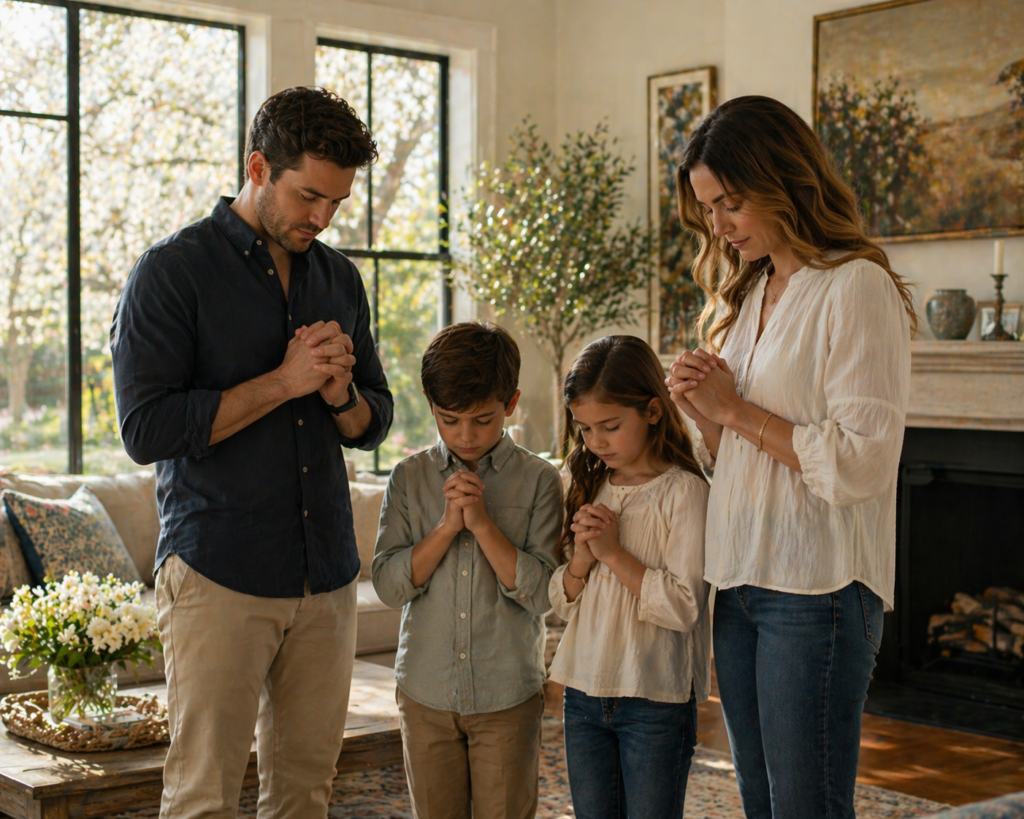
Family and Communal Prayer
Families and communities come together in unity, reading the account of the apparitions, praying collectively, and reflecting on how to embody the message in daily life. These gatherings reinforce shared values and a commitment to living with clarity and purpose.

Guide Our Hearts Away From Distraction & Disorder

O Blessed Lady of Fátima,
you who appeared in radiant light and spoke with gentle authority,
we turn to you with humility and trust.
Teach us to pray with sincerity,
to seek truth with clarity,
and to live with discipline and devotion in all that we do.
Guide our hearts away from distraction and disorder,
and lead us toward what is pure, steadfast, and enduring.
Help us to embrace repentance with courage,
to choose what is right with conviction,
and to carry peace into the world through our words and actions.
As you entrusted your message to humble souls,
make us willing vessels of what is good and true.
Strengthen our faith, refine our spirit,
and draw us ever closer to a life aligned with purpose and grace.
Remain with us, watch over us,
and lead us always toward the light that does not fade.
Amen.
Families pray together as a way of establishing unity at the deepest level—aligning not only their words, but their hearts, intentions, and direction. In a world that often pulls individuals in different directions, shared prayer becomes a point of return, grounding the family in what is steady, true, and life-giving. It creates a space where distractions fall away and what truly matters is brought back into focus. Prayer within the family also strengthens the foundation of the home. It cultivates humility, gratitude, and discipline, shaping both character and relationships. Through it, values are not only taught but lived—passed quietly from one generation to the next through consistent, intentional practice. Children learn not simply by instruction, but by witnessing devotion in action, forming a sense of identity rooted in reverence and purpose. At its core, family prayer is an act of trust and offering. It invites guidance, expresses dependence on something greater, and reinforces the understanding that the home is not merely a physical space, but a place of formation. In this shared rhythm, families grow not only closer to one another, but stronger in clarity, conviction, and the quiet strength that comes from living in alignment with what endures.

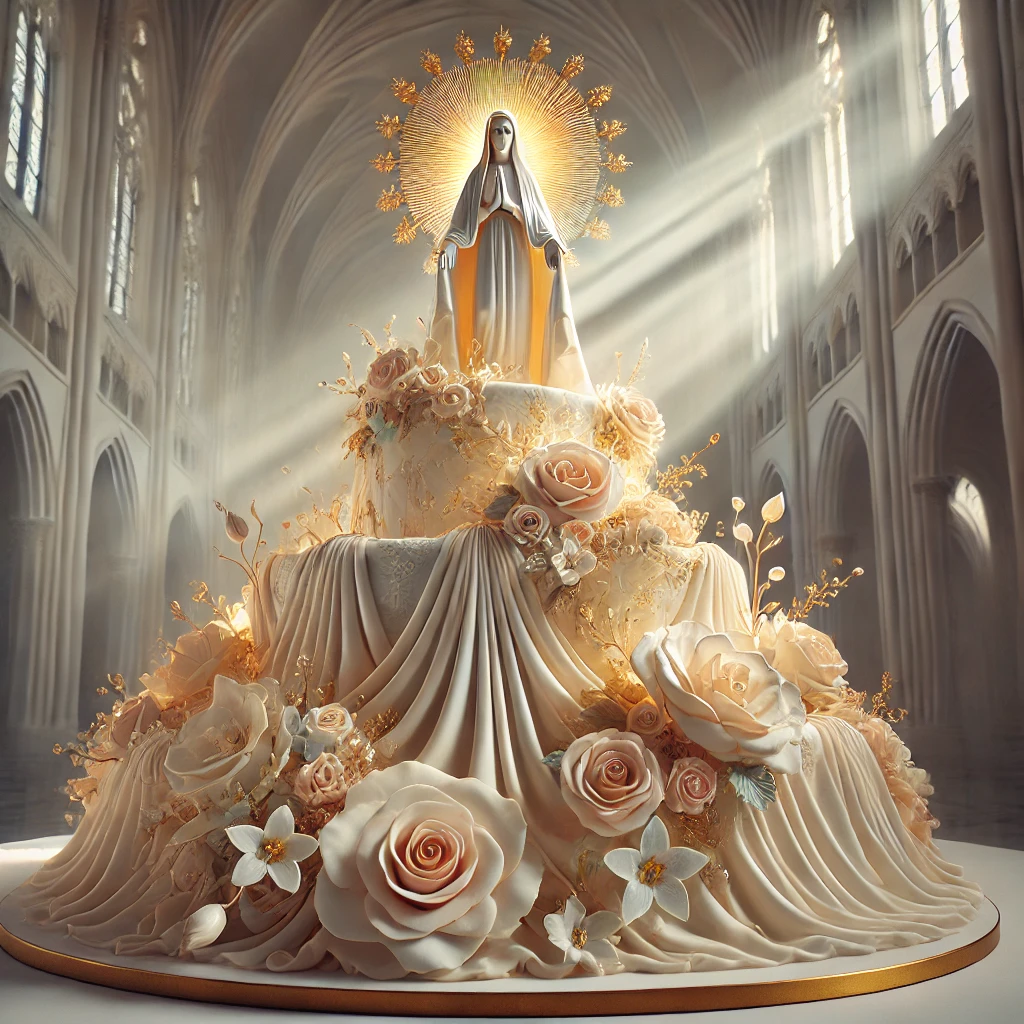
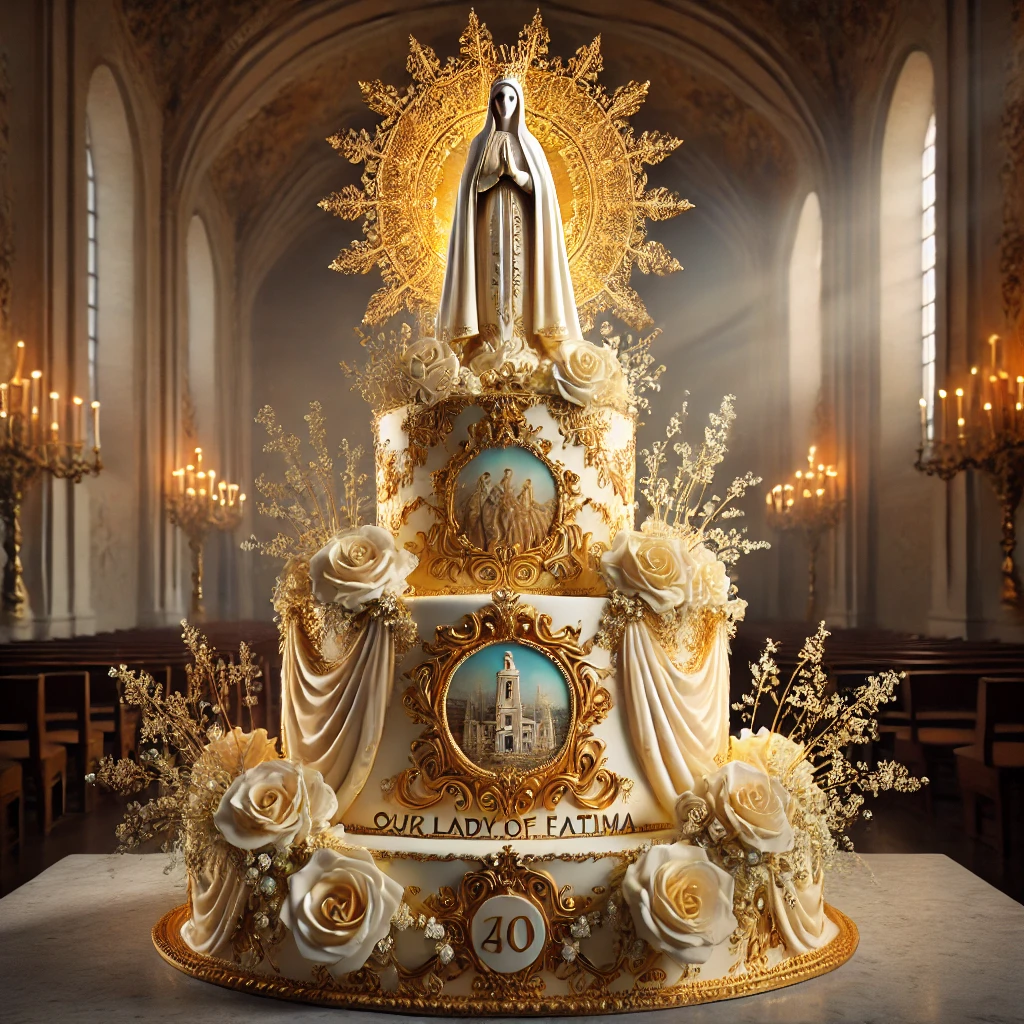
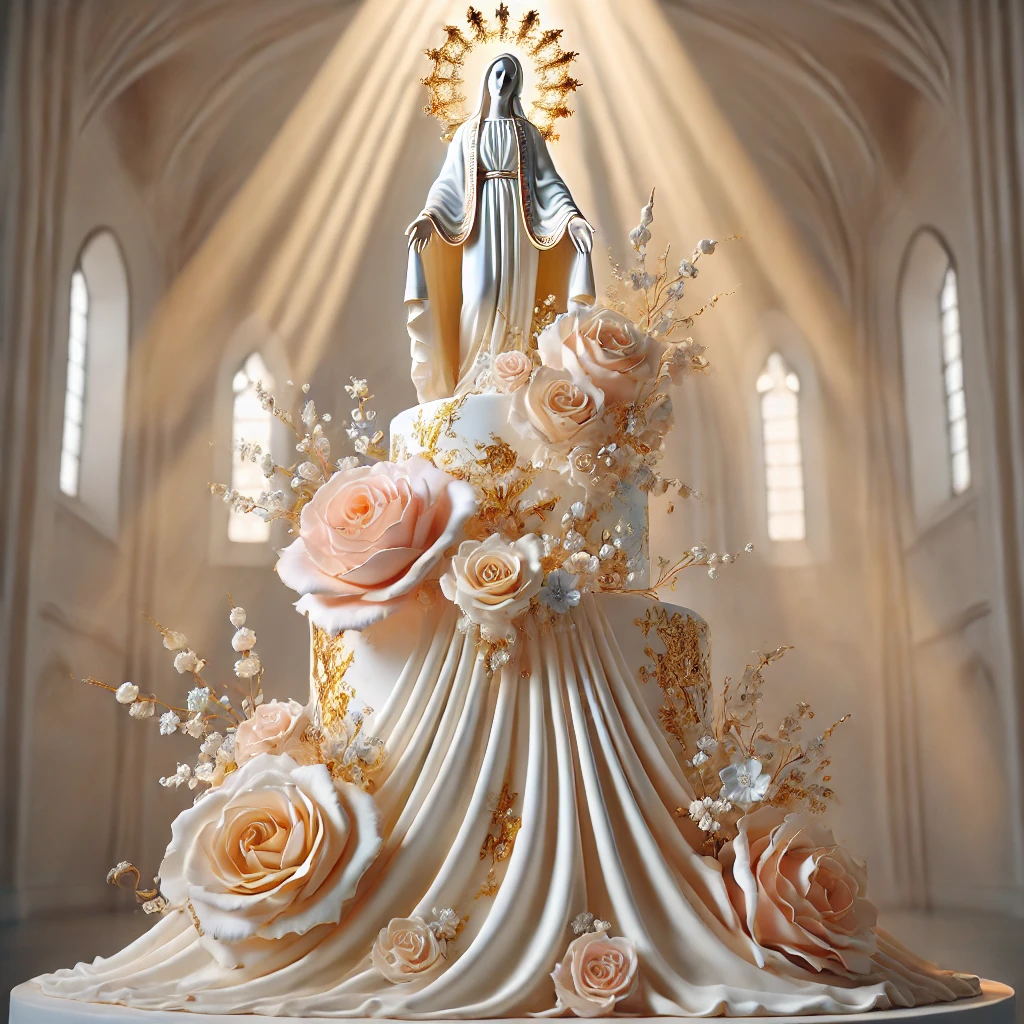
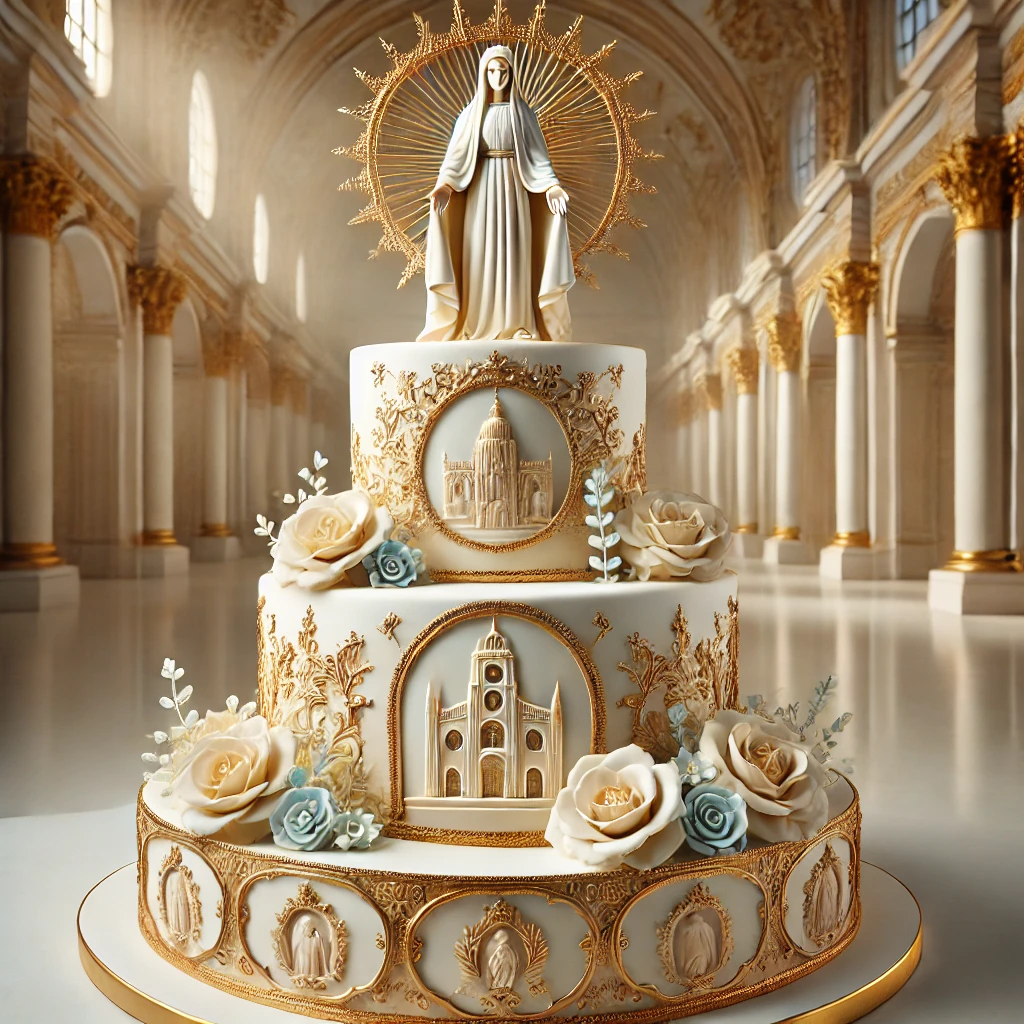
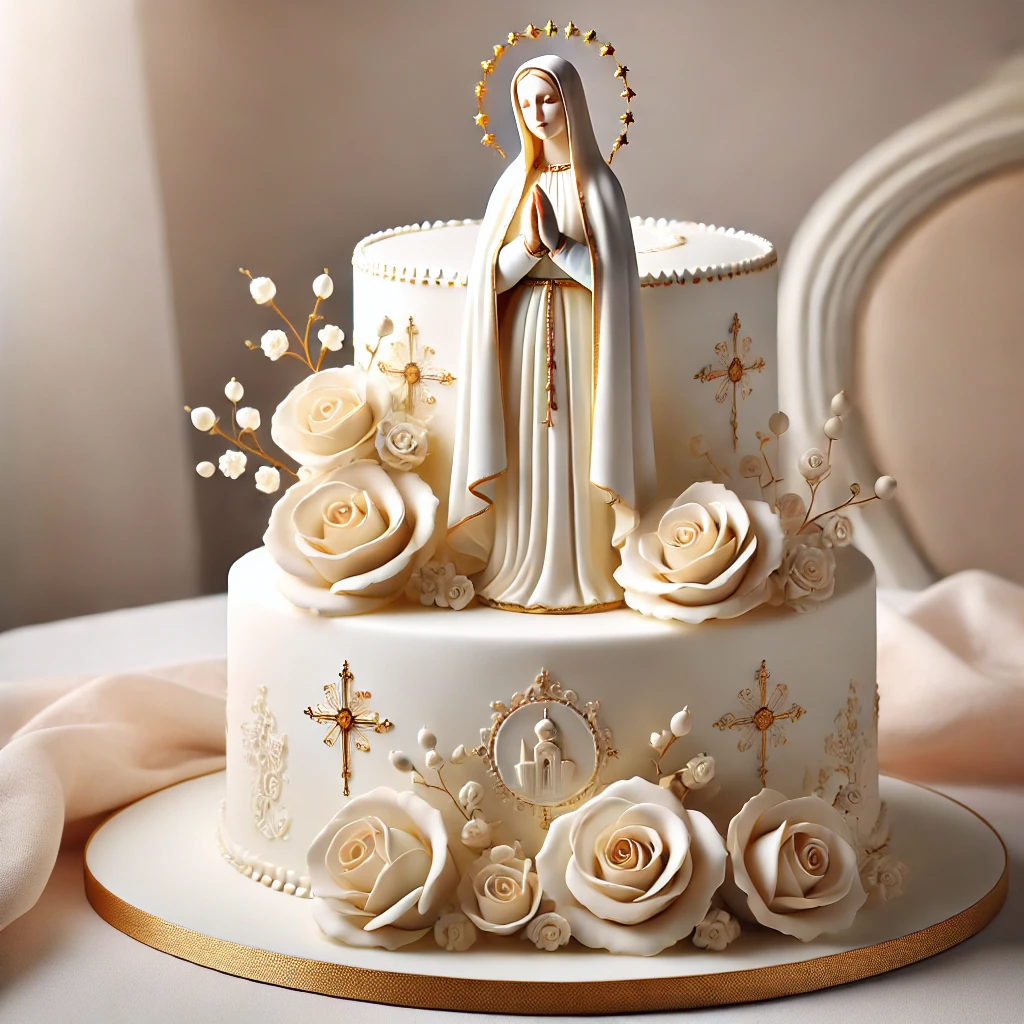
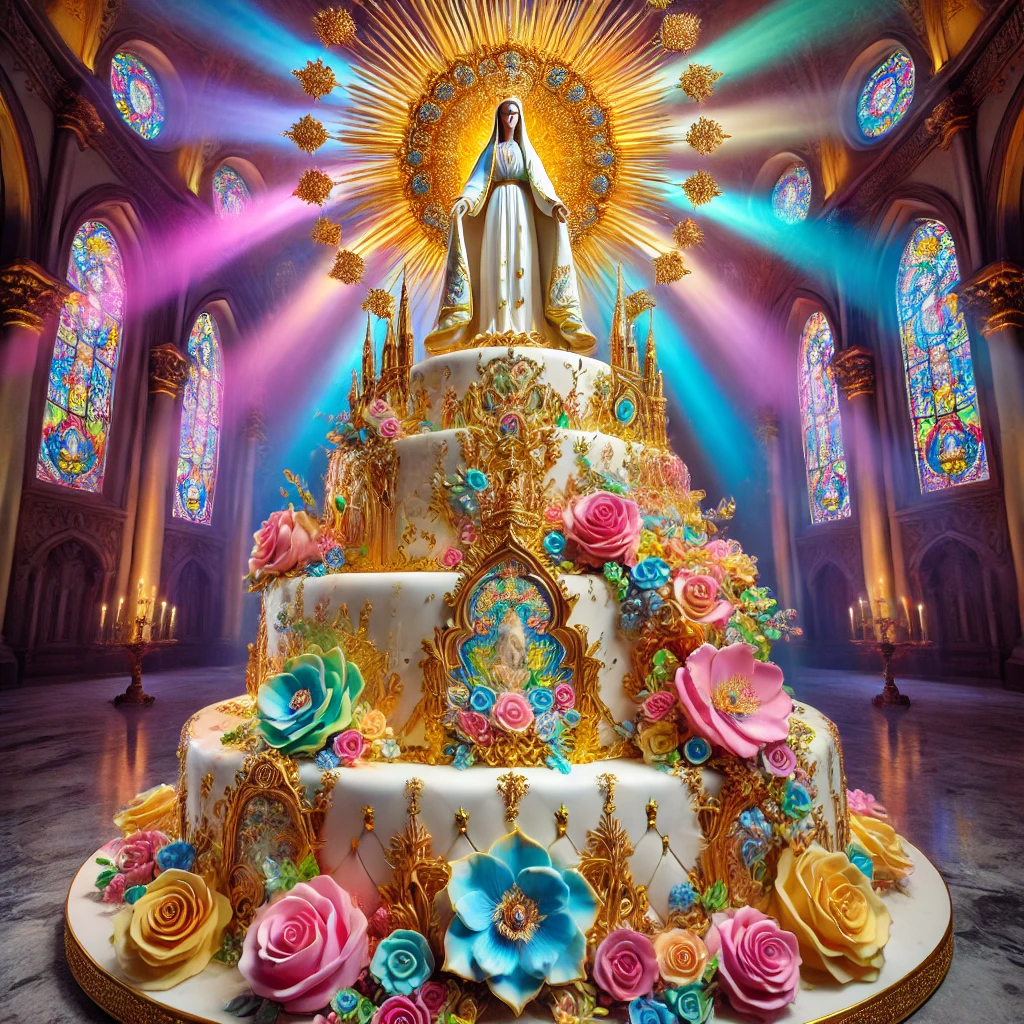
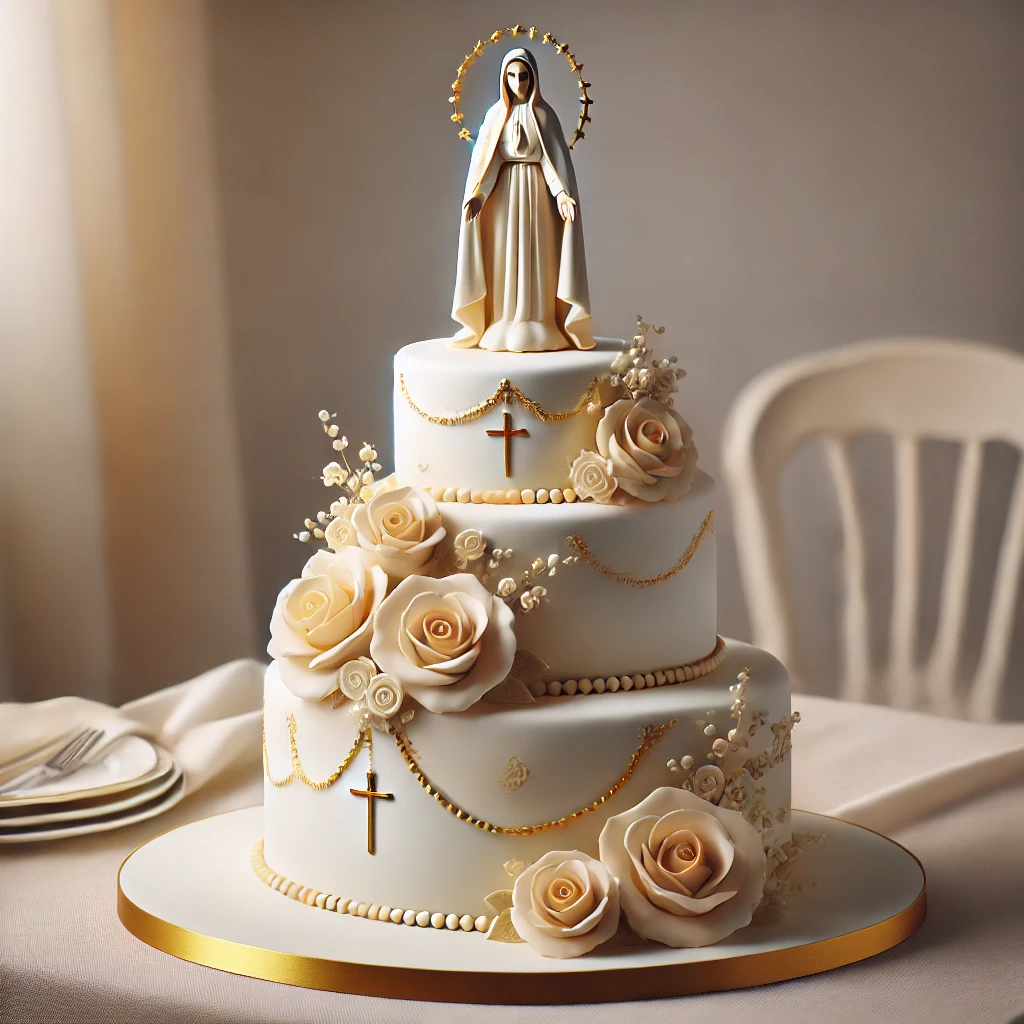
Our Lady of Fatima Cake & Atmosphere Ideas

Where style, memory, and celebration meet.

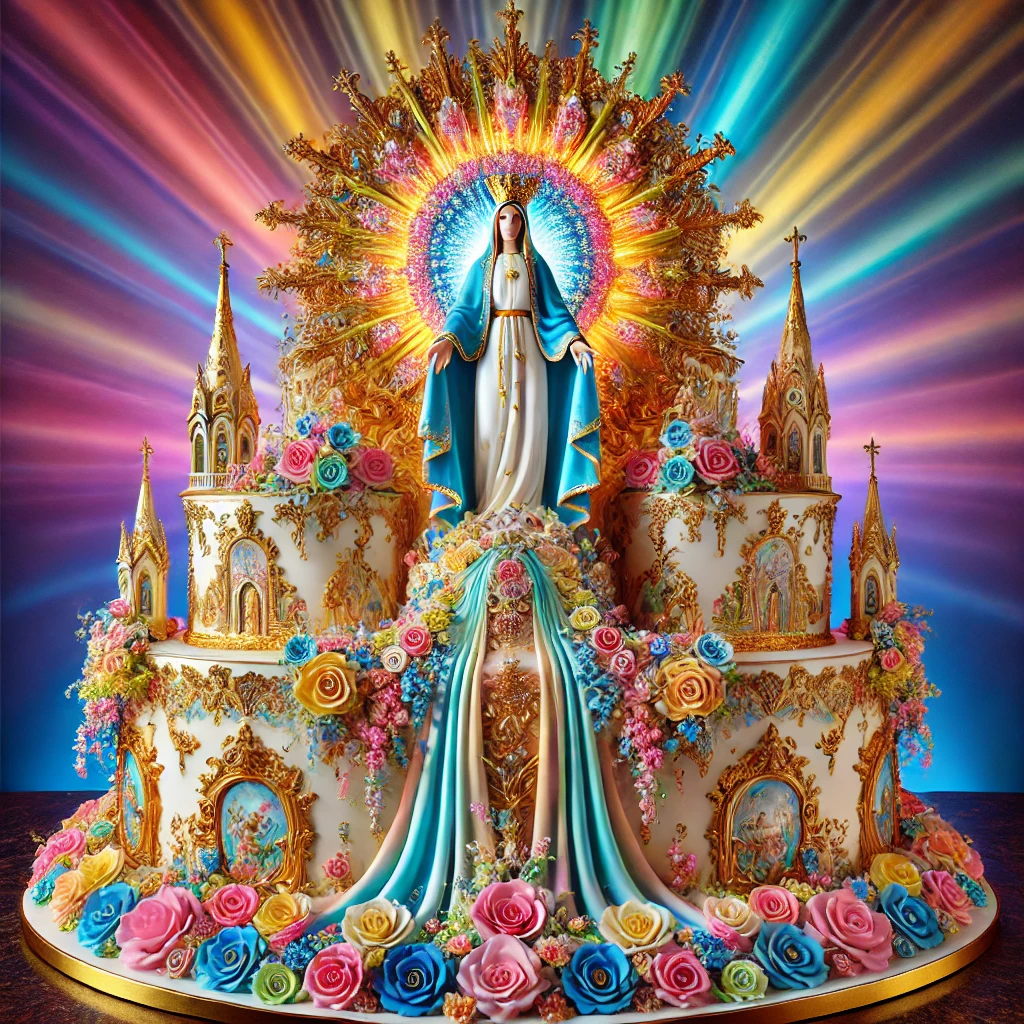
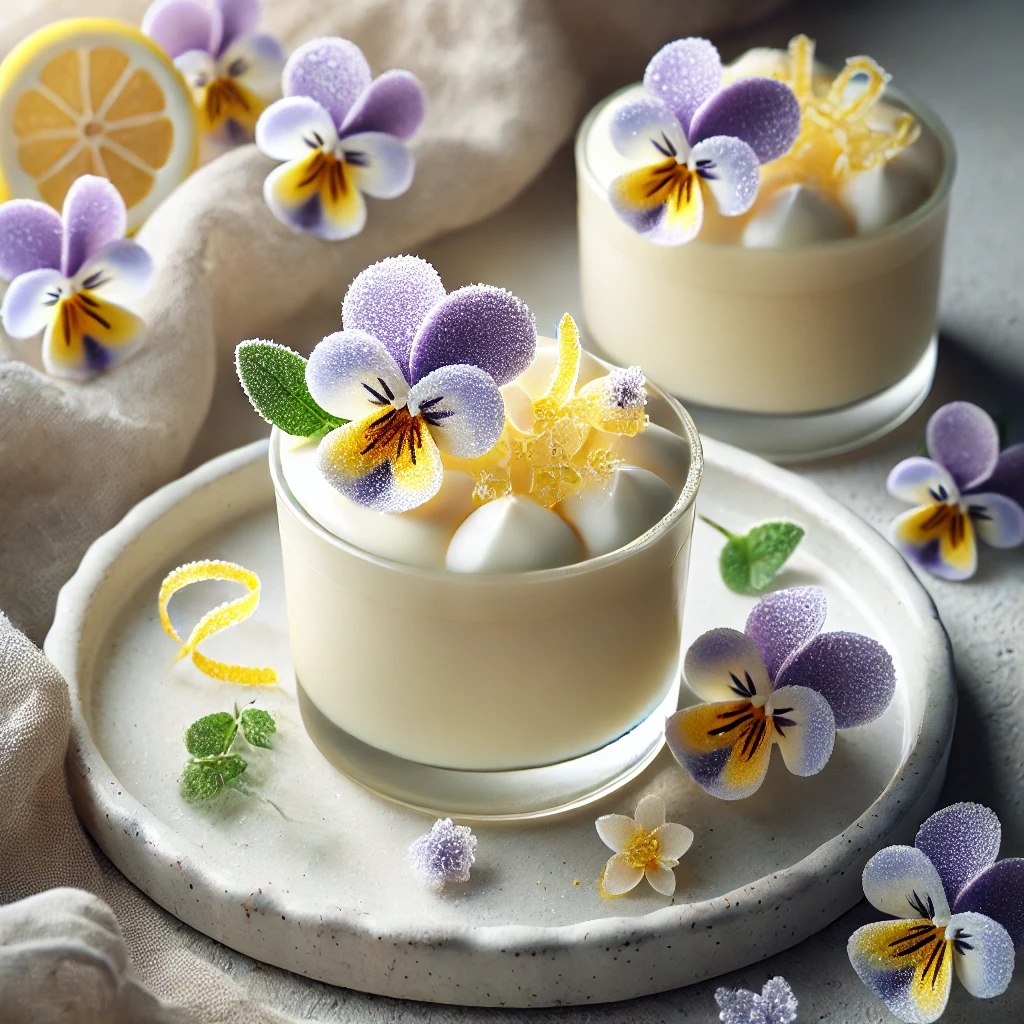
This section is meant to be more than Cake Decorating Ideas… it’s designed to spark inspiration and creativity, awaken tradition, and infuse your special occasions with style, identity, and atmosphere. A color palette becomes a theme. A design becomes a mood. Simple details—like sugared holly leaves or shimmering stars—can set the tone for a gathering and become part of cherished traditions and lasting memories melded with personal touch and love.

Traditional Our Lady of Fatima Dishes

Rustic Portuguese Bread (Broa or Pão Caseiro)
A foundational staple, representing humility, sustenance, and the simplicity of daily provision. Served warm, it reflects the quiet strength of ordinary life elevated with intention.

Grilled Sardines (Sardinhas Assadas)
A traditional Portuguese dish, especially meaningful as a nod to the coastal culture of Portugal. The simplicity of grilled fish honors purity, nourishment, and connection to the land and sea.

Caldo Verde (Green Soup)
A comforting soup made with potatoes, kale, and olive oil. Its warmth and nourishment symbolize restoration, unity, and the quiet care that sustains both body and spirit.

Roasted Lamb with Herbs (Borrego Assado)
Lamb carries deep symbolic meaning—sacrifice, devotion, and reverence. Prepared with herbs and care, it becomes a dish of both grounding and significance.

Olives and Olive Oil Pairing
Simple yet intentional, olives and high-quality olive oil reflect purity, longevity, and Mediterranean tradition. They are best served with fresh bread, encouraging slow, mindful dining.

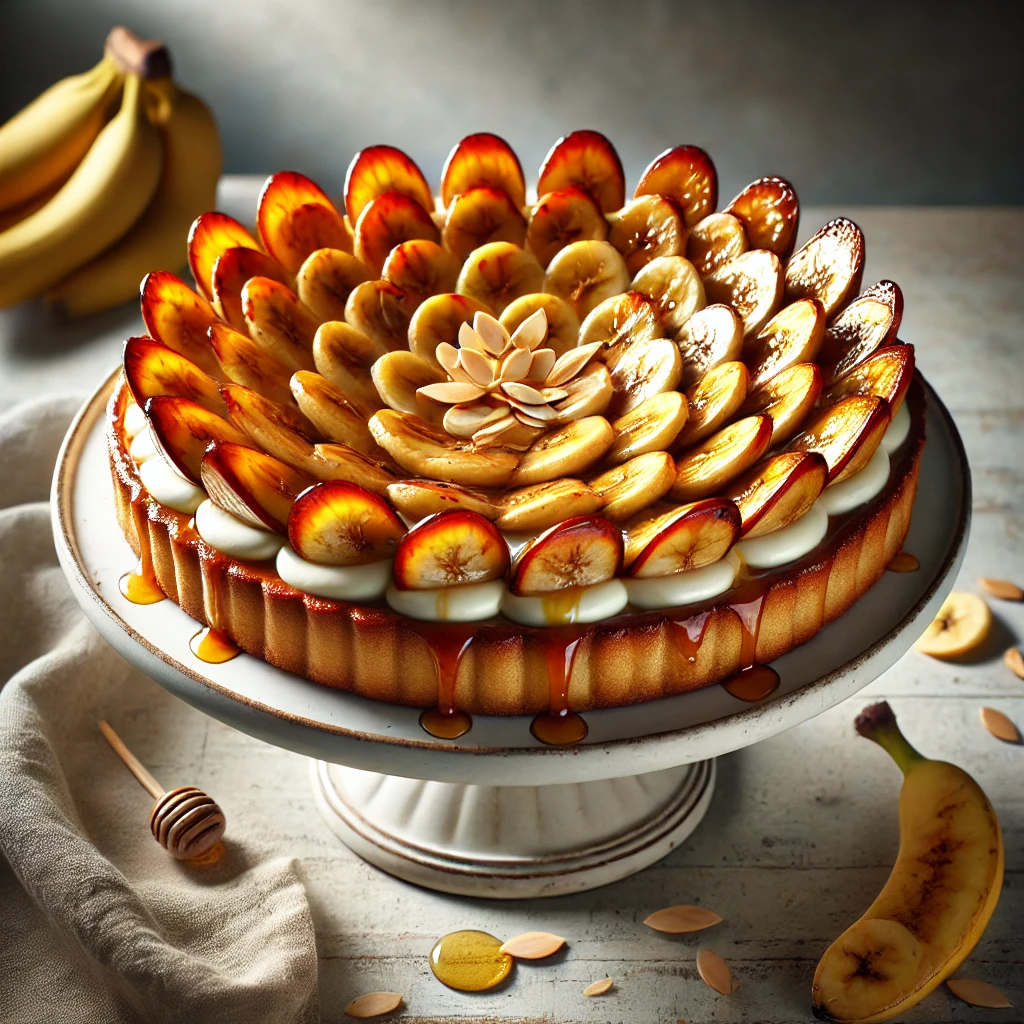
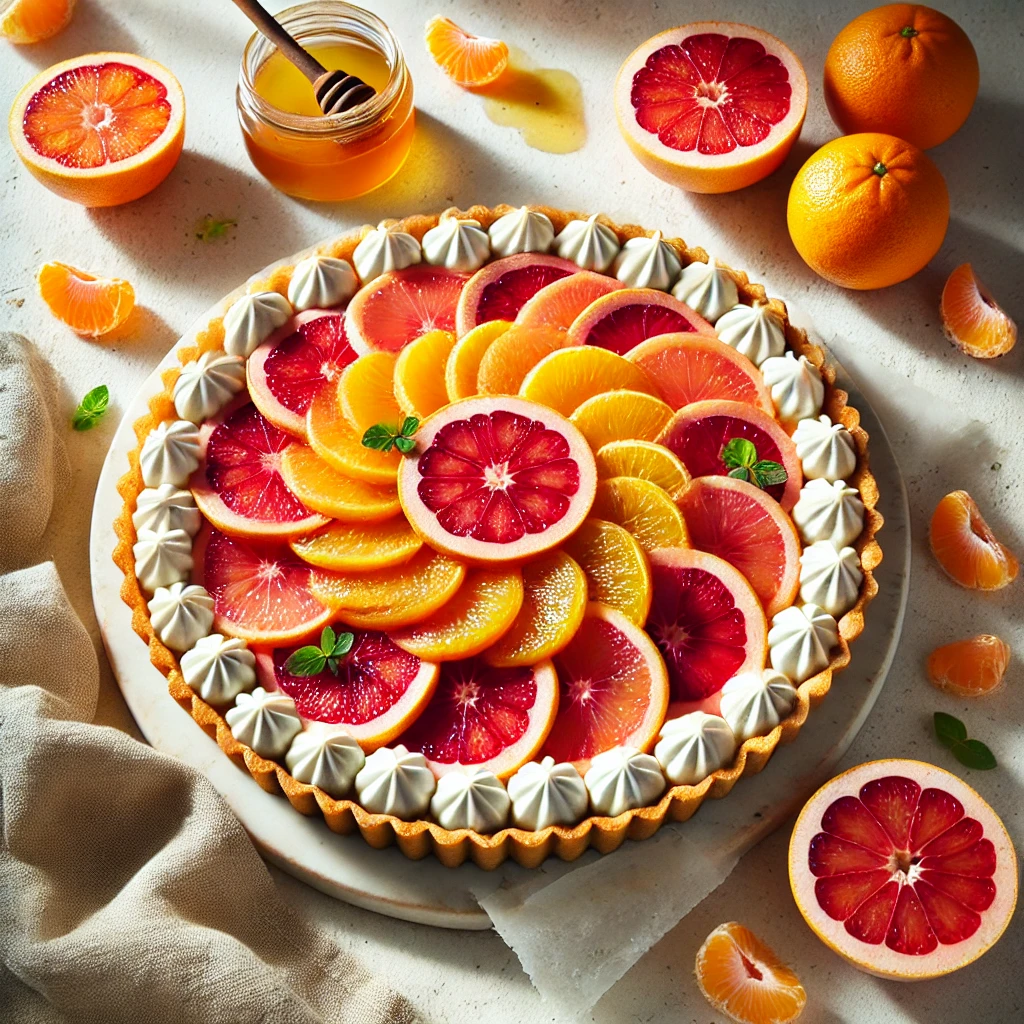
Fresh Fruit with Honey and Nuts
A natural and unprocessed offering, symbolizing abundance, renewal, and the sweetness found in simplicity. Often arranged beautifully to reflect intentional presentation.

Almond Pastries (Doces de Amêndoa)
Almond-based desserts are common in Portuguese cuisine and symbolize delicacy and refinement. Their subtle sweetness aligns with the tone of the day—elevated, but not excessive.

Sweet Rice (Arroz Doce)
A traditional dessert made with rice, milk, and cinnamon. Its gentle sweetness and comforting texture reflect peace, warmth, and shared tradition.

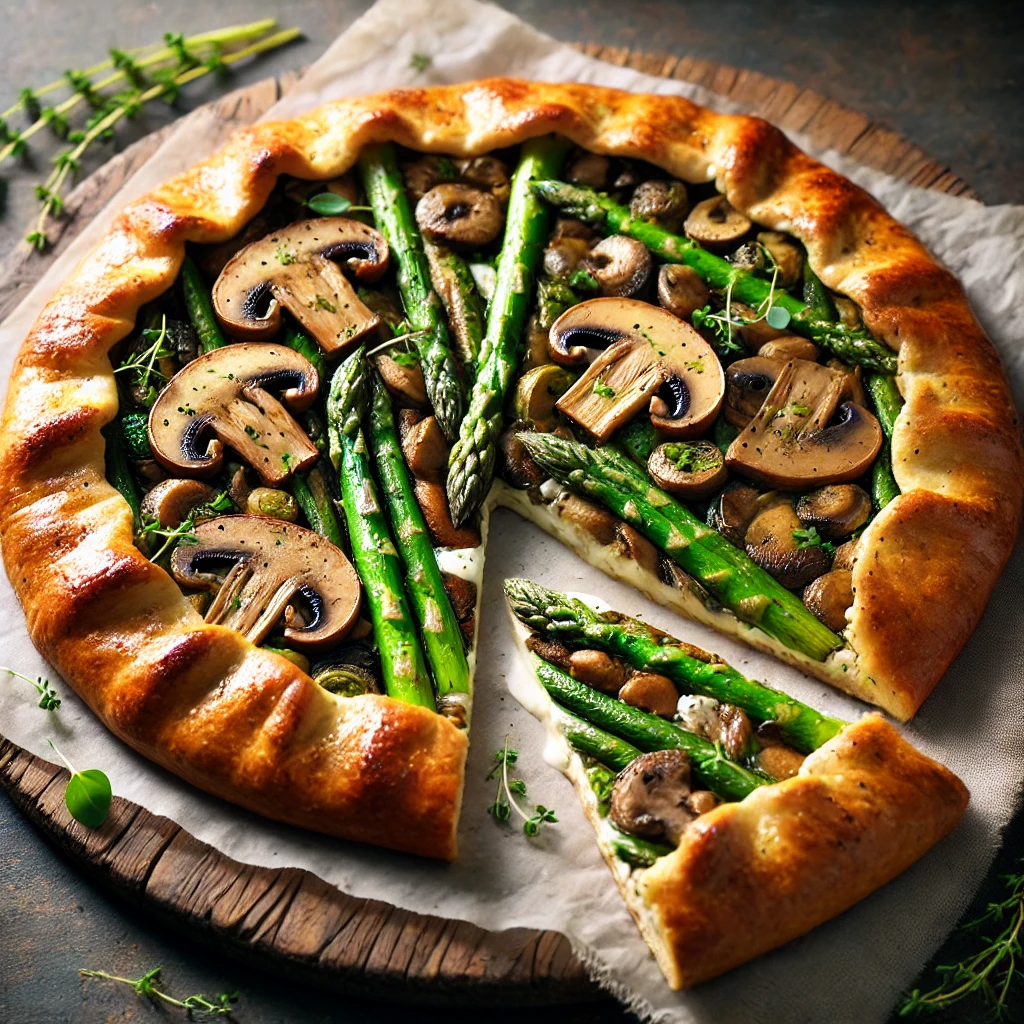
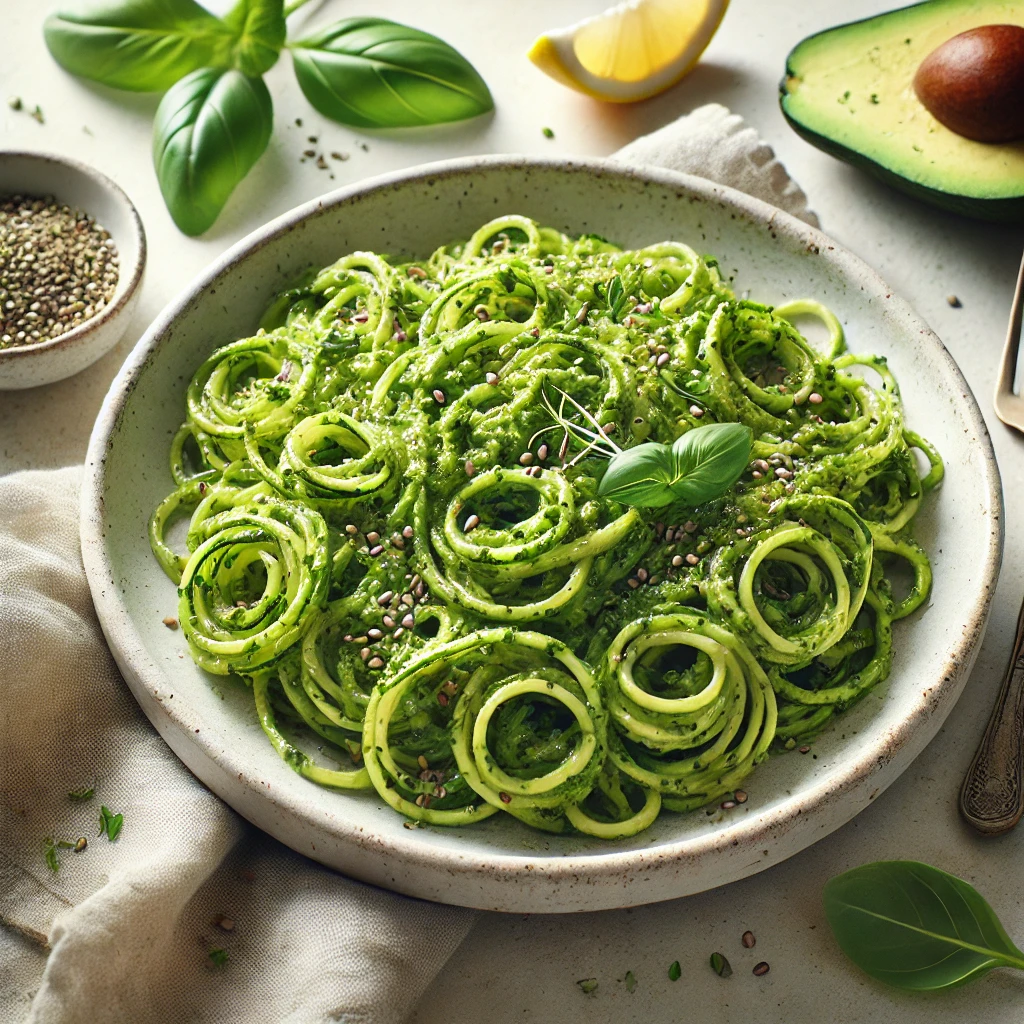
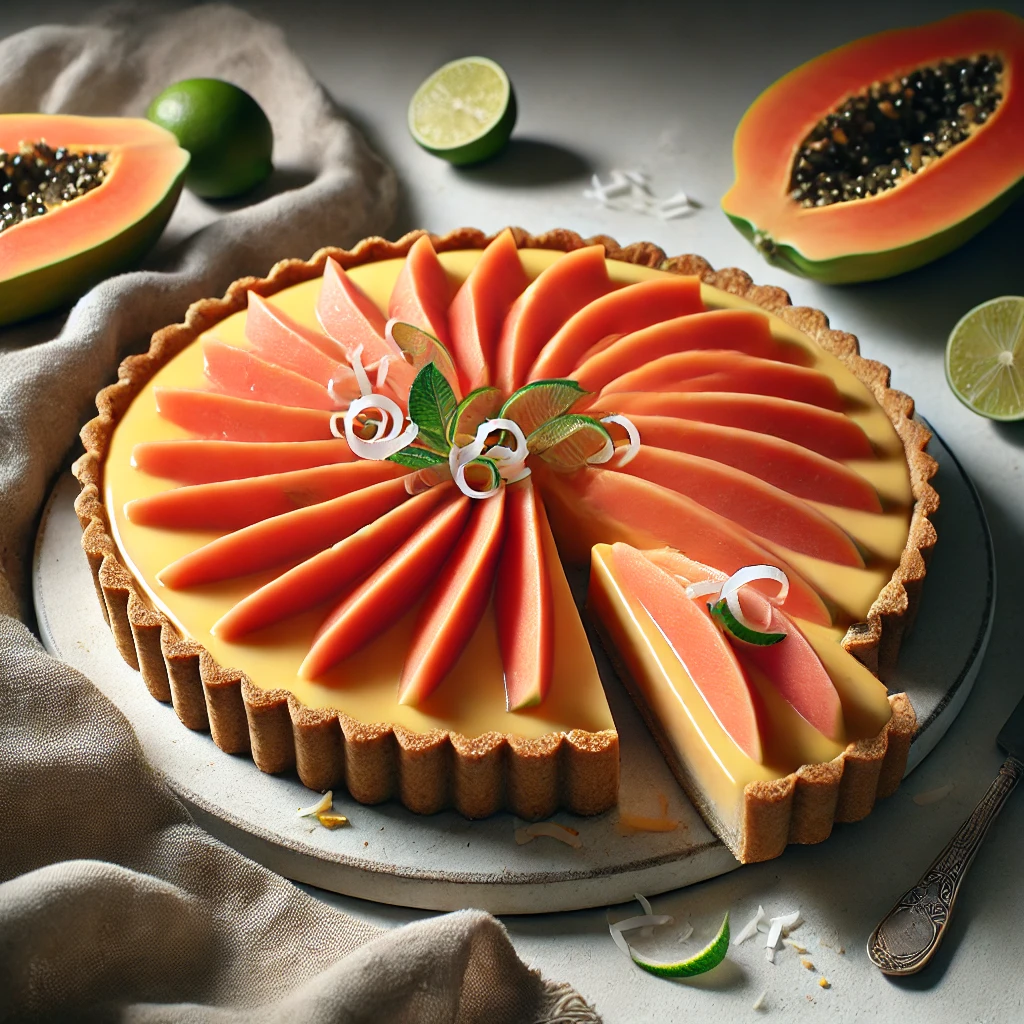
Recipes Engineered for that Spring Feeling