




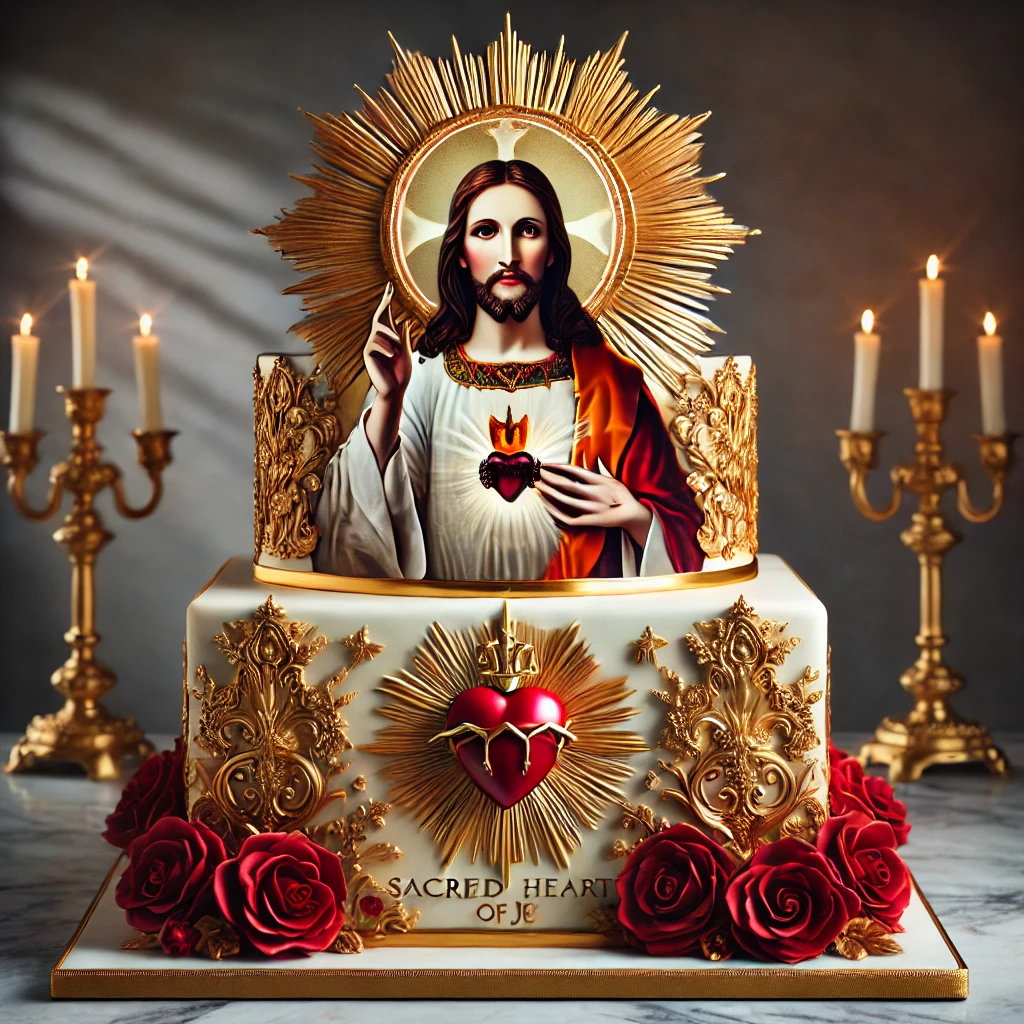


































The Sacred Heart of Jesus
with ORO VALENTIO
The Friday after the Feast of Corpus Christi (19 days after Pentecost)
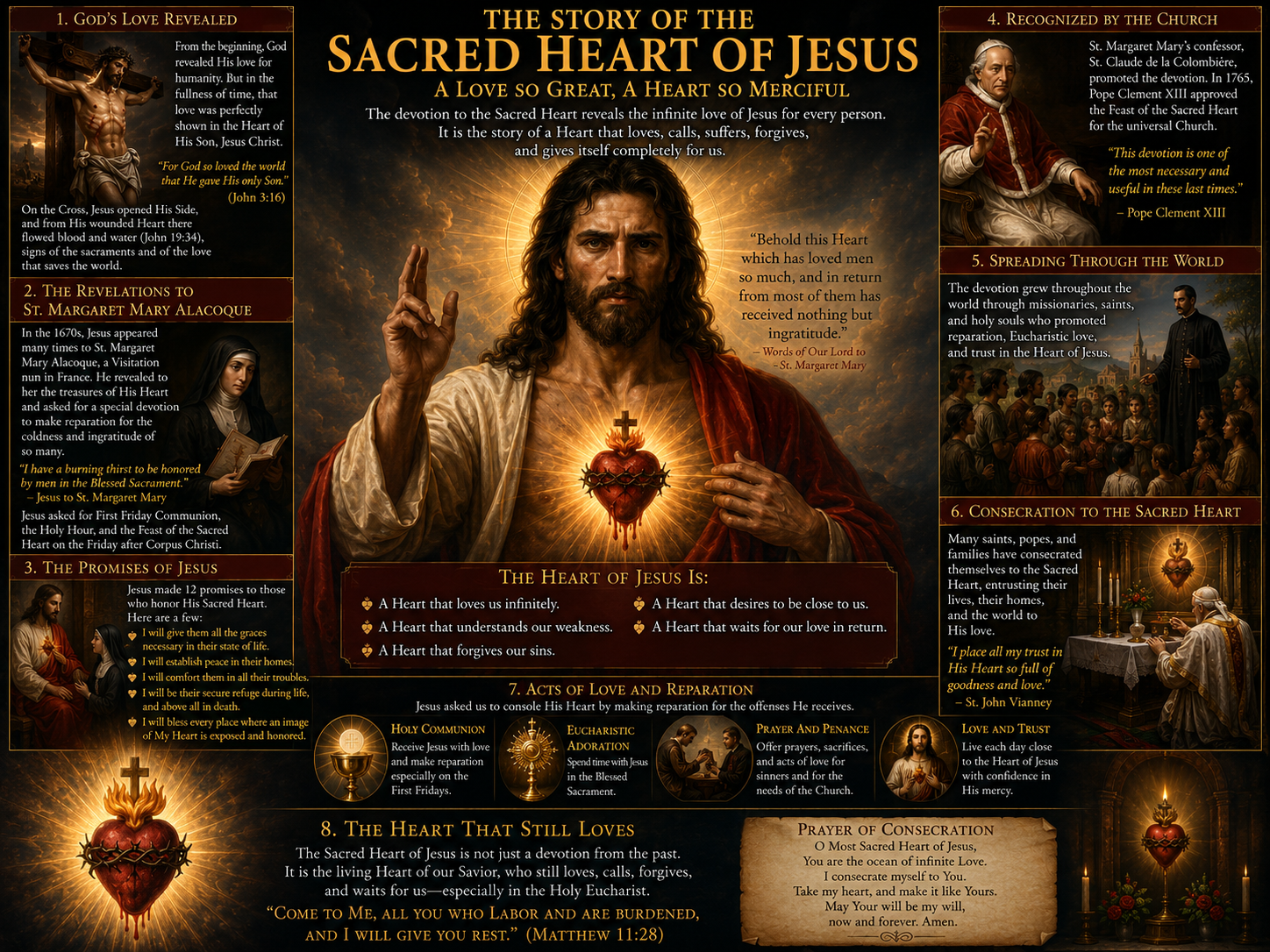
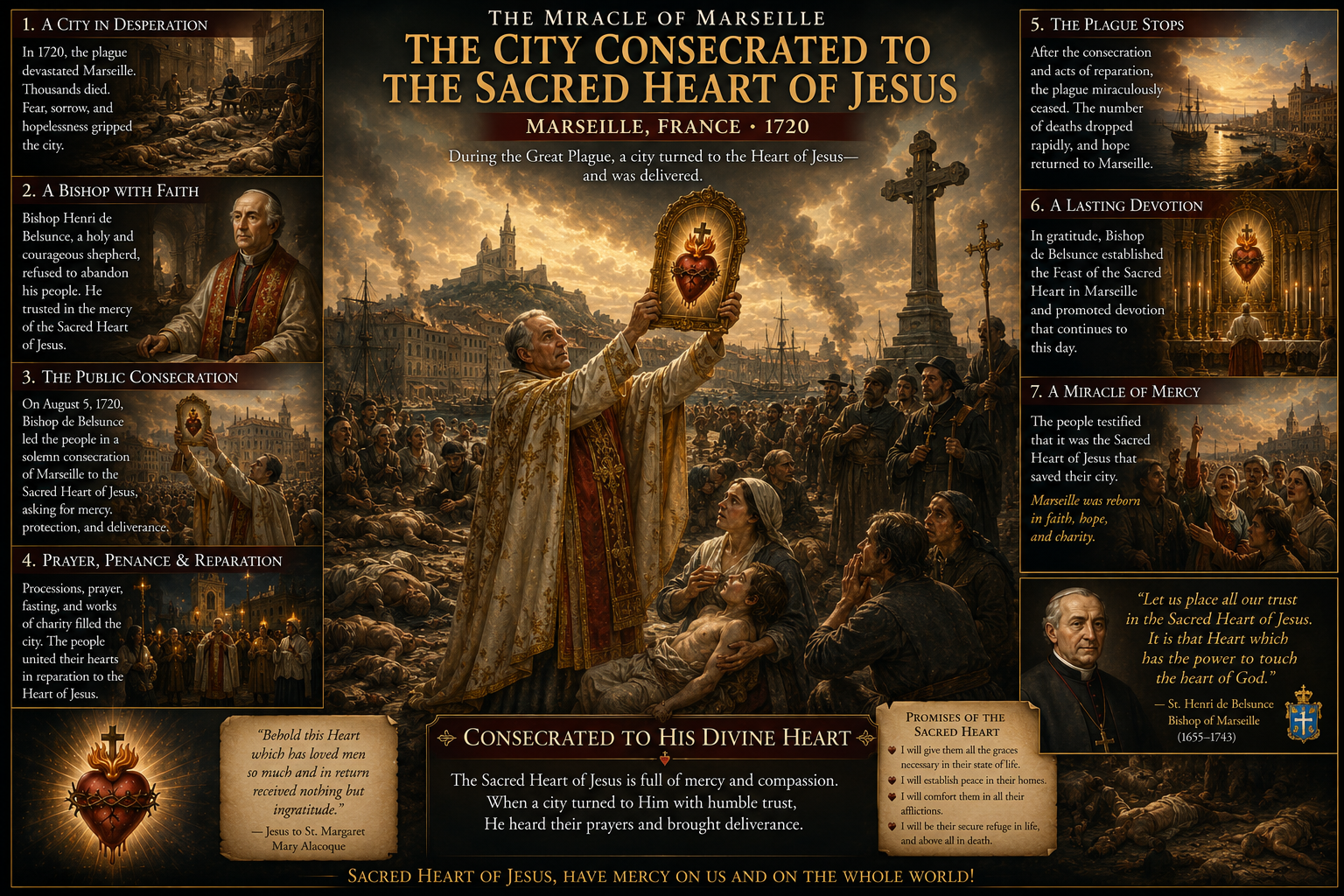
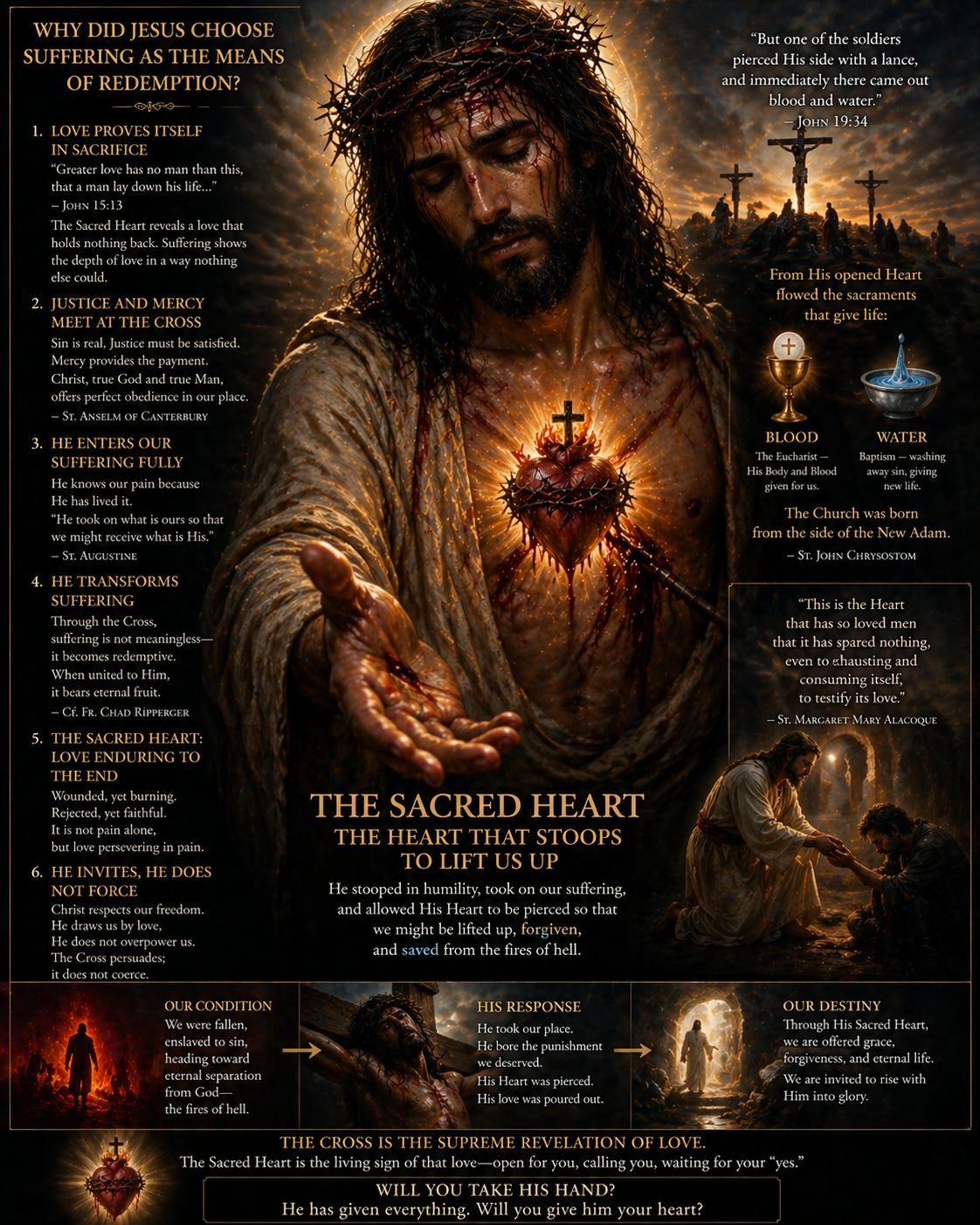
The devotion to the Sacred Heart of Jesus Christ is one of the most profound and tender expressions of Christian spirituality, revealing not only the divinity of Christ but also the depth of His human love. The “Heart” signifies the very center of His being—His will, His emotions, His compassion, and His burning charity toward humanity. This devotion invites the faithful to contemplate a love that is not abstract or distant, but intensely personal and sacrificial. It is a love that chose to suffer, to endure rejection, and ultimately to pour itself out entirely for the salvation of souls.
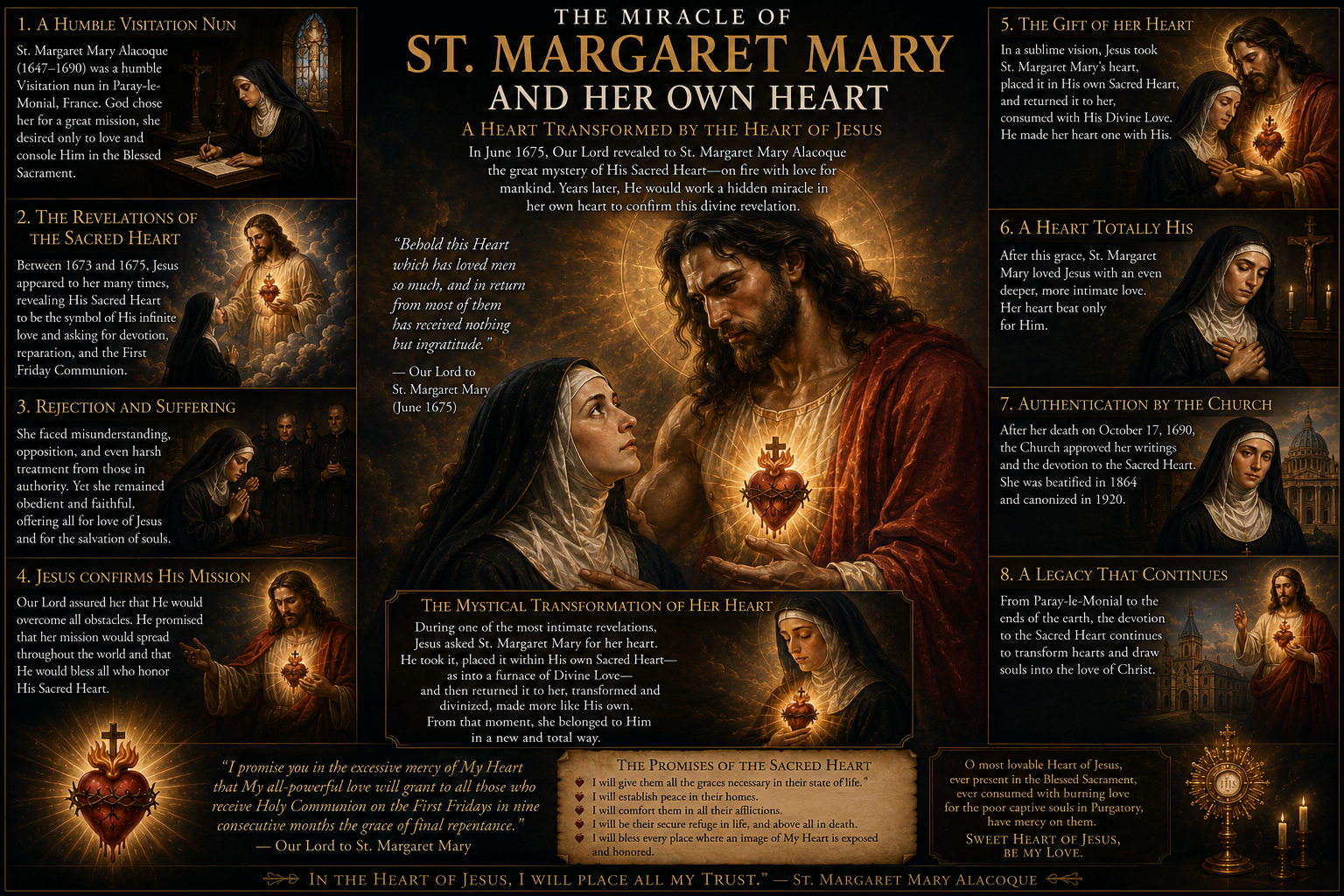
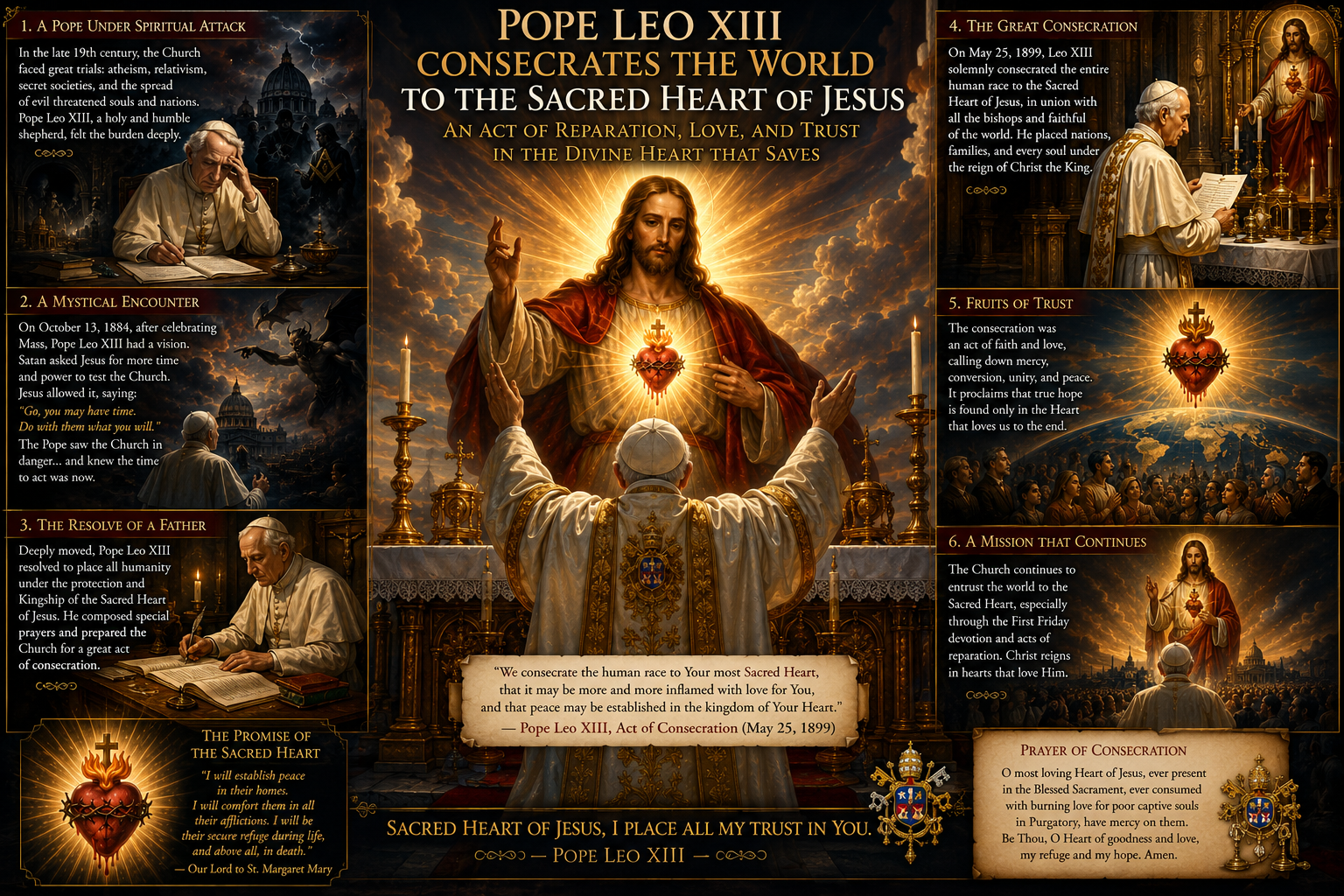
The Sacred Heart is often depicted aflame, encircled by a crown of thorns, and pierced—symbols that together communicate a love both wounded and unextinguished, a divine fire that continues to burn despite human indifference. Historically, while the roots of this devotion can be traced to early Christian meditation on the wounds of Christ, it came into fuller expression through the private revelations received by St. Margaret Mary Alacoque in the 17th century. In these visions, Christ revealed His Heart as a symbol of His immense love for humanity and lamented the coldness and ingratitude of many souls. He called for acts of reparation—prayers, sacrifices, and especially the reception of the Eucharist—as a way to console His Heart. Through her humility and perseverance, and with the guidance of St. Claude de la Colombière, this devotion spread throughout the Church and was eventually embraced universally, culminating in the establishment of the Feast of the Sacred Heart.
At its core, this devotion is not merely about honoring an image, but about entering into a relationship with Christ’s love—responding to love with love. It calls individuals to recognize both the tenderness and the cost of divine charity. The Sacred Heart represents a love that is patient in suffering, steadfast in mercy, and relentless in its pursuit of each soul. It is a reminder that Christ does not love humanity in a distant or general sense, but intimately—knowing each person fully and loving them still.
At the same time, the traditional language of Christ “lamenting” and “seeking consolation” must be understood analogically. In His glorified state, Christ is no longer subject to suffering as He was during His Passion. Yet this devotional language expresses a real spiritual truth: the ongoing reality of His love being rejected by sin, and the invitation for the faithful to respond through acts of reparative charity. In this way, the devotion does not imply a deficiency in Christ, but rather draws the believer into deeper union with His love, especially as it was revealed in His Passion. This personal dimension makes the devotion especially powerful, as it invites each believer to place themselves within that gaze of love and to respond with trust, surrender, and fidelity.
The Golden Flame of Divine Love
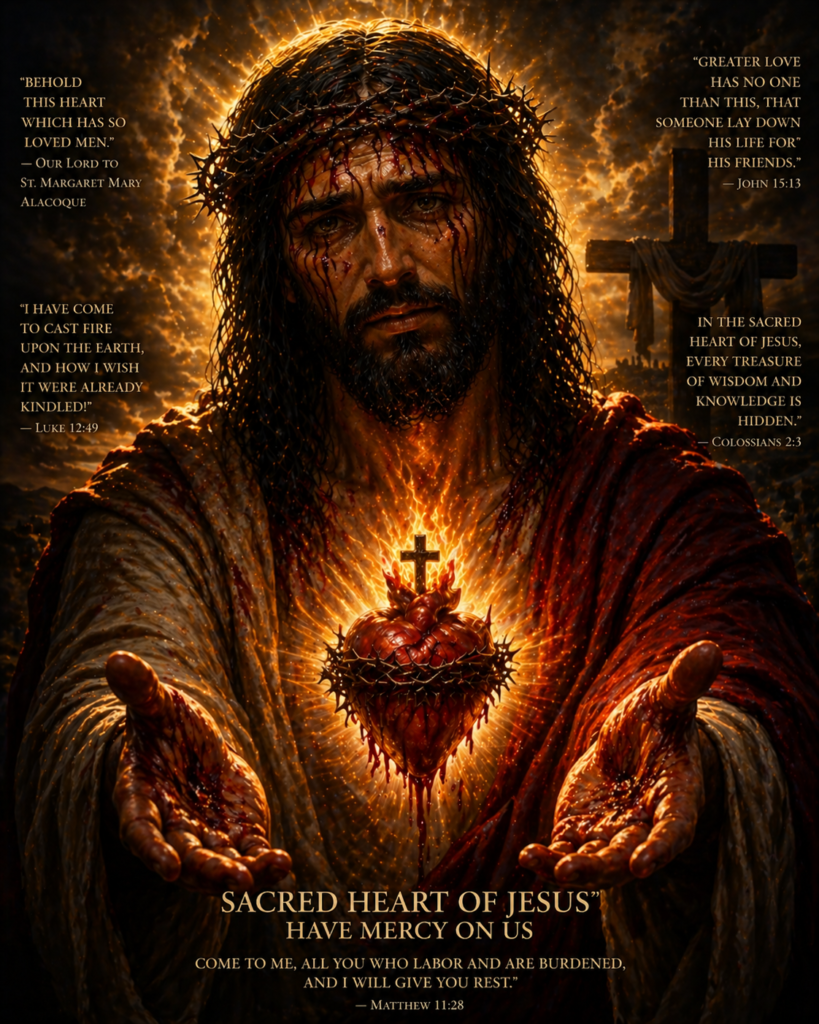
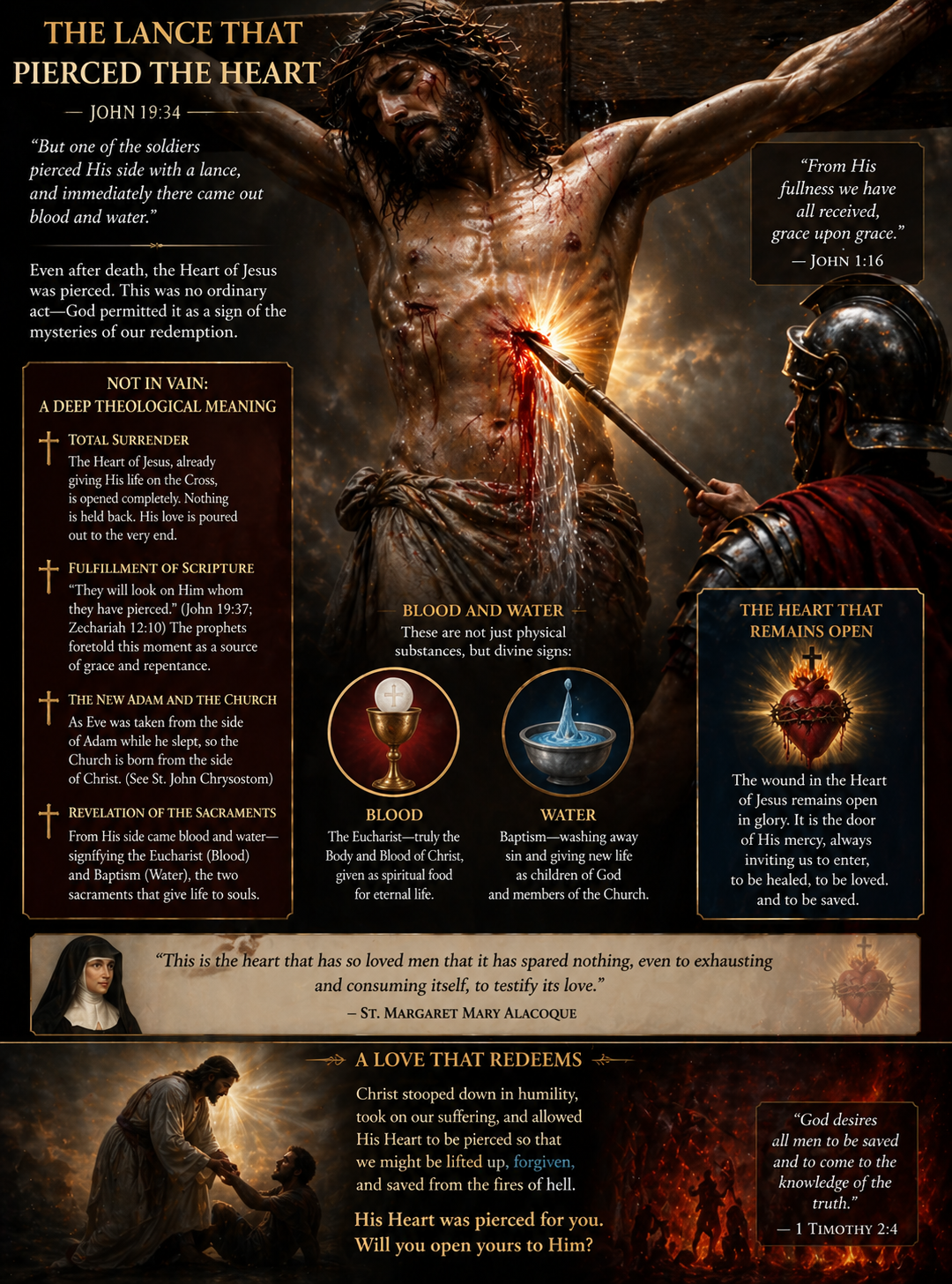
This devotion draws attention to the Heart of Christ as both wounded and radiant—wounded by sin and the rejection of divine love, yet radiant because that love remains unbroken, victorious, and ever-giving. The crown of thorns signifies the suffering He endured; the wound recalls the lance that opened His side; and the flames symbolize a charity that burns continuously—never withdrawing, never diminishing, even in the face of indifference.
The devotion became widely known through the revelations given to St. Margaret Mary Alacoque, who was shown the Heart of Christ as overflowing with love, yet grieved by the coldness and ingratitude of many souls. Through her, Christ called not merely for admiration, but for a response: a life marked by love, reparation, and fidelity, especially through devotion to the Eucharist.
At its core, the Sacred Heart is an invitation. It calls each person into a relationship that is both intimate and transformative—to trust in divine mercy, to live with integrity, and to return love for love. It reminds us that God is not distant or abstract, but personal—One who has entered into human suffering and gives Himself completely.
This reality is most profoundly encountered in the Eucharist, which the Church teaches is truly the Body and Blood of Christ. Yet in many places today, there has been a widespread weakening of belief in the Real Presence. In this light, the message of the Sacred Heart takes on renewed urgency: it calls for renewed faith, reverence, and acts of reparation for indifference toward so great a gift.
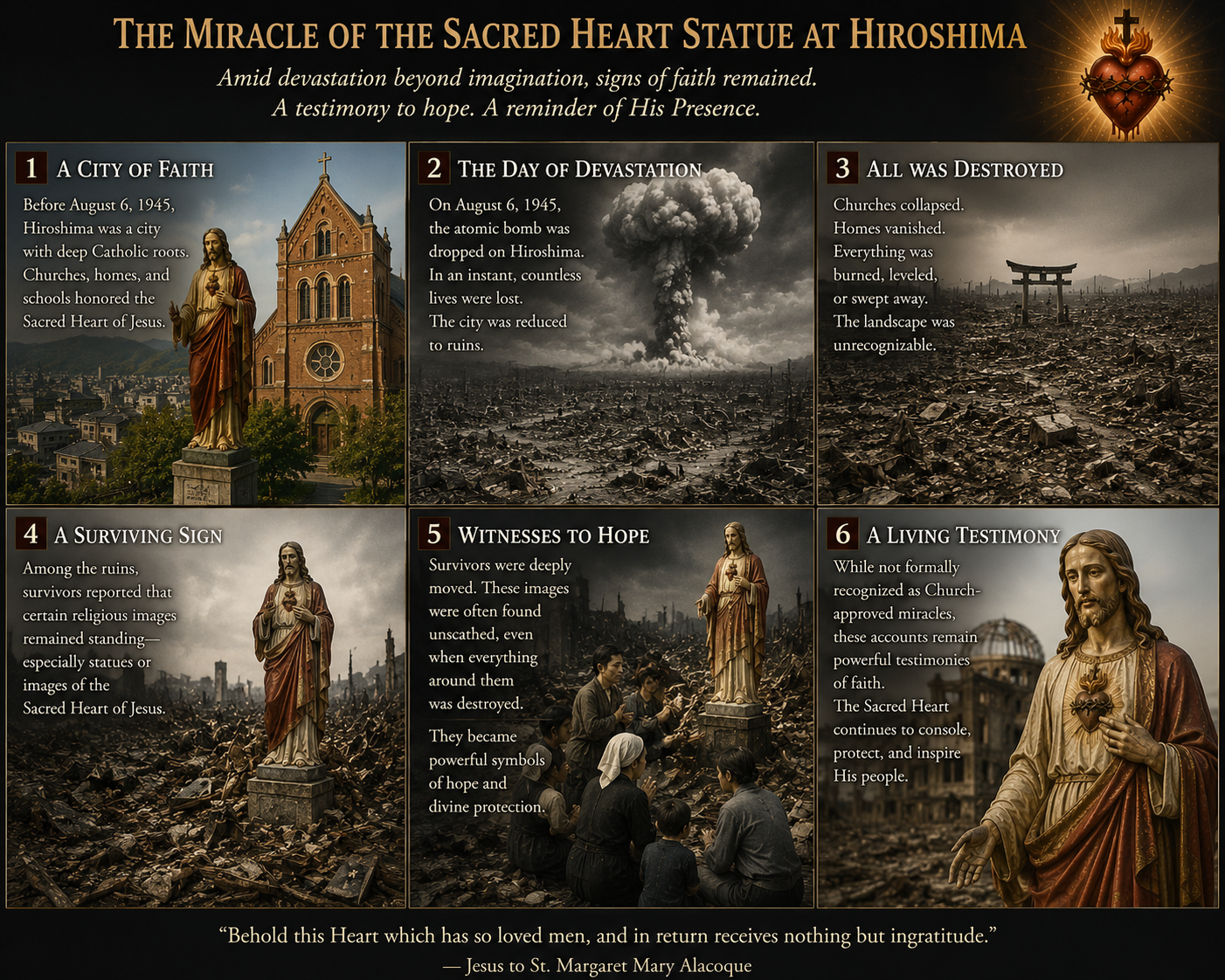
In various approved Eucharistic miracles throughout history, such as those associated with Lanciano, scientific examinations have reported that the consecrated Host manifested as human flesh identified as heart tissue, in some cases bearing signs consistent with suffering, and blood identified as type AB. While such miracles are not required objects of belief, the Church permits them as credible signs that can support faith. They do not add to the doctrine, but they can serve as a striking reminder of what is already revealed: that the same Heart which was pierced on the Cross is truly given to the faithful in the Eucharist.
Seen in this way, the devotion to the Sacred Heart and devotion to the Eucharist are inseparable. Both reveal a love that continues to offer itself—capable of being received with devotion or met with indifference. And both call the faithful to respond with deeper love, reverence, and faithful surrender to the One who first loved us.
Sacred Heart of Jesus Traditions to Make Your Own
Holy Mass & Holy Communion – Attending Mass and receiving the Eucharist with love and reverence, especially in a spirit of reparation.
Act of Reparation – Offering prayers to make amends for sins, particularly indifference and offenses against Christ’s love.
Eucharistic Adoration (Holy Hour) – Spending time in prayer before the Blessed Sacrament, “keeping watch” with Christ.
Devotion to the Sacred Heart Image – Honoring an image of the Sacred Heart, often with candles or flowers.
Enthronement of the Sacred Heart – Placing an image of the Sacred Heart in the home and consecrating the family to Christ.
First Friday Devotion – Receiving Communion on the first Friday of nine consecutive months in reparation (from the revelations to St. Margaret Mary Alacoque).
Consecration to the Sacred Heart – Personally offering one’s life, actions, and sufferings to Christ’s Heart.
Acts of Sacrifice or Penance – Small voluntary sacrifices offered in love and reparation.
Prayers to the Sacred Heart – Such as the Litany of the Sacred Heart or other devotional prayers.
You Who Have Loved Me From All Eternity
O Most Sacred Heart of Jesus,
burning furnace of divine love, I come before You in humility and trust.
You who have loved me from all eternity,
You who were pierced for my sins and remain open still,
draw me into the depths of Your mercy.
Sacred Heart, wounded yet radiant,
teach me to understand the cost of Your love.
Where I have been cold, enkindle me.
Where I have been indifferent, awaken me.
Where I have rejected You, forgive me.
You have stooped down in infinite humility
to lift me from sin and from the path that leads to destruction.
You have given everything—holding nothing back—
even to the pouring out of blood and water from Your side.
Let me never take such love lightly.
O Heart of Jesus, truly present in the Eucharist,
so often forgotten, neglected, and unreceived,
I offer You my love in reparation for all who do not love You.
Receive my poor heart and unite it to Yours,
that I may love You with Your own love.
Make me faithful in suffering,
gentle in charity,
and steadfast in trust.
Teach me to carry my crosses in union with Yours,
that my life may become an offering pleasing to the Father.
Sacred Heart of Jesus,
I consecrate myself entirely to You—
my thoughts, my actions, my joys, and my sufferings.
Take all that I am, and make it Yours.
Never let me be separated from You.
Hide me within Your wounded Heart,
where I may find refuge, healing, and eternal rest.
Amen.
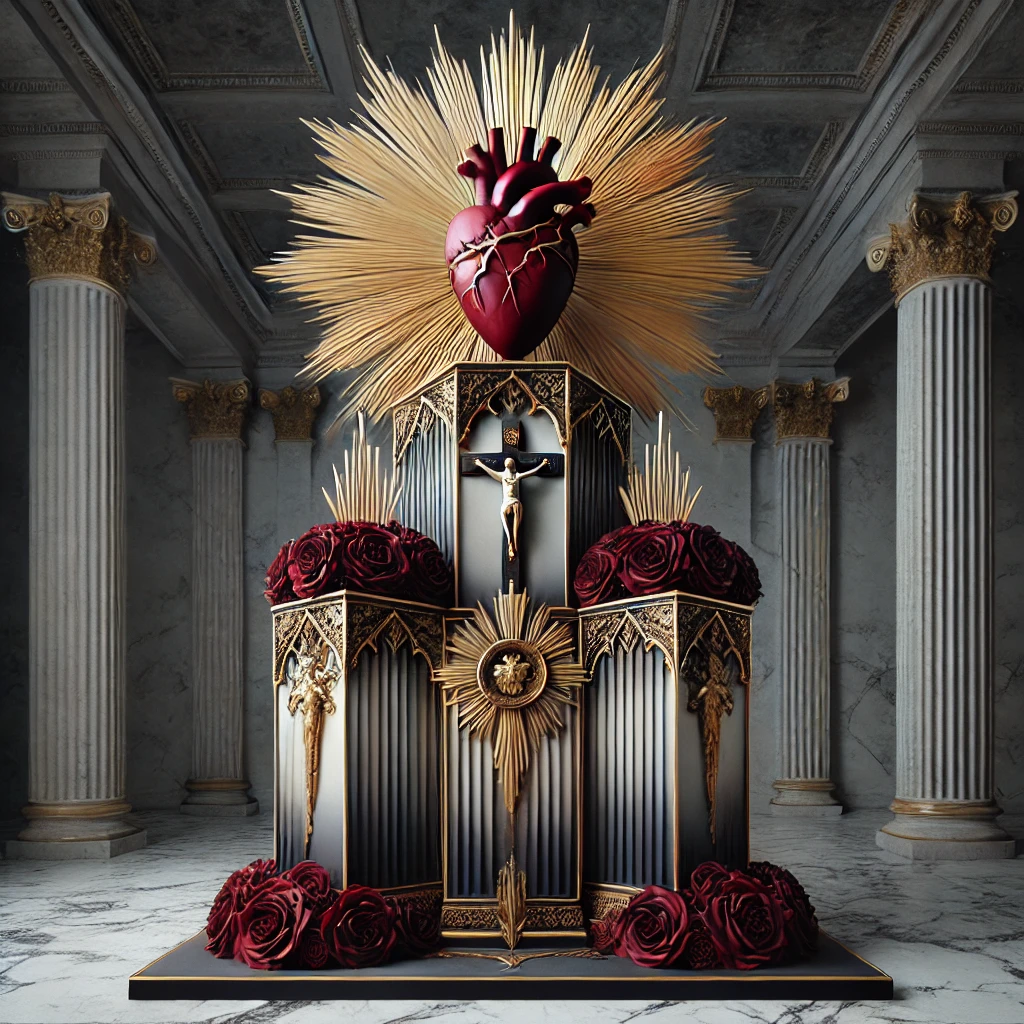
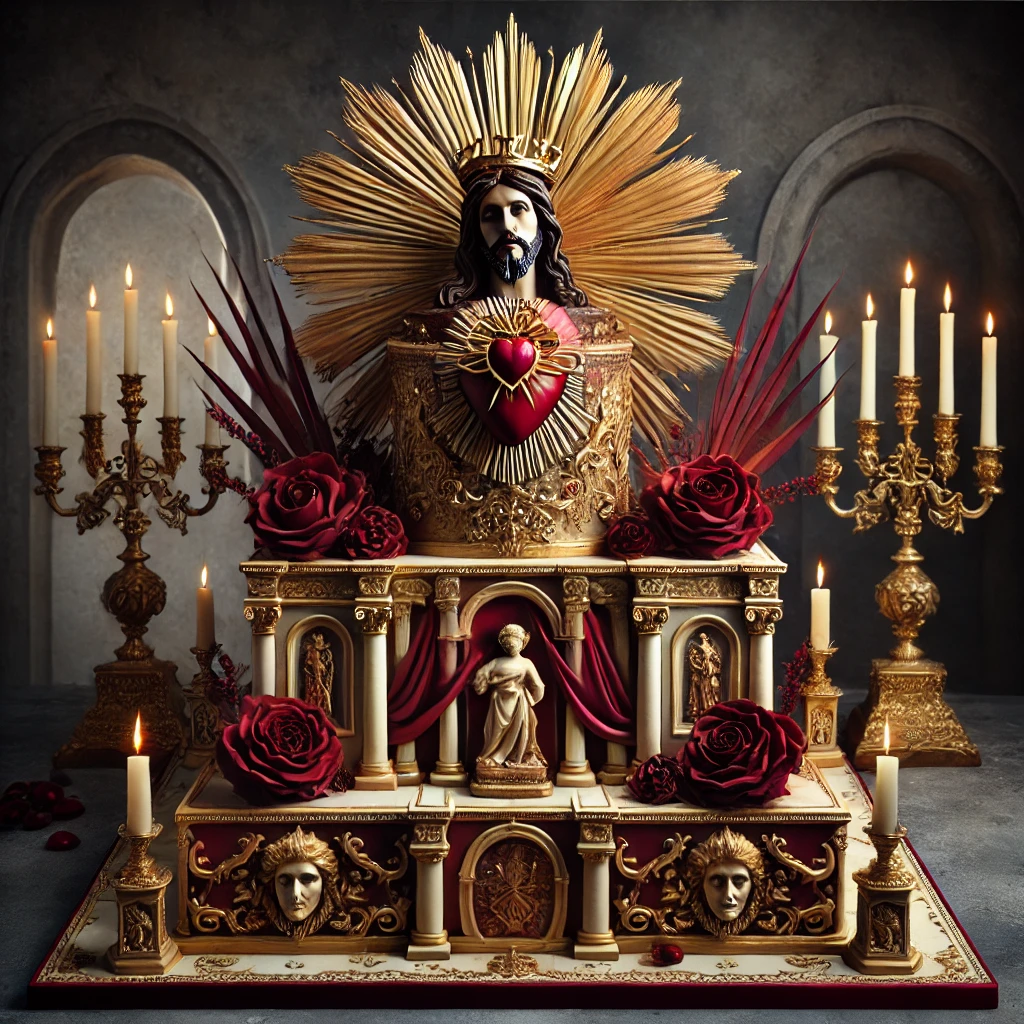
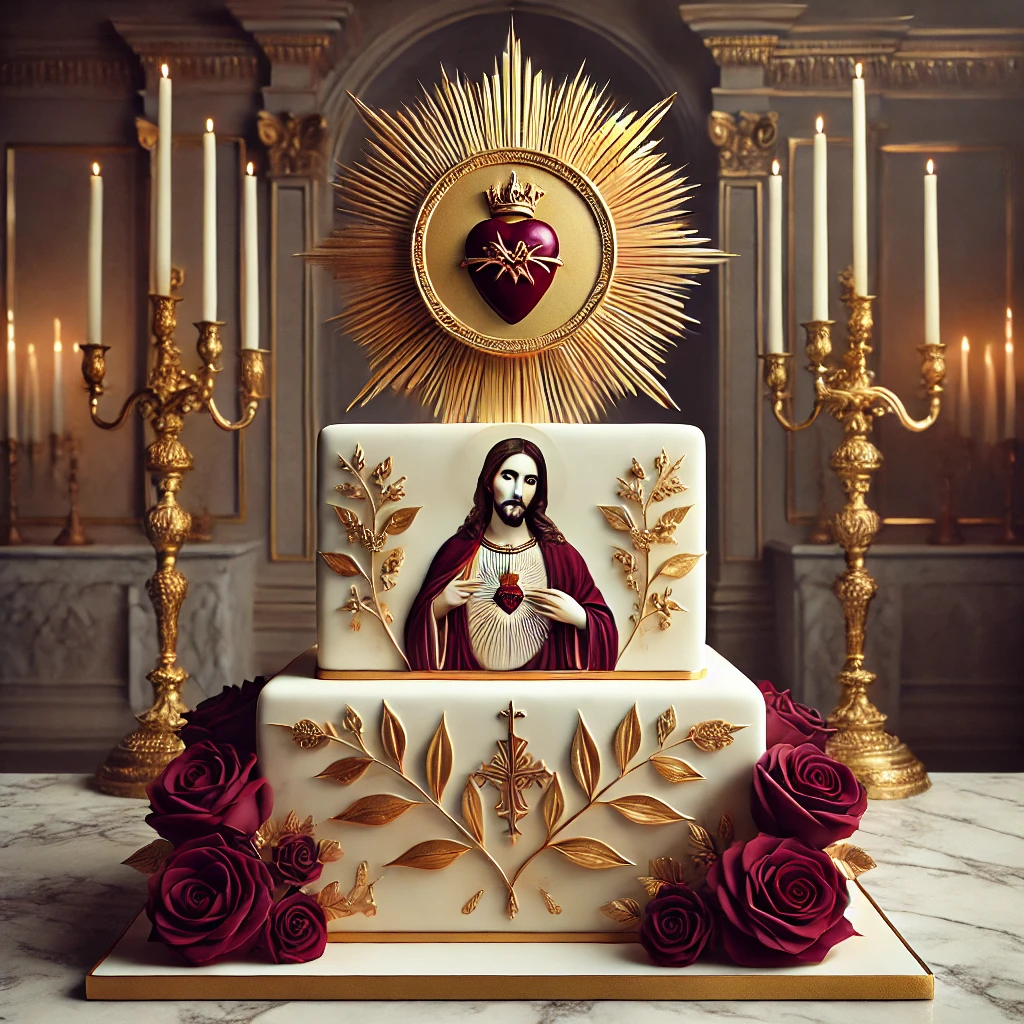
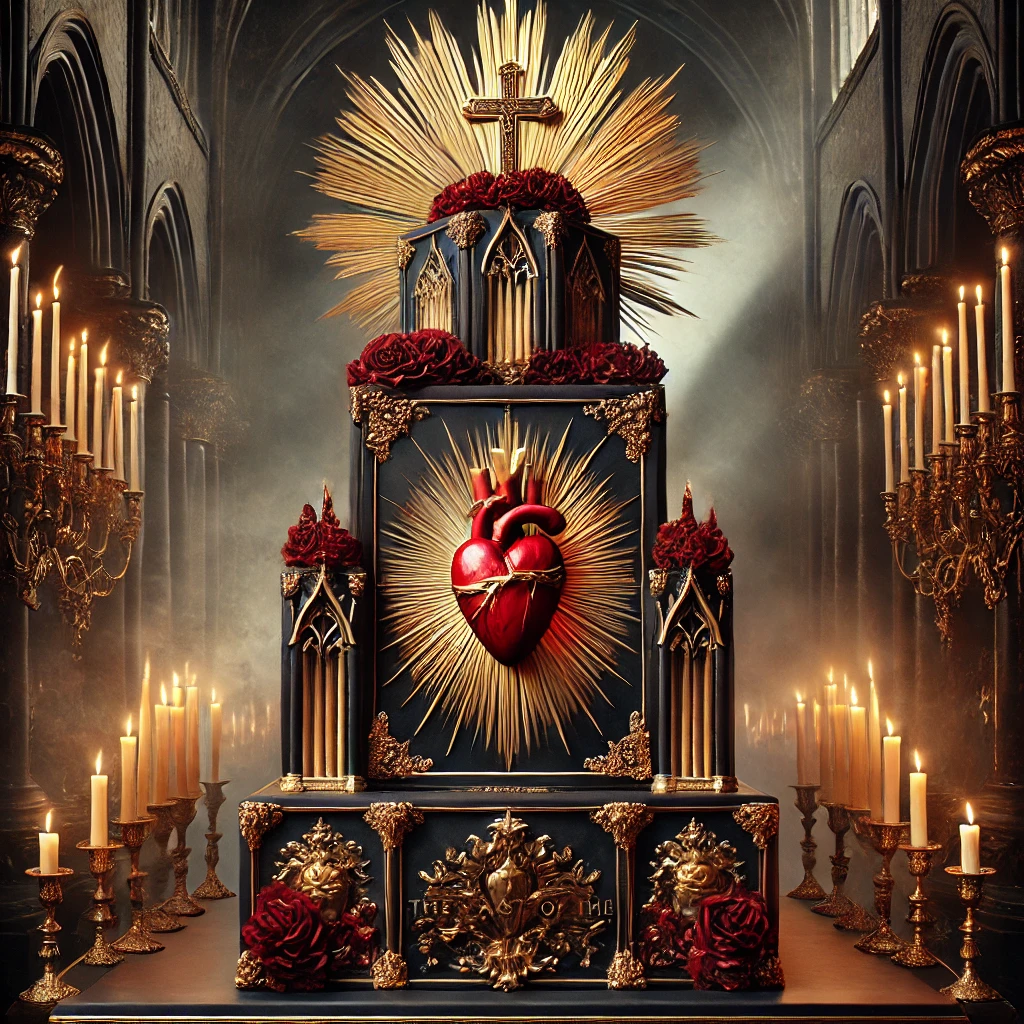
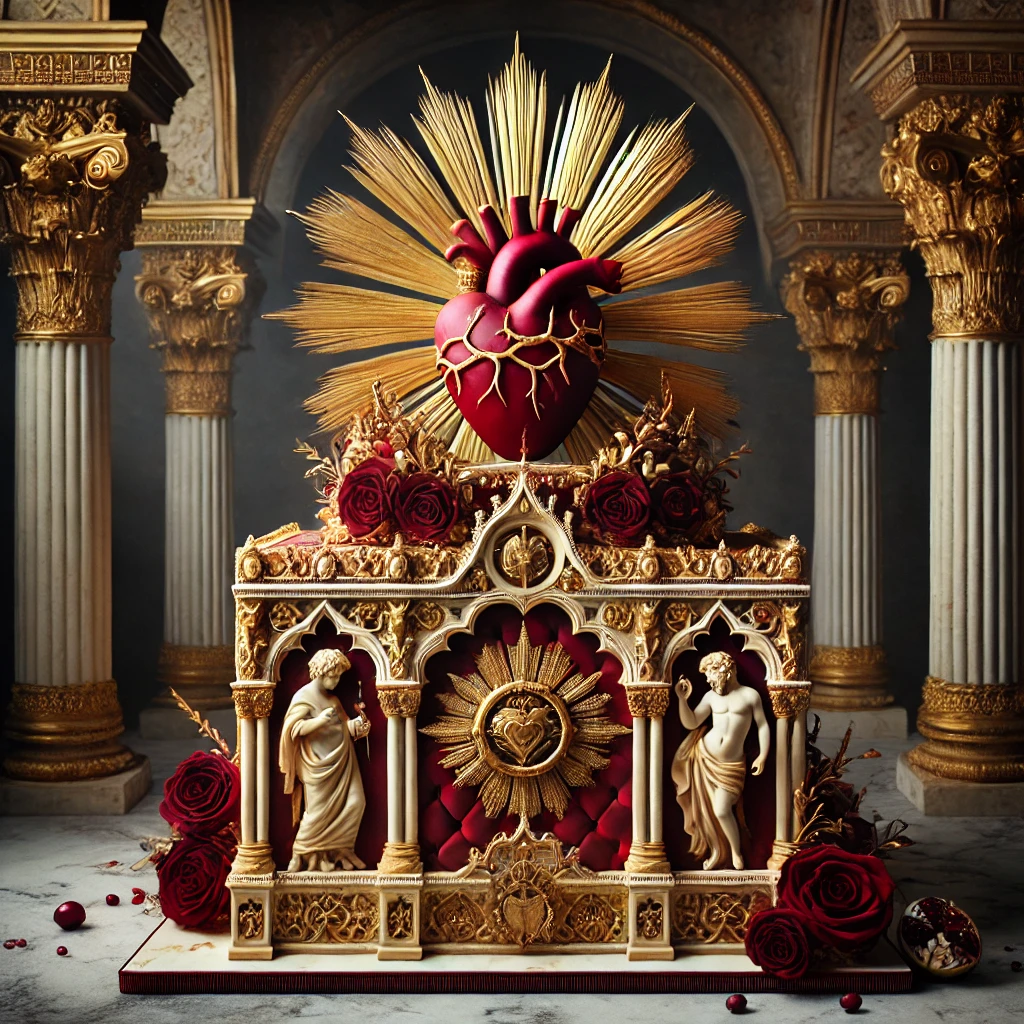
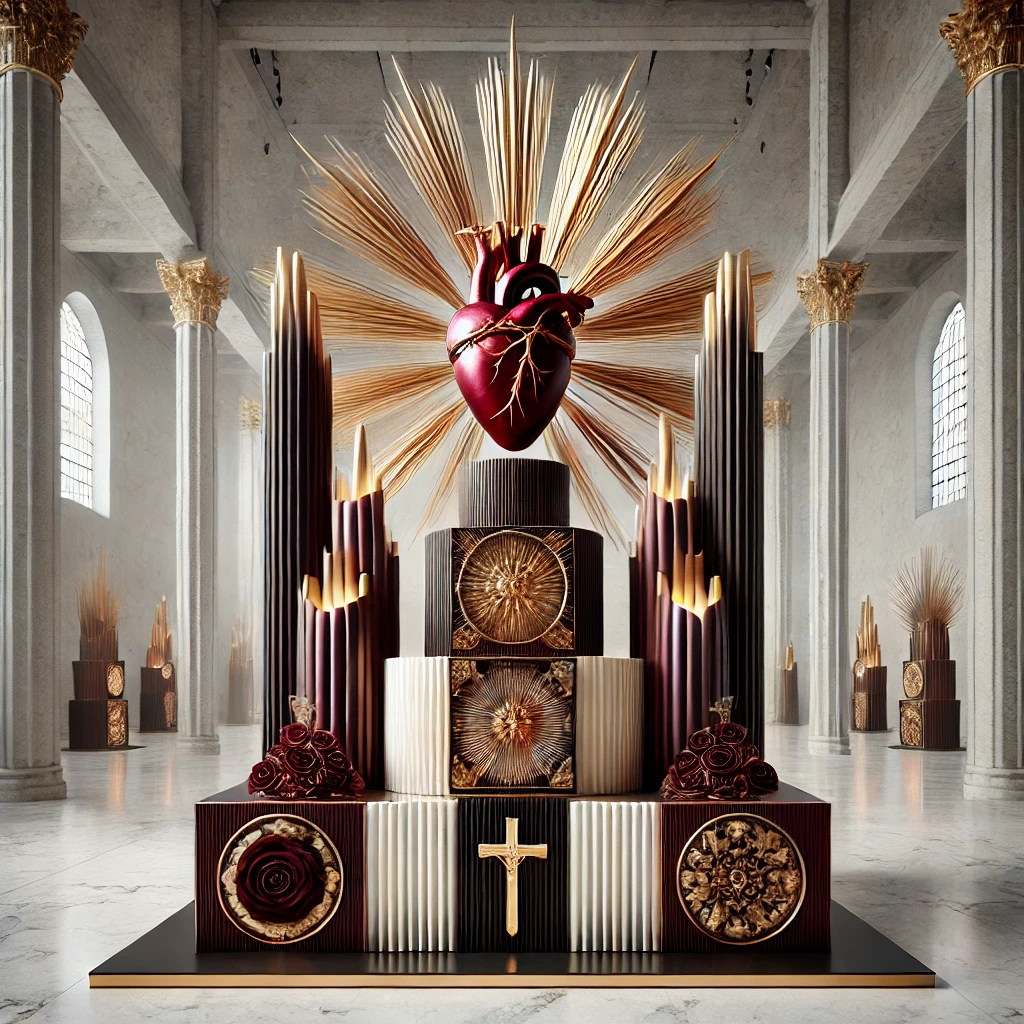
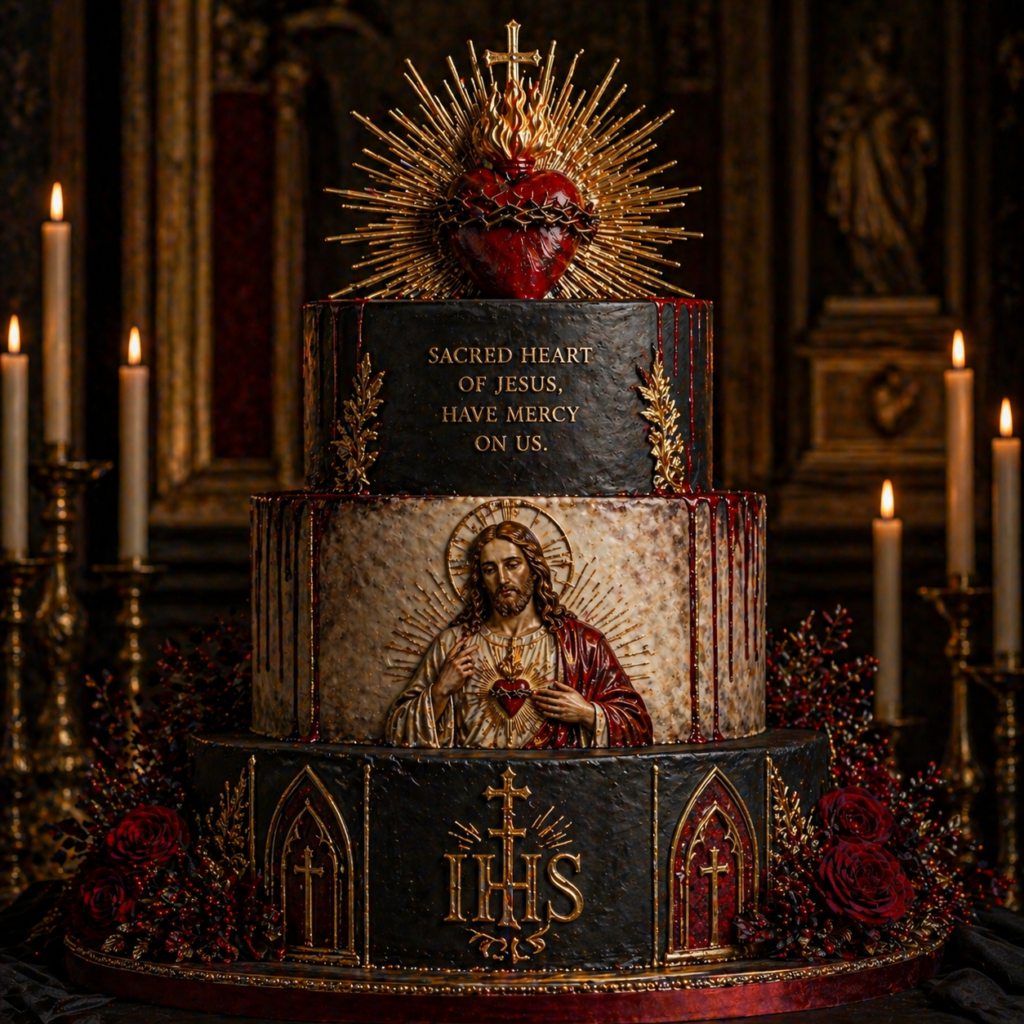
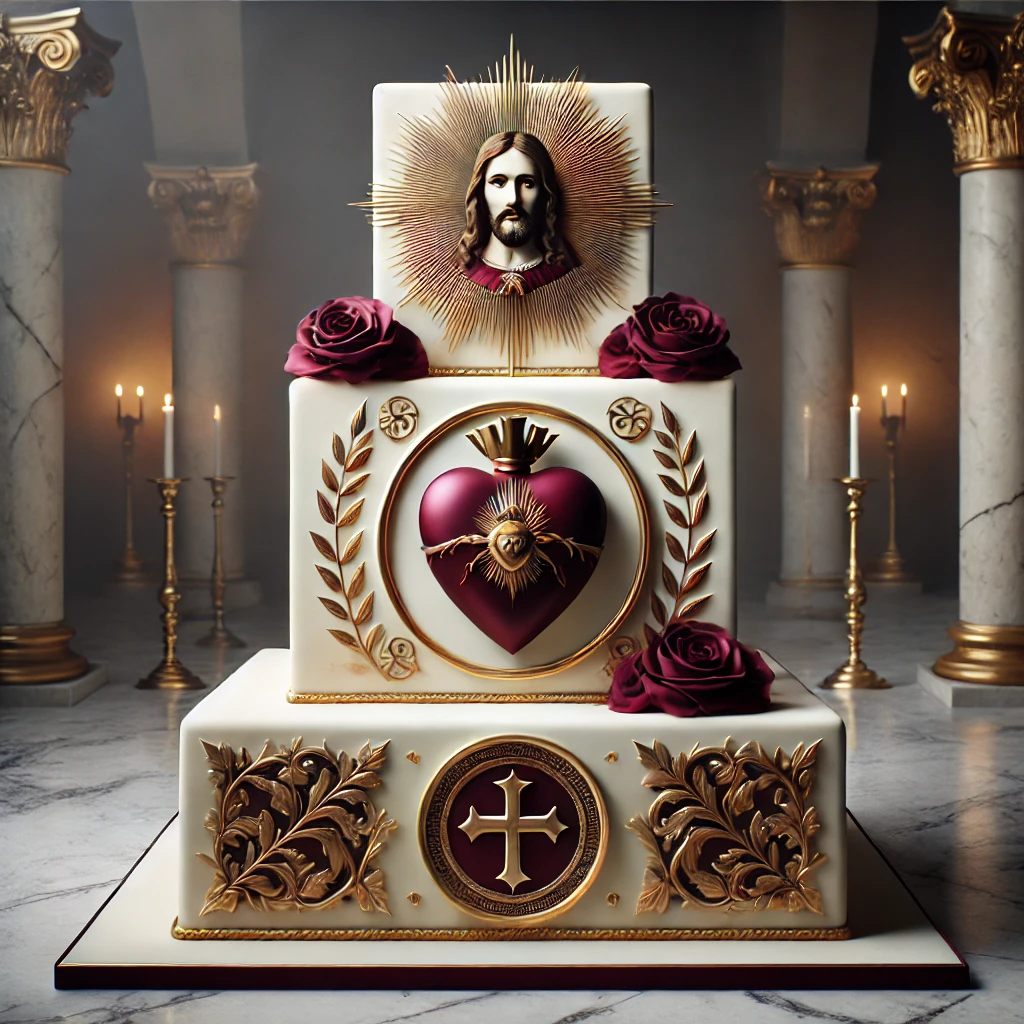
Sacred Heart of Jesus Cake & Atmosphere Ideas
Where style, memory, and celebration meet.
This section is meant to be more than Cake Decorating Ideas… it’s designed to spark inspiration and creativity, awaken tradition, and infuse your special occasions with style, identity, and atmosphere. A color palette becomes a theme. A design becomes a mood. Simple details—like sugared holly leaves or shimmering stars—can set the tone for a gathering and become part of cherished traditions and lasting memories melded with personal touch and love.
Sacred Heart of Jesus Traditional Dishes
1. Festive Meats (Especially After Friday Abstinence)
Because the feast falls on a Friday—but is a solemnity—abstinence from meat is lifted. So traditionally:
Roast beef, lamb, or pork
Hearty family meals
This reflects joy and celebration, similar to a Sunday feast.
2. Red or Heart-Themed Foods
Since the Sacred Heart is symbolized by love and fire:
Red-colored foods (berries, cherries, red wine, tomatoes)
Heart-shaped breads, cakes, or cookies
These visually reflect the burning Heart of Christ.
3. Rich Breads and Pastries
In many Catholic cultures:
Sweet breads
Brioche or enriched loaves
Pastries or cakes
These symbolize abundance and the sweetness of divine love.
4. French Traditions (Strongest Historical Influence)
Because the devotion spread through St. Margaret Mary Alacoque in France:
Festive French meals (roasts, cheeses, wine)
Desserts like custards or fruit tarts
The meal is often treated like a family celebration day.
5. Shared Family Meal
More important than specific dishes is the tradition of:
Eating together as a family
Possibly after Mass
With prayer or consecration to the Sacred Heart
This reflects the domestic church centered on Christ’s love.
6. Eucharistic Symbolism (Less Common but Meaningful)
Some incorporate symbolic elements:
Bread and wine at table (not sacramental, but symbolic)
Foods recalling sacrifice and offering