



Our Lady of Victory

with ORO VALENTIO

October 7th

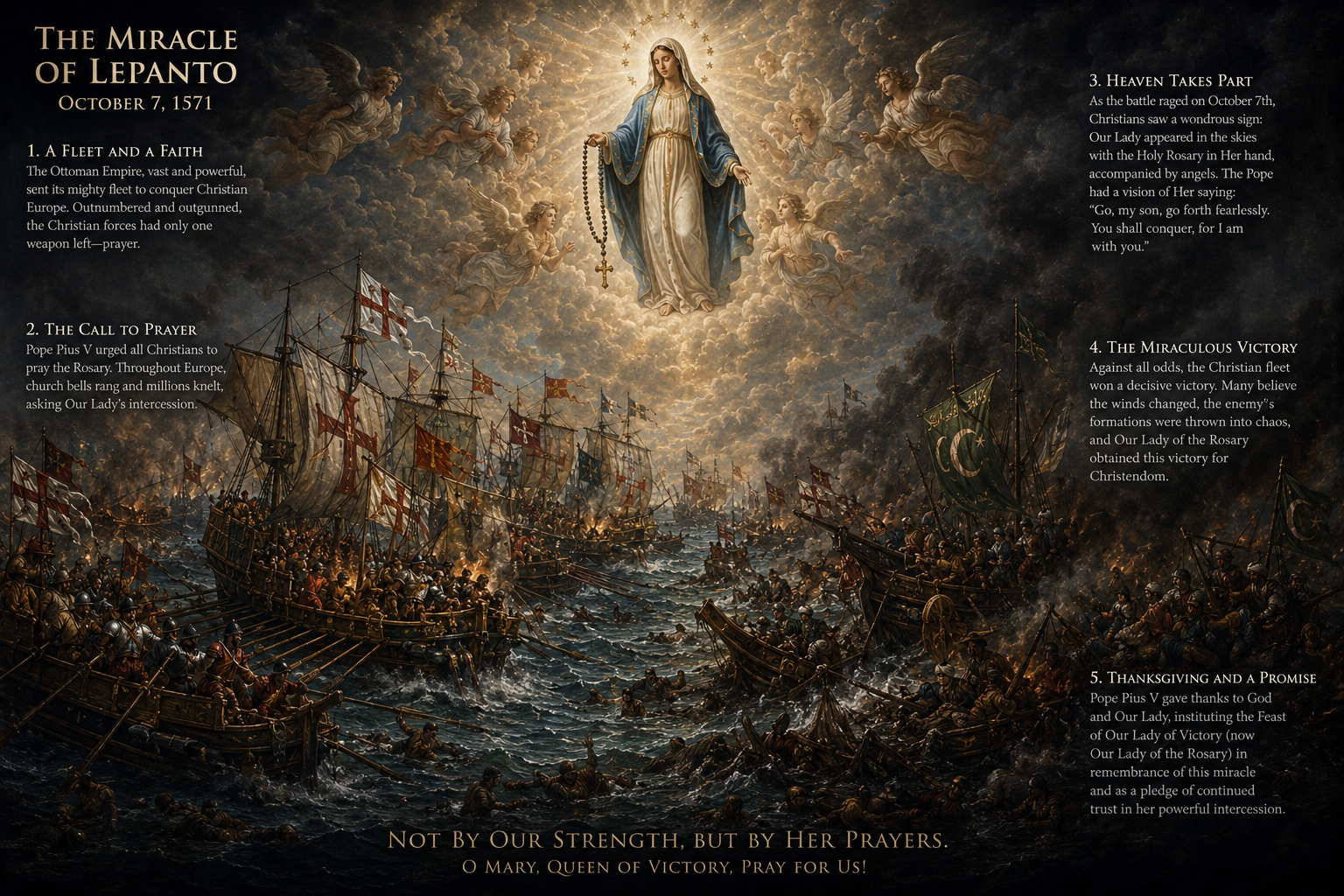
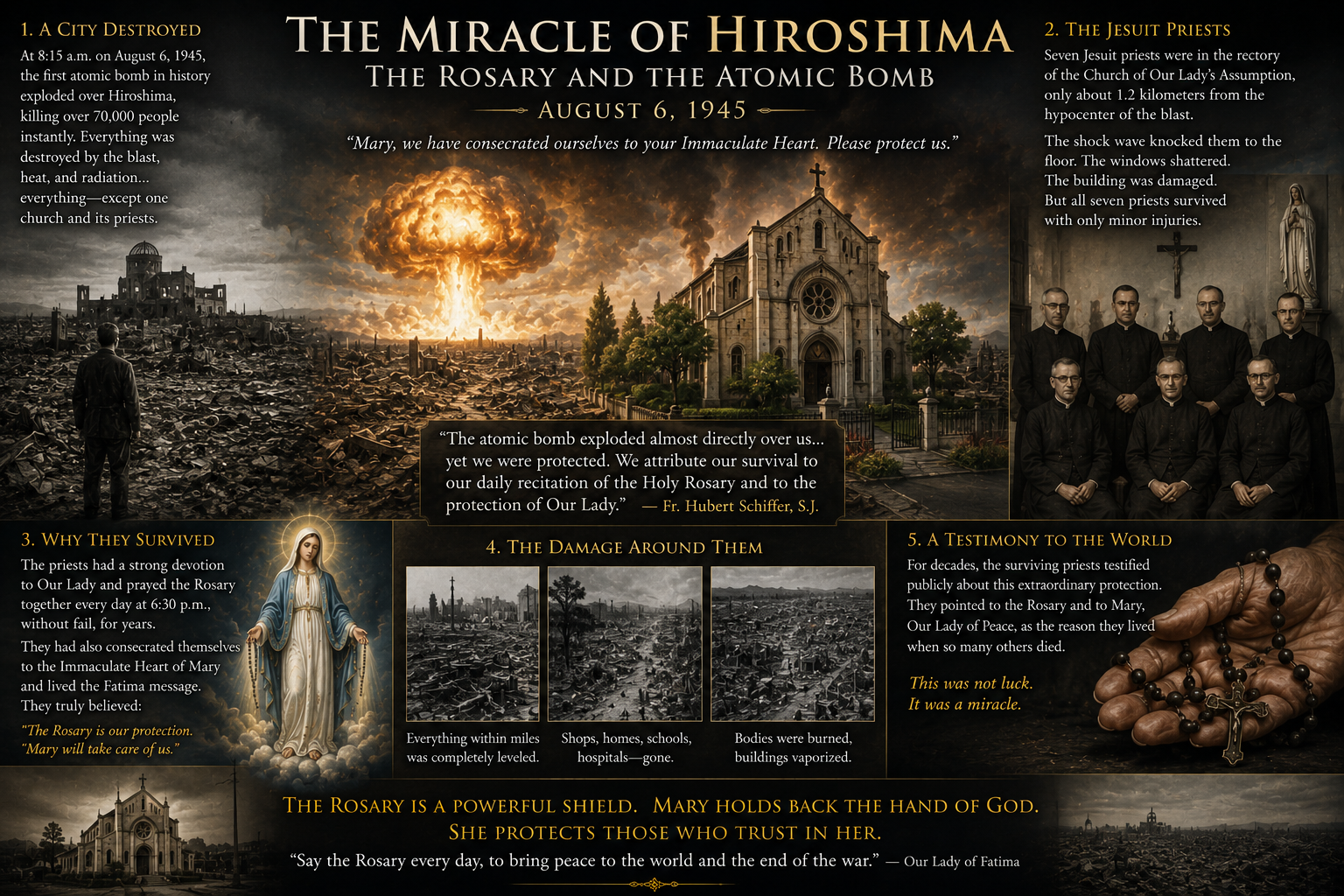
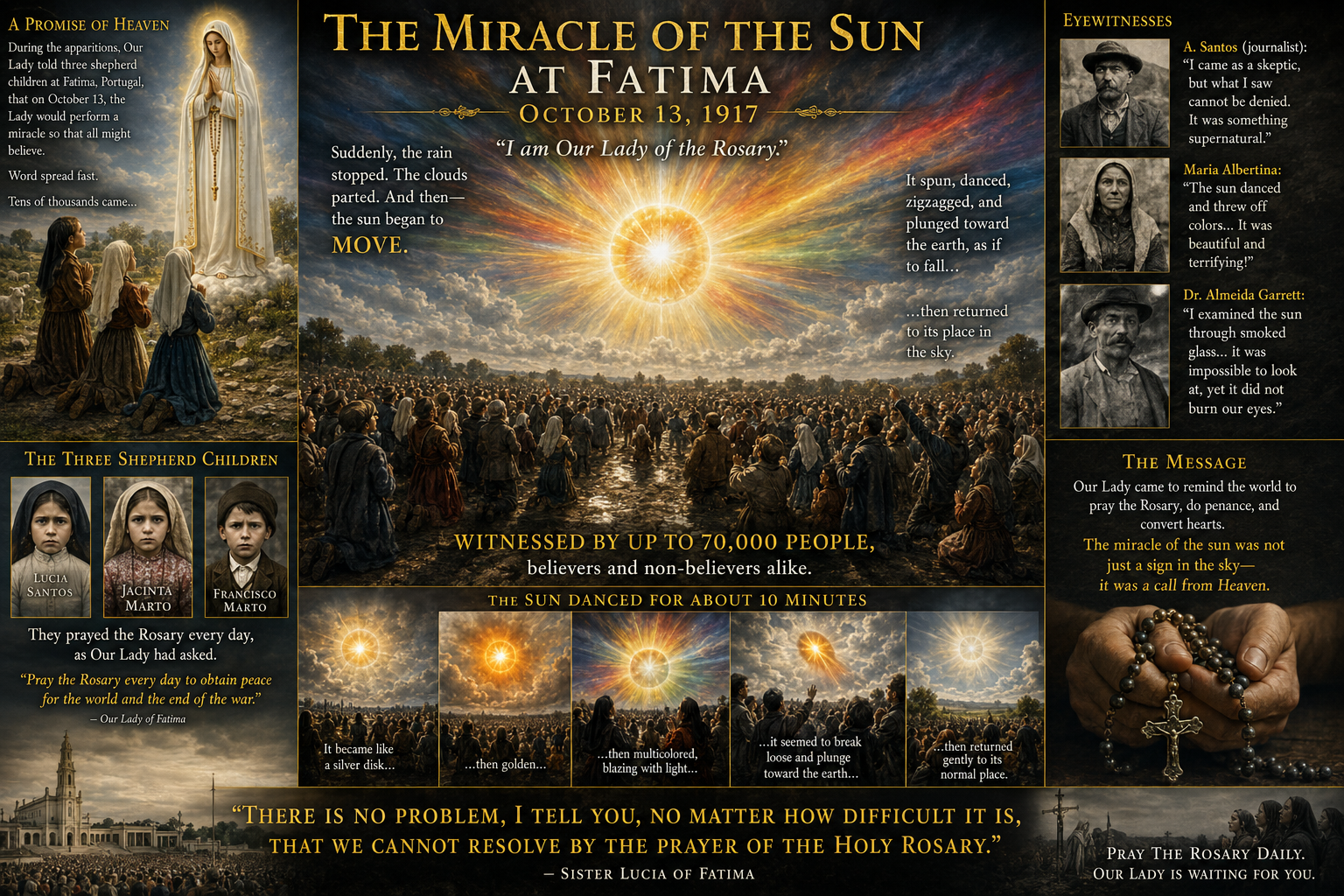
The Battle of Lepanto, fought on October 7, 1571, was one of the most consequential naval battles in history. It arose from the growing expansion of the Ottoman Empire throughout the Mediterranean and its threat to Christian territories, trade routes, and coastal populations. Following the Ottoman invasion of Cyprus and the brutal execution of the Venetian commander Marcantonio Bragadin, a coalition of Christian states known as the Holy League was formed under the leadership of Pope Pius V. Although these nations often disagreed politically, they united in the face of a common danger. Before the battle, Christians throughout Europe were urged to pray the Rosary, while many of the sailors and soldiers received the sacraments and entrusted themselves to God's protection. When the fleets finally met near Lepanto in western Greece, the Holy League achieved a stunning and unexpected victory against one of the most formidable naval powers of the age. Among the most remarkable and often overlooked aspects of the battle was the liberation of approximately twelve thousand Christian slaves who had been chained to Ottoman galleys. For these men, Lepanto was not merely a military victory but a day of freedom after years of captivity and suffering. Another fascinating detail is that the famous Spanish author Miguel de Cervantes, who would later write *Don Quixote*, fought in the battle and sustained wounds that permanently impaired the use of his left hand. He would later describe Lepanto as one of the greatest events in history. The commander of the Holy League, Don John of Austria, carried into battle a large crucifix and a banner specially blessed by Pope Pius V, while many aboard the Christian fleet prayed the Rosary as they prepared for combat. The significance of Lepanto extends far beyond military history. The victory was widely seen as a turning point that halted the seemingly unstoppable expansion of Ottoman naval power in the Mediterranean. More importantly, for countless believers of the time, it became a powerful reminder that faith, prayer, courage, and sacrifice can shape the course of history. In gratitude for the victory, Pope Pius V established a feast in honor of the Blessed Virgin Mary under the title **Our Lady of Victory**, a feast that would later become known as the Feast of **Our Lady of the Rosary**. The celebration was never intended to glorify war itself, but rather to acknowledge God's providence and the importance of united prayer in times of crisis. Even centuries later, the story of Lepanto continues to stand as a testament to perseverance, faith under pressure, and the enduring belief that the greatest victories are ultimately won not by human strength alone, but through trust in God.
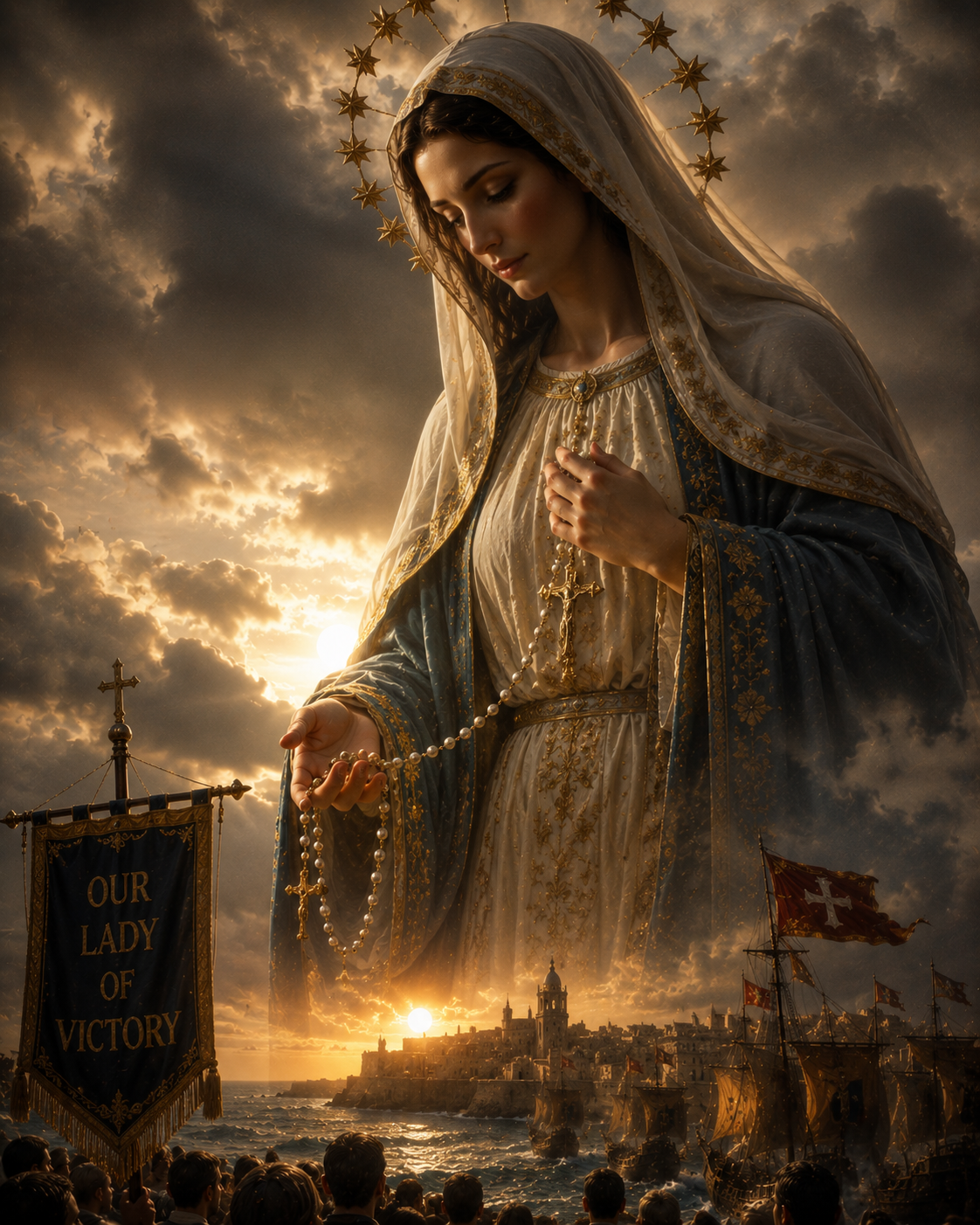
The Feast of Our Lady of the Rosary, celebrated each year on October 7, has its roots in a title that is both older and deeply significant: Our Lady of Victory. Following the Christian victory at the Battle of Lepanto in 1571—a victory widely attributed to fervent prayer of the Rosary throughout Christendom—Pope Pius V established a feast in honor of the Blessed Virgin Mary under the title Our Lady of Victory. The purpose of the feast was not to glorify warfare or earthly triumph, but to give thanks to God for His providential protection and to acknowledge the powerful intercession of the Mother of Christ. In time, the feast became known as the Feast of Our Lady of the Rosary, emphasizing the spiritual weapon through which believers had sought divine assistance. The change in title did not alter its meaning; rather, it highlighted the profound connection between Mary’s intercession and the prayer of the Rosary.
At its heart, this feast is not primarily about a historical event, but about a spiritual reality that extends far beyond any single moment in history. The title Our Lady of Victory points to the ultimate victory won by Jesus Christ through His Passion, Death, and Resurrection—a victory over sin, death, and the powers of darkness. Mary’s role is never independent of her Son’s saving work. Throughout Scripture, she appears as the humble servant of the Lord whose entire mission is to lead souls to Christ. The Rosary reflects this truth beautifully. Through its mysteries, believers contemplate the life, ministry, suffering, death, and glory of Jesus, seeing these events through the eyes of the one who knew and loved Him most perfectly. The Rosary is therefore not merely a series of repeated prayers, but a meditation on the Gospel itself, drawing the soul ever deeper into the mystery of redemption.
There is a remarkable wisdom and simplicity within this devotion. In a world often marked by distraction and noise, the Rosary invites the heart into recollection and contemplation. Each decade becomes an opportunity to reflect upon the saving work of God, while the rhythmic repetition of prayer quiets the mind and strengthens the soul. Through this discipline, believers learn perseverance, humility, patience, and trust. The Rosary forms the interior life by gently turning the heart away from anxiety and self-reliance and toward faith in God’s providence. It is both a prayer of contemplation and a school of discipleship.
The title Our Lady of Victory also reminds believers that the greatest victories are often hidden from the eyes of the world. The triumphs most pleasing to God are not those won by force, power, or earthly success, but those won through faithfulness, repentance, prayer, and love. Every temptation resisted, every act of forgiveness offered, every suffering borne with trust, and every soul drawn closer to God is a participation in the victory of Christ. In this light, the Rosary becomes a powerful instrument of spiritual renewal—a means by which hearts are strengthened, virtues are cultivated, and lives are gradually conformed to the will of God.

The Rosary as a Weapon

The title Our Lady of Victory has long reminded believers that the greatest battles in life are not fought on distant fields or upon the stage of history, but within the human heart. Every age faces its own struggles: temptation, discouragement, confusion, pride, fear, despair, and the countless distractions that draw the soul away from God. Throughout the centuries, saints and spiritual masters consistently pointed to the Rosary as one of the most effective means of overcoming these interior battles. They saw it not merely as a devotion, but as a spiritual discipline capable of transforming the soul through persistent contemplation of the mysteries of Christ.
What makes the Rosary so powerful is its unique ability to unite prayer with meditation. While the lips repeat familiar prayers, the mind is drawn into the life of Jesus Christ. The soul gradually learns to see through His eyes, to love what He loves, and to desire what He desires. The saints often taught that the Rosary slowly forms the interior life in ways that are often hidden at first. It cultivates humility where there is pride, peace where there is anxiety, purity where there is disorder, and trust where there is fear. Its work is gentle, but profound. Like water wearing away stone, the Rosary gradually reshapes the heart according to the image of Christ.
For this reason, many saints referred to the Rosary as a weapon—not because it conquers enemies through force, but because it helps conquer the enemies that most threaten the soul. It strengthens faith during periods of doubt, perseverance during trials, and hope during moments of darkness. Generations of believers have testified that through faithful prayer of the Rosary they found the grace to overcome habitual sin, endure suffering with courage, forgive injuries, resist temptation, and remain faithful amid great difficulties. Its victories are often unseen by the world, yet they are victories of eternal significance.
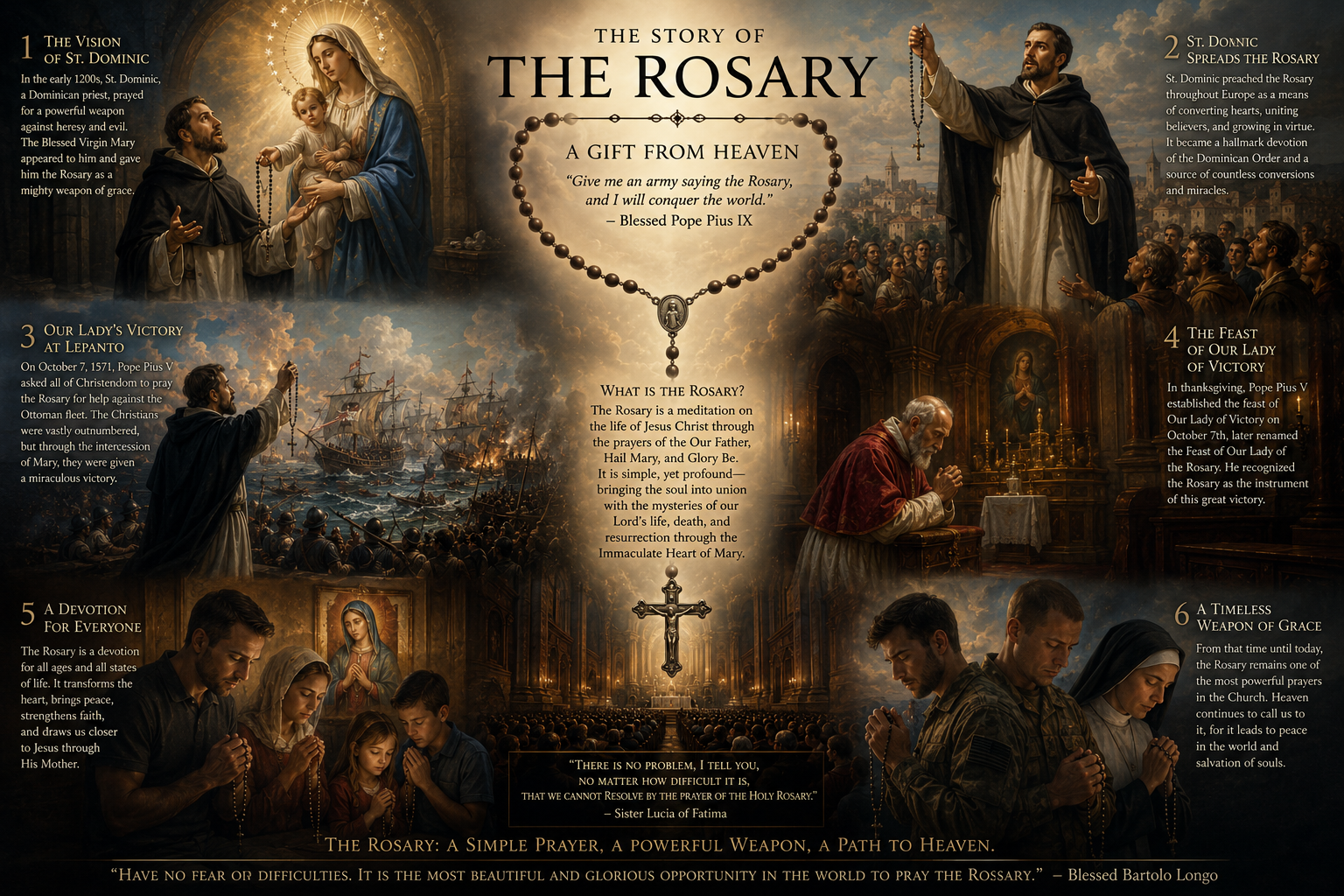
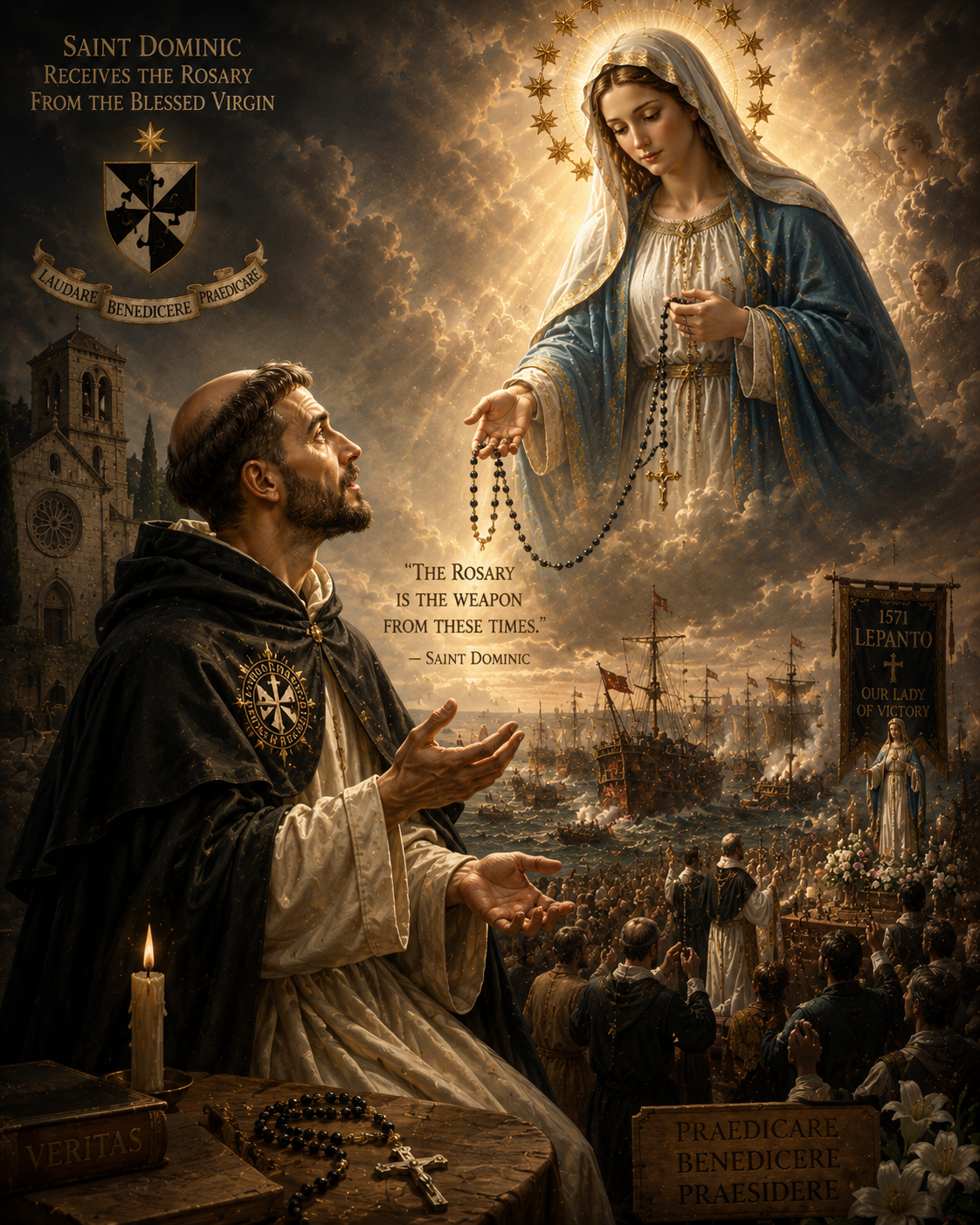
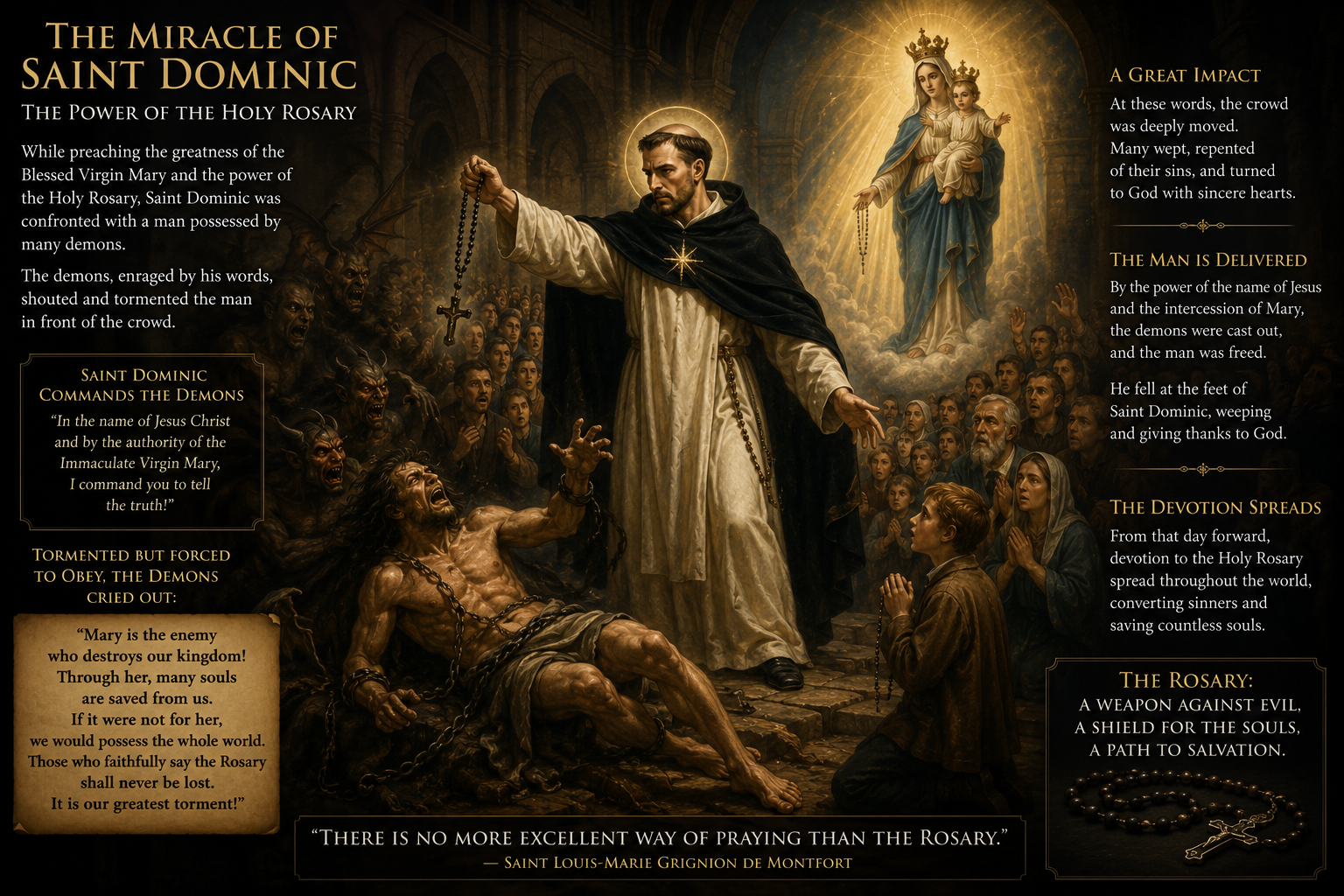
According to longstanding Christian tradition, during the early 13th century Saint Dominic was struggling against heresy in southern France and praying fervently for guidance. Tradition holds that the Blessed Virgin Mary appeared to him and encouraged the use of what would later develop into the Rosary as a powerful means of preaching the Gospel, converting sinners, and strengthening the faith of believers. While historians debate the exact historical details of this tradition, there is no doubt that the Dominican Order became one of the principal promoters of the Rosary throughout the Christian world. This connection became especially significant centuries later at the Battle of Lepanto in 1571. As Christian Europe faced the threat of Ottoman expansion, Pope Pius V called upon the faithful to pray the Rosary for divine assistance. Pius V himself was a Dominican deeply devoted to the Rosary and inherited the Rosary spirituality that had been preserved and promoted by the sons of Saint Dominic for generations. After the unexpected Christian victory, Pius V established a feast in honor of the Blessed Virgin under the title Our Lady of Victory. A few years later, the feast became known as the Feast of Our Lady of the Rosary, explicitly linking the victory to the widespread prayer of the Rosary. So while Saint Dominic was not directly connected to the Battle of Lepanto or the title "Our Lady of Victory," he stands at the beginning of the tradition that made the Rosary such a central devotion in Christian life.
The title Our Lady of Victory points to this deeper reality. The Blessed Virgin is honored under this name because she continually leads souls to the victory of her Son. Every conversion, every act of repentance, every temptation resisted, every virtue acquired, and every soul brought closer to God is a participation in Christ’s triumph over sin and death. The Rosary remains one of the most beloved paths by which believers enter into that victory. Through its mysteries, the soul learns that true greatness is found not in power or success, but in holiness; not in self-assertion, but in surrender to God; and not in earthly triumphs, but in the eternal kingdom won by Jesus Christ.
To honor Our Lady of Victory, therefore, is to remember that the decisive battle has already been won through Christ’s Cross and Resurrection. Yet it is also an invitation to enter more fully into that victory through prayer, conversion, and faithful perseverance. The Rosary remains a powerful companion on that journey, helping believers keep their eyes fixed upon Christ until the final victory is complete.

Our Lady of Victory Traditions to Make Your Own

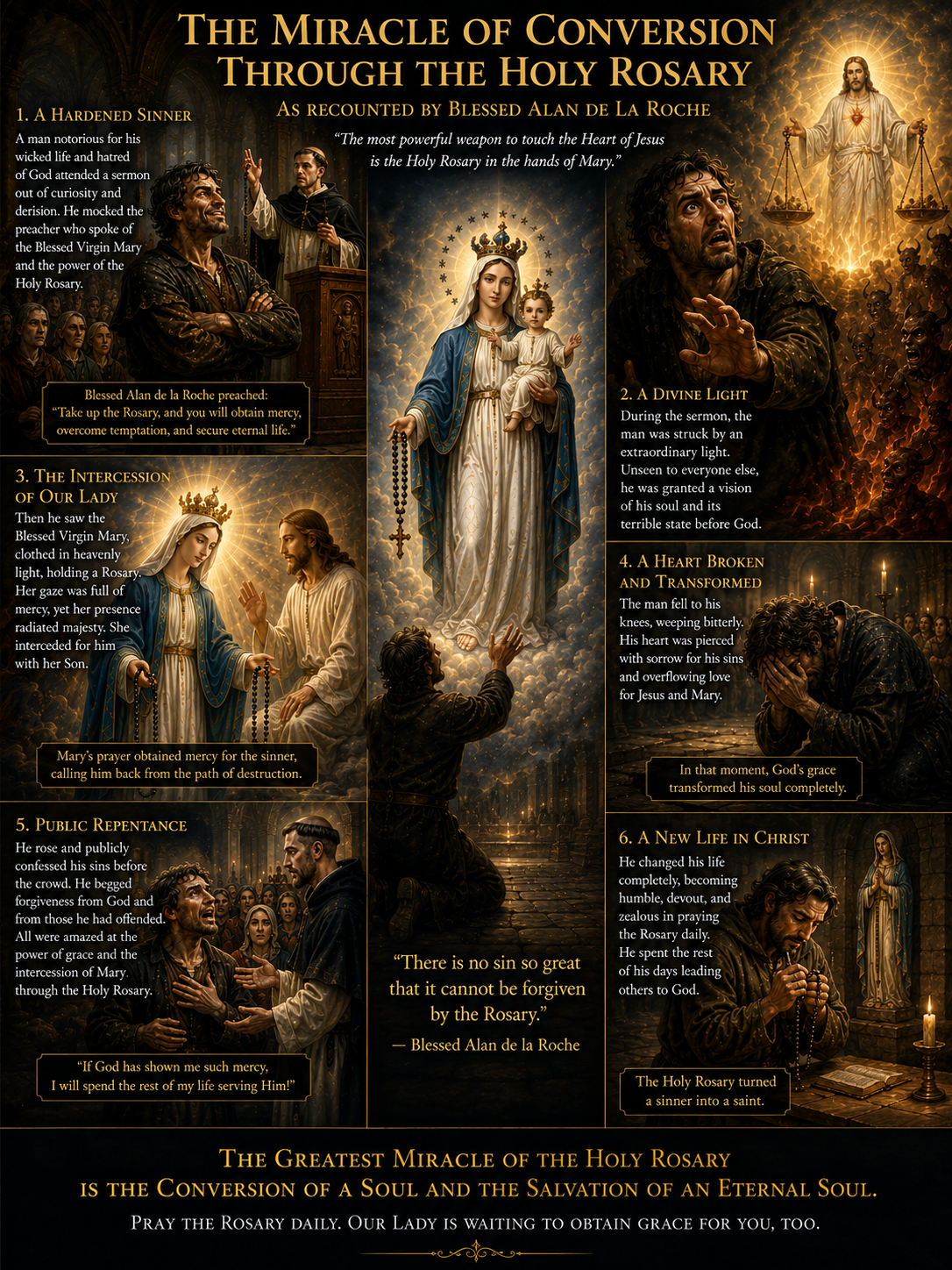
Throughout the centuries, countless saints, missionaries, martyrs, and spiritual masters have spoken of the Rosary as one of the most powerful prayers ever entrusted to the faithful. Again and again, holy men and women testified that the Rosary has been an instrument of conversion, a source of strength in temptation, a defense against spiritual darkness, and a pathway to deeper union with Jesus Christ. Its power does not arise from mere repetition, but from its ability to immerse the soul in the mysteries of Christ's life, death, and resurrection. Through the Rosary, believers contemplate the Gospel with the Blessed Virgin Mary, allowing the truths of salvation to move from the mind into the heart and gradually transform the whole person. Many saints described the Rosary as a spiritual weapon in the battle against sin and evil. Saint Dominic promoted it as a means of strengthening faith and combating error. Saint Louis de Montfort called it a powerful means of conversion and sanctification. Saint Pio of Pietrelcina referred to the Rosary as his "weapon" and urged believers to carry it always. Saint John Paul II described it as one of the most effective schools of prayer, capable of leading souls into profound contemplation of Christ. Across generations, saints consistently taught that those who faithfully pray the Rosary grow in virtue, receive grace to persevere through trials, and become more deeply conformed to the will of God. The power of the Rosary is found in its unique ability to unite vocal prayer, meditation, and contemplation. As the prayers are repeated, the soul is invited into a deeper recollection of the mysteries of redemption. The Annunciation teaches humility, the Nativity teaches gratitude, the Crucifixion teaches sacrificial love, and the Resurrection inspires hope in eternal life. Through this continual meditation upon the life of Christ, the Rosary forms the interior life, purifies the heart, strengthens faith, and cultivates the virtues necessary for holiness. History is filled with accounts of individuals, families, communities, and even entire nations turning to the Rosary during times of crisis. In moments of persecution, war, disease, and uncertainty, believers have found in this prayer a source of peace, courage, and perseverance. Yet the greatest victories attributed to the Rosary have never been earthly triumphs alone. The saints repeatedly taught that its most profound fruits are repentance, conversion, growth in holiness, and the salvation of souls. Every temptation resisted, every vice overcome, every heart reconciled to God, and every soul drawn closer to Christ is a victory flowing from the grace obtained through faithful prayer. For this reason, the Rosary has endured for centuries as one of the most beloved devotions in Christian history. It is more than a collection of prayers or a cherished tradition. It is a school of discipleship, a guide to contemplation, a source of spiritual strength, and a means by which countless souls have been led closer to Jesus Christ. Through the gentle guidance of His Blessed Mother, the Rosary invites believers to enter ever more deeply into the mysteries of redemption and to participate more fully in the victory of Christ over sin, death, and the powers of darkness.
Praying the Rosary
Individuals, families, and communities devote time to praying the Rosary with intention, meditating on the mysteries of Christ’s life. Whether done in quiet solitude or as a group, this practice brings focus to the mind, steadiness to the heart, and a deeper alignment with faith through disciplined reflection.
Attending Mass
Many honor the day by participating in Mass dedicated to the Blessed Virgin Mary under this title. The liturgy emphasizes perseverance, trust in God, and the strength found through faithful prayer, offering a structured and reverent way to observe the feast.
Rosary Processions
In some places, the faithful gather for processions while praying the Rosary together. Walking in unity symbolizes shared purpose and collective devotion, often accompanied by sacred music or a quiet, reflective atmosphere.
Family Devotion at Home
Families may set aside intentional time to pray together, place a Rosary in a meaningful space, or light candles as a sign of reverence. These simple acts create an environment of peace and reinforce the importance of faith within the home.
Offering Intentions
A key tradition is praying the Rosary for specific intentions—such as guidance, protection, or peace. This reflects the historical roots of the feast, where unified prayer was offered during times of great need, and continues as a way to seek strength and clarity today.

Strengthen Me Against Temptation

Our Lady of Victory, Mother of Jesus Christ and Mother of all who seek to follow Him, I come before you with confidence, and trust.
You who remained faithful beneath the Cross when others fled, teach me to stand firm in faith when trials arise. You who believed God’s promises even in moments of uncertainty, help me to trust His providence when I cannot see the path before me. You who surrendered your entire life to the will of God, obtain for me the grace to place His will above my own desires.
Our Lady of Victory, pray for me in the battles of daily life. Strengthen me against temptation and help me grow in purity, courage, humility, and perseverance. Teach me to reject pride and selfishness, and to embrace the strength that comes from obedience to God. May I never seek victory through power, anger, or domination, but through truth, self-mastery, sacrifice, and love.
Help me to imitate your Son, Jesus Christ, whose strength was revealed through humility, whose authority was exercised through service, and whose victory was won through the Cross. Form my heart according to His Sacred Heart. Teach me to lead with integrity, protect those entrusted to my care, remain faithful in adversity, and persevere in prayer when the battle is difficult.
Mother of God, you have guided countless souls toward your Son throughout the centuries. Take me by the hand and lead me ever closer to Him. May the Holy Rosary become for me a source of grace, a school of discipleship, and a weapon against all that seeks to separate me from God. Through meditation upon the mysteries of Christ’s life, help me to grow in wisdom, discipline, and holiness.
Our Lady of Victory, intercede for my family, my friends, my community, and for all who struggle in faith. Obtain for us the grace to remain steadfast amid the trials of this life and to keep our eyes fixed upon the eternal kingdom won by your Son.
May every victory in my life belong to God alone. May every grace draw me closer to Christ. May I one day join you and the saints in the glory of Heaven, where every tear is wiped away.
Our Lady of Victory, pray for us. Amen.
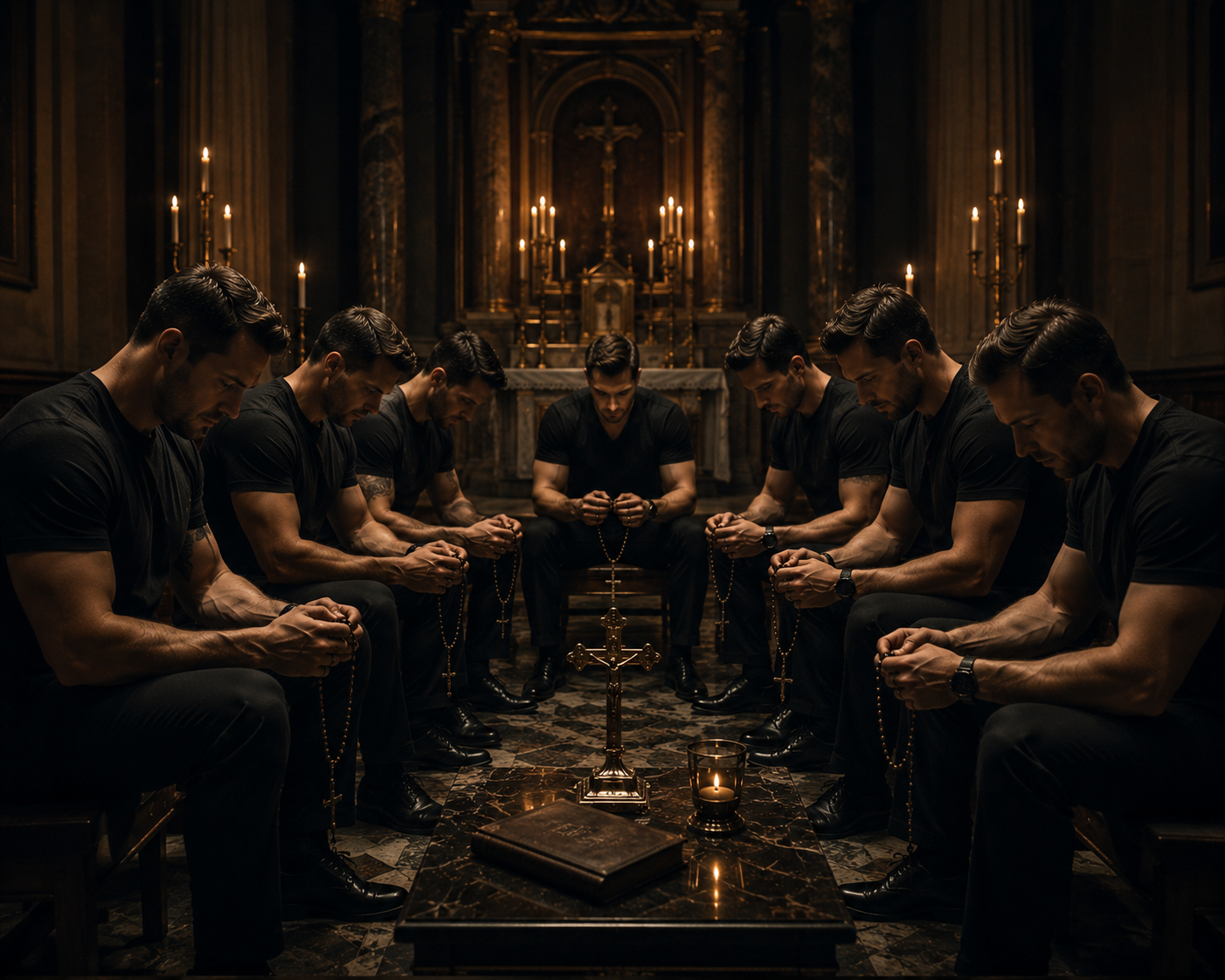
In an age that often misunderstands both masculinity and devotion, some men mistakenly assume that honoring the Blessed Virgin Mary is somehow incompatible with strength, leadership, or authentic manhood. Yet history, Scripture, and the witness of countless saints reveal precisely the opposite. The strongest men in Christian history have often been among the most devoted to the Mother of God. Far from diminishing masculinity, true devotion to Mary strengthens it by drawing men more deeply into the life and example of Jesus Christ Himself. If manhood is measured by one's ability to love sacrificially, lead courageously, remain steadfast under pressure, and fulfill one's responsibilities with integrity, then no man embodied these virtues more perfectly than Christ. And Christ, even in the midst of His suffering on the Cross, honored His Mother and entrusted her to His beloved disciple. To imitate Christ fully is therefore to embrace the virtues He lived, including filial love, reverence, humility, and honor toward His Mother. Devotion to Mary does not replace devotion to Christ; it deepens it. Throughout history, saints have consistently taught that the Blessed Virgin's entire mission is to lead souls to her Son. A man's relationship with Mary should never make him passive, sentimental, or weak. Rather, it should help form within him the virtues that define true masculine strength. Mary teaches obedience to God's will when it is difficult, courage when circumstances are uncertain, perseverance amid suffering, and unwavering faith in the face of adversity. These are not soft virtues; they are the very foundations of spiritual maturity and authentic leadership. The greatest men are not those who seek domination or self-glorification, but those who master themselves. The Rosary, Marian devotion, and meditation upon the life of Christ cultivate precisely this kind of strength. They train a man to discipline his thoughts, govern his passions, resist temptation, and orient his life toward higher purposes. In a culture that often encourages impulsiveness, pride, and self-indulgence, devotion to Mary calls men toward humility, purity, self-control, and sacrificial love. These qualities do not weaken a man—they forge him into someone capable of protecting, providing, leading, and serving with wisdom and conviction. History provides countless examples of strong men whose devotion to the Mother of God enhanced rather than diminished their masculinity. Kings, soldiers, missionaries, explorers, monks, fathers, and saints carried the Rosary into battlefields, prisons, wildernesses, and places of great hardship. They understood that strength is not measured merely by physical power, but by the ability to remain faithful to God regardless of the cost. Many of the Church's most fearless defenders and reformers openly professed deep love for Mary because they recognized that she continually directs souls toward greater conformity to Christ. At its deepest level, devotion to the Mother of God reminds men of their true identity. Every man is called to become more like Jesus Christ—the perfect man whose strength was revealed not through domination but through self-sacrifice, whose authority was exercised through service, and whose victory came through obedience to the Father's will. Mary helps men grow into that likeness. She does not draw attention to herself, but continually points toward her Son, teaching by her example what it means to trust God completely. For this reason, authentic devotion to Mary should never be viewed as emasculating. On the contrary, it forms men in courage, discipline, purity, humility, and faith. It strengthens character, clarifies purpose, and helps cultivate the kind of manhood that reflects the strength of Christ Himself—a strength rooted not in pride or power, but in holiness, truth, and love.

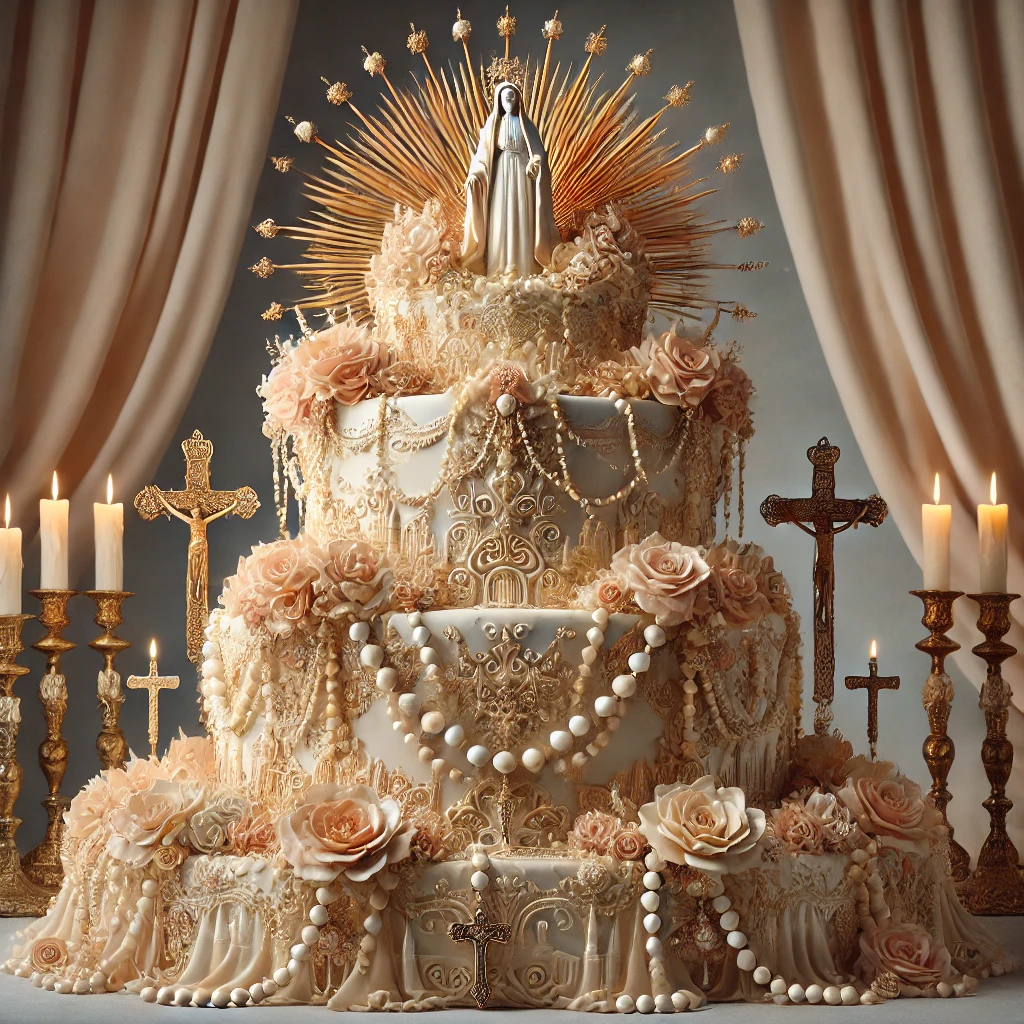
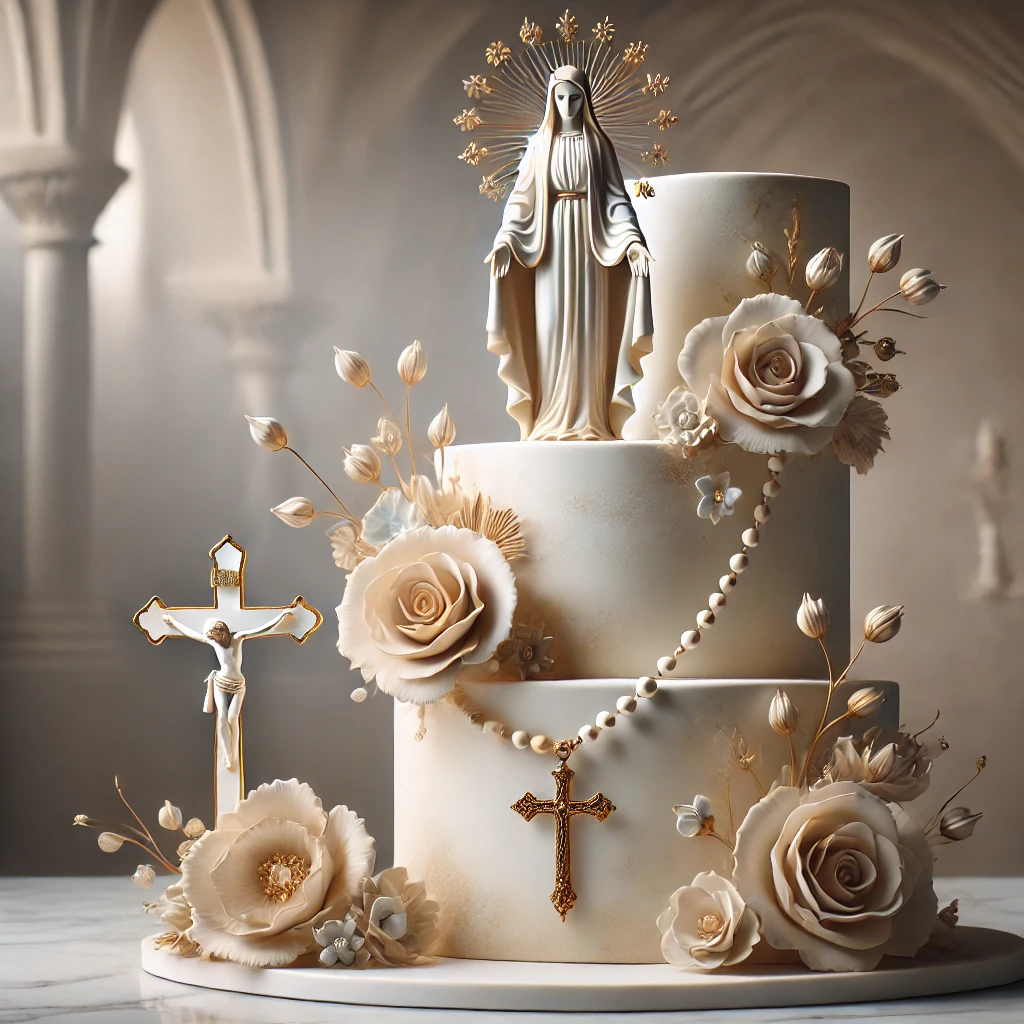
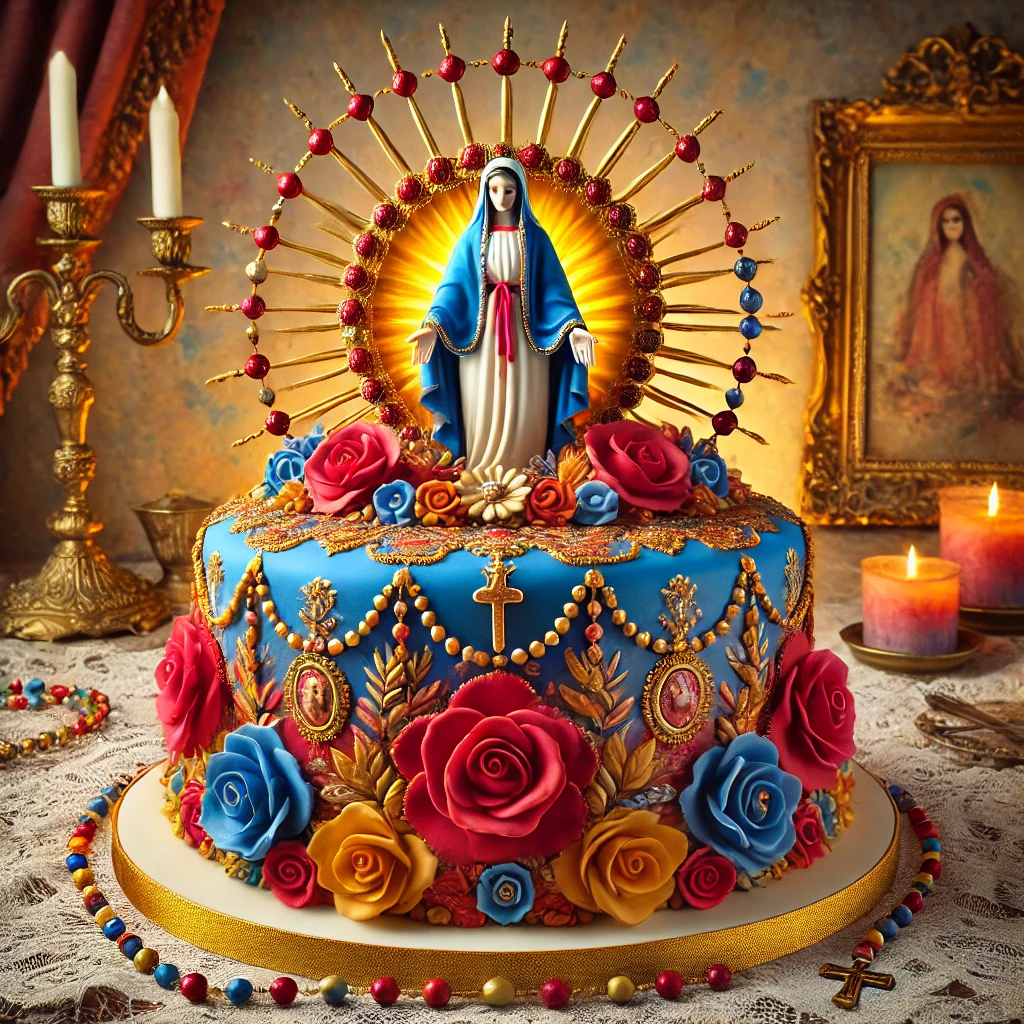
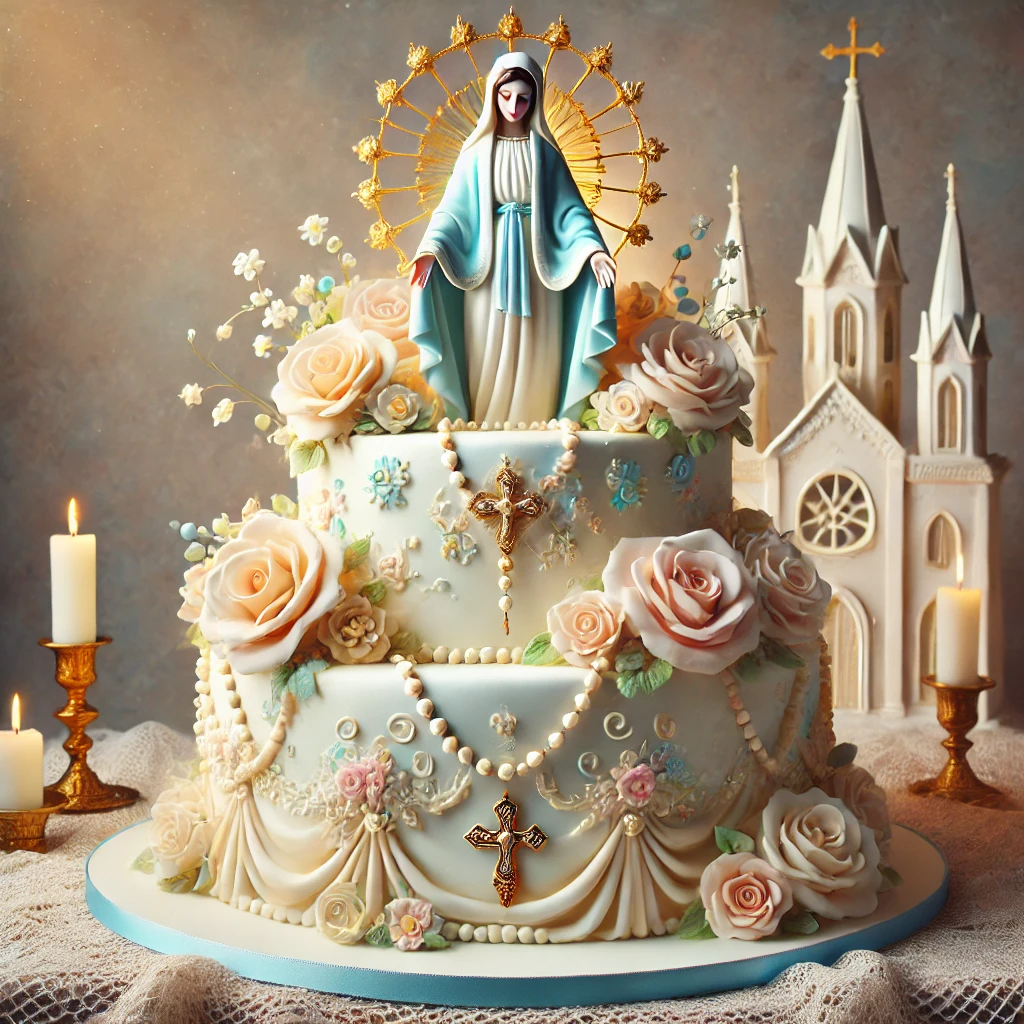
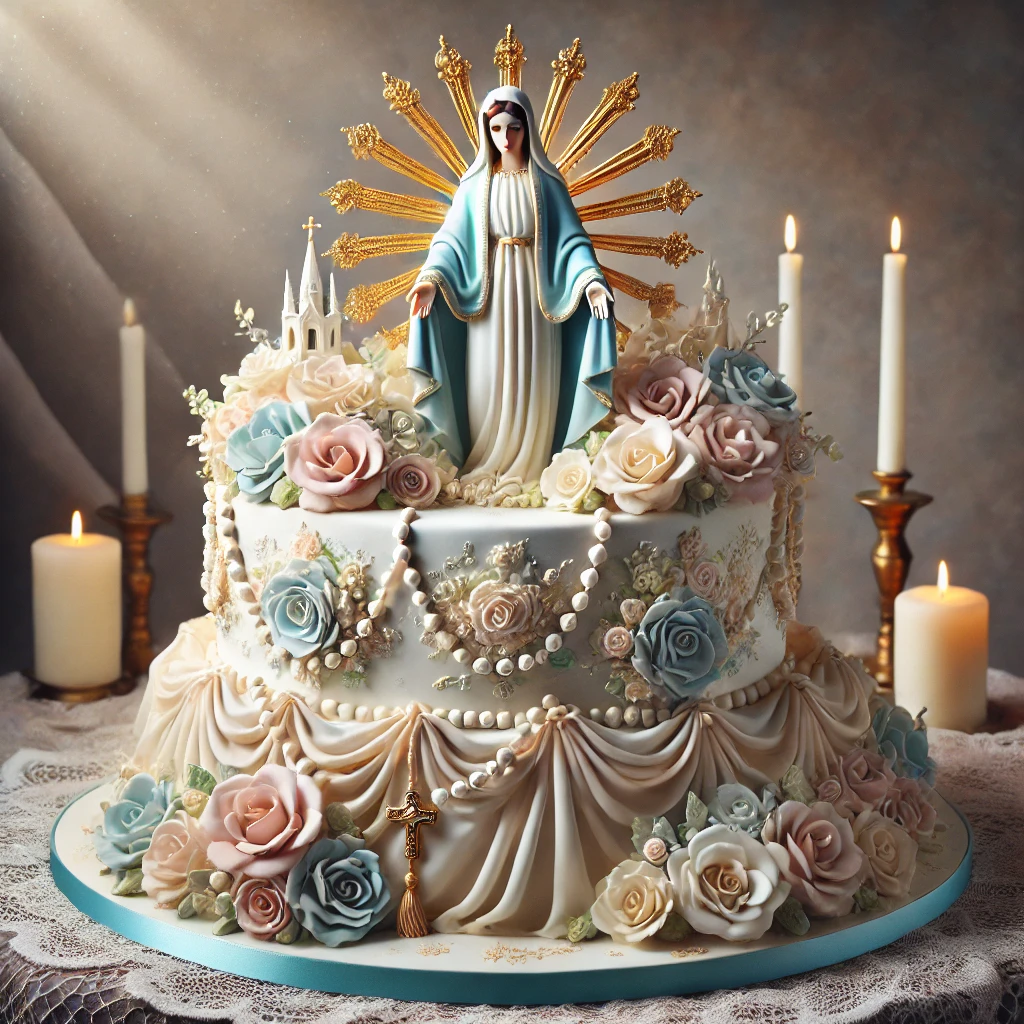
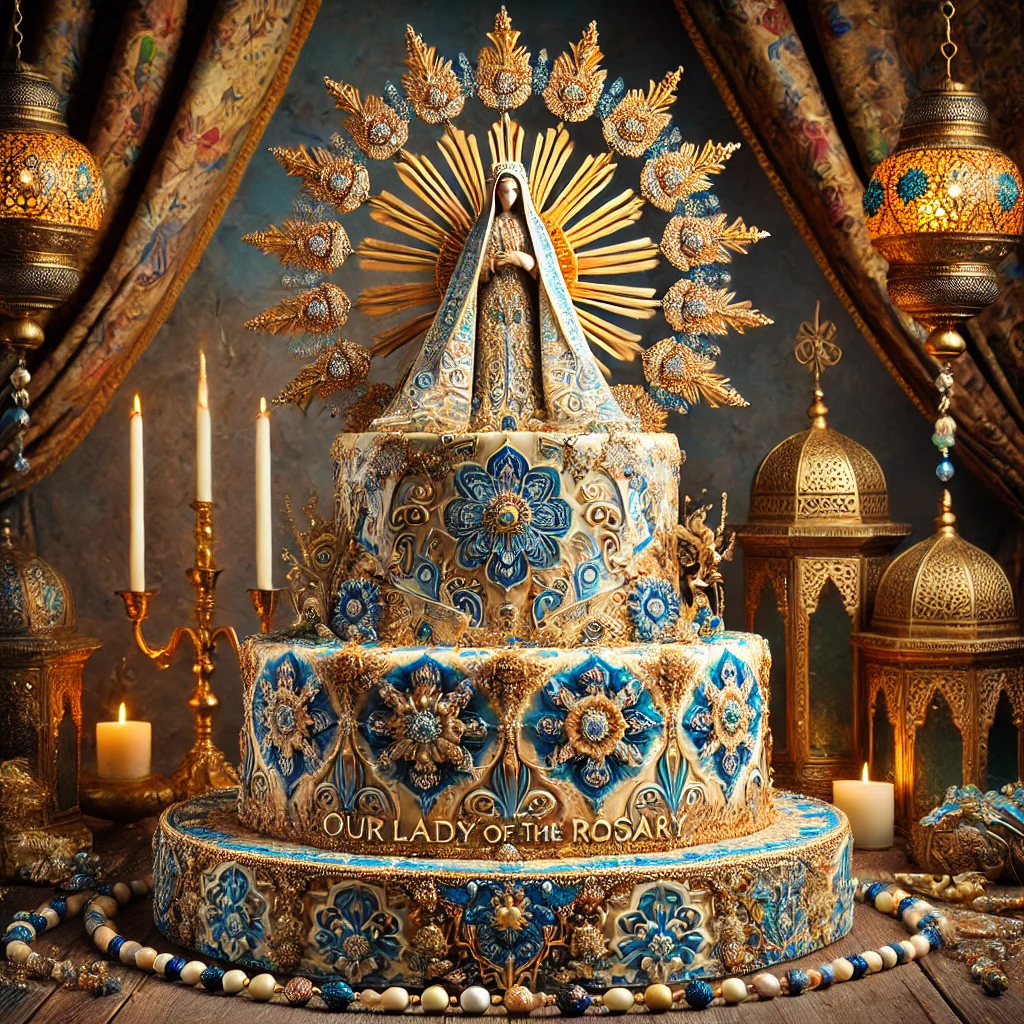
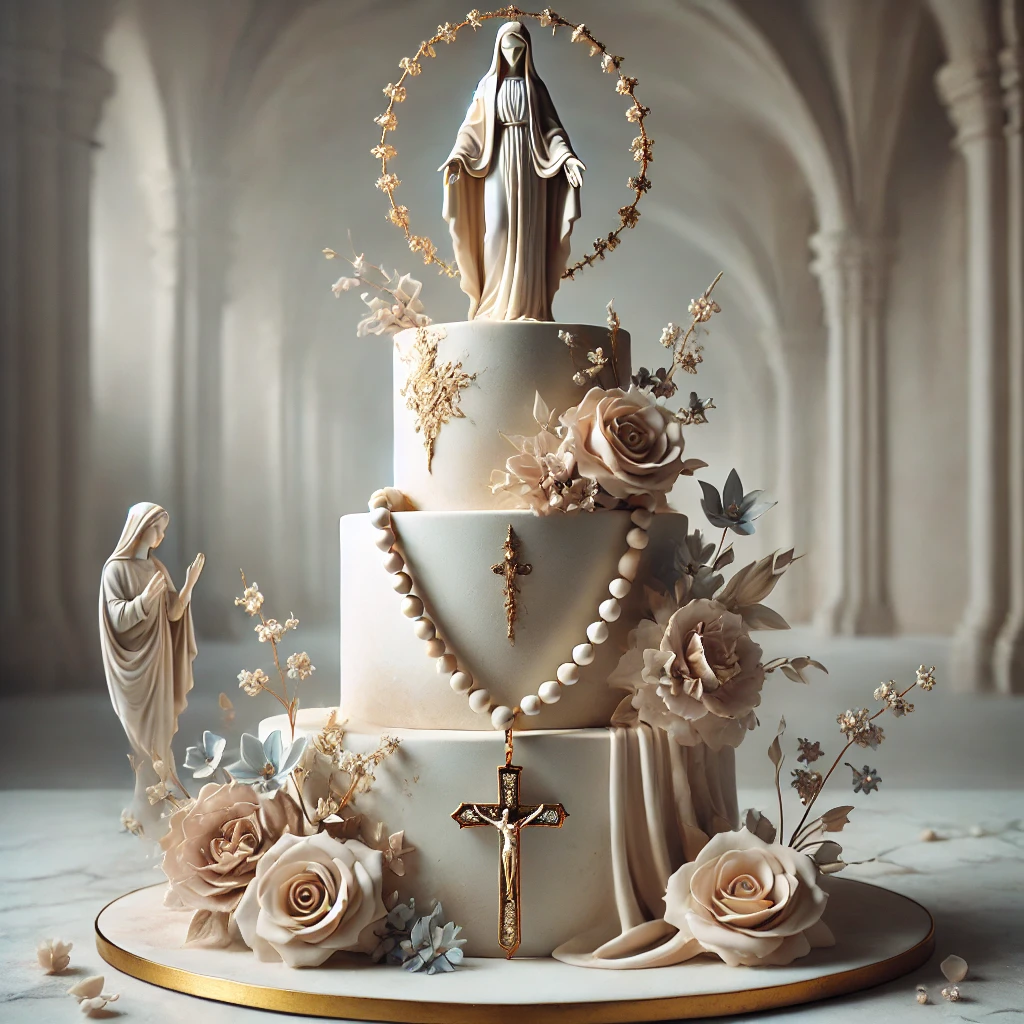
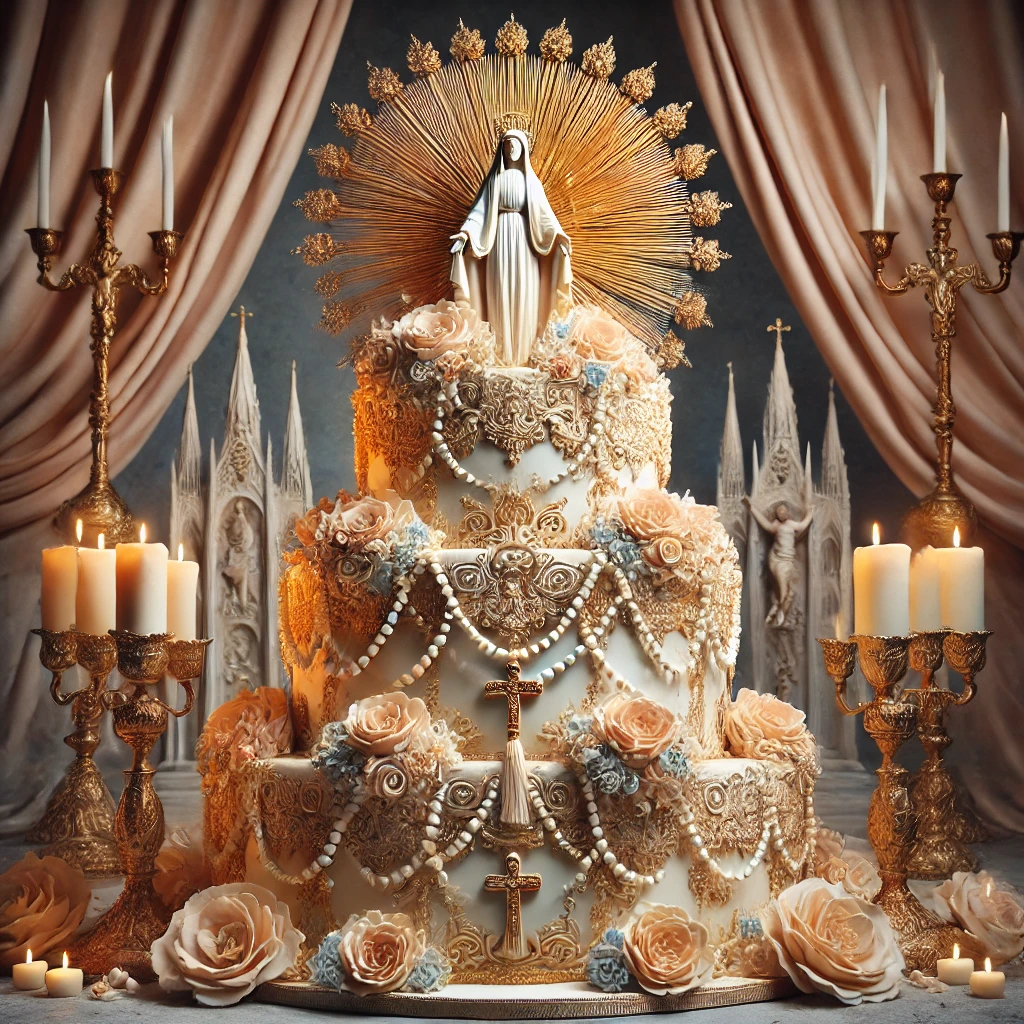
Our Lady of Victory Cake & Atmosphere Ideas

Where style, memory, and celebration meet.

This section is meant to be more than Cake Decorating Ideas… it’s designed to spark inspiration and creativity, awaken tradition, and infuse your special occasions with style, identity, and atmosphere. A color palette becomes a theme. A design becomes a mood. Simple details—like sugared holly leaves or shimmering stars—can set the tone for a gathering and become part of cherished traditions and lasting memories melded with personal touch and love.

Traditional Our Lady of Victory Dishes

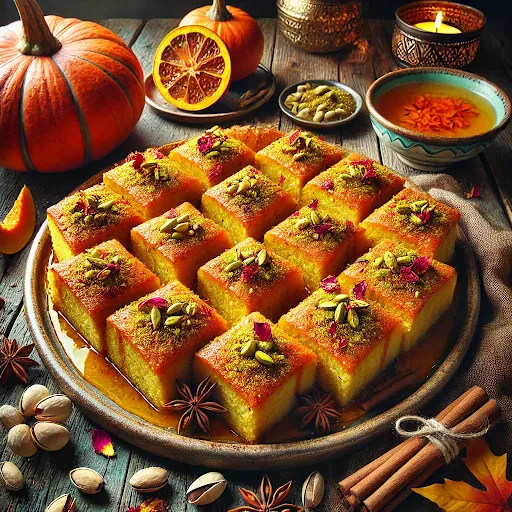
Rosary Almond Cake
A delicately structured almond cake, lightly sweet and refined, often dusted with powdered sugar or adorned with a subtle rosary-inspired design. Almonds symbolize purity and endurance, making this dessert both meaningful and elegant—perfect for a quiet, celebratory table.

Olive Oil Herb Bread
A rustic yet sophisticated bread infused with high-quality olive oil and fresh herbs. Olive oil represents peace and sacred anointing, while the bread itself reflects nourishment and simplicity. Served warm, it embodies both grounding and refinement.

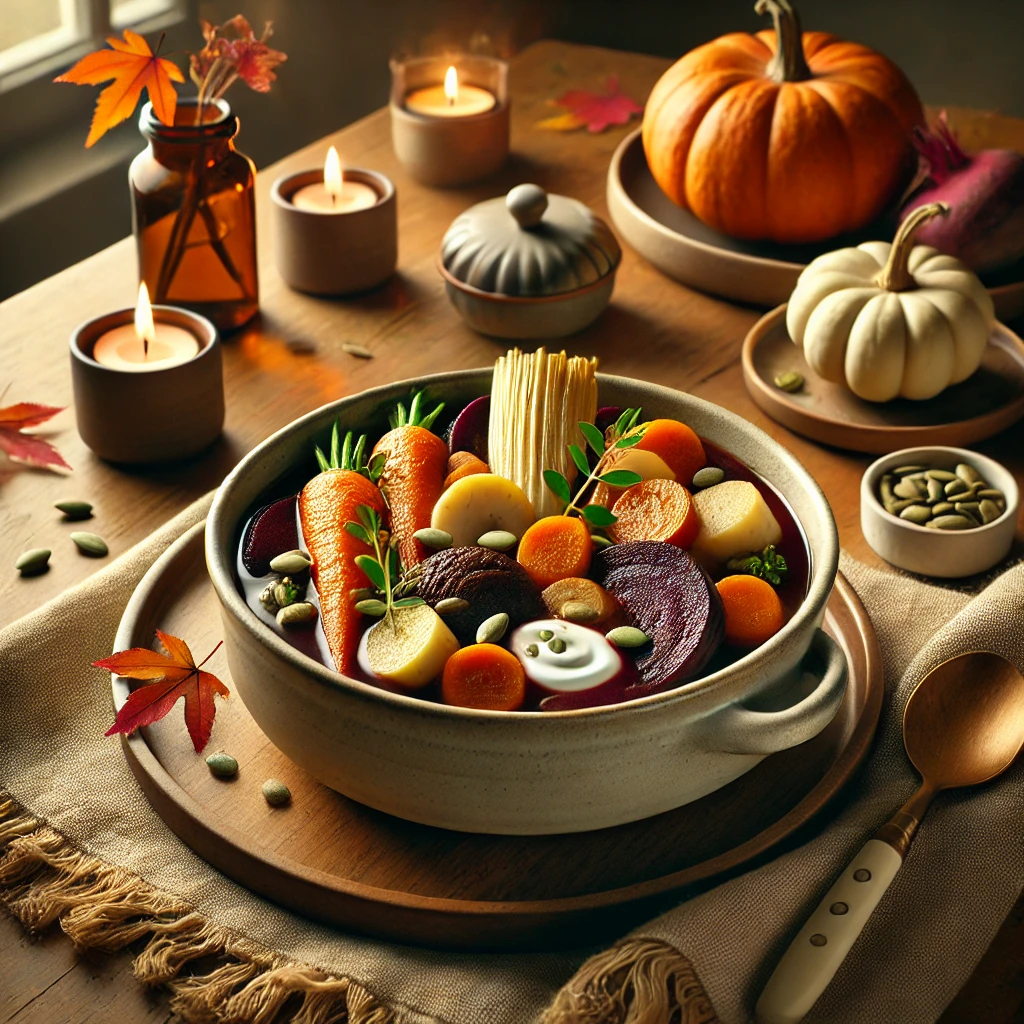
Mediterranean Lentil Stew
A deeply nourishing dish made with lentils, vegetables, and gentle spices. Lentils symbolize humility and sustenance, offering a meal that is both wholesome and quietly rich—ideal for a reflective gathering.

Grilled Fish with Lemon and Herbs
A clean, intentional dish that highlights purity and balance. Lightly seasoned and prepared with precision, it reflects restraint and clarity, aligning with the disciplined nature of the Rosary.

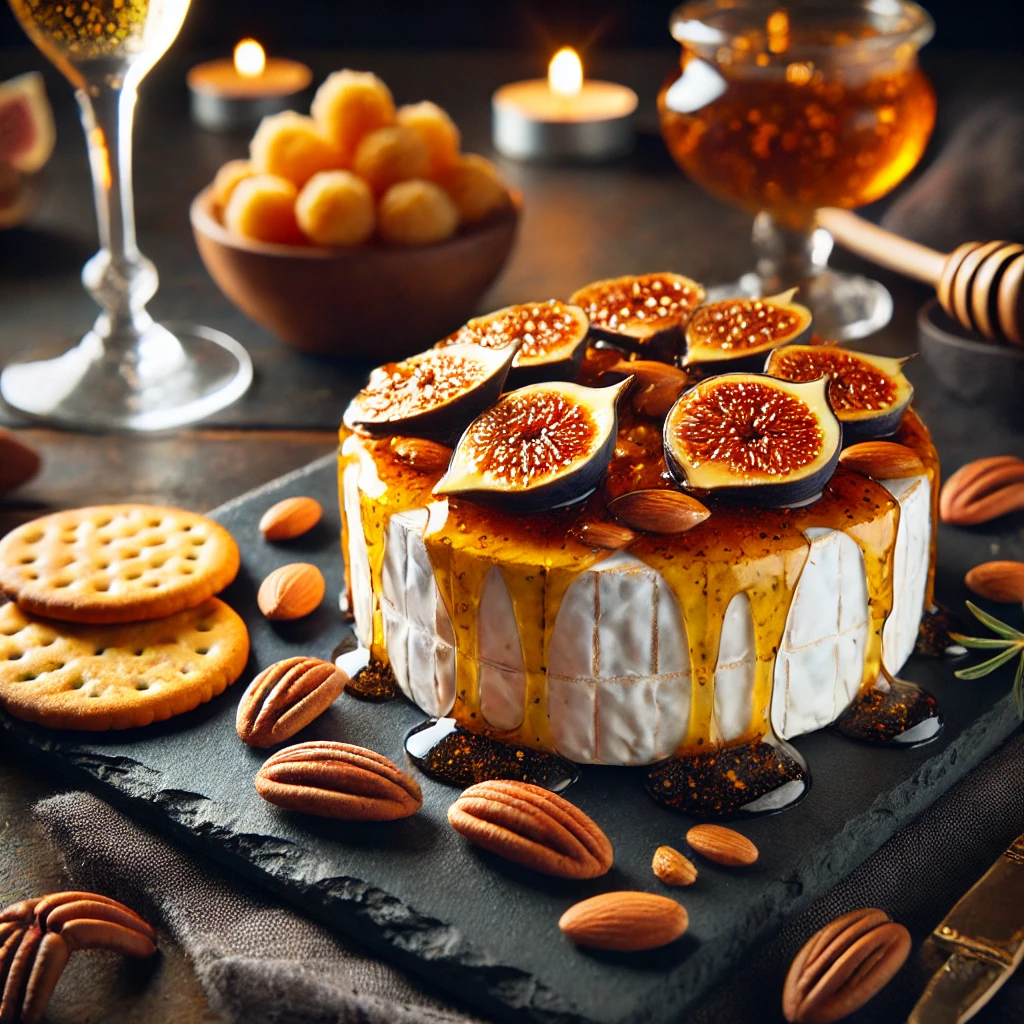
Honey and Fig Platter
Fresh or dried figs paired with raw honey create a naturally sweet, elevated offering. Figs carry biblical symbolism of abundance and peace, while honey adds a note of richness without excess.

Herbed Cheese with Stone Crackers
A composed and balanced pairing of soft cheeses infused with herbs, served alongside crisp, natural crackers. This dish brings a quiet sophistication to the table while remaining approachable and grounded.

Pomegranate and Greens Salad
A vibrant yet refined salad combining fresh greens, pomegranate seeds, and a light vinaigrette. The pomegranate symbolizes life and renewal, adding both visual elegance and deeper meaning.

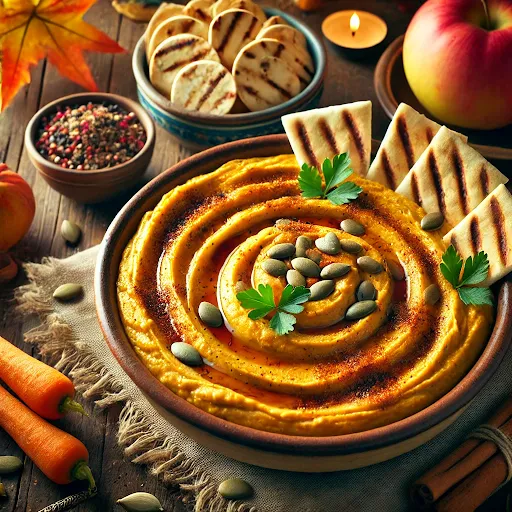
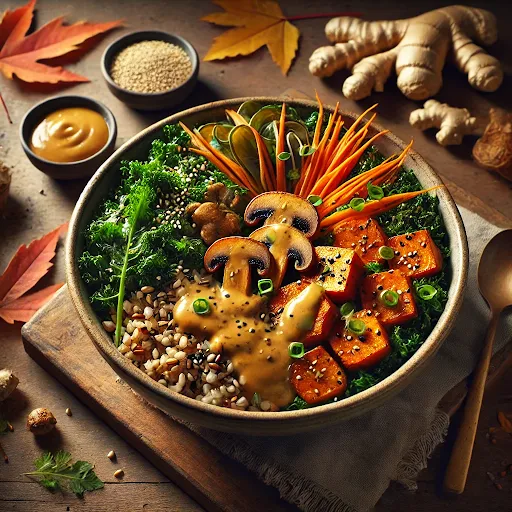
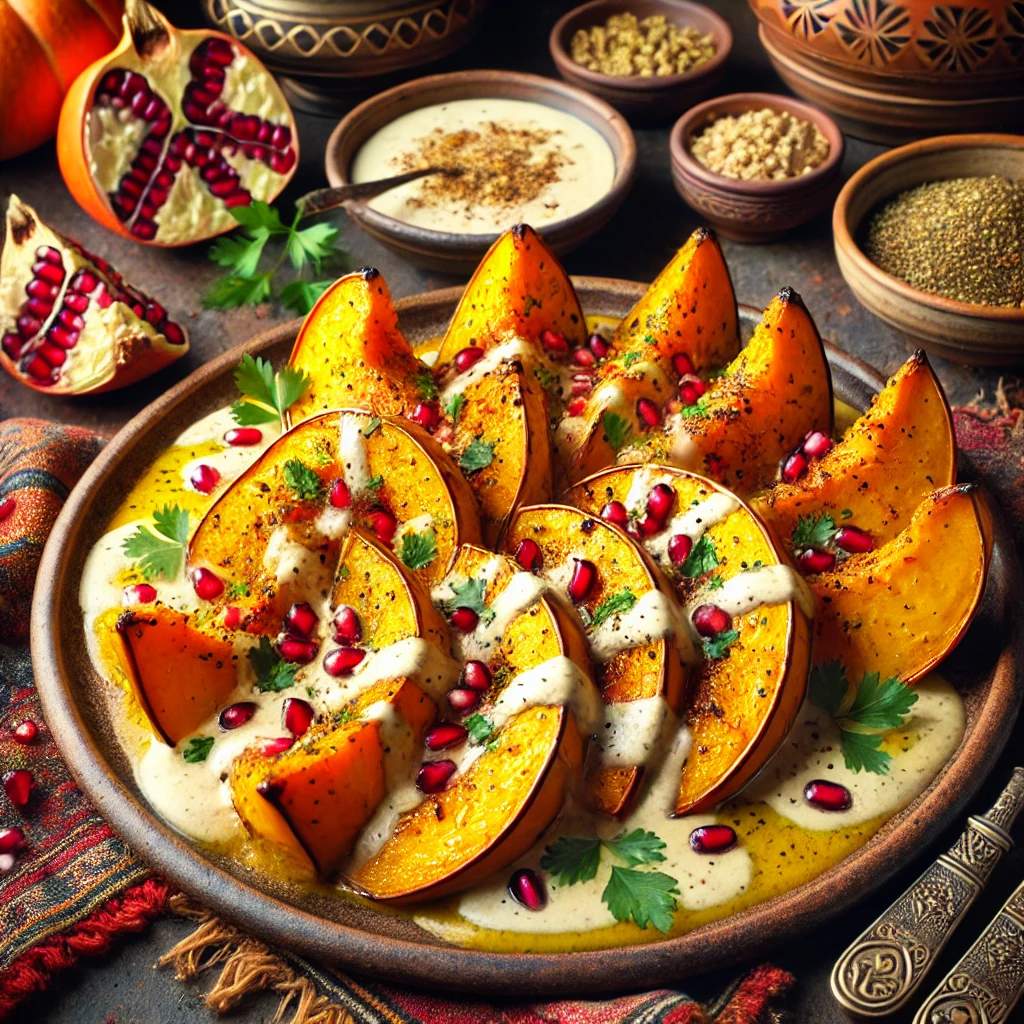
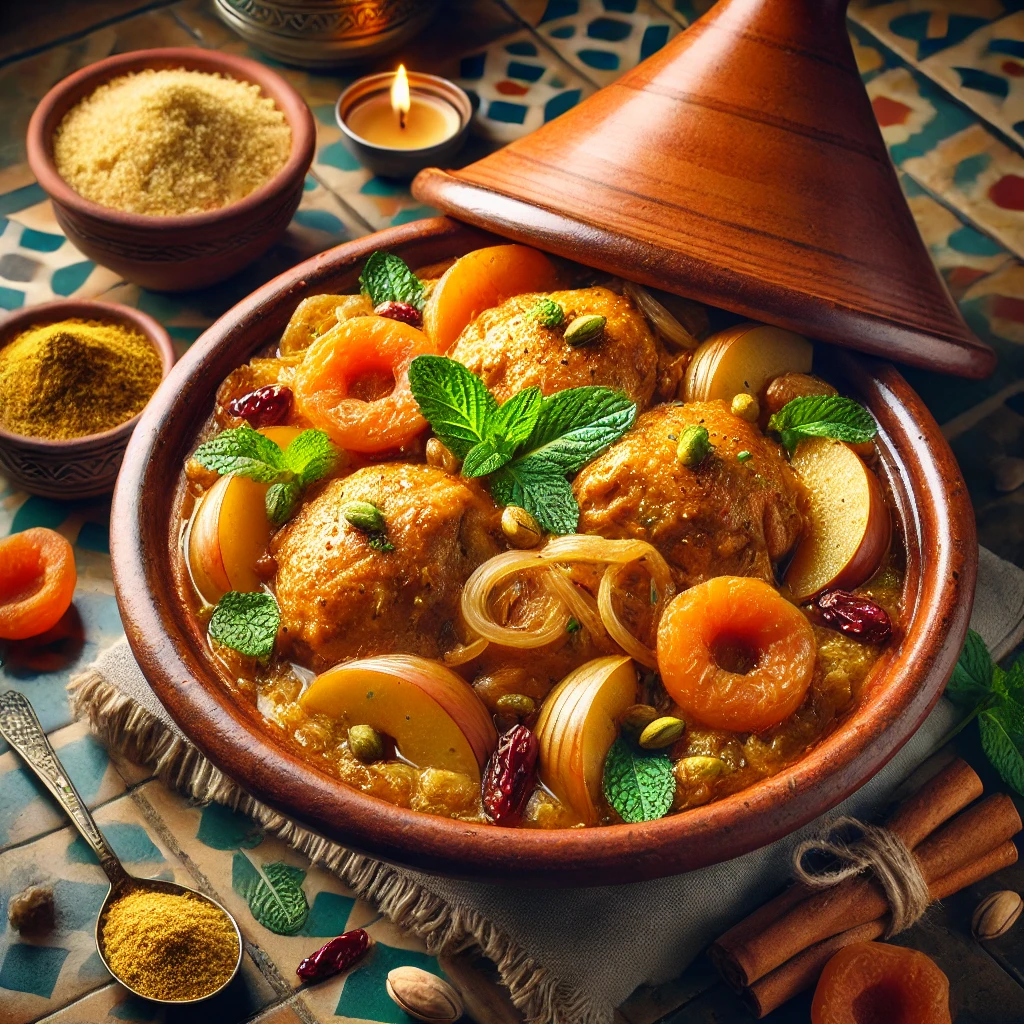
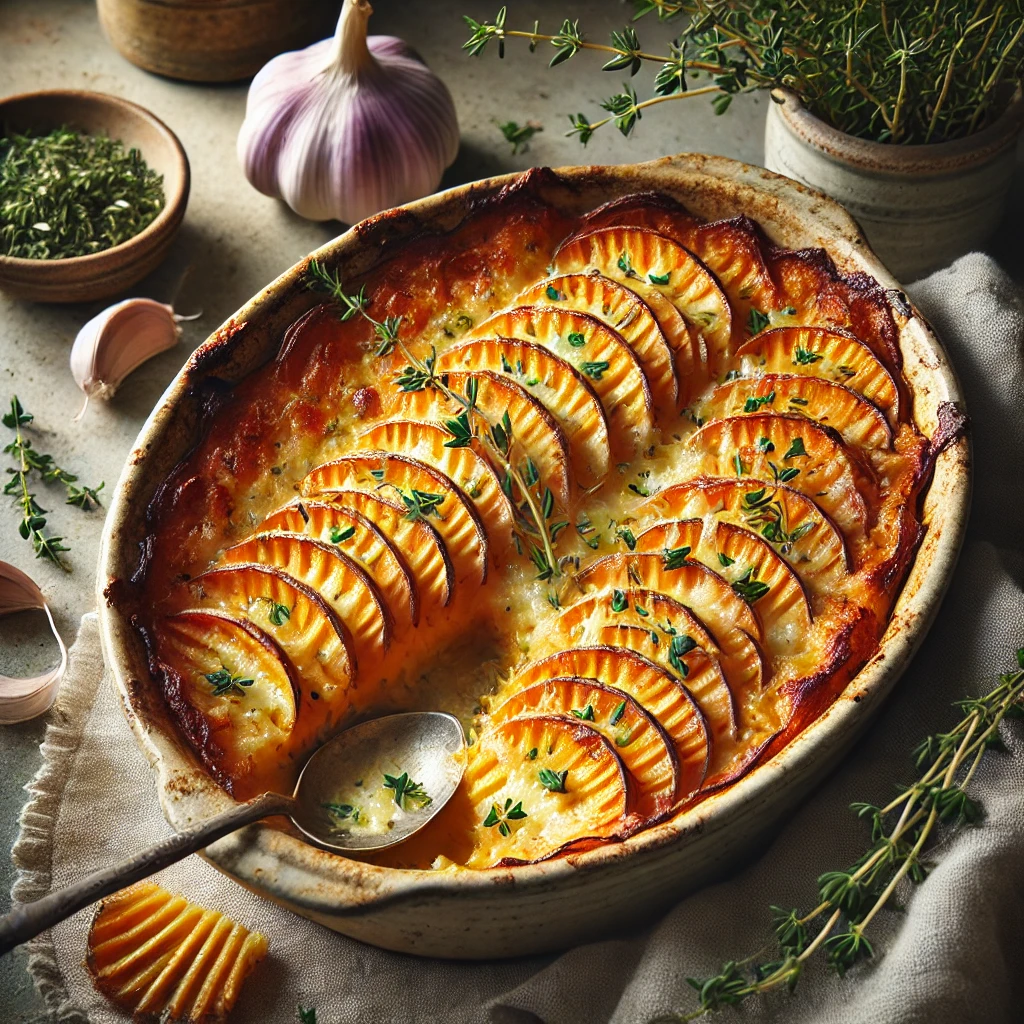
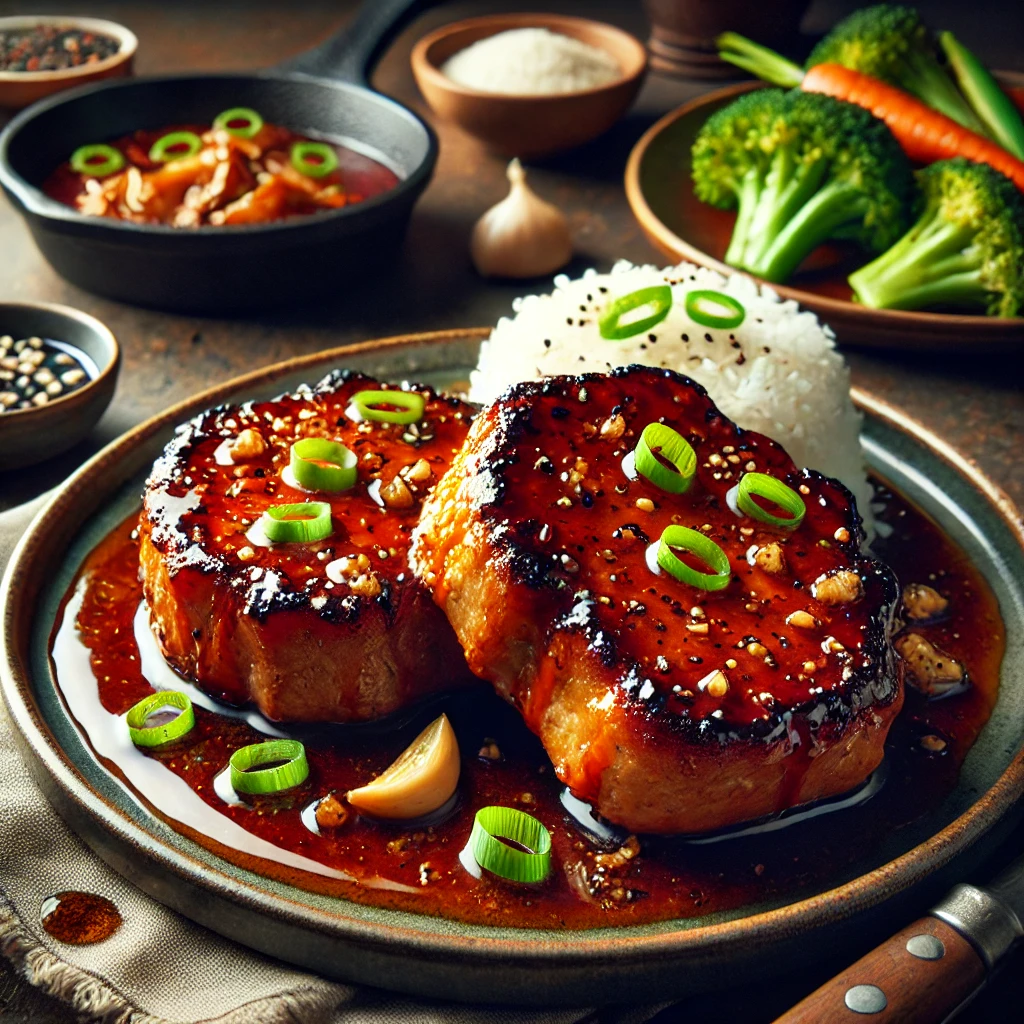
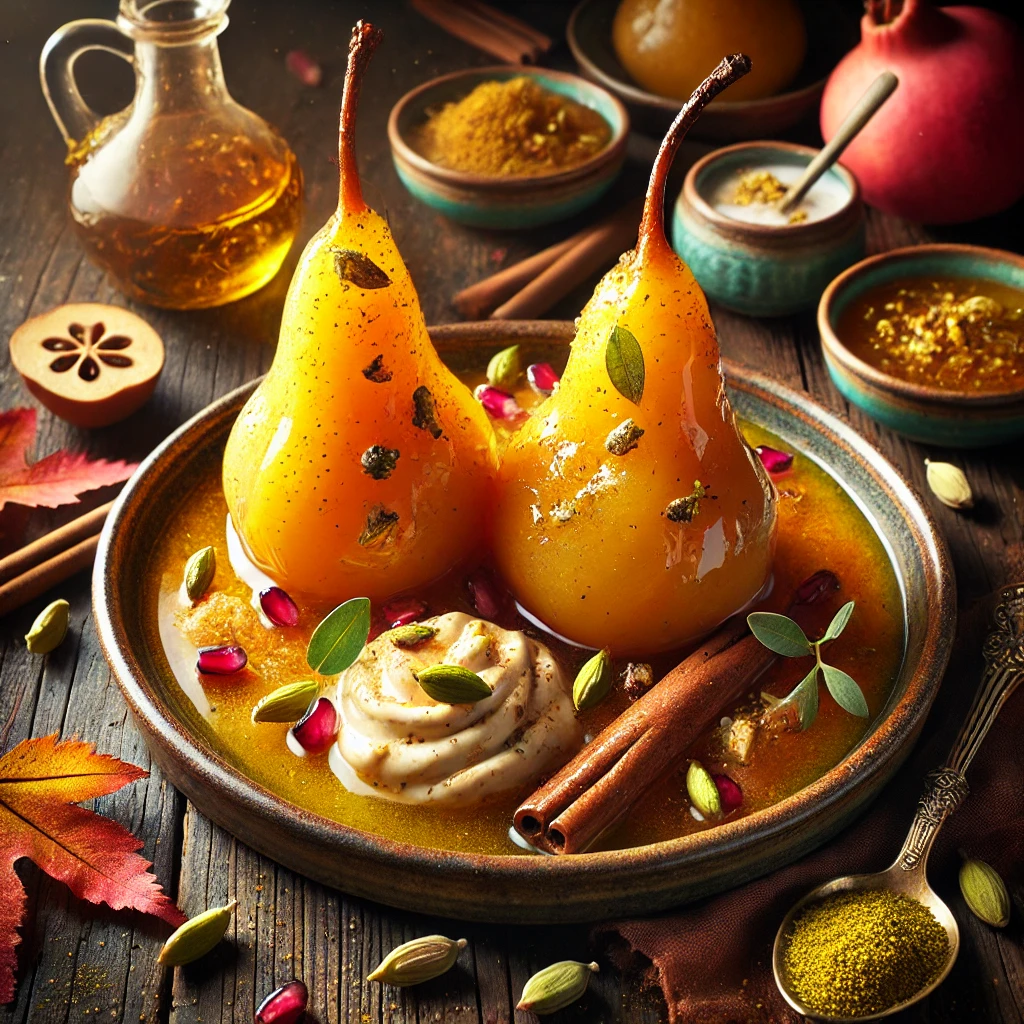
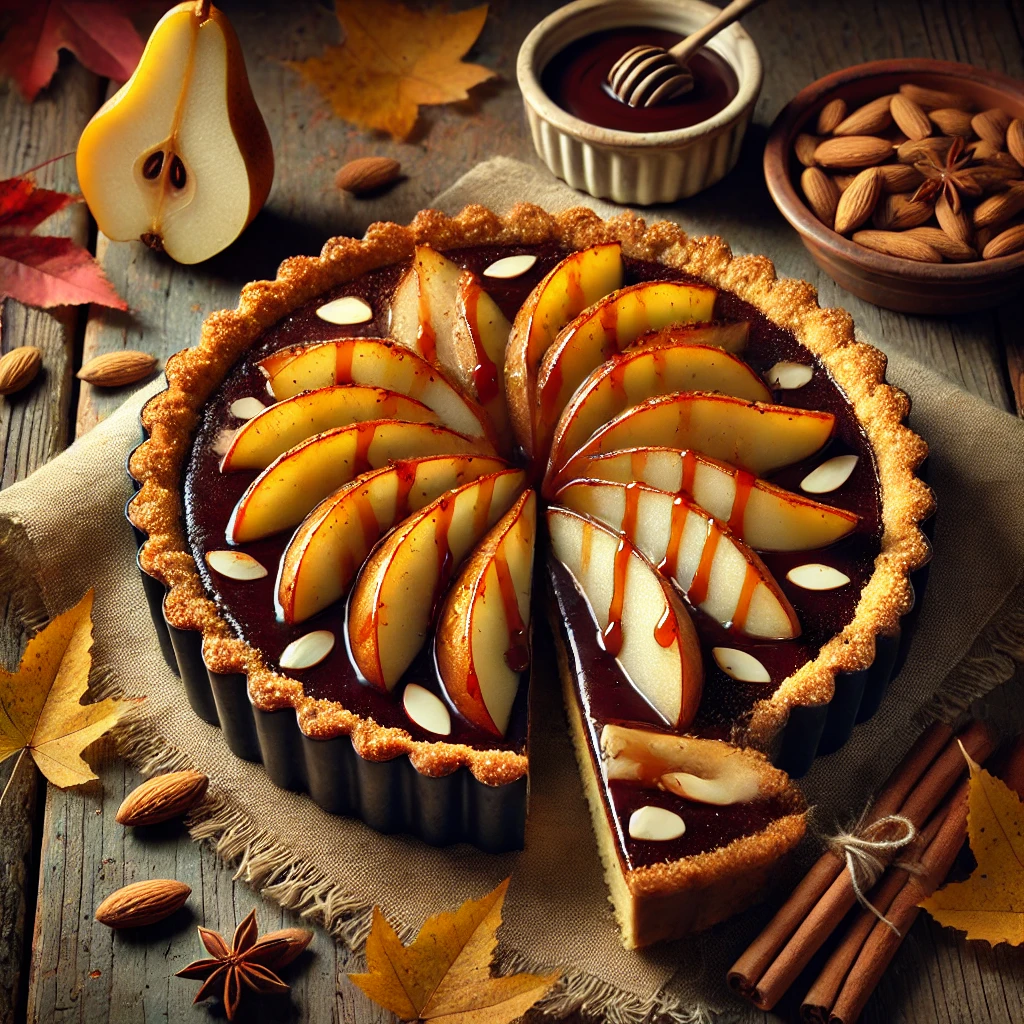
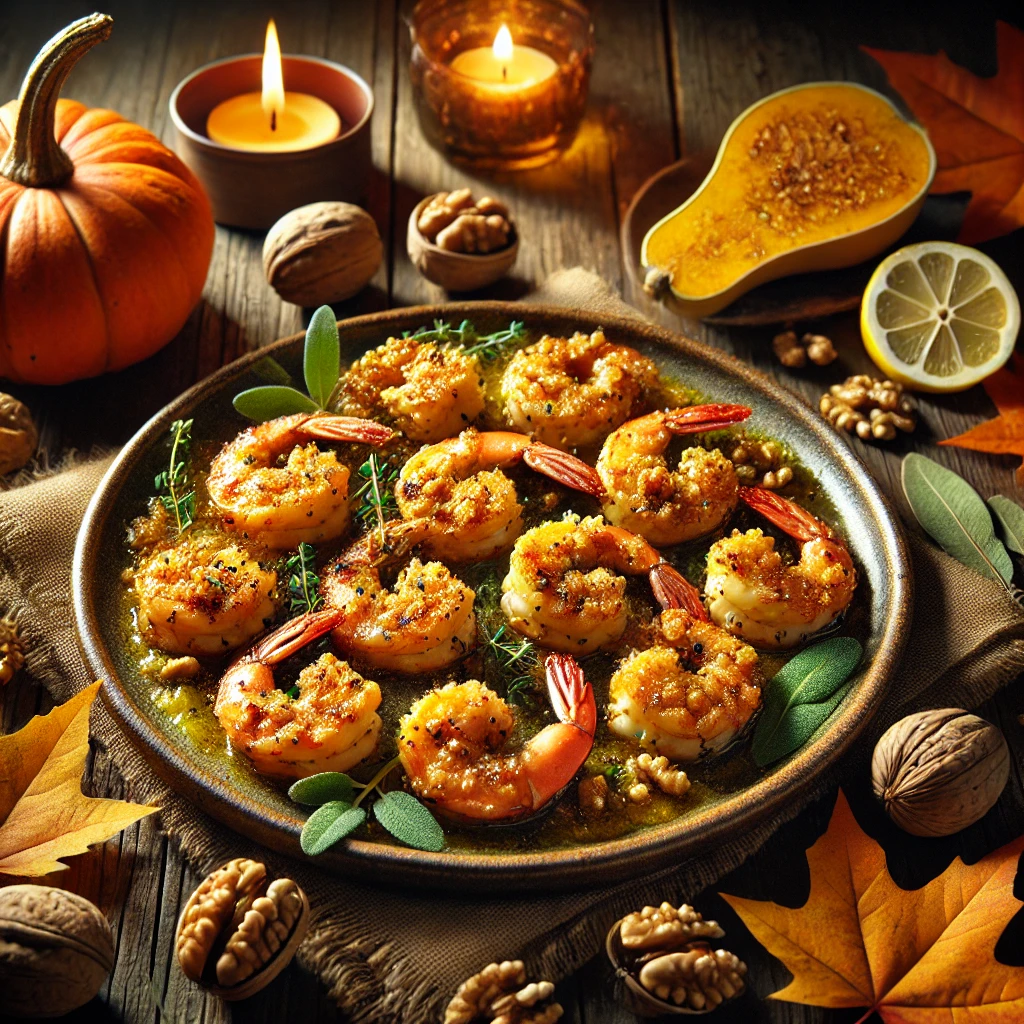
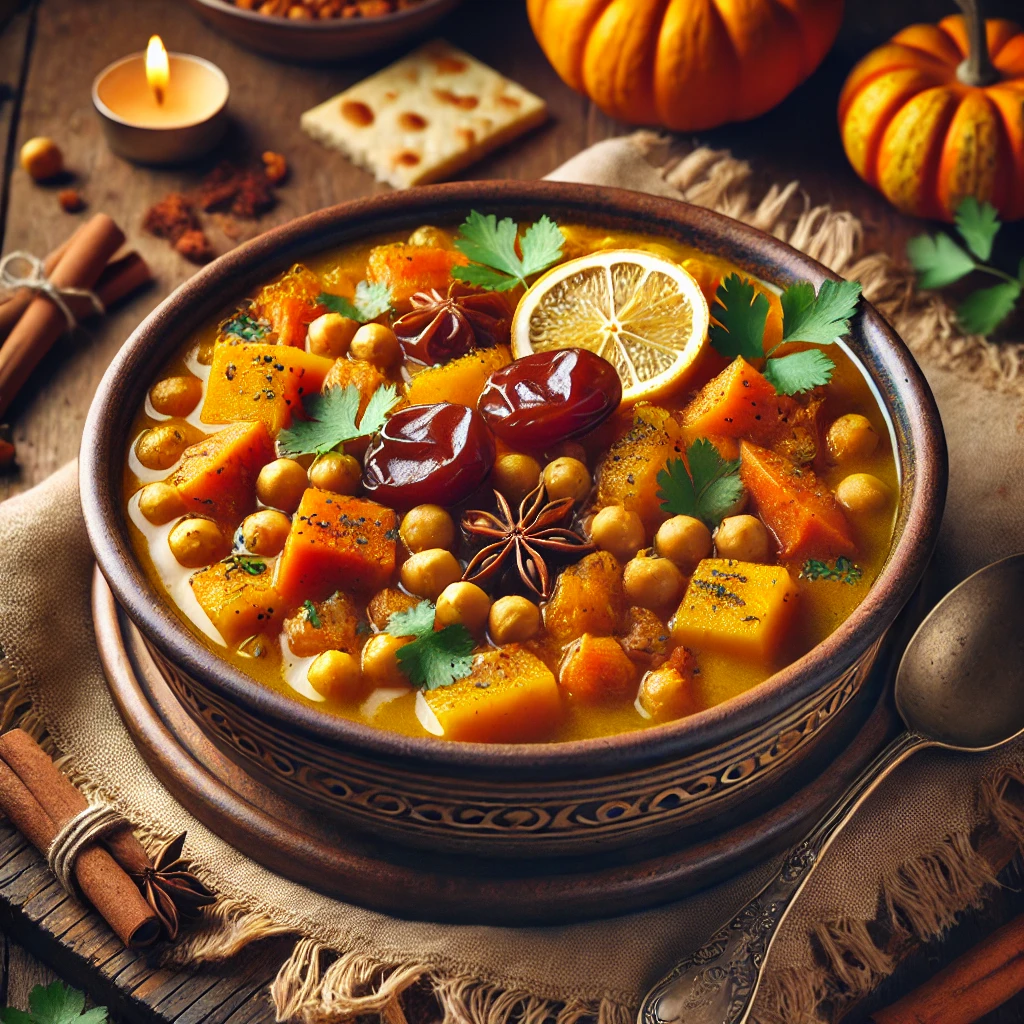
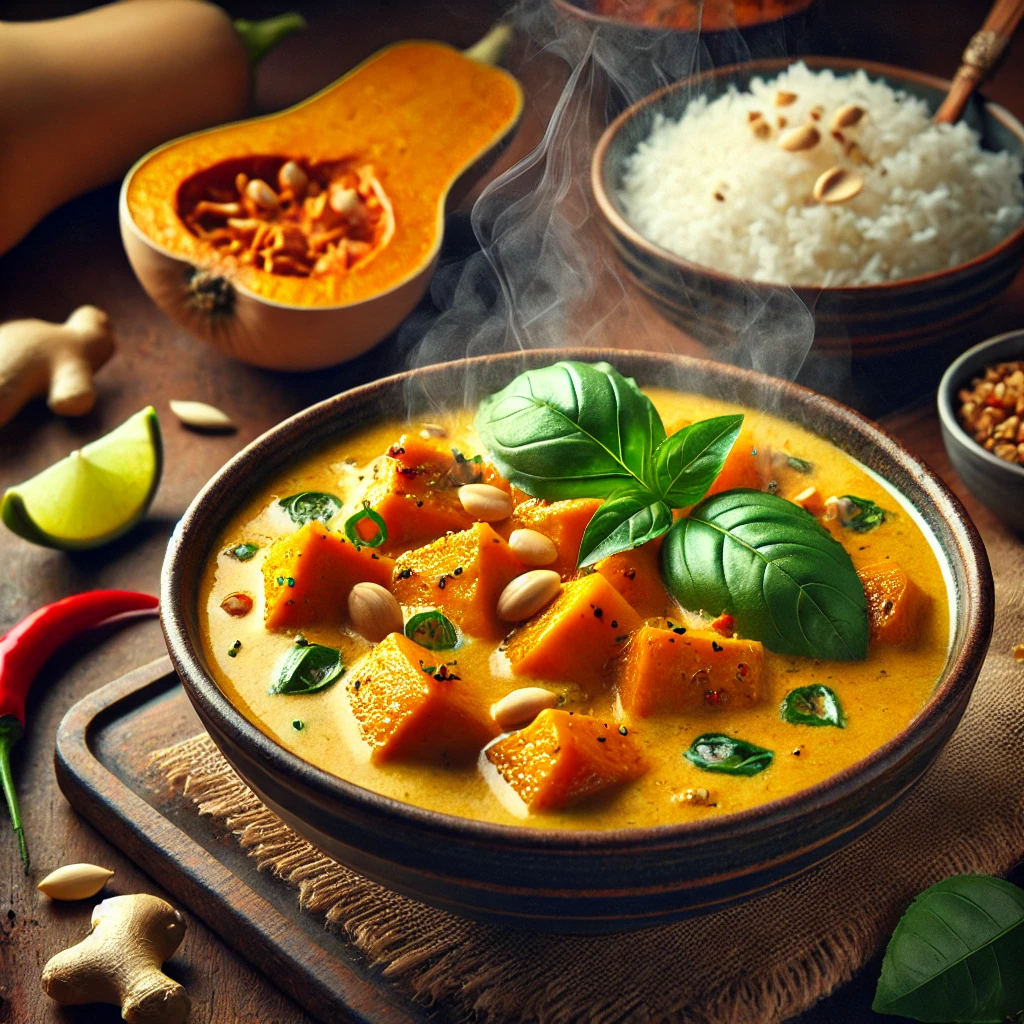
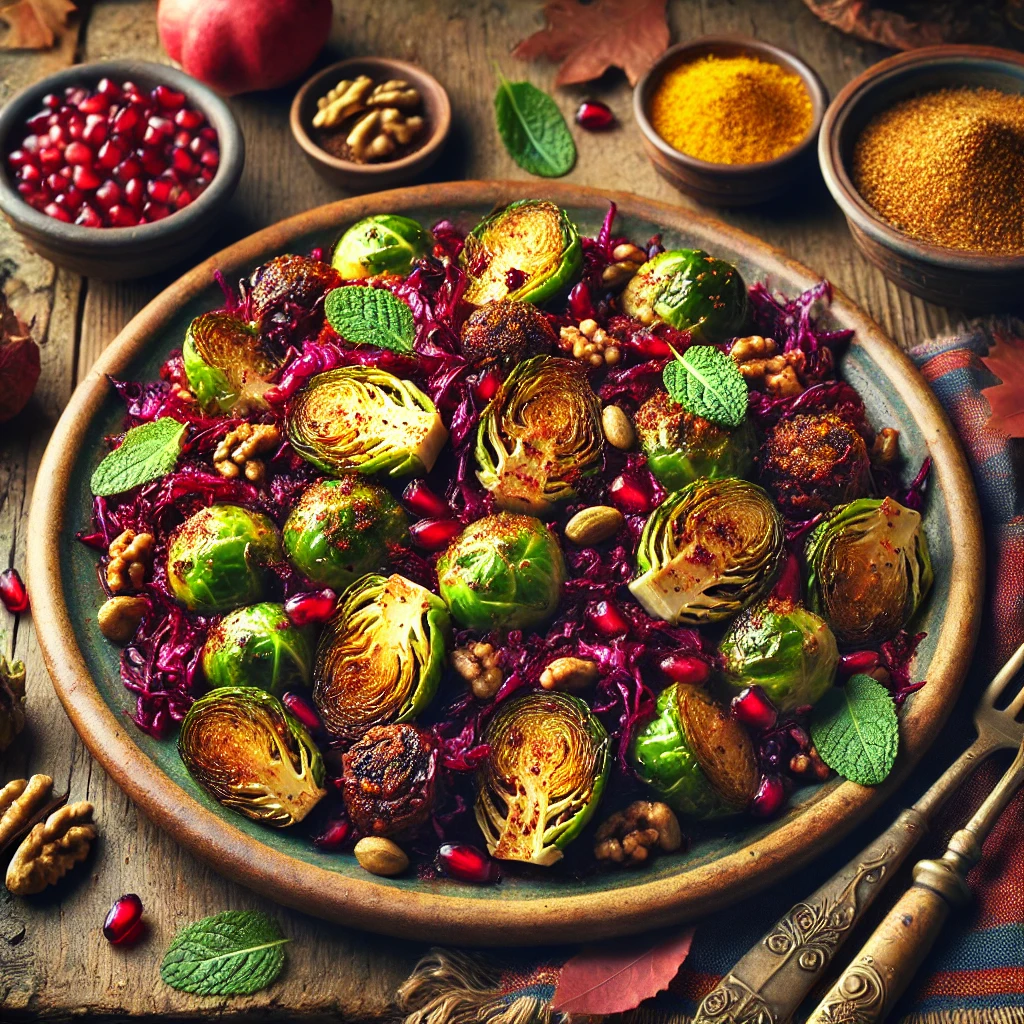
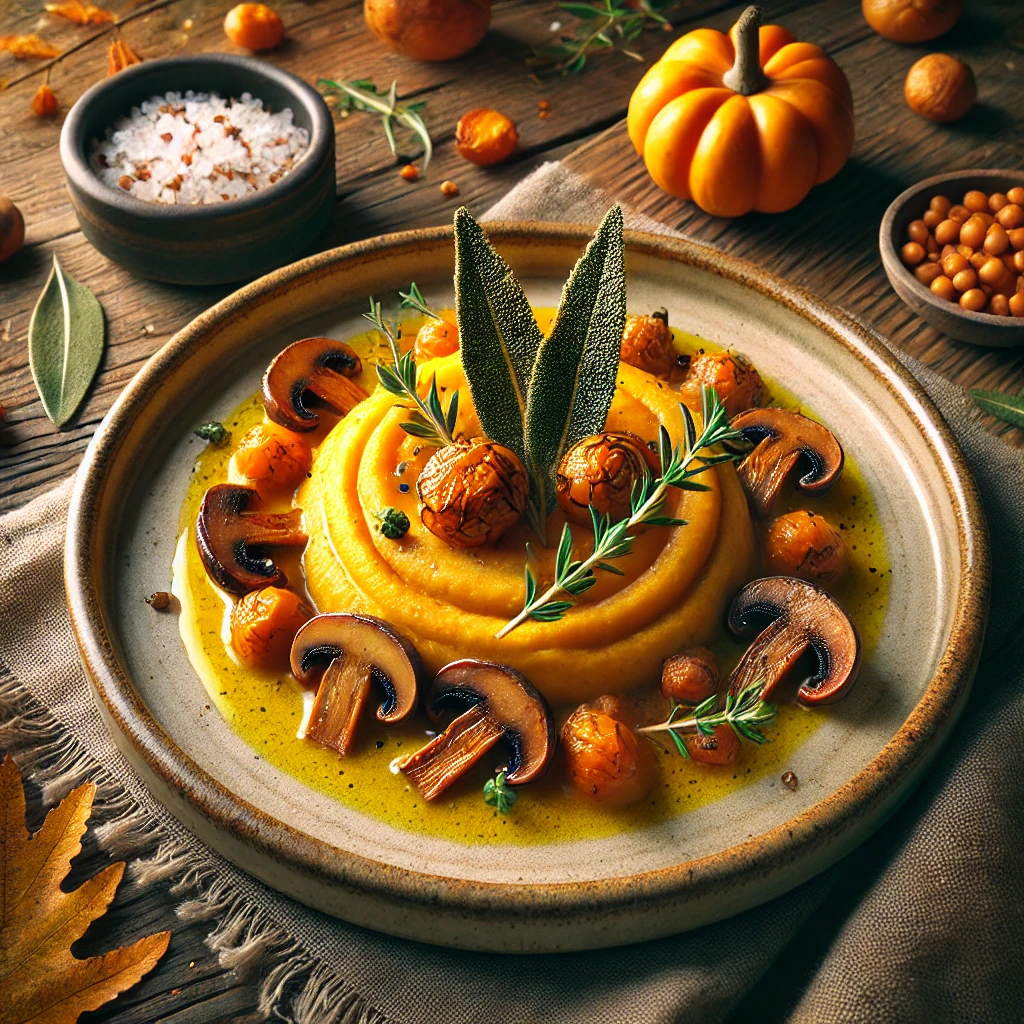
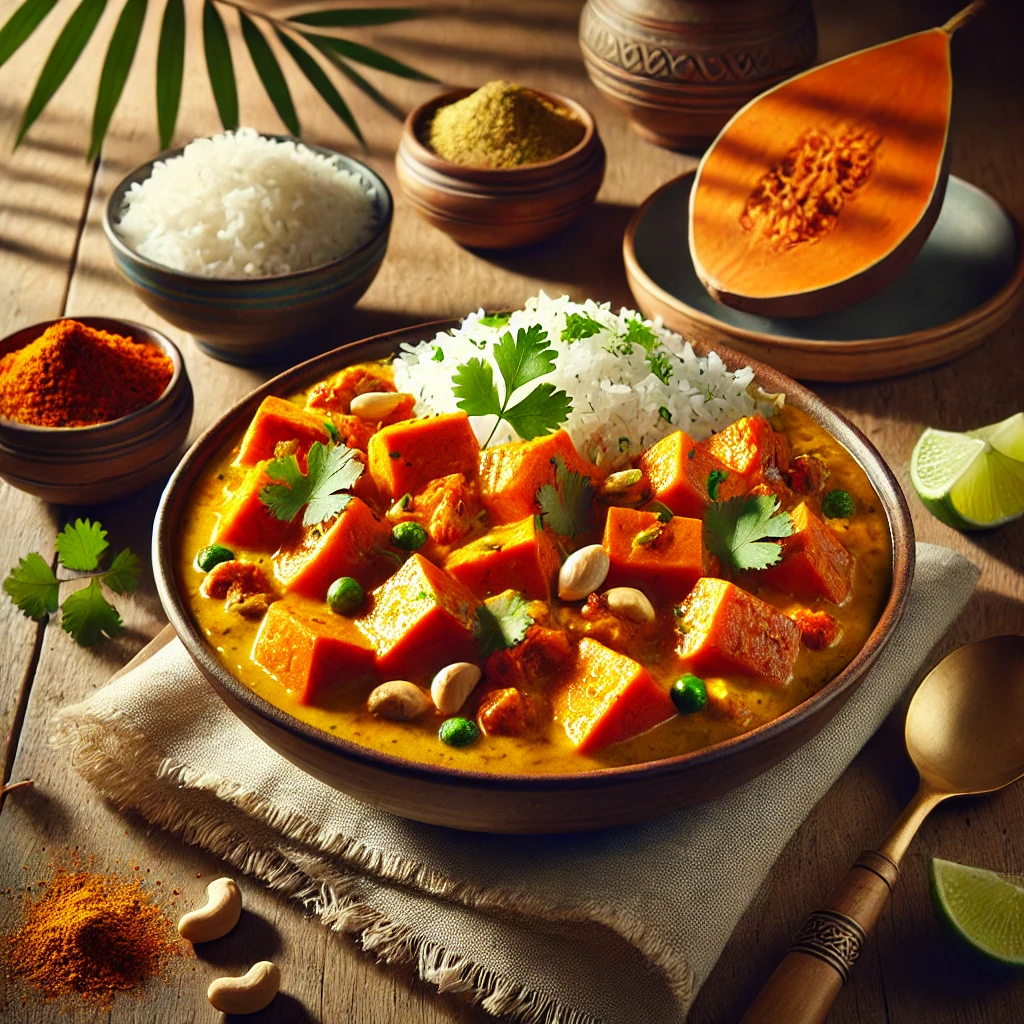
Recipes Engineered for that Autumn Glow