




























The Transfiguration

with ORO VALENTIO

August 6

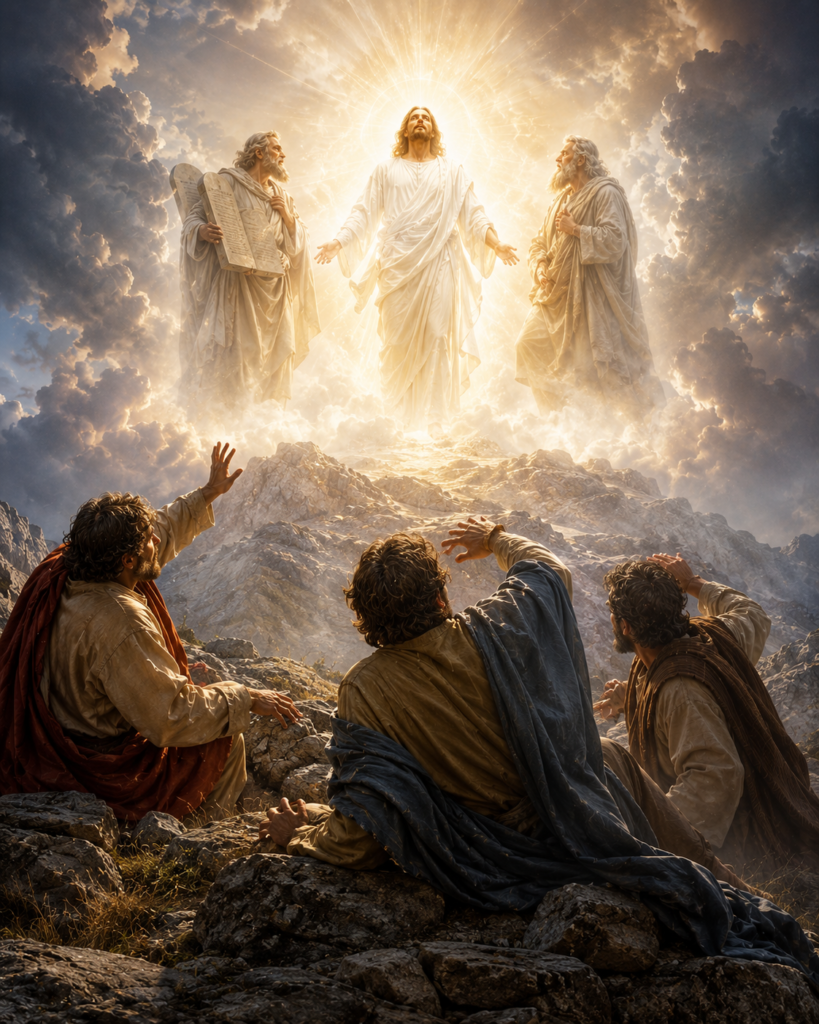
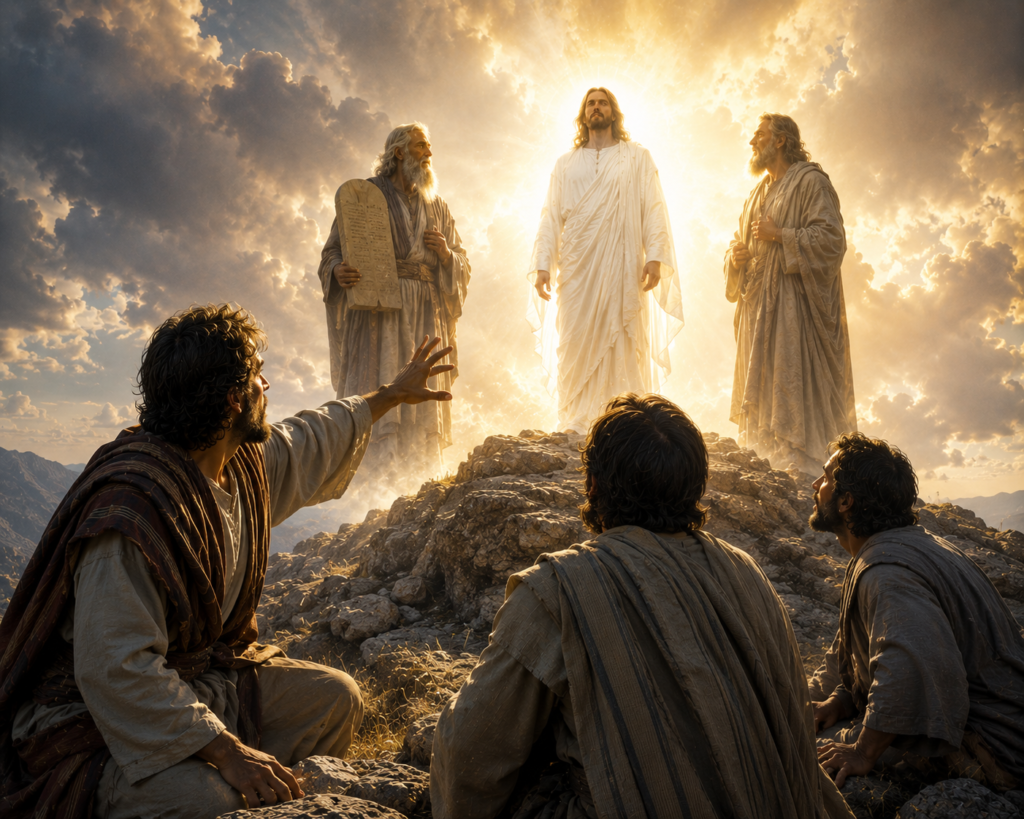
The Transfiguration took place when Jesus took Peter, James, and John up a high mountain to pray. While there, His appearance suddenly changed before them. His face shone with radiant glory, and His clothing became dazzling white, revealing a glimpse of His divine nature. The event is described in the Gospels of Matthew, Mark, and Luke. As the disciples watched in awe, Moses and Elijah appeared beside Christ and spoke with Him. Moses represented the Law, while Elijah represented the Prophets, showing that all of sacred history pointed toward and was fulfilled in Jesus. According to Scripture, they spoke about His coming “departure,” referring to His Passion, death, and Resurrection in Jerusalem. The disciples were overwhelmed by the sight. Peter, not fully understanding the magnitude of the moment, suggested building three tents or shelters so they could remain there. While he was speaking, a bright cloud overshadowed them — a sign of God’s holy presence, similar to the cloud that filled the tabernacle in the Old Testament. Then the voice of God the Father spoke from the cloud, saying: “This is my beloved Son, with whom I am well pleased; listen to Him.” Hearing this, the disciples fell face down in fear. Christ then approached them gently and told them not to be afraid. When they looked up again, Moses and Elijah were gone, and they saw only Jesus standing before them in His ordinary appearance once more. As they descended the mountain, Christ instructed them not to tell others what they had seen until after His Resurrection from the dead. The Transfiguration was deeply important because it strengthened the disciples before the suffering of the Cross. It revealed that Jesus was not merely a teacher or prophet, but truly the divine Son of God. The event also gave a foretaste of the Resurrection and the glory of Heaven, showing that suffering and sacrifice would not have the final word.
High upon the mountain, where earth seemed to lean toward Heaven, Christ unveiled a glimpse of divine glory before chosen witnesses. The Transfiguration stands not merely as a miracle of radiant light, but as a revelation of identity: the hidden majesty of the Son shining through mortal flesh. In that sacred moment, the veil between temporal suffering and eternal kingship was drawn back, allowing Peter, James, and John to behold the splendor of the One who is both Lamb and Lord.
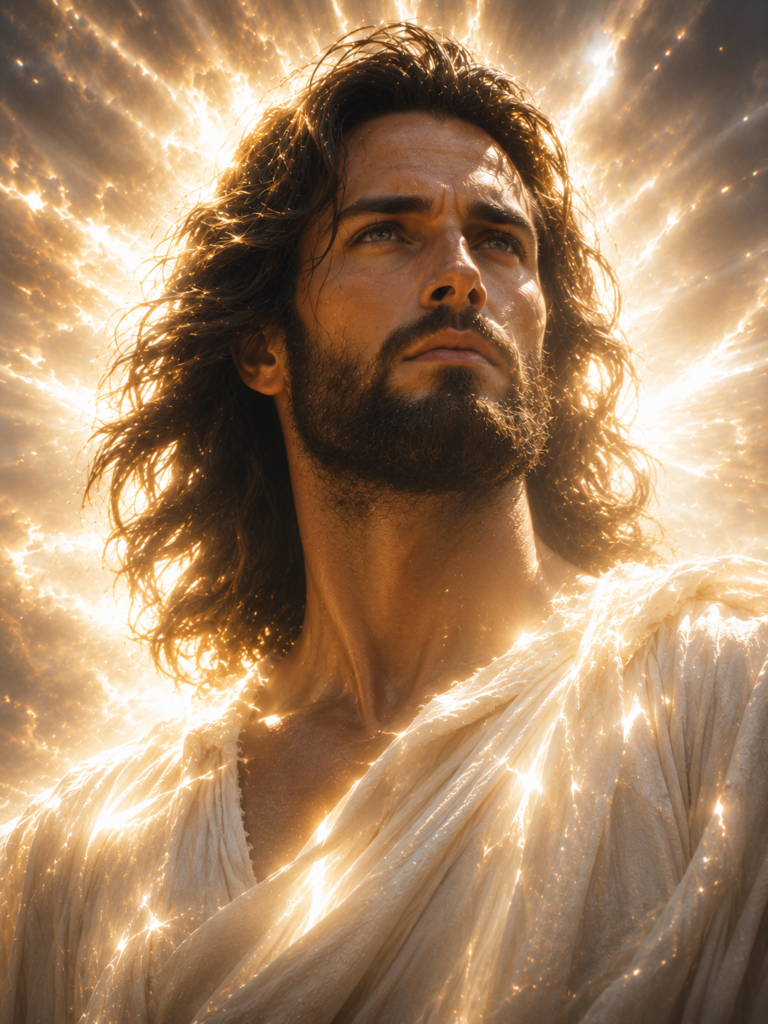
The mountain itself becomes a symbol of ascent — not only physical elevation, but spiritual rising. Throughout sacred history, mountains are places of covenant, revelation, sacrifice, and encounter. Upon this height, Christ is transfigured before His disciples; His face shines like the sun, and His garments become dazzling white. The brilliance is not borrowed light, but the manifestation of divine reality long concealed beneath humility. Heaven does not descend upon Him from elsewhere; rather, the eternal glory within Him emerges visibly before human eyes.
Beside Him appear Moses and Elijah, figures representing the Law and the Prophets. Their presence proclaims continuity rather than replacement. The covenant given through Moses and the prophetic voice carried through Elijah both converge and find fulfillment in Christ. The entirety of salvation history bends toward this luminous summit, where the Word made flesh stands as the living fulfillment of all that was promised. The old covenant does not vanish in the light; it reaches completion within it.
Peter, overwhelmed by wonder, desires to remain in the moment forever. His instinct reflects the longing of the human soul whenever it encounters glimpses of divine beauty: to stay, to preserve, to dwell within glory untouched by suffering. Yet the mountain cannot become a permanent refuge. Christ descends from it shortly afterward and continues toward Jerusalem, toward betrayal, crucifixion, and sacrifice. The Transfiguration therefore reveals not an escape from suffering, but the truth hidden within it — that beyond the Cross stands resurrected glory.
Then comes the overshadowing cloud and the voice of the Father: “This is my beloved Son, with whom I am well pleased; listen to Him.” The disciples fall in fear before the majesty of divine proclamation. The cloud recalls the glory that once filled the tabernacle and overshadowed Sinai. Here again, God draws near not as abstraction, but as living presence. The command to “listen to Him” becomes central: the path to transformation is not merely admiration of Christ, but obedience to Him.

When blood & suffering seem to conceal victory...

The Transfiguration also speaks to the destiny of humanity itself. In beholding Christ radiant with heavenly glory while still clothed in humanity, the disciples are shown what redeemed humanity is ultimately called toward. The event becomes a foreshadowing of resurrection, sanctification, and eternal communion with God. The human person was not created merely to survive the world, but to be transformed by divine grace into participation with eternal truth and life.
There is profound mercy in the timing of this revelation. Christ reveals His glory shortly before His Passion, strengthening the disciples for the scandal of the Cross to come. When darkness later descends upon Calvary, they are meant to remember the mountain. When blood and suffering seem to conceal victory, they are meant to remember the radiance. The Transfiguration plants within them the memory of glory so that despair will not have the final word.
Even now, the mystery continues to echo through the life of the faithful. The Transfiguration calls humanity upward — away from spiritual sleep, fragmentation, and vanity — toward clarity, holiness, and communion with divine truth. It reminds the soul that beneath the burdens of earthly life there remains a higher destiny: not merely to witness the light of God from afar, but to be transformed by it.
As the glory of Christ burst forth upon the summit of the mountain and His face shone like the sun, Peter found himself overwhelmed by a beauty unlike anything he had ever known. Standing before the radiant Lord, with Moses and Elijah appearing beside Him, Peter cried out, "Lord, it is good that we are here. If You wish, I will make three tents here, one for You, one for Moses, and one for Elijah." In that moment, Peter expressed the deepest longing of the human heart—to remain forever in the presence of God, untouched by suffering, fear, or the burdens of earthly life. He wanted to preserve the glory, to build shelters and stay on the mountaintop. Yet the Transfiguration was not given so the disciples could remain there. It was given to strengthen them for the road ahead—a road that would lead through Jerusalem, Calvary, and the Cross. The vision of Christ's divine splendor was a glimpse behind the veil, revealing that beyond every trial awaits glory, beyond every sacrifice awaits victory, and beyond the Cross shines the eternal kingdom of God. Like Peter, we often long to stay in moments of spiritual consolation, but Christ calls us to descend the mountain with Him, carrying the memory of His glory in our hearts until the day we behold Him face to face forever.

Transfiguration Traditions to Make Your Own

The Transfiguration stands as one of God's greatest answers to human despair. Before Christ ascended Calvary, He first ascended Tabor. Before the darkness of the Cross, He revealed the brilliance of His glory. Before the agony of Good Friday, He allowed His disciples to glimpse the victory of Easter. In moments of suffering, it is easy to believe that pain has the final word, that the struggle is endless, or that God has abandoned us. Yet the Transfiguration proclaims the opposite. It reminds us that beyond every cross lies a resurrection, beyond every sacrifice awaits a greater glory, and beyond every trial stands the faithful promise of God. Peter's cry, "Lord, it is good that we are here," echoes the longing of every soul that has tasted even a glimpse of heaven. He wanted to remain in that radiant moment forever. But Christ led him back down the mountain, teaching him—and teaching us—that spiritual glory is not an escape from suffering but a preparation for it. The memory of Tabor would sustain the apostles when they later saw Christ beaten, rejected, and crucified. In the same way, God often grants us moments of grace, peace, and light so that when darkness comes, we will remember that the darkness is not the end of the story. The glory revealed on Tabor is the destiny prepared for all who persevere with Christ through the crosses of this life.
Mountain Prayer Services
Many churches hold special liturgies focused on light, glory, and divine revelation. In some regions, believers climb hills or mountains before sunrise to pray, symbolizing the ascent of the disciples to the holy mountain where Christ was transfigured.
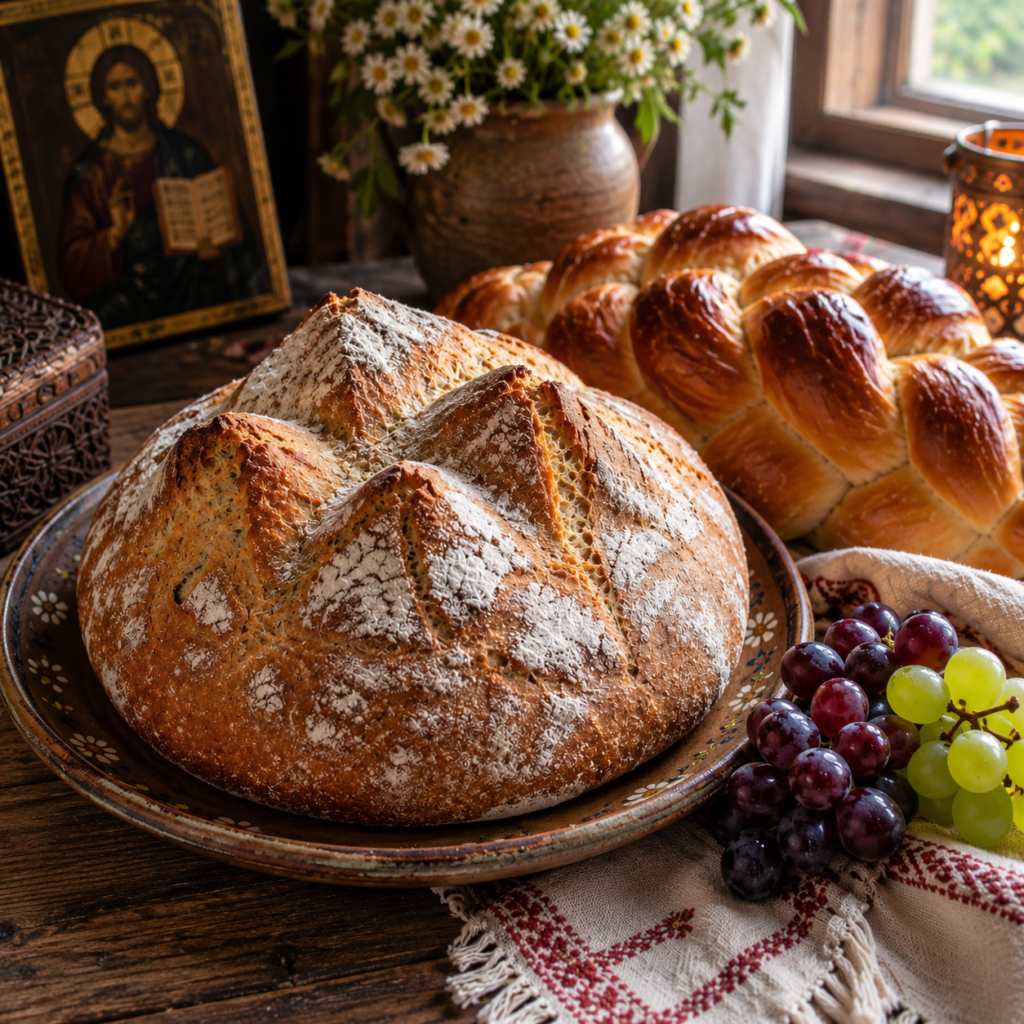
Blessing of Grapes and Harvest Fruits
In Eastern Christian traditions, especially within the Orthodox Church, grapes and first fruits are blessed on the Feast of the Transfiguration. This tradition symbolizes transformation, spiritual abundance, and the offering of creation back to God in thanksgiving.
White and Gold Vestments
Priests often wear white or gold vestments during the liturgy to represent the radiant glory revealed in Christ during the Transfiguration. Churches may also be decorated with candles, bright fabrics, and flowers to reflect heavenly light.
Reading of the Gospel Account
The Gospel passages describing the Transfiguration are solemnly proclaimed during Mass or Divine Liturgy. Sermons and reflections often focus on spiritual transformation, holiness, and the call to listen to Christ.
Candlelight and Incense
Candles and incense are commonly used during celebrations of the feast. The candles symbolize divine illumination, while incense represents prayer rising toward Heaven and the sacred presence of God overshadowing the mountain.
Fasting and Spiritual Reflection
Some believers prepare for the feast through prayer, fasting, confession, or periods of silence and reflection. The Transfiguration is seen not only as a historical event, but as an invitation for the soul to be transformed by grace.
Sacred Music and Hymns
Traditional hymns celebrating divine light and the glory of Christ are sung during services. Eastern traditions especially emphasize chants describing the uncreated light revealed upon Mount Tabor.
Art and Icon Veneration
Icons and sacred artwork depicting the Transfiguration are often displayed prominently in churches. The scene usually shows Christ in radiant light surrounded by Moses, Elijah, and the three disciples in awe below Him.

Strengthen Our Hearts

Lord Jesus Christ,
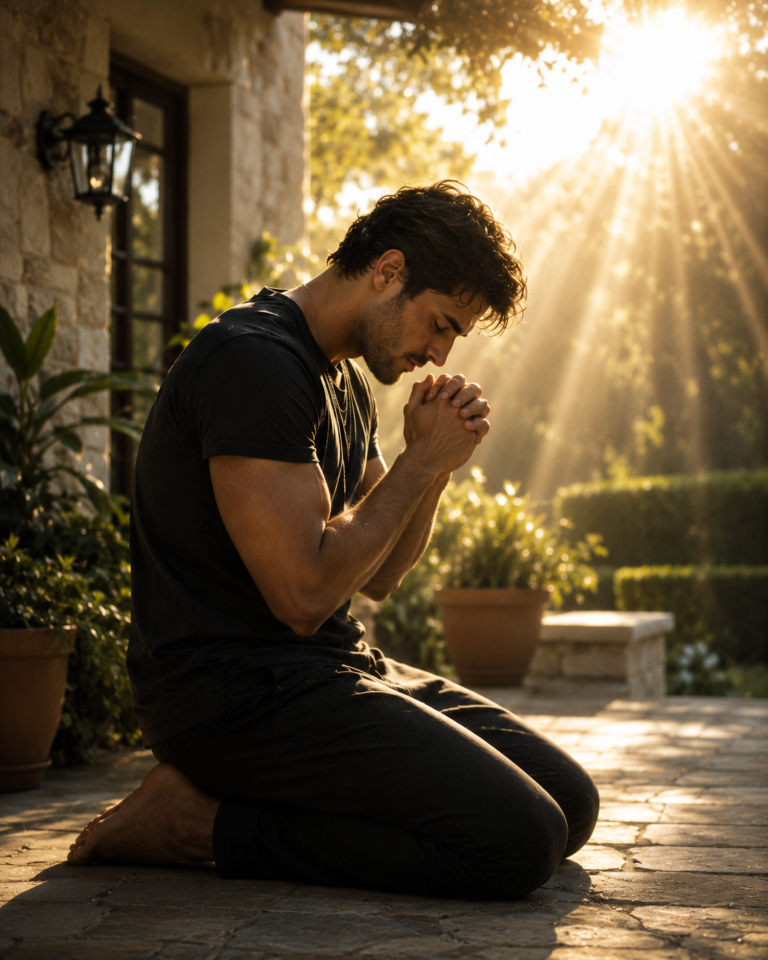
upon the holy mountain You revealed the radiance of Your divine glory before Your disciples. In the brilliance of Your light, strengthen our hearts when we grow weary, and guide us when the path before us becomes difficult. Teach us to look beyond the darkness of the world and to fix our eyes upon the eternal glory that comes from You alone.
Transfigure our souls by Your grace. Purify our thoughts, renew our spirits, and draw us closer to truth, holiness, and obedience to the will of the Father. As Peter, James, and John stood in awe before Your majesty, help us to approach You with reverence, humility, and faith.
Lord, when we face suffering, remind us of the mountain. When fear clouds our hearts, remind us of Your light. Let the memory of Your glory strengthen us through every trial and lead us toward hope, courage, and perseverance.
May Your divine light shine within our lives so that we may reflect Your love, truth, and peace to others. Lead us ever upward from confusion into clarity, from weakness into strength, and from earthly shadows into the promise of eternal life with You.
For You are the radiant Son of the Father,
the Light of the world,
now and forever. Amen.
Christians should ask Christ to “transfigure” their own hearts — to purify them from sin, fear, pride, confusion, and despair. Just as Christ’s light shone brilliantly upon the mountain, believers pray that God’s grace will illuminate their minds and souls, helping them grow in holiness, truth, and closeness to Him. The Transfiguration took place shortly before Christ’s Passion, giving the disciples a glimpse of heavenly glory before the sorrow of the Cross. The Father’s words during the Transfiguration — “Listen to Him” — are seen as a call to obedience and spiritual attentiveness. The imagery of the holy mountain, radiant light, heavenly presence, and divine glory inspires contemplation and worship. Through prayer, believers seek not only comfort or guidance, but a greater awareness of God’s majesty and eternal kingdom. Ultimately the Transfiguration offers hope: hope that God reveals Himself to humanity, hope that darkness does not overcome divine light, and hope that through Christ, human beings are called toward eternal transformation and communion with God.

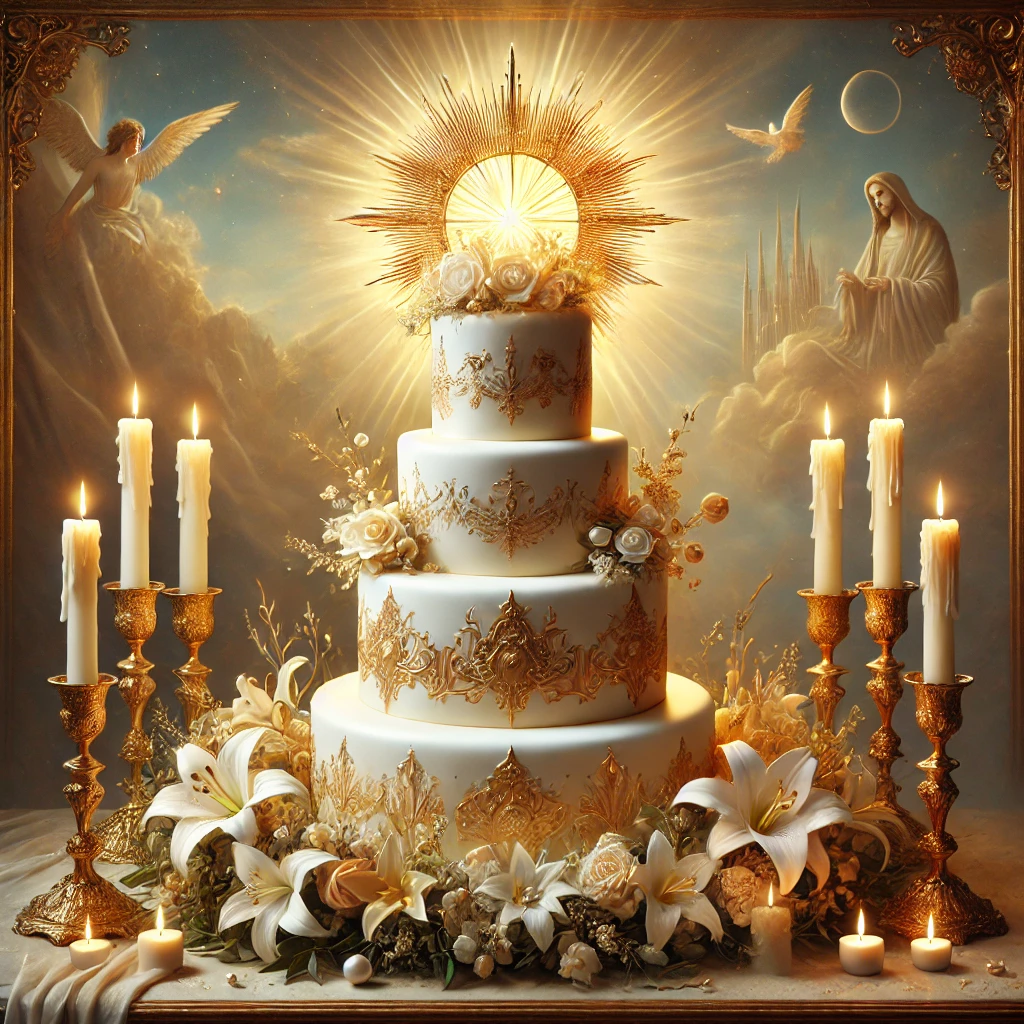
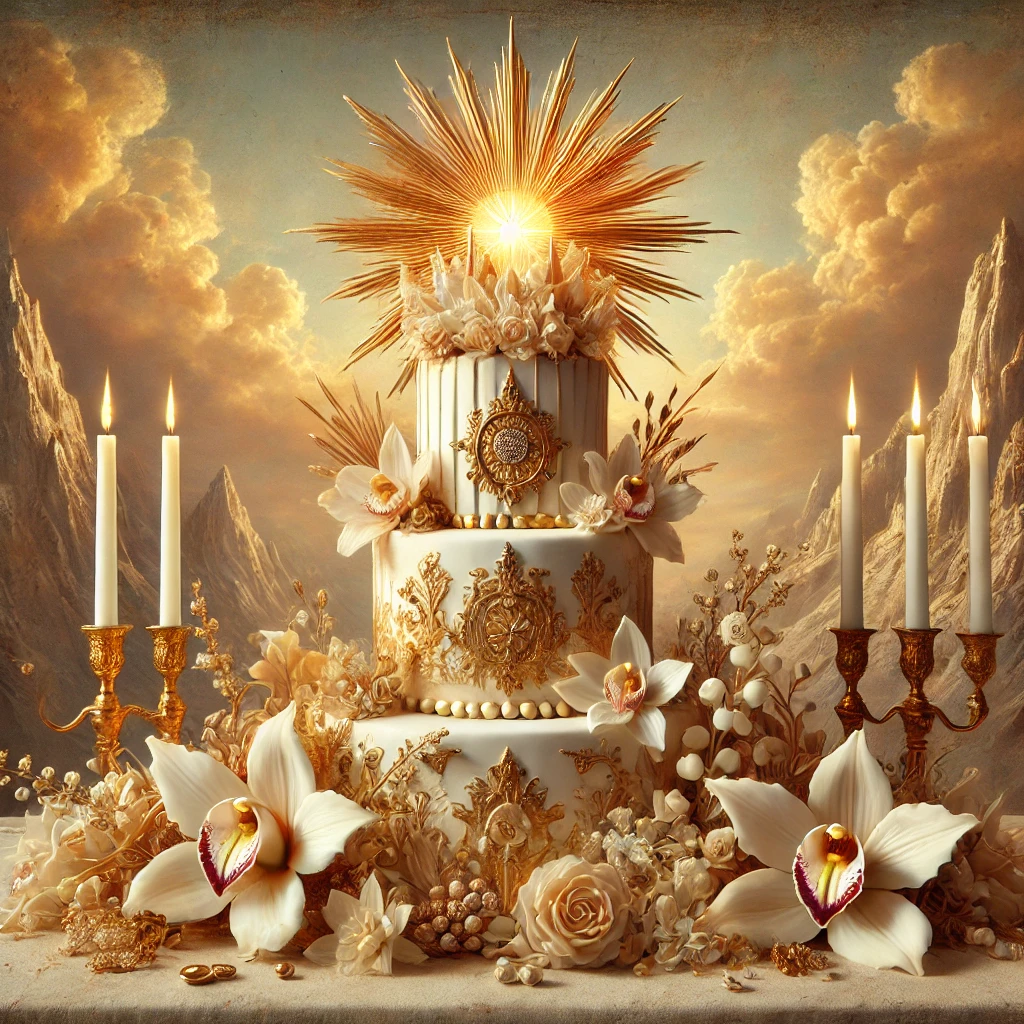
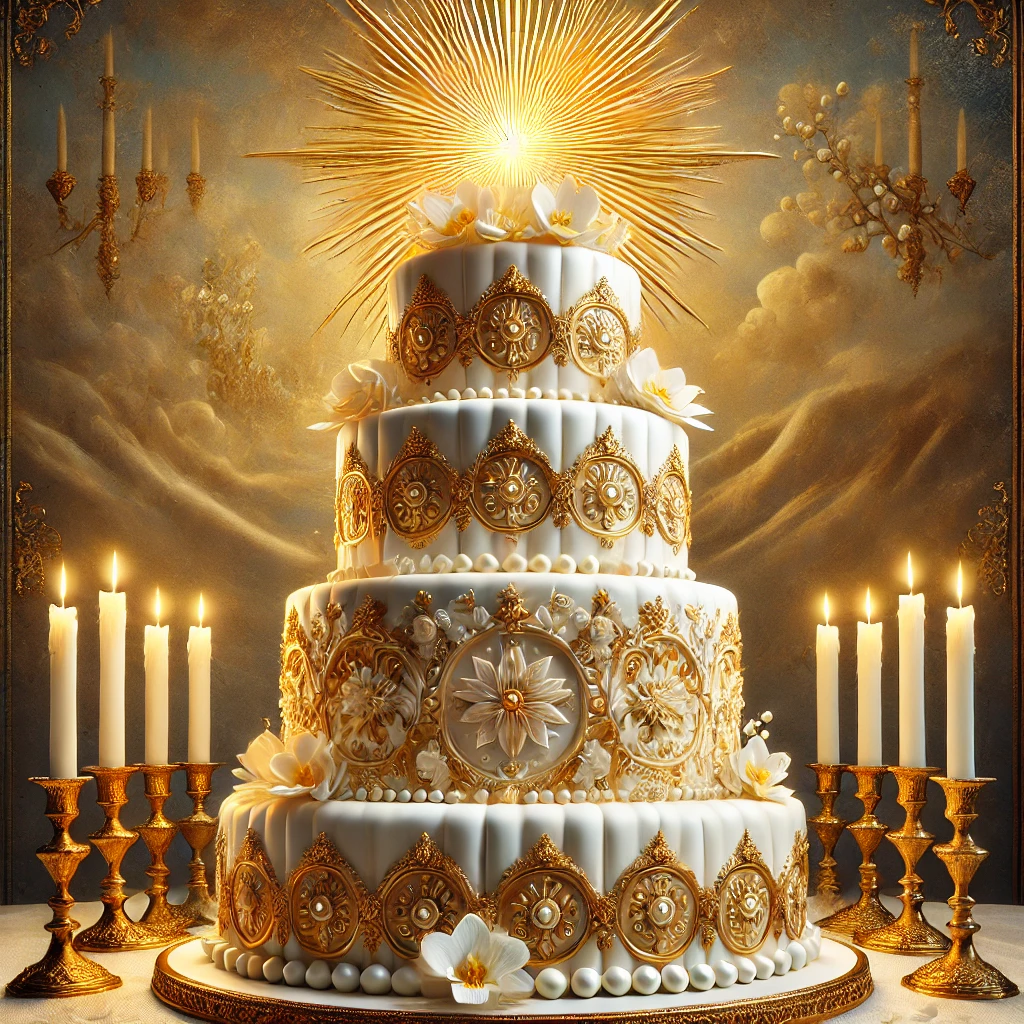
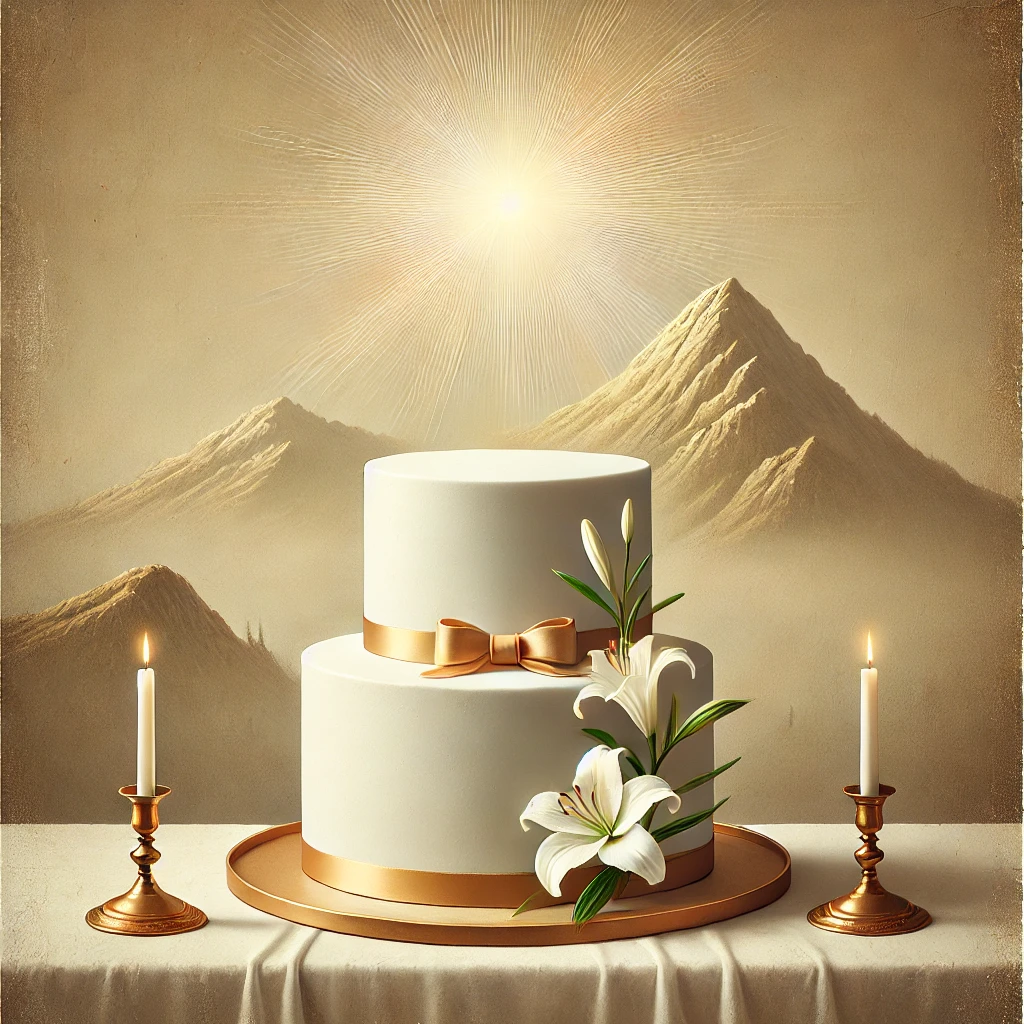
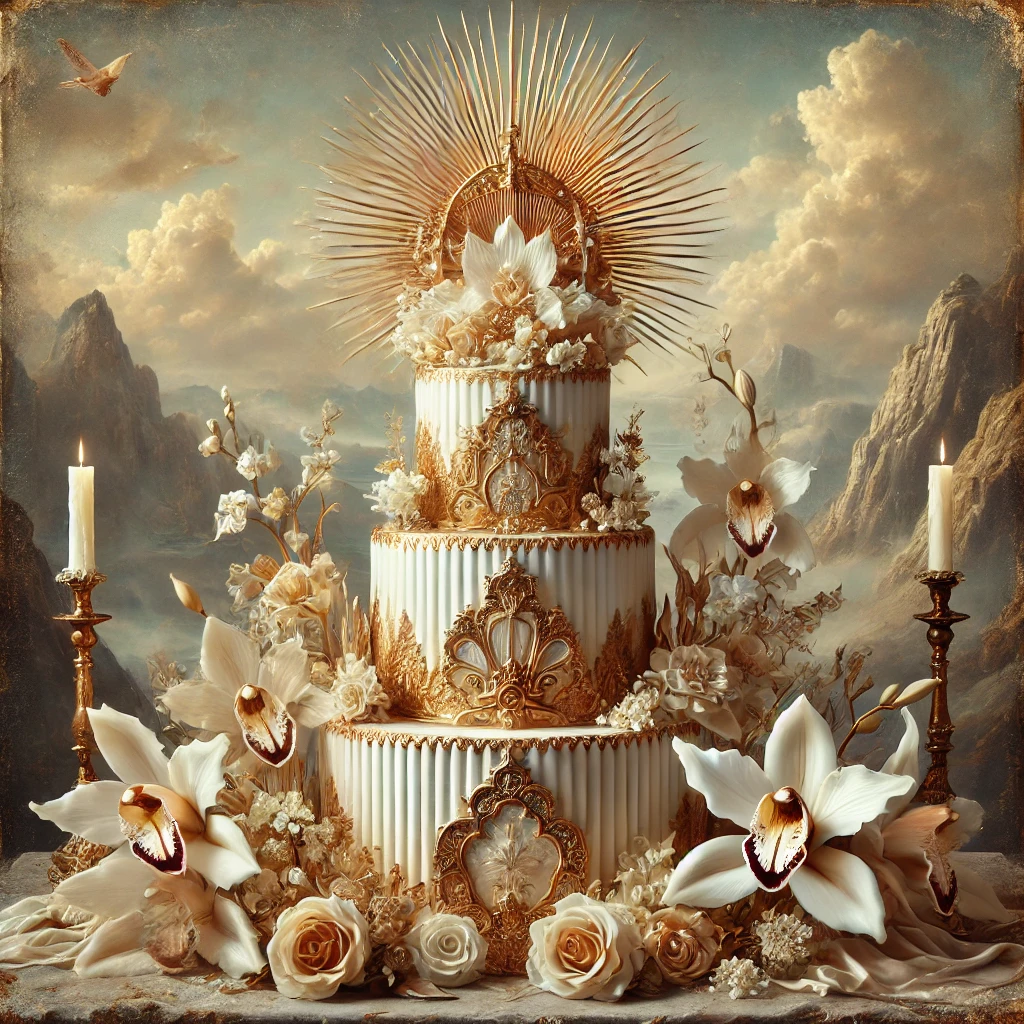
Transfiguration Cake & Atmosphere Ideas

Where style, memory, and celebration meet.

This section is meant to be more than Cake Decorating Ideas… it’s designed to spark inspiration and creativity, awaken tradition, and infuse your special occasions with style, identity, and atmosphere. A color palette becomes a theme. A design becomes a mood. Simple details—like sugared holly leaves or shimmering stars—can set the tone for a gathering and become part of cherished traditions and lasting memories melded with personal touch and love.

Traditional Transfiguration Dishes

Blessed Mountain Bread
A rustic round loaf or braided bread is sometimes prepared to symbolize the holy mountain and the spiritual nourishment found in Christ. In some Eastern traditions, freshly baked bread is brought alongside grapes for blessing.
Honey-Glazed Roasted Grapes
Because grapes are traditionally blessed during the Feast of the Transfiguration in many Eastern Churches, grape-based dishes are especially meaningful. Roasted grapes with honey, herbs, and nuts symbolize abundance, sweetness, and spiritual transformation.
Golden Herb Roasted Chicken
A richly seasoned roasted chicken with rosemary, thyme, garlic, and olive oil reflects the feast’s themes of warmth, light, and celebration. The golden color of the roasted skin connects symbolically with divine radiance and heavenly glory.
White Wine Cream Pasta
Cream-based dishes are often associated with solemn feast celebrations because of their richness and bright appearance. A white wine cream pasta with parmesan and herbs reflects both elegance and festivity.
Honey and Fig Platters
Figs, dates, nuts, and honey are common foods connected to biblical lands and sacred celebrations. These dishes evoke the abundance of the Promised Land and the sweetness of communion with God.
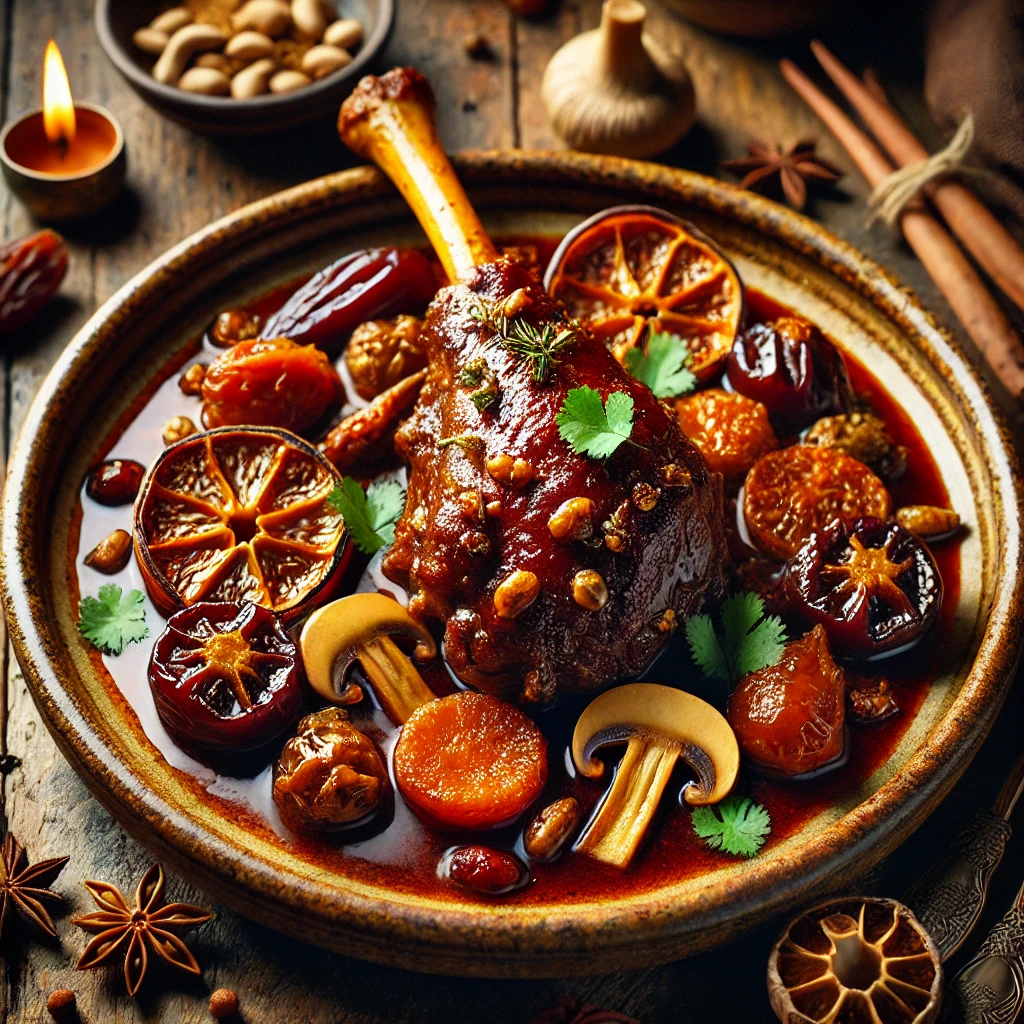
Lamb with Garlic and Olive Oil
Lamb dishes are deeply symbolic within Christianity, recalling Christ as the Lamb of God. Slow-roasted lamb with herbs and olive oil is often prepared for major feast days and family gatherings.
White and Gold Cakes
Elegant cakes decorated in white icing and gold accents are sometimes prepared for church gatherings or family celebrations of the feast. The colors symbolize the radiant garments of Christ during the Transfiguration.
Light-Colored Fruit Desserts
Pear tarts, lemon pastries, vanilla custards, and cream-filled desserts are popular because their bright tones reflect the themes of light, purity, and heavenly glory associated with the feast.

Recipes Engineered for Sweet Summer Days