



































The Sacred Heart of Jesus

with ORO VALENTIO

The Friday after the Feast of Corpus Christi (19 days after Pentecost)

The spiritual practices associated with the Sacred Heart further deepen this relationship. Among the most well-known is the Enthronement of the Sacred Heart in the home, where families consecrate themselves and their household to Christ, acknowledging Him as the center and king of their lives. The First Friday devotion, which involves receiving Holy Communion on the first Friday of nine consecutive months, is another practice rooted in Christ’s promises to those devoted to His Heart. These practices are not mechanical obligations but are meant to cultivate a life oriented around love, reparation, and union with Christ. Theologically, the Sacred Heart stands as a powerful synthesis of the mystery of the Incarnation. In Jesus Christ, divine and human natures are united, and His Heart becomes the meeting place of heaven and earth. It is through this Heart that divine grace flows into the world, and through it that humanity is invited back into communion with God. The pierced Heart recalls the moment on the Cross when blood and water flowed forth—a symbol of the sacraments and the birth of the Church. Thus, devotion to the Sacred Heart is inseparable from the Passion and from the Eucharist, where that same love is continually offered.
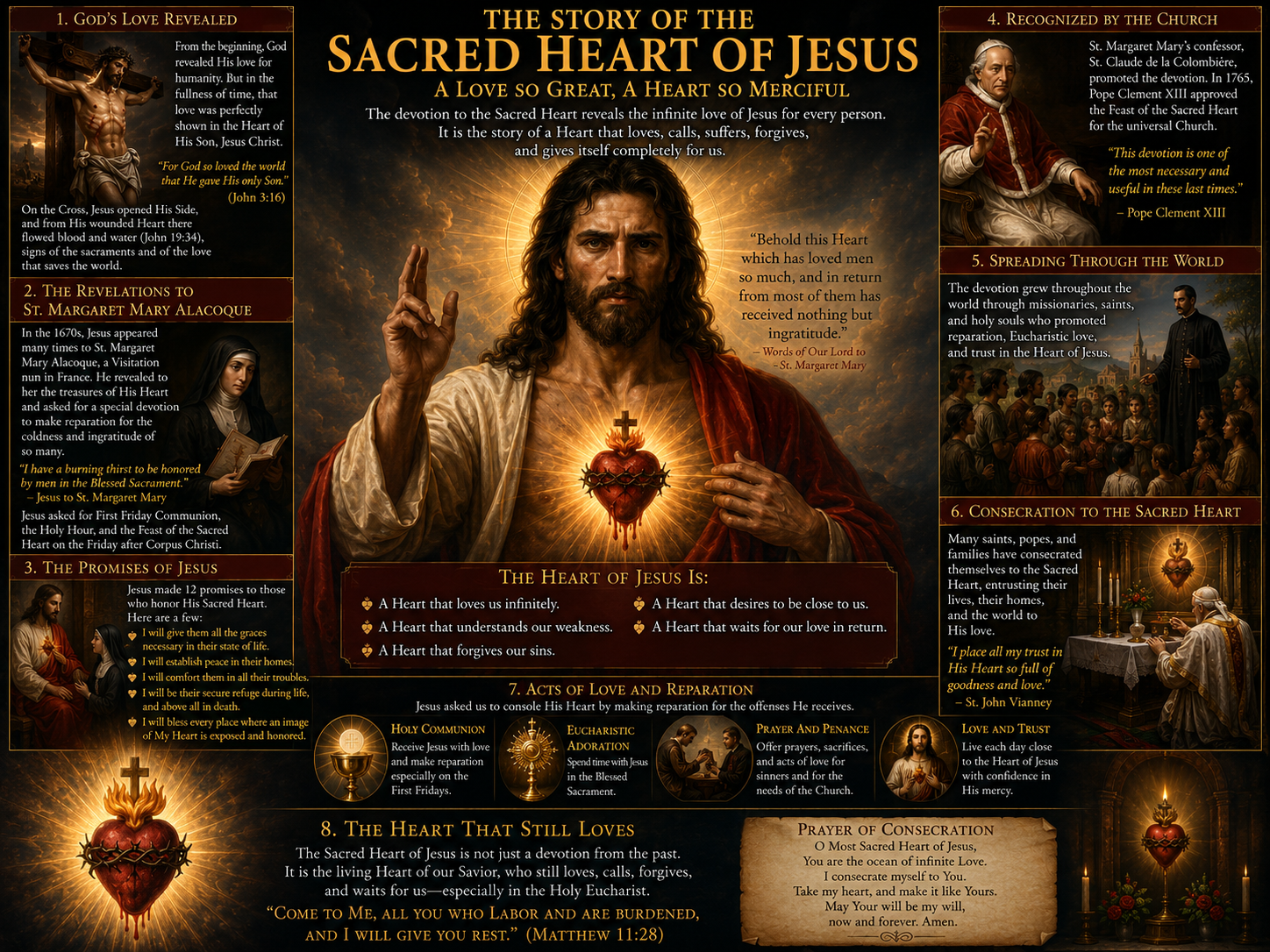
The devotion to the Sacred Heart of Jesus Christ is one of the most profound and moving expressions of Christian spirituality, revealing both the mystery of His divinity and the depth of His human love. The Sacred Heart represents the very center of His Person, manifesting the infinite love of God made visible in Jesus Christ. It speaks of His compassion, His mercy, His obedience to the Father, and His unwavering desire for the salvation of every soul. Through this devotion, believers are invited to contemplate a love that is neither distant nor abstract, but intensely personal—a love willing to suffer, to be rejected, and to pour itself out completely for the redemption of mankind.
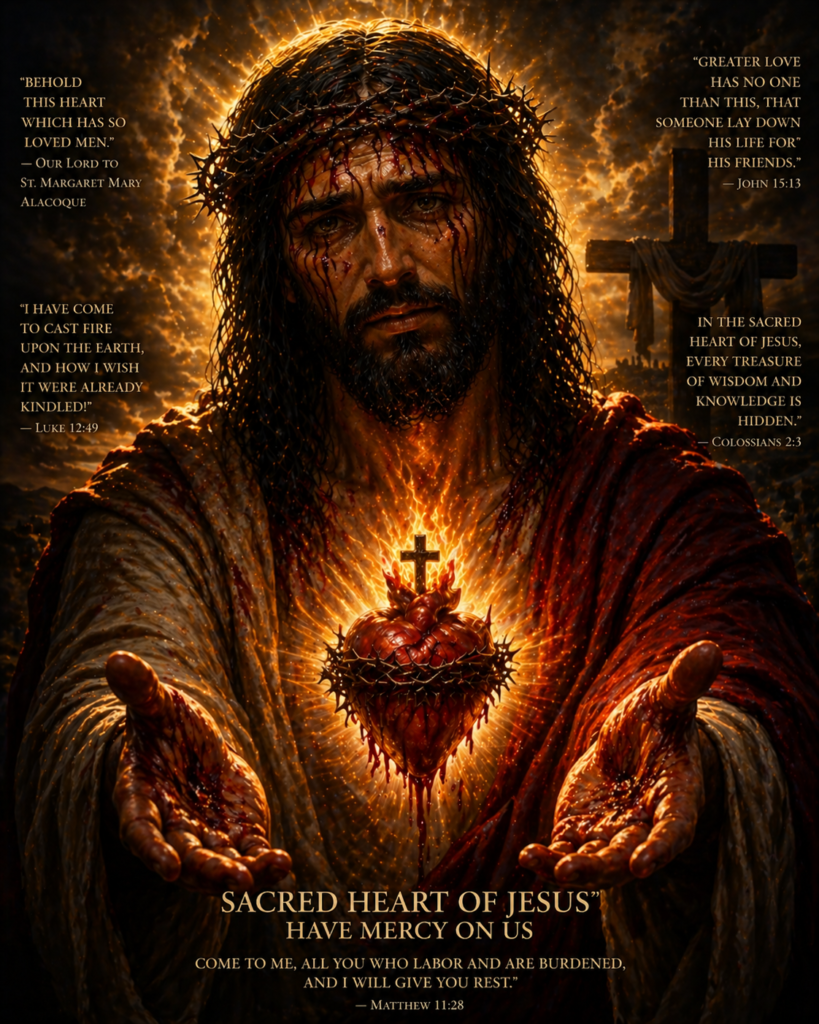
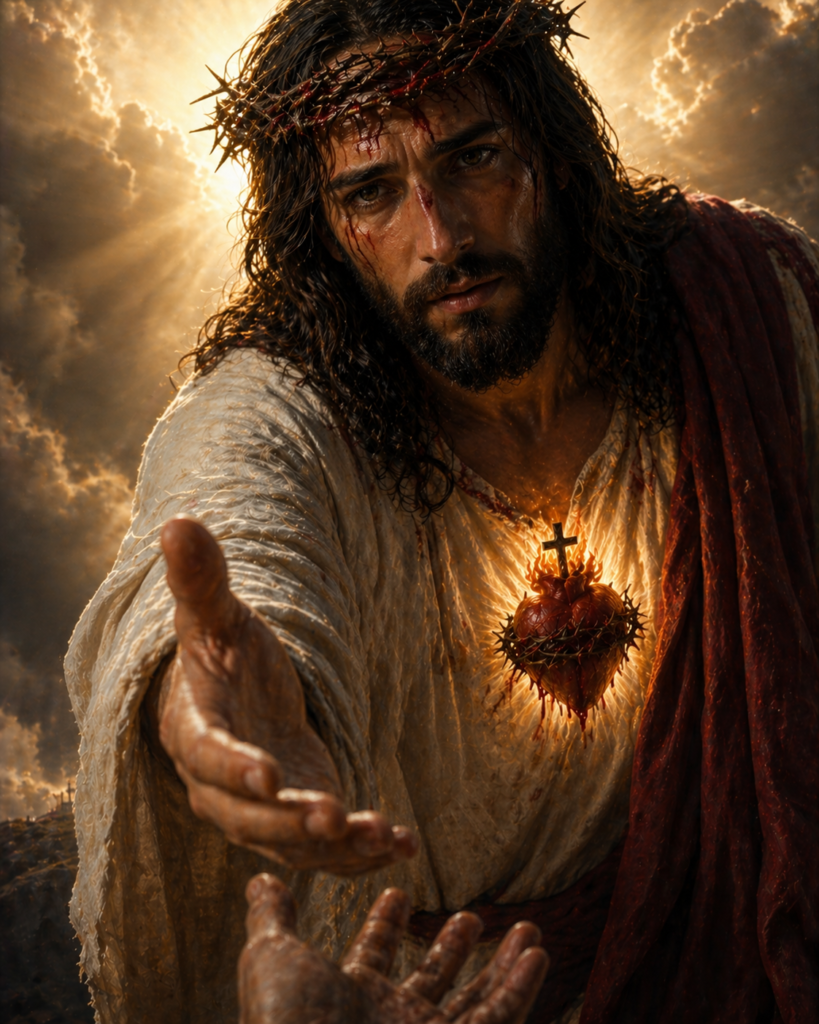
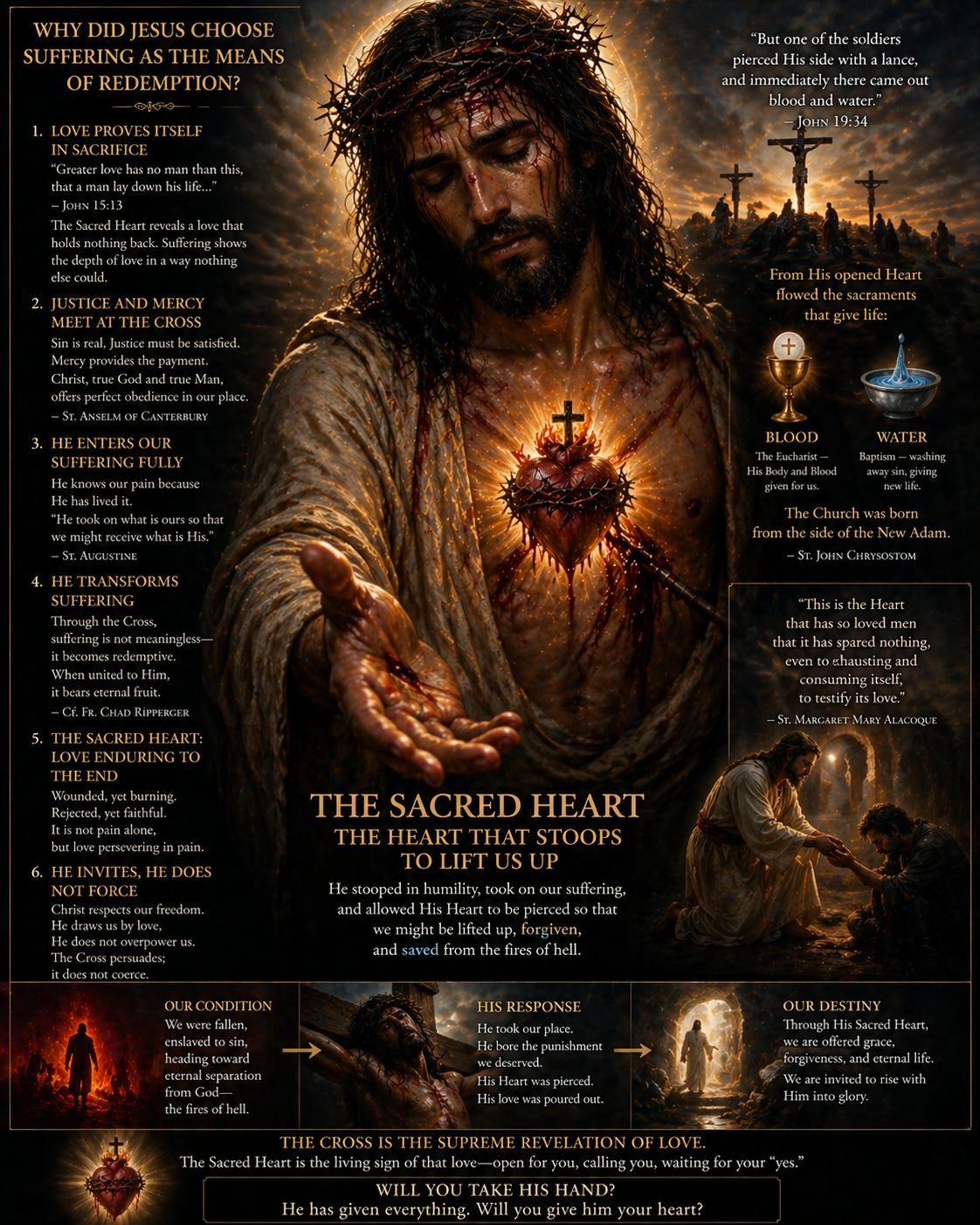
The Sacred Heart is traditionally depicted aflame, encircled by a crown of thorns, surmounted by a Cross, and pierced by a lance. These sacred images are not merely symbolic decorations but visible signs pointing to the real Heart of Christ, which reveals the immeasurable love of the Incarnate Word. The flames signify the burning intensity of divine charity; the crown of thorns recalls the ingratitude, indifference, and sins that wound that love; the Cross proclaims the sacrifice through which salvation was accomplished; and the pierced Heart recalls the wound opened on Calvary, from which flowed blood and water as signs of grace and new life. Together, these images reveal a love that remains steadfast and victorious despite suffering—a love that continues to seek every human heart.
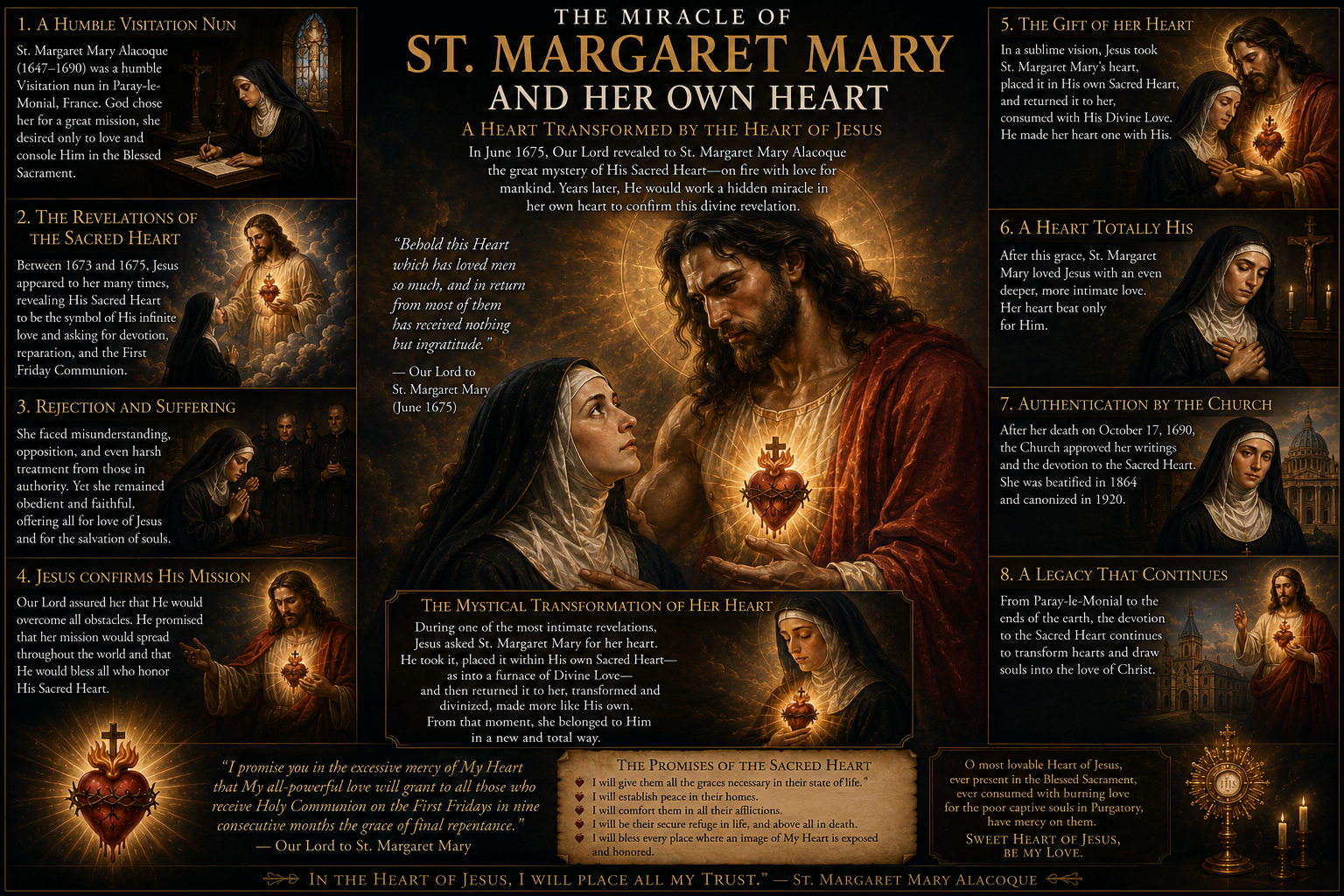
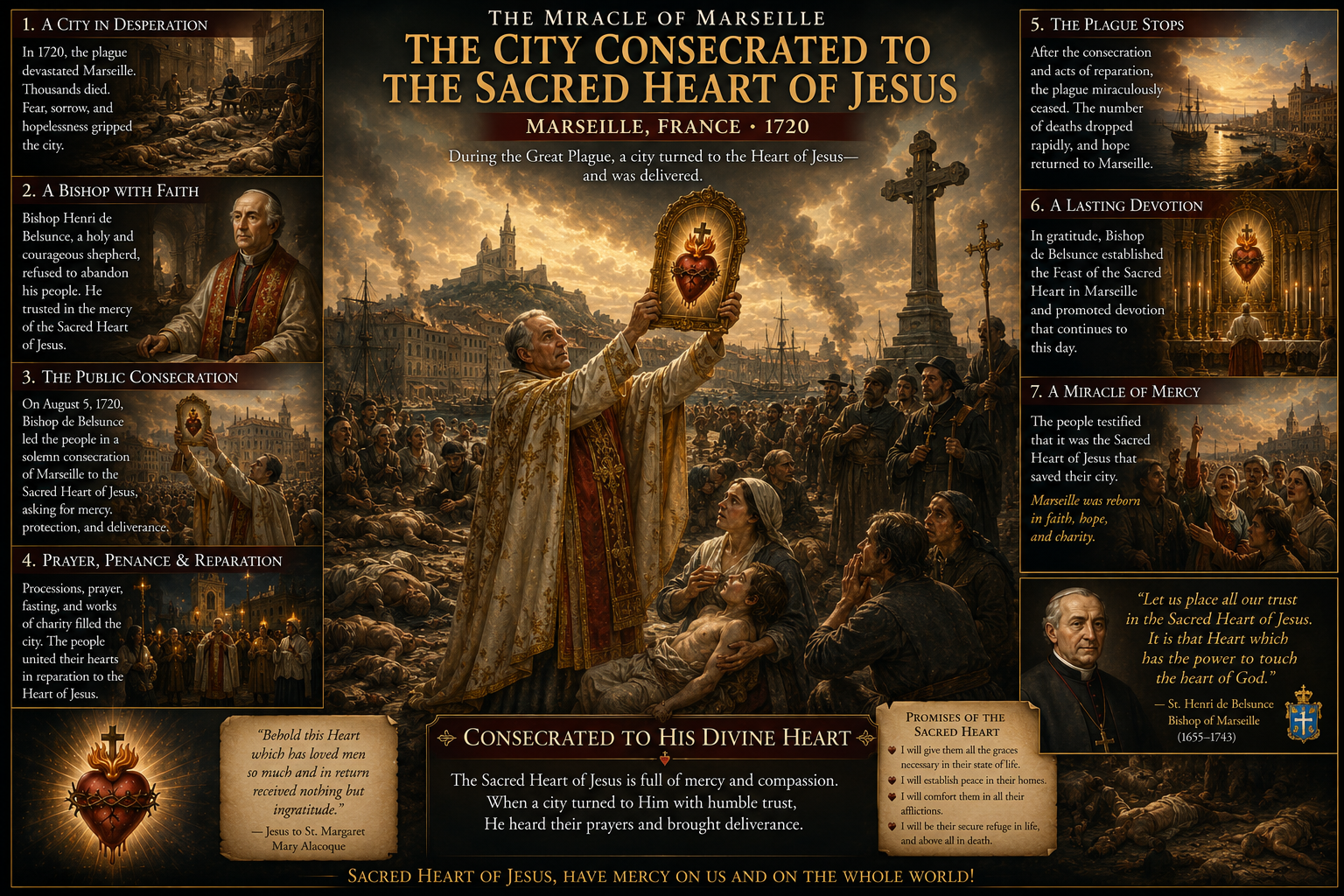
While the roots of this devotion can be traced to the earliest centuries of Christianity and to meditation upon the Passion of Christ, it came into fuller expression through the revelations received by Saint Margaret Mary Alacoque in seventeenth-century France. In these encounters, Jesus revealed His Heart as a profound manifestation of His love for humanity and expressed sorrow over the indifference with which that love was often received. He called for acts of reparation, deeper devotion to the Eucharist, and greater fidelity to prayer as responses to His invitation. Through the humility and perseverance of Saint Margaret Mary, aided by the guidance of Saint Claude de la Colombière, devotion to the Sacred Heart spread throughout the Christian world and eventually became one of the most beloved devotions in the life of the Church.
At its heart, this devotion is not primarily about honoring an image, but about entering into a living relationship with Jesus Christ and responding to His love with love. It calls believers to contemplate both the tenderness and the cost of divine charity. The Sacred Heart reveals a love that is patient in suffering, inexhaustible in mercy, and relentless in its pursuit of every soul. It reminds humanity that Christ does not love in a distant or impersonal way, but intimately and individually—knowing every weakness, every wound, every failure, and yet loving completely.
The Sacred Heart also reveals the kingship of Christ. The Heart that was pierced upon the Cross is the same Heart that now reigns in glory. Devotion to the Sacred Heart therefore calls believers not only to receive Christ’s love, but to place every aspect of their lives beneath His loving and merciful rule. It is an invitation to allow His Heart to shape one’s thoughts, desires, and actions, so that His peace may reign where there is turmoil, His truth where there is confusion, and His love where there is fear. Ultimately, the Sacred Heart points to the deepest truth of the Gospel: that God so loved the world that He gave Himself completely, and that His Heart remains forever open to all who seek Him.

The Golden Flame of Divine Love

One of the most striking aspects of Sacred Heart spirituality is its insistence that Christianity is not merely a set of beliefs, moral principles, or religious practices, but an encounter with a living Person. The devotion challenges the tendency to reduce faith to routine or obligation by continually directing attention back to the reality of Christ Himself. It reminds believers that the Christian life is ultimately about communion with the One who remains actively present and engaged in the life of His people.
This emphasis becomes especially significant in an age marked by distraction, skepticism, and spiritual indifference. While modern society often measures value through productivity, achievement, or personal fulfillment, the Sacred Heart points to a different standard: the capacity to receive and respond to divine love. It calls believers to cultivate an interior life rooted in prayer, trust, and attentiveness to God’s presence rather than being consumed by the constant noise of the world.
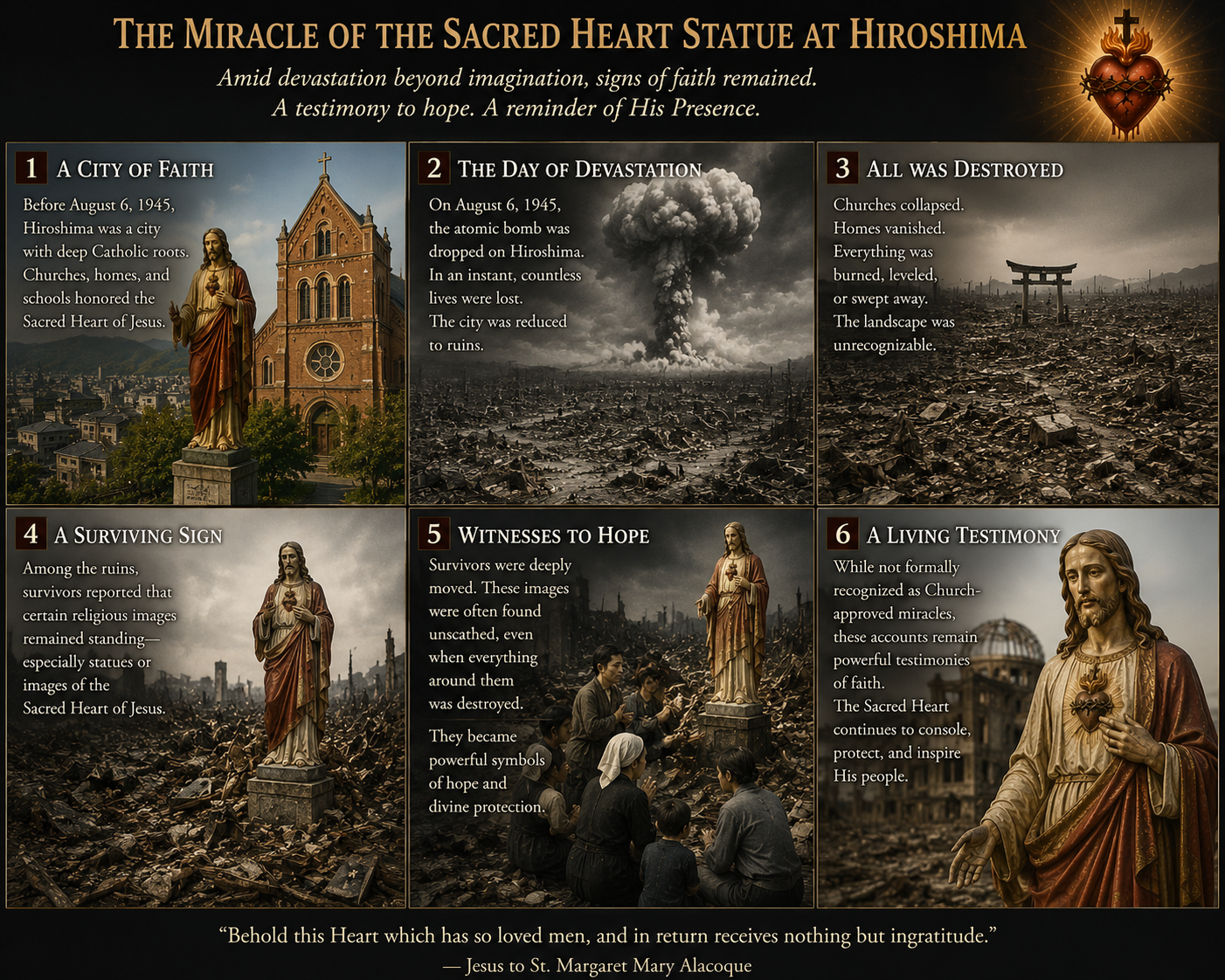
In this context, reports of Eucharistic miracles have drawn renewed attention throughout the centuries. In several well-known cases, scientific examinations have identified characteristics consistent with human heart tissue, often under circumstances that remain difficult to explain by natural means alone. While such events are not necessary for faith, they have inspired many people to reflect more deeply upon the mystery of Christ’s presence. Rather than introducing a new doctrine, these occurrences point back to an ancient truth: that the Lord who walked among His disciples continues to remain near to His people in a tangible and personal way.
The devotion to the Sacred Heart ultimately directs the believer toward a profound realization: Christianity is not centered upon an idea, but upon a relationship. The Heart of Christ stands as a perpetual invitation to move beyond superficial belief and into genuine friendship with God. It calls each person to a deeper conversion of heart, a greater openness to grace, and a more complete surrender to the transforming love that alone can satisfy the deepest longings of the human soul.
Christ’s love is revealed most strikingly in His humility: though He is true God, He does not remain distant from human suffering but lowers Himself to enter into it fully. As taught in Scripture and reflected upon by saints such as St. Thomas Aquinas, the Incarnation itself is an act of divine condescension—not in the sense of disdain, but of merciful descent. The Son of God takes on human nature, accepts weakness, and even submits to suffering and death, in order to raise humanity from sin. This humility is not passive; it is active and redemptive. Like one who stoops down to lift another from the ground, Christ bends toward fallen humanity, extending His hand through grace, the sacraments, and above all through His sacrifice on the Cross. He does not force salvation, but offers it freely, desiring that all be saved and rescued from eternal separation from God—the reality traditionally described as the fires of hell. In this, His Sacred Heart is revealed: a Heart that does not remain aloof, but descends into the depths to draw souls upward, inviting each person to grasp His outstretched hand in trust, repentance, and love.

Sacred Heart of Jesus Traditions to Make Your Own

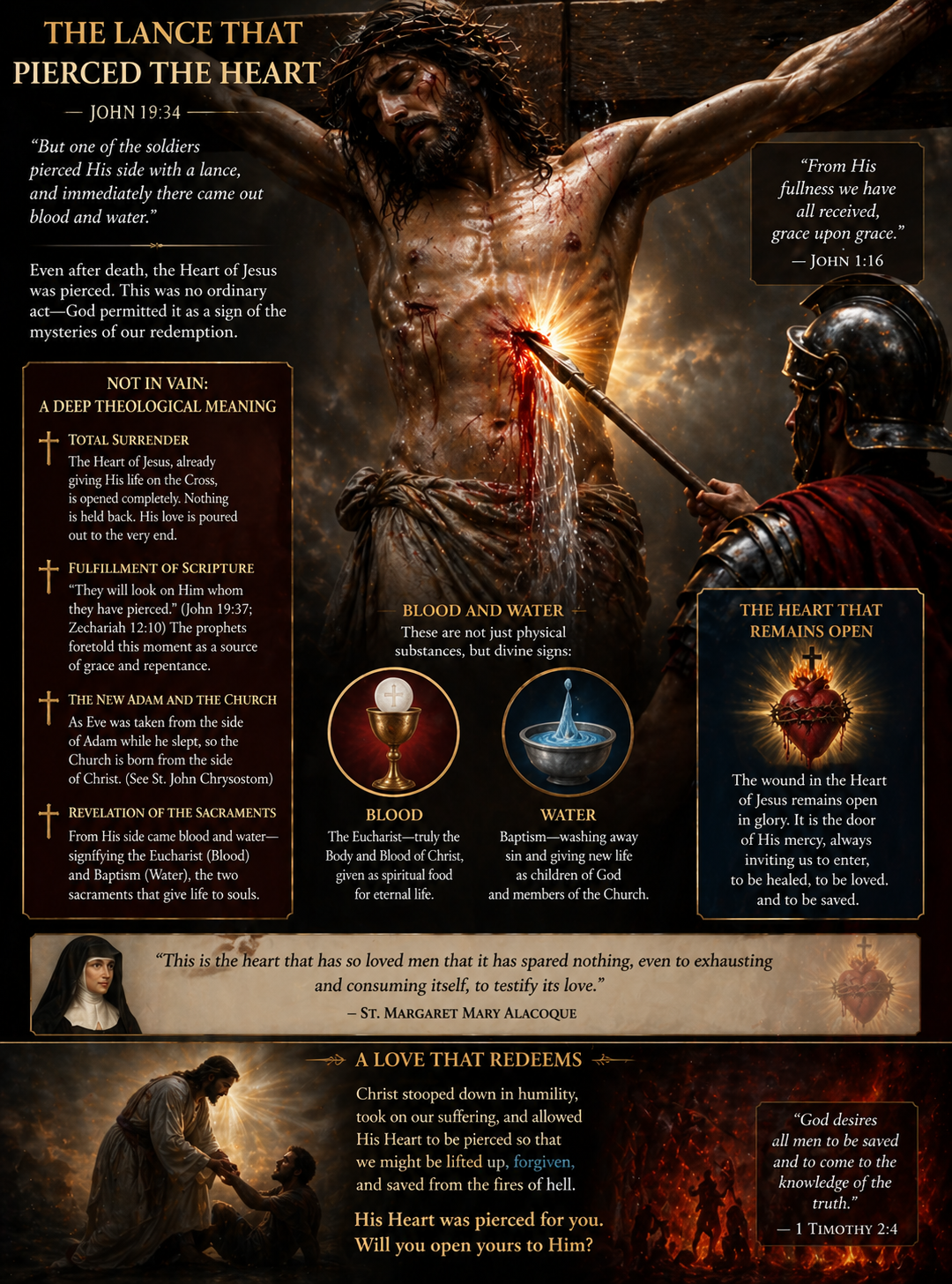
The piercing of Christ’s side by the lance, recorded in John 19:34, carries profound theological meaning that the Church has long contemplated. Though Christ had already died, this act was not meaningless; rather, as St. Augustine of Hippo teaches, it revealed the hidden mysteries of salvation. From His opened side flowed blood and water, which the Church understands as symbols of the sacraments—especially the Eucharist (Blood) and Baptism (water)—through which the life of grace is given to souls. In this moment, the Heart of Christ is laid open, signifying that nothing is held back: His love is poured out completely. St. John Chrysostom compares this to the creation of Eve from the side of Adam, seeing in it the birth of the Church from the side of Christ, the New Adam. The fact that His Heart is pierced even after death underscores that His sacrifice is total and irrevocable—He gives Himself to the very end. Spiritually, it reveals that the Sacred Heart remains open to humanity, an inexhaustible source of mercy, inviting all to enter into that wound, as many saints describe, and find refuge, healing, and redemption.
  • Holy Mass & Holy Communion – Attending Mass and receiving the Eucharist with love and reverence, especially in a spirit of reparation.
  • Act of Reparation – Offering prayers to make amends for sins, particularly indifference and offenses against Christ’s love.
  • Eucharistic Adoration (Holy Hour) – Spending time in prayer before the Blessed Sacrament, “keeping watch” with Christ.
  • Devotion to the Sacred Heart Image – Honoring an image of the Sacred Heart, often with candles or flowers.
  • Enthronement of the Sacred Heart – Placing an image of the Sacred Heart in the home and consecrating the family to Christ.
  • First Friday Devotion – Receiving Communion on the first Friday of nine consecutive months in reparation (from the revelations to St. Margaret Mary Alacoque).
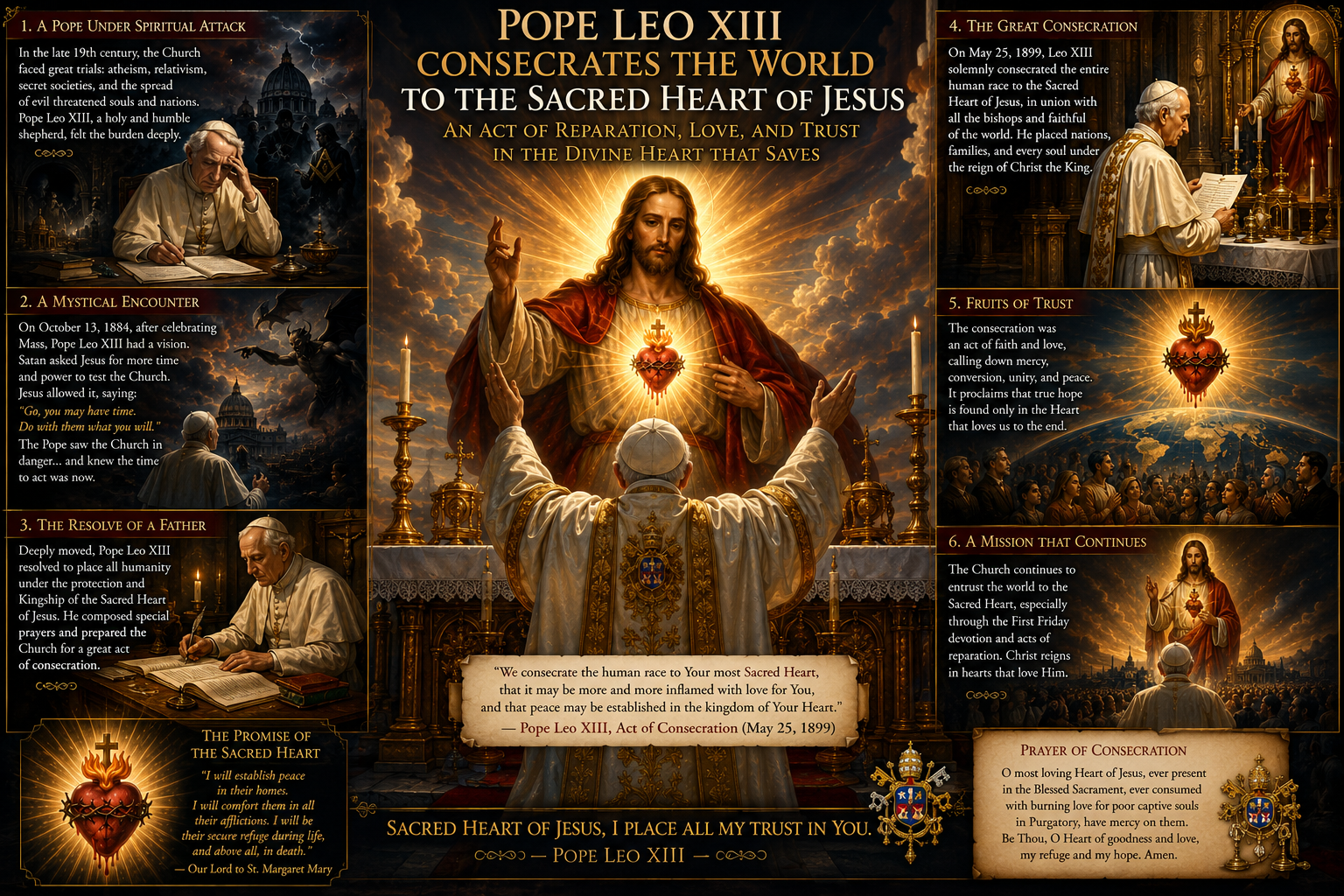
  • Consecration to the Sacred Heart – Personally offering one’s life, actions, and sufferings to Christ’s Heart.
  • Acts of Sacrifice or Penance – Small voluntary sacrifices offered in love and reparation.
  • Prayers to the Sacred Heart – Such as the Litany of the Sacred Heart or other devotional prayers.

You Who Have Loved Me From All Eternity

O Most Sacred Heart of Jesus,
burning furnace of divine love, I come before You in humility and trust.
You who have loved me from all eternity,
You who were pierced for my sins and remain open still,
draw me into the depths of Your mercy.
Sacred Heart, wounded yet radiant,
teach me to understand the cost of Your love.
Where I have been cold, enkindle me.
Where I have been indifferent, awaken me.
Where I have rejected You, forgive me.
You have stooped down in infinite humility
to lift me from sin and from the path that leads to destruction.
You have given everything—holding nothing back—
even to the pouring out of blood and water from Your side.
Let me never take such love lightly.
O Heart of Jesus, truly present in the Eucharist,
so often forgotten, neglected, and unreceived,
I offer You my love in reparation for all who do not love You.
Receive my poor heart and unite it to Yours,
that I may love You with Your own love.
Make me faithful in suffering,
gentle in charity,
and steadfast in trust.
Teach me to carry my crosses in union with Yours,
that my life may become an offering pleasing to the Father.
Sacred Heart of Jesus,
I consecrate myself entirely to You—
my thoughts, my actions, my joys, and my sufferings.
Take all that I am, and make it Yours.
Never let me be separated from You.
Hide me within Your wounded Heart,
where I may find refuge, healing, and eternal rest.
Amen.
Christ chose to redeem humanity through suffering not out of necessity, but because it most perfectly reveals the depth and nature of His love—a love made visible in His Sacred Heart. As taught by St. Thomas Aquinas, the Passion was the most fitting means of redemption because it manifests a love that holds nothing back: a Heart willing to endure rejection, agony, and death rather than abandon those it loves. In the pierced and burning Heart of Christ, justice and mercy meet—justice, because sin is not ignored but answered through a perfect act of obedience; mercy, because that act is offered by God Himself on our behalf, as explained by St. Anselm of Canterbury. This suffering is not distant or symbolic, but deeply personal: Christ enters fully into human pain—betrayal, loss, and death—so that nothing we experience is outside His knowledge or compassion, echoing the insight of St. Augustine of Hippo that He took on what is ours to give us what is His. Yet He does not simply remove suffering; He transforms it, making it a means of union with Him and a channel of grace when joined to His sacrifice, a reality emphasized in spiritual theology even by figures like Fr. Chad Ripperger. The Sacred Heart, wounded yet aflame, reveals that the true essence of the Cross is not pain alone, but love enduring through pain—love that remains faithful when rejected and continues to give when refused. In this way, Christ does not force salvation but invites it, respecting human freedom while drawing each soul through the witness of sacrificial love. The suffering Heart of Jesus thus becomes the ultimate answer to the human question of God’s love: not abstract or distant, but total, personal, and poured out “to the end.”

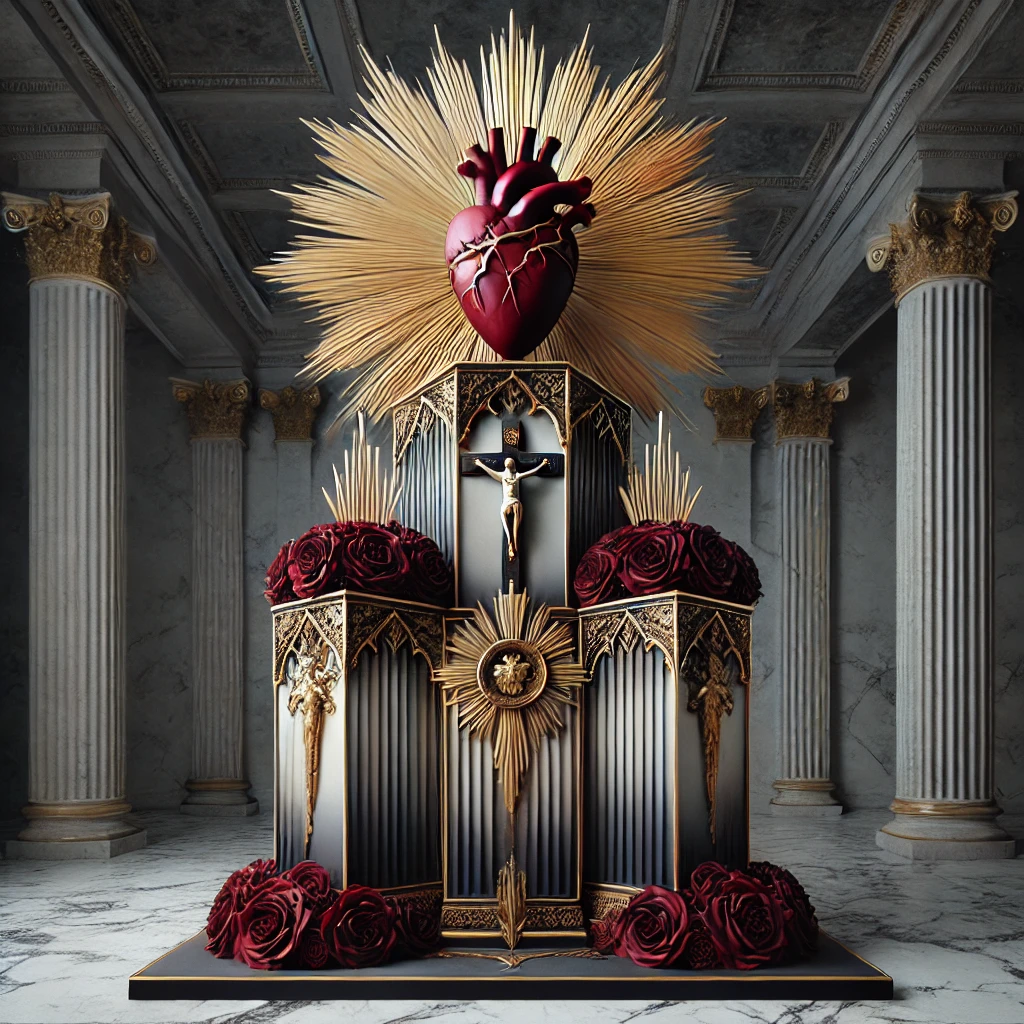
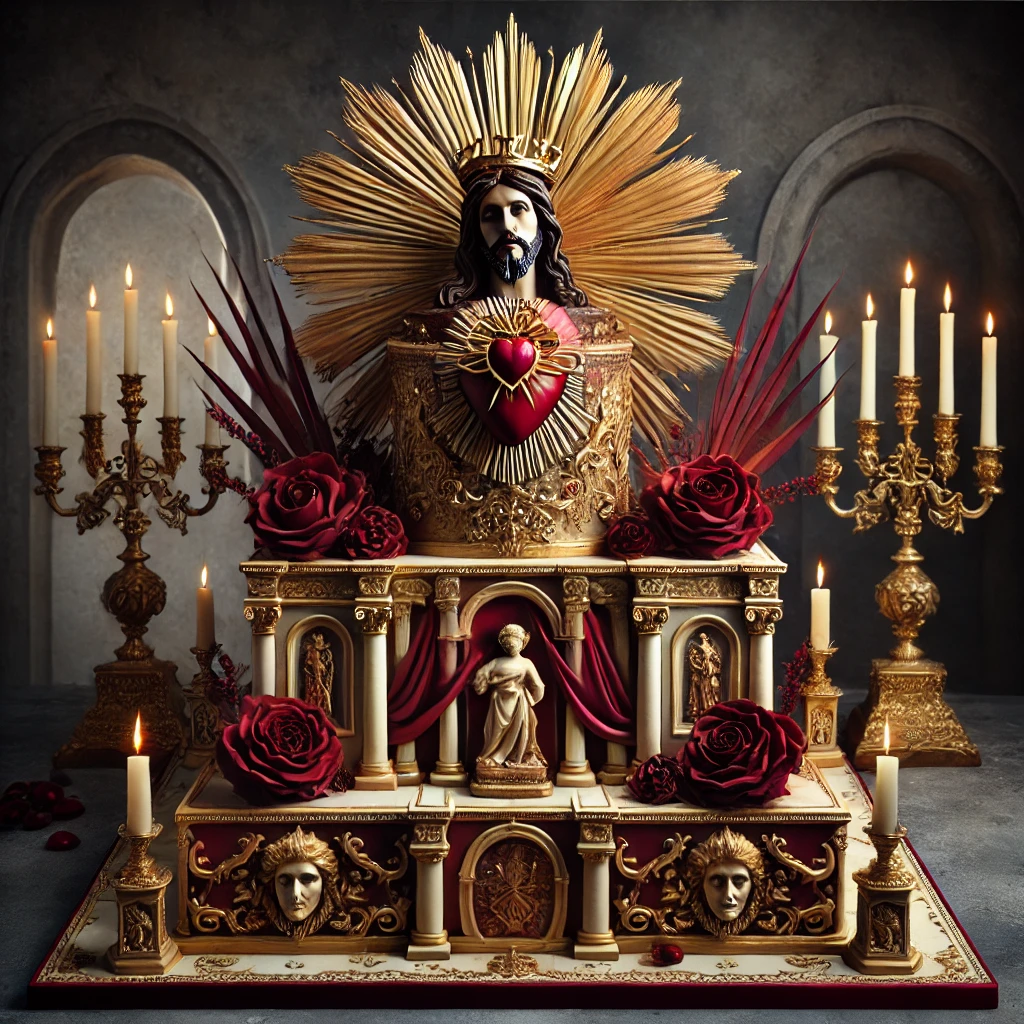
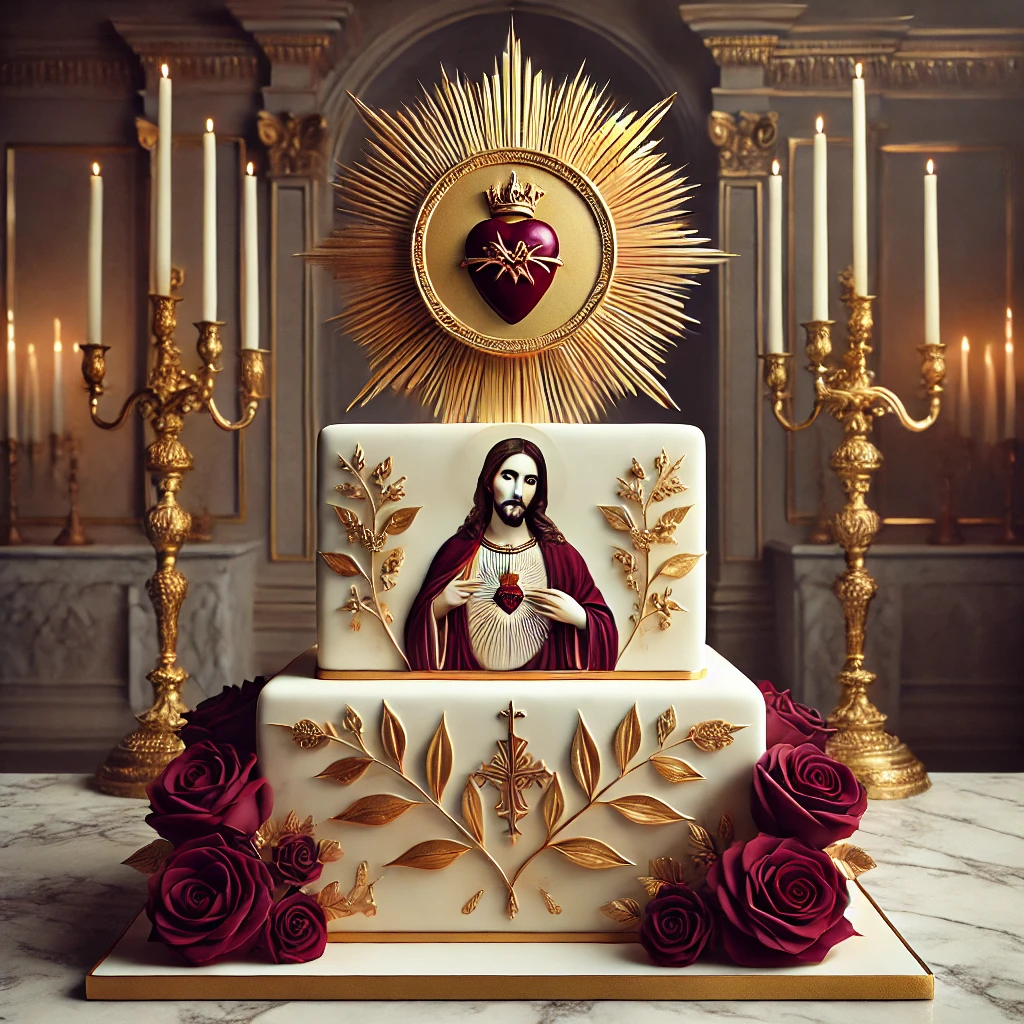
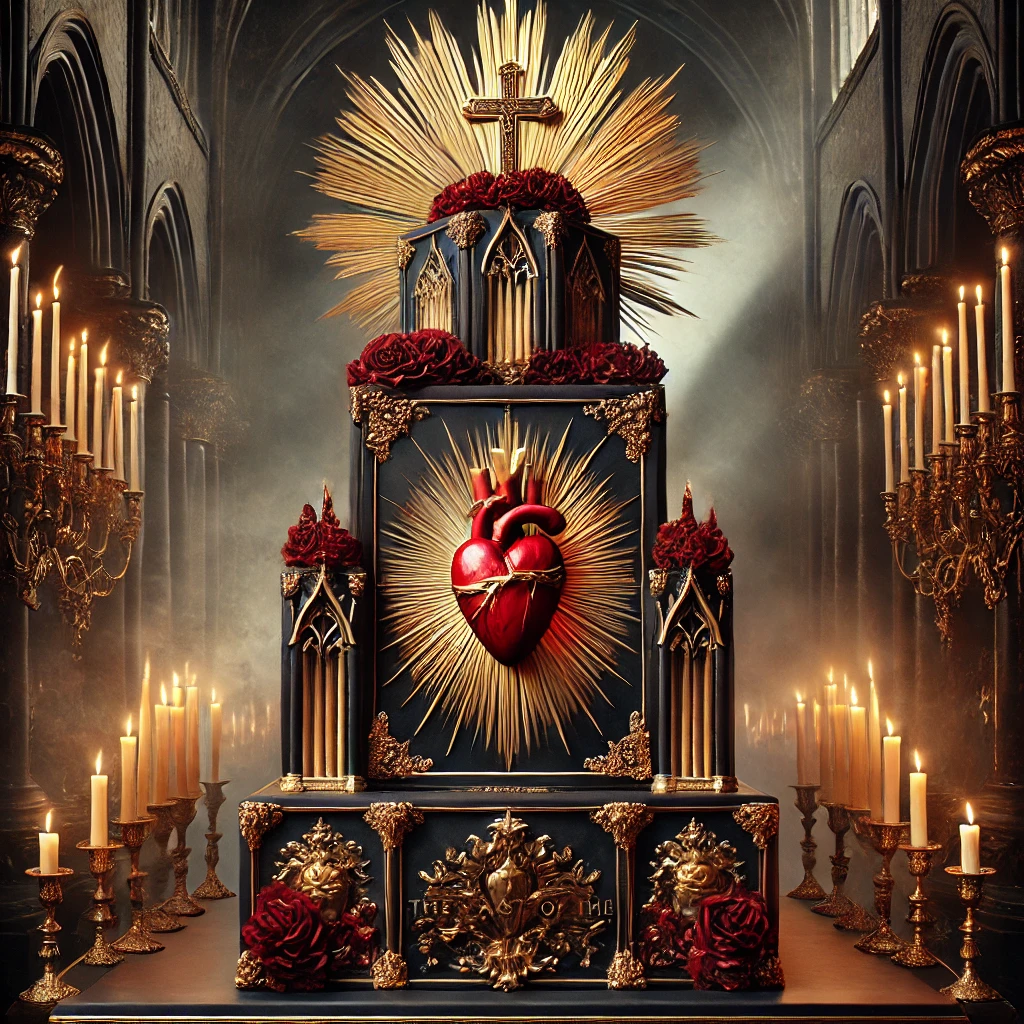
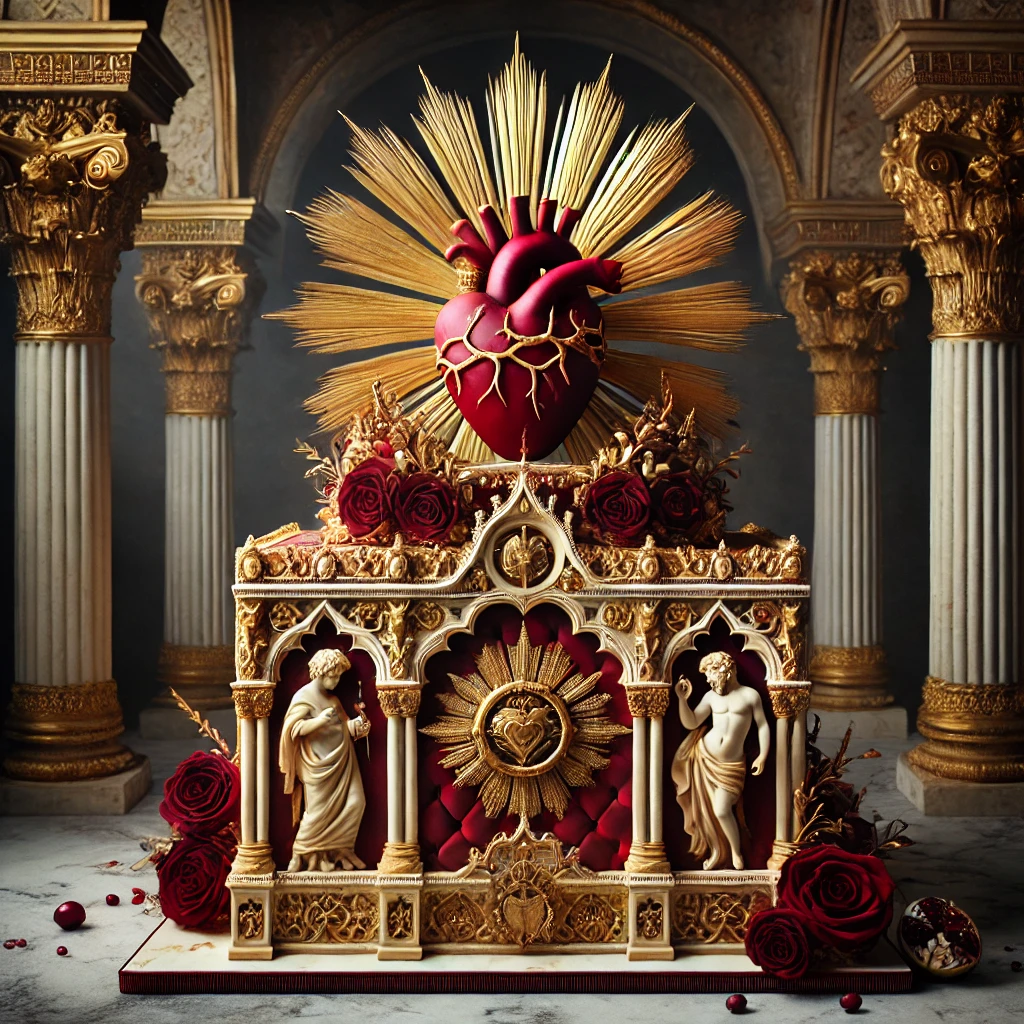
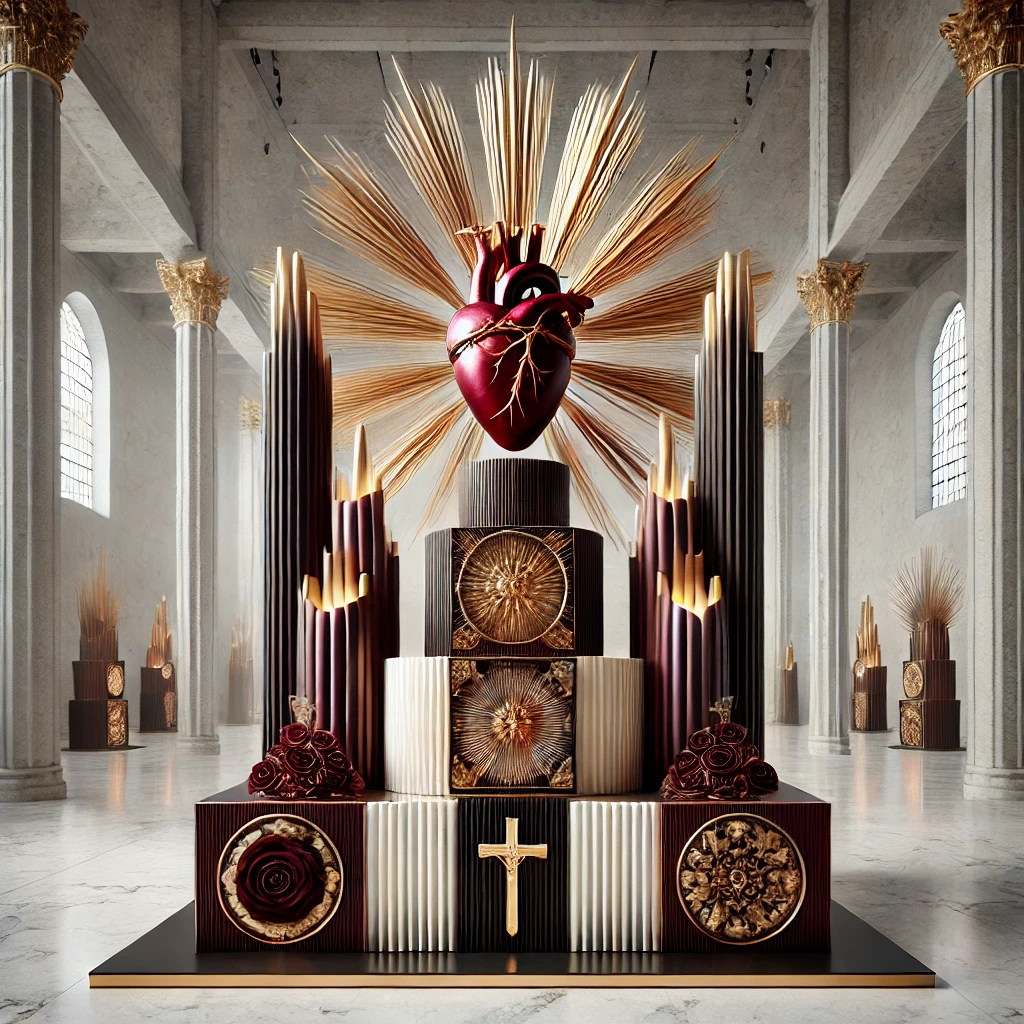
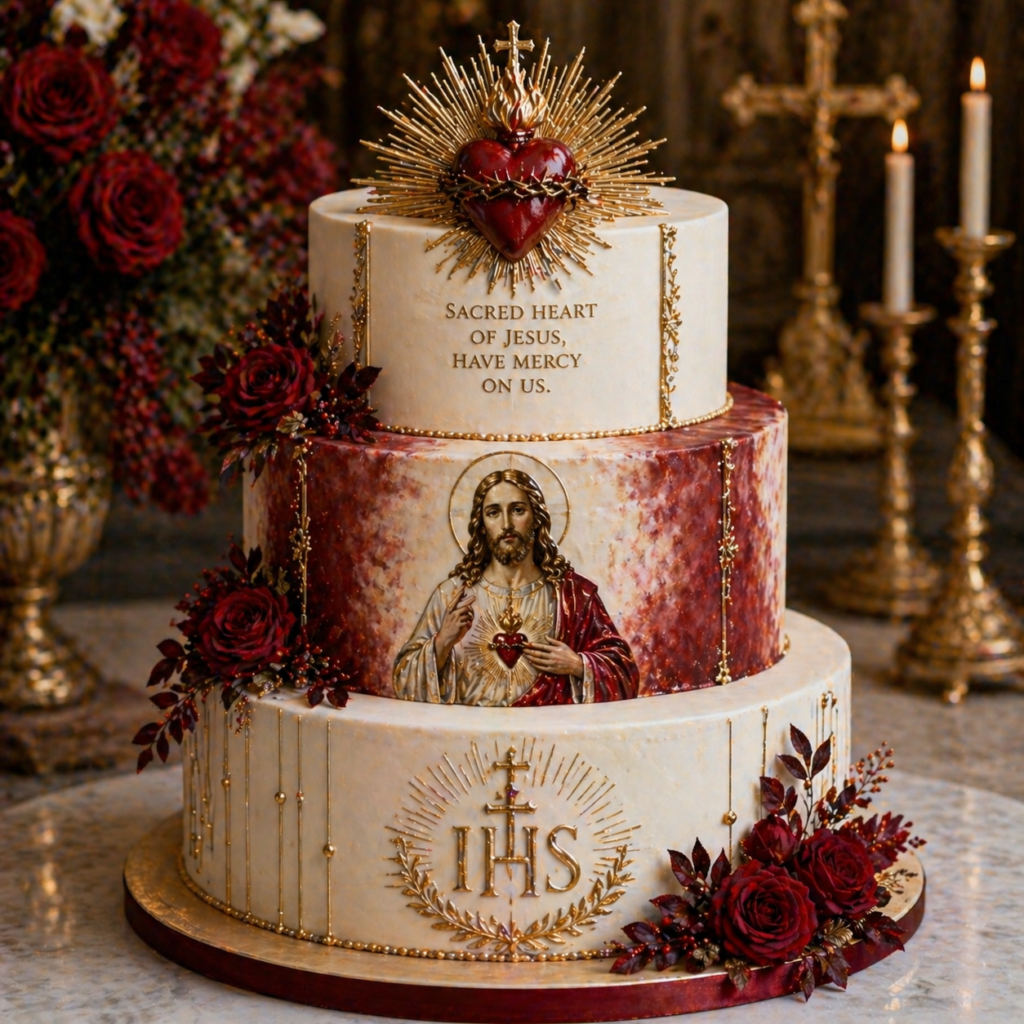
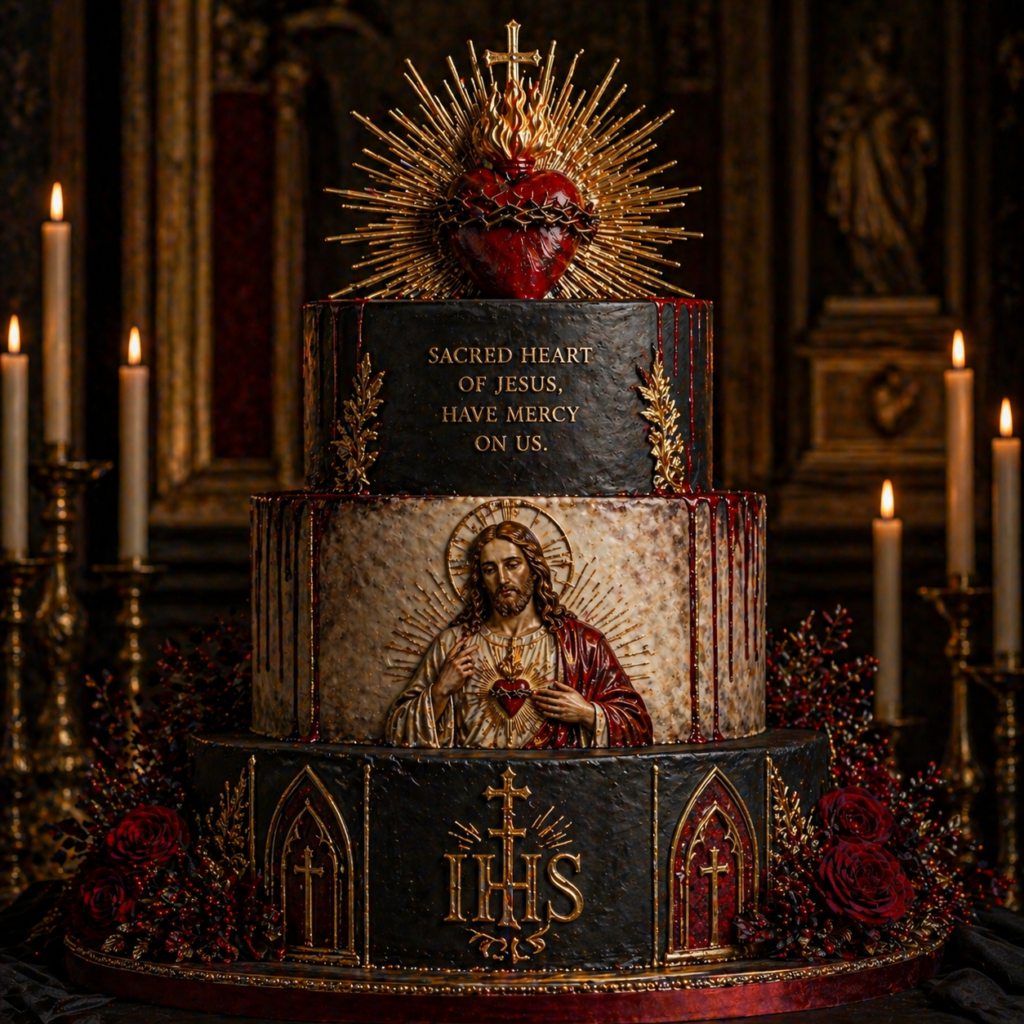
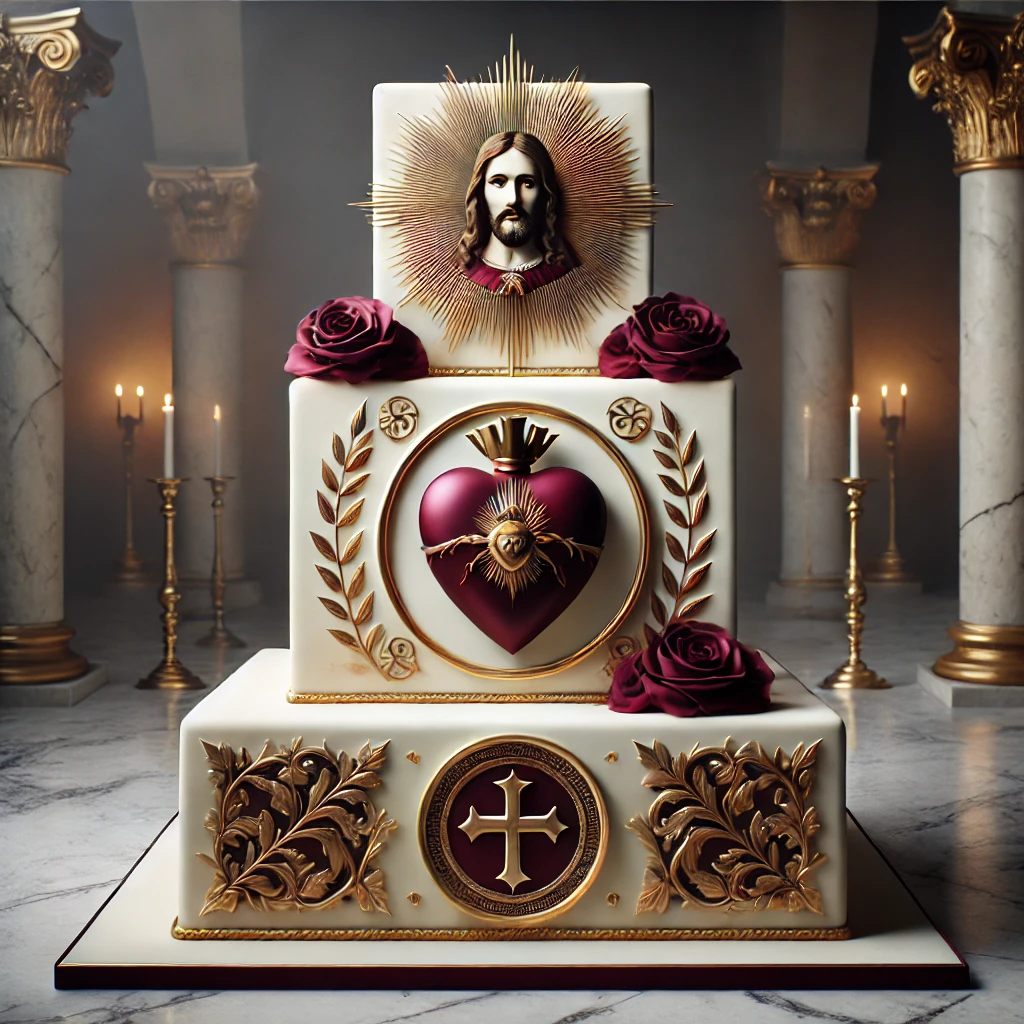
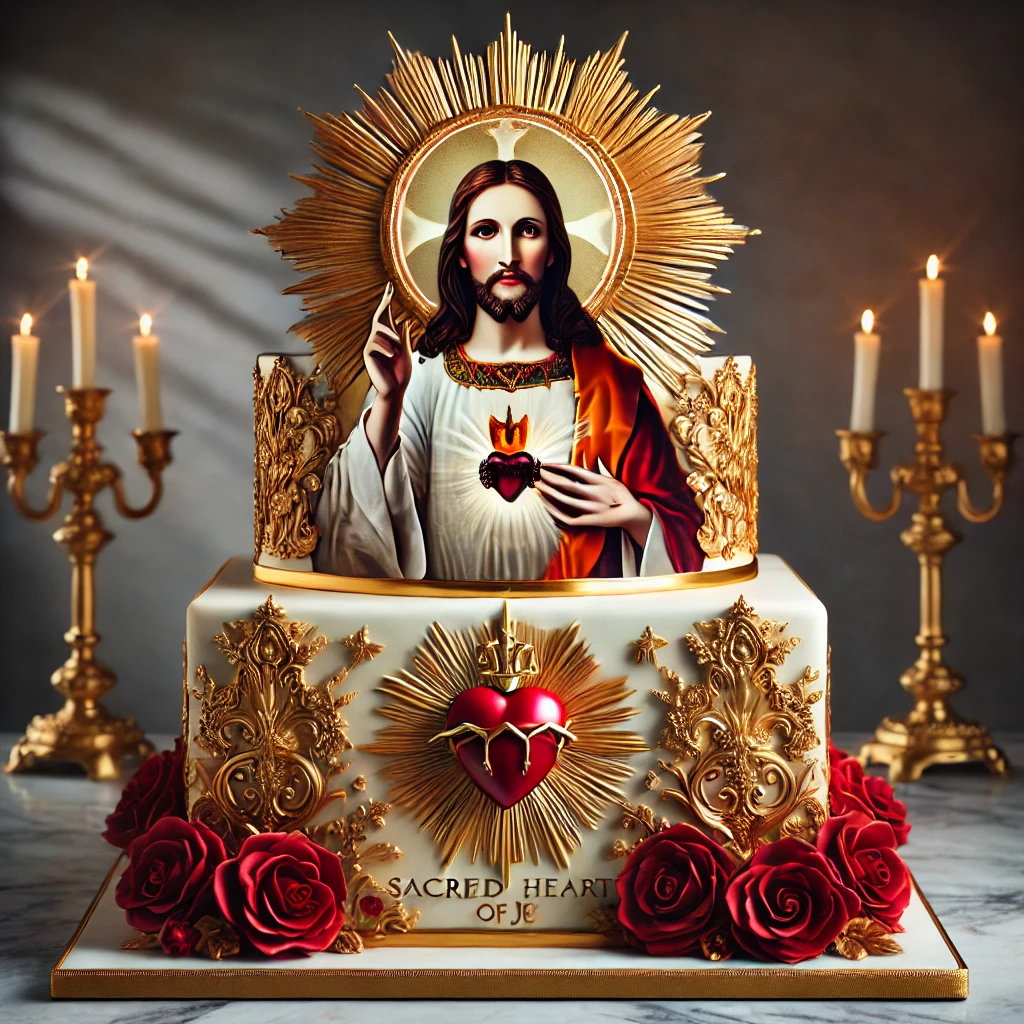
Sacred Heart of Jesus Cake & Atmosphere Ideas

Where style, memory, and celebration meet.

This section is meant to be more than Cake Decorating Ideas… it’s designed to spark inspiration and creativity, awaken tradition, and infuse your special occasions with style, identity, and atmosphere. A color palette becomes a theme. A design becomes a mood. Simple details—like sugared holly leaves or shimmering stars—can set the tone for a gathering and become part of cherished traditions and lasting memories melded with personal touch and love.

Sacred Heart of Jesus Traditional Dishes

1. Festive Meats (Especially After Friday Abstinence)
Because the feast falls on a Friday—but is a solemnity—abstinence from meat is lifted. So traditionally:
  • Roast beef, lamb, or pork
  • Hearty family meals
This reflects joy and celebration, similar to a Sunday feast.

2. Red or Heart-Themed Foods
Since the Sacred Heart is symbolized by love and fire:
  • Red-colored foods (berries, cherries, red wine, tomatoes)
  • Heart-shaped breads, cakes, or cookies
These visually reflect the burning Heart of Christ.

3. Rich Breads and Pastries
In many Catholic cultures:
  • Sweet breads
  • Brioche or enriched loaves
  • Pastries or cakes
These symbolize abundance and the sweetness of divine love.

4. French Traditions (Strongest Historical Influence)
Because the devotion spread through St. Margaret Mary Alacoque in France:
  • Festive French meals (roasts, cheeses, wine)
  • Desserts like custards or fruit tarts
The meal is often treated like a family celebration day.

5. Shared Family Meal
More important than specific dishes is the tradition of:
  • Eating together as a family
  • Possibly after Mass
  • With prayer or consecration to the Sacred Heart
This reflects the domestic church centered on Christ’s love.

6. Eucharistic Symbolism (Less Common but Meaningful)
Some incorporate symbolic elements:
  • Bread and wine at table (not sacramental, but symbolic)
  • Foods recalling sacrifice and offering
This ties the feast back to the Eucharistic Heart of Christ.

Recipes Engineered for Revitalization