


































The Visitation
with ORO VALENTIO
May 31st
The Visitation reveals a moment of quiet urgency shaped by love, humility, and purpose. After receiving the message of her calling, the Blessed Virgin Mary does not remain still or inwardly focused—she rises and goes with intention to serve her cousin Elizabeth. This movement is not driven by obligation, but by a deep alignment with grace. It is an outward expression of an interior “yes,” where faith immediately becomes action. In this, the Visitation becomes a model of how true devotion carries itself into the world—composed, purposeful, and directed toward the good of others.
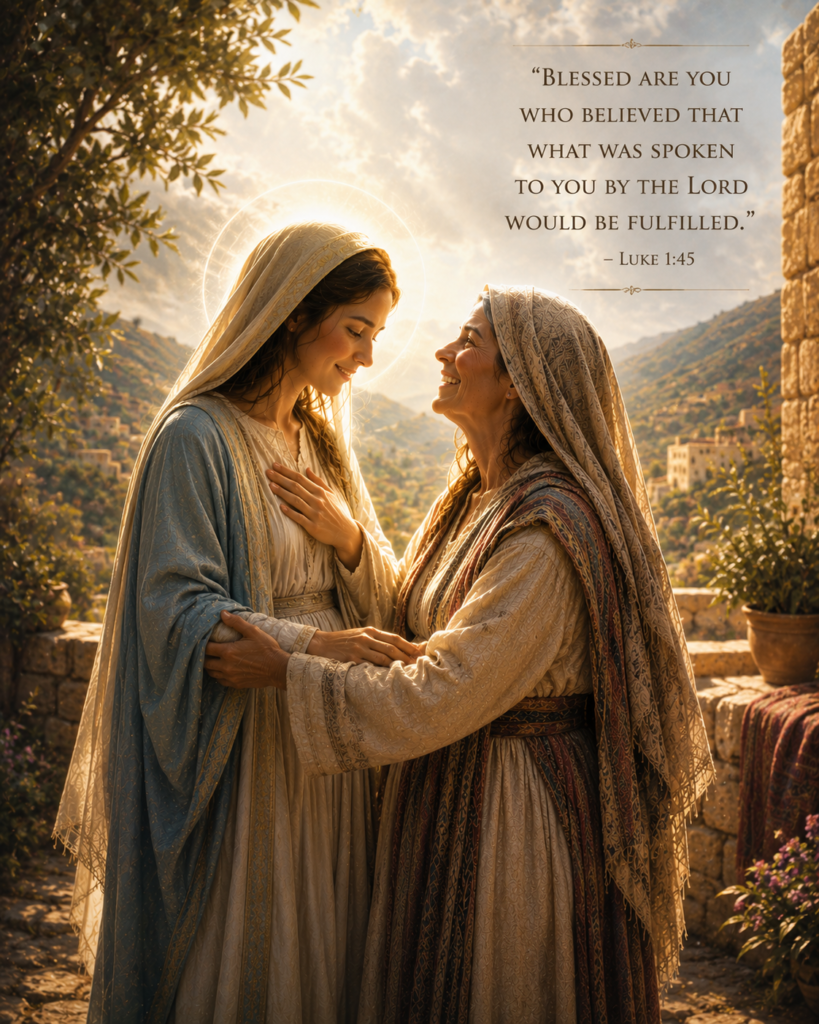
When Mary arrives, something profound unfolds without spectacle. Elizabeth recognizes the presence of the divine, and even before words are fully spoken, there is a response—an awakening, a joy that moves through both body and spirit. It is a meeting that transcends ordinary interaction; it is the convergence of promise and fulfillment, of expectation and presence. Mary does not elevate herself in this moment, but instead gives voice to gratitude and clarity, acknowledging the greatness of God with humility and strength. Her response is ordered, precise, and rooted in truth.
At its core, the Visitation is a study in rightly ordered movement—of thought, of will, and of action. It shows that faith is not static, but dynamic, expressed through service, presence, and disciplined responsiveness. There is no excess, no hesitation—only a steady alignment with what is right and necessary. In this encounter, both women are strengthened, not through grand display, but through recognition, affirmation, and shared purpose.
To reflect on the Visitation is to understand that true strength often moves quietly and with intention. It is found in the willingness to go when called, to serve without seeking recognition, and to remain grounded in clarity and humility. This moment stands as a refined expression of faith in motion—where grace is not only received, but carried, shared, and lived with enduring purpose.
Where Jesus Christ is carried in humility, grace awakens, souls are sanctified, and true joy overflows
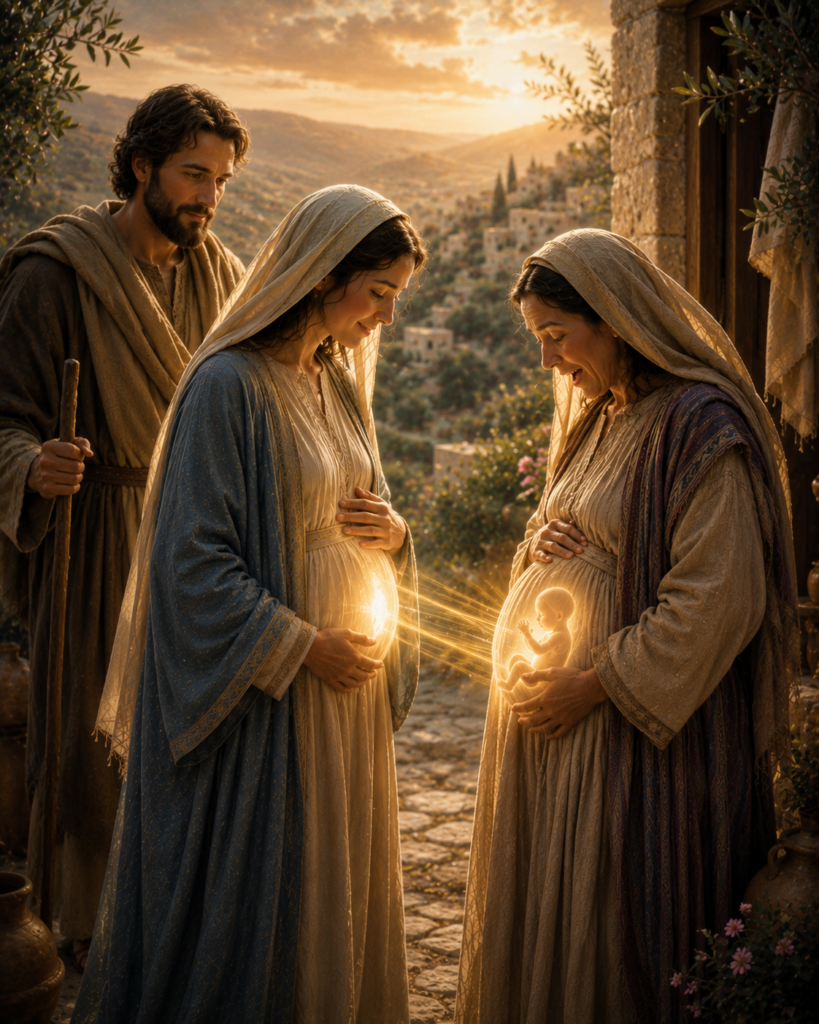
The Visitation (Luke 1:39–56) is a profound revelation of how divine grace works quietly yet powerfully in the lives of God’s people. Having just received the Incarnate Word through the mystery of the Annunciation, the Blessed Virgin Mary hastened in charity to visit her cousin Saint Elizabeth. Carrying Jesus Christ within her womb, Mary became the first bearer of Christ to the world, bringing His presence into the home of another family.
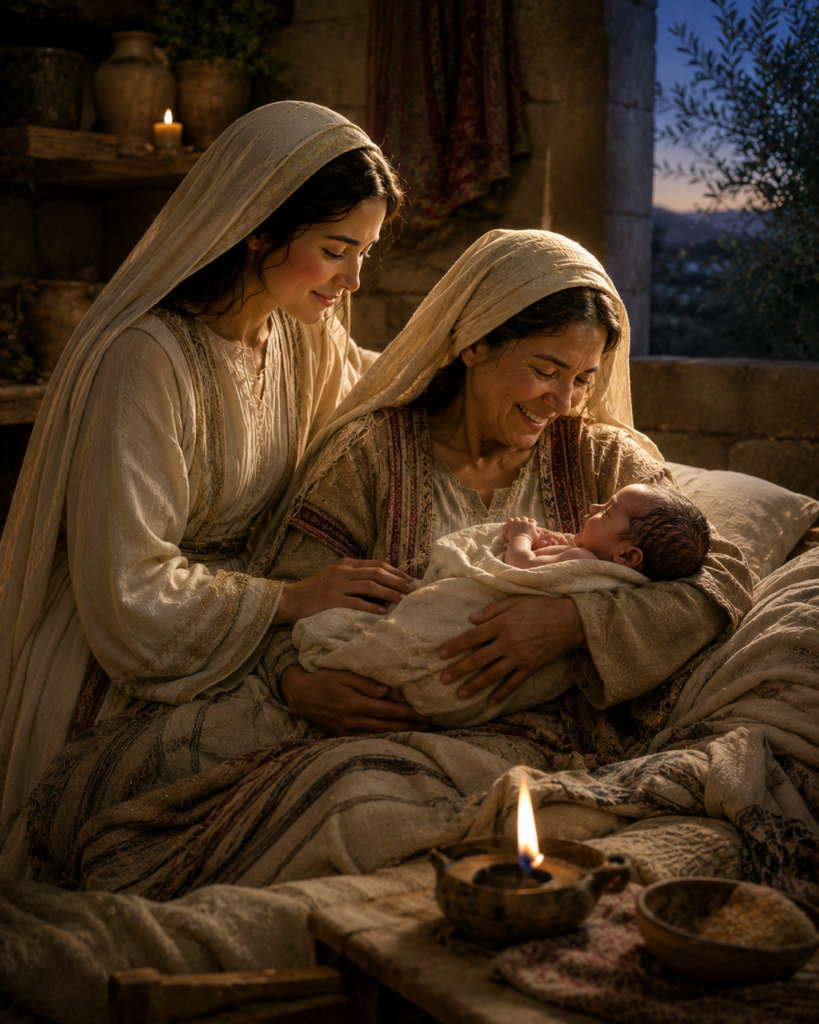
At Mary’s greeting, Elizabeth was filled with the Holy Spirit, and the unborn Saint John the Baptist leapt within her womb. The Church Fathers saw in this moment a special action of divine grace. Many theologians, including Saint Augustine of Hippo and Saint Thomas Aquinas, interpreted John’s leap as a sign of his sanctification in the womb and the beginning of his mission as the Forerunner who would spend his life directing others to Christ. Thus, even before His birth, Jesus sanctified those around Him through His hidden presence.
The Gospel’s focus remains on Mary, Elizabeth, Jesus, and John, highlighting the hidden action of grace and the meeting between the Old and New Covenants. Elizabeth, representing the long-awaited hope of Israel, encounters the fulfillment of God’s promises carried within Mary. The unborn John rejoices before the Messiah, while Mary brings not merely a message about Christ but Christ Himself.
This mystery also reveals Mary’s unique role in salvation history. Having welcomed God’s word with faith at the Annunciation, she immediately carries Christ to others through an act of humble charity. For this reason, the Church often sees in Mary the first missionary and the first living tabernacle, bearing the presence of the Lord wherever she goes. Wherever Christ is welcomed, grace follows; hearts are renewed, souls are sanctified, and joy is awakened through the Holy Spirit.
Mary’s Magnificat further reveals the heart of the Visitation. Rather than drawing attention to herself, she glorifies God for His mercy, faithfulness, and saving power. Her hymn is the song of a soul wholly surrendered to God’s will—a testimony that authentic holiness is rooted in humility, gratitude, and trust.
The Visitation teaches that true union with God naturally overflows into charity and mission. Mary does not keep Christ to herself; she carries Him to another household. In the same way, every Christian is called to receive Christ and bring Him to others through faith, service, and witness. The mystery reminds us that God’s greatest works are often accomplished not through public spectacle but through hidden fidelity, humble obedience, and openness to grace.
Above all, the Visitation reveals the transforming power of Christ’s presence. Even before His birth, He sanctified, healed, and drew souls into deeper communion with God. The meeting of Mary and Elizabeth therefore stands as a beautiful witness to the truth that wherever Christ is present, grace is at work, joy is awakened, and God’s saving plan continues to unfold.
The Visitation beautifully reflects the mystery of adoption because it reveals how God forms His family through grace and love. When Mary visits Elizabeth, she brings Christ to her cousin, and the unborn John the Baptist is filled with joy and grace in the presence of Jesus. This encounter points forward to Christ’s mission of making us adopted sons and daughters of the Father. Just as Mary lovingly carries Christ to another family, adoption is a living witness to the truth that family is built not only through blood but through self-giving love and God’s providence. The Visitation also highlights the dignity of every child and the importance of welcoming life, as both Mary and Elizabeth rejoice in the children entrusted to them. Through Mary’s Magnificat, we see God’s special care for the humble, the vulnerable, and those who depend entirely on His mercy. In this way, the Visitation serves as a profound image of adoption, reminding us that God first loved and chose us, welcoming us into His family through Jesus Christ.
Visitation Traditions to Make Your Own
For the Feast of the Visitation (traditionally May 31 in the Roman Rite), the Church’s customs are simple but deeply meaningful, centered on charity, humility, and bringing Christ to others:
Praying the Joyful Mysteries of the Rosary, especially the Visitation, asking for the grace to carry Jesus Christ into daily life as the Blessed Virgin Mary did.
Reciting or chanting the Magnificat (Luke 1:46–55), Mary’s hymn of humility and praise, often in the evening as part of Vespers.
Acts of charity and service, imitating Mary’s journey “in haste” to help Saint Elizabeth—traditionally visiting the sick, elderly, or those in need.
Meditation on humility and hiddenness, reflecting on how God worked powerfully in a quiet home, sanctifying Saint John the Baptist before birth.Blessings for expectant mothers and unborn children, recalling John’s sanctification in the womb and entrusting families to God’s grace.In some places, processions or Marian devotions, honoring Mary as the first tabernacle and missionary.
He that is Mighty has done great things to me
My soul doth magnify the Lord.
And my spirit hath rejoiced in God my Saviour.
Because he hath regarded the humility of his handmaid; for behold from henceforth all generations shall call me blessed.
Because he that is mighty, hath done great things to me; and holy is his name.
And his mercy is from generation unto generations, to them that fear him.
He hath shewed might in his arm: he hath scattered the proud in the conceit of their heart.
He hath put down the mighty from their seat, and hath exalted the humble.
He hath filled the hungry with good things; and the rich he hath sent empty away.
He hath received Israel his servant, being mindful of his mercy:
As he spoke to our fathers, to Abraham and to his seed for ever.
Glory be to the Father, and to the Son, and to the Holy Ghost.
As it was in the beginning, is now, and ever shall be, world without end. Amen.
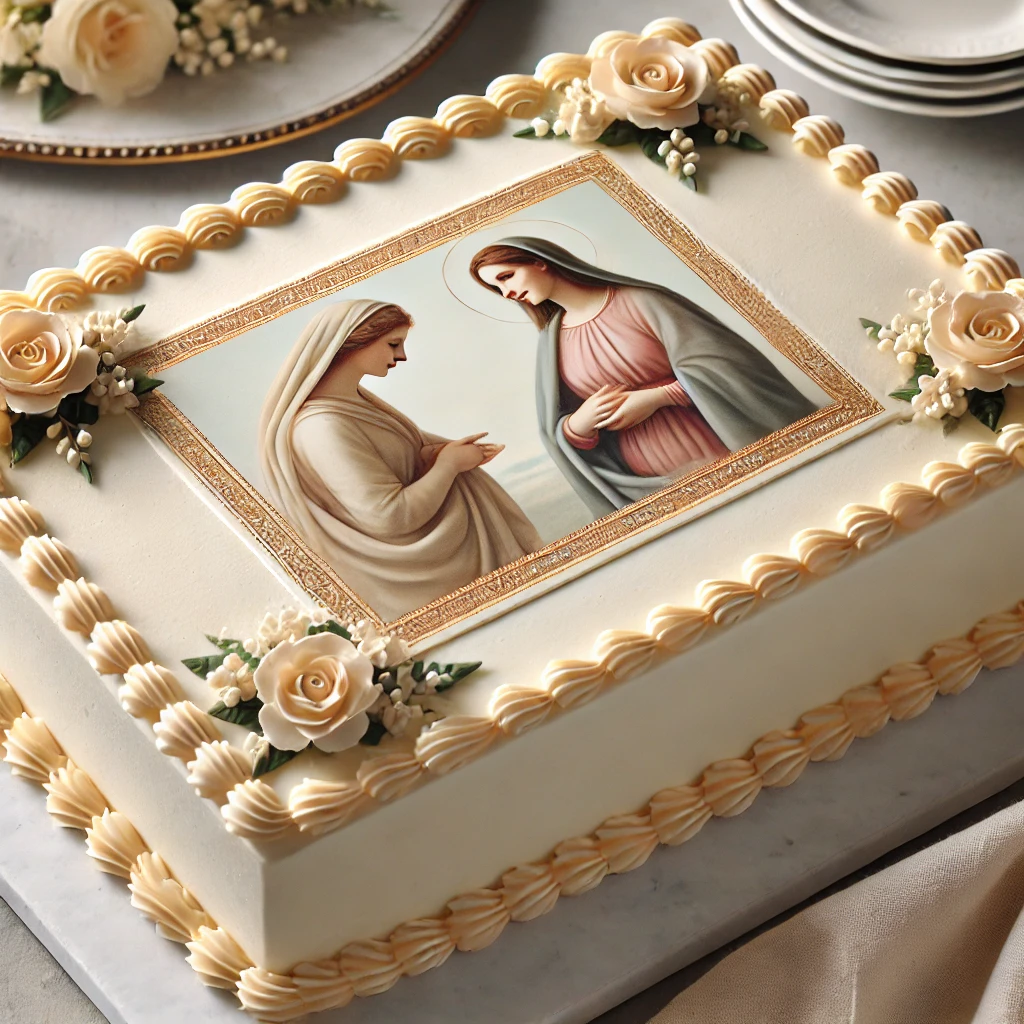
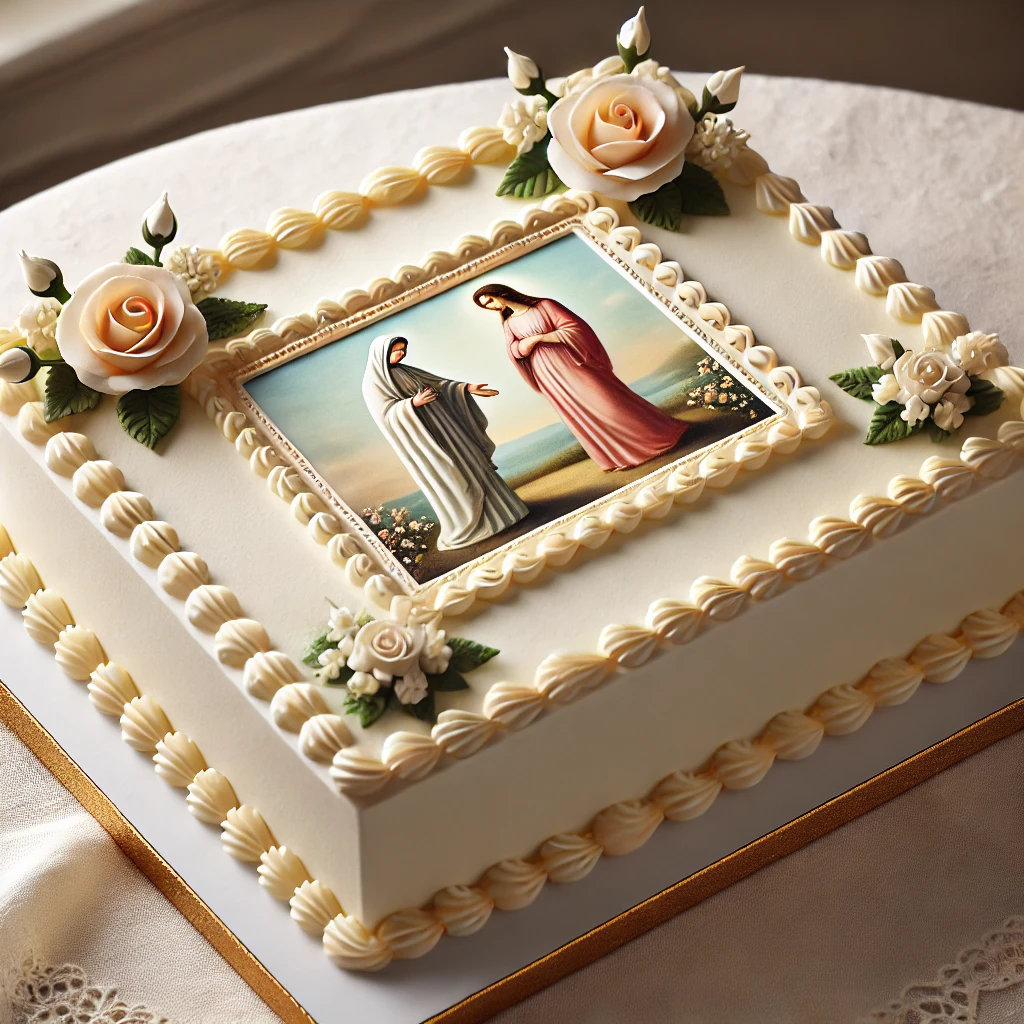
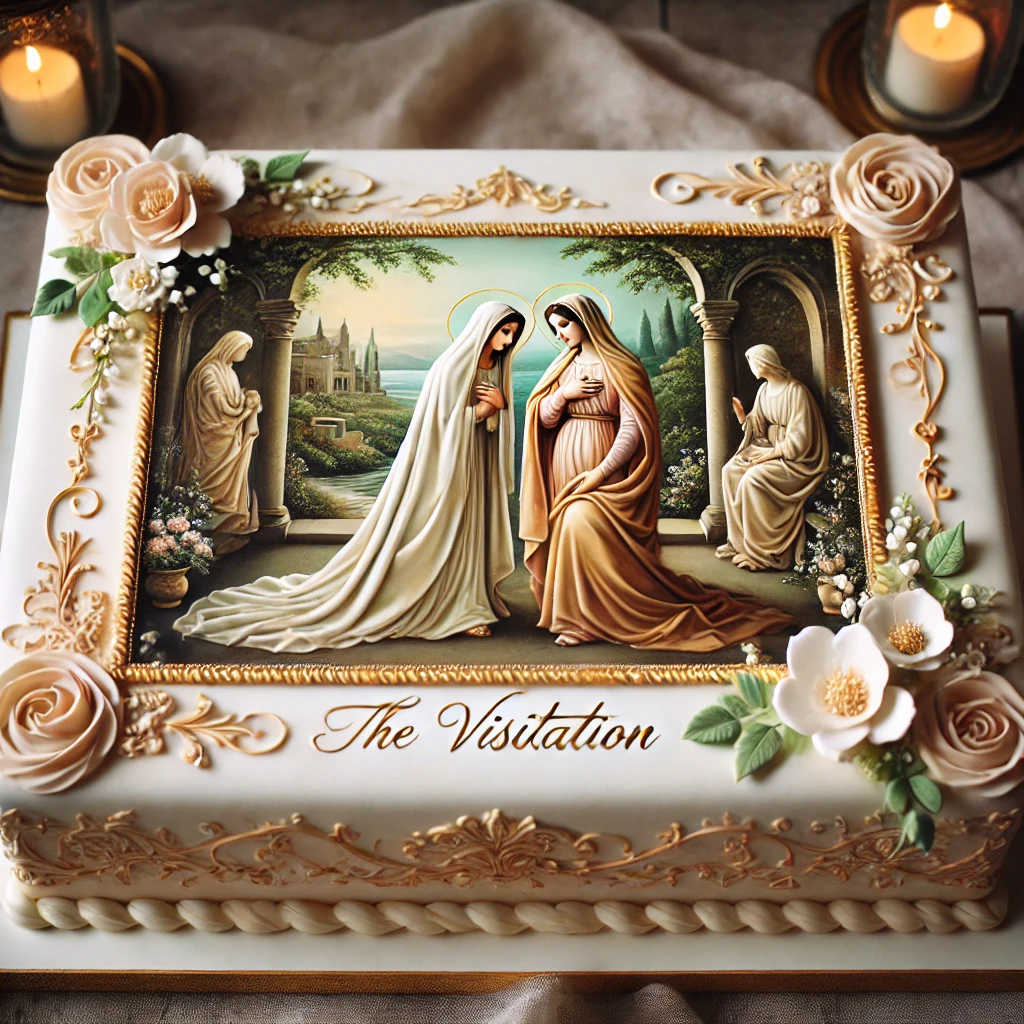
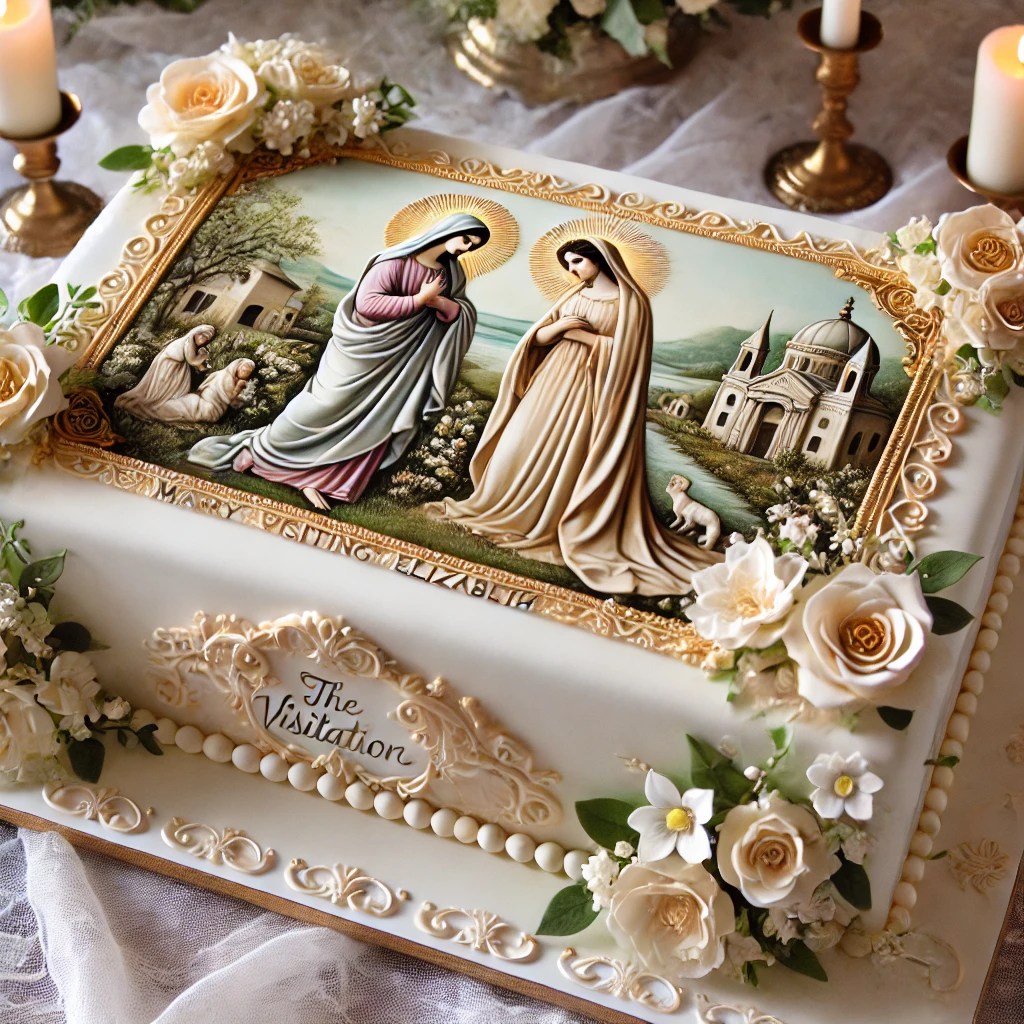
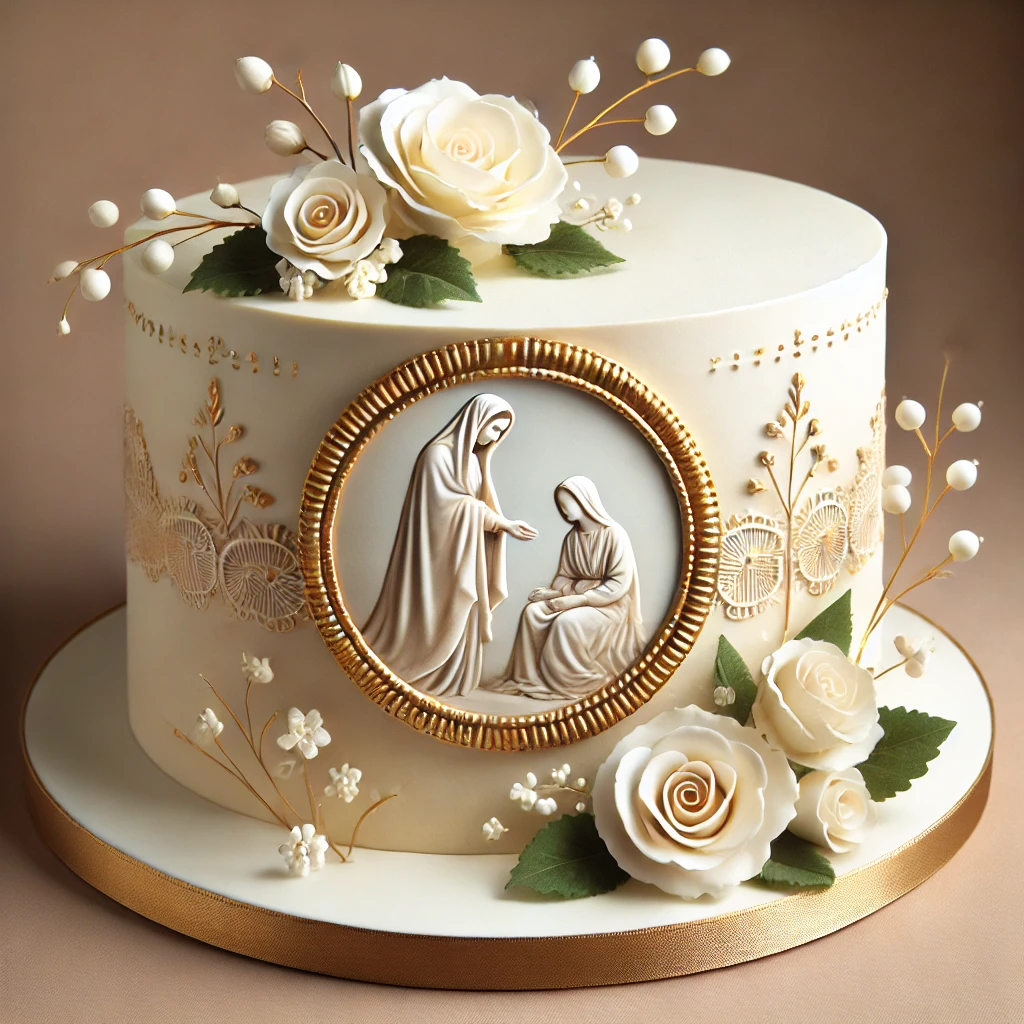
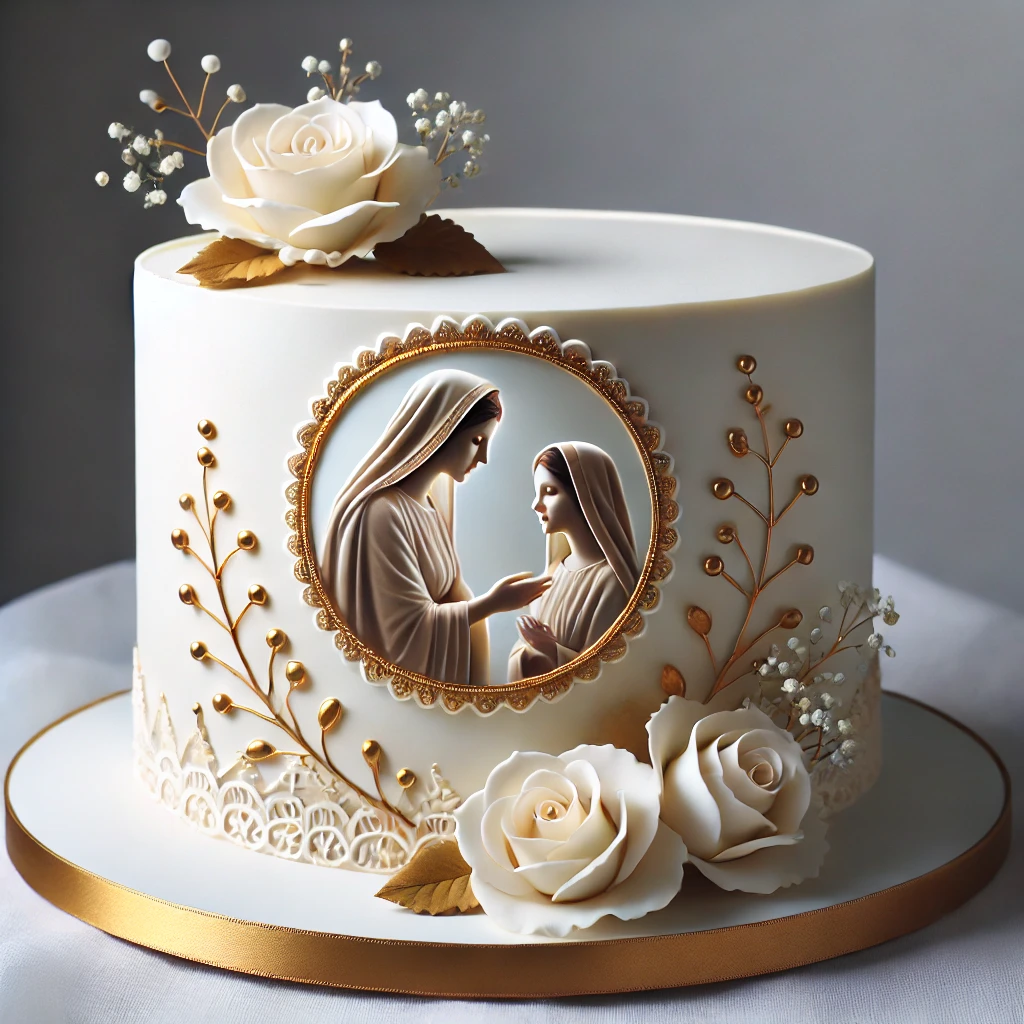
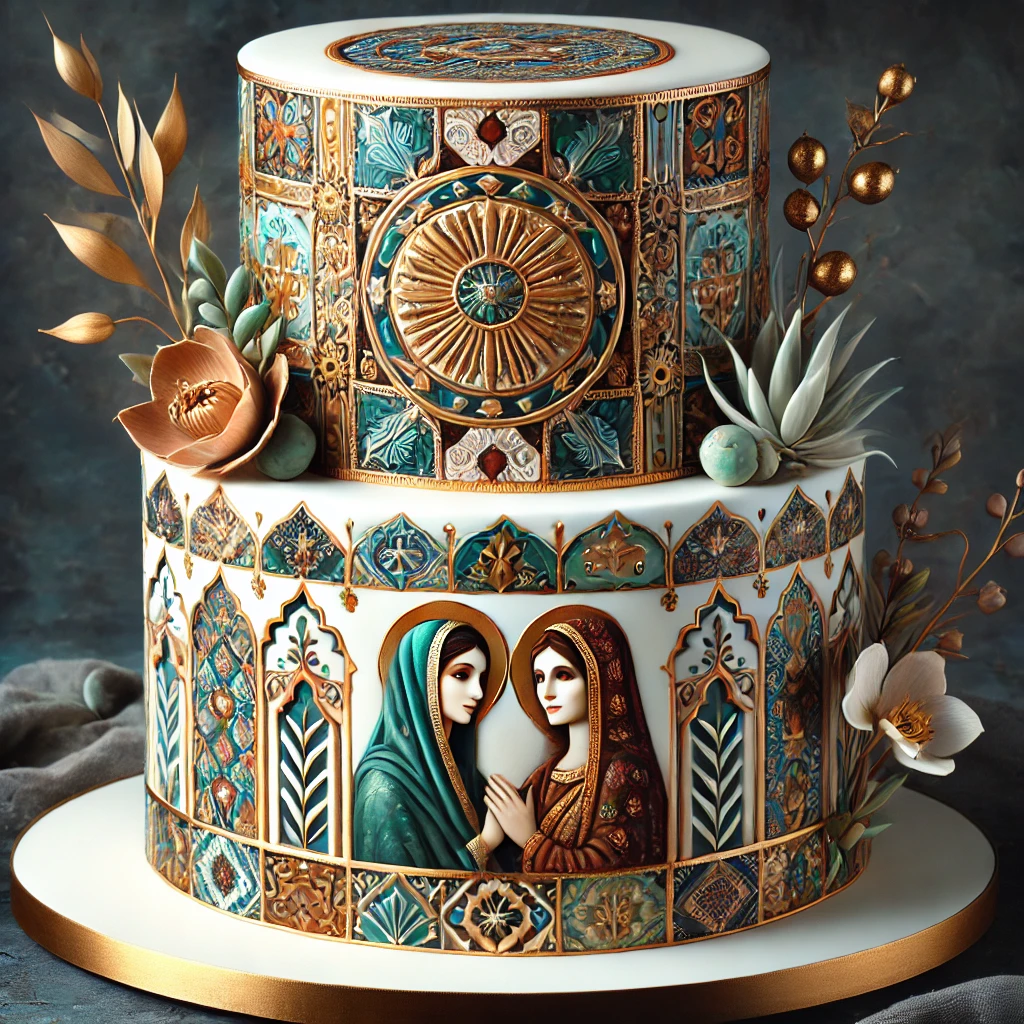
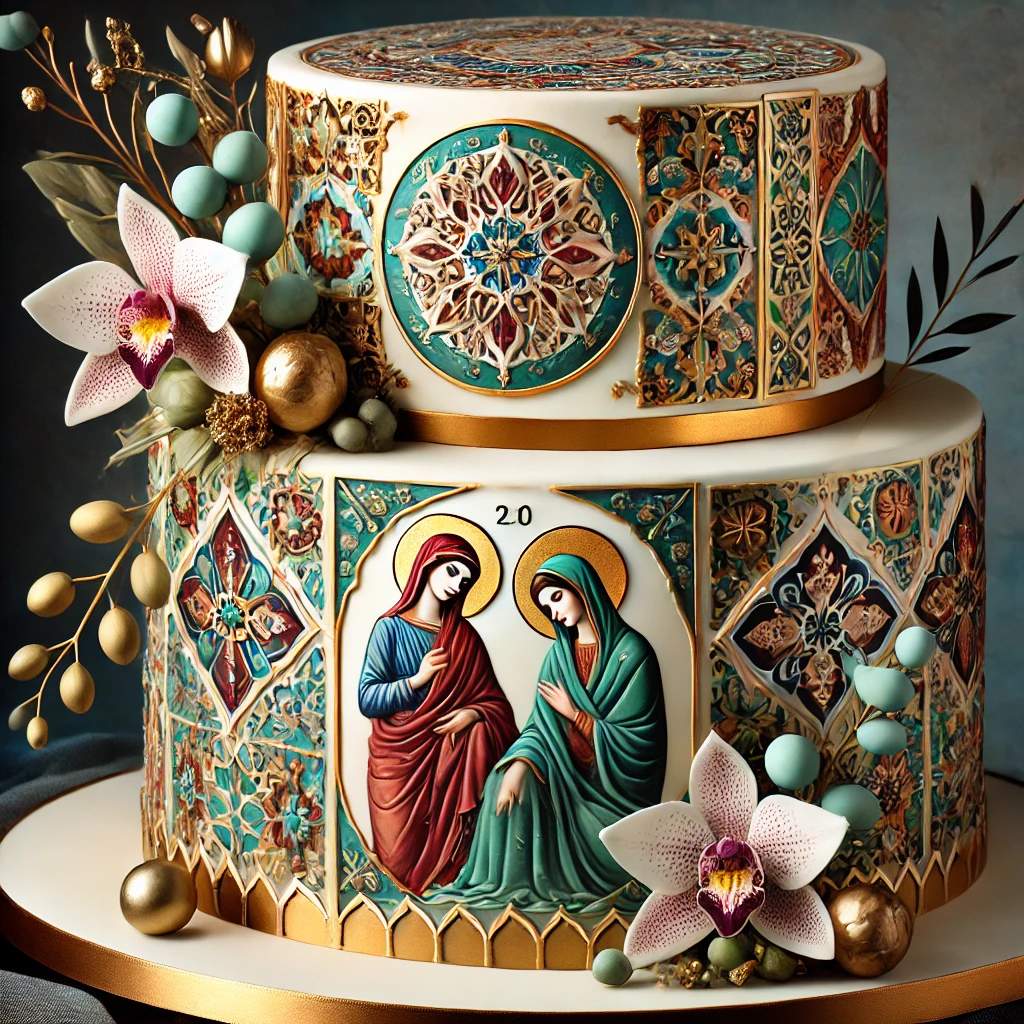
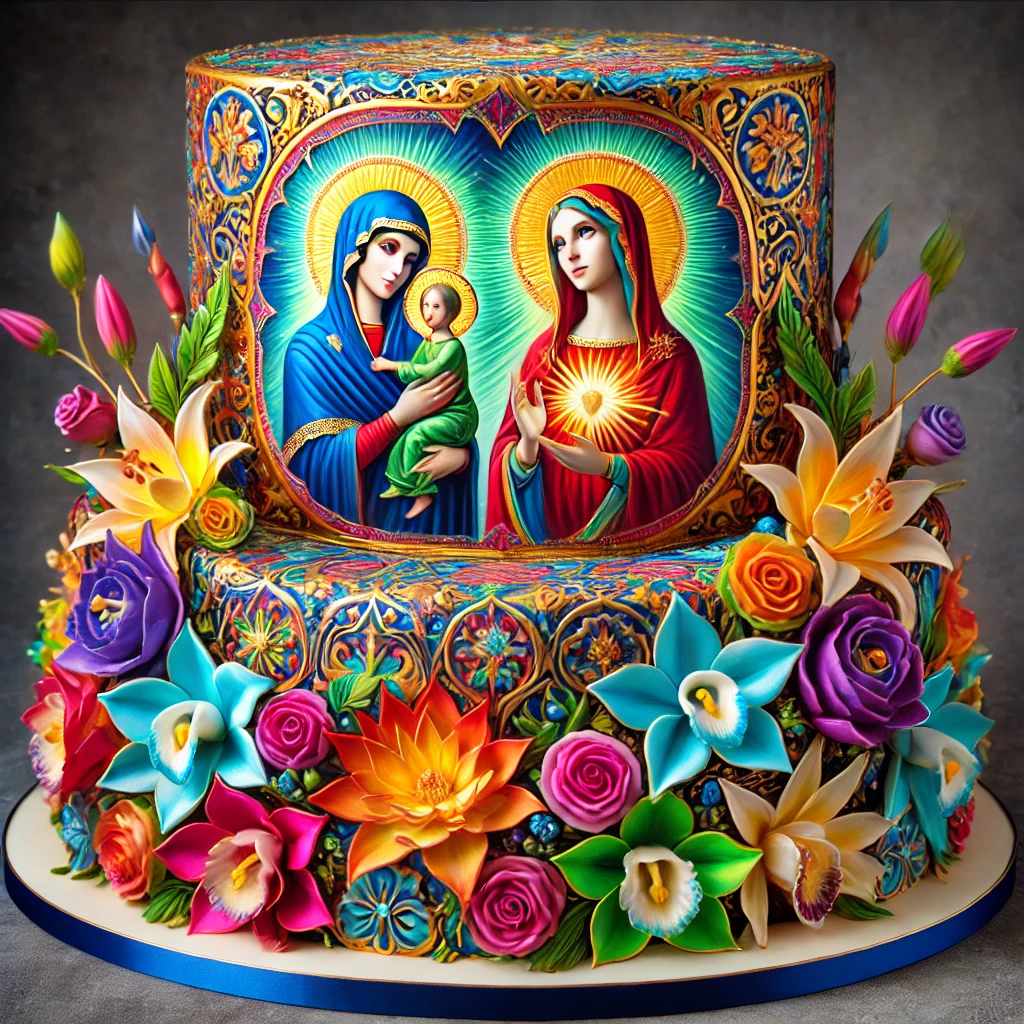
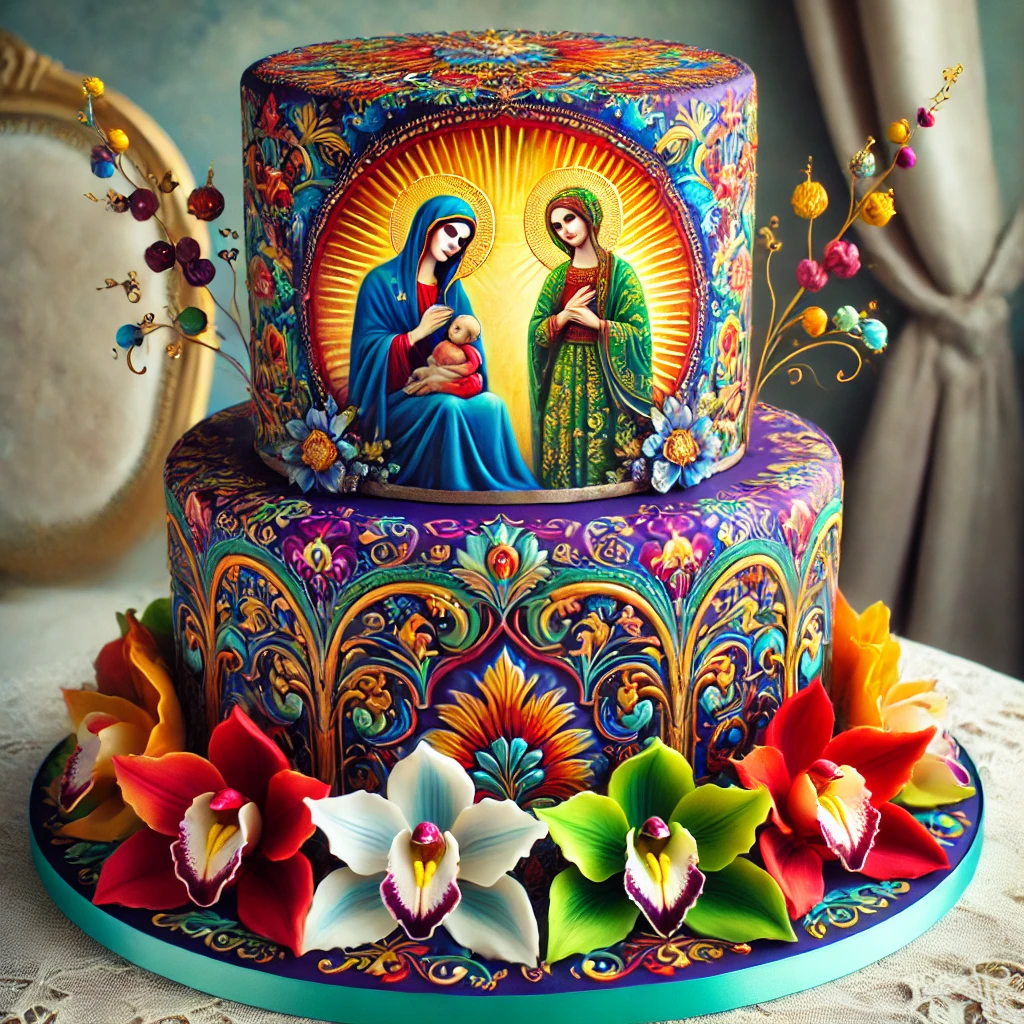
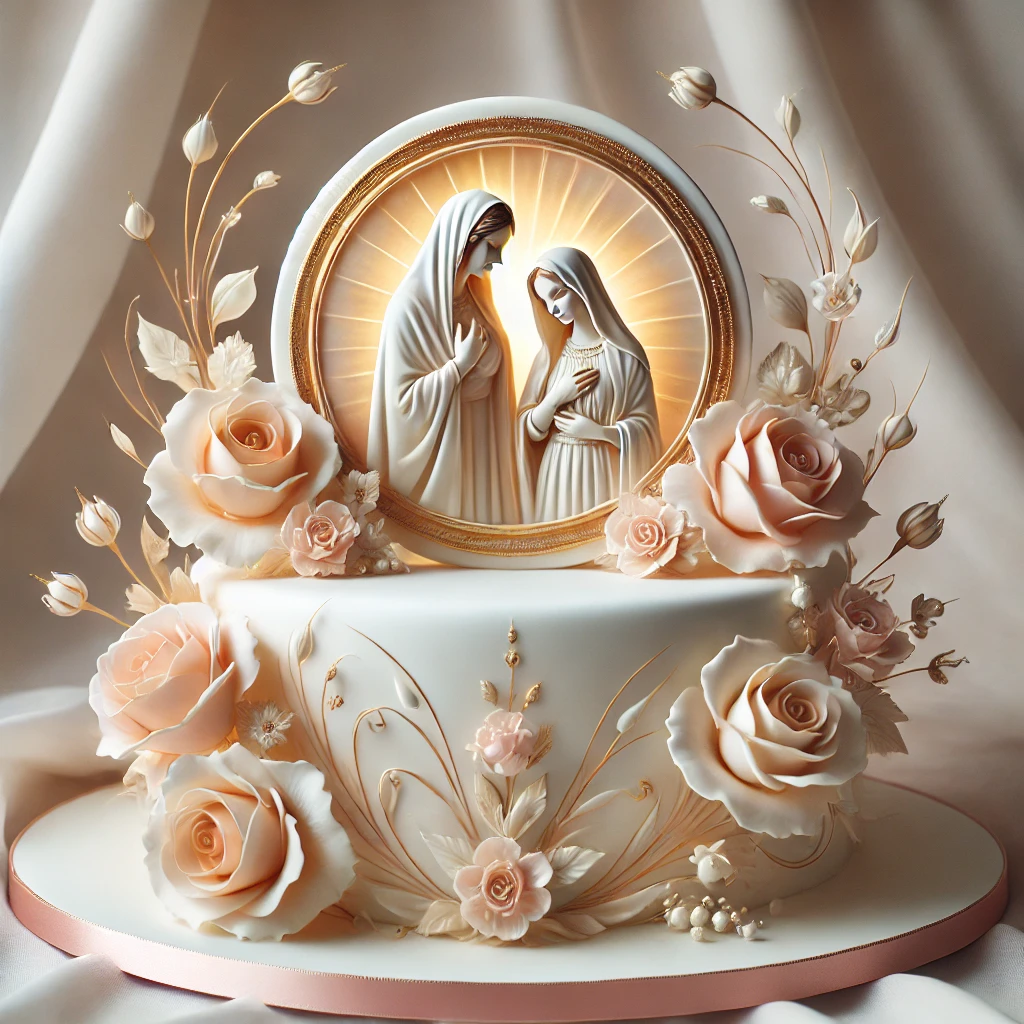
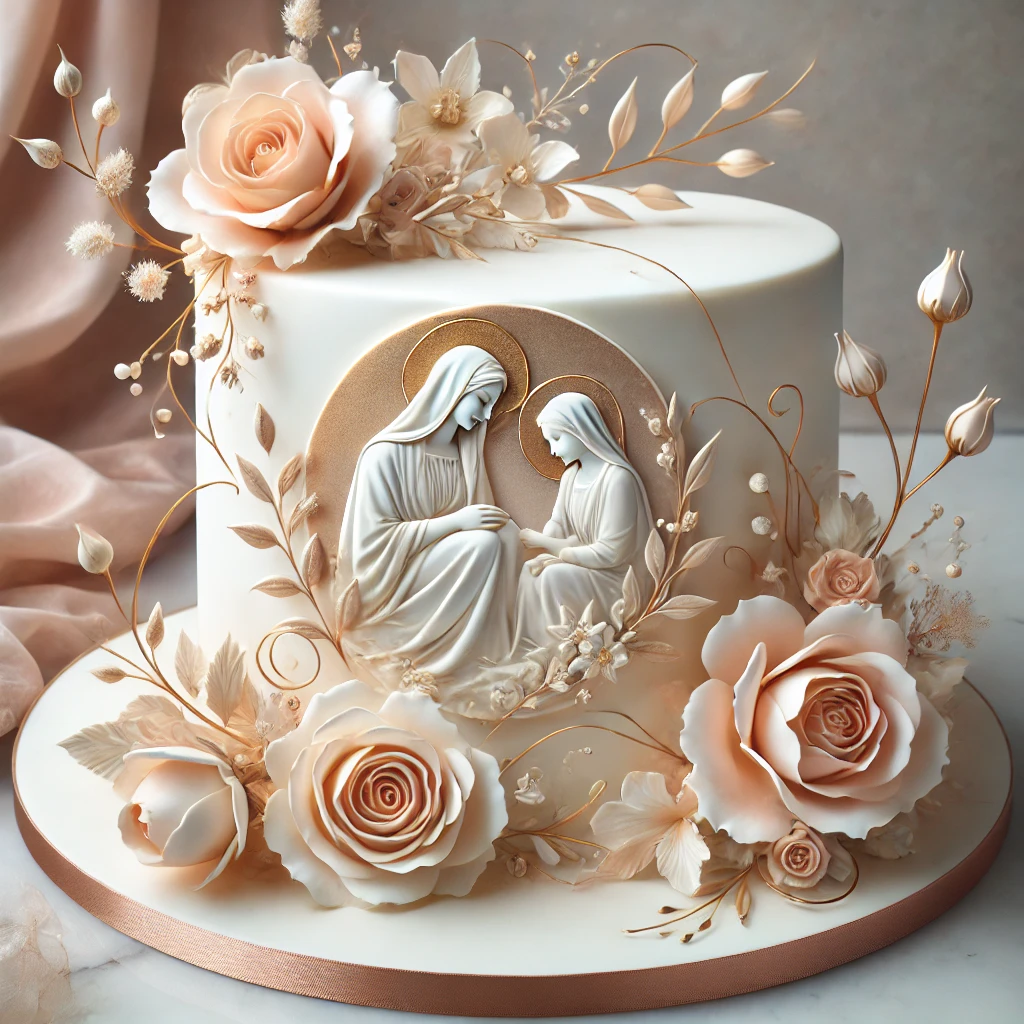
Visitation Cake & Atmosphere Ideas
Where style, memory, and celebration meet.
This section is meant to be more than Cake Decorating Ideas… it’s designed to spark inspiration and creativity, awaken tradition, and infuse your special occasions with style, identity, and atmosphere. A color palette becomes a theme. A design becomes a mood. Simple details—like sugared holly leaves or shimmering stars—can set the tone for a gathering and become part of cherished traditions and lasting memories melded with personal touch and love.
Traditional Visitation Dishes
Simple and humble foods (reflecting Mary’s humility)
Rustic bread or flatbread
Olive oil with herbs
Lentil or bean soup
Barley or wheat porridge
Fresh cheese (such as goat cheese)
Bread with honey
Foods expressing joy and blessing (Elizabeth’s rejoicing)
Grapes, figs, and dates
Pomegranates or pomegranate dishes
Honey cakes or small sweet loaves
Almond pastries
Fresh fruit platters
Main dishes for a shared meal (hospitality and communion)
Lamb stew or roasted lamb
Roasted chicken with herbs
Stuffed vegetables (grape leaves, peppers, or squash)
Herbed rice or grain pilaf
Roasted vegetables (eggplant, zucchini, onions)
Chickpea dishes (such as a simple hummus or stew)
Symbolic additions
Milk or yogurt dishes, recalling “a land flowing with milk and honey”
Honey-glazed foods, symbolizing the sweetness of grace
Wine or grape juice, pointing toward Christ’s future sacrifice
Spiritual elements to accompany the meal
Pray or chant the Magnificat (Luke 1:46–55), the hymn of Virgin Mary
Light a candle to signify Christ whom Mary brought to Elizabeth
Serve the meal family-style to emphasize charity and unity