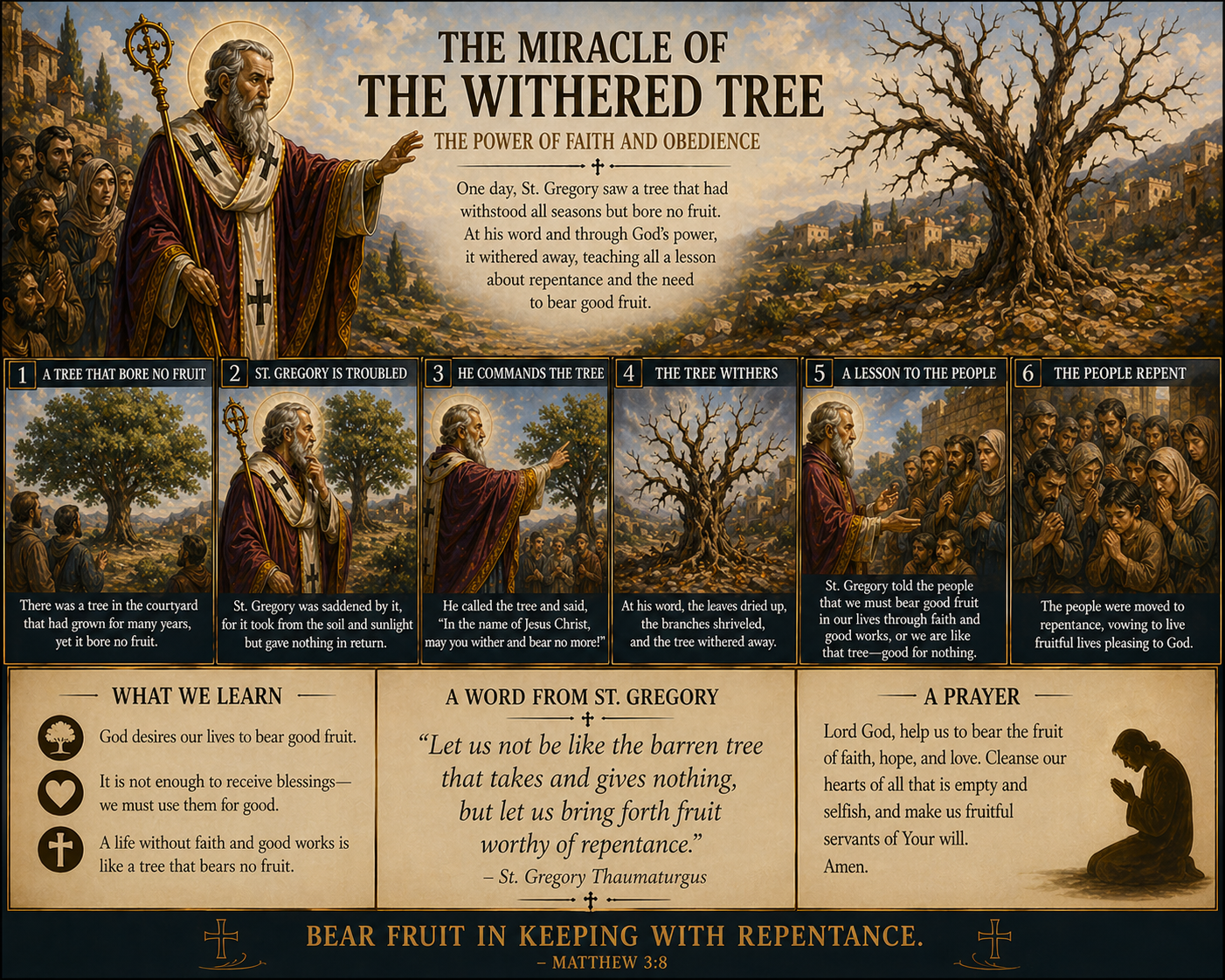
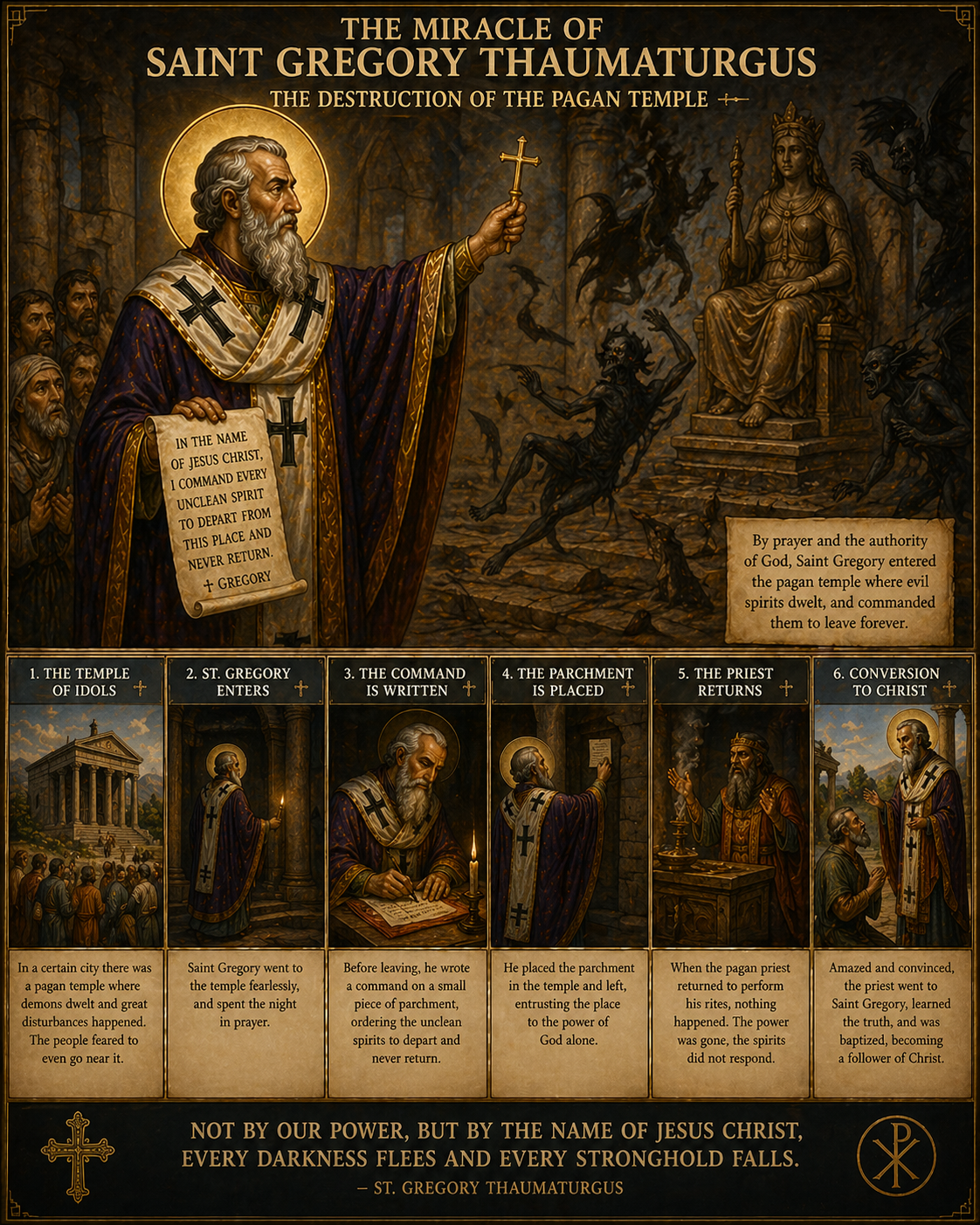
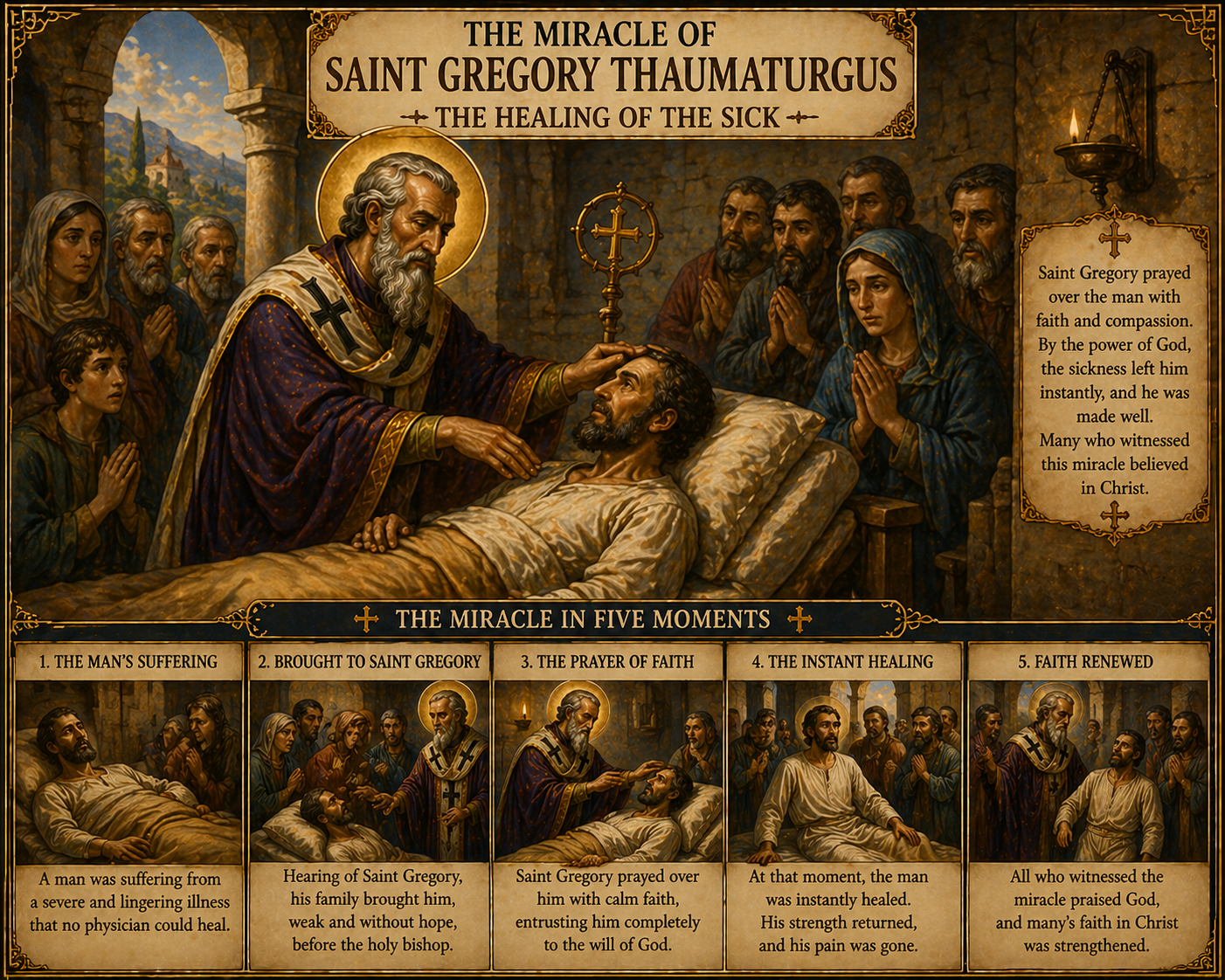
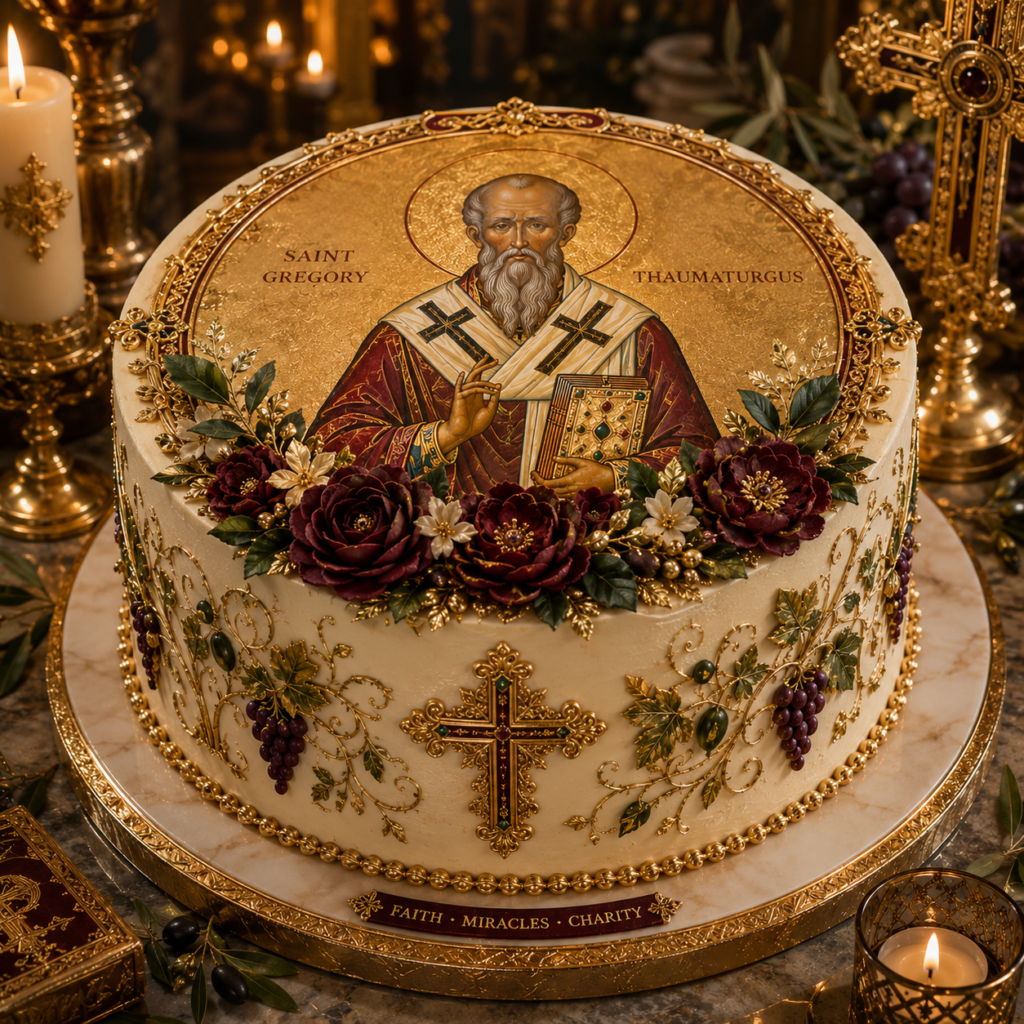
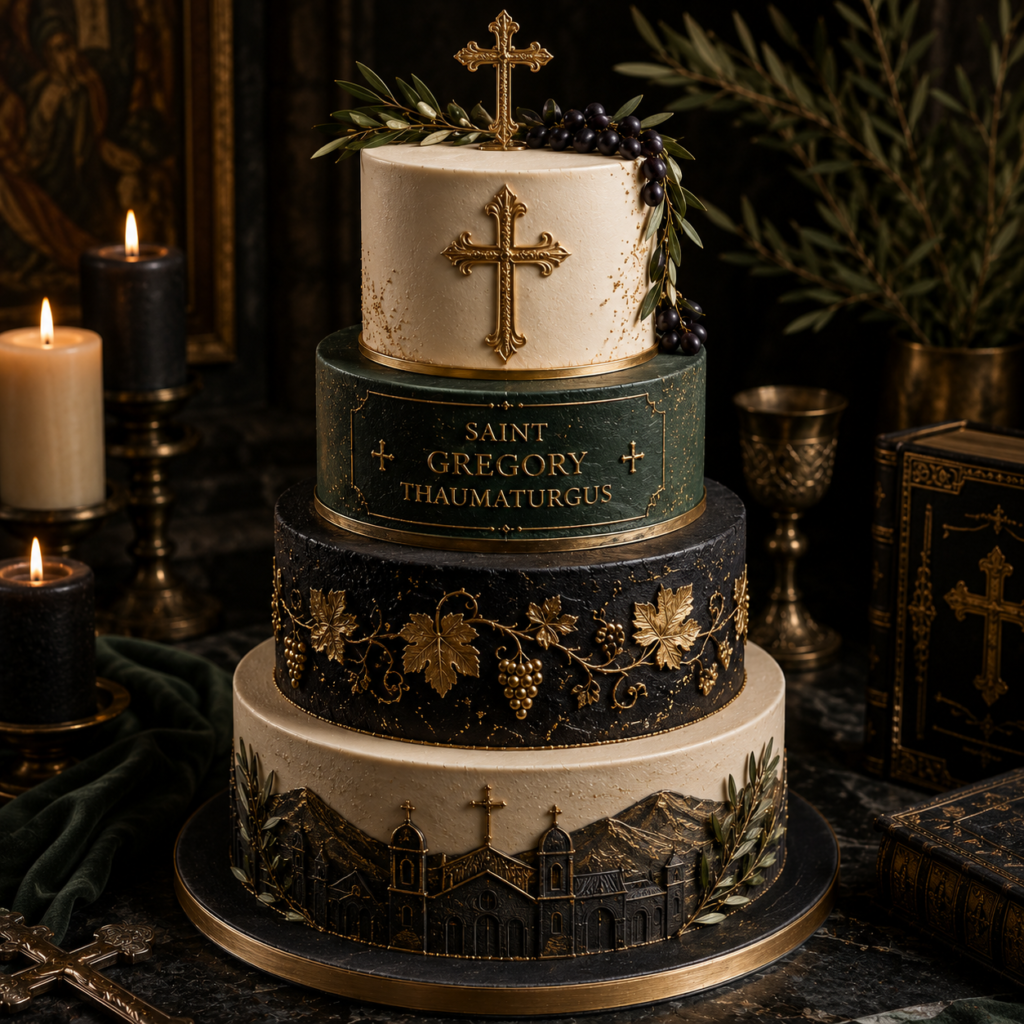
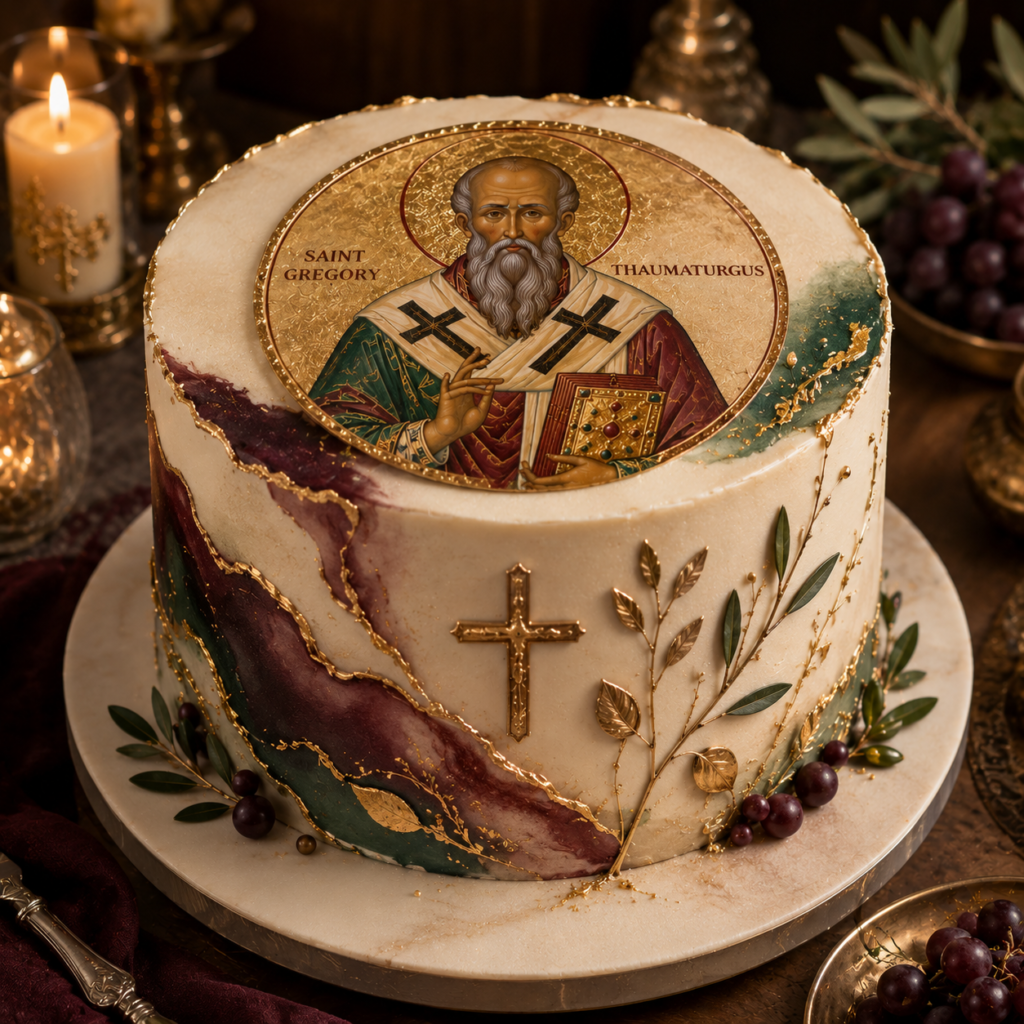



































St. Gregory the Wonder Worker

with ORO VALENTIO

What is impossible for man becomes possible when entrusted to God

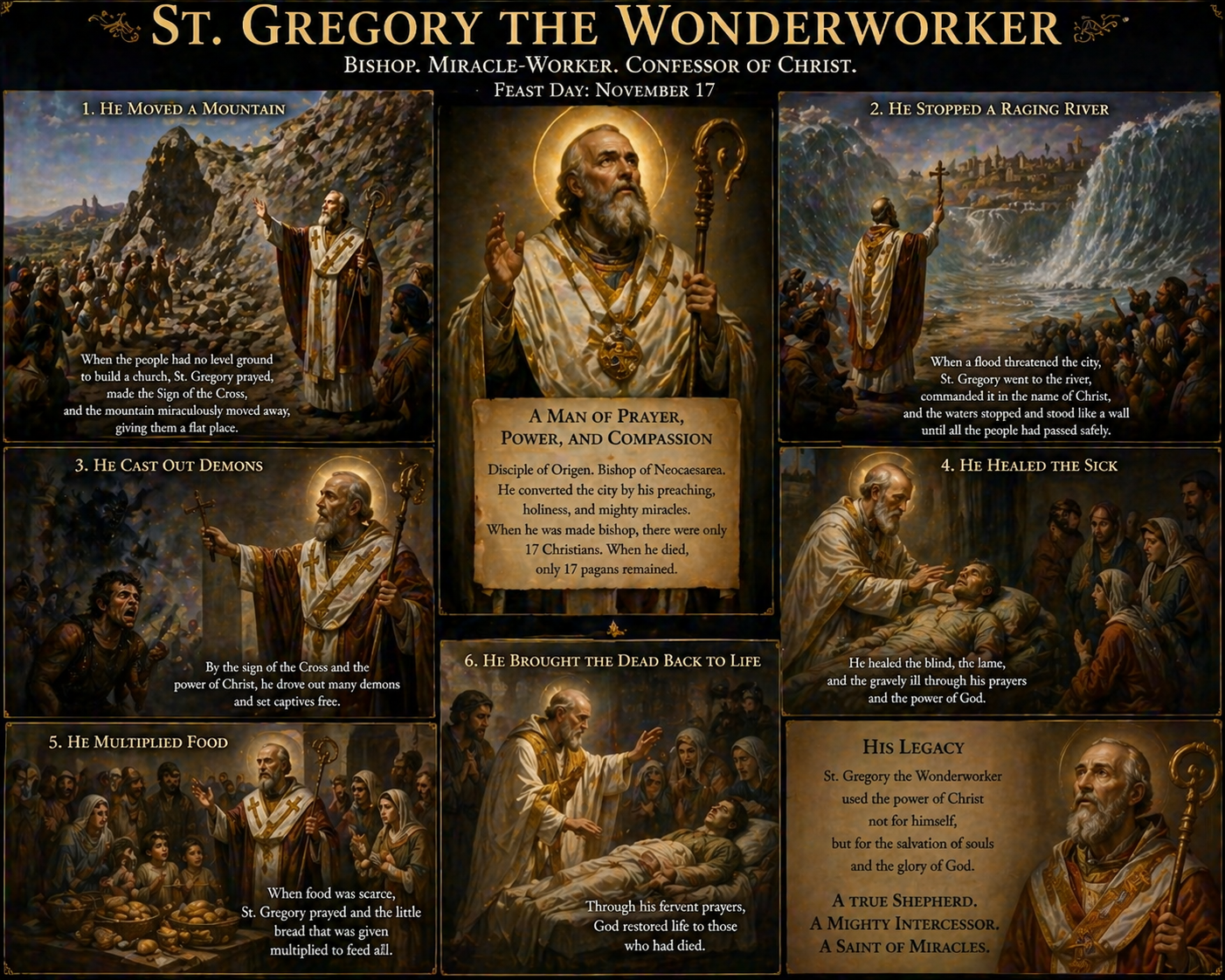
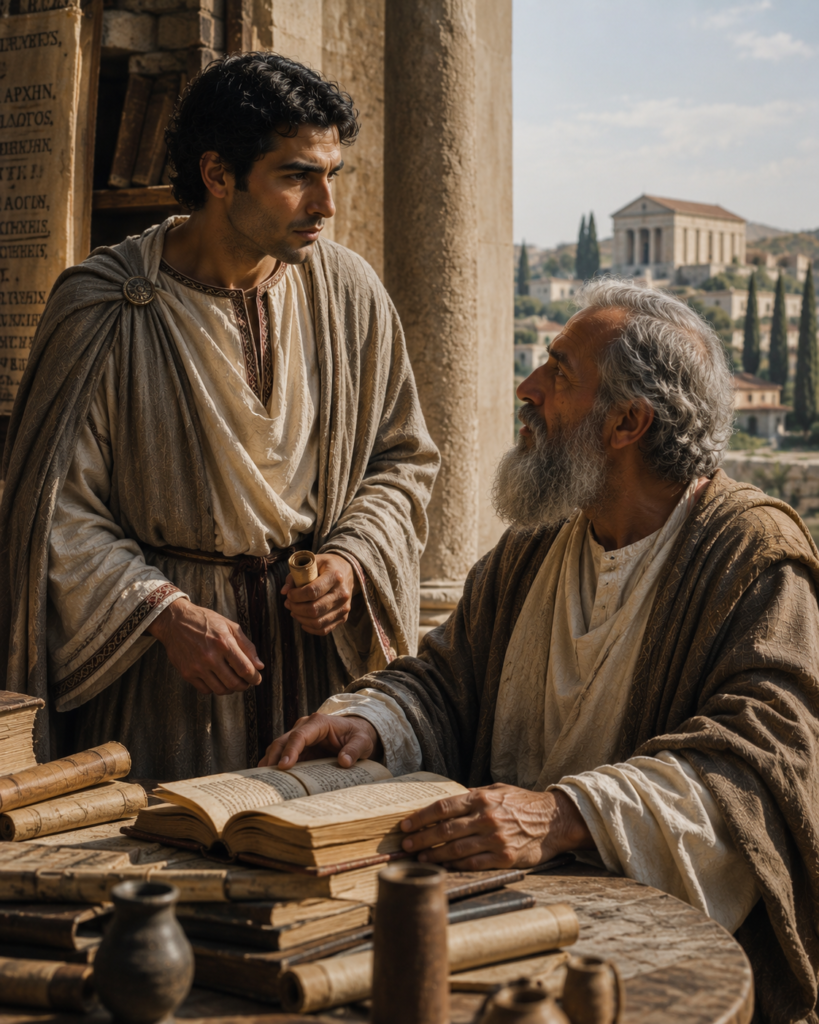
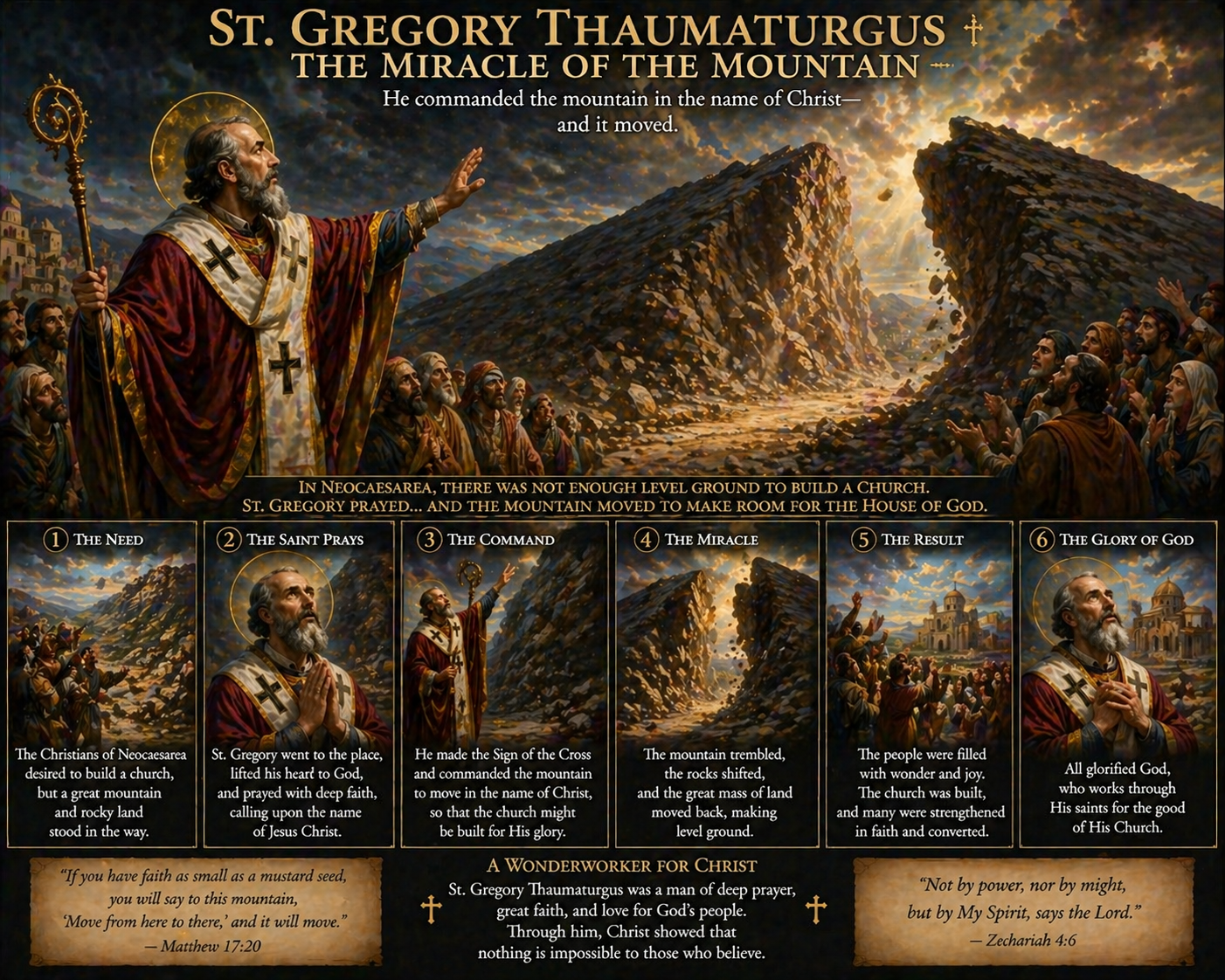
Gregory Thaumaturgus, who lived in the third century, stands as one of the most striking figures of the early Church—a man whose life seems to sit at the meeting point of intellectual brilliance, deep conversion, and extraordinary manifestations of faith. He was born around the year 213 in Neocaesarea, in a region known as Pontus in Asia Minor, into a well-established pagan family. His birth name was Theodore, and his upbringing was marked not by Christianity, but by the classical traditions of Greek culture. From a young age, he was trained in rhetoric, philosophy, and law, preparing for what would likely have been a distinguished secular career. Nothing in his early life suggested that he would become one of the most influential bishops of his time. His life took a decisive turn when he encountered Origen, one of the greatest intellectuals of early Christianity. Gregory initially went to study law, but under Origen’s influence, his entire trajectory shifted. Origen did not simply teach him doctrine; he formed his mind, guiding him through philosophy, theology, and Scripture in a way that revealed Christianity not as a rejection of reason, but as its fulfillment. Gregory later wrote a famous address of thanks to Origen, describing how he had been gently but powerfully led from worldly ambition into the pursuit of truth. This transformation was not merely intellectual—it was deeply personal and spiritual, marking a complete reorientation of his life. After completing his studies, Gregory intended to live quietly, possibly continuing in a scholarly or legal capacity, but circumstances intervened. When he returned to Neocaesarea, the local Christian community—small, vulnerable, and in need of leadership—chose him as their bishop. He was reluctant, even resistant, aware of the immense responsibility and danger involved. Christianity at the time was not socially secure; it existed under the shadow of persecution, misunderstanding, and political instability. Yet Gregory accepted the role, and in doing so stepped into a life that would demand both courage and profound faith. At the time of his appointment, tradition holds that there were only about seventeen Christians in the entire city. Over the course of his episcopacy, Gregory’s influence grew to such an extent that by the end of his life, the numbers had effectively reversed, with only a small remnant remaining outside the faith. Whether understood literally or symbolically, this dramatic shift reflects the extraordinary impact he had on the spiritual landscape of the region. His preaching, his presence, and the consistency of his life seem to have carried a persuasive force that went far beyond words.
The feast also carries a powerful message about order and authority in the human person and in society. It reminds believers that true freedom is not found in rejecting authority, but in rightly ordering one’s life under the authority of Christ. His kingship brings unity where there is division, clarity where there is confusion, and purpose where there is emptiness. It calls individuals to align their thoughts, actions, and desires with a higher truth, and to recognize that all earthly authority ultimately finds its legitimacy only in relation to Him. Liturgically, the celebration is marked by a sense of majesty and reverence. Churches may be adorned with rich colors such as white or gold, symbolizing victory, glory, and kingship. Hymns and prayers emphasize Christ’s sovereignty and eternal reign, often drawing from imagery in the Book of Revelation, where He is described as “King of kings and Lord of lords.” The faithful are invited to renew their allegiance to Him, not merely in word, but in the totality of their lives.

Faith That Brings the World Into Order

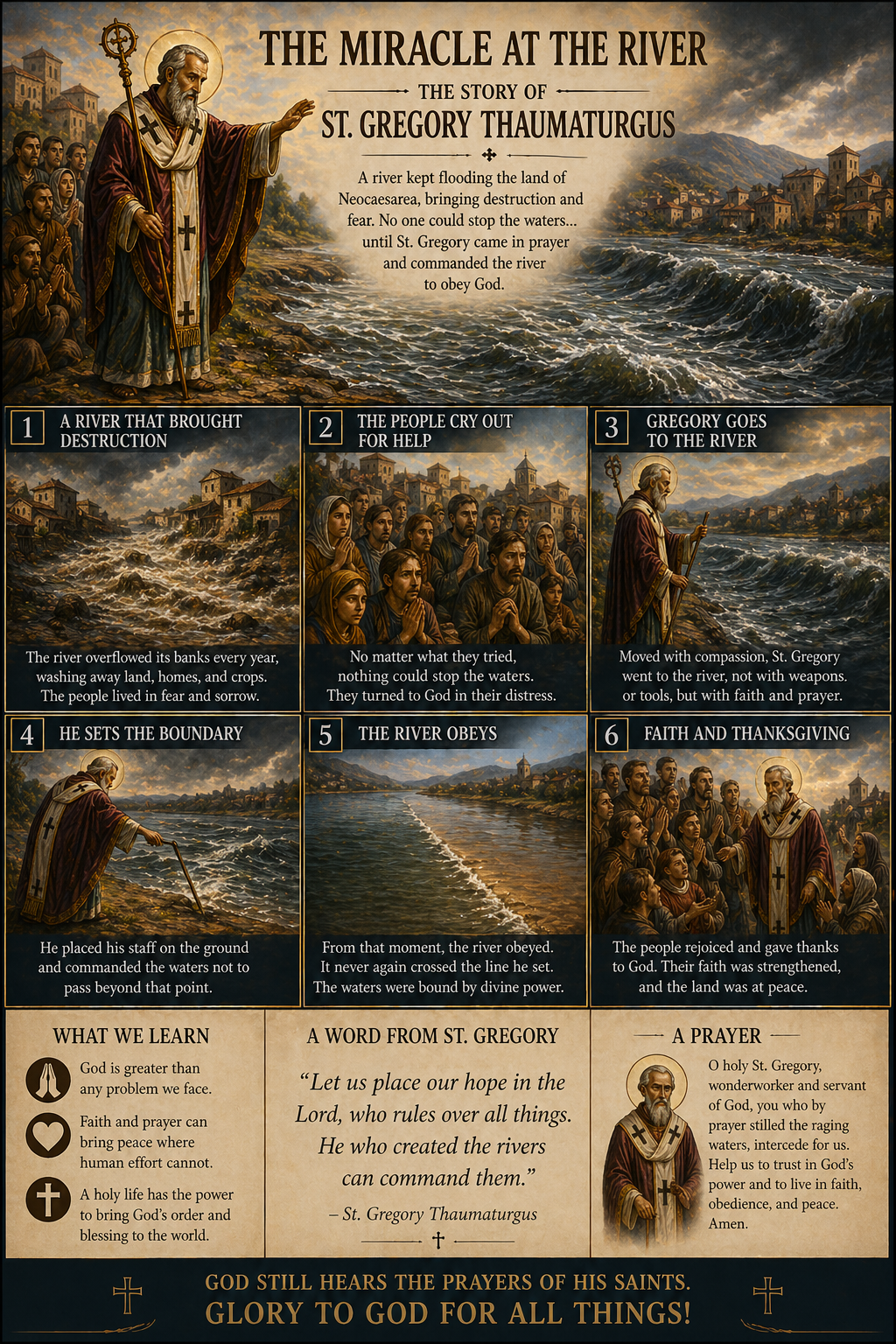
His formation under Origen becomes even more significant when viewed through this lens, because it was not simply an academic education, but a shaping of perception itself, teaching Gregory to see beyond surface realities into deeper truths, and this ability seems to echo in the accounts of his life, where he responds to physical problems with spiritual insight, not dismissing the material world but addressing it at its root. This integrated way of thinking—where philosophy, theology, and lived experience are unified—allowed him to act with a kind of calm decisiveness that others lacked, especially in crisis situations like the flooding river, where panic and repeated failure had worn down the people’s hope. Another important dimension of his legacy is the way he transformed leadership itself, because he did not lead through force, status, or charisma alone, but through consistency, conviction, and a visible alignment between what he believed and how he lived, and this gave his words credibility in a time when belief systems were often questioned or misunderstood. His reluctance to become bishop actually reinforces this point, showing that his authority was not something he sought for himself, but something entrusted to him, and that distinction shaped the way he exercised it—with humility, but also with firmness when needed. There is also a quiet but powerful theme of boundaries in his life, not just in the physical sense of setting limits for a river, but in the spiritual sense of restoring order where chaos had taken hold, whether in communities, in individual lives, or even in the relationship between humanity and the natural world, and this idea of boundaries becomes a kind of symbol for his entire mission, as someone who helped define what was true, what was stable, and what could be trusted in a time of uncertainty. 
His actions suggest that faith is not passive, but active, something that engages reality and shapes it, bringing it back into alignment with a higher order. Even the vision attributed to him involving Virgin Mary and John the Apostle carries this same theme, as it represents not just a mystical experience, but a moment of clarity in understanding, where complex truths about the nature of God are made accessible and expressed in a way that others can receive, reinforcing his role as both a teacher and a mediator of truth. This combination of insight and expression is part of what allowed his influence to extend beyond his immediate context, contributing to the broader development of Christian thought.

The First Miracle

One of the most striking yet little-known facts about Saint Gregory Thaumaturgus is that when he became bishop of Neocaesarea, tradition says there were only seventeen Christians in the entire city. After decades of preaching, teaching, prayer, miracles, and personal holiness, Gregory transformed the region so profoundly that, according to ancient accounts, when he was nearing death there were only seventeen pagans left. Whether those numbers are exact or symbolic, the point made by the early sources is extraordinary: Gregory almost completely converted an entire city during a time when Christianity was still a persecuted minority religion. He did not inherit a flourishing Christian community; he built one almost from nothing. What makes this even more remarkable is that Gregory was not primarily known as an administrator or political leader. He was a scholar, mystic, preacher, and miracle worker. His influence flowed largely from the force of his holiness and conviction. Ancient writers record that his reputation for miracles was so great that people simply called him Thaumaturgus—"the Wonderworker"—a title bestowed upon very few saints in Christian history. Perhaps the most moving aspect of this story is what it reveals about perseverance. Gregory did not see a hostile culture as an obstacle too large to overcome. He began with a tiny flock and spent his life faithfully serving God, trusting that grace could accomplish what seemed impossible. By the end of his life, the spiritual landscape of an entire region had been transformed. It is a powerful reminder that some of the greatest changes in history begin with what appears to be a very small beginning: a single believer, a single prayer, a single act of faith, and the willingness to remain faithful for a lifetime.
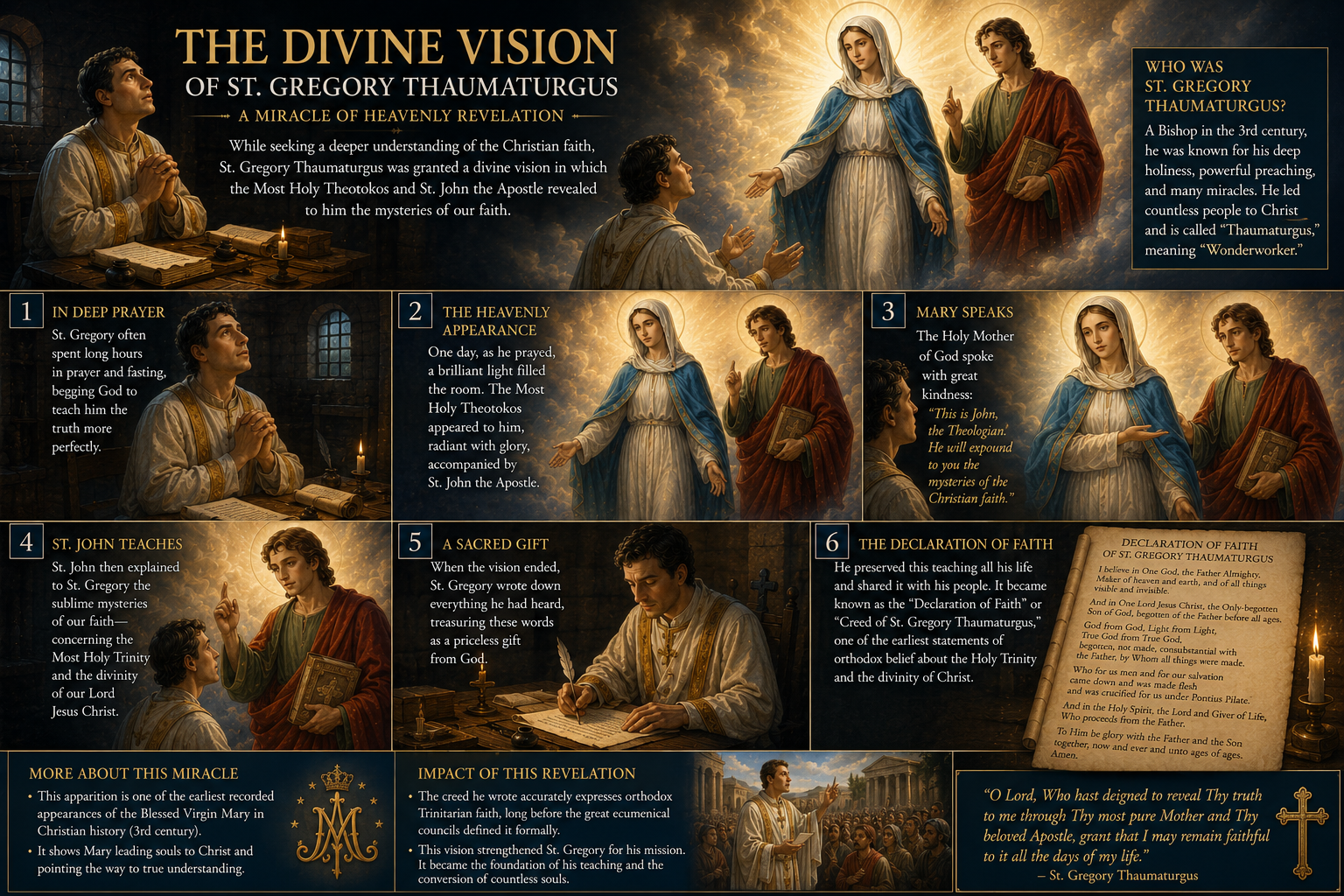
Perhaps the most fascinating and overlooked story about Saint Gregory Thaumaturgus is that he was said to have received a direct apparition of both the Blessed Virgin Mary and St. John the Apostle.
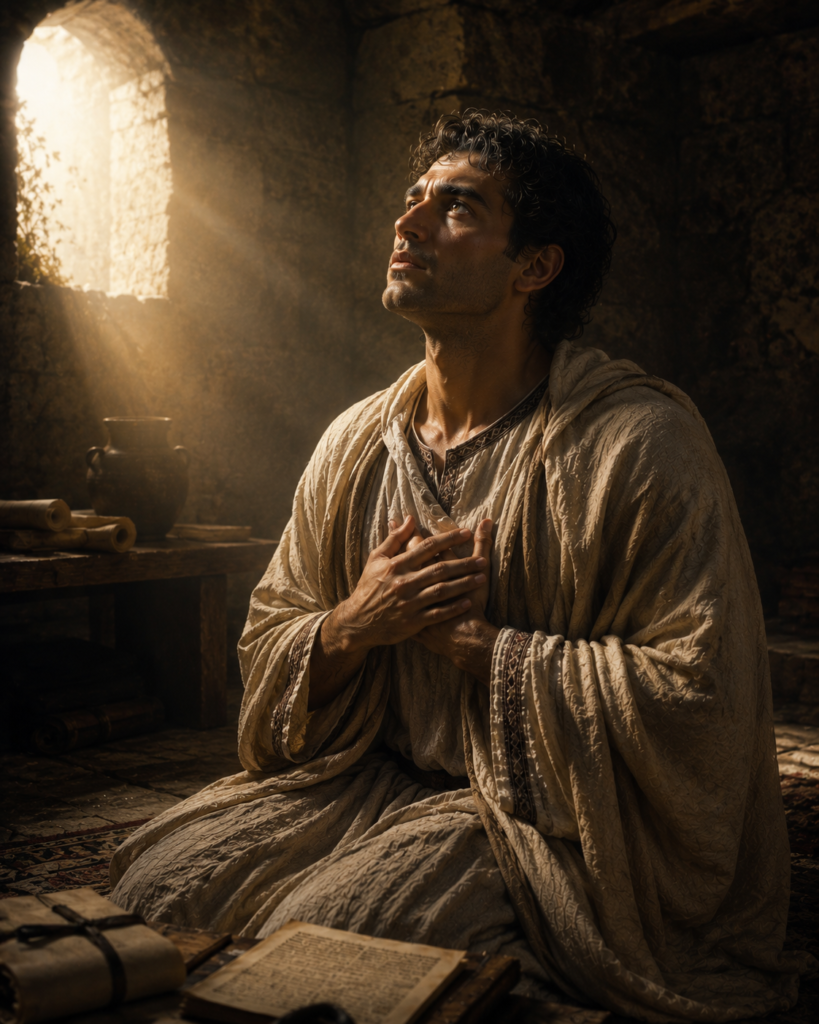
According to an ancient tradition preserved by his disciple Gregory of Nyssa, Gregory was praying and seeking deeper understanding of the Christian faith when he experienced a vision. In it, the Virgin Mary appeared and instructed St. John the Evangelist to explain the mysteries of the faith to him. St. John then delivered a concise profession of faith concerning the Trinity and the divinity of Christ. Gregory reportedly wrote this teaching down, and it became known as the “Declaration of Faith” or “Creed of Gregory Thaumaturgus.”
What makes this remarkable is that the event is one of the earliest recorded Marian apparitions in Christian tradition—occurring around the middle of the 3rd century, long before famous apparitions such as Lourdes or Fatima. It also presents Mary not drawing attention to herself, but directing Gregory toward a deeper understanding of Christ, which is a recurring theme in authentic Marian spirituality throughout Christian history.
Another fascinating detail is that Gregory preserved this creed for the rest of his life and taught it to his people. Centuries later, theologians marveled at how accurately it expressed orthodox Trinitarian doctrine despite being written before many of the great ecumenical councils had formally defined these teachings.
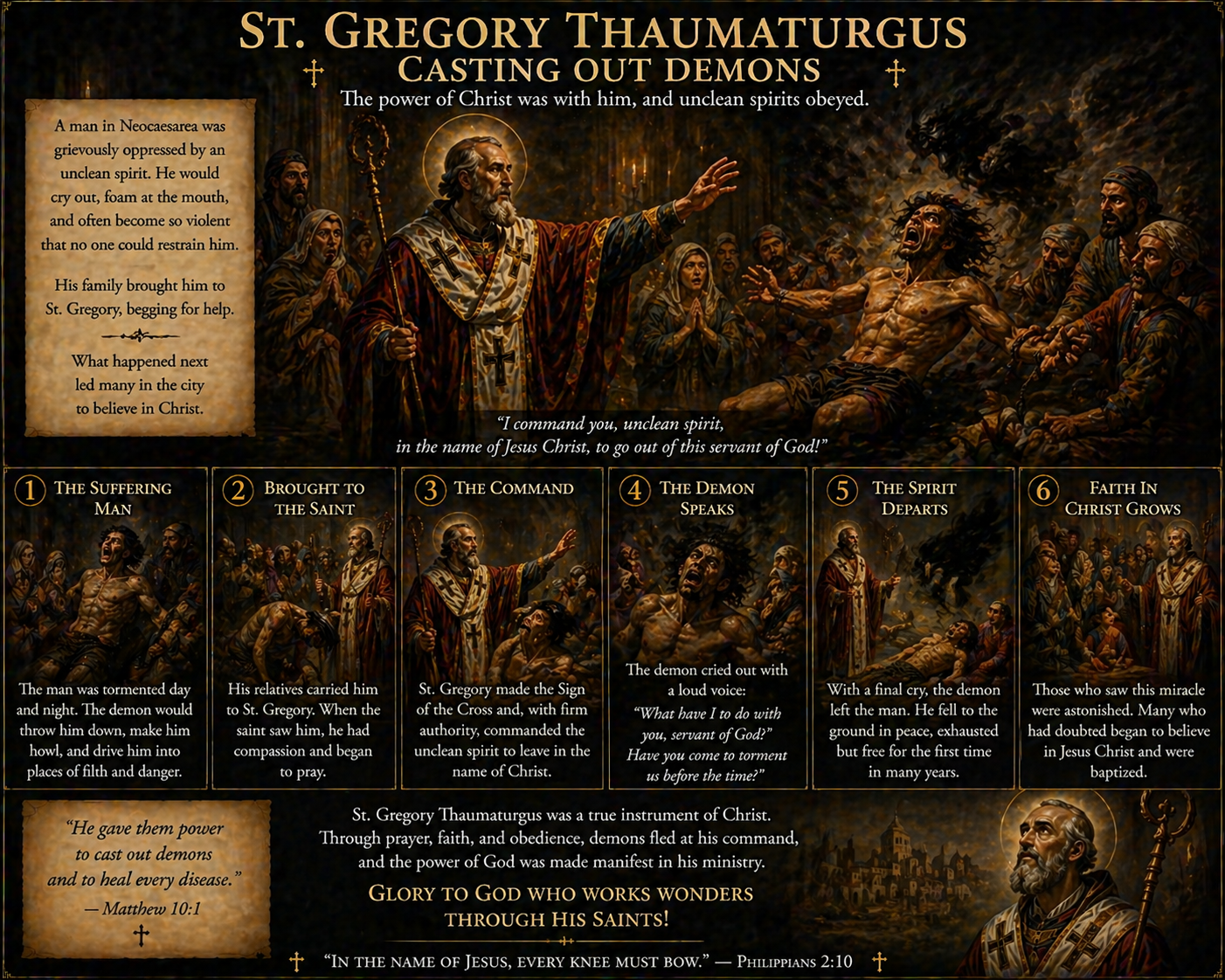
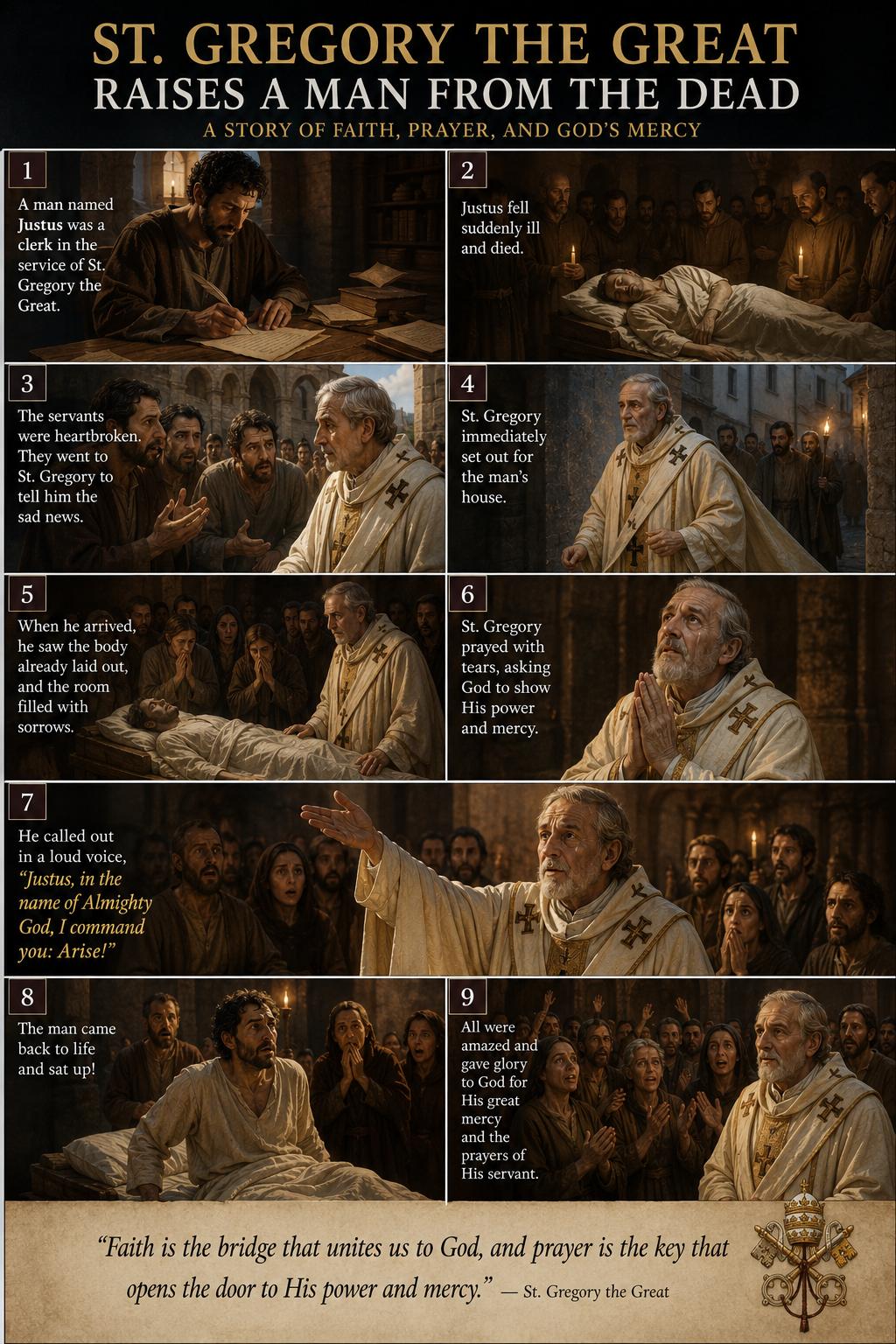
Whether one focuses on the apparition itself or on the creed that resulted from it, the story reveals something profound about Gregory: before he became known as a wonderworker who moved mountains and raised the dead, he was first a seeker of truth who spent long hours in prayer asking God to reveal Himself more fully. His miracles flowed from a deep contemplative life rooted in the mysteries of Christ.
A beautiful detail often noted by historians is that Gregory’s very first great miracle may not have been a physical one at all—it may have been the extraordinary theological insight contained in that creed, received while kneeling in prayer before God.

St. Gregory's Day Traditions to Make Your Own

Lighting Candles while offering prayers for protection, stability, and guidance can serve as a reminder of God’s light shining through times of uncertainty, reflecting Gregory’s role as a source of hope and peace.
Blessing Homes and Property while asking God’s protection over families, homes, and communities recalls Gregory’s reputation as a shepherd who brought order, harmony, and security to those entrusted to his care.
Praying for Guidance during difficult decisions or seemingly impossible situations reflects the faith for which Gregory became renowned, trusting that God can make a way where none appears to exist.
Acts of Charity offered to those in need honor Gregory’s pastoral concern for the suffering, the poor, and those burdened by hardship.
Reading Scripture—especially passages concerning faith, divine authority, healing, and God’s providence—provides an opportunity to reflect on the Gospel truths that shaped Gregory’s life and ministry.
Attending Liturgy or Personal Prayer Time allows believers to deepen their relationship with God and renew their commitment to living faithfully according to His will.
Fasting or Practicing Self-Discipline can be a meaningful way to cultivate spiritual strength and order, reflecting Gregory’s devotion and commitment to holiness.
Teaching and Sharing the Faith with family members, friends, or younger generations follows Gregory’s example as a teacher, evangelist, and defender of Christian truth.
Praying for Peace in families, communities, and throughout the world mirrors Gregory’s legacy as a man through whom God brought reconciliation, healing, and stability.
Spending Time in Silence and Reflection offers an opportunity to consider the deeper spiritual lessons of Gregory’s life: that true strength comes not from worldly power, but from faith, humility, and trust in God.

Faith to believe that nothing is beyond the reach of God's will

O holy Gregory Thaumaturgus, faithful shepherd and servant of God, who by humble prayer brought order to chaos and peace where there was fear, intercede for us now in our need, that our hearts may be strengthened with true faith and our minds guided in truth.
Teach us to trust in God when obstacles seem immovable, to remain steady when the waters of life rise against us, and to walk with quiet confidence in His power, not our own.
Pray that we may live with integrity, courage, and humility, aligning our lives with what is good, true, and lasting, so that through our actions, God’s peace may be made known in the world.
O wonderworker of Christ, ask for us the grace to persevere, the wisdom to discern, and the faith to believe that nothing is beyond the reach of God’s will.

Amen.

Dishes for St. Gregory the Wonder Worker Day

Roasted Lamb with garlic, rosemary, and olive oil, representing shepherding, sacrifice, and strength, prepared slowly for depth of flavor and served with pan juices.
River Fish grilled or baked with lemon, herbs, and sea salt, subtly honoring the miracle of the river and symbolizing peace brought to the waters.
Artisan Bread served with cultured butter and olive oil, simple yet foundational, representing provision, faith, and community.
Honey-Glazed Root Vegetables such as carrots, parsnips, and turnips, bringing warmth and natural sweetness while symbolizing restoration and groundedness.
Roasted Potatoes tossed with olive oil and herbs, crisp on the outside and tender within, reflecting balance and nourishment.
Sautéed Greens prepared with garlic and olive oil, offering strength and vitality while aligning with themes of endurance and inner order.
Lentil Stew enriched with herbs and bone broth, representing humility, sustenance, and care for the poor.
Aged Cheeses served with figs or dates, offering a refined contrast of savory and sweet, symbolizing wisdom and maturity.
Red Wine or diluted wine, representing celebration, gratitude, and the sacred nature of gathering.
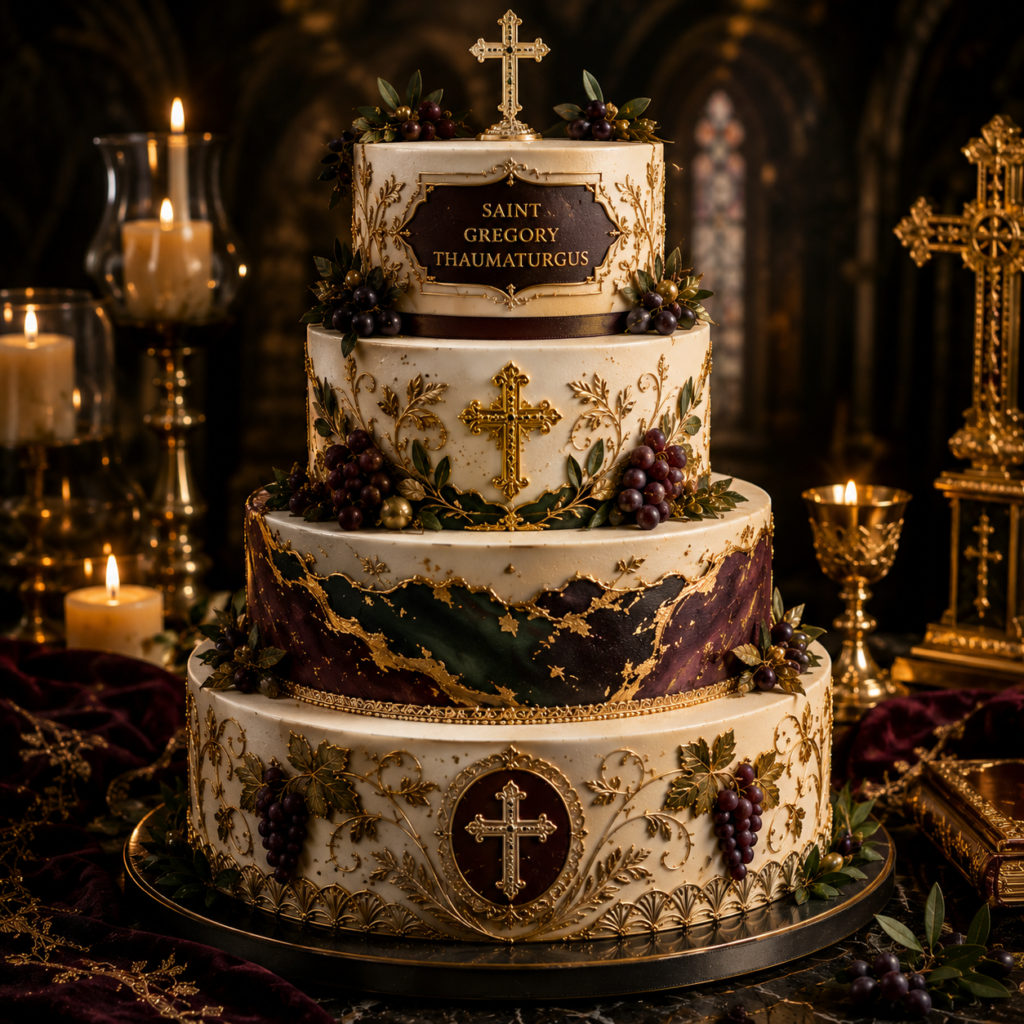
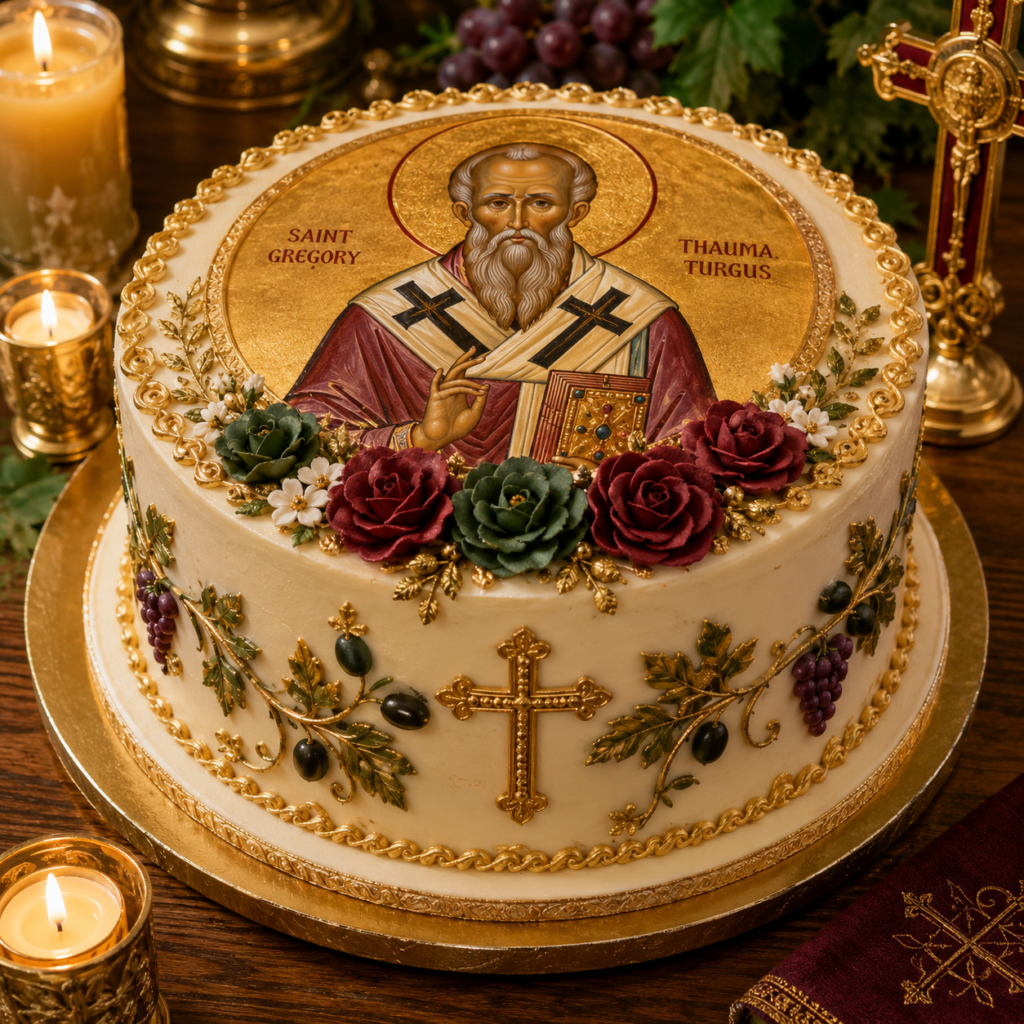
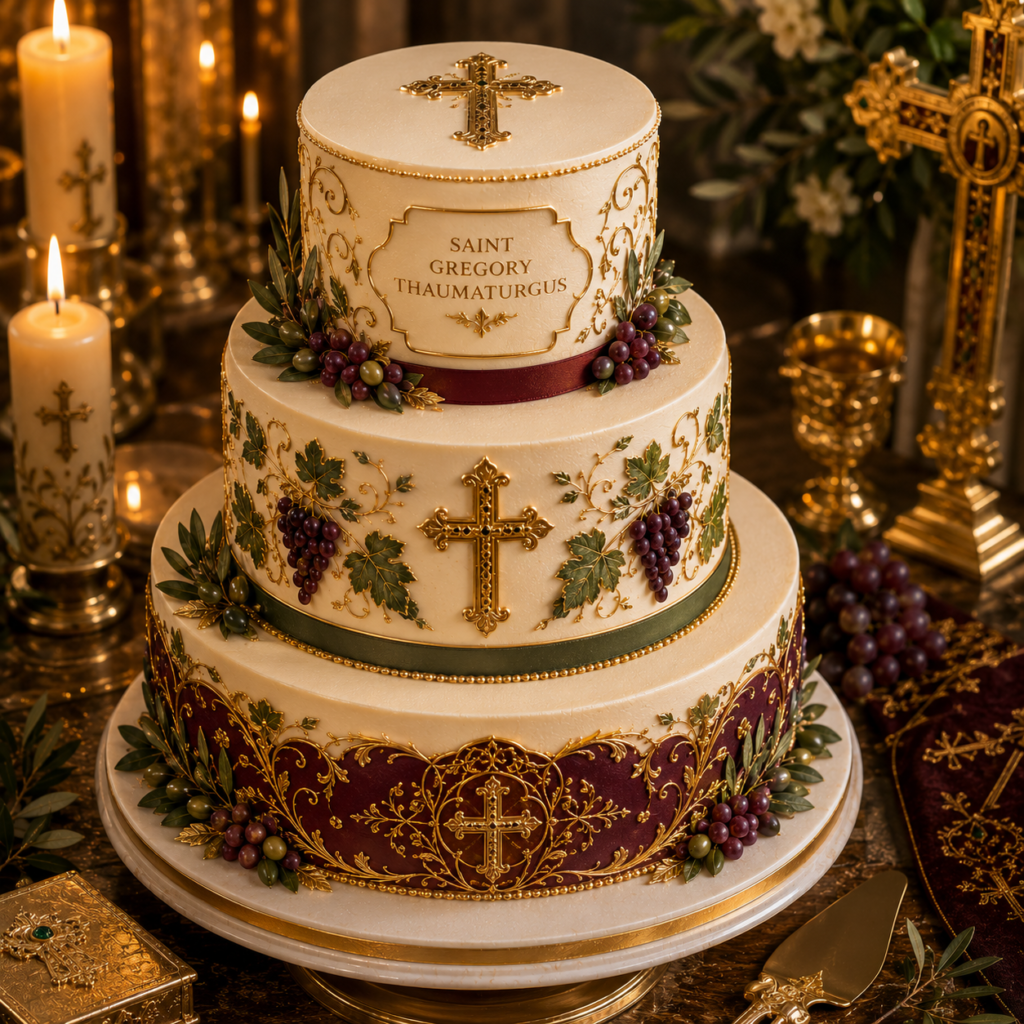
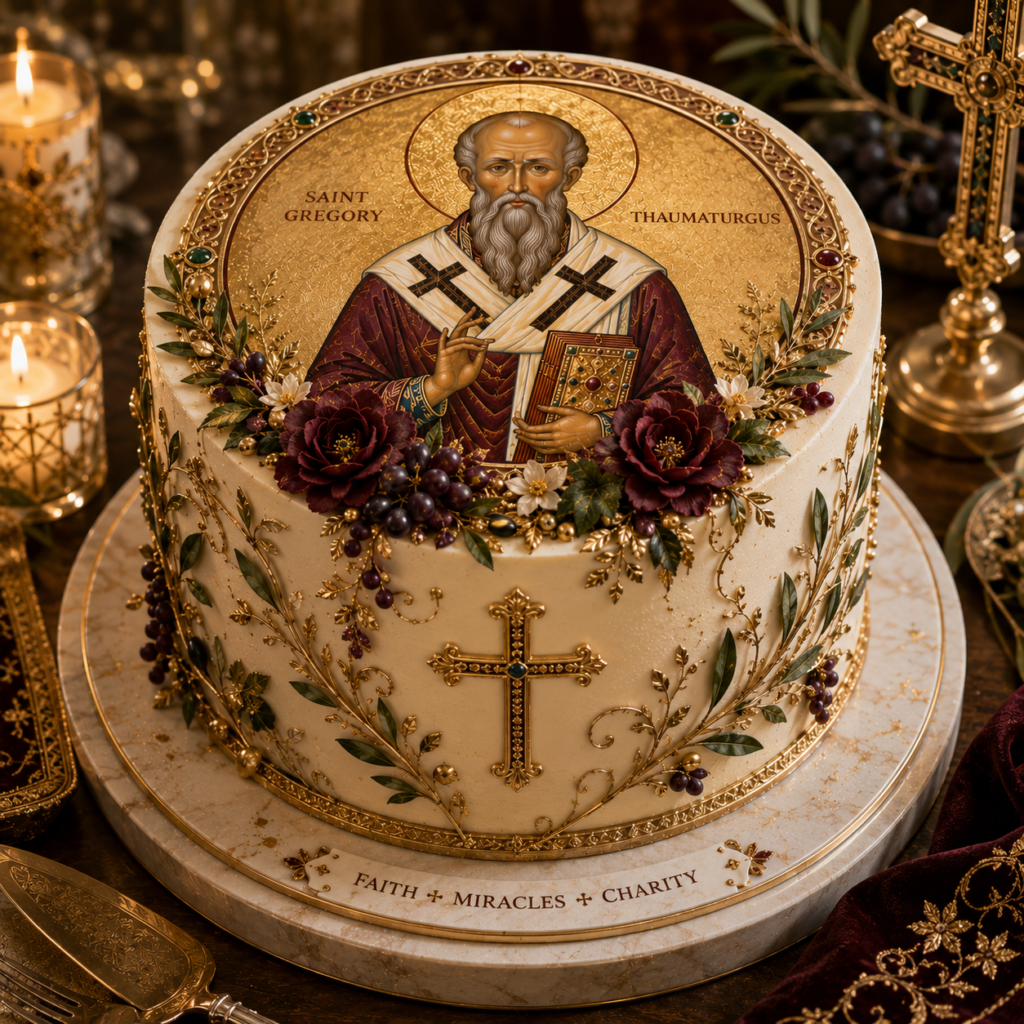
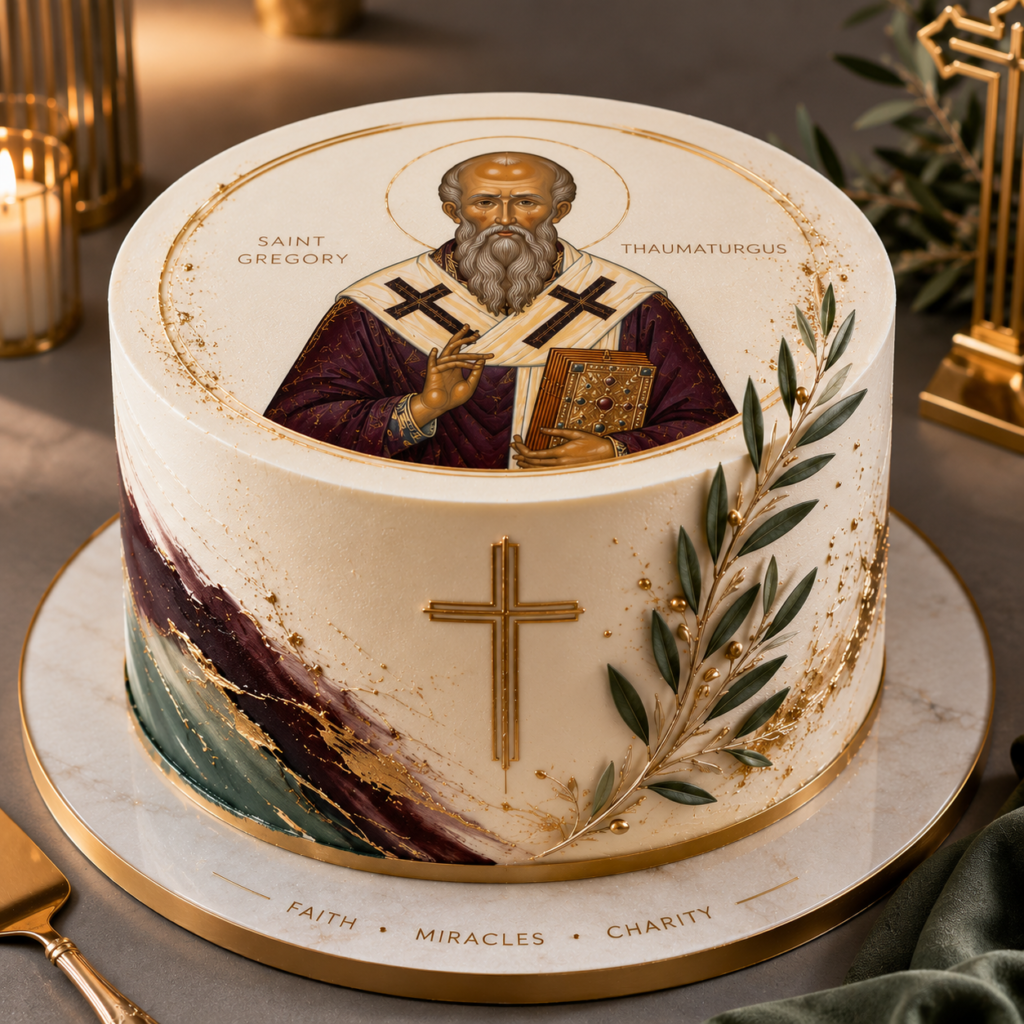
Honey or Almond Cake served as dessert, lightly sweet and elegant, reflecting the quiet beauty and depth of a life rooted in faith.

Recipes Engineered for Autumn Glory