



Patroness of the Americas

with ORO VALENTIO

December 12

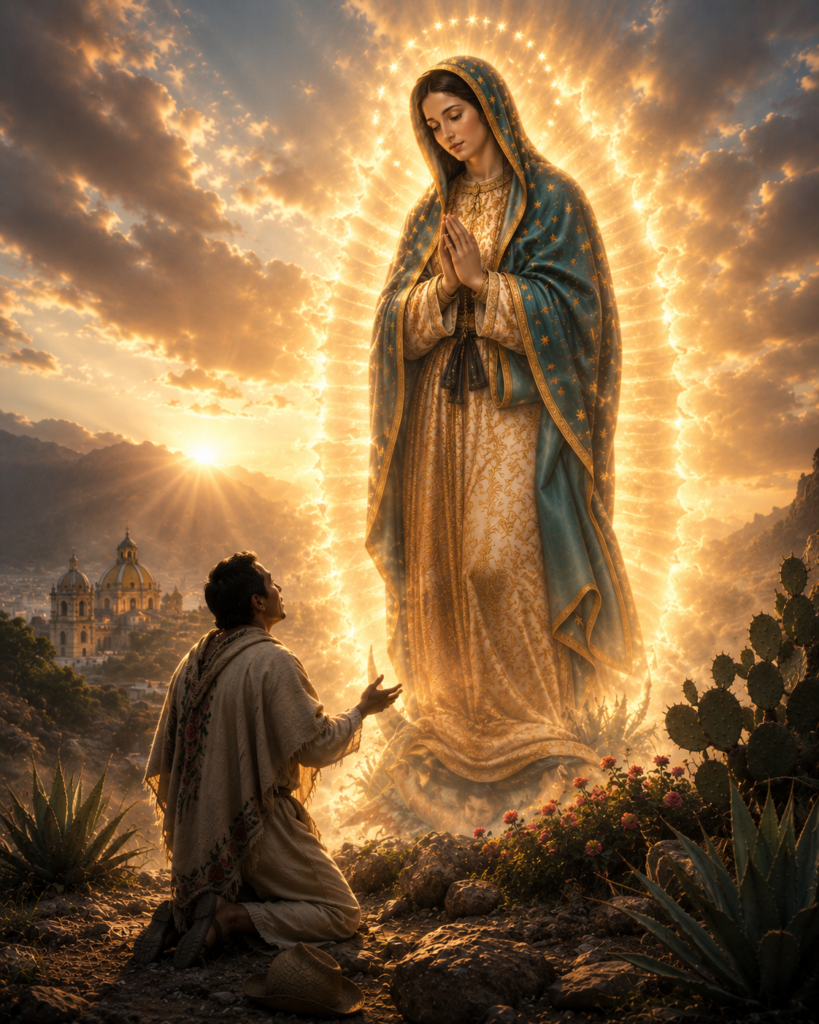
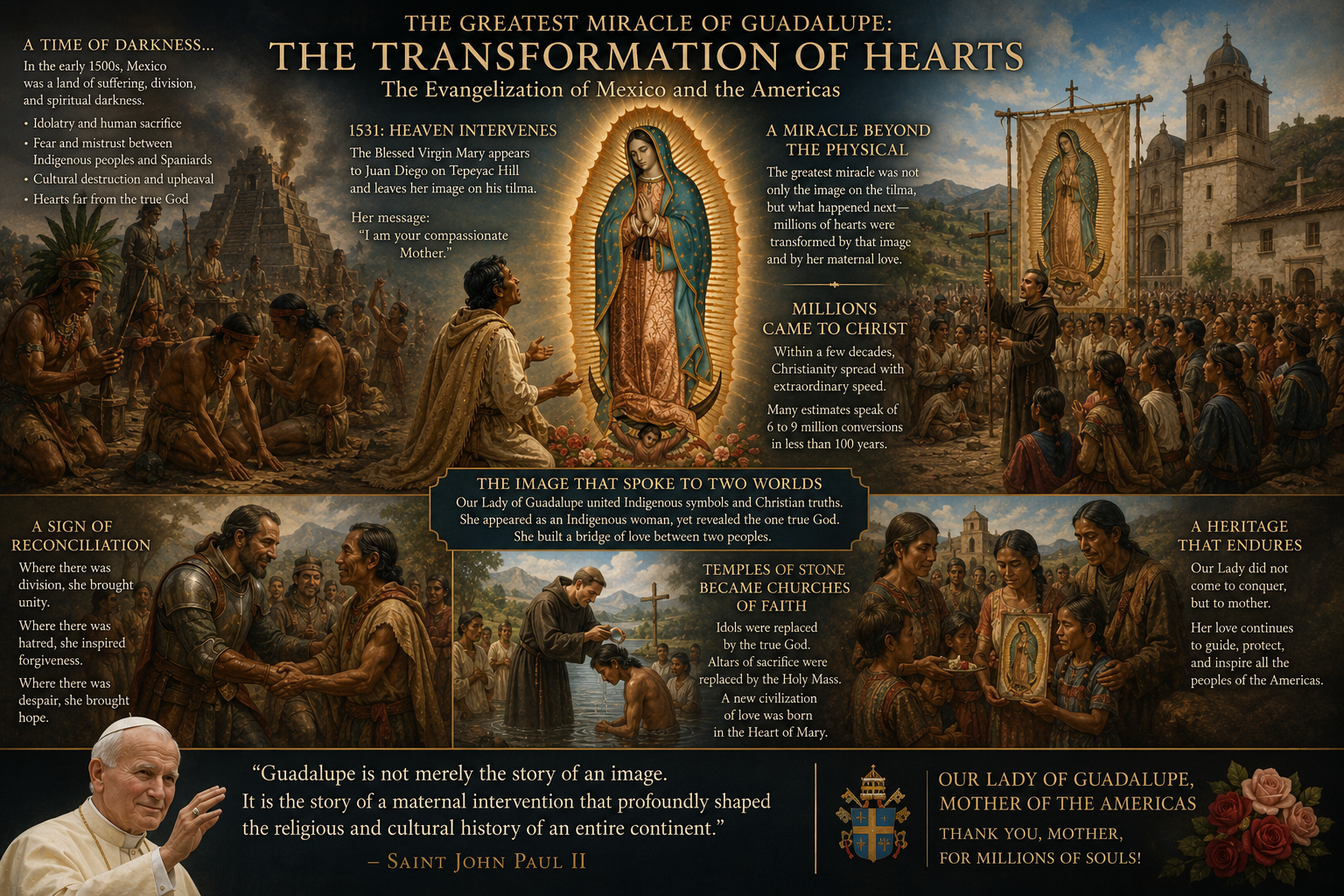
In December of 1531, a humble Indigenous convert named Juan Diego encountered a miraculous apparition of the Blessed Virgin Mary on the hill of Tepeyac near present-day Mexico City. Appearing with radiant beauty and speaking with tenderness and compassion, she asked that a church be built on the site so that she could offer comfort, mercy, and guidance to the people of the Americas. When local authorities requested proof of the apparition, she instructed Juan Diego to gather roses blooming miraculously in winter upon the hillside. As he carried the flowers in his tilma to the bishop and opened it before him, the roses fell away and an image of the Virgin herself was found imprinted upon the fabric. This miraculous image became known throughout the world as Our Lady of Guadalupe and remains one of the most beloved symbols of faith, hope, motherhood, and divine compassion in the Americas.
Patroness of the Americas Day is a celebration of heavenly motherhood, dignity, protection, and enduring hope throughout the nations of the Western Hemisphere. It honors the Blessed Virgin Mary under her title as Patroness of the Americas, a reminder that the peoples of North, Central, and South America share not only a common hemisphere, but also a rich spiritual heritage shaped by faith, hope, compassion, perseverance, and a call to unity.
This title is closely associated with Our Lady of Guadalupe, whose appearance in 1531 became a profound moment in the spiritual history of the Americas. Her message of compassion, faith, and trust in God has inspired generations and continues to serve as a symbol of reconciliation, hope, and maternal care across diverse cultures and nations.
This observance invites reflection on the sacred dignity of every human person, the importance of family and heritage, and the responsibility to build communities rooted in integrity, charity, and respect for one another. It is a day that speaks to the enduring beauty of faith, reverence for life, strength through humility, and the quiet courage required to remain steadfast during times of uncertainty.
For centuries, countless people throughout the Americas have looked to the Patroness of the Americas as a source of comfort amid hardship and peace amid struggle. Her patronage reflects maternal concern not only for individuals, but also for families, cultures, and communities striving to preserve virtue, compassion, freedom, and human flourishing.
In a world often marked by noise, division, and instability, Patroness of the Americas Day offers an opportunity to pause and reflect upon what truly matters. It calls people toward gratitude, prayer, renewal, and a deeper commitment to what is good, noble, and life-giving. It is a time to strengthen the bonds of family and community while pursuing a way of life rooted not merely in comfort or success, but in wisdom, discipline, compassion, and enduring purpose.
Ultimately, Patroness of the Americas Day reminds us that hope is strongest when joined with faith, that unity grows through mutual respect and charity, and that even amid life’s challenges, there remains a guiding call toward truth, goodness, and peace.

A Message of Faith, Mercy, Healing, and Hope

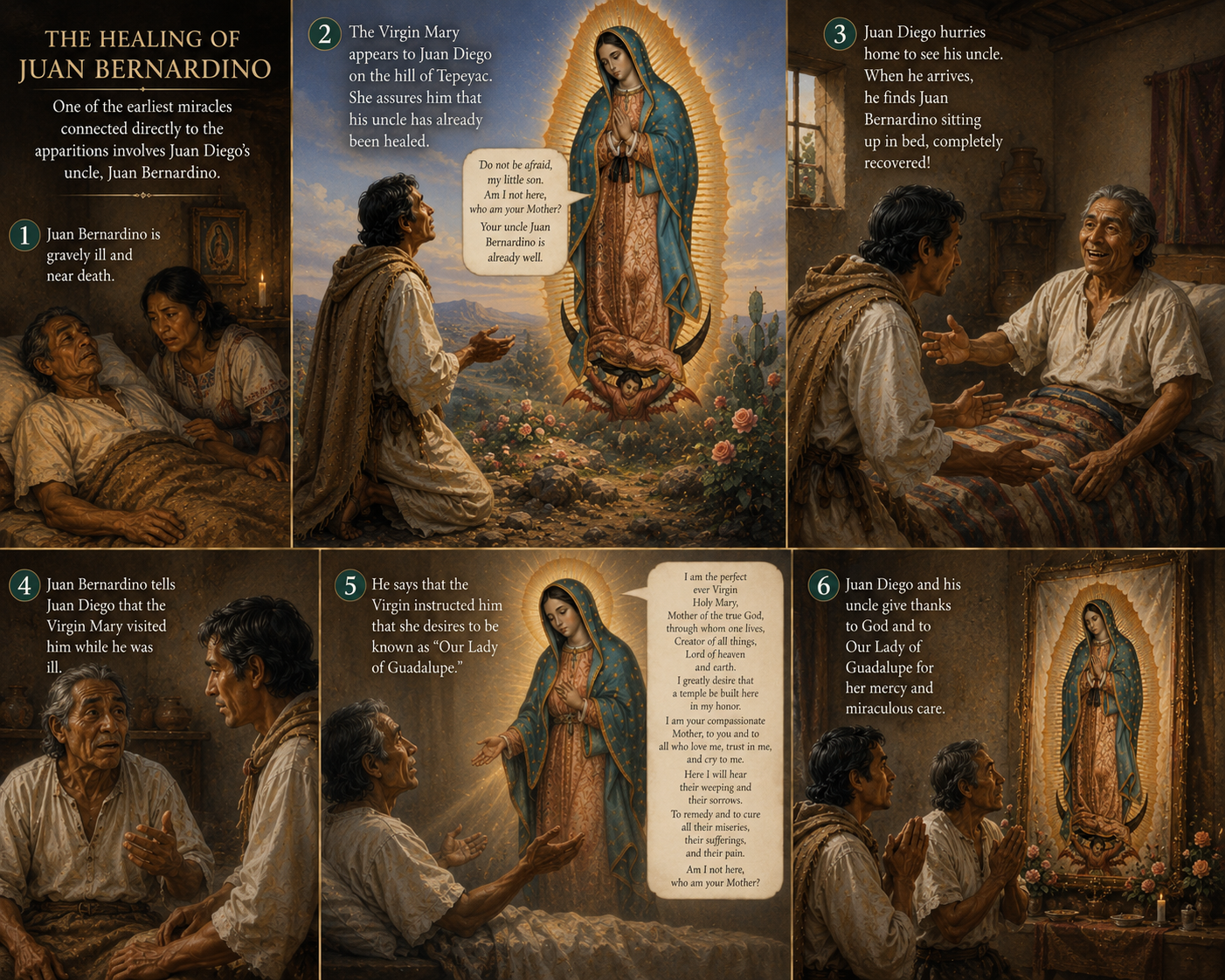
Patroness of the Americas Day honors the Blessed Virgin Mary under her title as Our Lady of Guadalupe, who is recognized as the Patroness of the Americas and spiritual mother of the peoples of North, Central, and South America. The observance commemorates the extraordinary events that took place in December of 1531 when the Virgin Mary appeared several times to Juan Diego, a humble Indigenous convert, on the hill of Tepeyac near present-day Mexico City.
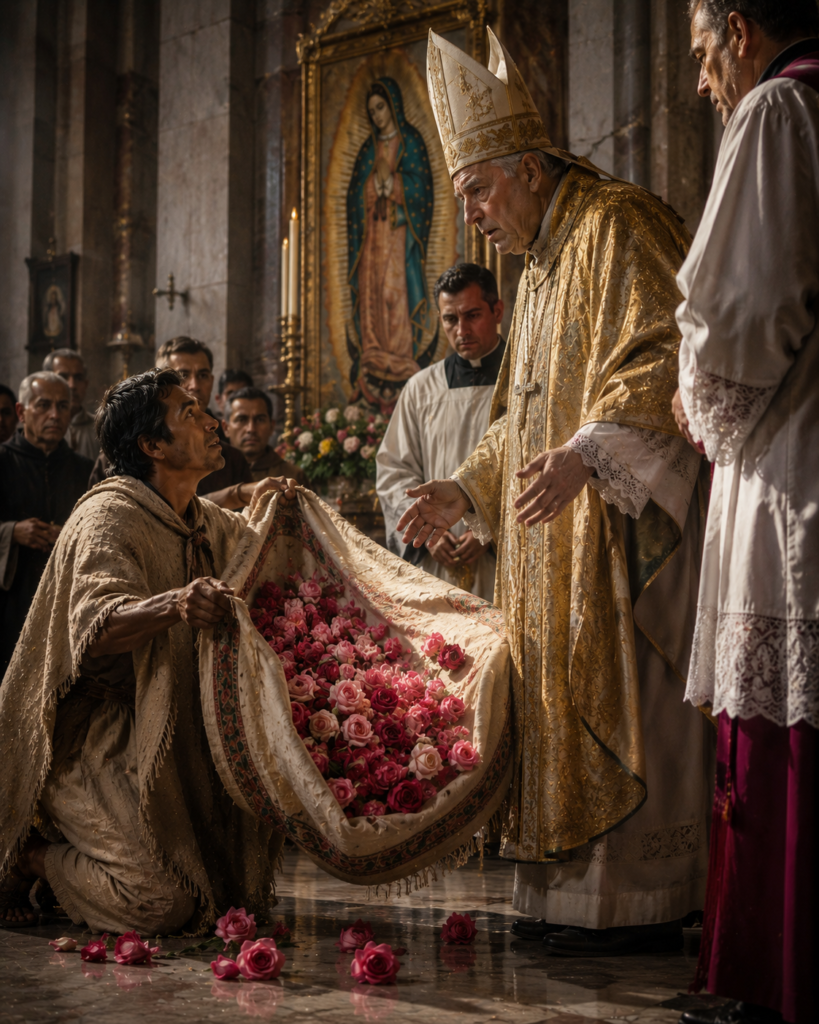
According to tradition, Mary entrusted Juan Diego with a request that a church be built at the site of the apparitions. When local authorities sought proof of the authenticity of his message, he was directed to gather roses blooming miraculously upon the hillside despite the winter season. Carrying the flowers within his tilma, Juan Diego returned to present them as a sign. When he opened the garment, the roses fell to the ground and a miraculous image of the Virgin Mary appeared upon the fabric.
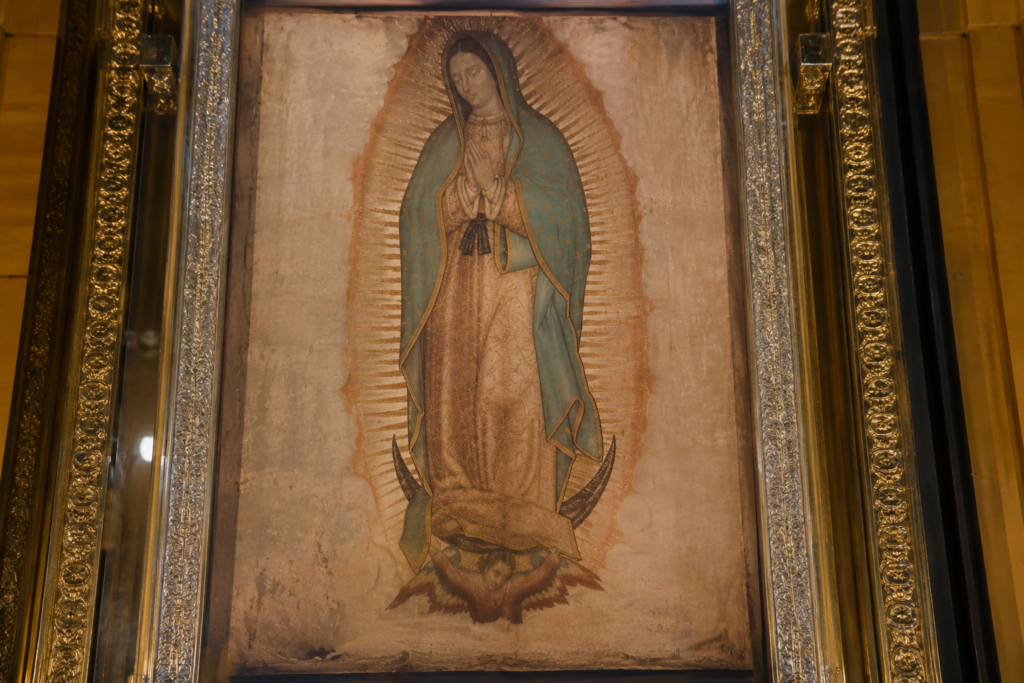
The image upon the tilma became one of the most recognized and beloved religious images in the world. For centuries it has drawn pilgrims, inspired devotion, and served as a source of comfort and encouragement for countless people throughout the Americas. The event is remembered not merely as a historical occurrence, but as a moment that profoundly shaped the spiritual and cultural history of an entire hemisphere.
The appearance to Juan Diego also carries a message that continues to resonate across generations. Rather than appearing to a ruler, scholar, or person of influence, the Virgin entrusted her message to a man of humble circumstances. This aspect of the story has long been understood as a reminder that every human life possesses dignity and worth, and that God’s grace is not limited by status, wealth, education, or position in society.
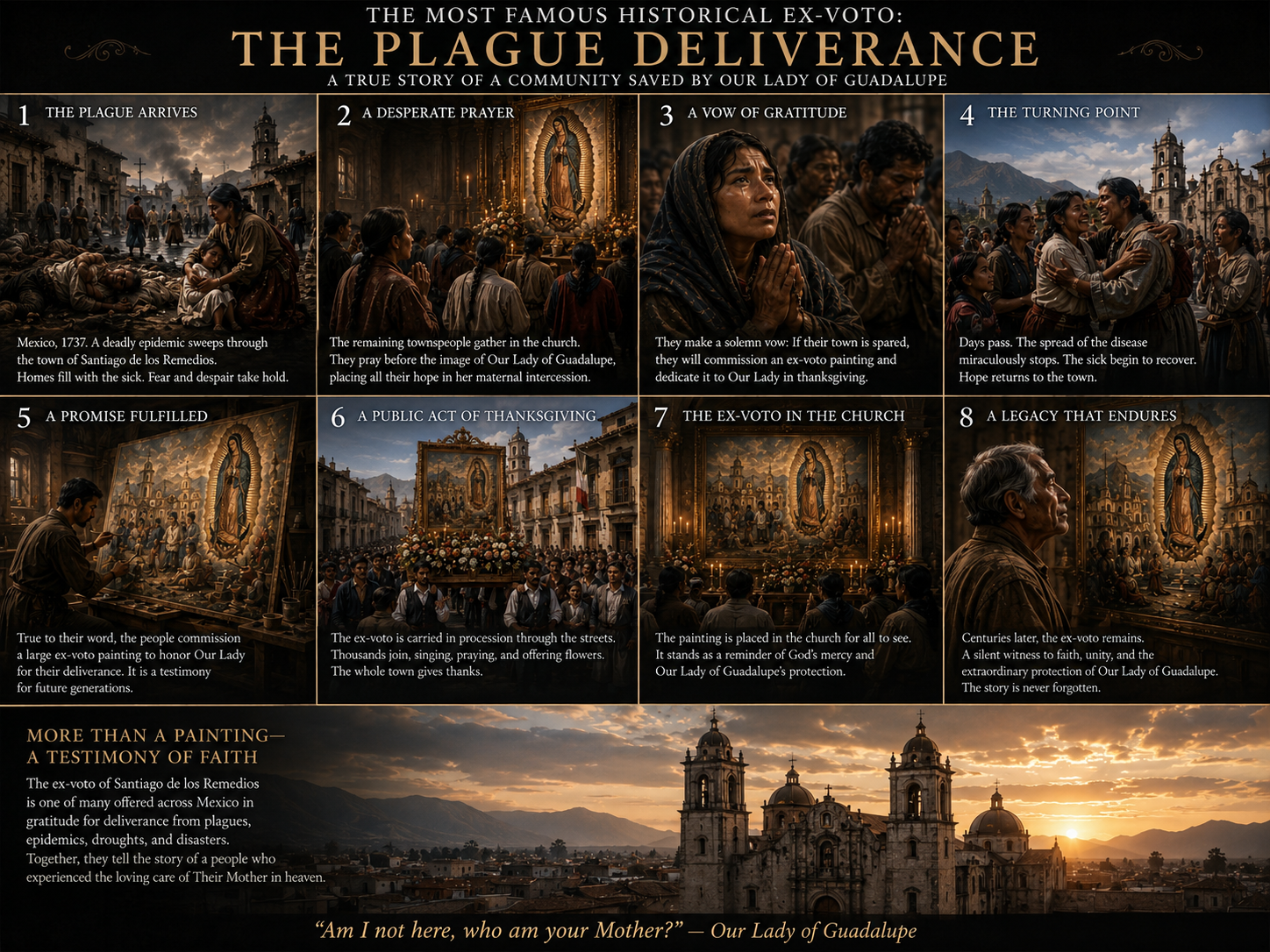
Throughout the Americas, the observance is marked by prayer, pilgrimages, processions, sacred music, charitable works, and gatherings of family and community. Many reflect upon the virtues associated with the Guadalupe tradition: humility, trust, perseverance, compassion, and care for those who suffer. The day serves as an opportunity to remember the importance of faith, gratitude, and service to others.
Beyond its historical and devotional significance, Patroness of the Americas Day stands as a testament to the enduring power of hope. The story of Juan Diego and the miraculous tilma continues to inspire people from diverse backgrounds and cultures, reminding them that light can emerge in times of uncertainty and that compassion can overcome division. For many throughout the Western Hemisphere, the observance remains a celebration of faith, human dignity, reconciliation, and the enduring belief that grace continues to work within history and within the human heart.
After the Blessed Virgin Mary appeared to Juan Diego and requested that a church be built in her honor upon the hill of Tepeyac, the local bishop asked for a sign to verify the miraculous encounter. In response, the Virgin instructed Juan Diego to climb the hillside, where he discovered beautiful roses blooming despite the cold winter season — something considered impossible at that time of year. He gathered the roses into his tilma, or cloak, and carried them to the bishop. When Juan Diego opened his tilma before the bishop and priests, the roses cascaded onto the floor, revealing a miraculous image of the Virgin Mary imprinted upon the fabric itself. Those present were overcome with awe and reverence, recognizing the event as a divine sign. The image would become known throughout the world as Our Lady of Guadalupe, standing as a lasting symbol of faith, compassion, protection, and hope for the peoples of the Americas.

Patroness of the Americas Traditions to Make Your Own

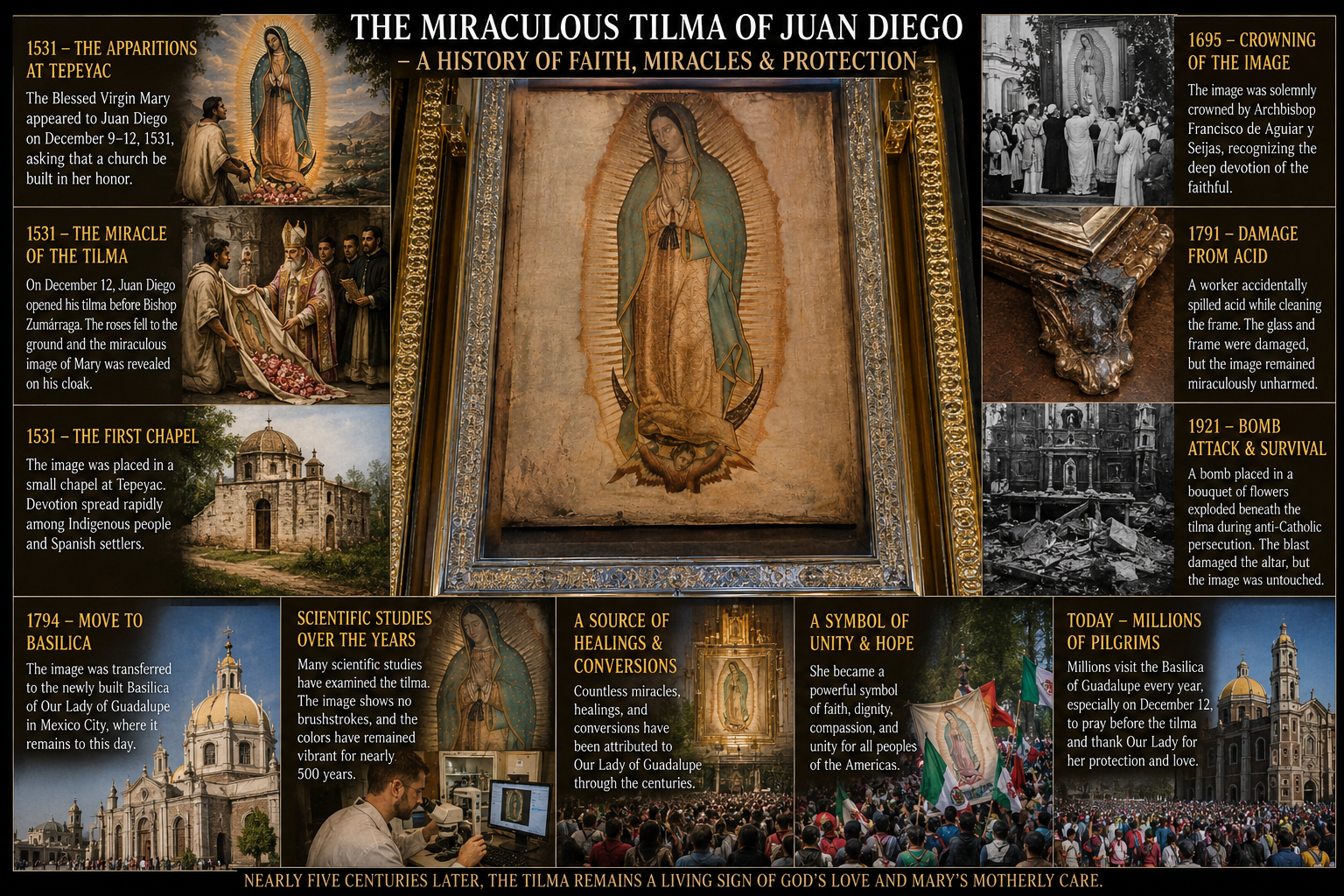
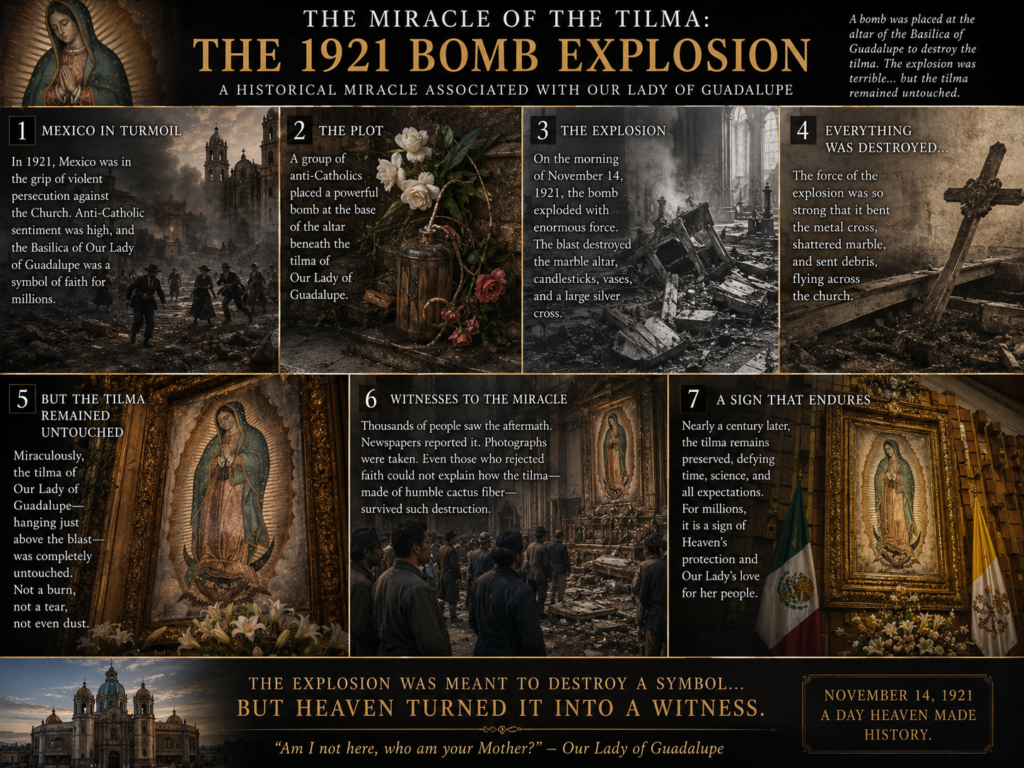
Today, the tilma of Juan Diego is carefully preserved within the modern Basilica of Our Lady of Guadalupe, one of the most visited pilgrimage sites in the world. The sacred image is displayed high above the main altar behind specially designed protective glass intended to shield it from humidity, dust, pollution, temperature fluctuations, and physical contact. Advanced preservation systems help maintain a stable environment around the tilma while still allowing millions of pilgrims each year to view it in prayer and reverence. To accommodate the enormous number of visitors, moving walkways pass beneath the image so pilgrims can observe the tilma without causing crowding directly beneath it. The basilica itself was designed to safely support the flow of worshippers who travel from across the Americas and around the world, especially during celebrations surrounding the Feast of Our Lady of Guadalupe in December. Over the centuries, the tilma has undergone careful examinations and preservation efforts to help ensure its continued protection while minimizing unnecessary handling. Modern conservation methods are approached with great caution due to both the tilma's age and its immense spiritual and historical significance. What continues to fascinate many observers is that the image remains visible upon a simple cactus-fiber cloak that, under ordinary circumstances, would not be expected to endure for nearly five centuries. The tilma's remarkable preservation has long been regarded as one of the most extraordinary aspects of the Guadalupe tradition. Researchers, historians, and devotees have also noted several unusual features associated with the image. Among the most discussed are microscopic details reportedly visible within the Virgin's eyes. Some investigators have claimed that highly magnified examinations reveal tiny reflected figures resembling individuals present at the moment Juan Diego unfolded his tilma before the bishop. While interpretations vary, these observations have contributed to the enduring fascination surrounding the image. Other studies have pointed to the extraordinary quality of the image itself. Portions of the tilma appear to exhibit coloration and detail that have prompted decades of examination, with some researchers noting the apparent absence of conventional brushstrokes in certain areas. The image has inspired continued interest among artists, conservators, scientists, and scholars seeking to better understand its characteristics. The tilma has also survived several incidents that many consider remarkable. Most notably, in 1921 a powerful bomb exploded near the image, causing significant damage to the surrounding sanctuary while leaving the tilma itself unharmed. The event further strengthened devotion to Our Lady of Guadalupe and reinforced the conviction of many believers that the image enjoys a special providential protection. Despite centuries of exposure, historical upheavals, and the passage of time, the tilma continues to draw millions of pilgrims each year. For many, it stands as far more than an artifact of religious history. It serves as a visible reminder of faith, hope, compassion, and God's care for ordinary people. Today, the preserved tilma remains both a treasured historical object and one of the most beloved devotional images in the world. Its enduring presence continues to inspire prayer, pilgrimage, reflection, and wonder, while serving as a symbol of maternal care, perseverance, human dignity, and spiritual unity throughout the Americas.
Church Services & Masses
Many people attend special Masses, prayer services, rosaries, and candlelight vigils dedicated to Our Lady of Guadalupe. Churches are often decorated with roses, candles, and sacred imagery as worshippers gather in reverence, thanksgiving, and prayer.
Processions & Pilgrimages
Communities frequently hold prayerful processions carrying banners, flowers, statues, or images of Our Lady of Guadalupe. Some pilgrims travel long distances to churches and shrines as acts of devotion, gratitude, and spiritual renewal.
The Tradition of Roses
Roses are one of the most recognized symbols of the celebration because of the miraculous roses gathered by Juan Diego at Tepeyac. Families and churches often display colorful bouquets to symbolize beauty, hope, faith, and divine grace.
Music & Hymns
Traditional hymns, choirs, bells, and mariachi music are commonly performed during celebrations. Music serves as an expression of joy, reverence, cultural heritage, and devotion.
Family Gatherings & Shared Meals
Families often gather together to share meals, prayer, stories, and fellowship. These gatherings emphasize unity, gratitude, hospitality, and the strengthening of family bonds.
Candles & Home Altars
Many families light candles or create devotional spaces within their homes featuring crosses, flowers, rosaries, and images of Our Lady of Guadalupe. These spaces are used for prayer, reflection, and remembrance.
Acts of Charity & Compassion
The celebration also encourages acts of kindness, charity, and service toward others, especially the poor, vulnerable, and suffering. This tradition reflects the message of compassion, dignity, and care associated with Our Lady of Guadalupe.
Cultural Celebration & Heritage
Patroness of the Americas Day is also a celebration of faith, history, and cultural identity throughout the Americas. Traditional clothing, artwork, storytelling, and community events help preserve and honor generations of spiritual and cultural heritage.

Strengthen families, heal the wounded, console the sorrowful

O Blessed Virgin Mary,
Our Lady of Guadalupe, Patroness of the Americas,
we come before you with humility, trust, and love.
You who appeared with compassion to Juan Diego and brought comfort to the suffering,
look kindly upon us and intercede for us before your Son.
Wrap us beneath your mantle of protection and guide our hearts toward truth, faith, charity, and peace.
Strengthen families, heal the wounded, console the sorrowful, and inspire all people to live with dignity, compassion, and integrity.
Pray for those who are struggling, for those who feel forgotten, and for all who seek hope amid uncertainty.
Help us to grow in humility, perseverance, gratitude, and love.
Lead us closer to God in all that we do, and teach us to serve others with kindness and mercy.
May your example inspire unity throughout the Americas and throughout the world, so that hearts may be renewed and communities strengthened in goodness and peace.
Our Lady of Guadalupe,
Patroness of the Americas,
pray for us now and always.
Amen.
 
 
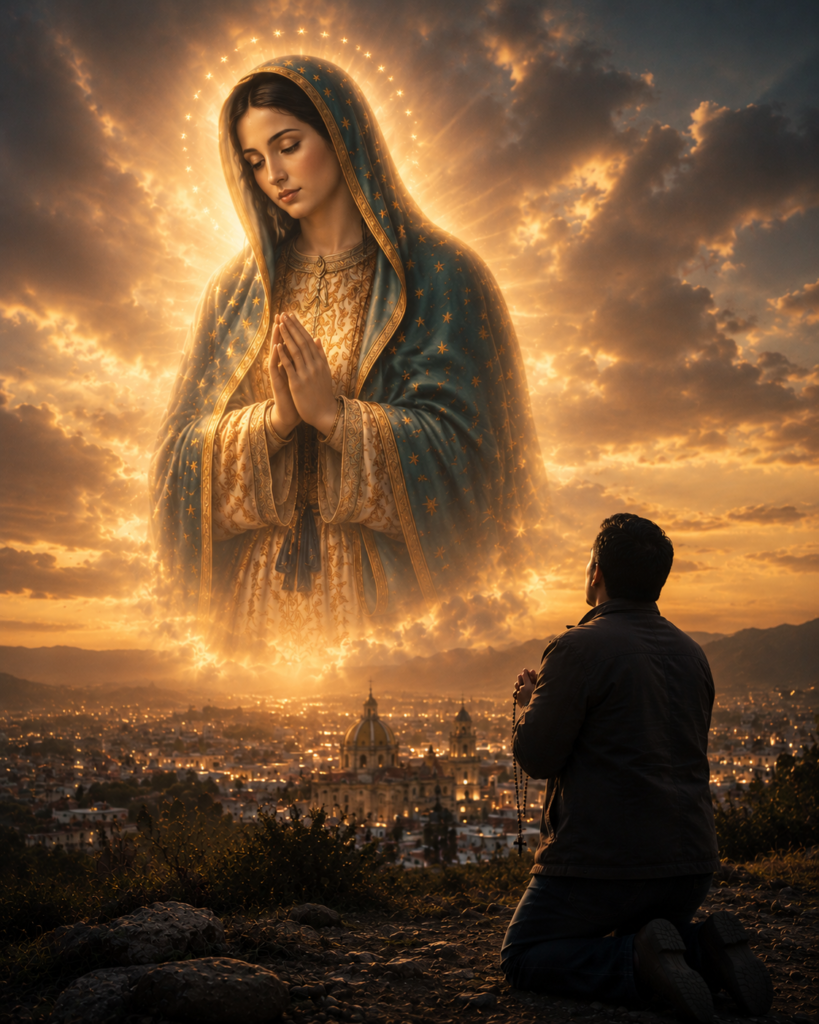
Prayer to Our Lady of Guadalupe is offered as a request for her intercession, guidance, and maternal care. As Patroness of the Americas, she is honored by many Christians as a spiritual mother who lovingly brings the prayers of the faithful before God. The apparitions to Juan Diego are remembered not only because of the miracle itself, but because of the message of compassion, humility, hope, and comfort that accompanied it. Through prayer, many seek her intercession during times of hardship, uncertainty, illness, grief, family struggles, and personal challenges, trusting in her care and prayers before her Son. People also pray to Our Lady of Guadalupe as a reminder of the sacred dignity of every human person and the importance of faith, mercy, and perseverance. Her appearance to a humble Indigenous convert carried a powerful message that no person is forgotten or without value. For this reason, prayers offered through her intercession often include petitions for healing, unity, protection of families, peace within communities, care for the vulnerable, and spiritual renewal throughout the Americas and the world. Beyond asking for help, these prayers are also expressions of gratitude, devotion, and trust. Many believers pray to Our Lady of Guadalupe to deepen their relationship with God, seek strength to live virtuously, and find comfort in times of fear or suffering. Her image and story continue to inspire millions because they point toward compassion, hope, endurance, and the belief that even in difficult times, grace and light remain present.

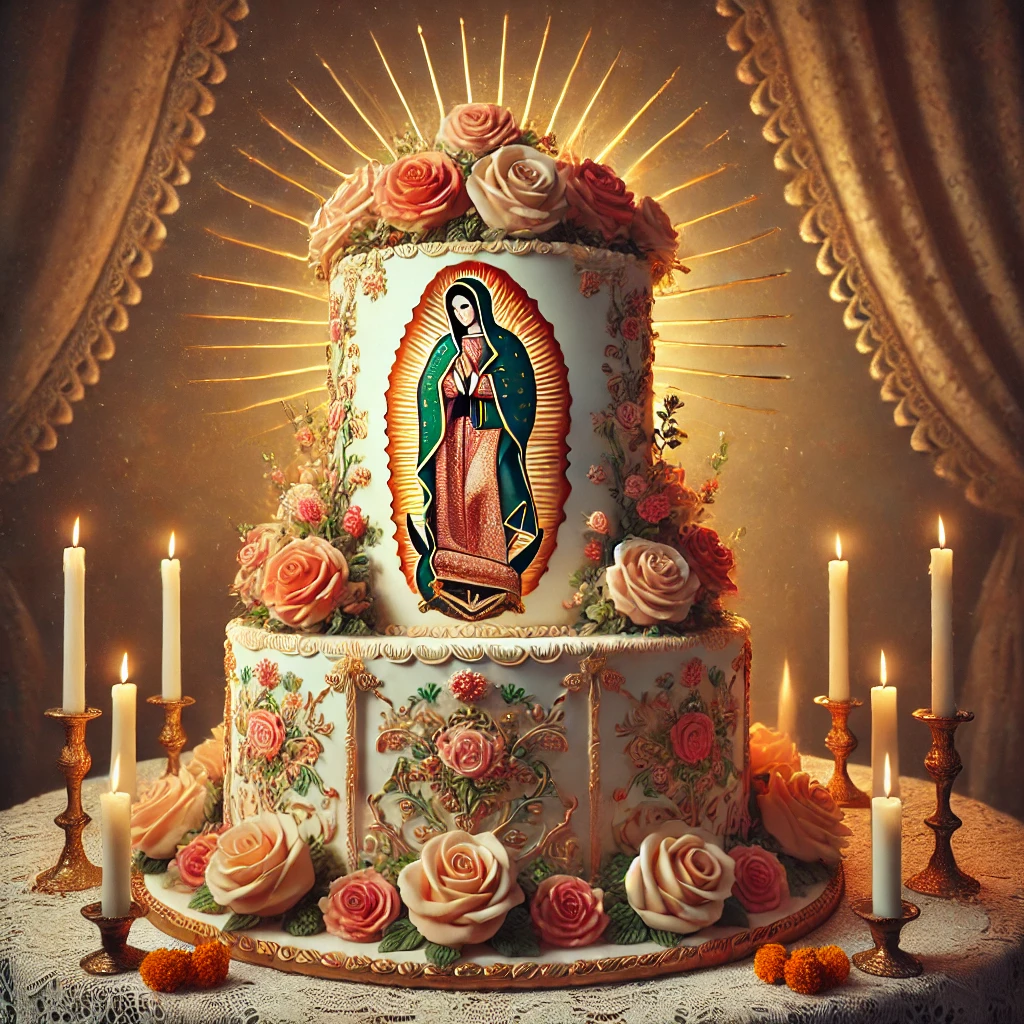
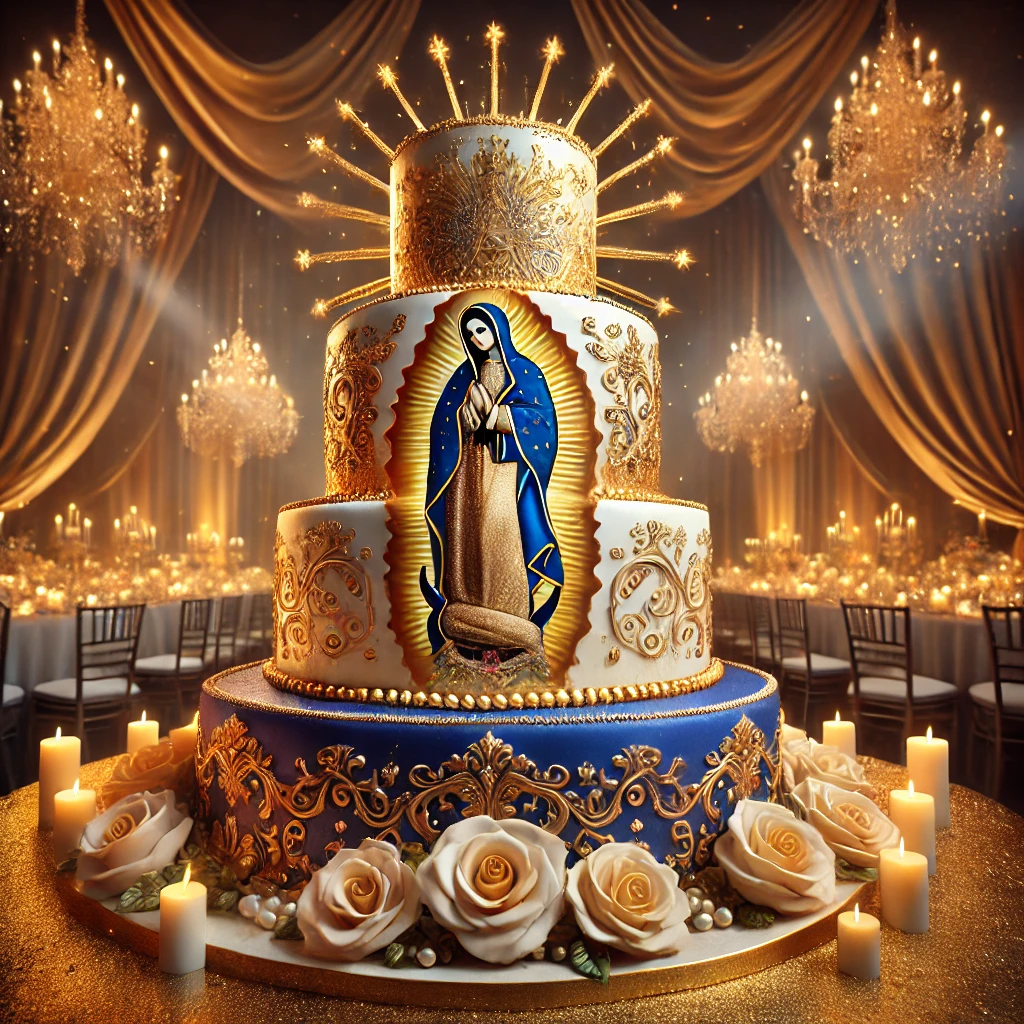
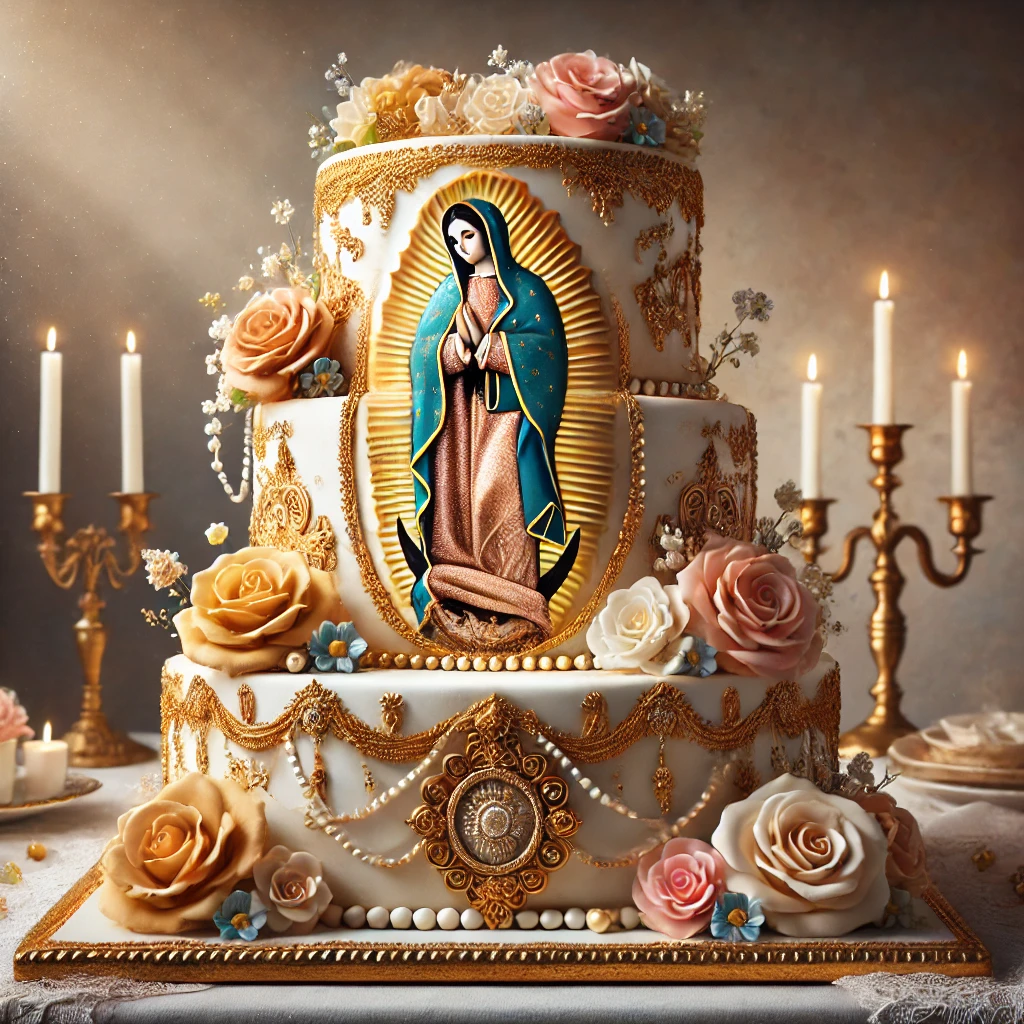
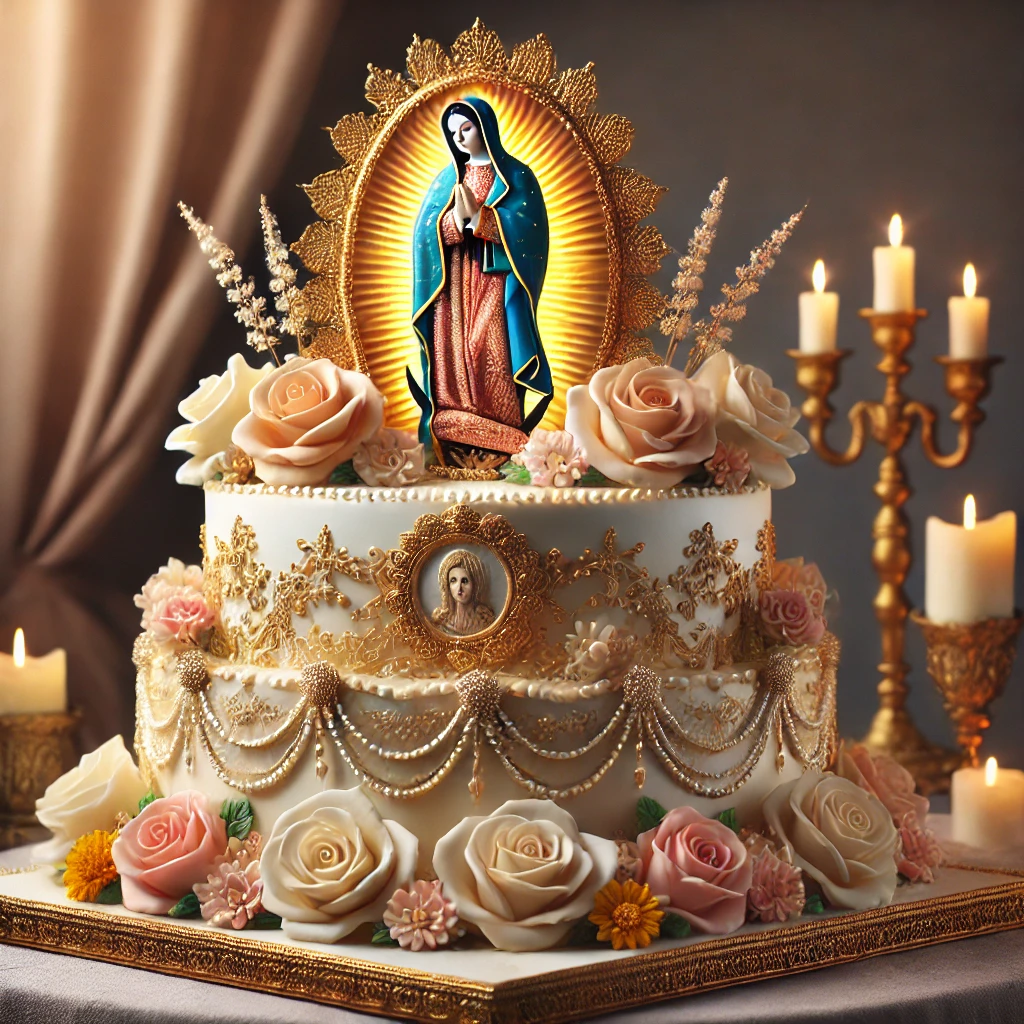
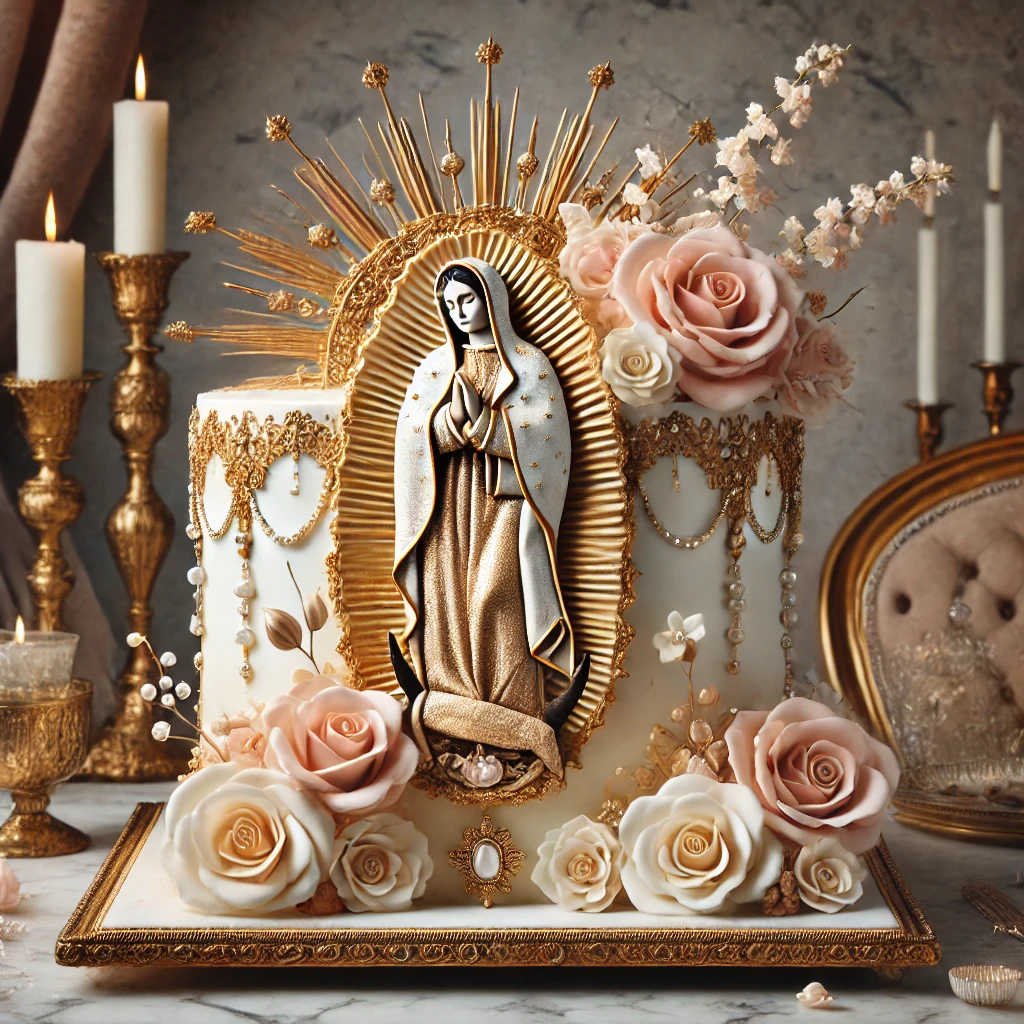
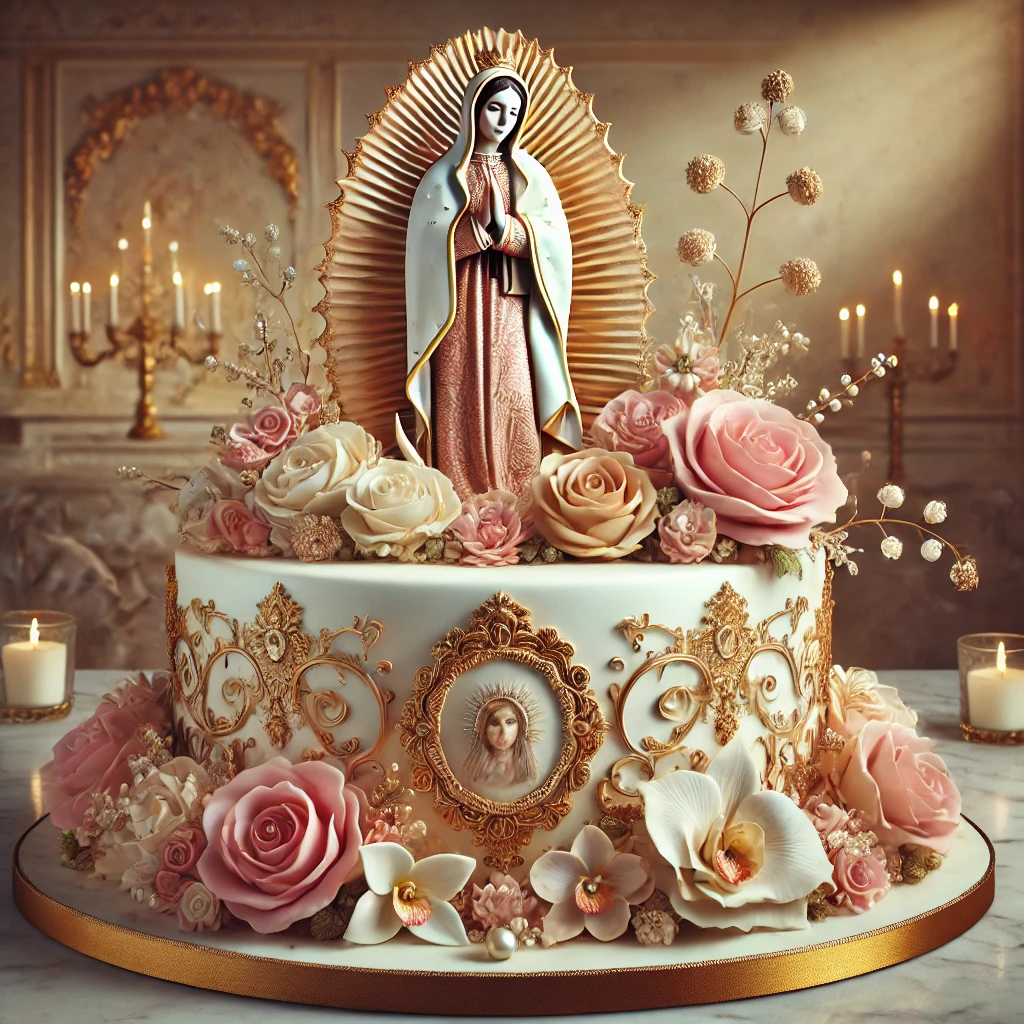
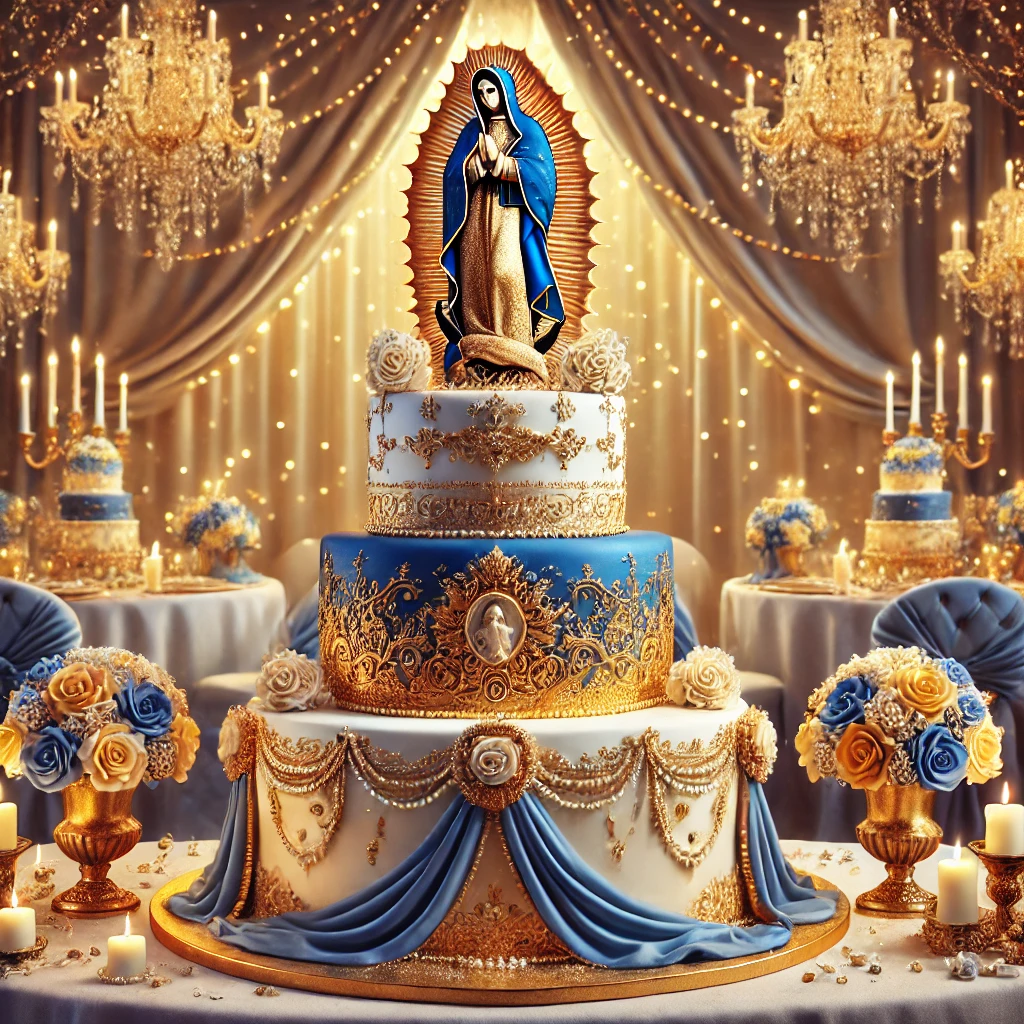
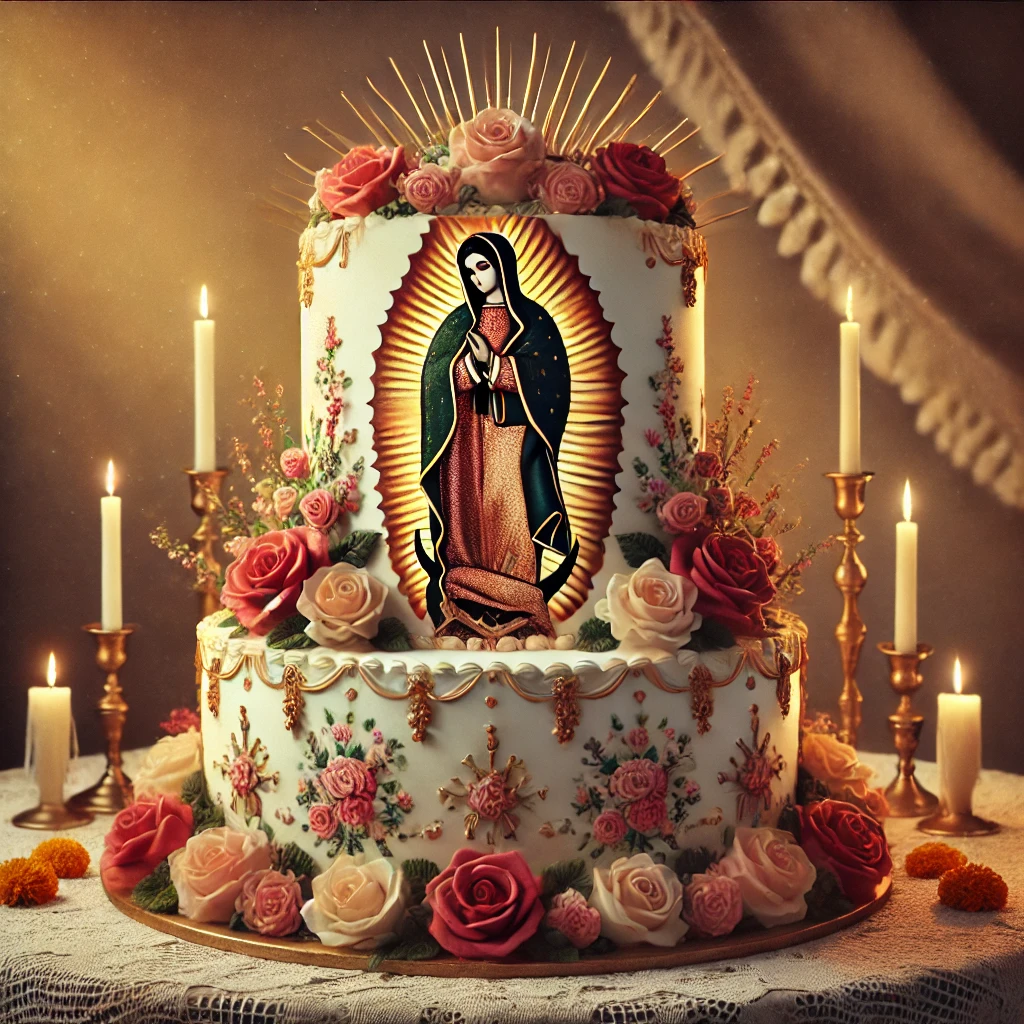
Patroness of the Americas Cake & Atmosphere Ideas

Where style, memory, and celebration meet.

This section is meant to be more than Cake Decorating Ideas… it’s designed to spark inspiration and creativity, awaken tradition, and infuse your special occasions with style, identity, and atmosphere. A color palette becomes a theme. A design becomes a mood. Simple details—like sugared holly leaves or shimmering stars—can set the tone for a gathering and become part of cherished traditions and lasting memories melded with personal touch and love.

Patroness of the Americas Traditional Dishes

Tamales
Tamales are one of the most beloved traditional foods associated with celebrations honoring Our Lady of Guadalupe. Made from masa dough and filled with meats, cheeses, peppers, or beans before being wrapped in corn husks and steamed, tamales are often prepared in large family gatherings where multiple generations cook together in celebration and fellowship.
Pozole
Pozole is a rich and comforting traditional soup commonly served during religious feasts and celebrations throughout Mexico and the Americas. Typically prepared with hominy, slow-cooked pork or chicken, broth, and spices, it is often garnished with cabbage, radishes, lime, onion, and herbs, creating a deeply communal and festive meal.
Atole & Champurrado
Warm traditional beverages such as atole and champurrado are frequently enjoyed during early morning processions, vigils, and gatherings. Atole is a comforting masa-based drink, while champurrado adds chocolate and warming spices for a rich festive variation often associated with winter celebrations.
Pan Dulce
Sweet breads and pastries known as pan dulce are commonly shared among families and communities during the celebration. Varieties may include conchas, empanadas, or other traditional baked goods enjoyed alongside coffee, hot chocolate, or champurrado.
Mexican Hot Chocolate
Traditional Mexican hot chocolate is often prepared with cinnamon, dark chocolate, and warm milk, sometimes lightly sweetened and frothed until rich and creamy. It is especially popular during evening vigils and cool December celebrations surrounding the feast day.
Mole Dishes
Mole sauces, known for their depth and complexity, are frequently served during important religious and family celebrations. Mole may include layers of chilies, chocolate, spices, nuts, seeds, and herbs served over chicken or other meats alongside rice and tortillas.
Fresh Tortillas & Rice
Homemade tortillas and seasoned rice are foundational dishes often served with celebration meals. Families may prepare large shared platters featuring meats, beans, sauces, vegetables, and warm tortillas to encourage communal dining and hospitality.
Arroz con Leche
This traditional rice pudding dessert, flavored with cinnamon and vanilla, is commonly served as a comforting sweet treat during religious gatherings and family celebrations. Its warmth and simplicity make it a cherished part of many holiday tables.
Sweet Fruits & Candied Treats
Fresh fruits, candied fruits, caramelized nuts, and festive sweets are often shared during celebrations as symbols of abundance, joy, hospitality, and gratitude.
Family Feast Tables
Beyond any single dish, one of the most important traditions is the shared family table itself. Meals during Patroness of the Americas celebrations are often centered around hospitality, togetherness, gratitude, storytelling, prayer, and strengthening the bonds of family and community.

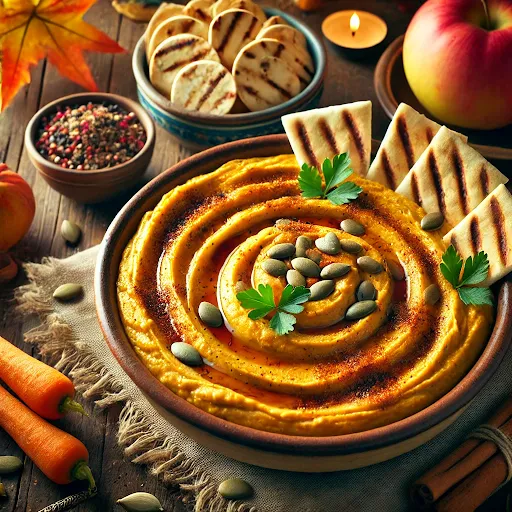
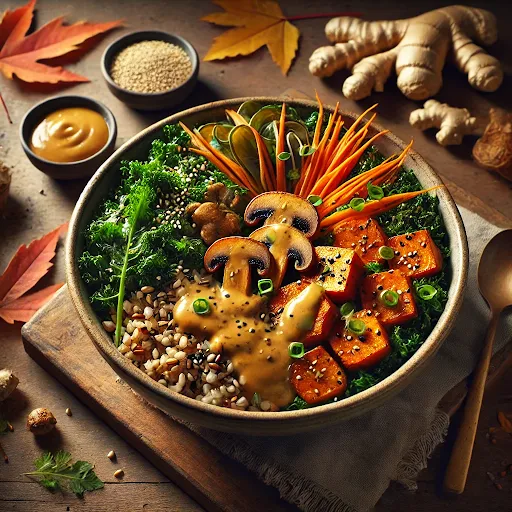
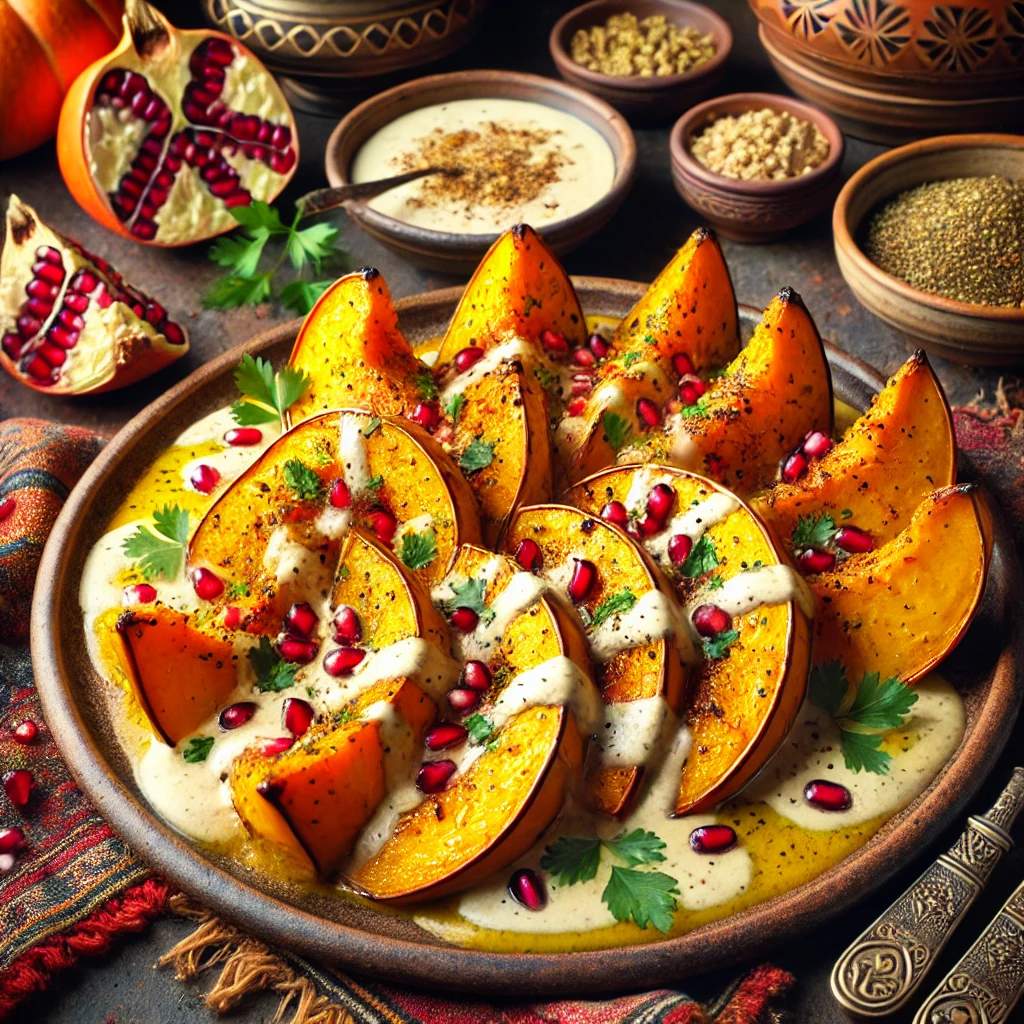
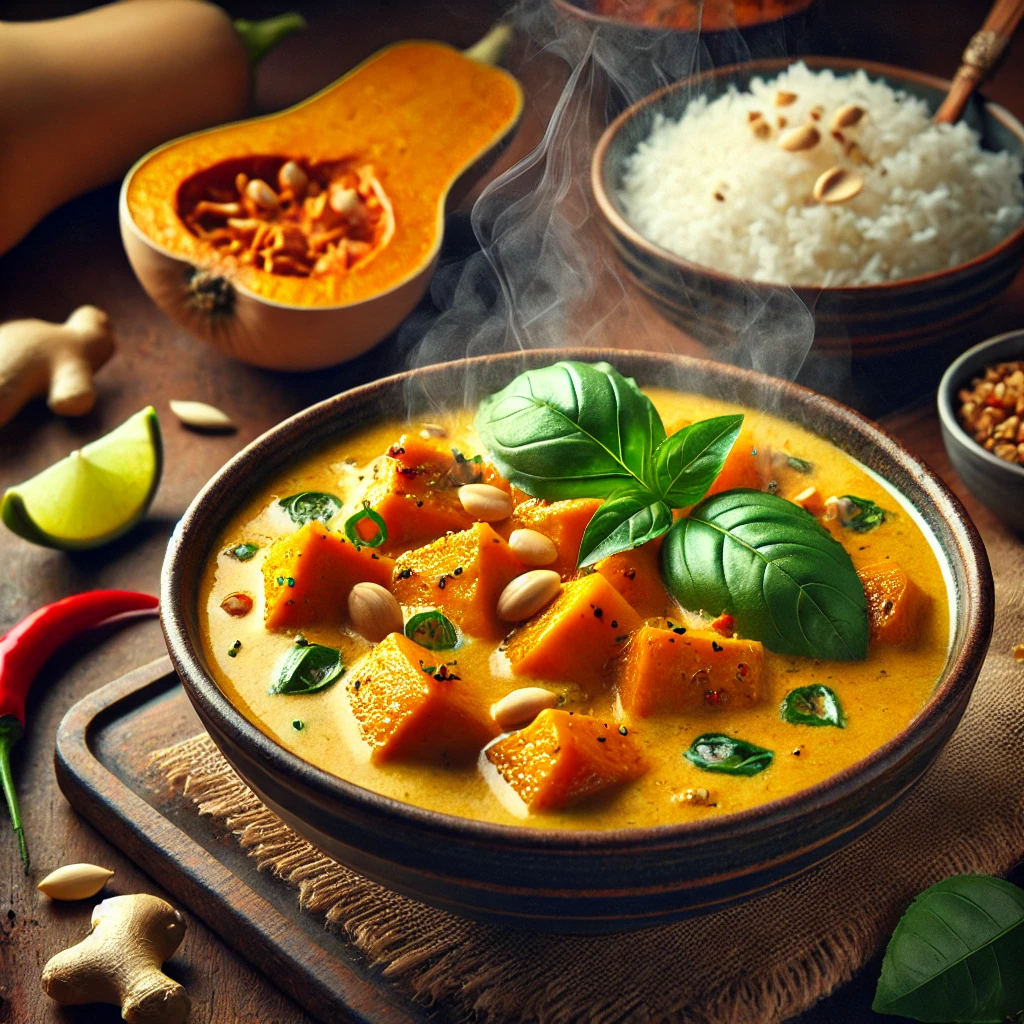
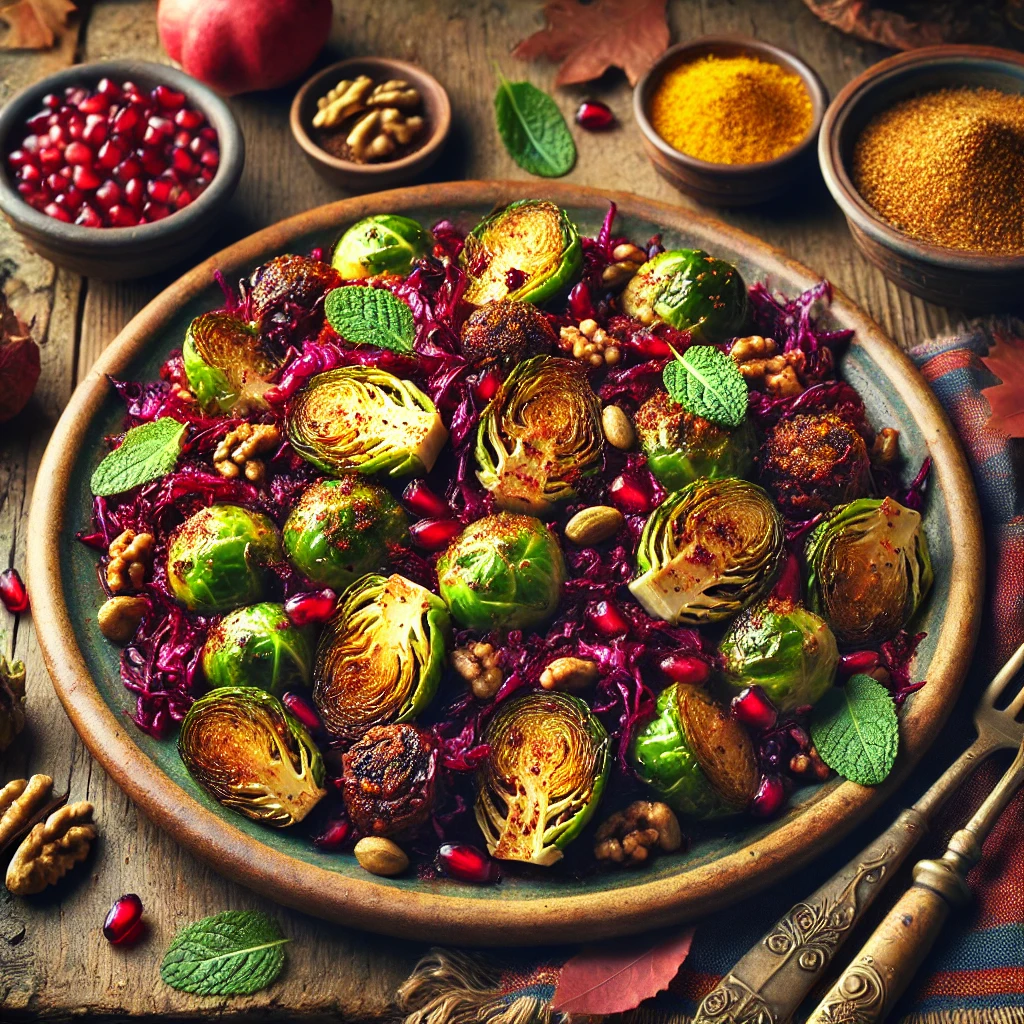
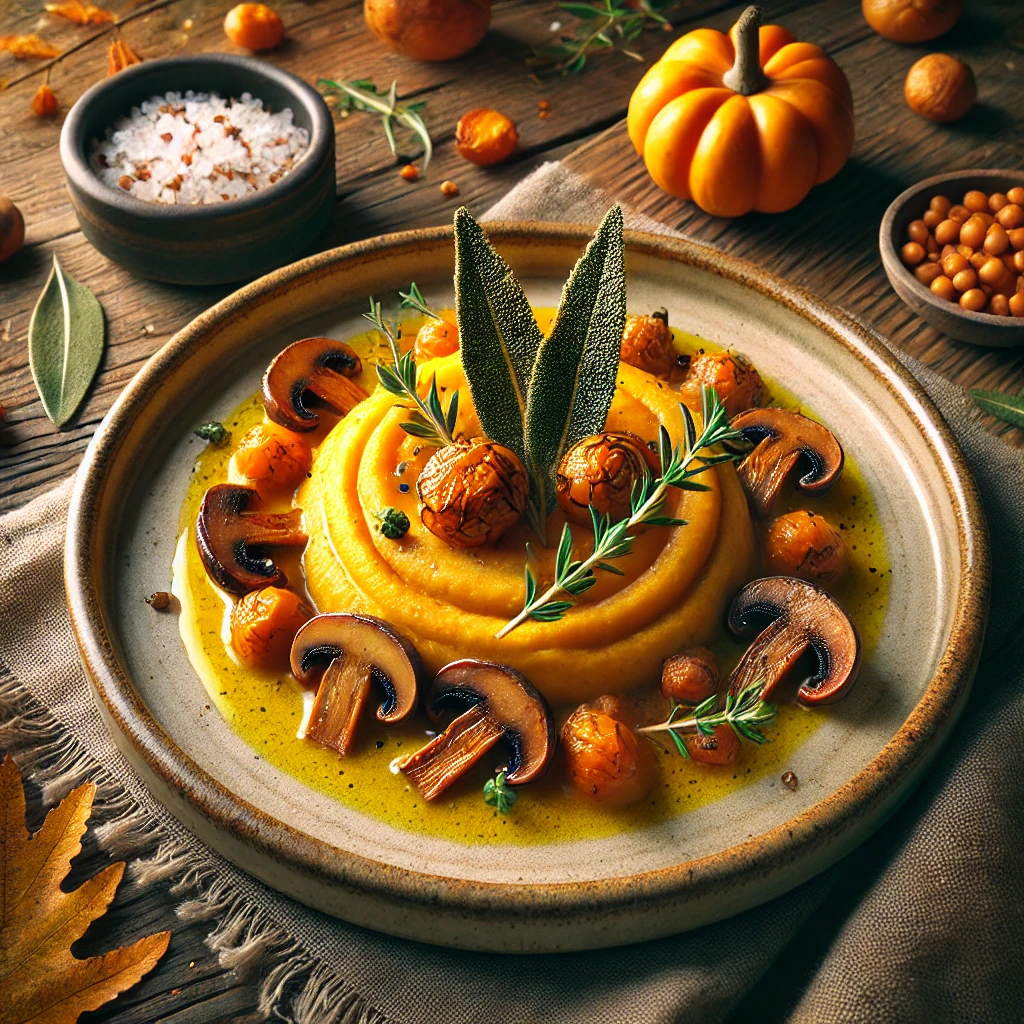
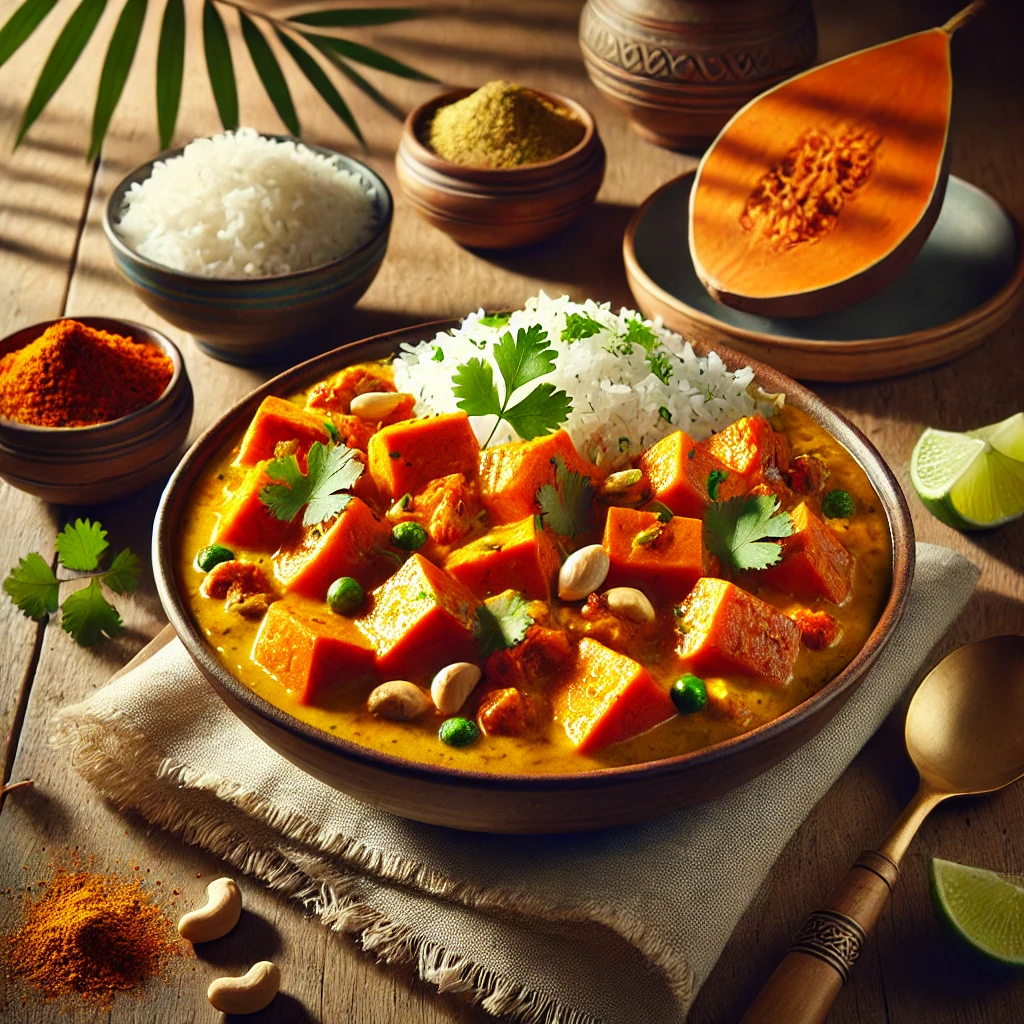
Recipes Engineered for Winter Warmth