

























Saint Nicholas' Day

with ORO VALENTIO

December 6th

Among the most intriguing traditions associated with St. Nicholas is the centuries-old phenomenon known as the **"Manna of St. Nicholas,"** or **myron**. Since the Middle Ages, clergy at the Basilica of Saint Nicholas in Bari, Italy, have periodically collected a small amount of a clear, fragrant liquid that has been observed in connection with the saint's relics. Pilgrims from both the Eastern and Western Christian traditions have long venerated this mysterious substance as a sign of God's grace and a reminder of the holiness of His faithful servant. Although the precise natural source of the liquid has been the subject of ongoing discussion and no definitive explanation has been established, the phenomenon itself has been documented and revered for centuries, making it one of the most remarkable and enduring traditions surrounding the life and legacy of St. Nicholas.
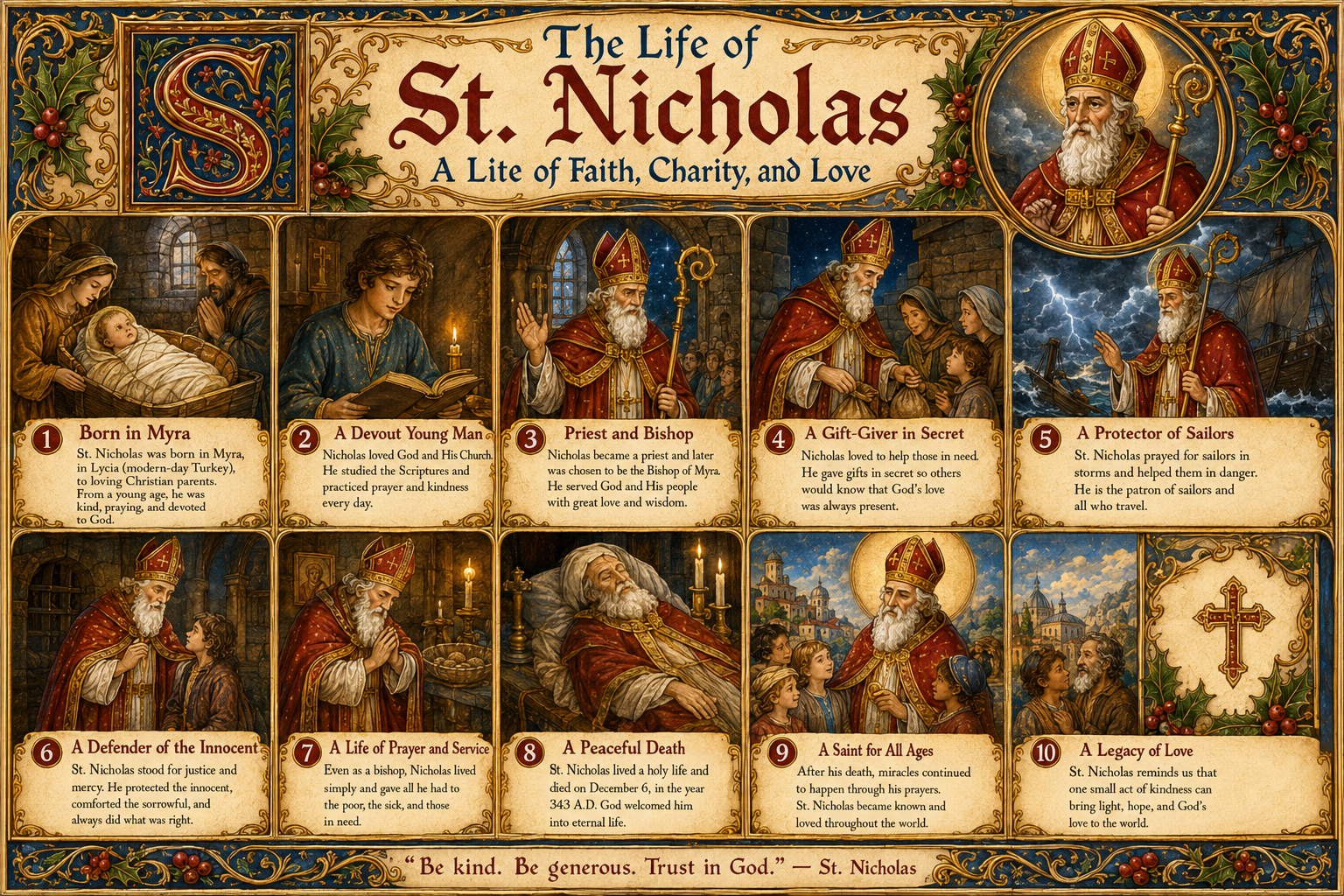
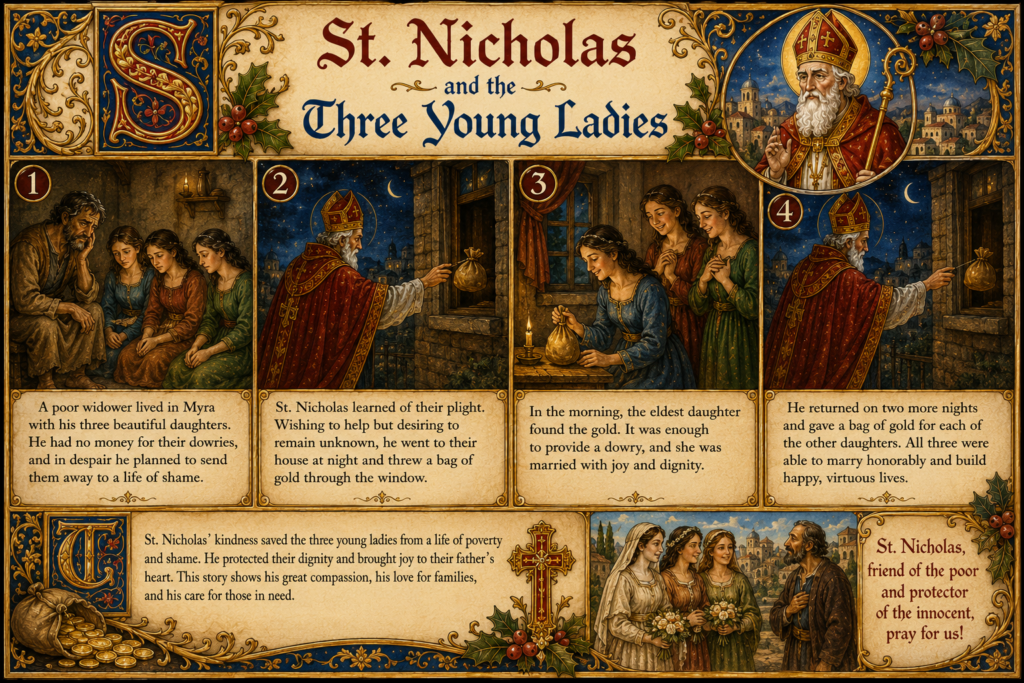
Saint Nicholas’ Day honors the life and legacy of Saint Nicholas of Myra, a fourth-century Christian bishop renowned for his extraordinary generosity, compassion, and unwavering devotion to those in need. While many modern Christmas traditions trace their roots to his story, Saint Nicholas’ Day focuses less on gift-giving itself and more on the virtues that inspired his life: charity, humility, kindness, and selfless service. Born in what is now modern-day Turkey, Saint Nicholas became known for quietly helping the poor, protecting children, and offering assistance to those facing hardship. One of the most famous stories tells of how he secretly provided dowries for three impoverished sisters, leaving bags of gold under the cover of night so they could avoid a life of destitution. These quiet acts of generosity eventually gave rise to the tradition of anonymous gift-giving and inspired the figure now recognized around the world as Santa Claus. For Christians, Saint Nicholas serves as an enduring example of living out one’s faith through action. Rather than seeking recognition, he chose to care for others with humility and compassion, reflecting Christ’s call to love one’s neighbor. His life reminds us that even small acts of generosity can profoundly impact the lives of others.

A Legacy of Generosity

Today, Saint Nicholas’ Day is celebrated in many countries throughout Europe and around the world. In many traditions, children place shoes or boots outside their bedroom doors or by the fireplace, hoping to find them filled with small gifts, fruit, nuts, candy, or coins. Families often read stories about Saint Nicholas, participate in charitable activities, attend church services, or perform acts of kindness in his honor. At its heart, Saint Nicholas’ Day is a celebration of generosity without expectation, compassion for those in need, and the joy that comes from giving. It encourages people of all ages to remember that the greatest gifts are often those offered quietly—with love, humility, and a genuine desire to brighten another person’s life. Saint Nicholas’ Day honors the remarkable life and enduring legacy of Saint Nicholas of Myra, a fourth-century Christian bishop whose compassion, generosity, and steadfast faith have inspired people around the world for centuries. Long before the familiar image of Santa Claus became part of popular culture, Saint Nicholas was revered as a man who quietly dedicated his life to serving God through acts of mercy, charity, and kindness toward others. Born into a wealthy Christian family in what is now modern-day Turkey, Nicholas inherited a considerable fortune at a young age. Rather than keeping his wealth for personal comfort, he chose to use it to care for the poor, provide for the needy, and encourage those who had fallen on difficult times. His generosity was never motivated by recognition or praise. Instead, he believed that the greatest gifts were those given in secret, with humility and genuine love. One of the most beloved stories associated with Saint Nicholas tells of three young sisters whose family had become so poor that they could not afford the dowries traditionally required for marriage. Without assistance, their future appeared uncertain. Learning of their situation, Nicholas secretly visited their home under the cover of darkness and left bags of gold for the family, allowing each daughter the opportunity for a better life. According to tradition, the gold landed in stockings or shoes that had been left out to dry, a story that helped inspire the custom of leaving shoes, boots, or stockings out to receive small gifts.
During the Middle Ages, the Feast of St. Nicholas on **December 6** was one of the most widely celebrated days of the Christian year, rivaling even Christmas in many parts of Europe. Communities honored the beloved bishop with church services, processions, acts of charity, and joyful family gatherings, while children often received small gifts in remembrance of his quiet generosity toward the poor. In many regions, these presents were given on St. Nicholas Day rather than on Christmas itself—a cherished tradition that continues to be observed in several European countries to this day, preserving the saint's enduring legacy of faith, kindness, and selfless giving.

Saint Nicholas' Day Traditions to Make Your Own

The strong association between St. Nicholas and the Netherlands developed over centuries through the country's deep Christian devotion, maritime culture, and enduring family traditions. Although St. Nicholas himself was a 4th-century bishop from Myra in present-day Türkiye, he became one of the most beloved saints throughout medieval Europe, especially among sailors, merchants, fishermen, travelers, and children. As the Dutch emerged as one of Europe's great seafaring nations, they embraced St. Nicholas as their heavenly patron, frequently seeking his protection on voyages and honoring his example of generosity. His feast day on December 6 gradually became one of the most cherished celebrations in Dutch society, with families gathering on the evening of December 5—known as *Sinterklaasavond*—to exchange gifts, sing traditional songs, and place shoes out for treats in remembrance of the saint's charitable spirit. The Dutch name *Sinterklaas*, derived from *Sint Nikolaas*, eventually traveled with Dutch settlers to New Amsterdam (later New York), where it evolved into the figure of Santa Claus. While modern Christmas traditions have changed considerably, the Dutch celebration has long remained rooted in the historical St. Nicholas as a compassionate Christian bishop whose life of faith, charity, and care for the vulnerable inspired generations of believers.
The enduring traditions of St. Nicholas that first flourished in the Netherlands continue to be celebrated in many parts of the United States today, especially on the Feast of St. Nicholas on **December 6**. Families of Dutch, German, Belgian, and other European heritage often preserve the custom of children placing their shoes by the fireplace or front door on the evening of **December 5**, sometimes leaving a carrot or hay for St. Nicholas's horse. By morning, the shoes are filled with small gifts, fruit, chocolate coins, candies, or other simple treats, recalling the saint's quiet generosity toward those in need. Churches, schools, and Christian communities across the country also observe the feast with special prayers, processions, charitable works, and reenactments of St. Nicholas's acts of mercy, reminding children and adults alike that the true spirit of gift-giving is found in humble love and selfless charity. Although many of these customs have gradually blended with modern Christmas celebrations, they remain a living connection to the centuries-old Dutch tradition of honoring the historical St. Nicholas and his enduring example of faith, compassion, and joyful generosity.
Leaving Shoes or Boots Out
One of the most beloved Saint Nicholas’ Day traditions is placing shoes or boots outside a bedroom door, near the fireplace, or by the front entrance. During the night, Saint Nicholas is said to fill them with small gifts such as candy, fruit, nuts, chocolate, coins, or other simple treats as a reward for kindness and good behavior.
Performing Acts of Kindness
Many families honor Saint Nicholas by carrying out anonymous acts of generosity. Donating to charities, paying for a stranger’s meal, helping a neighbor, or quietly assisting someone in need reflects the spirit of Saint Nicholas, who was known for giving without seeking recognition.
Giving Small Gifts
Unlike the larger gift exchanges often associated with Christmas, Saint Nicholas’ Day traditionally focuses on thoughtful, modest presents. Books, handmade crafts, sweets, and meaningful keepsakes emphasize the joy of giving rather than the value of the gift itself.
Attending Church Services
Many Christians attend special church services or prayer gatherings that celebrate the life and example of Saint Nicholas. These services often include readings about his generosity, faithfulness, and compassion, encouraging worshippers to follow his example of serving others.
Reading the Story of Saint Nicholas
Families often gather to read or tell the stories of Saint Nicholas’ life. Sharing these accounts helps children and adults alike understand the historical figure behind many holiday traditions while emphasizing values such as kindness, humility, generosity, and faith.
Sharing Food with Family and Friends
Many households prepare special meals or desserts to enjoy together. Traditional breads, cookies, pastries, fruit, and warm beverages create opportunities for fellowship while celebrating the blessings of family, friendship, and hospitality.
Visiting Those in Need
Some communities organize visits to nursing homes, hospitals, orphanages, or shelters in honor of Saint Nicholas. Bringing gifts, singing songs, or simply spending time with those who may feel lonely reflects the compassion that defined his life.
Teaching Children About Generosity
Parents often use Saint Nicholas’ Day as an opportunity to teach children about giving rather than receiving. Children may be encouraged to donate toys, prepare care packages, write encouraging notes, or participate in service projects that benefit others.
Decorating with Saint Nicholas Imagery
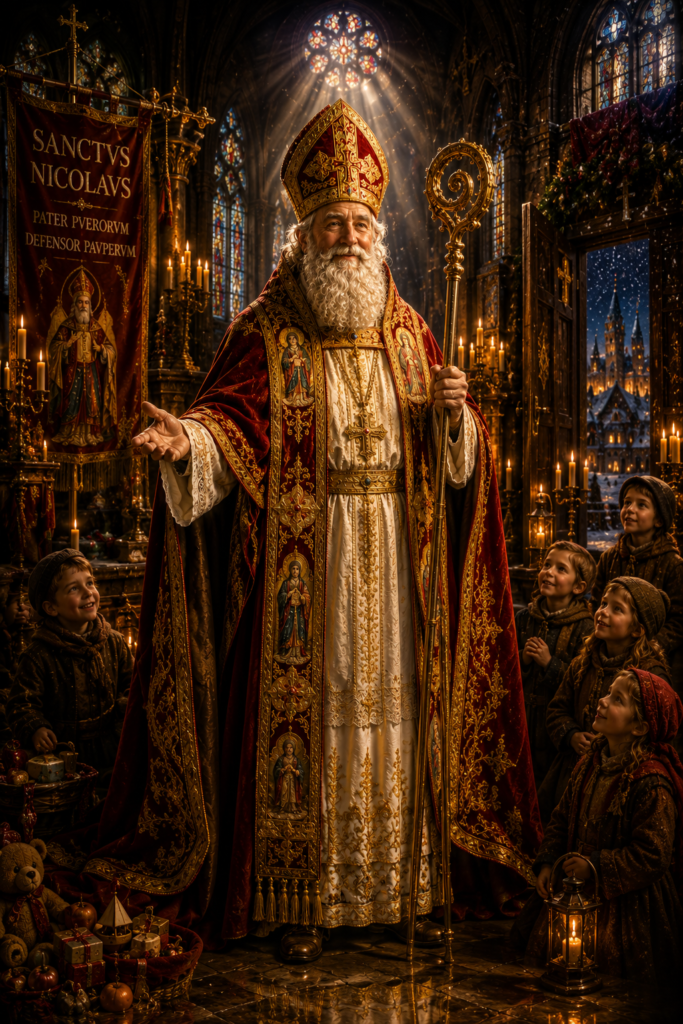
Homes, churches, and schools may display artwork or decorations featuring Saint Nicholas dressed as a bishop with his traditional mitre, crozier, and flowing robes. These decorations celebrate the historical saint rather than the modern image of Santa Claus.
Singing Hymns and Holiday Songs
Many churches and families include hymns and traditional songs celebrating generosity, hope, and the coming Christmas season. Music brings communities together while reminding participants of the values Saint Nicholas represented.
Baking Traditional Treats
Baking cookies, spiced breads, gingerbread, or other festive desserts is a cherished tradition in many countries. Families often prepare these treats together, sharing them with neighbors, friends, and those in need.
Practicing Secret Giving
Perhaps the tradition most closely associated with Saint Nicholas is giving anonymously. Whether leaving a small gift on a doorstep, secretly helping a struggling family, or quietly paying for someone’s groceries, this custom reflects the humble generosity for which Saint Nicholas became famous.

The Greatest Gifts are Often those Given Quietly

Heavenly Father, We thank You for the inspiring example of Saint Nicholas, whose life reflected generosity, compassion, humility, and unwavering faith. Lord, help us to follow his example by giving with joyful hearts. Teach us to be generous not only with our possessions but also with our time, our encouragement, our forgiveness, and our love. Fill our hearts with humility so that our good deeds point others to You rather than ourselves. May we remember that the greatest gifts are often those given quietly, with sincere love and without expectation of reward. Remind us that true joy is found not in what we receive, but in what we freely give. We thank You for Your countless blessings and for the greatest gift of all—Your Son, Jesus Christ, whose love and sacrifice offer hope, salvation, and eternal life to all who believe. In the name of Jesus Christ we pray, Amen.

Traditional Saint Nicholas' Day Dishes

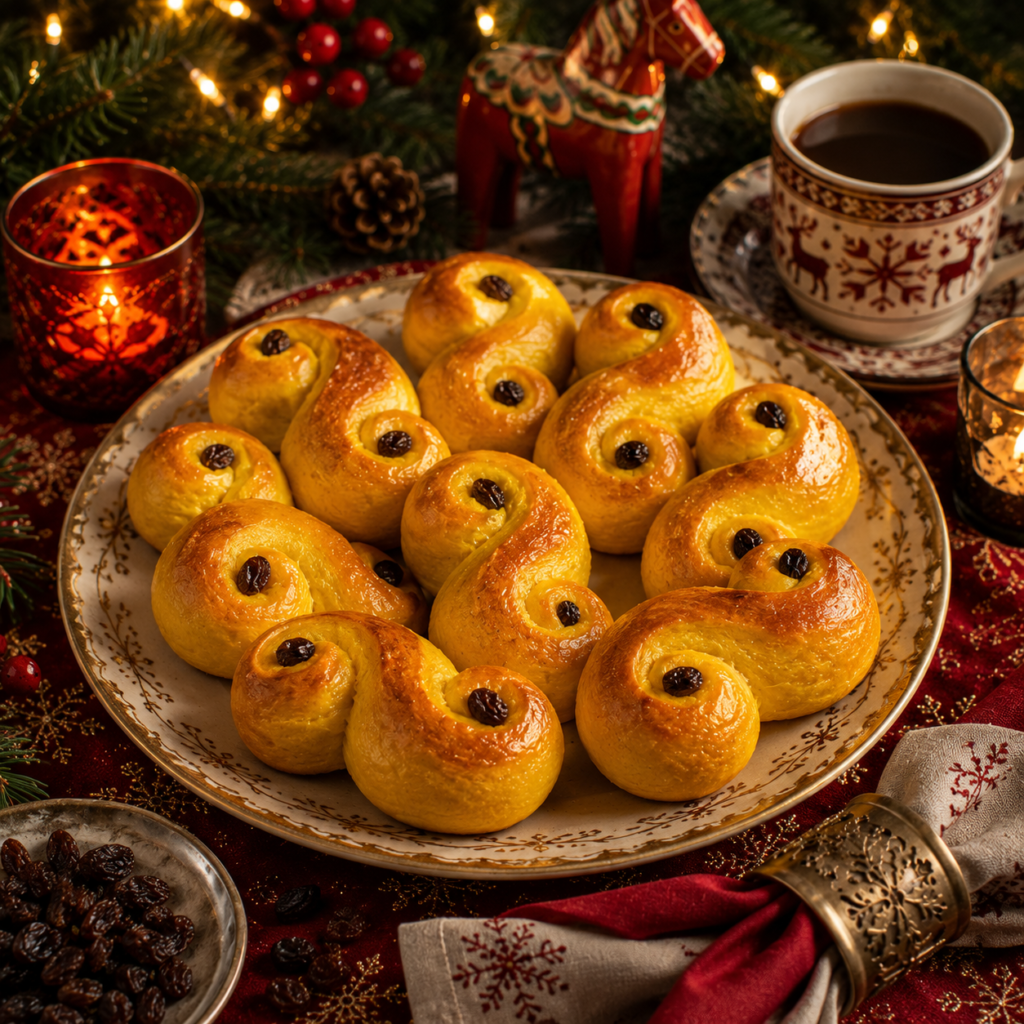
Saffron Buns (Lussekatter)
These golden, delicately curved buns are the signature of the day. Infused with saffron, they carry a rich yellow hue that symbolizes light itself. Slightly sweet, soft, and fragrant, they are often shaped into graceful forms and served warm in the early morning.

Spiced Cookies (Pepparkakor)
Thin, crisp cookies made with warming spices like ginger, cinnamon, and cloves. Their flavor is both bold and refined, offering a balance of sweetness and depth. Traditionally cut into simple, clean shapes, they pair beautifully with warm drinks.

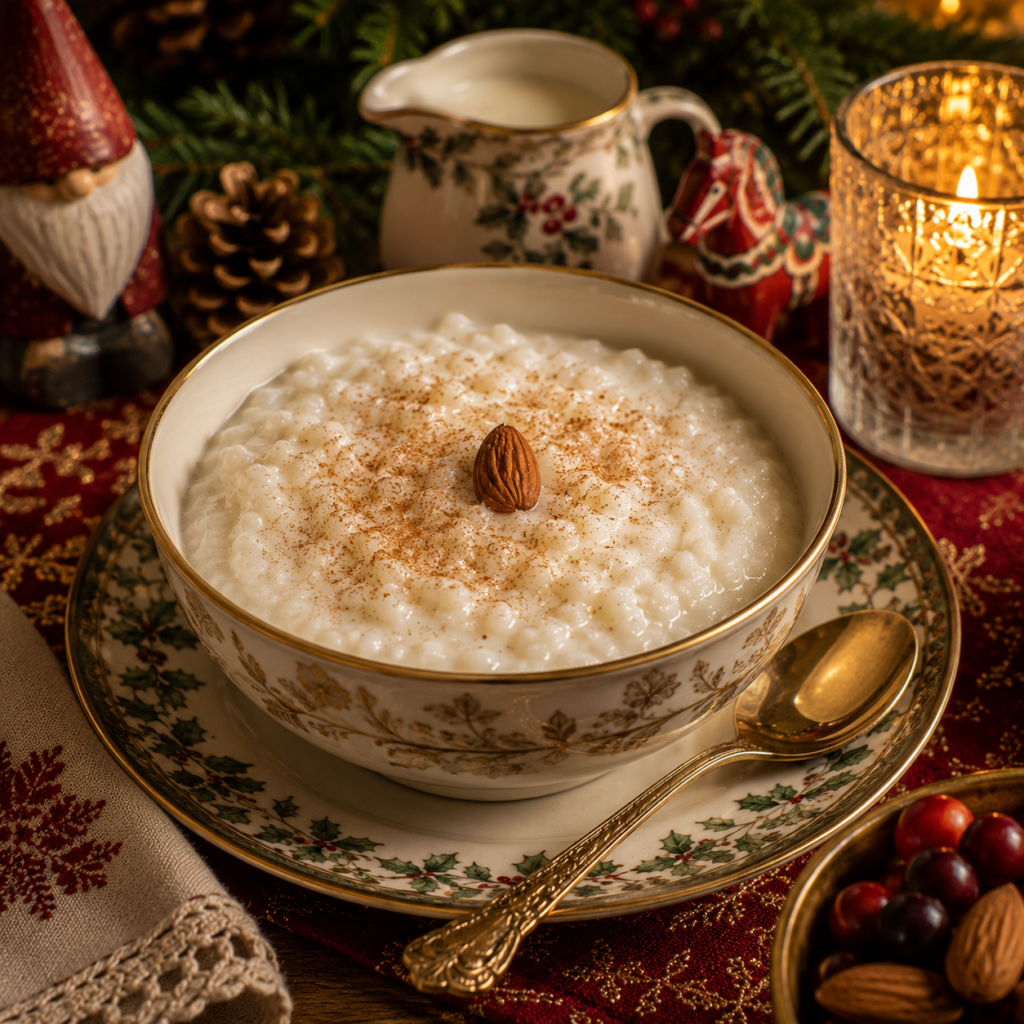
Rice Porridge (Risgrynsgröt)
A smooth, comforting dish made from rice slowly cooked in milk. It is simple yet deeply satisfying, often lightly sweetened and served warm. In some traditions, a single almond is hidden within—symbolizing quiet fortune and anticipation.

Mulled Wine or Warm Spiced Drinks (Glögg)
Served gently heated, these drinks are infused with spices and sometimes citrus. Whether alcoholic or non-alcoholic, they provide warmth and a sense of calm hospitality. The experience is less about indulgence and more about atmosphere—slow, steady, and shared.

Coffee or Warm Milk
Often served alongside the morning offerings, these simple beverages ground the meal. They complement the sweetness of the baked goods and reinforce the tone of the day: composed, comforting, and intentional.

Simple Breads and Butter
In some homes, additional breads are served—plain, well-prepared, and accompanied by quality butter. These elements reflect restraint and purity, allowing each component to stand on its own without excess.

Recipes Engineered for Winter Weather